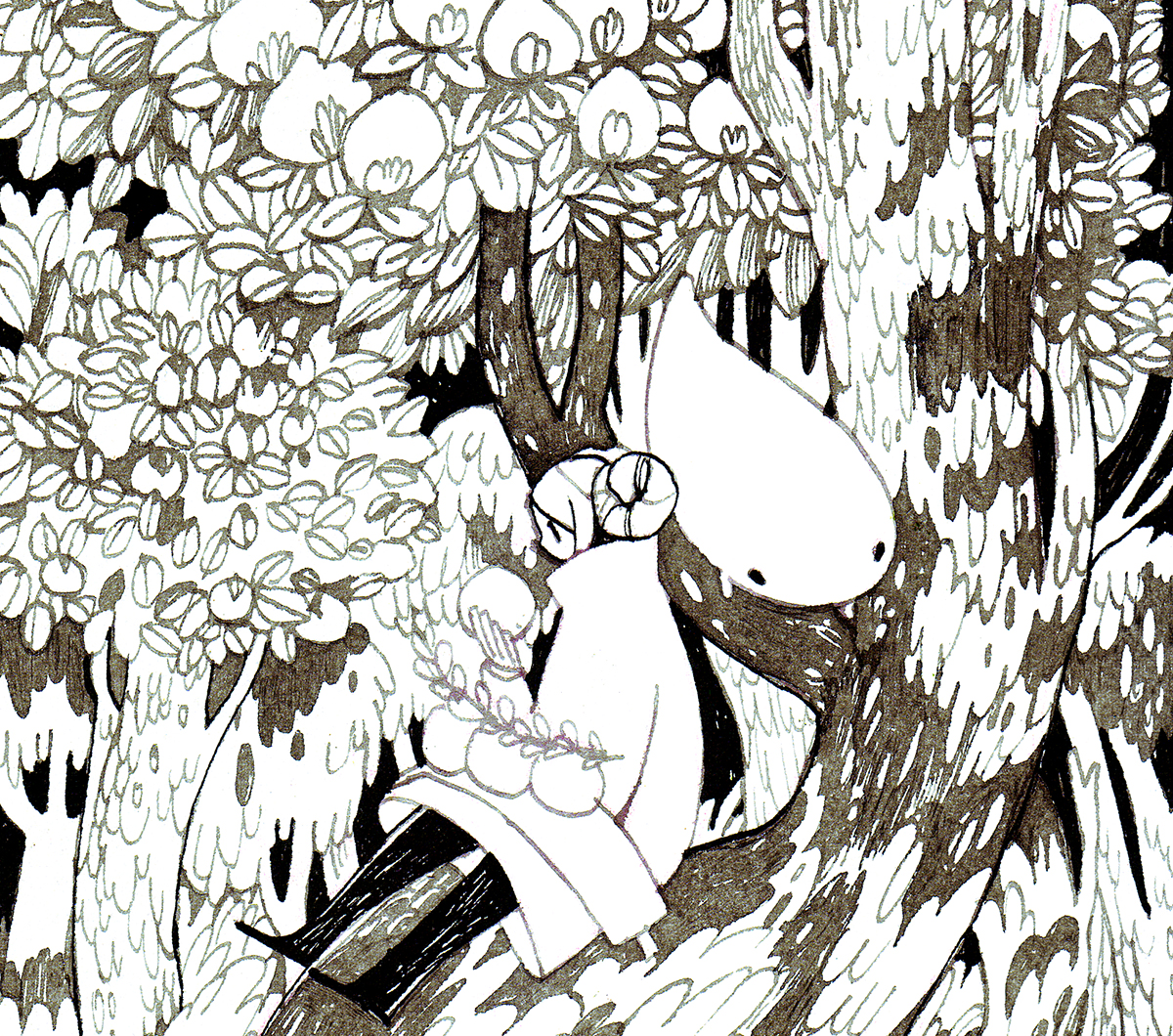
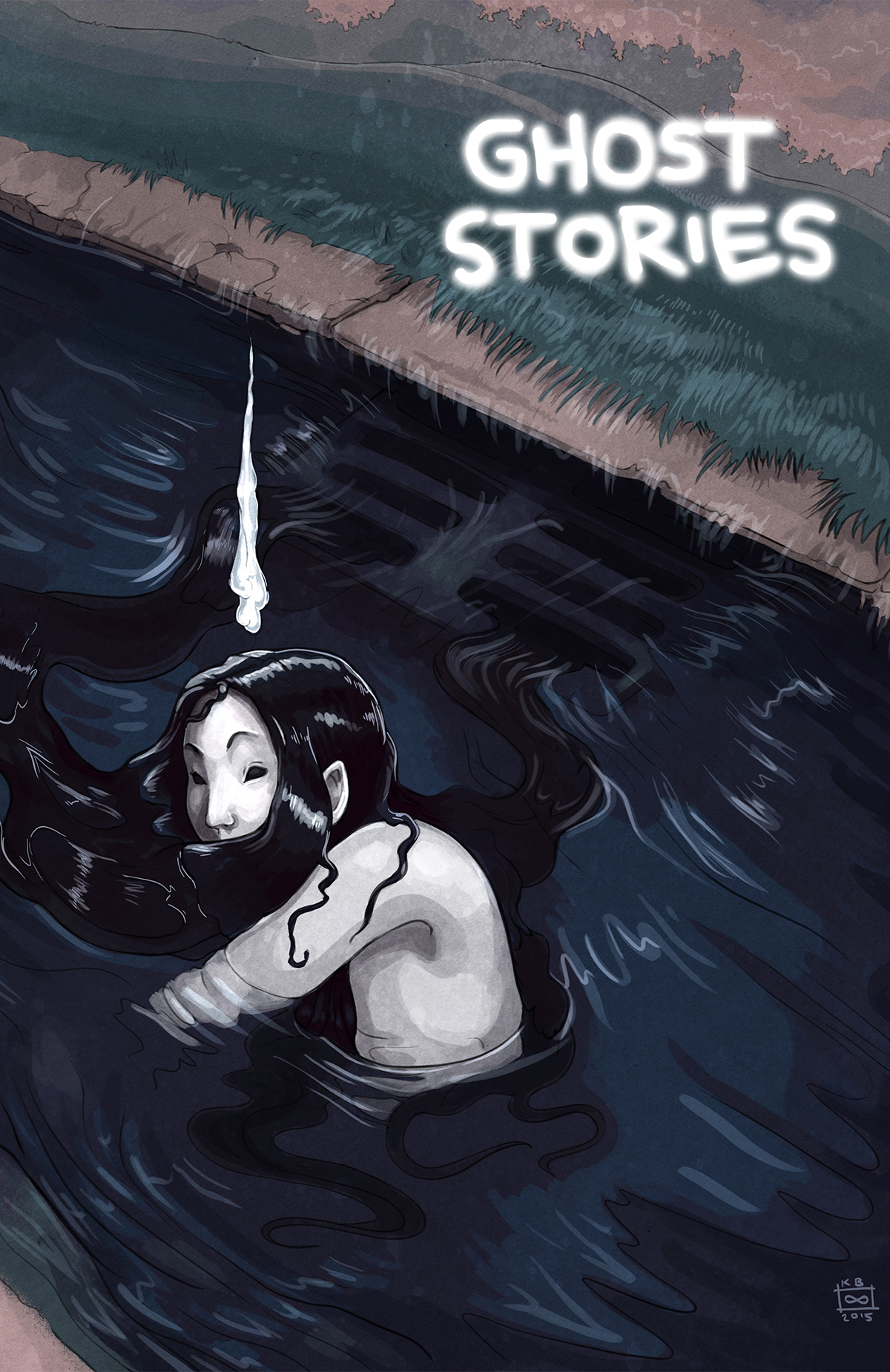
Review of Shadows of the Sea on Comics Beat

I recently had the privilege of writing a review for Comics Beat about Cathy Malkasian’s new graphic novel, Shadows of the Sea. I have to admit that I struggled with Malkasian’s previous books, which are brilliant but tonally dark and emotionally devastating. Shadows of the Sea is just as strange and heartbreaking as the artist’s earlier work, but it ends on a gloriously high note that gives me hope for the future. I was prepared to write a review about the value of portraying despair in dark times, but man. Hope is good too.

Here’s an excerpt:

In his review on The Beat, John Seven assesses Malkasian’s 2017 graphic novel Eartha as one of the artist’s characteristic “gloomy, apocalyptic parables that don’t make you feel so great about humankind.” It’s difficult to disagree, as Eartha is deeply disquieting. In contrast, Shadows of the Sea feels like a gentler turn of the same thematic wheel, presenting a story that’s smaller in scope but richer in emotional immediacy. The fantastic world Malkasian has painted is cruel and strange, to be sure, but it still affords the possibility of healing. Shadows of the Sea lingers not because of its darkness, but because of the hope that emerges after a brave confrontation with bitter truths.

You can read the full review on Comics Beat here:
https://www.comicsbeat.com/graphic-novel-review-shadows-of-the-sea/

Green Dreams: Tales of Botanical Fantasy

I’m excited to announce that I published a new zine! Green Dreams: Tales of Botanical Fantasy collects six illustrated stories about our relationships with plants and nature.

“Each turn of the seasons brings an end to lives both large and small, but new seeds sprout joyously from the ruins” is the zine’s tagline, and disaster is a major theme of the collection. One of the opening stories is about the gradual effects of climate change; and, in the closing story, environmental catastrophes have become so severe that humans have disappeared completely. The zine also features stories about a medical tragedy narrowly averted, the aftermath of a devastating war, and a porous biological quarantine.

I considered subtitling the zine “Tales of Botanical Dark Fantasy,” but the truth is that none of the stories are actually that “dark.” In fact, I’d say the main theme of the collection is a persistent hope for the future. At this particular moment in history, the state of the world seems very bleak, so it’s good to remember that the environment that surrounds us is much larger – but also much more personal – than whatever horrors are currently unfolding.

Precisely because are so many fires burning in the world, I think it’s important to spend time in thriving green spaces that suggest futures of shifting and changing growth. I believe that a mindful contemplation of our natural environment can also be useful in the uncomfortable but necessary process of decentering normative humanity while challenging the artificial divisions we impose on ourselves and each other.

The incredible cover art by Frankiesbugs captures the mood of these stories perfectly.

Frankie creates bold and imaginative botanical fantasy art, and I asked them to illustrate the pagan archetypes of the flower maiden and the horned god, who together represent the endless natural cycle of death and rebirth. In this zine, I wanted to play with symbols that convey the beauty and mystery of the natural world, and Frankie embraced this theme, tinging the painting with potent Christian motifs and a powerful sense of fertility.

It’s an extremely impressive piece of art, and you to check out more of the artist’s work on Instagram (here), on Bluesky (here), and on Redbubble (here).

In this collection, I did my best to share a sense of fertile “green dreams” for the future. Mostly, though, I just really wanted to write some fun ecofiction about plants and mushrooms.

If you’re interested, you can read a free digital version of the zine on Itch.io or order a print copy from Etsy.

🌿 https://digitalterrarium.itch.io/green-dreams
🌿 https://www.etsy.com/listing/4351990958/green-dreams-fantasy-fiction-zine

Firebird

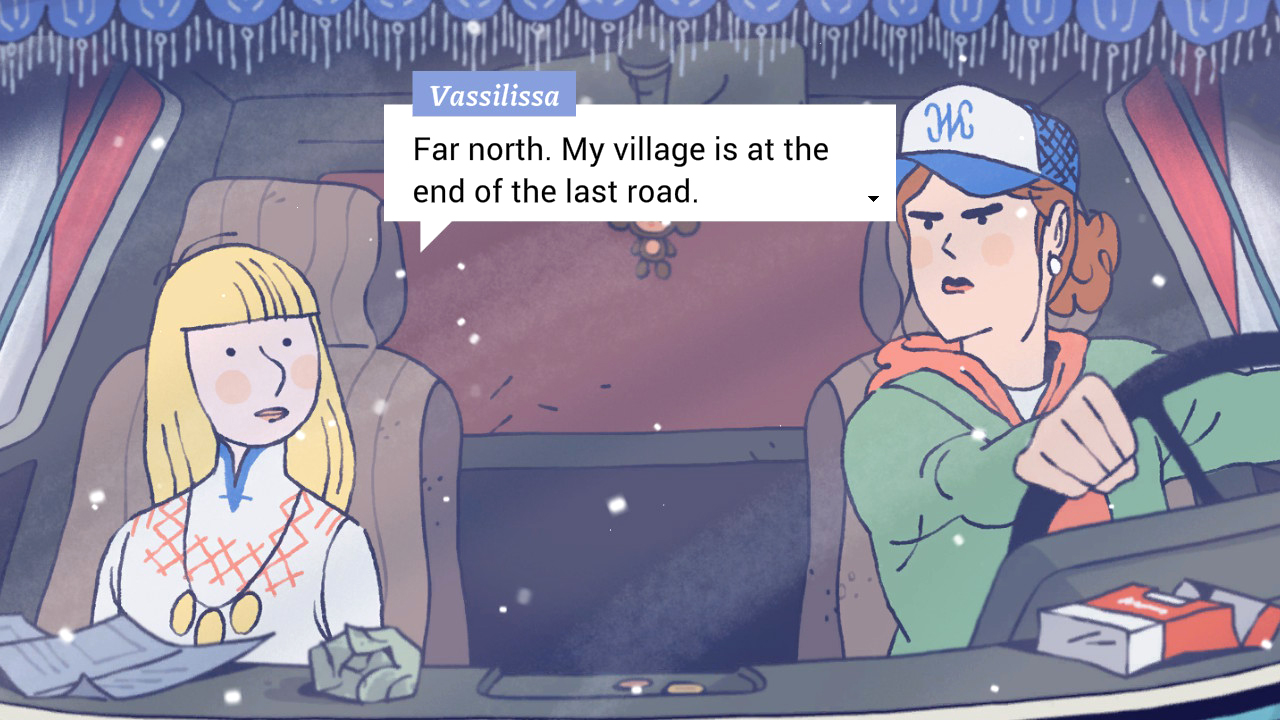
Firebird is a choice-based visual novel that takes about an hour and a half to play. The story is set in the northern borderlands of contemporary Russia, where a Hungarian migrant named Mariska makes her living as a freight trucker.

Since she’s in the country illegally, Mariska had to take out the loan for her truck, the Firebird, from a local mob boss. When she’s caught after trying to flee the boss’s territory without paying the interest on her loan, Mariska crosses paths with a strange girl in traditional clothing named Vassilissa, who promises great riches if Mariska will deliver food to her village in the far north.   

Your job as the player is to navigate between points on the map as Mariska and Vassilissa head steadily northward. There’s no backtracking, so you’ll have to choose between multiple routes while ensuring that the Firebird doesn’t run out of gas. The game is entirely text-based, and the elements of resource management are fairly chill.

More than anything, the gameplay is about roleplaying as you explore the dialogue options. It’s possible to die, but doing so will simply restart the game at a crucial choice. As the player, you’re mostly just along for the ride. And what an incredible ride it is.

At each point on the map along her route, Mariska is able to leave her truck and search for gasoline or money (which can occasionally be used to buy gas). The road is littered with the ruins of old villages and Soviet outposts, but a few of the waystations are still populated. The humans Mariska and Vassilissa meet are friendly, but the wolves and bears are another story entirely. To make matters worse, the mob boss has sent his henchman Ivan to pursue Mariska in his truck, the Gray Wolf.  

As you might have guessed from the character names, which are drawn from Slavic folklore, there are supernatural forces at play. Over the course of her journey, Mariska encounters various legendary characters, from the crafty witch Baba Yaga to the warrior princess Maria Morevna. The gradual shift from gritty realism into the realm of a fairy tale is a lot of fun, especially when the seemingly absurd advice offered by characters along the way begins to make perfect sense. Thankfully, Mariska is nothing if not pragmatic, and her no-nonsense attitude is exactly what she needs to get the job done.   

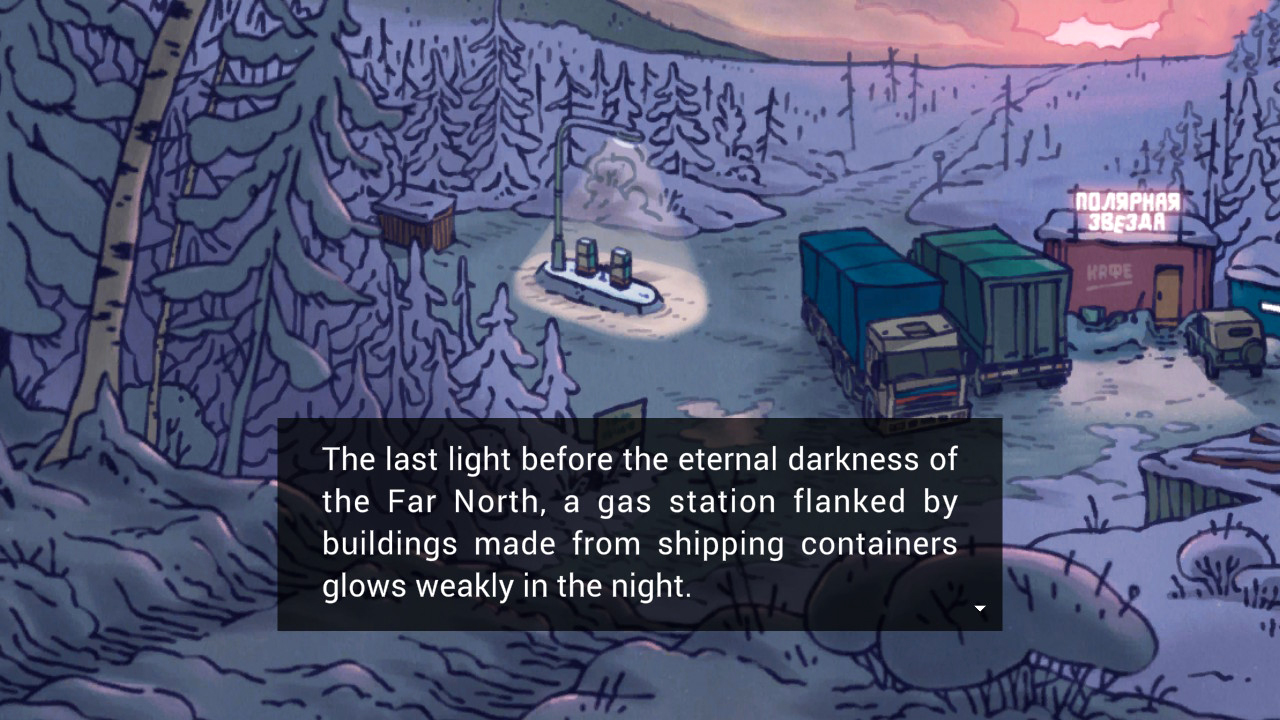
Firebird’s developers, Ludogram, are based in France, but they’ve devoted love and care to bringing the Russian setting to life. The luminous ligne claire artwork of Quentin Vijoux invites the player onto the northern tundra while conveying a strong sense of lingering twilight and freezing cold. Despite Firebird’s celebration of Slavic folklore, the game’s narrative makes no attempt to hide its criticism of the Russian state, especially the collusion between government and organized crime. There’s also a haunting scene with Soviet ghosts that I found genuinely chilling.

Although it’s possible to see an entirely different variation of the game’s story during a second playthrough by having Mariska drive through a different set of points on the map, the destination is always the same. No matter what path you choose, Firebird connects to universal themes as it acknowledges the cycles of nature – between winter and summer, and hardship and plenty, and faith and hard work. The bad times won’t last forever, Firebird suggests, and Mariska will keep on trucking.

Summer Break

In December 2019, I printed a chapbook that contains my unofficial translation of Hiromi Kawakami’s “Summer Break” (Natsu yasumi), the second story in the author’s prizewinning 1998 collection Kamisama. This story has not been officially translated, so I created a translation of my own to use in my Japanese literature classes.

“Summer Break” is a Studio Ghibli style celebration of the magic of the natural world and a quiet meditation on coping with mental illness. The narrator spends a few weeks working at a pear orchard, where they unwittingly adopt a trio of small tree spirits. One of these creatures is humorously neurotic, and its anxiety for the future resonates with the worries of the narrator, who feels that the world is slipping away from them.

You can download a free PDF copy of the chapbook from Itch.io here:
🌿 https://digitalterrarium.itch.io/summer-break

The cover illustration was created by Koyamori, who goes by @maruti_bitamin on Instagram.

Ms. Weaver’s Halloween Candy

I’m proud to see my story “Ms. Weaver’s Halloween Candy” in the newest issue of Suburban Witchcraft.

“Ms. Weaver’s Halloween Candy” is a magical realist suburban gothic fantasy about love, creativity, and the (human) sacrifices necessary to survive as an outsider in academia. The piece begins as a Stephen King style story about a kid on a bike investigating a local legend in a small college town, but it gradually unravels into a veiled reworking of the Ariadne myth as the protagonist learns that the ambitions of her mother extend far beyond the confines of her family.

Suburban Witchcraft Magazine is a gorgeous digital repository of weird writing with a literary bent, and each issue is free to read online. You can check out the issue with my story here:

📚 https://suburbanwitchcraft.com/issue6

Mr. Saitou

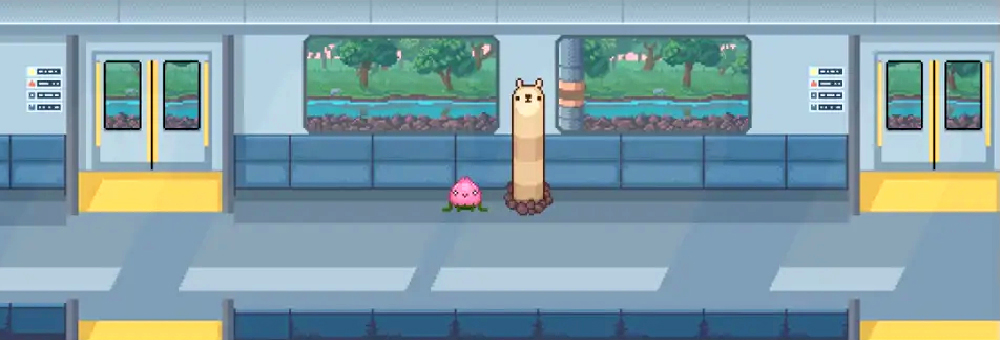
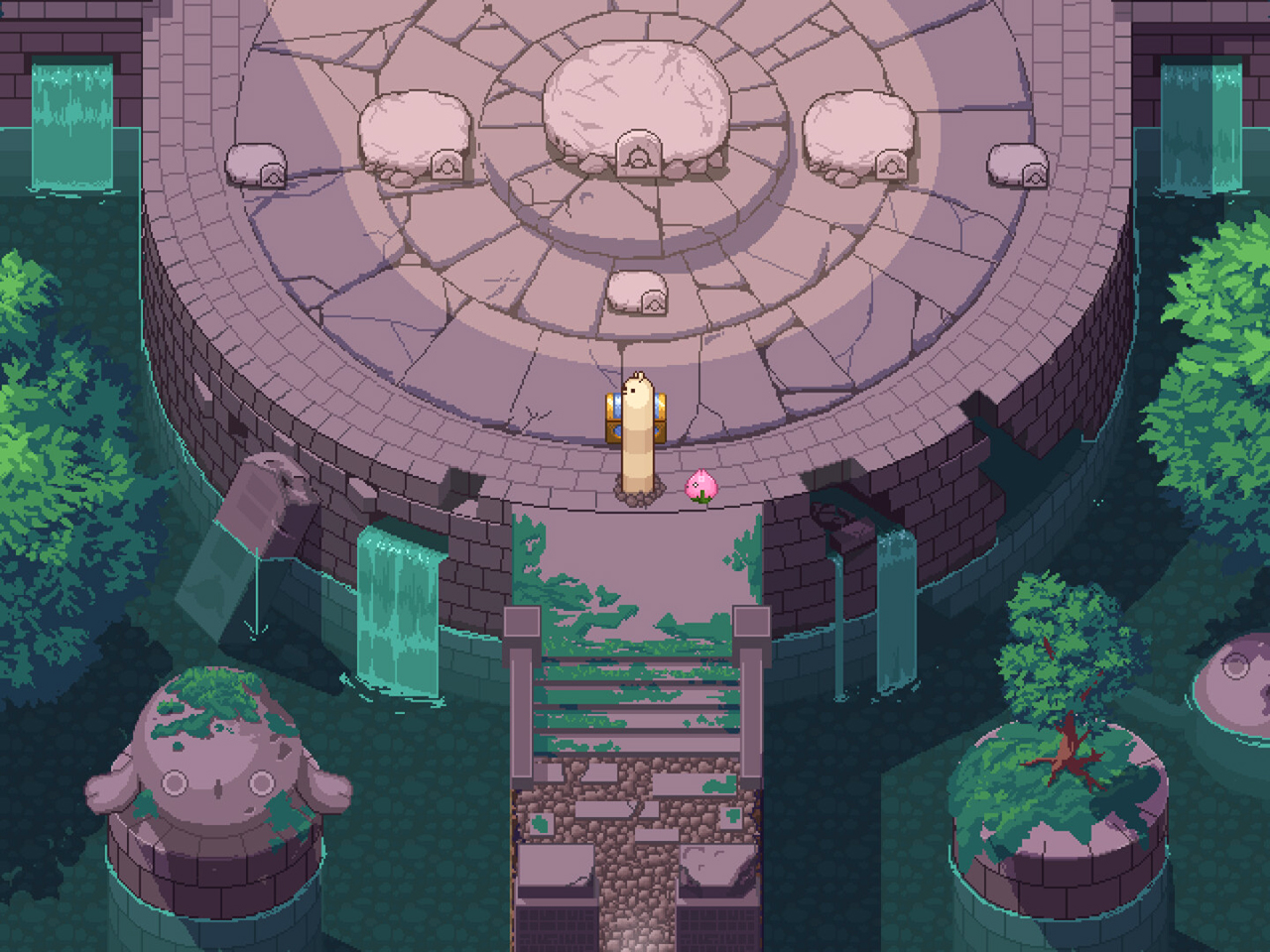
Mr. Saitou is an Undertale-style narrative adventure game (with music by Toby Fox) that takes about two hours to finish. You play as Saitou, a white-collar worker who finds himself in the hospital after a failed suicide attempt triggered by stress and overwork. While sleeping, Saitou dreams of himself as a llamaworm (a comically extended groundhog) who goes on an adventure with a cute pink flowerbud named Brandon, the dream persona of a young child Saitou meets in the hospital.

Mr. Saitou has something of slow start, during which the player’s sole job is mashing a button to advance text. Thankfully, the game becomes much more engaging after the first ten minutes, at which point Saitou enters the dream world.

After the introduction, Saitou spends about half an hour in an office of llamaworms that serves as a stage for a gentle comedy about workplace culture. After a ten-minute segment of mandatory afterwork socialization in an izakaya, Saitou returns home to his neighborhood of underground tunnels.

Saitou decides to skip work the next day. This gives him an opportunity to meet Bradon, who wants to visit the Flooded Gem Caverns deeper in the tunnels. The remainder of Mr. Saitou unfolds in a beautiful fantasy-themed underground space enhanced by lowkey elements of exploration and simple puzzles.

What I appreciate most about Mr. Saitou is its creativity, which is driven by cute but thoroughly original character designs and clever writing. Even though most of the gameplay consists of simple conversation-based fetch quests, I never got tired of seeing what was around the next corner, and I always enjoyed talking with each new character.

The game’s humor sits comfortably at the intersection between wholesome and quirky, and the writing subtly references internet culture without relying too heavily on these allusions. The simple spatial puzzles are easy and engaging without feeling as if they were phoned in, and the thematic background music is lovely from start to finish.

I love almost everything about Mr. Saitou, but I should probably mention that there’s an unskippable musical cutscene featuring about three minutes of unremittingly flashing strobe lights toward the end. If you (like me) are photosensitive, this may be worth taking into consideration.

In addition, the sentimentality of the ending may ring hollow for players searching for a more nuanced or complicated story, especially regarding the extent of an individual’s personal responsibility for ensuring their quality of life under late-stage capitalism. This is a valid criticism, of course, but Mr. Saitou is a game about a llamaworm and a talking flower having magical underground adventures. All things considered, I think it’s probably best to enjoy the game for what it is.

Mr. Saitou is a sweet but still surprising game that’s entertaining to read and engaging to play, and I feel that its story earns the right to state its final message clearly: The world is filled with interesting people and beautiful places, and there’s more to life than slowly killing yourself for your job. Good health is a blessing, so you might as well make the most of your time on this earth while you’re still young.

The Gentle Inclusivity of Kawakami Hiromi

I’m delighted to announce that my short essay “The Gentle Inclusivity of Kawakami Hiromi’s ‘Summer Break'” was just published in the 21st volume of the Proceedings of the Association for Japanese Literary Studies. Here’s the abstract…

“Summer Break” (Natsu yasumi), the second story in Kawakami Hiromi’s 1998 collection The God of Bears (Kamisama), is narrated by a young person who spends a summer working as a laborer in a pear orchard. Like the other stories in The God of Bears, “Summer Break” operates according to the logic of magical realism, which is perhaps why the owner of the orchard tells the narrator not to worry about the small, talking creatures that run through the trees and devour fallen fruit. The narrator nevertheless forms a bond with one of these pear spirits, whose panic attacks mirror the narrator’s own dissociative episodes. At the end of the story, both the pear spirit and the narrator grapple with anxiety and suicidal ideation, but the story’s conclusion embraces self-acceptance.

From the first publication of the award-winning title story of The God of Bears in 1994 to the appearance “Summer Break” in the complete collection in 1998, various public figures attempted to address the social malaise that characterized Japan’s economic recession. Several highly influential public intellectuals, including the clinical psychologist Kawai Hayao and the cultural critic Saitō Tamaki, viewed mental illness as a symptom of broader cultural forces.

In “Summer Break,” however, Kawakami portrays the experience of mental illness as embodied and personal instead of abstract and societal. This paper analyzes how the fantasy elements of “Summer Break” render its treatment of mental illness as sympathetic and relatable, an aspect of the story that is enhanced by its use of magical creatures that externalize the narrator’s psychological state. I will place this analysis within in the context of recent narratives in Japanese fiction and popular culture categorized as ijinkei (“about nonhuman characters”), as well as critical discussions of the folkloric qualities of this period of Kawakami’s writing.

…that’s a lot of material to cover in such a short essay, but I think I did a decent job of contextualizing the story. This piece of writing was intended to serve as an introduction to my translation of the story itself. Unfortunately, despite almost a year of constant work and the assistance of multiple high-profile translators, we weren’t able to secure the publication rights. It’s a disappointment, but I hope the silver lining is that there are plans for the full God of Bears short story collection to appear in translation soon.

My essay is available on JSTOR; but, since I understand that not everyone has institutional access, I’ve also made a copy available on my website (here). Although it’s unofficial, you can download a PDF of my translation of the short story “Summer Break” (here). Years ago, I translated all of the stories in The God of Bears, and the illustrator I was once planning on working with to create illustrations is Maru, who you can find on Twitter (here). And finally, you can learn more about the Proceedings of the Association for Japanese Literary Studies on their website (here).

Haunted Houses

Earlier this week I published my newest zine of horror-themed microfiction. Haunted Houses contains fifteen very short stories about haunted spaces and the terrible people who inhabit them. The cover art is by @QuinkyDinky, and the zine contains interior art by @irizuarts. I’ve got a listing up on Etsy (here), and I’m also promoting the zine on Twitter (here) and Instagram (here).

This zine is quite short, with each story and illustration occupying only one page. This is partially a trick of formatting, but it’s also a result of careful editing. You wouldn’t want to spend too much time in these places, after all.

I have to admit that, even though I’m categorizing this zine and the two other collections of microfiction that preceded it as “horror,” I’m on the fence about what genre my stories actually belong to.

In my mind, the genre of horror isn’t about a specific set of tropes or narrative structures. Rather, horror is characterized by the psychological and visceral sensation of unease it inspires.

I personally prefer to think of most horror, including the stories I write, as “dark fantasy,” or perhaps simply “magical realism.” I’m not easily creeped out by fiction, mainly because the real world is so lowkey awful so much of the time. As I write this, the National Guard is setting up base at a West Philadelphia Target in advance of the presidential election next week, ostensibly as a “defense” against people engaging in civic protest. There are actual tanks in the parking lot of the place I go to stock up on toilet paper, and that’s really scary. But monsters? Not so much.

I’ve always tended to identify with monsters, and not simply because so many villain characters are overtly coded as queer. Monsters are about disrupting the status quo, and I can get behind that. Postwar American horror cinema, including the slasher films of the 1970s and 1980s, is all about interlopers quietly invading small-town America and infecting people. The story behind many of these movies basically boils down to this: Can you even imagine scary things like communism and feminism and civil rights secretly gaining a foothold in our town? (Stephen King goes into fantastic detail about this in his 1981 book Danse Macabre, if you’re curious, and I think the book still reads well and holds up in many ways.)

To me, monsters aren’t scary because I am the monster, which is an uncomfortable set of life experiences to try to talk about in fiction or otherwise. There’s nothing you can specifically put your finger on regarding why people treat you the way they do, but you know there’s something a little off.

Fuck Sigmund Freud and his weird misogyny and homophobia, but I think I’m on the same page with him regarding “the uncanny” as one of the primary components of horror. Freud got a lot of things wrong in his career, but something he gets absolutely right is that it’s difficult to discuss the uncanny in concrete terms.

The uncanny doesn’t just apply to appearance, of course – social interactions and environments can be uncanny as well. If what I’m writing is horror at all, it probably falls into the subcategory of social horror, which focuses on people behaving in a way that’s almost human, but not quite. Many horror stories are cathartic, in that the status quo is threatened but ultimately restored at the end. Even if things have changed, we can feel relief in the knowledge that at least they’re getting back to normal. With social horror, however, our anxiety is never resolved, because we now understand that the status quo itself is horrifying.

It’s difficult for me to talk about the details of my identity and life in a mimetic way. When I’ve tried, it’s been my experience that people either won’t believe me, will think I’m being manipulative in an attempt to elicit undeserved sympathy, or will be put off by the political elements underlying my descriptions of the ways in which I’ve had to move through the world.

The point of the stories in Haunted Houses is not to try to explain why certain aspects of my life have been unsettling, but rather to create a sense of the uncanny in order to communicate the sense of feeling unsettled for reasons you can’t quite explain. Sometimes my stories about haunted houses are about the hidden trauma of being queer in a society that goes out of its way to create monsters; but, in the end, I just really like telling stories about strange people occupying uncomfortable places. I enjoy exploring these themes both as a reader and as a writer, and I’ve found that summoning the courage to open the door and peer into the darkness on the other side is, if not total escapism, still good spooky fun.

And right now, at this specific moment in time, I think we can all relate to the uncanny experience of feeling trapped in a haunted space, because this is our daily life – we live here now.
Ghost Stories

Although I’ve written fanfiction on and off for decades, I got really serious about fandom around November 2014. I’ve written hundreds of thousands of words of fic since then; and, for the most part, it was a positive and rewarding experience. Although I’m still wrapping up a few ongoing fandom-related projects, I’ve started to think about publishing original fiction.

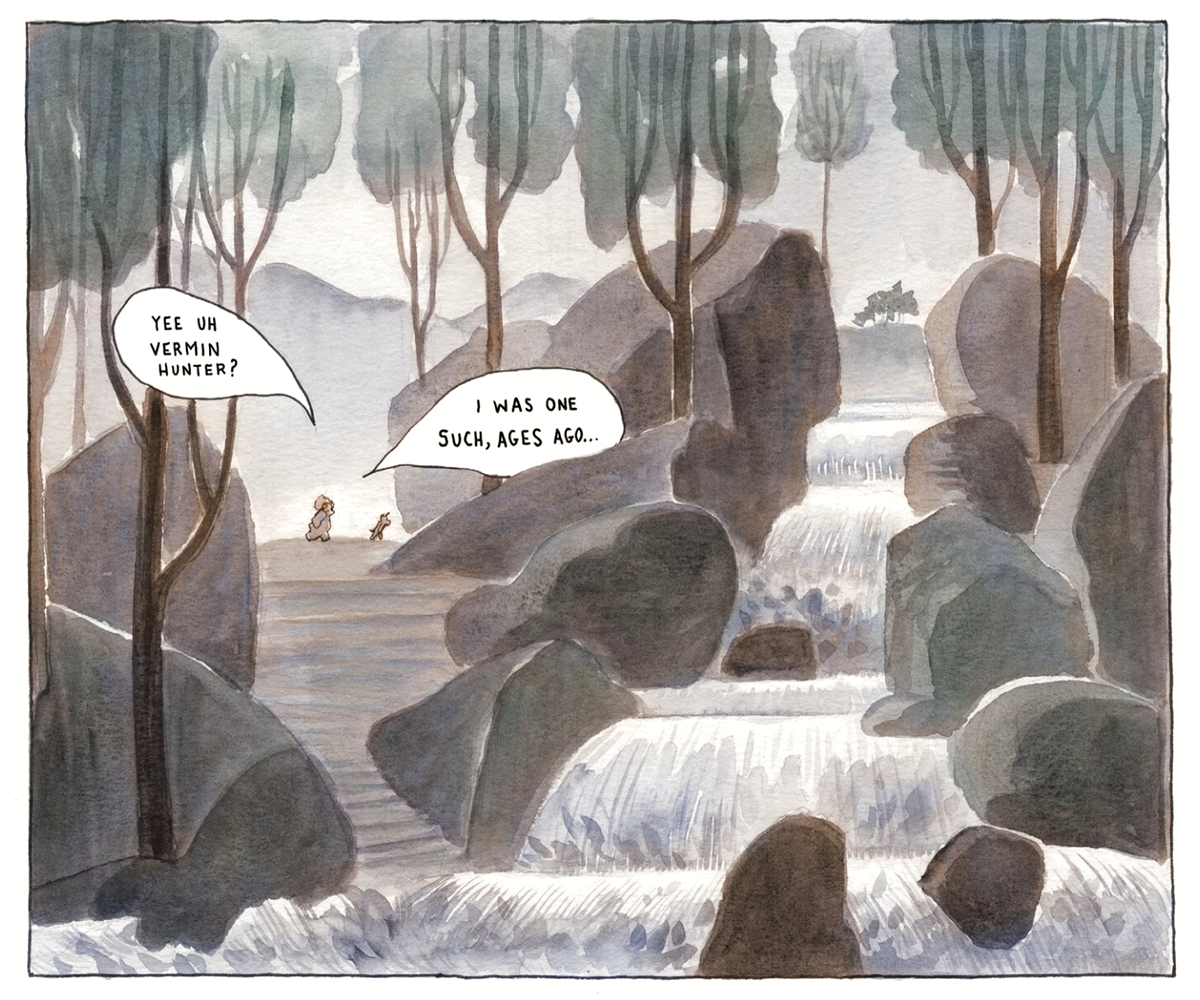
I published a chapbook called Ghost Stories in November 2018, and it collects thirteen short stories that occupy the space between horror, magical realism, and autobiography. It’s 28 pages long, standard half-letter size, and professionally printed with a velvet-touch cover and glossy interior pages by a service called Mixam. The tagline for the chapbook, which appears on the back cover, is this: These are the stories I tell myself to help make sense of a truth that’s too strange to be believed. Sometimes ghosts are kinder than the living.

The cover artist is Kirsten Brown (@unknownbinaries on Tumblr), who creates absolutely incredible horror-themed art.

I sold my last few copies of this zine at the DC Zinefest in July, but you can read the first story in the collection (here).