Misao

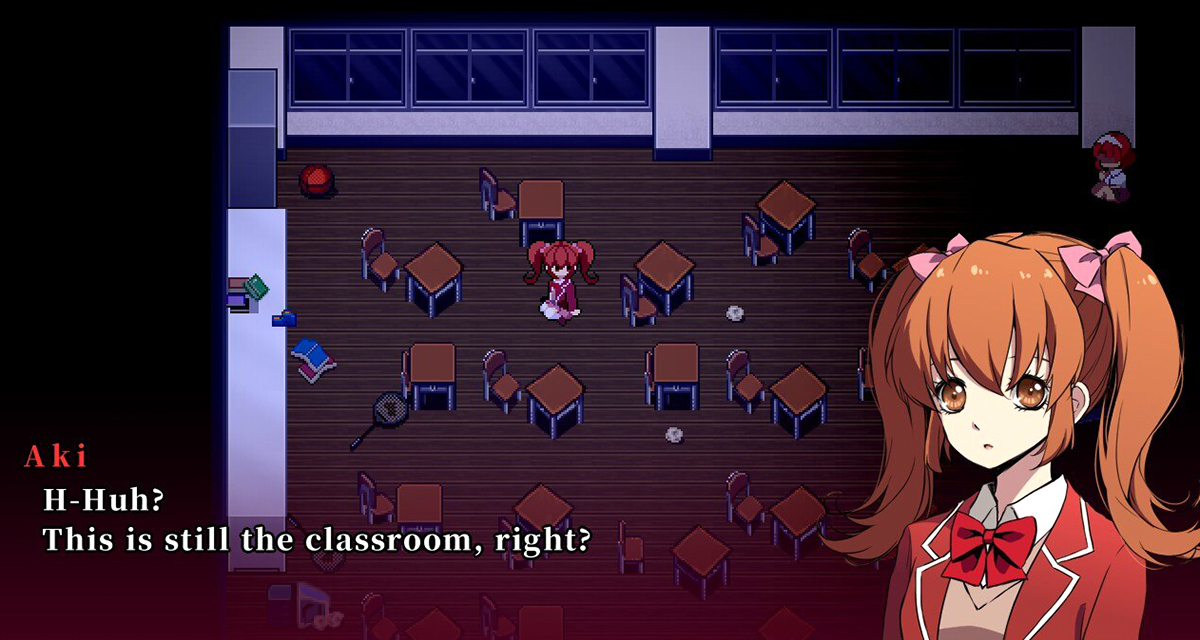
Misao is a short 16-bit indie survival horror game originally released in 2011 and then published on Steam (here) as a remastered edition in 2024. The game is set in a high school that’s been transported to a demonic realm by the vengeful spirit of the eponymous Misao, a beautiful but quiet girl who mysteriously disappeared three months prior to the opening of the story. 

You play as a girl (or optionally as a boy, in the HD version) named Aki who suddenly hears Misao’s voice in the middle of class, asking someone to “find me.” The classroom is cloaked in darkness, an earthquake hits, and the school begins to fall apart in the aftershocks. As Aki explores the mostly abandoned building, she learns that four of her classmates were bullying Misao with the compliance of their homeroom teacher. Despite the intensity of the bullying, Misao didn’t kill herself – but someone else did.

The gameplay consists of navigating the school while collecting six objects necessary to piece together Misao’s story. There’s no set order to acquiring these items, meaning that the game starts off as somewhat confounding but gradually comes to make more sense. Once you get your bearings, what you need to do becomes fairly self-evident, but a walkthrough is recommended for players (such as myself) who might find themselves overwhelmed at first. There are several excellent guides posted to Steam, but I recommend (this one) on account of its helpful division into sections.

Like Mad Father (reviewed here), which was also published by Miscreant’s Room, Misao is essentially a haunted house simulator in which your player-character can die in dozens of delightfully gruesome ways. Thanks to a handy quicksave function, there’s no penalty for dying, and the player is encouraged to get into all sorts of trouble for the sole purpose of seeing what will happen. Aside from two short chase sequences, very little skill is needed to survive, just a bit of trial and error.
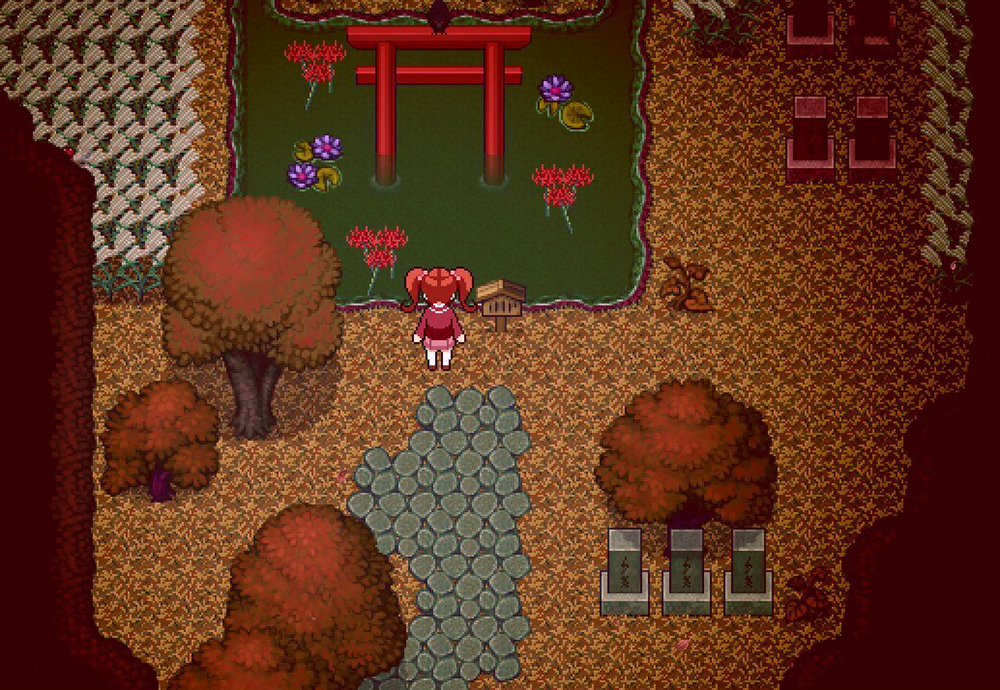
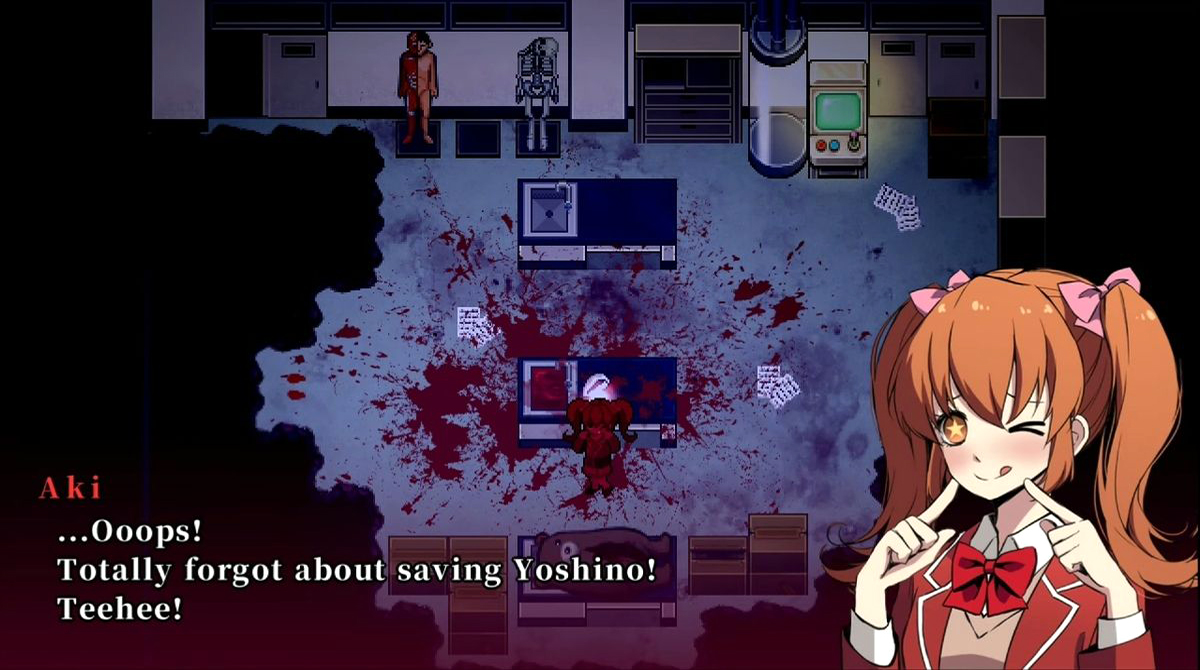
What I love about Misao is how much fun this game has with the tropes and imagery of a haunted high school. The laboratory is staffed by a mad scientist who has a chainsaw and will take advantage of any excuse to use it. The hamburgers in the cafeteria are made of unspeakable meat, and the seating area in front of the open kitchen is filthy with blood and entrails. The toilets haven’t been cleaned for a very long time, nor has the secret zombie cave under the school. The Shinto shrine in the courtyard is beautiful, but the rituals performed there are anything but.

Misao’s story mixes high school bullying and friendship drama with a mystery surrounding a twisted serial killer, and everyone gets exactly what they deserve. Still, for players who think high school kids shouldn’t be condemned to eternal damnation, Aki can rescue her classmates from their personal hells in a short epilogue. A few of the characters Aki encounters are native to the demon realm, and they’re all having the time of their lives. My favorite is the student librarian, who’s fully aware of the bloodshed surrounding her but just wants to make friends. She is a treasure.

If you’re not a completionist, Misao takes about two hours to finish, allowing the story to make an impact without testing the player’s patience through needless puzzles or gameplay challenges. The haunted high school setting is creatively rendered and a lot of fun to explore, even if the open-world structure is a bit overwhelming at the beginning.

The deaths are all creative and disturbing, but the retro graphics allow the game to feel campy instead of creepy, so much so that Misao sometimes feels more like a comedy than a horror story. I grew to feel a begrudging sort of affection for the characters, but I can’t deny that I had a huge smile on my face as I watched them get picked off – and really, good for Misao. I support her.
It’s Not Me, It’s My Basement

It’s Not Me, It’s My Basement
https://arcadekitten.itch.io/its-not-me-its-my-basement

It’s Not Me, It’s My Basement is an RPG Maker gothic horror game from 2021 along the lines of The Witch’s House and Mad Father. It takes about 35 minutes to finish, and it’s free to download from Itchio.

You play as a kid named Embry whose parents have been eaten by monsters. Embry has managed to padlock the basement door, but the monsters are constantly hungry. The player is therefore tasked with feeding the monsters so they don’t escape and eat Embry. The game consists of navigating between Embry’s kitchen and the town market while stopping at the basement door a few times along the way.

The story is divided into three days, during which food becomes progressively scarce and the monsters become increasingly hungry. Each night, after feeding the monsters, Embry has a dream. All three dreams end with an extremely mild jumpscare, but the game is more concerned with creating an oppressive atmosphere than it is with trying to shock you.

What I appreciate is that it’s unclear what the monsters are or where they came from, just as it’s occasionally unclear what Embry is feeding them. Although you have the choice to enter the basement in one of Embry’s dreams, you never learn exactly what’s going on down there, and sometimes not knowing is worse.

If you’re worried that I just spoiled the game, please don’t be. There’s a lot going on here.

The creator has a few shorter games available on Itchio, some of which are loosely connected through a shared universe. The reason I chose to play It’s Not Me, It’s My Basement is because this game has a surprisingly large online fandom. Seriously, it even has its own page on TV Tropes (here).

It’s Not Me, It’s My Basement feels a bit like Homestuck run through a few filters. Everything about this game is catnip for edgy tweens. Even if that doesn’t sound appealing to you, It’s Not Me, It’s My Basement presents an interesting and open-ended story, and the game is a fun experience that doesn’t bother the player with any puzzle elements that impede the flow – or the steadily mounting creepiness – of the delivery.

Mad Father

Mad Father is a retro survival horror game about a cute girl named Aya who lives in an isolated mansion with her father. As you might be able to guess from the title, her dad is not 100% sane.

The game was originally designed with RPG Maker and released on Steam in 2012, but it’s been remastered for Nintendo Switch with updated graphics and sound design, as well as a few postgame bonus segments. It takes about three hours to play, and I felt that it was a good value when I bought it on sale on Nintendo’s digital storefront for $5. The horror is ghoulishly cheesy, and the jump scares are a lot of fun.

The opening of the game is nonlinear, as Aya has the run of the entire aboveground portion of the mansion. It’s somewhat difficult to understand what to do at first, and I admit that I had to consult a walkthrough to figure out how to get started. Once you gain access to the family’s sprawling underground murder dungeon, however, the path forward becomes easier to discern. Also, once you figure out how the environmental puzzles are supposed to work, they become much more entertaining.

As you grow accustomed to Mad Father during the first hour of playing, the jump scares become less effective, and the game compensates by leaning hard into camp. I don’t mean to suggest that anime can’t be scary, but Mad Father’s combination of over-the-top character portraits and cute pixel art amps up the carnivalesque elements of the story. By the time the dad starts chasing you with a chainsaw, my main reaction to the various horrors on display was delighted amusement.

There is one genuinely creepy moment toward the beginning of the game involving the father’s (nonsexual) reaction to the distress of a naked preteen girl, and it’s creepy because the game knows this reaction is upsetting but still treats it as perfectly natural. The killer dolls and unquiet ghosts haunting the tunnels of the murder dungeon aren’t actually all that scary, but the “kind” behavior of the father during the sepia-tinted nostalgia flashbacks is super disturbing. Mad Father is officially rated Teen, but it’s definitely not for kids (or adults sensitive to depictions of child abuse).

The basement of this family’s house is truly epic, by the way. The other day I was reading that a lot of families who live in McMansions don’t actually have any furniture in most of the rooms, and that makes sense to me. If you’re not imprisoning people to use as subjects for occult medical experiments, then what are you supposed to do with all that space, exactly? If nothing else, I suppose Aya’s dad is to be commended for his commitment to his interior decorating theme. It’s a shame that this theme is “horrible grotesque murder,” but if he’s paying the property tax on all those rooms then he might as well put them to good use.