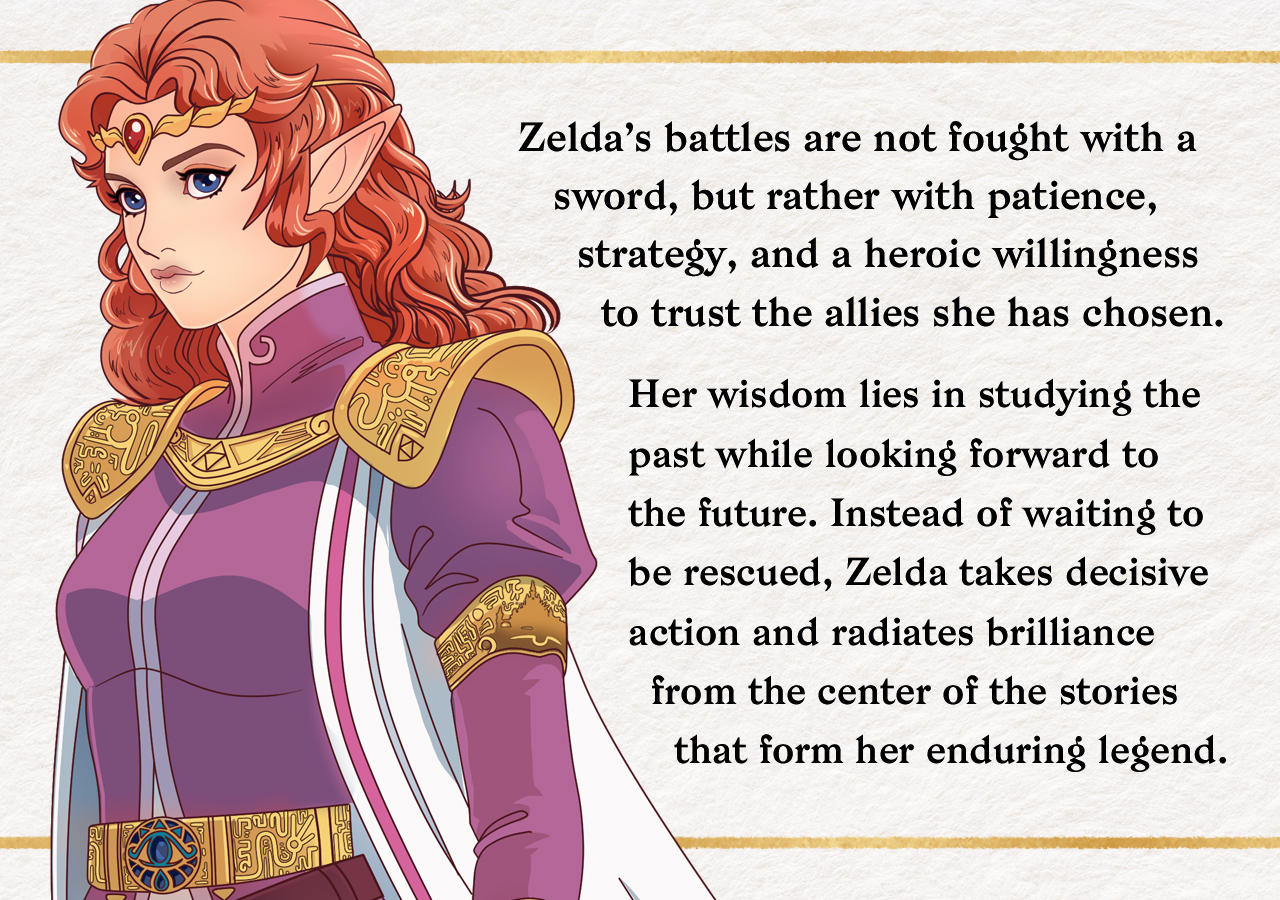
The Wisdom of the Waiting Princess

The Wisdom of the Waiting Princess is an empowering feminist reading of how the trope of the “captive princess” applies to the Zelda of the original 1986 game. While this Zelda is an action hero in her own right, her wisdom manifests in her remarkable ability to lay plans for the future.

You can read the essay on AO3 here:
https://archiveofourown.org/works/67410167

I had the honor of contributing this essay to Silent Princess: A Zelda Zine. The zine’s website is on Carrd (here), and you can check out the art and writing featured in the zine on its Tumblr site (here). Leftover sales of the zine merch are currently open (here), and you can still pick up a digital copy of the zine (here). All profits from zine sales will go to support Doctors Without Borders.

This original design for Princess Zelda was created by Hollarity, who put an incredible amount of love and care into portraying the character as a courageous young woman who is fully capable of going on her own adventures. You can find more of Holly’s gorgeous artwork on her website (here).
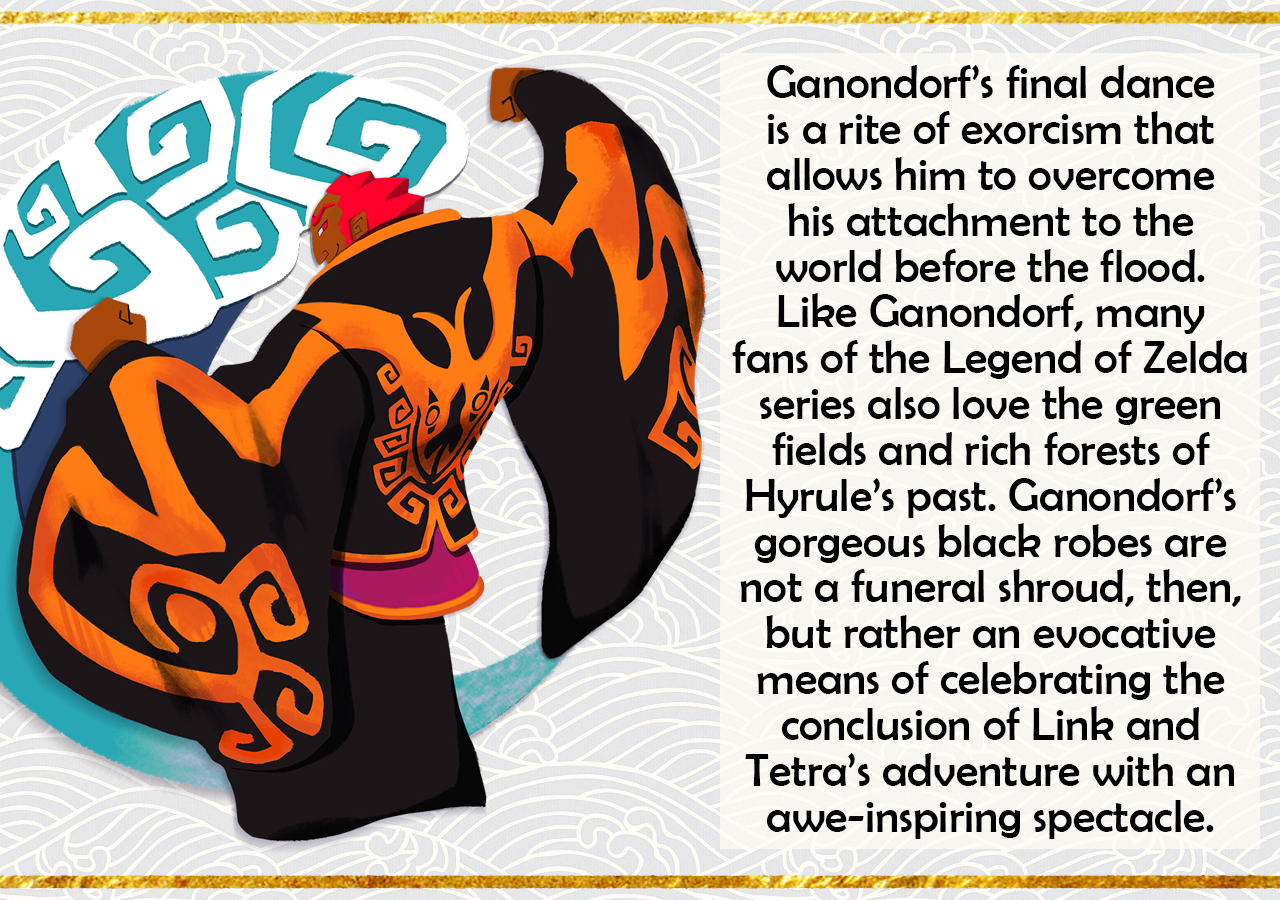
Ganondorf’s Robes in The Wind Waker

I’m excited to share my contribution to Hyrule Fashion Anthology, a fanzine celebrating the complex evolution of fashion history through the characters and setting of the Legend of Zelda series. Here’s a short description…

“A Wind-Grieved Ghost” discusses the influence of medieval Noh theater on the striking costume worn by Ganondorf in The Wind Waker. I provide a brief introduction of Noh drama and summarize how its character archetypes are enhanced by their clothing. I then explain the symbolism of Ganondorf’s gorgeously patterned robes and argue that the sartorial allusions to Noh theater serve to characterize Ganondorf as a frightening yet tragic ghost displaced from the beautiful vanished kingdom of Hyrule.

If you’re interested, you can read the full essay on AO3 here:
https://archiveofourown.org/works/60062635

I consider myself extremely fortunate to have this essay illustrated by the dangerously stylish Astarsor, who shares bold and colorful character portraits on Instagram (here).

Leftover sales for Hyrule Fashion Anthology are open until November 15. This is a beautifully published zine filled with gorgeous artwork and fascinating articles inspired by the golden age of glossy fashion magazines, and it’s a stunning physical object. You can pick up a digital or paper copy along with a dazzling selection of merch via the zine’s storefront (here).

A Record of the Calamity

This collection of meta essays explores the worldbuilding and cultural background of Hyrule and its inhabitants during the timeline of Breath of the Wild and Tears of the Kingdom.

Ninja Lore in Breath of the Wild
On the historical precedents of the Sheikah, the origins of the names “Yiga” and “Kohga,” and how the culture of historical ninja is referenced in the story and setting of Breath of the Wild.

Governance in Hyrule
On the nature and questionable necessity of the Hyrulean monarchy in comparison with other systems of governance in Hyrule.

Zelda and the Calamity
On how Zelda’s repressed emotions may have surfaced in a tragic explosion of chaotic power.

Ganondorf as an Agent of Change
On Ganondorf’s role as the villain of a heroic fantasy, the existential challenge he poses to Hyrule, and the necessity of disruption to an otherwise closed system.

Ganondorf’s Design in Tears of the Kingdom
On the Japanese cultural references incorporated into Ganondorf’s visual design.

The Two Kings in Tears of the Kingdom
On the fantasies of Japanese cultural identity represented by Rauru and Ganondorf, and why the power structures associated with the two kings are disavowed by Zelda.

The Best Wells in Tears of the Kingdom

“The Best Wells in Tears of the Kingdom” is a series of short travelogue essays celebrating the hidden secrets, environmental storytelling, and understated exploration elements of Tears of the Kingdom.

One of my main criticisms of Breath of the Wild was that its world felt curiously flat. Why wasn’t Link allowed to go underground? What was lurking underneath Hyrule?

When I first discovered that Tears of the Kingdom was filled with wells and caves, I made it my mission to track them all down. Ganondorf would just have to wait. I’m currently taking my time and leisurely enjoying myself as I go cave diving, but I managed to locate all 58 wells before completing the first dungeon. Each of these wells is unique, but what I’ve been most impressed by are the small stories told by the characters who’ve found themselves at the bottom of a well by accident – or by choice.

For the record, these are my favorites:

1. Kakariko Village Well
2. Haran Lakefront Well
3. Rikoka Hills Well
4. Popla Foothills South Well
5. Kara Kara Bazaar Well
6. Zelda’s Secret Well

You can find the annotated list on AO3 here:
https://archiveofourown.org/works/48633913/chapters/122678209

The cover illustration for this piece, which depicts the veteran well explorer Fera, was created by the magical MiroiMirage. You can find their lively and colorful artwork on Twitter (here) and on Instagram (here). It was a joy and an honor to work with Miroi while getting a glimpse into their creative process. All of the groundwork they laid for the final painted illustration was amazing, so much so that I’d like to share one of their preliminary sketches, which you can see (here).