I Am Setsuna

I Am Setsuna, which was published by Square Enix in 2016, is a twenty-hour JRPG set in a beautiful fantasy world blanketed by snow.

You play as a young man named Endir, a member of a secretive tribe of masked warriors. Endir has been hired by a mysterious third party to assassinate Setsuna, a young woman who has been chosen as the sacrifice whose death will hold back the tide of ice and monsters plaguing the world for another decade. When Endir finds and confronts Setsuna, she tells him that she is willing to die, but she requests that he accompany her on her journey to the sacrificial grounds so that her death will have meaning.

The structure of the game follows a standard JRPG progression. As he follows Setsuna on her pilgrimage, Endir travels between an alternating series of towns and dungeons. Each new town has slightly nicer weapons, and the money gained while fighting monsters allows these weapons to be purchased. The player can also purchase accessories that can be customized with various materials dropped by defeated monsters, thus granting characters new and improved battle abilities and magic spells.

I am Setsuna takes its inspiration in equal parts from Final Fantasy X and Chrono Trigger, meaning that its combat system is simple, easy to pick up, and fun to experiment with. Your characters gain levels quickly, so you’ll never have to worry about grinding. To help keep battles engaging, the combat employs an optional system of timed button presses that enable attack bonuses.

About ten hours in, the game becomes more challenging. Enemies take longer to defeat and often damage your characters before they die, while the dungeons become twisting labyrinths of indistinguishable corridors. It shames me to admit this, but I had to buy the Japanese strategy guide to find my way through an endgame dungeon filled with teleporter traps. In addition, I’d have to say that the game’s story begins to lose its threads well before the ending, which is remarkably unsatisfying.

As I’ve gotten older, I’ve found that I care far less about finishing any given video game. The moment a game stops being fun, I put it down and move on to something else. This is less about frustration and more about appreciation. Even if I never beat a game’s final boss, I can still be grateful for the parts of it that I enjoyed. Once I’ve seen everything I want to see, I can feel satisfied.

For me, I am Setsuna is a perfect example of a game that’s wonderful to play until it stops being fun. Although I’ve finished the story twice in the past, I was happy to enjoy about a dozen hours during my most recent playthrough. I suppose that I could keep going and power through the segments that necessitate a walkthrough, but I don’t particularly want to. And that’s okay.

Over the course of the first twelve hours of I am Setsuna, you’ll traverse snow-covered forests, venture into mountain villages beset by blizzards, and explore sparkling ice caves. Along the way, you’ll fight winter-themed creatures such as snow rabbits, arctic foxes, walruses, and bears. All of your characters are bundled up in warm and comfortable clothing, and it’s a pleasure to spend time in the villages chatting with NPCs by the fire while admiring the dried herbs and patterned quilts hanging from the walls.

I’m a fan of I am Setsuna, but I’d recommend it in the same way I’d recommend an actual retro game like Ocarina of Time. It’s absolutely worth playing I am Setsuna to experience its atmosphere and charm, but no one should feel bad about walking away when it becomes difficult and awkward.  
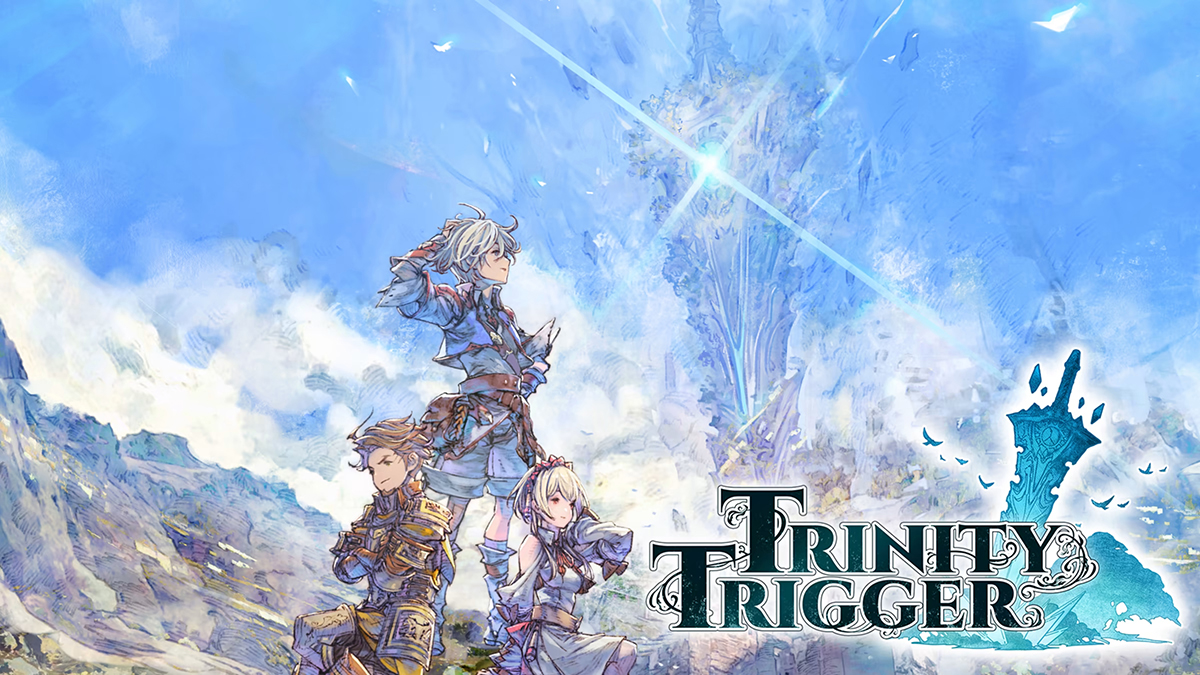
Trinity Trigger

Trinity Trigger, an action JRPG published by Xseed Games in April 2023, is essentially Secret of Mana with a fresh coat of paint. The story is simple. The combat is simple. The dungeons are simple. There’s a rudimentary crafting system, and it’s simple as well. I love this simplicity, which allows you to enjoy the game in the same way that you might enjoy scenery from a train window. Not everything has to be complicated, and Trinity Trigger is a wonderful title for people who play games to relax.

You control three heroes, each of whom can wield a set of weapons chosen via a ring menu, just like Secret of Mana. Some enemies are vulnerable to certain weapons, but these vulnerabilities aren’t a big deal outside of boss fights.

Unlike Secret of Mana, you don’t need to grind for weapon upgrades, which are unlocked automatically at the end of each dungeon. There are a few sidequests that involve backtracking in order to fight a slightly stronger enemy variation, but these aren’t necessary for staying ahead of the gentle difficulty curve. Trinity Trigger is slightly more complicated than I’m giving it credit for, but not by much, and it’s no trouble to figure out the various character optimization systems as you go.

If I were to offer any criticism of the game, I might point out that the AI of the characters you’re not directly controlling isn’t great, but this doesn’t really matter. The voice acting isn’t great either, but you can turn it off. There are a few short anime-style animated cutscenes, and they don’t include English subtitles if you’ve got the voice language set to Japanese. This is an unfortunate oversight, but it’s not as if the cutscenes contain important information about the story, which is largely immaterial.

This story, such as it is, involves a pair of deities enmeshed in an endless war. In order to avoid decimating the world, they’ve agreed to fight through human proxy warriors. The factions of both gods want this cycle to end. Your main viewpoint character, who has been chosen as one god’s proxy warrior, is therefore joined by two warriors from the opposite faction.

Even if they never intend to fight anyone, your party still journeys from one dungeon to the next in order to collect mystical weapons. These dungeons are actually giant weapons once wielded by the gods, and their magic spills out into the environment, causing diverse biomes to exist in close proximity. The snowy mountain biome is right next to the desert biome, for example. The game is fairly linear, so you progress from one biome to the next while wondering what climate is going to be around the next corner.

In many ways, Trinity Trigger reminds me of I Am Setsuna, a game I also enjoyed. The primary purpose of I Am Setsuna was to recapture the simplicity of the combat system of Chrono Trigger, which felt especially satisfying given how complicated and arcane JRPG combat systems had become in the 2010s. In the same way, Trinity Trigger is all about creating a frame for the basic combat loop of Secret of Mana while adding a few small quality-of-life updates.

Along with the simplicity of its combat, a significant part of what made Secret of Mana so lovely was how beautiful and green its world was. As an early Super Nintendo game, Secret of Mana didn’t have great writing, nor were the characters even remotely well-developed. In Secret of Mana, an evil empire wants to cut down a magical tree, and you must save the tree. The evil empire is evil, of course, and they must be stopped. The empire is never presented as a real threat, however. The reason you keep going in Secret of Mana, and the reason you care about the Mana Tree, is because the world is filled with gorgeous variations on the “forest” environment. There are sunlight-drenched peaceful forests and dark labyrinthine forests and lush autumn forests and sparse alpine forests and fantastic mushroom forests and glittering winter forests and forests with pink cherry blossom petals floating on the breeze.

Like Secret of Mana, the writing in Trinity Trigger is passable but not worth remarking on. Instead, the storytelling of the game is broadly conveyed through its environment. What would it mean if the natural environment stopped following natural patterns? What would it look like if lakes and rivers dried up and forests disappeared? What if natural disasters became an everyday occurrence? In Trinity Trigger, an environmental apocalypse is underway, but it’s happening very slowly. Your characters are doing their best to stop it, but that’s not really the point. Rather, what Trinity Trigger wants is for you to enjoy how the wind rustles the leaves and how the sunlight sparkles on the sand.

Basically, in Trinity Trigger, you run around colorful environments and attack colorful enemies with colorful weapons while watching various sets of numbers go up. There’s not much to say about the game save that it’s uncomplicated and fun to play, and I enjoyed the twenty hours I spent with it. I have nothing but respect and appreciation for a solid and well-made 7/10 game that knows what it’s doing and does it well, and I’m always up for saving some trees.

Review of Japanese Role-Playing Games

This past summer I was given an opportunity to review an academic essay collection titled Japanese Role-Playing Games: Genre, Representation, and Liminality in the JRPG. The work the two editors did for this collection is incredible, and every single essay is fantastic. Here’s a short excerpt from the book review that I published in the journal Asian Studies Review:

Japanese Role-Playing Games: Genre, Representation, and Liminality in the JRPG is the first English-language collection of essays focusing entirely on a genre of Japanese games known for their complex stories and rich worldbuilding. The fourteen essays in this collection cover the construction of the JRPG genre, the formation of transcultural gaming communities, and the representation of issues such as nationality, gender, and disability.

Japan Studies scholars with varying degrees of familiarity with the specific titles used as case studies will find a wealth of information and resources in these essays, which briefly summarize the games while explaining why they are representative, important, and connected to broader currents in Japanese history and society. Meanwhile, Game Studies scholars will find approachable yet intellectually rigorous discussions of culture and national origin, which have thus far been relatively few and far between in the field outside of the work of a few specialists.

If you’d like to read the full review, you can find it (here). I understand that not everyone has institutional access to academic journals, so I’m also hosting the PDF on my own website (here). In addition, you can find Japanese Role-Playing Games on the publisher’s website (here), and you can follow the journal Asian Studies Review on Twitter (here).