Dorotea

Dorotea
https://pasquiindustry.itch.io/Dorotea

Dorotea is a spooky ten-minute narrative adventure game made in Game Boy Studio and set in the medieval castle town of Conversano in southeast Italy.

You play as Dorotea, a researcher who has been hired by a local museum to catalog the books, manuscripts, and art objects in a neglected storage room housing a collection dating from the 1600s. Upon opening and passing through a strange door at the back of the room, Dorotea finds herself transported to the medieval era, when the museum was still a convent.

Thankfully, Dorotea is intercepted by a nun before she can land herself in trouble, but she’s not entirely out of danger. The lord of the castle on the hill isn’t a good person, and there also seem to be monsters of a more literal sort in the vicinity.

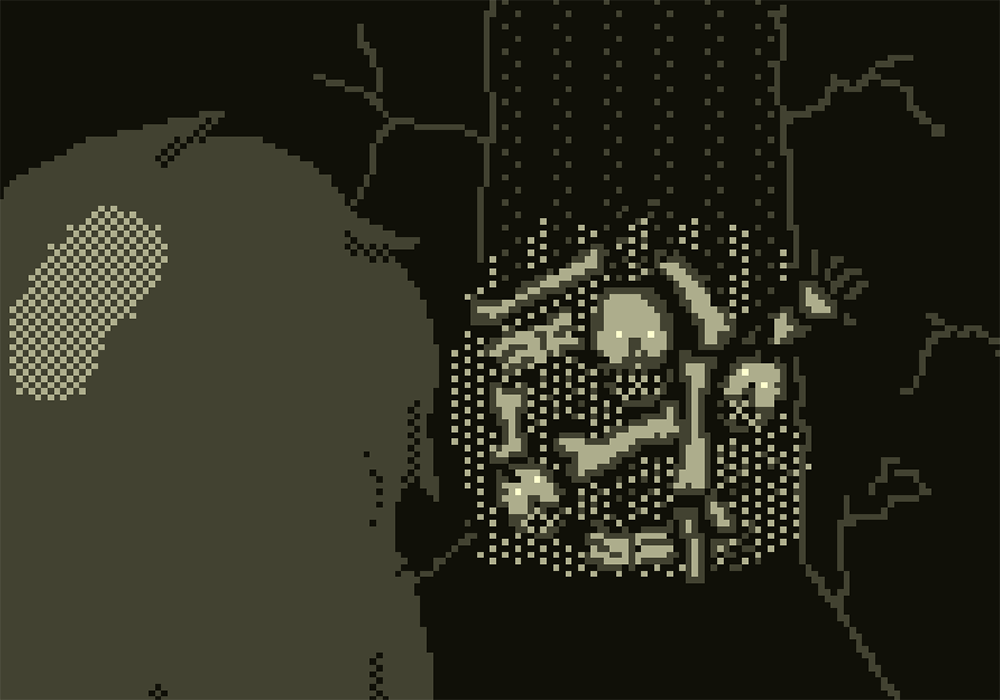
Dorotea features a suspenseful (but no-penalty) chase sequence, but its horror is largely atmospheric. The game’s uncanny pixel-art insert illustrations contribute to the feeling of something being terribly amiss, as do the ghosts and monsters, but the game also explores the anxiety generated by the prospect of being trapped in the past. As much as we might like to romanticize the medieval period, the culture shock experienced by most people – especially women – would likely be atrocious.

Putting its supernatural elements aside, Dorotea dwells in what might be called “archive horror,” or the morbid claustrophobia of a closed room filled with the relics of people long dead. There’s the dankness of the space itself, as well as the fear of the door swinging closed behind you, trapping you inside with nothing but dust. Then there’s the very real possibility that, in all the detritus of the past, you might find something deeply disturbing that you wish you hadn’t seen – or that someone very much wanted to hide. With its retro graphics and creepy pixel illustrations, Dorotea is a fantastic vehicle for conveying a sense of unease.

Dorotea is a short game, but it nevertheless manages to pull off a gut punch of a twist ending while indulging in a few interesting experiments with the ludic medium. The game was created for Italocurso Game Jam 2025, which is themed on folk horror specific to regional cultures in Italy. The 33 entries include a number of games offered in English, and all of them look amazing.

Bloodbark

Bloodbark
https://sirtartarus.itch.io/bloodbark

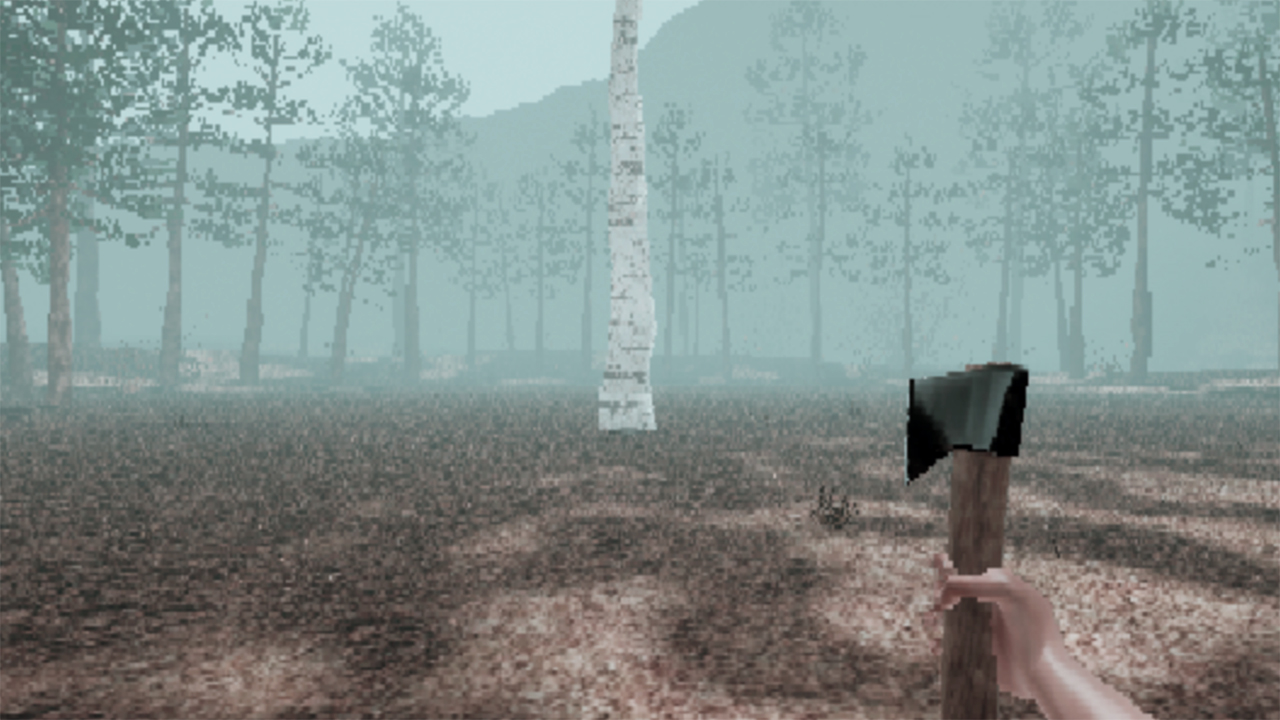
Bloodbark is a forest horror game based on the art of Eduardo Valdés-Hevia that’s free to download and takes about half an hour to play. You play as a lumberjack camping out in a small cabin next to a state park where a new type of tree has been discovered. Although these trees look like normal birches on the outside, their wood is bright red and fetches a high price. The lumberjack’s job is simple – he needs to find the special trees on his employer’s fenced-in property, cut them down, and return the timber to his cabin.

Still, given how much blood is involved… Are you really sure that it’s trees you’re chopping?

The gameplay of Bloodbark is limited to wandering around (with tank controls) and striking various objects with your axe. As you walk, your character’s thoughts automatically appear on the screen as text overlay. The lumberjack is somewhat unwell at the beginning of the game, and he becomes progressively more unhinged as the days pass. Fun times!

The standard route of progression through Bloodbark is fairly well signposted and easy to follow. If you like, however, you can wander to your heart’s content, and the game features a number of achievements and collectibles. Though it won’t have any effect in most circumstances, you can also hack at anything you like. My favorite surprise in the game is a large cocoon suspended from a pole on a dock at the lake. If you manage to find it and get it open, you’re in for an odd little treat.

Although the twist to the story is nothing you wouldn’t expect, the writing leaves a number of interesting questions open to the player’s interpretation. I am not unsympathetic to the lumberjack, who has reasonable doubts about the job he’s been paid to do, and I’m just as annoyed as he is by the car alarms and other annoyances from the neighboring state park. I also think it’s telling that the lumberjack won’t cut down any tree he’s not paid for, no matter how hard the player tries.

My only issue with Bloodbark is that it conveys “darkness” by turning the visual contrast down to zero. Unless you play the game in a sealed room with no external light, the screen appears to be almost solid black. Depending on the quality of your monitor, the parts of the game that take place at night can range from needlessly annoying to impossible to see. It’s a shame, but I’m afraid that this flaw in the game’s visual design may make it inaccessible to many players.

Thankfully, when you can see the game’s graphics, they’re quite lovely. I’m a fan of this sort of lo-fi crispiness to begin with, and I think it creates an interesting contrast with the visual style of many of the secrets you can encounter. To give an example, interacting with three roadside crosses will trigger the brief appearance of a Biblically accurate angel, and the fluidity of this manifestation is a sight to behold against the pixelated mountains and treetops.

If you’re unable to play Bloodbark yourself due to accessibility issues, I’d recommend (this video), which has no voiceover and allows you to watch a streamlined yet still thorough run of the game. Whether you’re watching the game or playing it yourself, Bloodbark is an oddly relaxing game about losing your sanity in the woods, and I’d recommend it to anyone who enjoys the themes and imagery of horror but is happy to dispense with the tension and jumpscares.

Apartment Complex

Apartment Complex
https://kinerus.itch.io/apartment-complex

Apartment Complex is a short and free-to-download narrative exploration game set in a mostly abandoned apartment building. The only human occupants of this building are its two landlords. You play as one of the owners, who is middle-aged, jobless, and depressed. In an effort to do something with his life, your character takes it upon himself to check in with the tenants, who are not even remotely human.

The game only takes about twenty minutes to play, and the gameplay consists of walking through the three-story building and talking to the tenants. Just to put this out on front street, Apartment Complex has a message, and that message is that landlords are bad. I don’t disagree, but the game isn’t shy about being didactic. Putting the armchair Marxism aside, the writing is a lot of fun.

Each of the eight tenants (inasmuch as they can be counted) is a Lovecraftian monstrosity that defies Euclidean logic but still needs a place to stay on this particular plane of reality. Perhaps because of his depression, your character isn’t the least bit bothered by the ontology of these beings. Regardless of whether he’s talking to the fungus-infested remains of the former co-landlord, a divorced dad with multiple alligator mouths, or a colossal all-seeing eye of the abyss, this guy takes each of these conversations in stride.

And honestly, this is such a mood. I get it. Sanity-altering cosmic abnormalities are a dime a dozen, but you know what’s really fucked up? The unequal distribution of wealth across class lines. Again, Apartment Complex has a message, but it’s not wrong.

Also, given that the creator is only twenty years old, I admire the accuracy of the game’s portrayal of the jaded middle-aged mindset. Like does it really matter that your neighbor is an eldritch abomination who exists in the shadows of reality? Does it even matter.

Where Apartment Complex shines is the boldness and creativity of its 16-bit pixel art. The floorplan and room layouts of the building are bog-standard, but the way each tenant occupies the space has to be seen to be believed. If you’ve ever wondered just how weird Earthbound-style graphics can get, this game is for you. The character portraits displayed during conversations are incredible.

From its eye-catching color palette to the dry tone of its absurdist humor, Apartment Complex makes me nostalgic for Welcome to Night Vale in the best possible way. This is a chill and fantastically creative game about monster friends and postmodern malaise, and honestly? It’s super relatable.