Whispering Willows

Whispering Willows (on Steam here) is a 2D adventure game set in a haunted mansion. There’s no combat, and the game takes about three hours to finish. It’s a small indie game made in 2014, and it’s not perfect. Still, I enjoyed the time I spent in Willows Mansion, and I’d recommend giving this game a shot if you’re into spooky gothic stories.

You play as Elena Elkhorn, a teenage girl whose father works as the groundskeeper at the derelict and abandoned Willows Mansion. Elena’s father doesn’t return one night, and she has a bad feeling about the mansion. Hoping to bring her father home, Elena sneaks onto the property and immediately falls headlong into an underground crypt. There she meets the ghost of her ancestor, who teaches her how to use the power of her magical pendant to leave her body to go spiritwalking. In a cursed mansion filled with phantoms, this is an extremely useful ability to have.  

Before I jump into the many things I love about this game, let me be upfront about its flaws:

– There’s not much actual gameplay.
– The hand-drawn cutscene art is unpolished.
– The writing is good but a bit uneven.
– The background music is limited.
– Your character walks very slowly.
– There’s no map to help you navigate.

Essentially, this is a small indie game that indeed looks and feels like a small indie game. I’m not complaining about the rough edges of Whispering Willows; I just want to make it clear that it’s a game made ten years ago on a tiny budget earned from a Kickstarter campaign. Still, I found its simplicity and amateurish aspects charming, and it has many strong points.

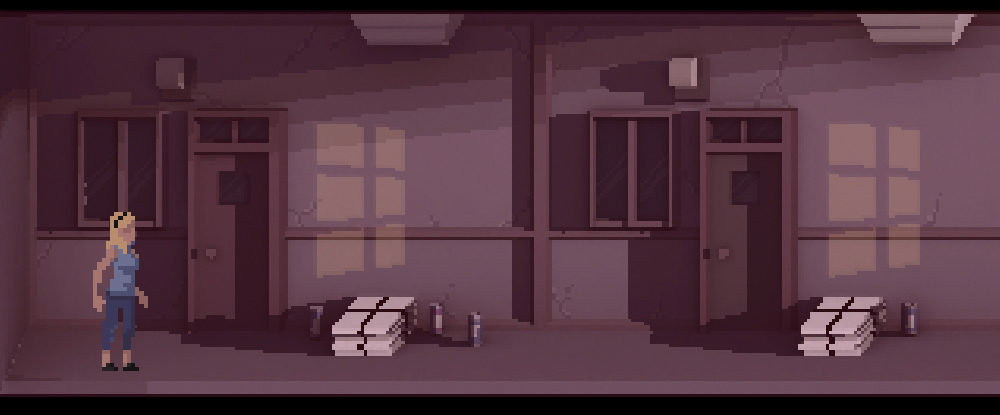
To begin with, the map is surprisingly large, and there’s a lot of space to navigate. You’ll explore the mansion’s crypt, its garden, and various outbuildings; but mainly you’re going to be walking around the house itself. The mansion is impossibly large and includes all the standard gothic flourishes: locked doors, grisly kitchens, moldy bathrooms, crooked paintings, peeling wallpaper, taxidermied hunting trophies, creepy dolls, and all the secret passageways you could ever want.

Of course there are all manner of notes lying around, and these notes collectively tell a suitably gothic story about the very wealthy but very evil man who built the mansion. This story never quite comes together in terms of plot or themes, and the character motivations are ridiculous. Still, all the individual bits and pieces are gothic catnip, from a lover kept in a secret room to a murdered best friend to a servant driven mad by what he’s seen.
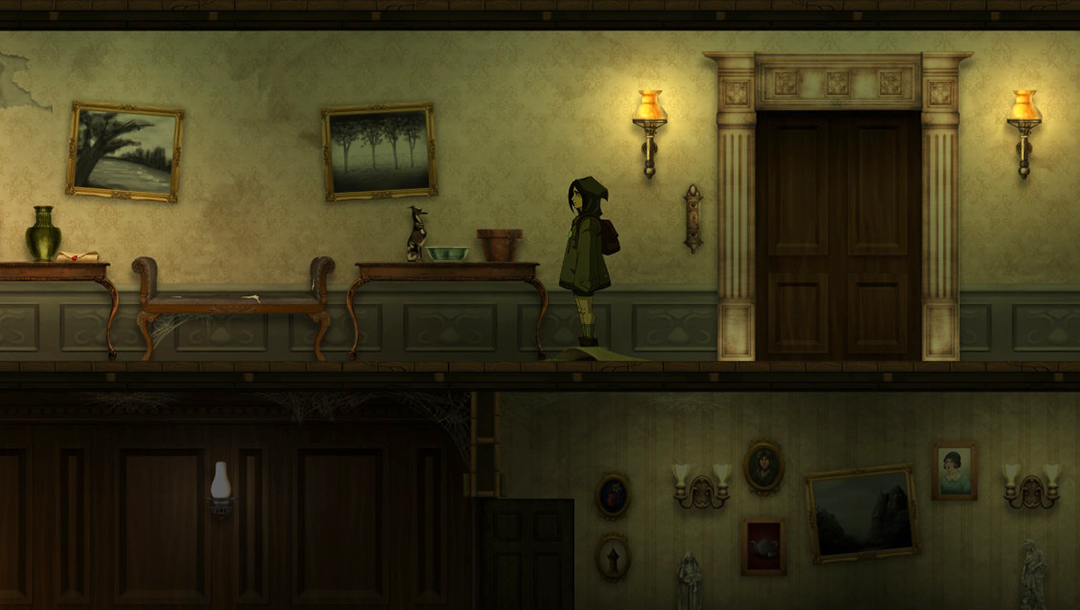
This all takes place in California during the Wild West days, meaning that the land occupied by the mansion had to be taken from someone. It turns out that it was forcibly wrested from Elena’s own ancestors. Alongside his more intimate crimes, then, the mansion’s owner became the mayor of a frontier town by means of enacting war and genocide on First Nations people.

We tend to think of gothic mansions as being located in Europe, or perhaps New England. There are definitely nineteenth-century mansions in California, though (like the Carson Mansion), and they’re built on land soaked in blood.

Importantly, the First Nations people in Whispering Willows aren’t all ghosts. Elena and her father are very much alive, and they’re not tempted by the faded pseudo-grandeur of the former colonists. At the end of the game, it’s extremely satisfying to see Elena essentially say “fuck all this” as she walks away from the mansion with her father.  

This is an interesting perspective on classic gothic story tropes that I love to see. And honestly, Whispering Willows isn’t such a bad game. The puzzles are easy, but the lack of difficulty is a selling point for me. Also, the gameplay mechanic of Elena spiritwalking to interact with the numinous aspects of the environment is used in clever ways, and it’s a lot of fun.  

Aside from Elena’s slow walking speed, my only real complaint is that this game would benefit immensely from a map. Even though navigation isn’t particularly complicated, I got lost a few times and had to resort to a walkthrough (this one here) a few times, which wouldn’t have been necessary if the player could just pull up a subscreen.

Whispering Willows definitely feels like an indie game, but it’s got a delightfully grisly story and an excellent sense of atmosphere, and it’s worth checking out if you’re interested in Wild West Gothic from an indigenous perspective.

As a side note, this was apparently the game that launched Akupara Games, a publisher that specializes in quirky indie games with a strong sense of style and setting. Two of my favorite titles they’ve helped get off the ground are Rain World and Mutazione, and it’s cool to know that this was where they started.  

Apartment Complex

Apartment Complex
https://kinerus.itch.io/apartment-complex

Apartment Complex is a short and free-to-download narrative exploration game set in a mostly abandoned apartment building. The only human occupants of this building are its two landlords. You play as one of the owners, who is middle-aged, jobless, and depressed. In an effort to do something with his life, your character takes it upon himself to check in with the tenants, who are not even remotely human.

The game only takes about twenty minutes to play, and the gameplay consists of walking through the three-story building and talking to the tenants. Just to put this out on front street, Apartment Complex has a message, and that message is that landlords are bad. I don’t disagree, but the game isn’t shy about being didactic. Putting the armchair Marxism aside, the writing is a lot of fun.

Each of the eight tenants (inasmuch as they can be counted) is a Lovecraftian monstrosity that defies Euclidean logic but still needs a place to stay on this particular plane of reality. Perhaps because of his depression, your character isn’t the least bit bothered by the ontology of these beings. Regardless of whether he’s talking to the fungus-infested remains of the former co-landlord, a divorced dad with multiple alligator mouths, or a colossal all-seeing eye of the abyss, this guy takes each of these conversations in stride.

And honestly, this is such a mood. I get it. Sanity-altering cosmic abnormalities are a dime a dozen, but you know what’s really fucked up? The unequal distribution of wealth across class lines. Again, Apartment Complex has a message, but it’s not wrong.

Also, given that the creator is only twenty years old, I admire the accuracy of the game’s portrayal of the jaded middle-aged mindset. Like does it really matter that your neighbor is an eldritch abomination who exists in the shadows of reality? Does it even matter.

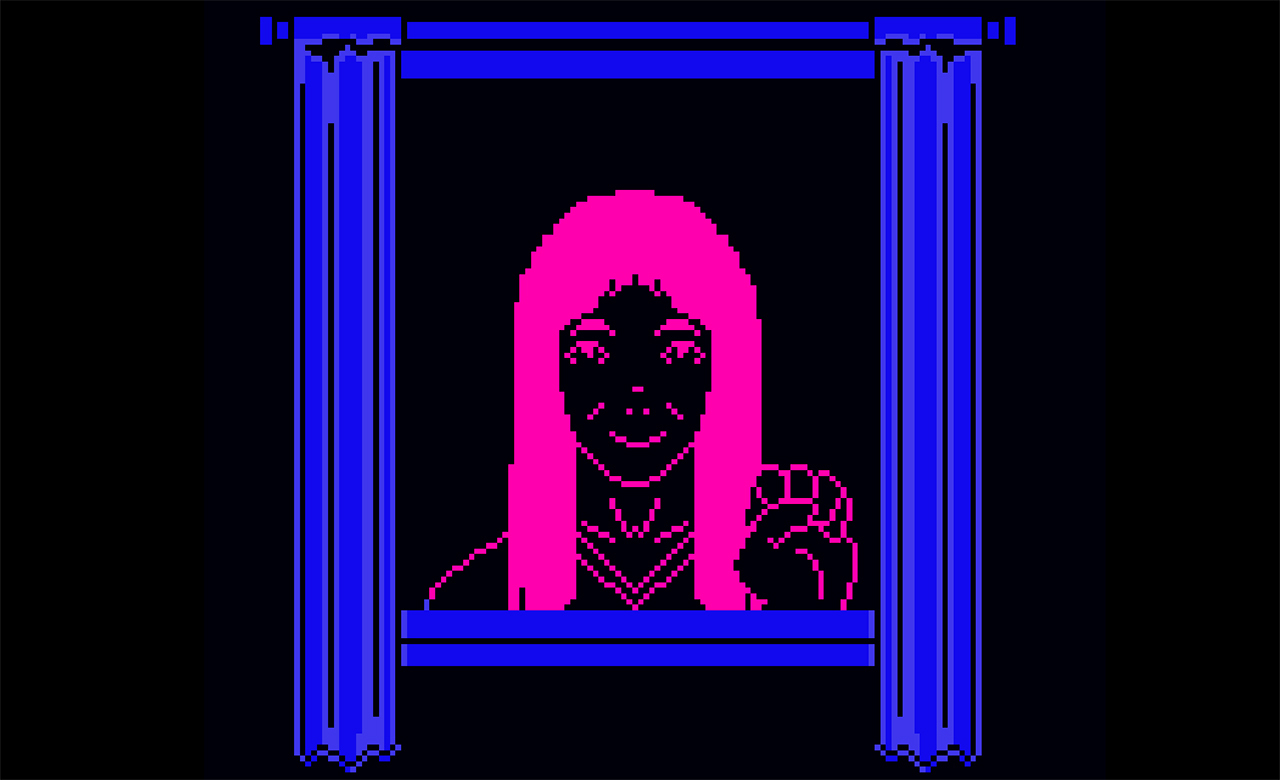
Where Apartment Complex shines is the boldness and creativity of its 16-bit pixel art. The floorplan and room layouts of the building are bog-standard, but the way each tenant occupies the space has to be seen to be believed. If you’ve ever wondered just how weird Earthbound-style graphics can get, this game is for you. The character portraits displayed during conversations are incredible.

From its eye-catching color palette to the dry tone of its absurdist humor, Apartment Complex makes me nostalgic for Welcome to Night Vale in the best possible way. This is a chill and fantastically creative game about monster friends and postmodern malaise, and honestly? It’s super relatable.

Vacant

Vacant
https://doublecrow.itch.io/vacant

Vacant is a free-to-play 2D narrative adventure game that takes about 35 minutes to finish. You play as a camerawoman named Elena who accompanies her friend Priya to a hotel that was abandoned shortly after it was built. Priya runs a ghost hunting video channel, and she wants to make it big by solving the mystery of the unexplained disappearances of Masthill Lodge.

Following a short hike through the woods, Elena and Priya enter the abandoned hotel, which has two floors and a basement. There’s a kitchen and a few staff rooms on the first floor, and the guestrooms are on the second floor. The space is large enough to be fun to explore but small enough to be manageable. All points of interaction are clearly marked, and there are no puzzles. The occasional dialogue choices are fun but don’t seem to affect the story, which is fairly linear.

After you poke around a bit, Elena and Priya have a heart-to-heart talk about why Priya makes these videos despite her firm belief that ghosts don’t exist. Her work is about the craft and the connection with her audience, she says, giving a perfectly reasonable explanation for why so many people enjoy ghost hunting videos.

Regardless, there’s something not quite right about Masthill Lodge. How did 54 people disappear here, exactly? And why has no information about any of them turned up in the ten years since?

The tension comes to a head when a man suddenly appears outside the lodge. “Don’t make a sound,” Priya says, and this is when the strength of the medium comes into play. As the player, you have to move forward, and your choices are limited for the worst possible reasons. I don’t generally get creeped out by horror games, but let me be honest – this one got me.

The writing in Vacant is excellent, and the characters are human and believable. The pixel graphics and sound design contribute to the subtly creepy atmosphere. The pacing is perfect, with a good balance of character drama, humor, mystery, and horror. The ending is fantastic.

There’s no way to save your progress, so you’ll need to sit down and play the whole story in one go. I didn’t mind, as the game is so well crafted that it’s easy to become immersed in the fiction. If you’re a fan of the character writing of Night in the Woods or the magical realism of The Magnus Archives, I’d definitely recommend checking out Vacant.

Blackout

Blackout
https://freshgames.itch.io/blackout

Blackout is a Halloween-themed point-and-click adventure game that you can play in your browser or download for free.

You play as a teenage witch who falls from the roof of a house while trying to snatch a feather from a crow. She loses her memory during her tumble to a second-floor balcony, and she’s surprised to find that the house is filled with corpses. The electricity seems to have been cut, and it’s too dark to see anything clearly. Your job as the player is to guide the witch through the haunted house and get the lights on so she can figure out what happened.  

Once the lights are back on, you’re free to explore the house a second time to see what’s actually going on. This is a super fun twist, and it’s what really sells the game for me. The tone completely shifts, and the ending is fantastic. I hope it doesn’t spoil the story to say that it’s just as much comedy as it is horror.  

Even though your character is in the dark, the game’s 16-bit pixel art is bright and colorful. Each room of the house is a pleasure to explore. There are enough points of interest to provide flavor, but the graphics are designed to help the important puzzle pieces stand out. The puzzles are mostly self-explanatory – use the footstool to reach the key on the shelf, etc. – but some are silly and surprising. The writing in this game is just as charming as the art, and I really enjoyed the time I spent in this weird little house.

Blackout probably takes twenty minutes to play if you know what you’re doing. Since there’s not much guidance, I got stuck a few times, and it took me about 45 minutes to finish the game. I’m grateful to ( this ) short video walkthrough on YouTube for helping me figure out the endgame puzzle, which is very clever but only makes sense in retrospect once the lights are back on.

Don’t Let Her In

Don’t Let Her In
https://flowerstudio.itch.io/dont-let-her-in

Don’t Let Her In is a free ten-minute horror game that you can play on a Game Boy Color emulator (such as mGBA) or directly in your browser on Itch.io.

You play as a teenager who hasn’t set foot outside the house in several weeks. Their father left a note on the kitchen table with a simple warning: Don’t let her in. As the player, you move through the house while interacting with various objects. You have one job, but you won’t be able to keep yourself safe forever.

Alternatively, you can ignore your father’s warning and invite the creepy woman inside the house as soon as she knocks on the kitchen window. This also leads to a satisfying story, although I’d recommend playing the game straight the first time around. The slow lead to the twist ending is wonderful, and having already experienced this twist makes the second ending much more satisfying.

The game’s graphics are simple but effective, and you might be surprised by how much body horror a few pixels can generate. The subtle worldbuilding is quite intriguing as well. There’s no good ending to this story, and its tone is bleak – there’s no irony or campiness, just horror. Don’t Let Her In may be short, but it’s remarkably effective at creating an atmosphere of loneliness and dread.

Crow Country

Crow Country is a retro-styled 32-bit survival horror game that takes about four hours to play. What I love about Crow Country is its Story Mode, which removes all enemies and allows you to enjoy the game as an atmospheric adventure in an abandoned amusement park.

The year is 1990, and you (ostensibly) play as a police detective named Mara Forest. Mara is investigating the disappearance of Edward Crow, the owner of a small amusement park called Crow Country. Crow Country shut down and closed to the public two years ago after a girl named Elaine Marshall was severely injured in an accident.

Although Elaine’s family sued Edward Crow for the hospital fees, he never responded to court summons, and now the park sits boarded up and abandoned. Mara has reason to believe that Crow has holed up on the property, so she breaks in and begins searching for clues pertaining to his whereabouts.

Unfortunately for Mara, there are zombies about. Thankfully, she has a gun and a car trunk full of ammo. There’s also ample ammo scattered throughout the park, as well as various types of guns (and grenades) for Mara to pick up and experiment with. I’ve heard that the zombies aren’t particularly aggressive, and that shooting them isn’t particularly difficult, but I wouldn’t know. I didn’t bother with combat, and I have no regrets.

Even in Story Mode, Crow Country is a dense game with a lot to do. The map isn’t actually that big, but every “room” has multiple points of interaction. Most of this interaction provides atmosphere and flavor text, but Mara also needs to solve environmental puzzles in order to find the tools she needs to progress deeper into the park.

Mara can collect bits and pieces of brochures that she assembles into a map that proves to be extremely useful, as locked doors and unsolved puzzles are clearly marked. Although I did have to look up one or two solutions for optional challenge puzzles, I was never lost or confused about what I needed to do next. Unlike many puzzle-based adventure games, Crow Country is entirely possible to play without a guide.

In terms of its PlayStation-era retro graphics, Crow Country looks exactly like Final Fantasy VII. All of the character models are composed of charmingly blocky polygons, and the environments are pre-rendered and gradient shaded. Points of interaction are easy to distinguish, and you can rotate the camera a full 360 degrees. It’s a joy to move through this environment, especially once you begin to open Dark Souls style shortcuts.

Crow Country isn’t a cozy horror game; there’s no learning or friendship or beautiful autumn leaves. That being said, the horror elements are very mild, especially in Story Mode. Despite the atmospheric creepiness of its setting, Crow Country is less of a horror story about zombies and more of a speculative fiction story about how humans process the reality of climate change – or rather, how we will do anything to avoid processing this reality. The game’s conclusion is fantastic, as is the foreshadowing leading to its final reveals.

I wasn’t expecting Crow Country to be so fun to play, or for its environment to be so creatively designed, or for its story to hit so hard. I have zero patience for “intentionally inaccessible” retro game nonsense at this point in my life, but Crow Country wants to be experienced. Since it’s so short and accessible, I’d recommend the game to anyone who’s interested in the premise, even if you’re not typically a fan of survival horror.

2024 Horror Games Post on Sidequest

There’s a chill in the air as the twilight lingers and the moon glows bright in the autumn sky. What better time to crouch in front of your computer and scare yourself silly? For intrepid digital ghost hunters, Sidequest presents eight eerie games that are free to play on itch.io and short enough to occupy an intermission between deep dives into creepypasta wikis…

I was thrilled to have an opportunity to write another piece for Sidequest showcasing a curated collection of indie horror games. If you’re interested, you can check out the list here:

💻 https://sidequest.zone/2024/10/01/eight-short-horror-games-on-itchio/

Tales of the Black Forest

Tales of the Black Forest
https://store.steampowered.com/app/1093910/Tales_of_the_Black_Forest/

Tales of the Black Forest is a 16-bit RPG Maker narrative adventure game whose tone is split evenly between wholesome cuteness and graphic horror. Although Tales of the Black Forest features a dozen simple puzzles, a few short chase sequences, and limited elements of exploration, it might be more accurate to call it a visual novel instead of a classic adventure game. Tales of the Black Forest takes about three and a half hours to play, and more than half of this time is spent reading character dialog as you progress through a linear story.

The game’s story follows a high school student named Kihara Kashin who wakes up on a bench outside an abandoned train station. Kihara has somehow been transported to a depopulated town called Kuromori (whose name means “black forest”), where she used to live as a child before her mother died in a car accident. Inside the derelict station, Kihara meets a mysterious shape-shifting woman named Kiritani Yuki, who tells her that she has been trapped in the ruins of Kuromori by a curse. The only way to escape Kuromori is to use Nensha, a magical power that allows Kihara to travel back in time by touching retro electronic devices. By going back to the 1990s with Kiritani as her guide, Kihara can learn the origin of the curse and hopefully break it. 

The overall story arc of Tales of the Black Forest admittedly doesn’t make much sense. Thankfully, the game is split into three distinct chapters, each of which showcases the stand-alone character story of a cute yōkai girl while allowing the player to explore her environment. Each of the three chapters also explores the intersection between an urban legend and a social issue of the 1990s.

The first chapter is about a deserted village, Shiranaki (a play on the urban legend of Inunaki Village), and rural depopulation. The second chapter is about a magical ghost train and a fictional version of the Aum Shinrikyō “new religious movement” that carried out the Tokyo Subway Sarin Gas Attacks in March 1995. The third chapter is about a haunted movie theater that serves as a case study for how many small businesses that thrived during the postwar Shōwa era were forced to close during the prolonged economic recession of the 1990s.

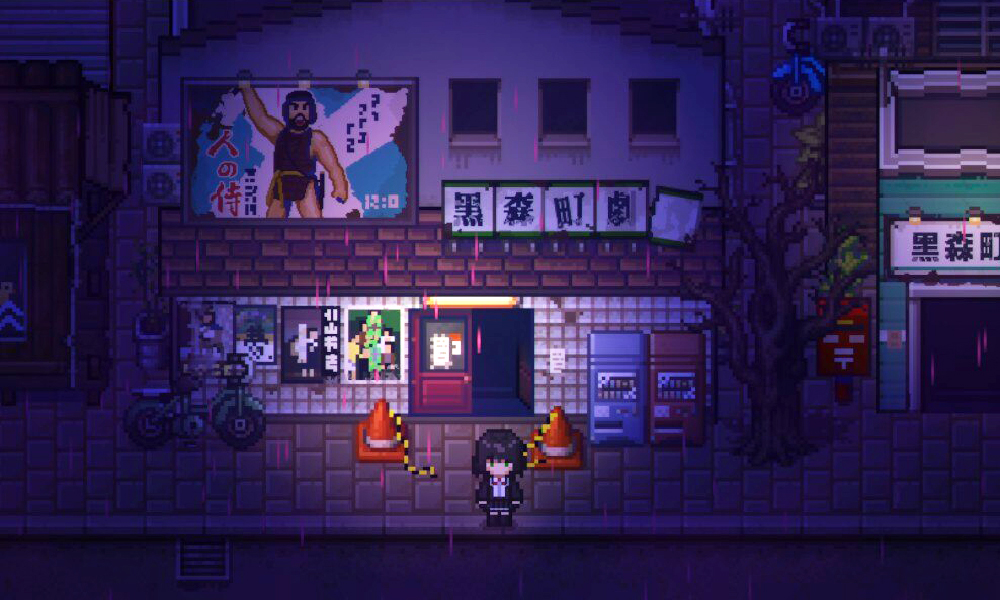
Along with urban legends and social issues, Tales of the Black Forest is strongly inspired by the movies of Studio Ghibli, and its magical world is filled with quirky yōkai and gentle kami. The character illustrations of cute girls that accompany the dialog text are somewhat generic, but the game’s developers clearly put a great deal of love and attention into the 16-bit character sprites and their environments. There’s not a single part of this game that doesn’t make a gorgeous screenshot.

Alongside its whimsy and beauty, however, Tales of the Black Forest contains serious and sometimes graphically violent scenarios with disturbing themes and imagery. The overall tone of the game’s story emphasizes character drama more than horror, but the gruesome and upsetting elements are still there. You’ll be talking to adorable cats in the beautiful green yard of a forest café, and fifteen minutes later you’ll be watching a young woman beaten to death by a deranged cultist.

This mix of wholesome and horror worked for me, but both tonal aspects of the story are equally prominent. Accordingly, I wouldn’t recommend Black Forest to anyone who can’t sit through the creepier moments of The Ring, nor would I recommend it to anyone who can’t tolerate the more sentimental moments of My Neighbor Totoro.

Tales of the Black Forest was made by a Chinese studio in an obvious homage to Japanese popular culture, and its story occasionally feels like an attempt to filter a lecture from an “Introduction to Contemporary Japanese Society” university course through the medium of fiction. I personally found the references to Japanese social problems of the 1990s to be interesting and well-intentioned, but I could understand that some players might find these elements of the story a bit cringe in the way that early 2000s “onigiri means rice ball desu” North American anime fandom was a bit cringe.

Tales of the Black Forest was originally written in Chinese, and the English translation feels as though it was created by someone without much experience in localization. It’s serviceable, but it can be awkward at times. I tend to think the concept of “standard English” is nonsense, and I found the translation to be charming, especially because it reminded me of how pirated anime used to have English subtitles created by people whose first language was Chinese. In keeping with the retro theme of the game, I very much appreciated this unintentional element of nostalgia.

Tales of the Black Forest isn’t perfect, but it’s a solid 7/10 game that’s elevated to an 8/10 by virtue of the love and care that the two-person development team put into every aspect of its creation. This game caters to Japanese pop culture nerds who are fans of both cute anime characters and creepy urban legends, and I’m surprised it hasn’t attracted more attention since it was released on Steam in 2019. Tales of the Black Forest is a small but shining hidden treasure.

NextDoor

NextDoor
https://broelbrak.itch.io/nextdoor

NextDoor is a spooky 2D interactive story game based on one of Junji Itō’s short horror manga. It’s free to download or play in your browser, and it takes about ten to fifteen minutes to read.

You play as a college student living in a rundown apartment building. The student is unable to concentrate because of the loud music blaring in the apartment above hers, so she finally snaps and goes to complain. The upstairs tenant is an asshole who refuses to turn down his stereo because his next-door neighbor has never said a word to him about the noise. If you can convince his neighbor to complain, the manchild gripes, perhaps he might listen to what you have to say.

The problem is that the next-door neighbors are decidedly unfriendly. Another tenant in the building says that there’s actually a group of women in that apartment, but they’re very quiet, and no one has ever spoken with them. Perhaps it’s not the best idea to attract their attention…

Despite its limited scope, the environment design of NextDoor is nicely done and more than sufficiently creepy. Ironically, the music is quite good, and the sound design is better. The character animations are a pleasure to watch, especially when the player gets to see more of the mysterious next-door neighbor.

“The Lady Next Door” is from Junji Itō’s collection Mimi’s Tales of Terror, and it’s a fun play on a category of Japanese urban legends that take the form of “here’s some weird shit I saw in a Shōwa-era (built before the 1990s) apartment building.” Itō transforms the tropes of these non sequitur “weird shit I saw” stories into a cautionary tale, and it’s delightfully cathartic to witness the unnecessarily harsh punishment of the transgressor. Because seriously, fuck that guy.

NextDoor’s adaptation of this manga is interesting in that it configures the college student as the transgressor. By association, you the player are the transgressor as well, and it’s fun to push the college student forward into increasingly bad decisions. She doesn’t die, but she most definitely sees some weird shit.

There’s one (very mild) jumpscare in the game, and it’s a cameo from my favorite Junji Itō manga, Junji Ito’s Cat Diary: Yon & Mu. Yon & Mu is exactly what you would expect from a cute autobio pet manga drawn by Junji Itō, and it’s marvelous. It’s always a pleasure to have an unexpected encounter with one of these adorable hellbeasts.

Last Train Home

Last Train Home
https://hby.itch.io/last-train-home

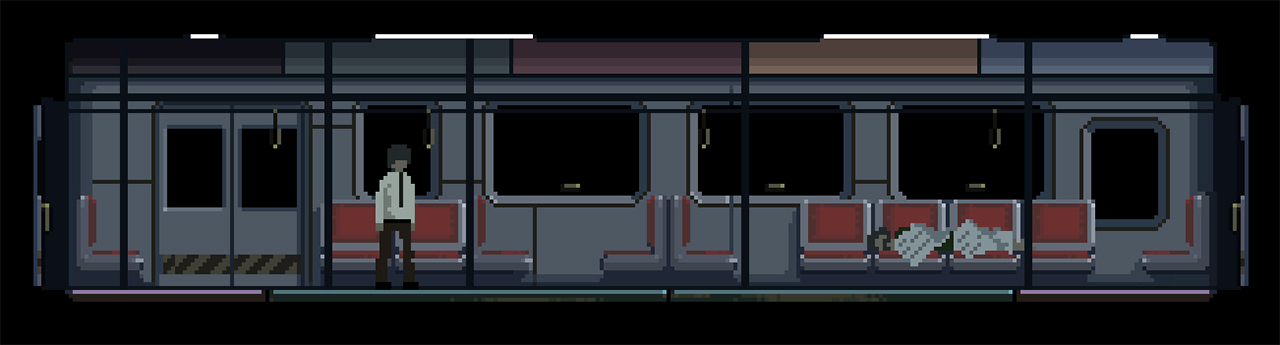
Last Train Home is a short and spooky creepypasta story game. It’s free to play in your browser, and it takes about five minutes to complete. You play as a salaryman who finds himself on a near-deserted commuter train in the dead of night.

The first half of the game is set in three train cars and the two walkways between them, each of which is occupied. With the doors at either end locked, you move between the three cars and talk with their occupants, befriending them by completing small tasks.

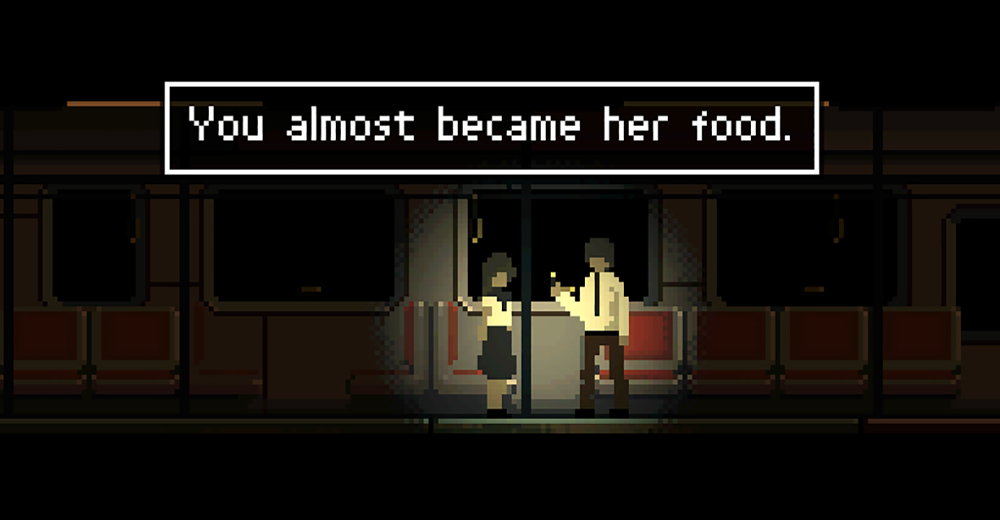
This is all well and good until the lights go off, at which point you’re left to fend for yourself in the darkness with nothing more than a cigarette lighter and the eerie flashes from outside the windows to illuminate your path forward. Where is this train going, and how do you get off?

Just as the United States is home to countless urban legends surrounding cars, from vanishing hitchhikers to cursed highway rest areas, there are all sorts of urban legends about commuter trains in Japan and South Korea. “The last train” is a common motif in cautionary tales warning midnight passengers against accidentally boarding the wrong train or even, heaven forbid, falling asleep and missing your stop as the train continues hurtling into the night.

In contrast to the pristine coziness of trains in East Asia, there’s a New York style grunginess to the cars in Last Train Home that renders the environment unsettling and uncanny. The lighting and sound design are nicely creepy as well. There’s not a lot of text, but each line manages to be subtly unpleasant. There are no jumpscares, just a pervasive atmosphere of creeping dread. The catharsis at the end of the story is lovely, but you’ll definitely have second thoughts about running to catch the last train after playing this game.