Whispering Willows

Whispering Willows (on Steam here) is a 2D adventure game set in a haunted mansion. There’s no combat, and the game takes about three hours to finish. It’s a small indie game made in 2014, and it’s not perfect. Still, I enjoyed the time I spent in Willows Mansion, and I’d recommend giving this game a shot if you’re into spooky gothic stories.

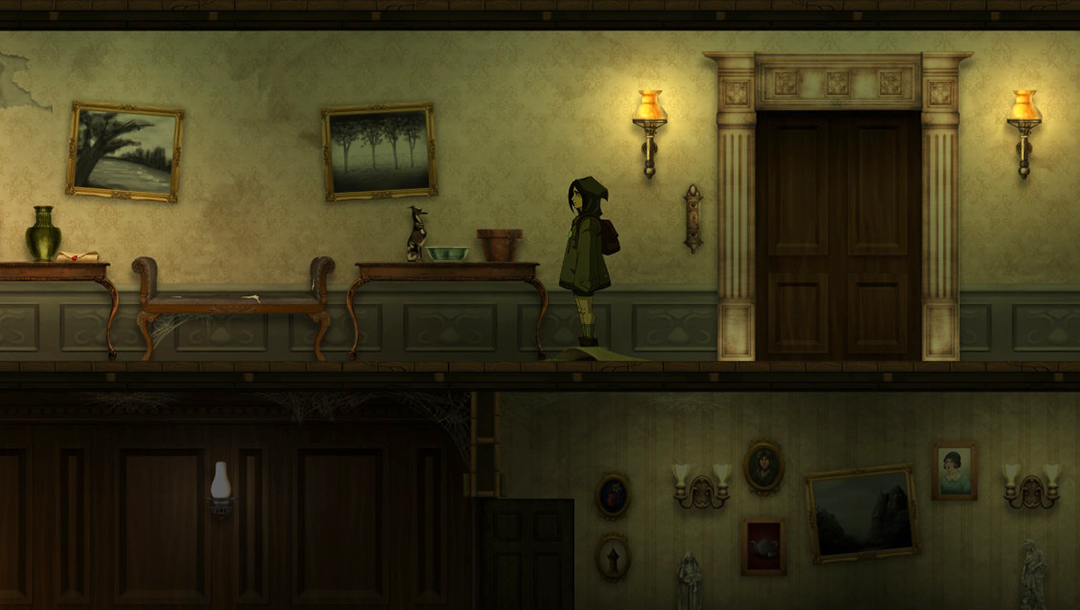
You play as Elena Elkhorn, a teenage girl whose father works as the groundskeeper at the derelict and abandoned Willows Mansion. Elena’s father doesn’t return one night, and she has a bad feeling about the mansion. Hoping to bring her father home, Elena sneaks onto the property and immediately falls headlong into an underground crypt. There she meets the ghost of her ancestor, who teaches her how to use the power of her magical pendant to leave her body to go spiritwalking. In a cursed mansion filled with phantoms, this is an extremely useful ability to have.  

Before I jump into the many things I love about this game, let me be upfront about its flaws:

– There’s not much actual gameplay.
– The hand-drawn cutscene art is unpolished.
– The writing is good but a bit uneven.
– The background music is limited.
– Your character walks very slowly.
– There’s no map to help you navigate.

Essentially, this is a small indie game that indeed looks and feels like a small indie game. I’m not complaining about the rough edges of Whispering Willows; I just want to make it clear that it’s a game made ten years ago on a tiny budget earned from a Kickstarter campaign. Still, I found its simplicity and amateurish aspects charming, and it has many strong points.

To begin with, the map is surprisingly large, and there’s a lot of space to navigate. You’ll explore the mansion’s crypt, its garden, and various outbuildings; but mainly you’re going to be walking around the house itself. The mansion is impossibly large and includes all the standard gothic flourishes: locked doors, grisly kitchens, moldy bathrooms, crooked paintings, peeling wallpaper, taxidermied hunting trophies, creepy dolls, and all the secret passageways you could ever want.

Of course there are all manner of notes lying around, and these notes collectively tell a suitably gothic story about the very wealthy but very evil man who built the mansion. This story never quite comes together in terms of plot or themes, and the character motivations are ridiculous. Still, all the individual bits and pieces are gothic catnip, from a lover kept in a secret room to a murdered best friend to a servant driven mad by what he’s seen.
This all takes place in California during the Wild West days, meaning that the land occupied by the mansion had to be taken from someone. It turns out that it was forcibly wrested from Elena’s own ancestors. Alongside his more intimate crimes, then, the mansion’s owner became the mayor of a frontier town by means of enacting war and genocide on First Nations people.

We tend to think of gothic mansions as being located in Europe, or perhaps New England. There are definitely nineteenth-century mansions in California, though (like the Carson Mansion), and they’re built on land soaked in blood.

Importantly, the First Nations people in Whispering Willows aren’t all ghosts. Elena and her father are very much alive, and they’re not tempted by the faded pseudo-grandeur of the former colonists. At the end of the game, it’s extremely satisfying to see Elena essentially say “fuck all this” as she walks away from the mansion with her father.  

This is an interesting perspective on classic gothic story tropes that I love to see. And honestly, Whispering Willows isn’t such a bad game. The puzzles are easy, but the lack of difficulty is a selling point for me. Also, the gameplay mechanic of Elena spiritwalking to interact with the numinous aspects of the environment is used in clever ways, and it’s a lot of fun.  

Aside from Elena’s slow walking speed, my only real complaint is that this game would benefit immensely from a map. Even though navigation isn’t particularly complicated, I got lost a few times and had to resort to a walkthrough (this one here) a few times, which wouldn’t have been necessary if the player could just pull up a subscreen.

Whispering Willows definitely feels like an indie game, but it’s got a delightfully grisly story and an excellent sense of atmosphere, and it’s worth checking out if you’re interested in Wild West Gothic from an indigenous perspective.

As a side note, this was apparently the game that launched Akupara Games, a publisher that specializes in quirky indie games with a strong sense of style and setting. Two of my favorite titles they’ve helped get off the ground are Rain World and Mutazione, and it’s cool to know that this was where they started.  

Blackout

Blackout
https://freshgames.itch.io/blackout

Blackout is a Halloween-themed point-and-click adventure game that you can play in your browser or download for free.

You play as a teenage witch who falls from the roof of a house while trying to snatch a feather from a crow. She loses her memory during her tumble to a second-floor balcony, and she’s surprised to find that the house is filled with corpses. The electricity seems to have been cut, and it’s too dark to see anything clearly. Your job as the player is to guide the witch through the haunted house and get the lights on so she can figure out what happened.  

Once the lights are back on, you’re free to explore the house a second time to see what’s actually going on. This is a super fun twist, and it’s what really sells the game for me. The tone completely shifts, and the ending is fantastic. I hope it doesn’t spoil the story to say that it’s just as much comedy as it is horror.  

Even though your character is in the dark, the game’s 16-bit pixel art is bright and colorful. Each room of the house is a pleasure to explore. There are enough points of interest to provide flavor, but the graphics are designed to help the important puzzle pieces stand out. The puzzles are mostly self-explanatory – use the footstool to reach the key on the shelf, etc. – but some are silly and surprising. The writing in this game is just as charming as the art, and I really enjoyed the time I spent in this weird little house.

Blackout probably takes twenty minutes to play if you know what you’re doing. Since there’s not much guidance, I got stuck a few times, and it took me about 45 minutes to finish the game. I’m grateful to ( this ) short video walkthrough on YouTube for helping me figure out the endgame puzzle, which is very clever but only makes sense in retrospect once the lights are back on.

My House Is Haunted!

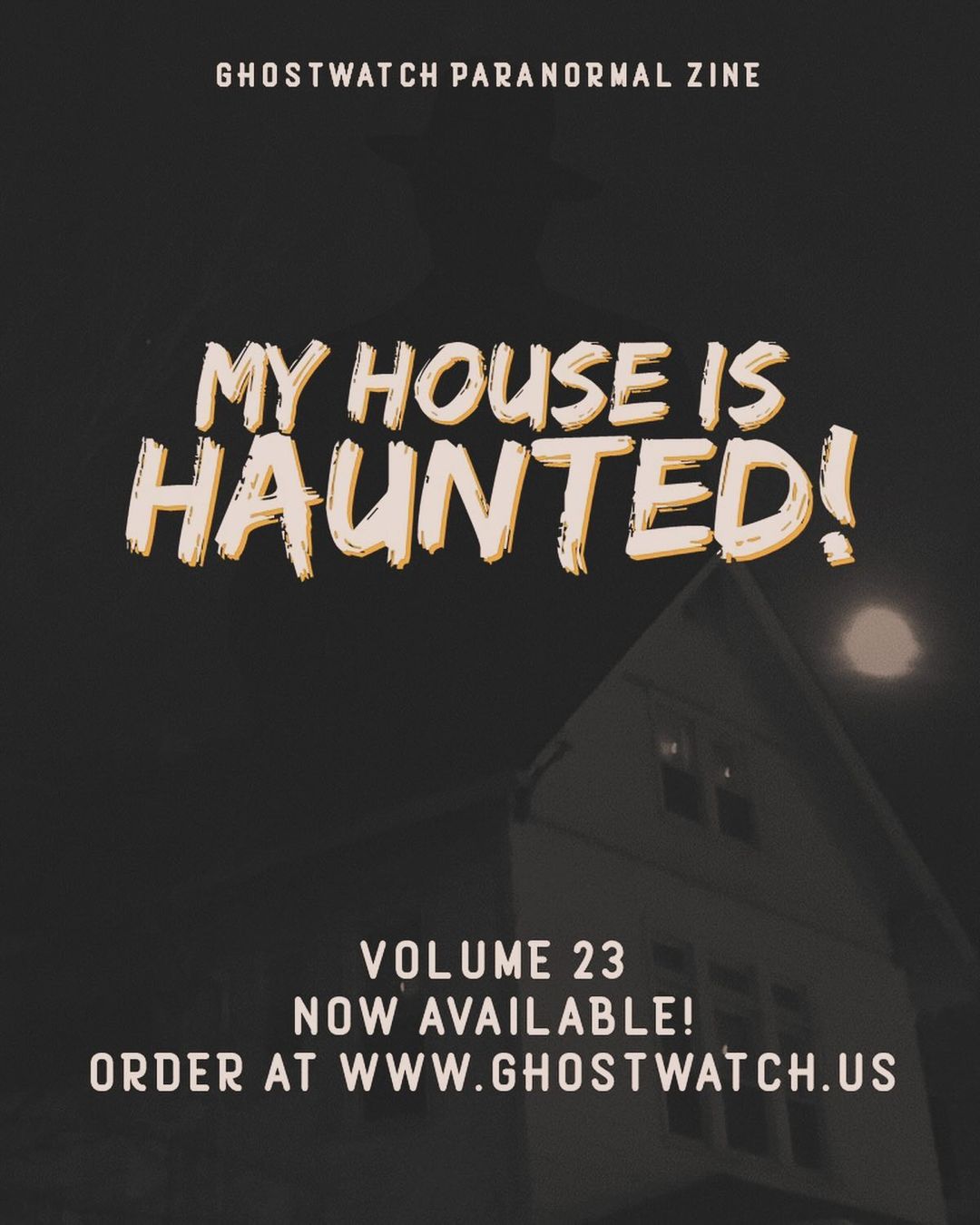
I’m excited to have a short story appearing in the latest issue of Ghostwatch.

My story, “The Sweet Blue House,” is based on a property I viewed while househunting in the suburbs of West Philadelphia. There’s nothing paranormal about what I saw, but some houses don’t need ghosts to be haunted.

Ghostwatch is a really neat publication. I have zero belief in the supernatural, and what I love about Ghostwatch is how it collects odd and interesting bits of folklore and documents local and regional cultures in the United States while maintaining a supremely chill attitude. The zine’s account on Instagram is a lot of fun too.

If you’re interested, you can order the “My House Is Haunted” issue here:
https://www.ghostwatch.us/product/vol-23-my-house-is-haunted

Afterdream

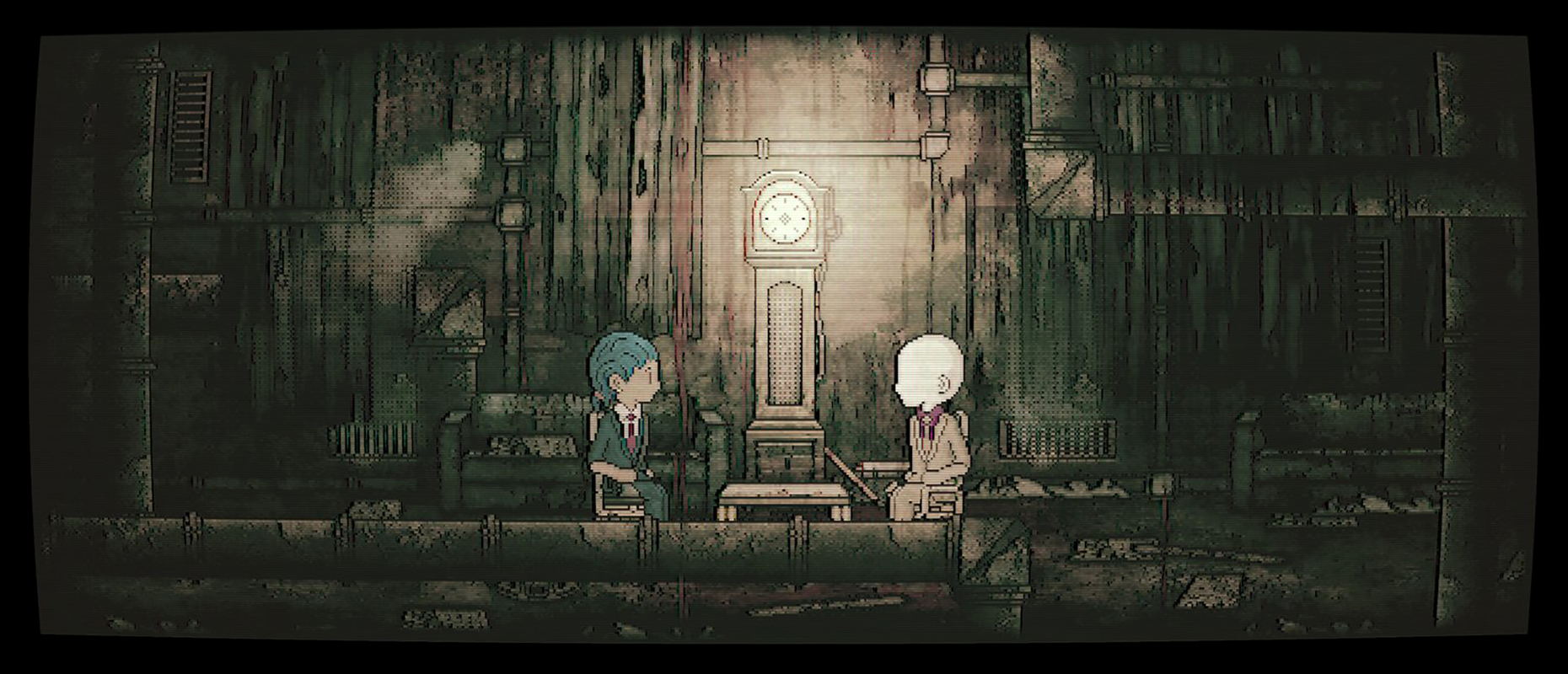
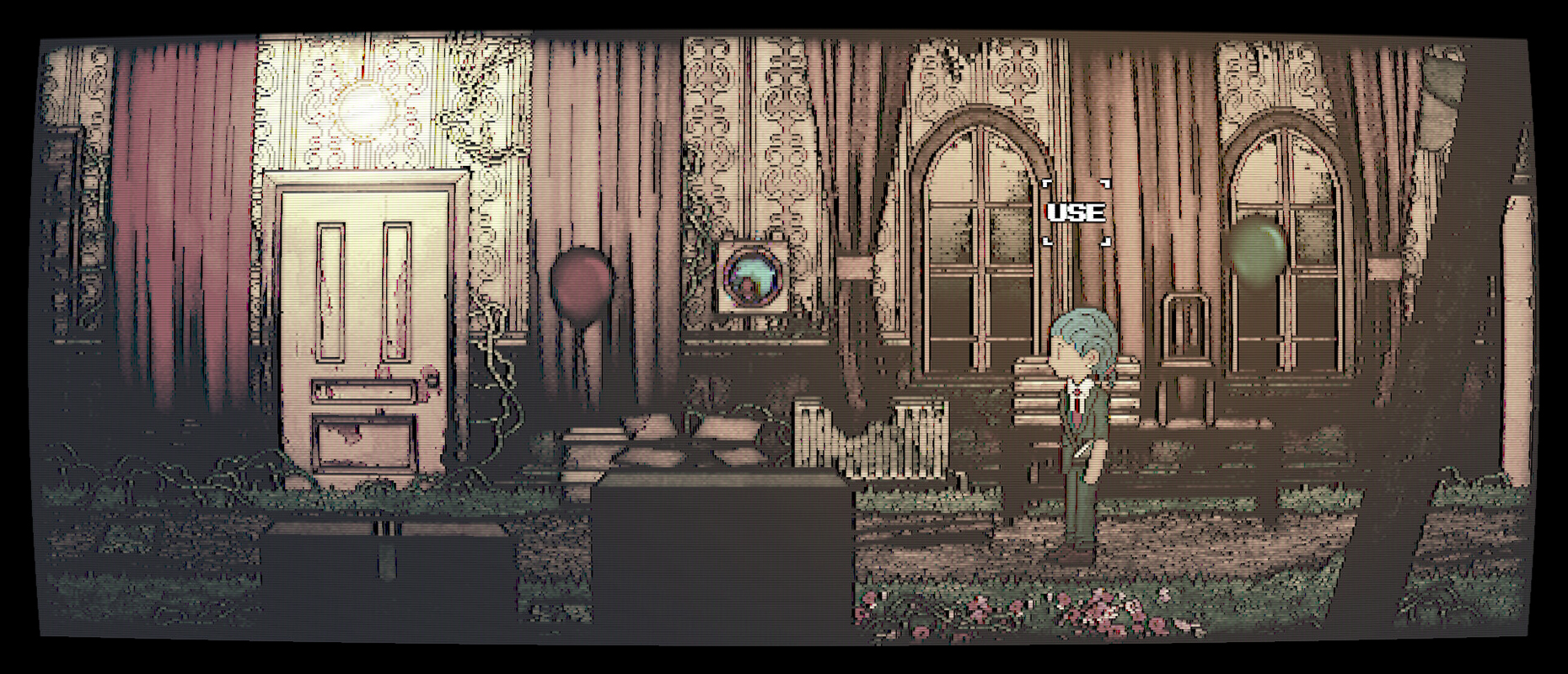
Afterdream is a 2D horror adventure game with puzzle elements and lo-fi pixelated graphics that takes between two to three hours to finish. It’s on Steam, but I played it on Nintendo Switch and had a fantastic time. Afterdream drops you right into the story and immediately grabs your attention, and its pacing is impeccable. The horror is mostly atmospheric, but the game features a great set of jumpscares mixed with short segments of heightened tension.

Afterdream isn’t for people who can’t tolerate horror, but I’d happily recommend it to anyone else who’s interested in trying out a short, original, and creative story game. The puzzles are fun but not too difficult, and the environmental design is really something special.

You play as a woman named Jennifer who wakes up in a filthy derelict room wearing a suit she doesn’t own. During the intermittent frame story, Jennifer relates this situation to an older man who seems to be a psychiatrist, claiming that she’s experienced an unusually realistic nightmare.

Within this nightmare, Jennifer’s job is to navigate a series of haunted houses while finding a series of objects for a series of NPCs. There are no Professor Layton style puzzles relating to number games or spatial arrangement challenges; rather, Afterdream’s puzzles are mainly fetch quests reminiscent of old-school adventure games in which a certain object needs to be applied to a certain environmental obstacle, like a key being needed to unlock a door.

The challenge, such as it is, lies in being able to form a mental map of each area and remembering what goes where. The game mechanics are extremely simple and intuitive, and there are no inventory limits or menu screens to distract the player from the immersive environment. It’s always clear what you can interact with, and the in-game text isn’t cryptic about what needs to happen.

The haunted houses don’t reveal their secrets willingly, but Jennifer is aided by a Polaroid ghost camera that she can use to scan her surroundings. The oddities exposed through the camera’s viewfinder become real once photographed. You might hear an odd ticking sound, for example, in which case your camera will reveal a ghostly clock on the wall. It’s a neat game mechanic, and it’s put to good use in a nice variety of situations.

Jennifer begins in an old and rotting apartment building and then progresses to a fancier but similarly ruined mansion, wherein a helpful ghost tells her that she’s been given an opportunity to make contact with the spirit of her recently deceased father. In order to summon his ghost, Jennifer must first find a special “portal object” hidden within the liminal space between life and the afterlife. Unfortunately, no one can say what this object looks like or where it’s hidden.

Still, Jennifer has no choice but to keep moving forward through progressively spookier areas. As a special present to me personally, there’s a dark and grimy sewer level, and it’s wonderful. There’s also a “creepy little town” level, and it’s beautiful and I love it.

Even though the game is divided into discrete stages, its story isn’t formulaic. To lighten the heavy atmosphere, the writing employs humor at key moments, with both Jennifer and the NPC ghosts occasionally poking fun at the absurdity of various situations. I really enjoyed the instances when I thought something horrible was going to happen but everything actually turned out to be perfectly wholesome. The pacing is excellent, with plenty of fun character interactions and chill periods of downtime between the creepy bits and jumpscares.

Afterdream is the perfect length for its story, and its gameplay goes from strength to strength as its setting becomes stranger and more disturbing. It might not be to the taste of people looking for more action or more explicit horror, but it was perfect for me.

One final thing: When I first saw the game’s trailer, I was like, “This looks cool, but I hope you can turn off the strobe effects.” And thankfully, you can in fact turn off the strobe effects. It’s always nice when game developers take this sort of accessibility issue into consideration.

The Suicide of Rachel Foster

The Suicide of Rachel Foster is a suspense thriller in the form of a walking sim that takes about three hours to play. The game has moderate elements of horror, and the relationship between the player-character’s father and the teenage girl he groomed is a key part of the story.

This is a difficult game to recommend, as I’m not sure its merits outweigh its flaws. These flaws aren’t necessarily related to the story, which is engaging despite its sensitive themes. Rather, The Suicide of Rachel Foster has major gameplay issues that will probably be a turn-off for anyone who isn’t already a veteran fan of walking sims. In other words, The Suicide of Rachel Foster is a very walking-simy walking sim, and I think it’s safe to say that people who aren’t interested in the premise probably won’t get a lot out of the game.

That being said, the premise is a banger: Your dad was the manager of what is essentially the Overlook Hotel from The Shining, and you get trapped in the hotel by a snowstorm while inspecting the property after your dad’s death. As you poke around mementos of the past, a terrible family secret comes to light, and it’s entirely possible that you’re not as alone in the building as you were led to believe.

The Suicide of Rachel Foster begins when the player character, Nicole, gets a letter from her late mother, who hired a lawyer to deliver the document to her on the event of her father’s death. Ten years ago, when Nicole was 16, her mother took her to Portland when she left her father and the hotel in Montana they managed together. Nicole’s father had been pursuing an affair with one of Nicole’s classmates, the eponymous Rachel Foster. Rachel became pregnant and committed suicide by jumping off a cliff in the mountains.

The Timberline Hotel struggled on for another six years but closed in 1989, and Nicole’s father continued to live there for another four years before committing suicide himself. It’s now 1993, but everything in the hotel is more or less how it was when Nicole left in 1983 – including, creepily enough, her childhood bedroom. Regardless, the elements have taken their toll on the building, and Nicole is legally required to perform an in-person inspection before she has her father’s lawyer sell the property to a hotel chain.

Thankfully, the hotel still has hot water and electricity. Nicole is connected via a very chunky cellphone to a man named Irving, who identifies himself as a FEMA agent who’s been assigned to monitor her situation. Irving cautions Nicole not to leave during the snowstorm, and he helps guide her through the hotel so that she can keep the lights on and the water running during the emergency.

Oddly enough, Irving seems a little too helpful, and maybe just a little too available. He explains that he’s been a member of the small-town community since he was a child, but perhaps he knows a bit too much about the history of her family. Nicole is suspicious of Irving at first; but, the longer she’s stuck in the hotel, the more she comes to trust him. Despite Irving’s misgivings, Nicole starts to investigate the death of Rachel Foster, and she begins to suspect that perhaps the girl didn’t commit suicide after all.

While Nicole is stuck in the hotel for nine days, the player is tasked with finding the answers to three questions. What happened to Rachel ten years ago? What does Irving know that he isn’t telling you? And something is clearly strange about the hotel – what’s going on there?

While The Suicide of Rachel Foster presents an intriguing set of intertwined mysteries, the performance of Nicole’s voice actress rubbed me the wrong way. Nicole comes off like a whisky-slinging, battle-hardened intergalactic bounty hunter, which is an odd approach to the character. Nicole is only 26 years old, and she’s something of a blank slate. She doesn’t seem to have a job, or friends, or interests, or hobbies, or even practical knowledge concerning how to maintain the hotel. To me, it didn’t feel like Nicole’s badass attitude is earned, and it grated on my nerves.

In addition, one of the main thematic questions of the game doesn’t mean anything to me. Can you still love your dead father if he abused your mother, seduced and impregnated your teenage friend, and then didn’t contact you for ten years? Like… no?? At the very least, this is a complicated issue that would have required much more heavy lifting than the game’s script was willing to do.

Thankfully, what’s going on with Irving is far more interesting, and his voice actor gives an incredible performance that made me feel way more sympathy toward his character than perhaps I should have.

In any case, the game is primarily concerned with creating an atmosphere of slowly mounting dread.

Unfortunately, Nicole walks at a glacial pace, which makes it a pain to explore the hotel. The map you’re given isn’t terribly useful when you have it, and Nicole loses it halfway through the game. The location of your objectives isn’t clear, and there’s a lot of extraneous space with no plot relevance. It’s easy to get lost, and there are no nudges to help get you back on the critical path.

Because you move so incredibly slowly, I ultimately gave up on free exploration and used a walkthrough, this one (here). There’s nothing wrong with using a walkthrough, of course, but I wish it weren’t necessary.

I should note that you can run, but this is also a pain. To run in the Nintendo Switch version of the game, you have to exert force to press down the left joystick as you move it. This is extremely awkward and uncomfortable. To put it bluntly, it’s an obvious accessibility issue that doesn’t need to exist.

Also, you’re occasionally given dialog choices that don’t make much sense. You’ll choose one thing, and then Nicole will say something else. These choices are timed for some inexplicable reason, and what you say doesn’t have any impact on the plot.

This makes it all the more confusing when you’re given a choice that does matter at the end of the game, which is whether or not to allow Nicole to commit suicide. This is a weird choice to have, to be honest, especially since there’s nothing about Nicole that indicates she’s depressed or suicidal. Again, the player doesn’t know anything about her, and nothing that happened in the past is her fault. Even if you don’t allow her to commit suicide, I don’t understand the “good” ending, which doesn’t make any logical or emotional sense.

I know this seems like a lot of criticism, but it’s worth repeating that the game isn’t that long, and its main focus is on creating a creepy narrative atmosphere to accompany its lovingly rendered spatial environment. You can probably finish the story in two and a half hours if you use a walkthrough from the beginning and don’t get stupidly lost like I did, and the gameplay issues might not bother someone more inured to the idiosyncrasies of walking sims.

I have to admit that I never really warmed up to Nicole or felt any sympathy for her sexpest father, but Irving grew on me. The intertwined stories of what happened to Rachel Foster and what’s currently going on in the hotel are extremely intriguing, as is the physical environment of the hotel itself.

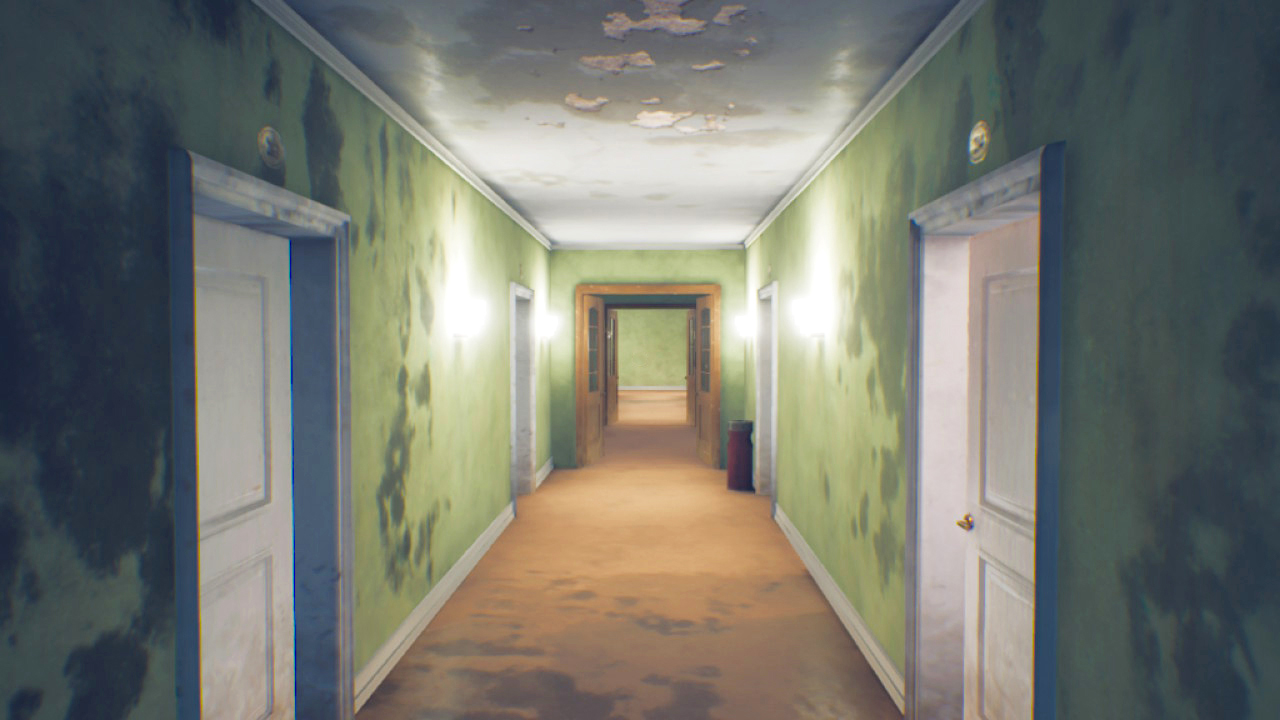
I’m a huge fan of The Shining, both the Stephen King novel and the Stanley Kubrick film, and it was cool to see what the “staff only” spaces of a place like the Overlook might actually look like, from the caretaker apartments to the boiler room to the industrial kitchen freezer to the utility crawlspaces. Mercifully, there are no elevators in the Timberline Hotel, but the carpeted hallways are plenty spooky enough. There’s also a secret underground passage with a secret room. I consider myself to be a connoisseur of secret basement rooms, and this one gave me serious chills.

If you’re not sold on The Suicide of Rachel Foster but curious about where it goes with its premise, I’d recommend checking out the Wikipedia article (here), which contains a detailed plot synopsis. I think The Suicide of Rachel Foster probably would have made a better novel, but there’s also something to be said for the experience of being able to walk through the hotel while hearing every creak of the floorboards and every rattle of the pipes in the walls. If nothing else, the sound design is amazing, and the dev team clearly put a lot of love and care into creating an immersive setting.

So, in conclusion, while The Suicide of Rachel Foster is a difficult game to recommend to everyone, I personally very much enjoyed being drawn into the strange and horrible story of the Timberline Hotel.

Haunted Houses

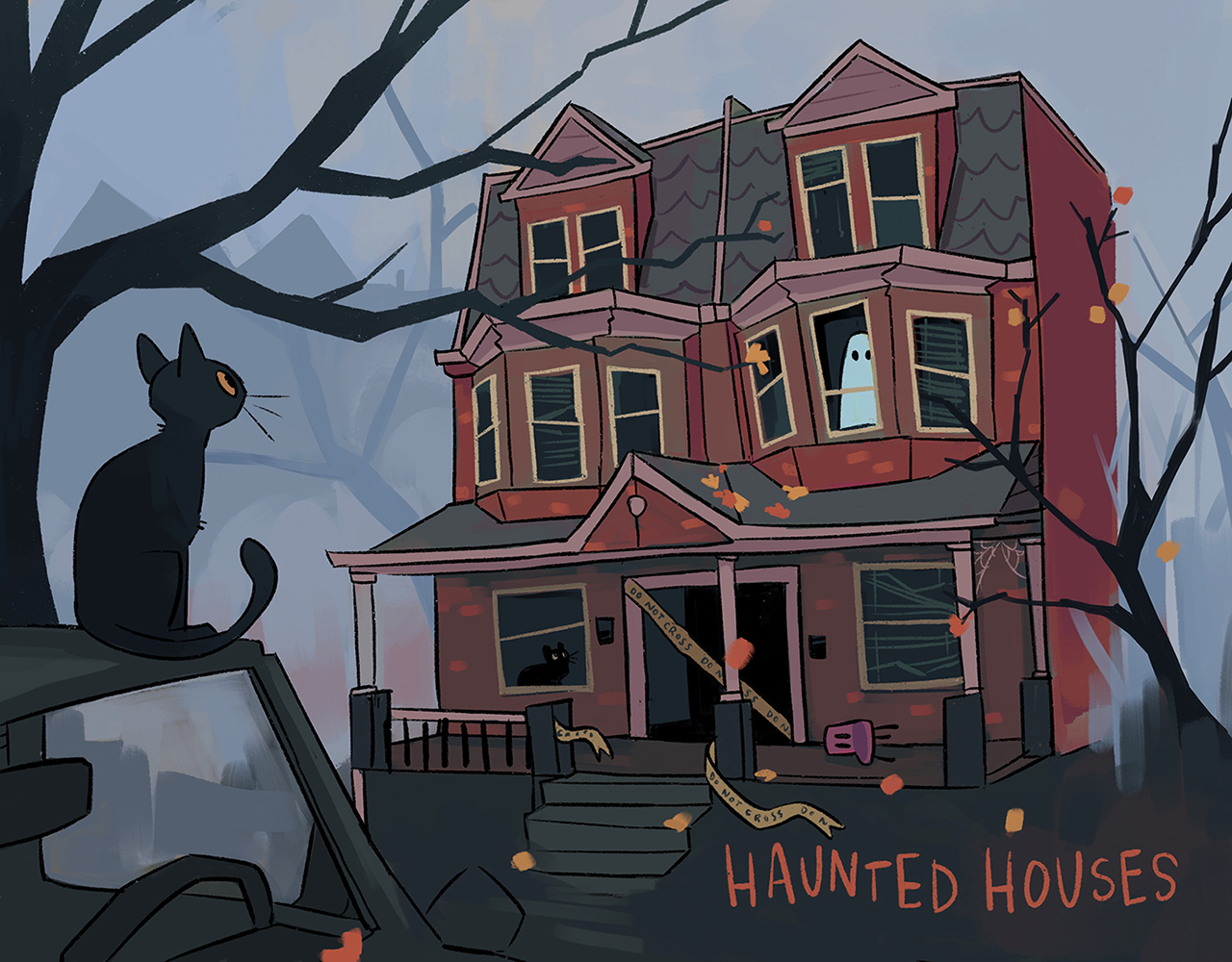
I recently published a new edition of my horror fiction zine Haunted Houses!

Haunted Houses collects seventeen pieces of surreal flash fiction about haunted spaces and the terrible people who inhabit them. This edition of the zine includes several new stories and illustrations, as well as a gorgeous cover illustration by Megan Crow, who was able to channel the everyday spookiness of West Philadelphia. Although the stories in this zine fit firmly into the mode of magical realism, I wanted to use the medium of fiction to explore a truly terrifying set of real-life themes relating to housing, from gentrification to rent spikes to urban depopulation.

If you’re interested, physical copies of the zine are available on Etsy:
https://www.etsy.com/listing/890744799/haunted-houses-fiction-zine

I’ve also started to host free digital editions of my older zines on Itchio:
https://digitalterrarium.itch.io/

At the Edge of the Garden

When I was ten years old, all my friends had trampolines. I wanted a trampoline too, but my mother was opposed to the idea. One of my cousins decided to jump onto a trampoline from the roof of his house, breaking his arm and becoming a neighborhood hero in the process. My mother used my cousin’s behavior as a justification for keeping our yard trampoline-free, but I understood that she didn’t want her garden to be invaded.

My family lived on the outskirts of a pine forest bordering a small town. The property would later be sold, cleared, and incorporated into a subdivision, but our house was fairly isolated when we lived there. Since I had no one to play with and nothing better to do, I spent the summer roaming the forest with my dog while pretending to be a dinosaur. After a boy was shot in a hunting accident only a mile away from our house, my mother came to the reluctant conclusion that keeping me and the dog in the yard on a trampoline would probably be safer than letting us run wild in the woods.

The trampoline dominated my mother’s garden, as she had known it would, but this was more than likely a relief for her. She had neglected to do any weeding that summer, and the plants had gone feral. The trampoline blocked the view of the overgrown tangle of the rose bushes and ornamental shrubs that she used to keep meticulously maintained. My dog would sometimes disappear into the thistles and milkweed that grew as tall as my waist at the edge of the yard and emerge with his coat covered in burs, and my mother would pretend not to notice.

My parents’ marriage had turned sour. They fought after dinner, so I tried to be in the house as little as possible. I would go outside to jump on the trampoline every evening. It was soothing, almost hypnotic. I would position myself in the middle of the black canvas tarp and bounce in place as I watched the sun set over the pine trees standing just beyond the garden. I would hop off the trampoline and head back inside once the sky had gone completely dark, but twilight tends to linger in that part of the world, especially during summer. Sometimes I would be on the trampoline for more than an hour, letting my mind draft into various fantasies of prehistoric life while my dog barked at the rabbits that sniffed around the patch of soil where my mother used to grow carrots.

One evening, just as the sun had begun to sink below the tops of the pines, I saw a figure slink out of the dim forest underbrush. There wasn’t enough light to see clearly, but I was convinced it was a person. My dog was somewhere else, so I was alone with the shadow.

I was struck by a sense of terror, but I couldn’t stop jumping on the trampoline. My body moved mechanically as the blob of darkness made its way across the yard. Eventually it halted, raised the stalks of its arms, and slowly waved at me. I kept jumping, and it kept waving. It seemed as though it were trying to get my attention, but I refused to acknowledge its presence. If I looked at it directly, the stalemate would be broken, and I would be eaten. I was only a dinosaur in my mind, after all, and I knew that I was no match for whatever had come out of the trees.

As the sun disappeared, the shadow sank back into the forest. I hopped off the trampoline and ran inside as quickly as my shaking legs could carry me. 

The next day, when the sun was fully back in the sky, I ventured out to the line of trees beyond the garden, but I didn’t find anything out of the ordinary. The thick mat of pine needles covering the ground lay undisturbed.

Later that afternoon, my dog got hit by a speeding truck on the state highway that ran past the end of our driveway, but I don’t think there was any connection to what I’d seen the previous evening. How could there have been? Nothing made sense to me at the time – not the death of my dog, not the end of my parents’ marriage, and not the creeping realization that my mother and I would have to leave our home at the end of the summer. All things considered, a strange shadow lurking in the woods at the edge of the garden was the least of what was wrong with that house.

. . . . . . . . . . . . . . .

This story was originally published in Issue 7 of 3 Moon Magazine in April 2021. The issue’s theme was “Growing Malcontent,” and this story was my first foray into botanical horror. 3 Moon Magazine ceased publication and closed its website at the end of 2022, and I am reproducing this story with the kind permission of the editors.

The House in Fata Morgana

The House in Fata Morgana describes itself as “a gothic suspense tale set in a cursed mansion,” but I would describe this visual novel as 500k+ words of torture porn. It’s so bad. It is so so bad.

The premise of the game is that you wake up in an abandoned mansion with no memories. A creepy maid guides you through the house while telling you the tragic stories of the people who once lived there. It turns out that the maid was present in all eras of history, and that you were too – albeit not in the form you expect. Along the way there are a lot of silly and juvenile anime tropes, as well as a seriously awful mistreatment of transgender issues. And did I mention torture? There’s a lot of torture.

The remainder of this post includes discussion of torture, including sexual assault, so please take care.

One of the reasons I shy away from away from amateur writing communities is because they tend to have at least one person who will go through a manic phase and then won’t shut up about how they wrote 10k words in one night, and how these words are the most brilliant thing that’s ever been written, and how every single one of these words are perfect and should never be edited.

The House in Fata Morgana wrote 10k words in one night, and it shows. The ideas behind the individual character stories and the overarching plot aren’t bad, but the writing is godawful. There was clearly no editing, and the pacing is a miserable mess. Characters repeat themselves endlessly in a way that goes far beyond “demonstrating the theme of a cycle of abuse.” Each of the sub-stories drags on forever before ending in a bloodbath of screams that go “AaAAAAggHHH” and “NnnGGggGG uuuUrrhhh” and “hehehHEHEHehehe” for literally dozens of minutes of the player clicking through meaningless text.

(I don’t mean to suggest that the translation is bad, by the way. It’s actually very polished. Still, I feel horrible that the translator had to wade through this mess, and I hope they got to take a long vacation afterward.)

The art is pretty but extremely limited, and the character designs fail to convey any sort of personality or mood. The game offers almost no horror art, or even any interesting visual imagery. The giant gothic mansion has maybe ten rooms, and they’re all bog-standard stock photos run through different filters. The player is asked to make a few decisions, but they’re few and far between. These choices are binary, with the wrong decision being crystal clear and resulting in an obviously premature end to the game. In other words, there’s no real gameplay to speak of, nor any real payoff for making your way through the text.

About two-thirds of the way through the game, I got to the point where I was holding down the skip button to speed-read through the text as quickly as possible. I gave up at some point during the penultimate chapter. Towards the end, the story’s pace slows down instead of quickens, making the game feel even more tedious as it offers revelations that might have been surprising if the writing weren’t so mind-numbingly boring.

The House in Fata Morgana could have had the potential to be unique and interesting if its writing had been properly edited. At perhaps 250k words, the player would still have been able to spend a significant amount of time in this creepy mansion with these unfortunate characters, and the writer still would have been able to convey the sense of feeling trapped in a web of words. I’m willing to grant a creator sufficient room to explore the world of their story, but I think it’s safe to say that three entire novels’ worth of extra words will try anyone’s patience.  

There’s also the game’s severe mistreatment of transgender issues.

By this point I have enough exposure to Japanese otaku media to understand that the representation of queer identity and sexuality is complicated. For example, is a work of fiction seemingly intended for a straight male audience secretly LGBTQ+ friendly, or is it actually homophobic? And, if it is borderline homophobic, how much energy do you need to expend to reinterpret the plot and characters into something that can be read as queer-positive? Is it worth the trouble?

Even with the benefit of the doubt, however, the second-to-last chapter of The House in Fata Morgana hit me especially hard.

This chapter is about a transgender (and possibly intersex) character quietly coming out as gay and then being tortured by his family. It’s intense, and it lasts for more than an hour of gameplay time. I don’t use the word “problematic” lightly, but the way this torture and misgendering resonates with the rest of the story is deeply upsetting.

Maybe this is all resolved and everyone gets a happy ending, who knows. For me, I’m not sure any ending is worth having to sit through hours of a transgender character being imprisoned and starved and beaten and tortured and being told, in line after line after line of text, that he would be happy if only he weren’t gay.

I feel like this goes beyond “horror” and enters the realm of something else entirely. Either the writer has an intense fetish, or it’s sincere homophobia. I don’t think every piece of media needs to be ideologically pure or written for me specifically, but the way this element of the story casts a different light on the plot of the entire game (for complicated spoiler reasons) is extremely weird and fucked up.

I think most players will eventually run up against the question of “why don’t the characters just get up and leave the house,” and the same frustration applies to The House in Fata Morgana in a meta sense. Namely, you don’t need to be trapped by this poorly-written and poorly-edited and poorly-paced game. You can just quit playing! So that’s what I did.

If you’re wondering whether you should spend $40 to check out The House in Fata Morgana and just play until you get bored, it’s worth keeping in mind that there’s a strong psychosexual element to the story presented by each chapter, with sexual assault and torture being the dominant themes. This is par for the course for gothic horror, but the player’s enjoyment of this game is going to be strongly dependent on how many hundreds of thousands of words of explicit descriptions of non-erotic yet still sexualized torture they’re willing to tolerate. Also, the very first chapter is about incest.

I love horror, and I’m not judging anyone who uses fiction to explore the darker sides of human experience. Still, considering how highly rated The House in Fata Morgana is on Steam, I think it’s important to say that this game definitely isn’t for everyone.

Quiet Haunting

I moved to South Philadelphia toward the end of the pandemic. My landlord raised the rent, and it was cheaper just to buy a house. Granted, it’s not a big house, nor is it particularly nice. The floors are uneven, and the ceiling sags. The kitchen is like the set of an old movie, and the basement is infested with centipedes. But it’s affordable, and it’s quiet, especially since no one lives next door.

I’ve recently started to hear things moving on the other side of the townhouse wall. The noises aren’t loud, nor are they frequent. It’s mostly soft shuffling and light tapping, usually right before dawn and just after dusk. To make matters even more curious, someone has been watering the plants in the house’s back yard. Two leafy fig trees have grown from small sprouts to extraordinary heights over the summer.

Earlier this evening, I noticed that the house’s back door was open. It was just a crack, as if someone had forgotten to close it. The opossums that live in the alleyway will come inside and eat your trash if you let them, so I figured I’d be doing someone a favor if I closed the door. I climbed over the crumbling cinderblock wall and maneuvered through the foliage. When I put my hand on the knob, the door surprised me by swinging open.  

There was nothing inside, just uneven floors and sagging ceilings like my own, but I could hear a beeping sound emerging from the basement. I peeked down the stairs, where I saw an older man in a colorless cardigan sweater sitting on a metal folding chair. He was flipping through an issue of National Geographic that he’d taken from a cardboard box filled with old magazines.

I froze in alarm, but he looked up and met my eyes before I could back away. “I’m sorry to bother you,” I apologized. “I live next door, and I heard the beeping. I was worried something was going to explode.”

“It’s fine.” He shrugged. “It’s just an oven timer. I figured I’d give it a few more minutes, but I might as well turn it off.”

I felt awkward, like I couldn’t just leave, so I asked him why he was sitting in the basement with an oven timer.

“They pay me to look after the place,” he answered. “You know, rattle a few chains, make some thumping noises in the night. Feed the spiders, maybe put a bloody handprint on the window. That sort of thing. It keeps the property values down.”

I realized that I could see the back of the chair through the man’s sweater. This didn’t bother me as much as you’d think it would. I’d seen stranger things in the neighborhood, and the man seemed nice enough.

“I haven’t really heard anything from next door,” I admitted. “Do you want me to be more scared?”

“Don’t sweat it. They’re not paying me much, and I haven’t gotten a raise in years. My heart’s just not in it these days.” With a sigh, he closed the magazine and tossed it back into the box before disappearing in a thin wisp of smoke.

I left the basement, closing and locking the door behind me before returning to my own house. I guess the post-pandemic economy has been tough for everyone. All things considered, I don’t mind living next door to a haunted house. Like I said, it’s affordable, and it’s quiet.

. . . . . . . . . . . . . . . . . . . .

This illustrated short story was originally published in the Philly Zine Fest 2022 Anthology. This year’s Philly Zine Fest was held at Temple University on Saturday, November 5. Despite a giant political rally happening right across the street that afternoon, it was a very chill and relaxed event with lots of good vibes and creative energy. It’s been my dream to table at the Philly Zine Fest for years, and it was just as amazing as I hoped it would be. Here’s to many more celebrations of independent artists and writers in years to come! If you’re interested, you can find the Philly Zine Fest website (here), and it’s definitely worth checking out their parent organization, The Soapbox Community Print Shop & Zine Library.

Gothic Horror Story Elements

In order for a story to be considered “Gothic,” I think it needs to include…

– A house. This “house” can be a castle or a space station or an abandoned medical research facility or what have you, but it needs to be a place where people live and eat and sleep.

– It has to be a big house. In addition to being big on the outside, it should be larger than it appears. The house should have something along the lines of a secret sub-basement, hidden rooms, tunnels in the walls, a House of Leaves style portal to another dimension, or something along those lines. The house needs to be large enough to be considered a labyrinth.

– The house has to be old and in a state of decay or disrepair. In addition, the house needs to be isolated and surrounded by wilderness. Over the course of the story, the natural environment should intrude on the interior of the house. This should still be the case even if the environment is not technically “natural,” as in the case of Suburban Gothic.

– The house needs to be associated with and occupied by a family.

– The family needs to have a dark secret, preferably one hidden within the house.

– At least one member of the family should still live in the house. “Family” can be loosely defined, but the concept of “family” as such is key.

– If there’s no family living in the house, then the story is a “haunted house” story, not a “Gothic” story. This is also the case if the people living in the house aren’t alive or aren’t human (or whatever passes for “a normative person” in the world of the story). This is important, as “Gothic” is just as much of a narrative structure as it is a collection of tropes. For example…

– The point-of-view character should be a member of the family in some way. Often this character will come into the house through marriage or inheritance. Sometimes they won’t initially know they’re related to the family. In the case of servants and governesses and so on, the point-of-view character will either be secretly related to the family, or they’ll be a parent or spouse in all but name. If the point-of-view character isn’t related to the family, they will gradually fall under the delusion that they are.

– The point-of-view character will obviously be privileged, as they live in a large house and are associated with a wealthy family, but they also need to be disadvantaged in some way. The way in which they’re disadvantaged should have some thematic relevance to the dark secret hidden by the house.

– The point-of-view character must be forbidden from certain behavior by an arcane rule or system of rules. The forbidden behavior will generally involve the navigation of space in or around the house: Don’t go into the forest, don’t go into the cellar, don’t leave your room at night, etc.

– The disadvantage of the point-of-view character will compel them to accept the family rules even though they can intuitively feel that something is horribly wrong. This traps them within the house.

– The goal of the point-of-view character is to escape the maze of the house. The only way to navigate this labyrinth is by breaking the rules, engaging in forbidden behavior, and bringing the dark secret to light.

– The primary antagonist should be a living person in the family, related to the family, or emotionally invested in the family in some way. Although supernatural elements are not out of the question, it’s often the case that the phenomena presumed to be supernatural have a rational (albeit psychologically deranged) explanation. That being said, there’s often a Todorovian elision between “natural” and “supernatural,” with the distinction being left to the reader.

– When the point-of-view character reveals the family’s secret, this destroys the house. This destruction is usually literal. The family almost always dies as well. If the point-of-view character is too closely tied to the family, they may die too. Regardless, the reader will understand that the collapse of the house and the demise of the family is a good thing that needed to happen.

– The house and family should represent an older social system responsible for the disadvantage of a group of people represented by the point-of-view character. This system usually concerns oppression on the basis of class or gender, but it can sometimes be about race, nationality, or colonial heritage.

– The Gothic genre is not conservative, because it’s essentially about how outdated systems of privilege that still continue to oppress people are deeply fucked up and unhealthy and need to be destroyed. “Haunted house” stories are often conservative, but I would argue that Gothic stories advocate for radical systemic change and the self-realization of freedom from social expectations.

– At the same time, Gothic stories are not didactic. The lure of the forbidden goes both ways, after all, and the reader should be able to understand why the point-of-view character allows themselves to become trapped in the house. The old castle is majestic. The beast-husband is attractive. The spoils of ill-gotten wealth are luxurious and comfortable. The ruins are delightfully mysterious. The poison apple looks delicious. The story is queer and problematic, and that’s precisely why it’s appealing.

There are numerous cross-genres and sub-genres of Gothic that have their own specific conventions, like Gothic Romance and Boarding School Gothic. I didn’t address the visual language of the Gothic, or how tropes and conventions vary between times and cultures. Still, I think this is the core of the genre.