Review of Sas Milledge’s Mamo on WWAC

I recently had the good fortune to write a review of Sas Milledge’s graphic novel Mamo for Women Write About Comics. The book came out last April, but it’s been at the back of my mind all year. Mamo is the sensitive queer critique of cottagecore that I’ve always wanted, demonstrating the appeal of “nature” and “tradition” while simultaneously arguing that these concepts must change and evolve for new generations.

Mamo is about a witch who returns to her hometown for a brief visit and gets pulled into a local mystery despite her best intentions. I started thinking about Mamo’s story this summer while trying to grow a tomato plant from Home Depot in my tiny concrete backyard. Either I was watering the plant too much, or I wasn’t watering it enough. Maybe it needed to be around other plants? Maybe it needed to be lifted farther off the ground? I couldn’t figure out why it wasn’t thriving, and I kept wishing that I weren’t so clueless about growing a simple tomato plant.

Like, wouldn’t it be nice if I’d lived in the same place all my life, and I’d grown tomatoes every summer, and I knew exactly when to plant and harvest them. Wouldn’t it be nice to bake my own bread to go with the tomatoes. Wouldn’t it be nice if a kind older adult helped me. Wouldn’t it be nice if, when I went to the grocery store, I knew exactly where the yeast is, and everyone I saw in the store greeted me by name. Wouldn’t it be nice to have a backyard that wasn’t concrete. Wouldn’t it be nice to have a tree by my house. Wouldn’t it be nice to live near the friends I grew up with, and be part of a community.

The truth is that I did spend a part of my childhood in a green and beautiful small town in rural Georgia where my mother’s entire extended family lives. And the truth is that I felt extremely alienated and unwelcome there, and that I couldn’t stay. My mother’s family has all the “tradition” you could ever want, and this was extremely unhealthy for me, especially as a young queer person. Even if you leave, though, a part of you is still going to miss the abstract concept of “homeland,” especially when it’s tied to all the simple pleasures most people don’t get enjoy in a city.

Mamo understands this, and it expresses these tensions beautifully. Here’s an excerpt from my review:

As a renegotiation of tradition, the cottagecore visual aesthetic of Mamo is liberating. Milledge’s bold and expressive art celebrates green spaces that exist on their own terms regardless of human relationships. The literary trope of seeking freedom from oppressive social constraints by venturing into the wilderness is as old as human storytelling, and Milledge’s colorful and immersive art invites the reader into the forest along with Jo and Orla as they attempt to find a new path between untethered freedom and rigid tradition.

You can read the full piece on Women Write About Comics here:
https://womenwriteaboutcomics.com/2023/08/mamo-by-sas-milledge/

As always, I’d like to express my appreciation for my editor, the amazing Kat Overland, who allowed me to write about a graphic novel that came out more than a year ago. Kat also writes about comics, and you can – and should! – follow them on Twitter (here) and on Bluesky (here). You can also follow Mamo’s creator, Sas Milledge, on Instagram (here) and on Tumblr (here). As I was reading Mamo, I realized that I used to be a huge fan of the artist’s Legend of Zelda comics (like this one), and it turns out that they still have excellent taste in fandoms.    
Good Reads from 2022

Big Press Graphic Novel:
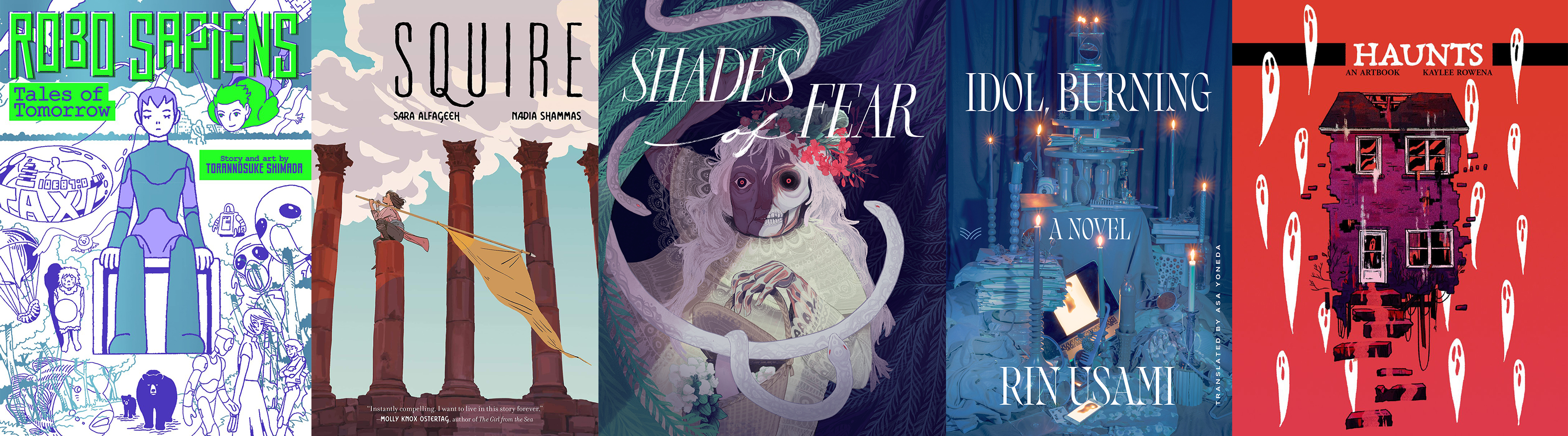
Squire by Sara Alfageeh and Nadia Shammas (HarperCollins Publishers)

Sara Alfageeh and Nadia Shammas’s graphic novel Squire is a low fantasy coming-of-age story about teenage recruits to an imperial army supposedly intent on “preserving the peace” of an arid land inhabited by different ethnic groups. We see this world through the eyes of Aiza, a fourteen-year-old from a minority ethnicity who intends to become a knight in order to gain citizenship and thereby ameliorate the poverty of her marginalized community.

Aiza’s fellow knights-in-training are a fascinating cast of characters, especially her friend Husni, who would much prefer to be a historian than a soldier and occasionally threatens to steal the show with his witty sense of humor and expressive body language. When Aiza begins training with the grizzled retired knight Doruk, the delicate layers of the story begin to unpeel as Aiza’s dream of assimilation is shattered by the realities of a collapsing empire.

Nadia Shammas’s writing is powerful and nuanced, and Sara Alfageeh’s art builds a world beautifully inspired by our own. Adrienne Resha’s review of Squire on Women Write About Comics unpacks the historical and contemporary cultural references behind the Middle Eastern and Arab-American inspirations of the graphic novel, and you can check out a few preview pages on the artist’s website.

Small Press Comic Anthology:
Shades of Fear, edited by Ashanti Fortson & Allison O’Toole (Balustrade Press)

Ashanti Fortson and Allison O’Toole’s Shades of Fear anthology collects ten short horror comics themed according to the strong use of a single color. The artwork is nothing short of spectacular, offering the reader both dazzling beauty and horrific imagery. As befitting the rich banquets of color, many of the stories share the theme of being devoured, either metaphorically through toxic relationships and generational trauma – or quite literally.

My favorite piece is Mar Julia’s “Bellies,” a work of poetic yet intense body horror about an order of immortal priestesses who dine well so that they may endow themselves with the fortitude necessary to make appropriate sacrifices to a (mercifully) unseen deity. The narrative depth of every short comic in the anthology recalls the gothic masterpieces of Emily Carroll, and I’ve often found myself returning to Shades of Fear to dig deeper for creative inspiration and visceral chills.

Manga:
Robo Sapiens: Tales of Tomorrow by Toranosuke Shimada (Seven Seas)

Toranosuke Shimada’s Robo Sapiens: Tales of Tomorrow is a one-volume graphic novel that begins in the near future and spans many hundreds of years of cosmic time. The manga’s ambitious narrative is pieced together from smaller and more intimate stories about the lives of individual robots and their human companions. Shimada is not concerned with whether robots have sapience; rather, these stories take the dignity and legal rights of artificial intelligence for granted in order to ask questions about what personal happiness might look like should “humanity” be separated from its current embodiment.

Shimada’s artwork is deceptively simple and allows the reader ample space to appreciate the timelessness of each character’s story even as the world around them changes. Despite the gaps between chapters, I found it profoundly moving when the narrative threads began to connect toward the end of the manga. Robo Sapiens contains a number of subtle references to the pioneering work of Osamu Tezuka, but Shimada’s speculation on a posthuman future brings a fresh and nuanced perspective to familiar tropes.

Fiction:
Idol, Burning by Rin Usami (HarperCollins Publishers)

Rin Usami’s Idol, Burning is only 115 pages long, but it’s a whirlwind ride through the psychology of boy band fandom. The narrator is failing out of high school because the Japanese education system refuses to accommodate her learning style, and her world begins to fall apart when the pop star she idolizes becomes the target of social media discourse. Usami is unflinching in her portrayal of online fandom cultures, and she’s refreshingly honest about the adverse effects that flamewars can have on vulnerable people seeking support in fandom communities. It’s not always easy to read Idol, Burning, but I couldn’t put it down. 

The English translation of the book includes short essays by the author and her translator, as well as statements from the cover designer (surrealist photographer Delaney Allen) and the illustrator (comic artist Leslie Hung). The novel’s story stands on its own, but it’s a treat to read about the inspirations of the writers and artists who brought it to life.

Zine:
Haunts by Kaylee Rowena

I recently had the pleasure of flipping through Kaylee Rowena’s zine Haunts, which collects the American comic artist’s illustrations of haunted houses. I especially appreciate the epilogue, which takes the form of a short essay about houses and hauntings and memory. It’s a fantastic piece of writing, and Rowena acknowledges the influence of a YouTube video called “Control, Anatomy, and the Legacy of the Haunted House” by the video game critic Jacob Geller

This video discusses the trope of the haunted house through the two games mentioned in the title, but it has deeper cultural resonance and doesn’t require any prior knowledge. It’s also my favorite type of video essay: it’s only twenty minutes long, it has subtitles, and it’s not necessary to watch the video footage if you just want to listen to the audio. I’ve been feeling a bit more homebound since the weather has gotten colder, and the combination of Rowena’s colorful art and Geller’s video essay have helped me appreciate the magic and mystery of walls that continue upright and doors that remain sensibly shut.

Video Game:
Stray, developed by BlueTwelve Studio and published by Annapurna Interactive

You may have seen your favorite artists posting tributes to the game Stray, which was released in July by Annapurna Interactive, a publisher that specializes in unique and stylish narrative games. The game’s website describes it as “a third-person cat adventure game set amidst the detailed, neon-lit alleys of a decaying cybercity,” but really it’s about hope and friendship. The story is divided into twelve chapters that alternate between nonviolent 3D platforming segments and more text-based exploration segments, the combination of which provide a fun and interesting mix of narrative elements. Stray is accessible to a diverse range of gamers, and the rich and detailed visual splendor of the posthuman cityscape will be a delight to fans of cyberpunk comics and manga.

. . . . . . . . . . . . . . .

All of these mini-reviews were originally published as part of the monthly “WWACommendations” roundtables on the website Women Write About Comics. You can find these posts on the WWAC website (here) and follow WWAC on Twitter (here).

Himawari House Review on WWAC

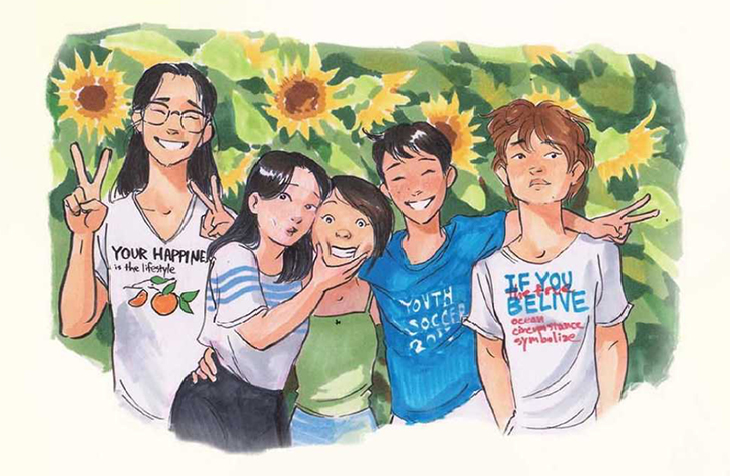
I recently had the honor of writing a review of Harmony Becker’s graphic novel Himawari House for the website Women Write About Comics. Here’s an excerpt:

Himawari House is an interesting and meaningful follow-up to They Called Us Enemy, Becker’s collaboration with actor and activist George Takei about the illegal internment of Japanese-Americans during the Second World War. While They Called Us Enemy is about how individual lives were subsumed under the cultural identity of “Japanese,” which was foreign to many people to whom it was forcibly applied, Himawari House is about finding and negotiating Japanese cultural heritage as a chosen aspect of individual identity.

You can read the full review (here). You can also check out the book’s page on the publisher’s website (here) and follow the artist on Instagram (here). I’d also like to acknowledge the fantastic work of my brilliant editor, whom you can follow on Twitter (here).