Symbiosis

Symbiosis
https://spicaze.itch.io/symbiosis

Symbiosis is a free-to-play RPG Maker horror game about a murderous mad scientist living in a house in the woods with an adorable child. The story has two endings, and it takes about 25 minutes to play through the game once.

You play as Magnolia, a geneticist who left her university post after a mysterious fire broke out in her lab when her research came under public scrutiny. She now lives in isolation with Mint, a curious and precociously intelligent young boy whom she’s raising as her son. According to local rumors, Magnolia is a witch. It doesn’t help that hikers have a tendency to disappear in the forest surrounding her property.

The game begins as Magnolia carves up the corpse of someone she caught sneaking into her house. She’s interrupted by Mint, who can’t sleep and wants a bedtime story. Unfortunately, there are three more intruders in the house, and Mint won’t stay in his room. Your job as the player is to turn the remaining intruders into corpses – for science! – while ensuring that Mint remains out of harm’s way. 

Magnolia’s house isn’t too terribly large, but it’s big enough to have all sorts of nooks and crannies to poke around, as well as various journals and research notes to find. The player can use these clues to figure out who Magnolia is and where Mint came from, although you’ll have to make your own decision regarding Magnolia’s feelings toward Mint and what the fate of the pair will be. The game’s creator has posted a guide for the two endings (here), and this short devlog also contains their thoughts on the story and characters.

What sets Symbiosis apart from the crowd of RPG Maker horror games is the creator’s gleeful willingness to allow Magnolia to be messy and problematic. She initially seems to be a complete sociopath, and her bad behavior is a joy to watch. As you witness her interactions with Mint unfold, however, her character becomes more complicated. Why Magnolia feels affection for Mint is open to interpretation, but I think it’s fair to say that her attachment is genuine.

The way I interpret this relationship is that it’s an analogy for the process of artistic creation (or scientific discovery, as the case may be). In order to create something meaningful, an artist has to be unpleasant, selfish, and more than a little antisocial. Gradually the art comes to take on a life of its own, and it’s up to the artist to decide whether to let it go or to keep it firmly in the orbit of their own dysfunctional personality.

Lest you think I’m spoiling the story, fear not – there’s all sorts of nasty business in Magnolia’s past for the player to discover. This woman is a legitimately horrible person, and her crimes are fantastic fun.

Symbiosis tells a short but grisly story through simple narrative adventure gameplay intercut with stylishly illustrated cutscenes, and I enjoyed it enough to go back and see both endings. I definitely recommend this game to fans of gothic horror, demonic women, and questionable scientific ethics.

Review of The Harrowing Game on Comics Beat

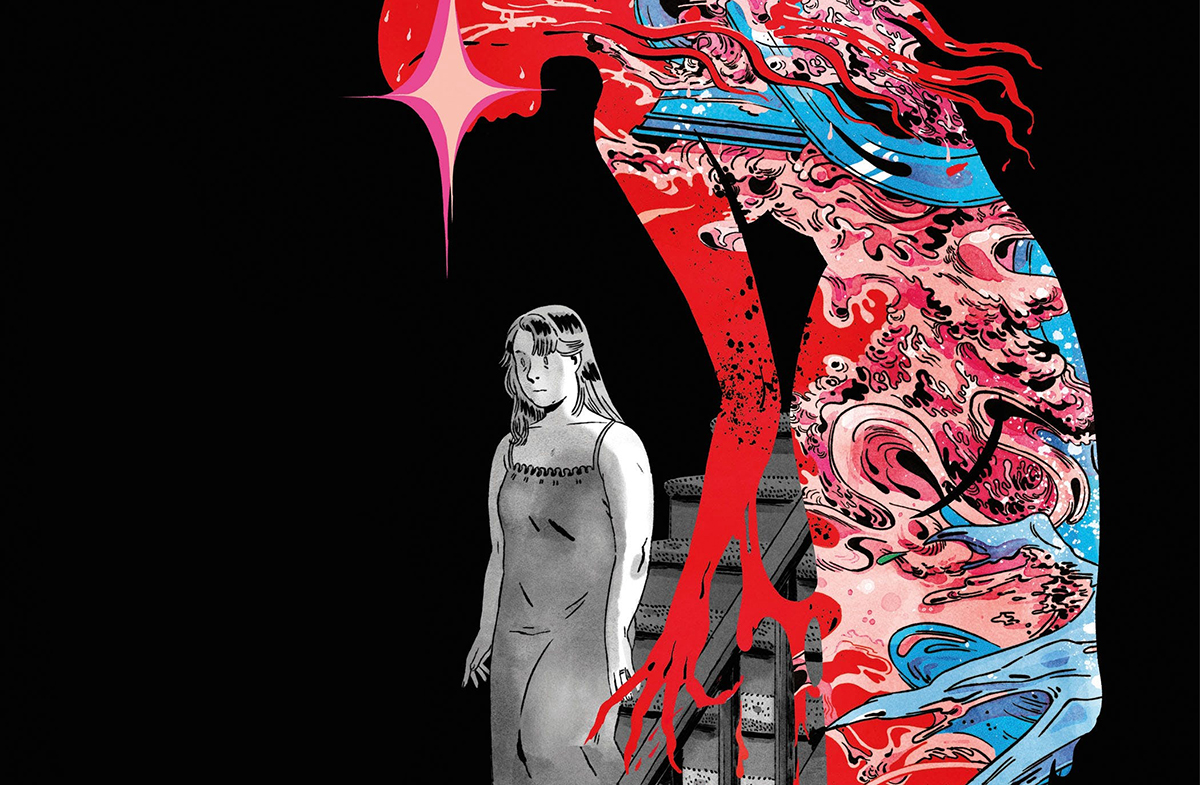
I consider myself extremely fortunate to have been an early reader of Antoine Revoy’s newest graphic novel, The Harrowing Game. I love this book, which is strongly inspired by Junji Ito but still very much its own thing. I’m also lucky to have gotten an opportunity to write a review for Comics Beat. Here’s an excerpt…

The Harrowing Game will delight fans of Junji Ito and H.P. Lovecraft, to be sure, and connoisseurs of horror will appreciate Revoy’s intriguing interpretations of familiar tropes. Revoy twists gothic stories into broken reflections of cultural anxieties, and the storytelling is no less dramatic for the subtlety of its social commentary. If nothing else, it’s a pleasure to get lost in the details of Revoy’s spectacular illustrations. Whether you’ll be able to find your way out untouched and undisturbed is another story.

You can read the full review on Comics Beat here:
https://www.comicsbeat.com/graphic-novel-review-the-harrowing-game/

Whispering Willows

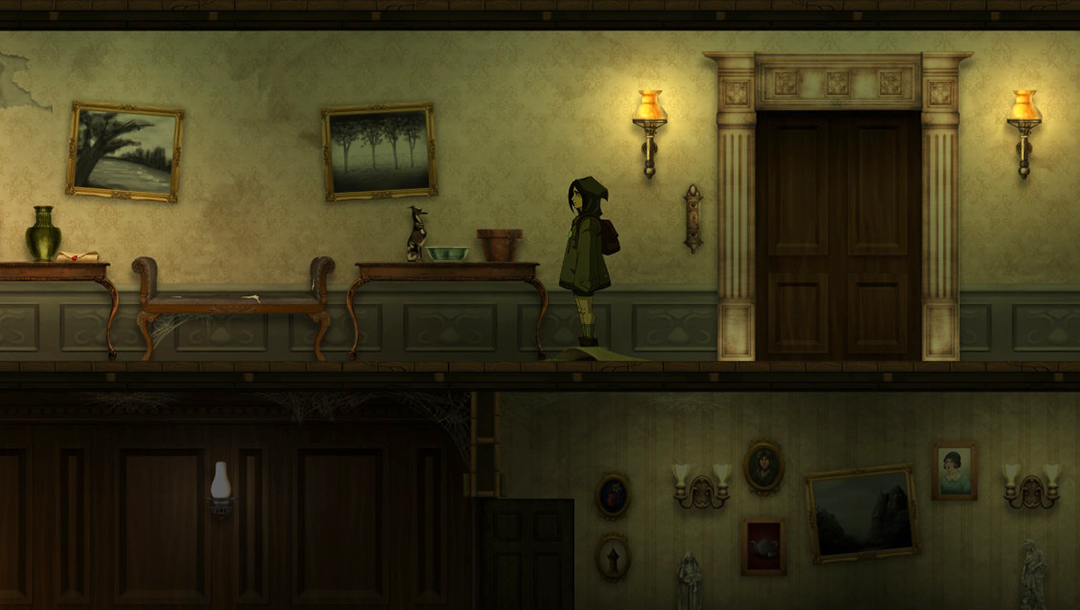
Whispering Willows (on Steam here) is a 2D adventure game set in a haunted mansion. There’s no combat, and the game takes about three hours to finish. It’s a small indie game made in 2014, and it’s not perfect. Still, I enjoyed the time I spent in Willows Mansion, and I’d recommend giving this game a shot if you’re into spooky gothic stories.

You play as Elena Elkhorn, a teenage girl whose father works as the groundskeeper at the derelict and abandoned Willows Mansion. Elena’s father doesn’t return one night, and she has a bad feeling about the mansion. Hoping to bring her father home, Elena sneaks onto the property and immediately falls headlong into an underground crypt. There she meets the ghost of her ancestor, who teaches her how to use the power of her magical pendant to leave her body to go spiritwalking. In a cursed mansion filled with phantoms, this is an extremely useful ability to have.  

Before I jump into the many things I love about this game, let me be upfront about its flaws:

– There’s not much actual gameplay.
– The hand-drawn cutscene art is unpolished.
– The writing is good but a bit uneven.
– The background music is limited.
– Your character walks very slowly.
– There’s no map to help you navigate.

Essentially, this is a small indie game that indeed looks and feels like a small indie game. I’m not complaining about the rough edges of Whispering Willows; I just want to make it clear that it’s a game made ten years ago on a tiny budget earned from a Kickstarter campaign. Still, I found its simplicity and amateurish aspects charming, and it has many strong points.

To begin with, the map is surprisingly large, and there’s a lot of space to navigate. You’ll explore the mansion’s crypt, its garden, and various outbuildings; but mainly you’re going to be walking around the house itself. The mansion is impossibly large and includes all the standard gothic flourishes: locked doors, grisly kitchens, moldy bathrooms, crooked paintings, peeling wallpaper, taxidermied hunting trophies, creepy dolls, and all the secret passageways you could ever want.

Of course there are all manner of notes lying around, and these notes collectively tell a suitably gothic story about the very wealthy but very evil man who built the mansion. This story never quite comes together in terms of plot or themes, and the character motivations are ridiculous. Still, all the individual bits and pieces are gothic catnip, from a lover kept in a secret room to a murdered best friend to a servant driven mad by what he’s seen.

This all takes place in California during the Wild West days, meaning that the land occupied by the mansion had to be taken from someone. It turns out that it was forcibly wrested from Elena’s own ancestors. Alongside his more intimate crimes, then, the mansion’s owner became the mayor of a frontier town by means of enacting war and genocide on First Nations people.

We tend to think of gothic mansions as being located in Europe, or perhaps New England. There are definitely nineteenth-century mansions in California, though (like the Carson Mansion), and they’re built on land soaked in blood.

Importantly, the First Nations people in Whispering Willows aren’t all ghosts. Elena and her father are very much alive, and they’re not tempted by the faded pseudo-grandeur of the former colonists. At the end of the game, it’s extremely satisfying to see Elena essentially say “fuck all this” as she walks away from the mansion with her father.  

This is an interesting perspective on classic gothic story tropes that I love to see. And honestly, Whispering Willows isn’t such a bad game. The puzzles are easy, but the lack of difficulty is a selling point for me. Also, the gameplay mechanic of Elena spiritwalking to interact with the numinous aspects of the environment is used in clever ways, and it’s a lot of fun.  

Aside from Elena’s slow walking speed, my only real complaint is that this game would benefit immensely from a map. Even though navigation isn’t particularly complicated, I got lost a few times and had to resort to a walkthrough (this one here) a few times, which wouldn’t have been necessary if the player could just pull up a subscreen.

Whispering Willows definitely feels like an indie game, but it’s got a delightfully grisly story and an excellent sense of atmosphere, and it’s worth checking out if you’re interested in Wild West Gothic from an indigenous perspective.

As a side note, this was apparently the game that launched Akupara Games, a publisher that specializes in quirky indie games with a strong sense of style and setting. Two of my favorite titles they’ve helped get off the ground are Rain World and Mutazione, and it’s cool to know that this was where they started.  

The Sleeping Princess

There is a legend in Hyrule that a sleeping princess lies behind the door of a locked room deep under the ruins of the North Castle. When the princess rises, so too will the ancient powers sealed within her dreams. Impa knows the legend is true, and she fears the fate that will befall the kingdom should the first Zelda wake. Yet when a shadow rises on the borders of Hyrule after the birth of a new princess, Impa must make a terrible choice.

I had the honor of contributing a story called “The Sleeping Princess” to Blood Moon Rising: A Zelda Horror Zine. I was interested in exploring the background of Princess Zelda in the original 1986 game, and I thought it might be fun to see her story through the eyes of Impa, who knew about the undead princess who was the first of Zelda’s line. In other words, I’m connecting some of the more disturbing threads between The Legend of Zelda and Zelda II: The Adventure of Link.

“The Sleeping Princess” is a story about maternal love, political sacrifice, and the dark secrets hidden within the labyrinthine dungeons of Hyrule. I was strongly inspired by H.P. Lovecraft’s novel At the Mountains of Madness, which dwells in the geometric terror of monumental architecture built by strange hands, and I did my best to create a sense of ruined grandeur similar to that of Dark Souls and Ico: Castle in the Mist.

For the story’s illustrations, I had the incredible pleasure of working with the devilishly talented Pumpkinsouppe, whose dark arts brought this ruined world to life.

You can find “The Sleeping Princess” on AO3 here:
https://archiveofourown.org/works/62492182

Leftover sales of the zine are open until February 24 on BigCartel (here).

Review of A Guest in the House on WWAC

I had the pleasure of writing a review of Emily Carroll’s darkly brilliant graphic novel, A Guest in the House, for Women Write About Comics. The story gazes into the moonlit shadows of “traditional” families, and it’s gothic horror at its sexiest and most subversive. Here’s an excerpt from my review:

Carroll’s visual representation of Abby’s inner world is brilliantly strange and gorgeously queer. In her more introspective moments, Abby indulges in a fantasy of herself as a heroic knight fighting dragons, who lay waiting for her, hot and wet in their dark caves. Having slain a dragon while remaining protected and genderless inside her full-body armor, Abby seeks comfort in the arms of the beautiful ladies that await her arrival. While the majority of the artwork in A Guest in the House is painted in black ink with gradations of gray, Abby’s fantasies practically scream from the page in lurid full color that slowly begins to bleed into Abby’s waking life.

You can read the full review here:
https://womenwriteaboutcomics.com/2023/10/a-guest-in-the-house-review/

If you’re interested, I also recommend checking out Emily Carroll’s website (here) for a curated selection of horror art and short comics. It’s not for the faint of heart, but it’s one of the best sites on the internet.

While I was writing this review, I told a friend that A Guest in the House is like Dark Souls, but if Dark Souls were about a housewife in rural Canada in the 1990s. I stand by this evaluation, and I think it makes sense given the artist’s love of FromSoft games. Carroll recently released a short fancomic about Bloodborne, and you can download it for free from Itchio (here). As with A Guest in the House, I might offer a content warning for body horror and violence, but the art and writing are gorgeous.

The Suicide of Rachel Foster

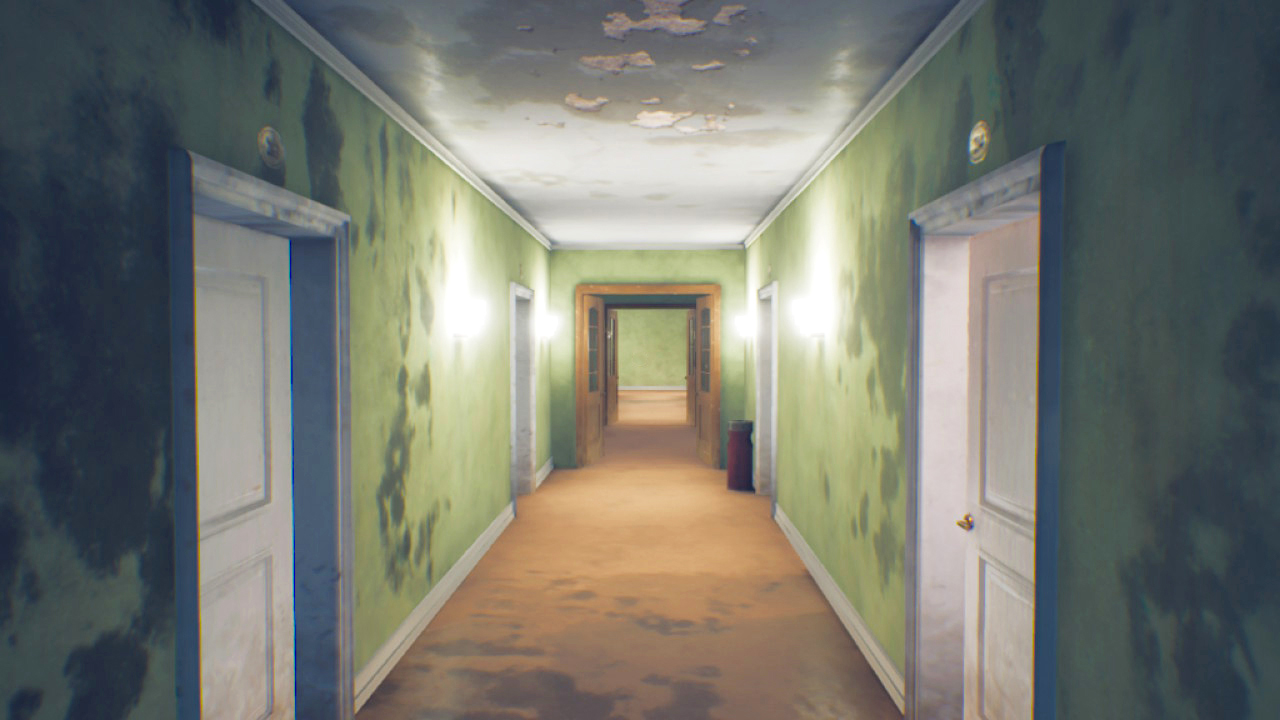
The Suicide of Rachel Foster is a suspense thriller in the form of a walking sim that takes about three hours to play. The game has moderate elements of horror, and the relationship between the player-character’s father and the teenage girl he groomed is a key part of the story.

This is a difficult game to recommend, as I’m not sure its merits outweigh its flaws. These flaws aren’t necessarily related to the story, which is engaging despite its sensitive themes. Rather, The Suicide of Rachel Foster has major gameplay issues that will probably be a turn-off for anyone who isn’t already a veteran fan of walking sims. In other words, The Suicide of Rachel Foster is a very walking-simy walking sim, and I think it’s safe to say that people who aren’t interested in the premise probably won’t get a lot out of the game.

That being said, the premise is a banger: Your dad was the manager of what is essentially the Overlook Hotel from The Shining, and you get trapped in the hotel by a snowstorm while inspecting the property after your dad’s death. As you poke around mementos of the past, a terrible family secret comes to light, and it’s entirely possible that you’re not as alone in the building as you were led to believe.

The Suicide of Rachel Foster begins when the player character, Nicole, gets a letter from her late mother, who hired a lawyer to deliver the document to her on the event of her father’s death. Ten years ago, when Nicole was 16, her mother took her to Portland when she left her father and the hotel in Montana they managed together. Nicole’s father had been pursuing an affair with one of Nicole’s classmates, the eponymous Rachel Foster. Rachel became pregnant and committed suicide by jumping off a cliff in the mountains.

The Timberline Hotel struggled on for another six years but closed in 1989, and Nicole’s father continued to live there for another four years before committing suicide himself. It’s now 1993, but everything in the hotel is more or less how it was when Nicole left in 1983 – including, creepily enough, her childhood bedroom. Regardless, the elements have taken their toll on the building, and Nicole is legally required to perform an in-person inspection before she has her father’s lawyer sell the property to a hotel chain.

Thankfully, the hotel still has hot water and electricity. Nicole is connected via a very chunky cellphone to a man named Irving, who identifies himself as a FEMA agent who’s been assigned to monitor her situation. Irving cautions Nicole not to leave during the snowstorm, and he helps guide her through the hotel so that she can keep the lights on and the water running during the emergency.

Oddly enough, Irving seems a little too helpful, and maybe just a little too available. He explains that he’s been a member of the small-town community since he was a child, but perhaps he knows a bit too much about the history of her family. Nicole is suspicious of Irving at first; but, the longer she’s stuck in the hotel, the more she comes to trust him. Despite Irving’s misgivings, Nicole starts to investigate the death of Rachel Foster, and she begins to suspect that perhaps the girl didn’t commit suicide after all.

While Nicole is stuck in the hotel for nine days, the player is tasked with finding the answers to three questions. What happened to Rachel ten years ago? What does Irving know that he isn’t telling you? And something is clearly strange about the hotel – what’s going on there?

While The Suicide of Rachel Foster presents an intriguing set of intertwined mysteries, the performance of Nicole’s voice actress rubbed me the wrong way. Nicole comes off like a whisky-slinging, battle-hardened intergalactic bounty hunter, which is an odd approach to the character. Nicole is only 26 years old, and she’s something of a blank slate. She doesn’t seem to have a job, or friends, or interests, or hobbies, or even practical knowledge concerning how to maintain the hotel. To me, it didn’t feel like Nicole’s badass attitude is earned, and it grated on my nerves.

In addition, one of the main thematic questions of the game doesn’t mean anything to me. Can you still love your dead father if he abused your mother, seduced and impregnated your teenage friend, and then didn’t contact you for ten years? Like… no?? At the very least, this is a complicated issue that would have required much more heavy lifting than the game’s script was willing to do.

Thankfully, what’s going on with Irving is far more interesting, and his voice actor gives an incredible performance that made me feel way more sympathy toward his character than perhaps I should have.

In any case, the game is primarily concerned with creating an atmosphere of slowly mounting dread.

Unfortunately, Nicole walks at a glacial pace, which makes it a pain to explore the hotel. The map you’re given isn’t terribly useful when you have it, and Nicole loses it halfway through the game. The location of your objectives isn’t clear, and there’s a lot of extraneous space with no plot relevance. It’s easy to get lost, and there are no nudges to help get you back on the critical path.

Because you move so incredibly slowly, I ultimately gave up on free exploration and used a walkthrough, this one (here). There’s nothing wrong with using a walkthrough, of course, but I wish it weren’t necessary.

I should note that you can run, but this is also a pain. To run in the Nintendo Switch version of the game, you have to exert force to press down the left joystick as you move it. This is extremely awkward and uncomfortable. To put it bluntly, it’s an obvious accessibility issue that doesn’t need to exist.

Also, you’re occasionally given dialog choices that don’t make much sense. You’ll choose one thing, and then Nicole will say something else. These choices are timed for some inexplicable reason, and what you say doesn’t have any impact on the plot.

This makes it all the more confusing when you’re given a choice that does matter at the end of the game, which is whether or not to allow Nicole to commit suicide. This is a weird choice to have, to be honest, especially since there’s nothing about Nicole that indicates she’s depressed or suicidal. Again, the player doesn’t know anything about her, and nothing that happened in the past is her fault. Even if you don’t allow her to commit suicide, I don’t understand the “good” ending, which doesn’t make any logical or emotional sense.

I know this seems like a lot of criticism, but it’s worth repeating that the game isn’t that long, and its main focus is on creating a creepy narrative atmosphere to accompany its lovingly rendered spatial environment. You can probably finish the story in two and a half hours if you use a walkthrough from the beginning and don’t get stupidly lost like I did, and the gameplay issues might not bother someone more inured to the idiosyncrasies of walking sims.

I have to admit that I never really warmed up to Nicole or felt any sympathy for her sexpest father, but Irving grew on me. The intertwined stories of what happened to Rachel Foster and what’s currently going on in the hotel are extremely intriguing, as is the physical environment of the hotel itself.

I’m a huge fan of The Shining, both the Stephen King novel and the Stanley Kubrick film, and it was cool to see what the “staff only” spaces of a place like the Overlook might actually look like, from the caretaker apartments to the boiler room to the industrial kitchen freezer to the utility crawlspaces. Mercifully, there are no elevators in the Timberline Hotel, but the carpeted hallways are plenty spooky enough. There’s also a secret underground passage with a secret room. I consider myself to be a connoisseur of secret basement rooms, and this one gave me serious chills.

If you’re not sold on The Suicide of Rachel Foster but curious about where it goes with its premise, I’d recommend checking out the Wikipedia article (here), which contains a detailed plot synopsis. I think The Suicide of Rachel Foster probably would have made a better novel, but there’s also something to be said for the experience of being able to walk through the hotel while hearing every creak of the floorboards and every rattle of the pipes in the walls. If nothing else, the sound design is amazing, and the dev team clearly put a lot of love and care into creating an immersive setting.

So, in conclusion, while The Suicide of Rachel Foster is a difficult game to recommend to everyone, I personally very much enjoyed being drawn into the strange and horrible story of the Timberline Hotel.
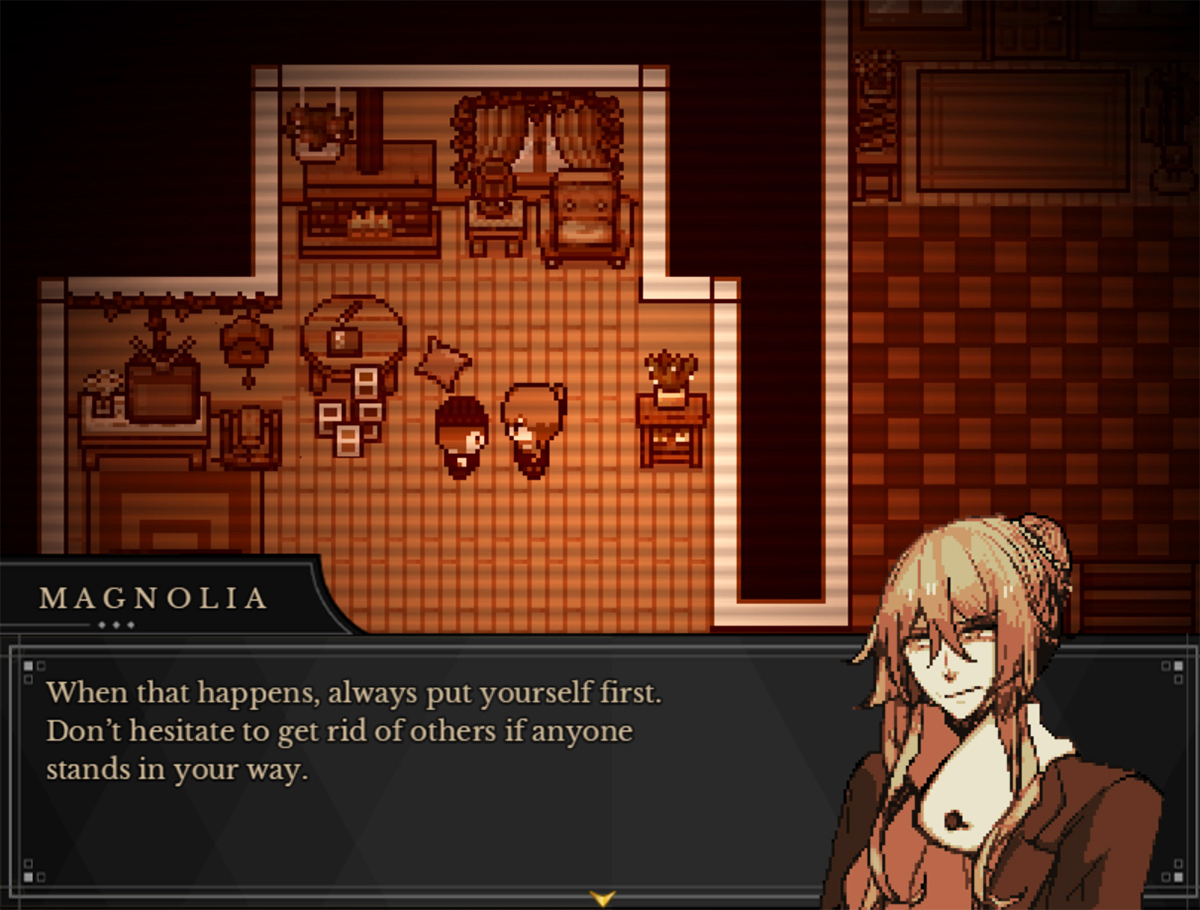
The Witch’s House

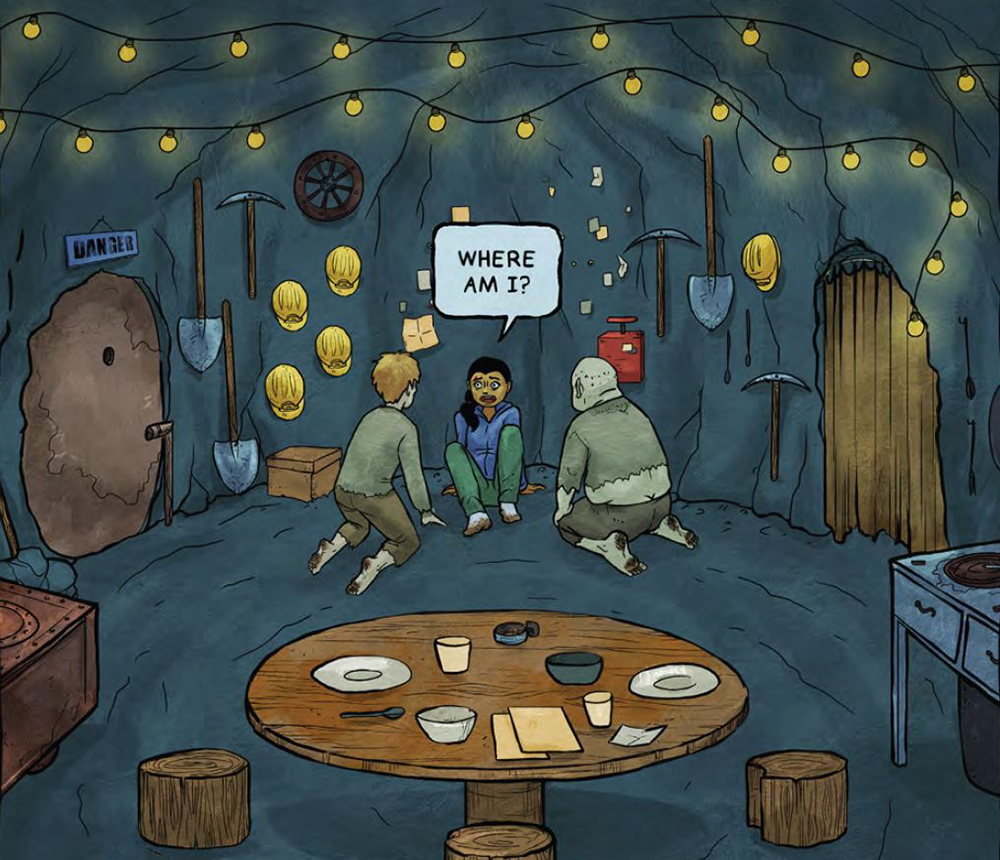
The Witch’s House is an RPG Maker gothic horror game from 2012 that was released as a remastered edition for Nintendo Switch in October 2022. The game consists of cute environmental puzzles presented in gorgeous 16-bit pixel graphics, and it’s brutally violent in an over-the-top and almost cartoonish way. It takes about fifty minutes to play if you’re good at video game puzzles, and maybe an hour and twenty minutes if you need to consult a guide like I did.

You play as Viola, a 13yo girl who finds herself alone in the woods outside a mysterious mansion. A black cat greets her and invites her to wait inside until her father comes to pick her up, thereby trapping her within a hungry and malicious labyrinth. Your job is to find a way to escape the house while learning the story of the girl who lives there, a young witch named Ellen.

The game drops you right into the action with very little preamble. Within sixty seconds, you’re inside the house. Within another sixty seconds, you’ve probably already died for the first time. I was shocked and delighted by how graphic this first death was. Viola’s deaths become more horrendous and creative as you get deeper into the house, and the main appeal of the game is seeing all the fun ways this cute anime girl can die.   

With one or two exceptions, surviving the traps isn’t a matter of reflexes. Instead, the game asks you to solve simple puzzles by interacting with the environment. The house is divided into five floors, and each floor is further divided into discrete suites of rooms associated with a specific puzzle sequence. Only the fifth and final floor has enough moving parts to necessitate consulting an online guide; and, for the most part, it’s fairly easy to figure out what you need to do. 

Of course, you can always choose to do something else just to see what will happen. The Witch’s House rewards exploration and experimentation with especially gruesome deaths. My favorite death is when Viola gets eaten by a grand piano. There’s a nice discordant crunch when the lid slams down, and I appreciate how blood oozes from the cracks.

On the game’s opening menu screen, you can choose to play in an “Easy” mode that will allow you to respawn at the start of the room where you died. When you finish the game, you’ll unlock an “Extra” mode that adds more objects and text to the environment while slightly increasing the complexity of the puzzles. Despite the fact that the Extra mode and the Easy mode are mutually exclusive, I enjoyed replaying The Witch’s House with the added difficulty. You can interact with just about everything you see on screen, and the flavor text is terse yet interesting. The house is like a murder playground, and it’s fun to wander around while triggering various awful scenarios.

The game’s story is self-contained and satisfying. There are two extra endings unlocked by meeting special challenge conditions (which aren’t a big deal in Easy mode), and they both add horrifying context to the default ending. Apparently, there’s also a fourth ending where the house simply allows you to leave if you wait in the foyer for an hour of real time. I’m not going to do that, of course, but that’s a neat concept.

For me, The Witch’s House was $15 and two hours well spent. I think some people might complain about how the spooky atmosphere of the game relies a bit too heavily on jumpscares, which is fair… but they’re very good jumpscares. In the end, The Witch’s House presents a perfect short horror story with excellent pacing that continually surprises the player and doesn’t overstay its welcome. The puzzles are clever without being overly difficult, the 16-bit graphics are beautiful, and the translation is excellent.

Lily’s Well

Lily’s Well
https://pureiceblue.itch.io/lilys-well

Lily’s Well is a lo-fi horror adventure game with a charming top-down NES aesthetic. You play as an anime girl named Lily who hears a voice calling for help from the well by her isolated cabin in the woods. Your job is to explore the house and its surroundings while collecting materials to make a rope. Depending on how many materials you assemble, you’ll be able to descend to a different level of the well. Each of the ten levels is its own horrible ending.

There are ten “good” materials and another five “bad” materials that you can find. If you incorporate a bad material into your rope, it will break. Lily will die, and you’ll have to start over again from the beginning. The game doesn’t signpost which materials are good or bad, so you have to go through them one by one and figure this out for yourself using the process of elimination. I got very frustrated very quickly, but this could have just been me being impatient.

I found the guide (here) to be extremely useful. This isn’t so much a walkthrough as it is a list of materials and a FAQ, and you’ll still have to put the pieces of the game together yourself. While using the guide, it took me about three hours to get all of the endings.

If you use the guide judiciously, you can finish the game in about 45 minutes. This involves spending 25 minutes to get to the bottom of the well, and another 20 minutes to explore what’s down there. Every other ending is an instant gruesome death for Lily, while the bottom of the well is essentially the second half of the game. In all fairness, the game’s true ending has a much better payoff if you die a few times first, and there are all sorts of fun little secrets to play with between runs, including certain events that only trigger on multiple playthroughs.

I said at the beginning that Lily’s Well has an NES aesthetic, but it’s really more of an early 1990s MS DOS game. The graphics are primitive, but the game uses them extremely well and puts a lot of care into the adventure elements. There’s all sorts of text for anything you care to interact with; and, if you’re patient, it’s possible to figure everything out on your own without using a guide.

The adventure game elements of Lily’s Well were hit-or-miss for me, and what I really enjoyed was the game’s dark humor. It was fun to see this cute anime girl die in all sorts of fun and creative ways, and I loved how over-the-top gruesome each ending is. I kept playing to dig deeper into the lore and see just how gleefully horrible Lily’s world could get under its placid surface, and I was not disappointed.

The House in Fata Morgana

The House in Fata Morgana describes itself as “a gothic suspense tale set in a cursed mansion,” but I would describe this visual novel as 500k+ words of torture porn. It’s so bad. It is so so bad.

The premise of the game is that you wake up in an abandoned mansion with no memories. A creepy maid guides you through the house while telling you the tragic stories of the people who once lived there. It turns out that the maid was present in all eras of history, and that you were too – albeit not in the form you expect. Along the way there are a lot of silly and juvenile anime tropes, as well as a seriously awful mistreatment of transgender issues. And did I mention torture? There’s a lot of torture.

The remainder of this post includes discussion of torture, including sexual assault, so please take care.

One of the reasons I shy away from away from amateur writing communities is because they tend to have at least one person who will go through a manic phase and then won’t shut up about how they wrote 10k words in one night, and how these words are the most brilliant thing that’s ever been written, and how every single one of these words are perfect and should never be edited.

The House in Fata Morgana wrote 10k words in one night, and it shows. The ideas behind the individual character stories and the overarching plot aren’t bad, but the writing is godawful. There was clearly no editing, and the pacing is a miserable mess. Characters repeat themselves endlessly in a way that goes far beyond “demonstrating the theme of a cycle of abuse.” Each of the sub-stories drags on forever before ending in a bloodbath of screams that go “AaAAAAggHHH” and “NnnGGggGG uuuUrrhhh” and “hehehHEHEHehehe” for literally dozens of minutes of the player clicking through meaningless text.

(I don’t mean to suggest that the translation is bad, by the way. It’s actually very polished. Still, I feel horrible that the translator had to wade through this mess, and I hope they got to take a long vacation afterward.)

The art is pretty but extremely limited, and the character designs fail to convey any sort of personality or mood. The game offers almost no horror art, or even any interesting visual imagery. The giant gothic mansion has maybe ten rooms, and they’re all bog-standard stock photos run through different filters. The player is asked to make a few decisions, but they’re few and far between. These choices are binary, with the wrong decision being crystal clear and resulting in an obviously premature end to the game. In other words, there’s no real gameplay to speak of, nor any real payoff for making your way through the text.

About two-thirds of the way through the game, I got to the point where I was holding down the skip button to speed-read through the text as quickly as possible. I gave up at some point during the penultimate chapter. Towards the end, the story’s pace slows down instead of quickens, making the game feel even more tedious as it offers revelations that might have been surprising if the writing weren’t so mind-numbingly boring.

The House in Fata Morgana could have had the potential to be unique and interesting if its writing had been properly edited. At perhaps 250k words, the player would still have been able to spend a significant amount of time in this creepy mansion with these unfortunate characters, and the writer still would have been able to convey the sense of feeling trapped in a web of words. I’m willing to grant a creator sufficient room to explore the world of their story, but I think it’s safe to say that three entire novels’ worth of extra words will try anyone’s patience.  

There’s also the game’s severe mistreatment of transgender issues.

By this point I have enough exposure to Japanese otaku media to understand that the representation of queer identity and sexuality is complicated. For example, is a work of fiction seemingly intended for a straight male audience secretly LGBTQ+ friendly, or is it actually homophobic? And, if it is borderline homophobic, how much energy do you need to expend to reinterpret the plot and characters into something that can be read as queer-positive? Is it worth the trouble?

Even with the benefit of the doubt, however, the second-to-last chapter of The House in Fata Morgana hit me especially hard.

This chapter is about a transgender (and possibly intersex) character quietly coming out as gay and then being tortured by his family. It’s intense, and it lasts for more than an hour of gameplay time. I don’t use the word “problematic” lightly, but the way this torture and misgendering resonates with the rest of the story is deeply upsetting.

Maybe this is all resolved and everyone gets a happy ending, who knows. For me, I’m not sure any ending is worth having to sit through hours of a transgender character being imprisoned and starved and beaten and tortured and being told, in line after line after line of text, that he would be happy if only he weren’t gay.

I feel like this goes beyond “horror” and enters the realm of something else entirely. Either the writer has an intense fetish, or it’s sincere homophobia. I don’t think every piece of media needs to be ideologically pure or written for me specifically, but the way this element of the story casts a different light on the plot of the entire game (for complicated spoiler reasons) is extremely weird and fucked up.

I think most players will eventually run up against the question of “why don’t the characters just get up and leave the house,” and the same frustration applies to The House in Fata Morgana in a meta sense. Namely, you don’t need to be trapped by this poorly-written and poorly-edited and poorly-paced game. You can just quit playing! So that’s what I did.

If you’re wondering whether you should spend $40 to check out The House in Fata Morgana and just play until you get bored, it’s worth keeping in mind that there’s a strong psychosexual element to the story presented by each chapter, with sexual assault and torture being the dominant themes. This is par for the course for gothic horror, but the player’s enjoyment of this game is going to be strongly dependent on how many hundreds of thousands of words of explicit descriptions of non-erotic yet still sexualized torture they’re willing to tolerate. Also, the very first chapter is about incest.

I love horror, and I’m not judging anyone who uses fiction to explore the darker sides of human experience. Still, considering how highly rated The House in Fata Morgana is on Steam, I think it’s important to say that this game definitely isn’t for everyone.

Gothic Horror Story Elements

In order for a story to be considered “Gothic,” I think it needs to include…

– A house. This “house” can be a castle or a space station or an abandoned medical research facility or what have you, but it needs to be a place where people live and eat and sleep.

– It has to be a big house. In addition to being big on the outside, it should be larger than it appears. The house should have something along the lines of a secret sub-basement, hidden rooms, tunnels in the walls, a House of Leaves style portal to another dimension, or something along those lines. The house needs to be large enough to be considered a labyrinth.

– The house has to be old and in a state of decay or disrepair. In addition, the house needs to be isolated and surrounded by wilderness. Over the course of the story, the natural environment should intrude on the interior of the house. This should still be the case even if the environment is not technically “natural,” as in the case of Suburban Gothic.

– The house needs to be associated with and occupied by a family.

– The family needs to have a dark secret, preferably one hidden within the house.

– At least one member of the family should still live in the house. “Family” can be loosely defined, but the concept of “family” as such is key.

– If there’s no family living in the house, then the story is a “haunted house” story, not a “Gothic” story. This is also the case if the people living in the house aren’t alive or aren’t human (or whatever passes for “a normative person” in the world of the story). This is important, as “Gothic” is just as much of a narrative structure as it is a collection of tropes. For example…

– The point-of-view character should be a member of the family in some way. Often this character will come into the house through marriage or inheritance. Sometimes they won’t initially know they’re related to the family. In the case of servants and governesses and so on, the point-of-view character will either be secretly related to the family, or they’ll be a parent or spouse in all but name. If the point-of-view character isn’t related to the family, they will gradually fall under the delusion that they are.

– The point-of-view character will obviously be privileged, as they live in a large house and are associated with a wealthy family, but they also need to be disadvantaged in some way. The way in which they’re disadvantaged should have some thematic relevance to the dark secret hidden by the house.

– The point-of-view character must be forbidden from certain behavior by an arcane rule or system of rules. The forbidden behavior will generally involve the navigation of space in or around the house: Don’t go into the forest, don’t go into the cellar, don’t leave your room at night, etc.

– The disadvantage of the point-of-view character will compel them to accept the family rules even though they can intuitively feel that something is horribly wrong. This traps them within the house.

– The goal of the point-of-view character is to escape the maze of the house. The only way to navigate this labyrinth is by breaking the rules, engaging in forbidden behavior, and bringing the dark secret to light.

– The primary antagonist should be a living person in the family, related to the family, or emotionally invested in the family in some way. Although supernatural elements are not out of the question, it’s often the case that the phenomena presumed to be supernatural have a rational (albeit psychologically deranged) explanation. That being said, there’s often a Todorovian elision between “natural” and “supernatural,” with the distinction being left to the reader.

– When the point-of-view character reveals the family’s secret, this destroys the house. This destruction is usually literal. The family almost always dies as well. If the point-of-view character is too closely tied to the family, they may die too. Regardless, the reader will understand that the collapse of the house and the demise of the family is a good thing that needed to happen.

– The house and family should represent an older social system responsible for the disadvantage of a group of people represented by the point-of-view character. This system usually concerns oppression on the basis of class or gender, but it can sometimes be about race, nationality, or colonial heritage.

– The Gothic genre is not conservative, because it’s essentially about how outdated systems of privilege that still continue to oppress people are deeply fucked up and unhealthy and need to be destroyed. “Haunted house” stories are often conservative, but I would argue that Gothic stories advocate for radical systemic change and the self-realization of freedom from social expectations.

– At the same time, Gothic stories are not didactic. The lure of the forbidden goes both ways, after all, and the reader should be able to understand why the point-of-view character allows themselves to become trapped in the house. The old castle is majestic. The beast-husband is attractive. The spoils of ill-gotten wealth are luxurious and comfortable. The ruins are delightfully mysterious. The poison apple looks delicious. The story is queer and problematic, and that’s precisely why it’s appealing.

There are numerous cross-genres and sub-genres of Gothic that have their own specific conventions, like Gothic Romance and Boarding School Gothic. I didn’t address the visual language of the Gothic, or how tropes and conventions vary between times and cultures. Still, I think this is the core of the genre.