Afterdream

Afterdream is a 2D horror adventure game with puzzle elements and lo-fi pixelated graphics that takes between two to three hours to finish. It’s on Steam, but I played it on Nintendo Switch and had a fantastic time. Afterdream drops you right into the story and immediately grabs your attention, and its pacing is impeccable. The horror is mostly atmospheric, but the game features a great set of jumpscares mixed with short segments of heightened tension.

Afterdream isn’t for people who can’t tolerate horror, but I’d happily recommend it to anyone else who’s interested in trying out a short, original, and creative story game. The puzzles are fun but not too difficult, and the environmental design is really something special.

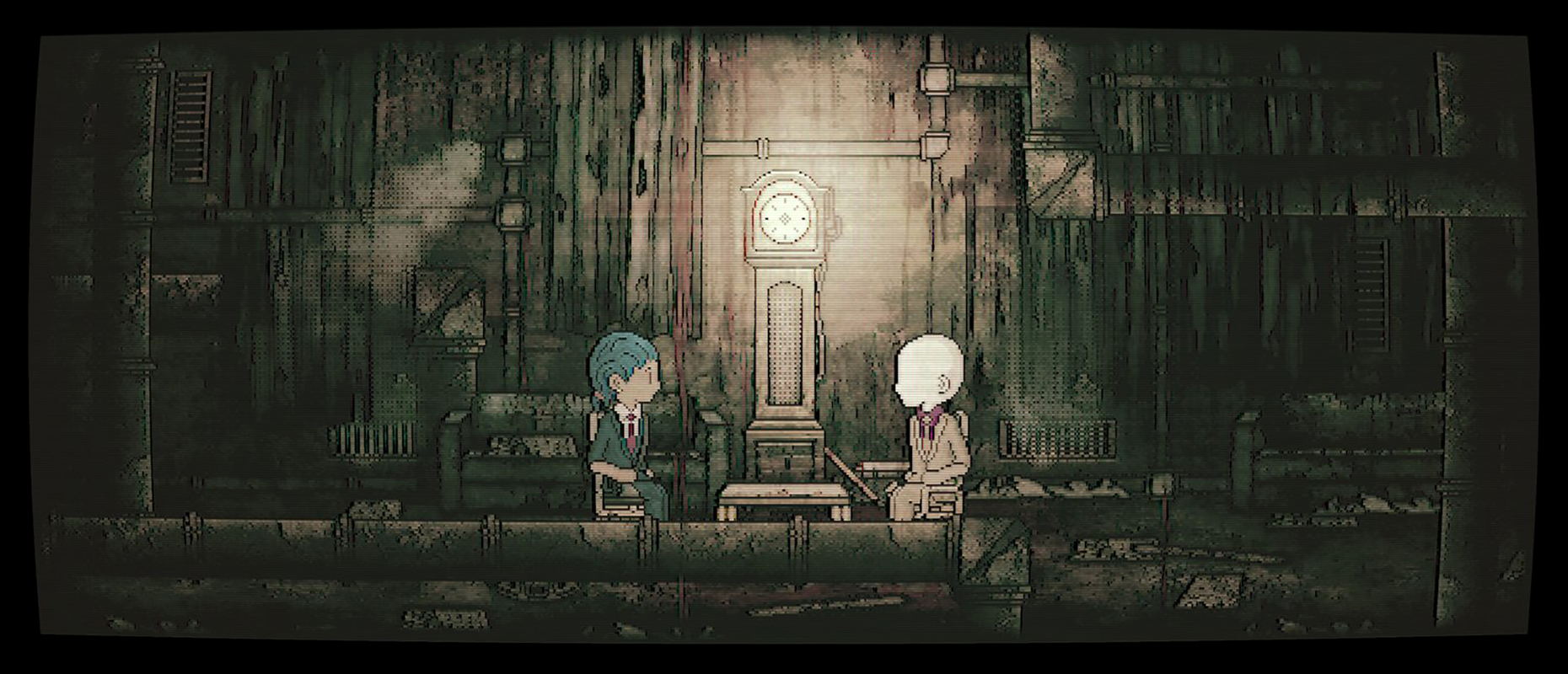
You play as a woman named Jennifer who wakes up in a filthy derelict room wearing a suit she doesn’t own. During the intermittent frame story, Jennifer relates this situation to an older man who seems to be a psychiatrist, claiming that she’s experienced an unusually realistic nightmare.

Within this nightmare, Jennifer’s job is to navigate a series of haunted houses while finding a series of objects for a series of NPCs. There are no Professor Layton style puzzles relating to number games or spatial arrangement challenges; rather, Afterdream’s puzzles are mainly fetch quests reminiscent of old-school adventure games in which a certain object needs to be applied to a certain environmental obstacle, like a key being needed to unlock a door.

The challenge, such as it is, lies in being able to form a mental map of each area and remembering what goes where. The game mechanics are extremely simple and intuitive, and there are no inventory limits or menu screens to distract the player from the immersive environment. It’s always clear what you can interact with, and the in-game text isn’t cryptic about what needs to happen.
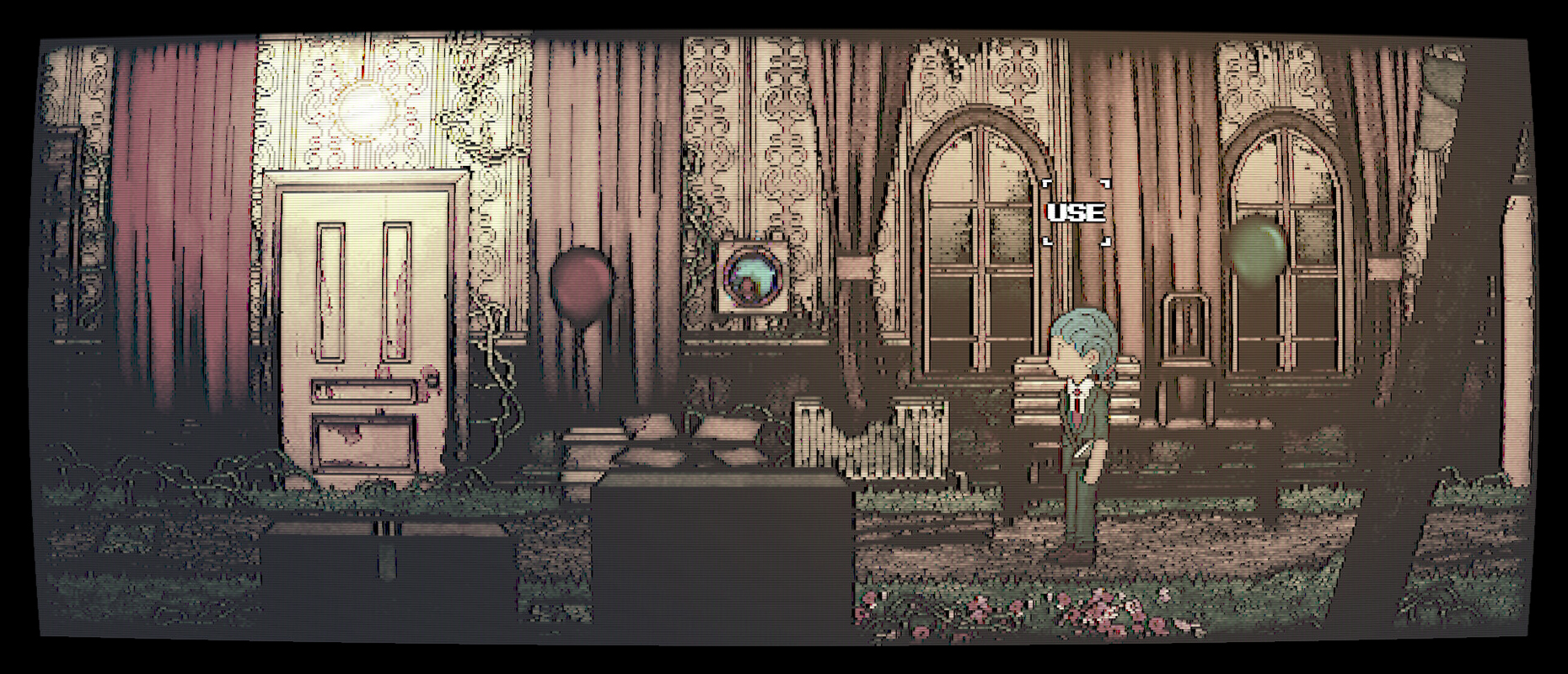
The haunted houses don’t reveal their secrets willingly, but Jennifer is aided by a Polaroid ghost camera that she can use to scan her surroundings. The oddities exposed through the camera’s viewfinder become real once photographed. You might hear an odd ticking sound, for example, in which case your camera will reveal a ghostly clock on the wall. It’s a neat game mechanic, and it’s put to good use in a nice variety of situations.

Jennifer begins in an old and rotting apartment building and then progresses to a fancier but similarly ruined mansion, wherein a helpful ghost tells her that she’s been given an opportunity to make contact with the spirit of her recently deceased father. In order to summon his ghost, Jennifer must first find a special “portal object” hidden within the liminal space between life and the afterlife. Unfortunately, no one can say what this object looks like or where it’s hidden.

Still, Jennifer has no choice but to keep moving forward through progressively spookier areas. As a special present to me personally, there’s a dark and grimy sewer level, and it’s wonderful. There’s also a “creepy little town” level, and it’s beautiful and I love it.

Even though the game is divided into discrete stages, its story isn’t formulaic. To lighten the heavy atmosphere, the writing employs humor at key moments, with both Jennifer and the NPC ghosts occasionally poking fun at the absurdity of various situations. I really enjoyed the instances when I thought something horrible was going to happen but everything actually turned out to be perfectly wholesome. The pacing is excellent, with plenty of fun character interactions and chill periods of downtime between the creepy bits and jumpscares.

Afterdream is the perfect length for its story, and its gameplay goes from strength to strength as its setting becomes stranger and more disturbing. It might not be to the taste of people looking for more action or more explicit horror, but it was perfect for me.

One final thing: When I first saw the game’s trailer, I was like, “This looks cool, but I hope you can turn off the strobe effects.” And thankfully, you can in fact turn off the strobe effects. It’s always nice when game developers take this sort of accessibility issue into consideration.

Speed Dating for Ghosts

Originally released on Valentine’s Day in 2018, Speed Dating for Ghosts is a short and simple roleplaying visual novel (or rather, visual short story collection) in which you can date your choice of nine ghosts. The version currently available on Steam, on Switch, and on Itchio includes the “Go to Hell” expansion, which includes three more postgame ghosts to date and an epilogue in the form of a beach party in Hell.

You play as yourself. Presumably you are dead, and also a ghost. You have registered for a speed dating event that is, predictably, run by a ghost. At this event, you choose between three rooms, each of which contains three ghosts. You have two short conversations with each of the three ghosts. If a ghost likes you, you can go on a date with them. Thankfully, it’s not difficult to convince the ghosts to warm up to you, and you can go on a date with all of them without having to replay the initial conversations.

These “dates,” such as they are, involve helping each ghost take care of their unfinished business. Instead of romancing the ghosts, what you’re really trying to do is learn their stories. After you complete a date, you’re rewarded with more information about the ghost via a character sheet on the “Graveyard” page of the game’s main menu. Once you date the first nine ghosts, you’re given the option to visit Hell for postgame content.

The gameplay consists of choosing between dialog options and being friendly. The art is simple and stylized but manages to achieve a good balance of creepy and cute. The writing is wonderful.

For me, playing through one speed dating room + going on three dates took about 25 minutes. Technically, you can convince a ghost not to date you, but I don’t know why you’d do this. All of the dialog choices make sense, and I can’t imagine needing to use a walkthrough. The postgame content is a bit trickier, and two of the ghosts in Hell might require some extra effort to date. The third ghost in Hell is a dog, and you can pet him. I love him forever.

Aside from the ghost dog, I’m also a fan of Spooky Peter, the plague doctor ghost who’s been around for centuries and has found a vocation in frightening the living. If you agree to apprentice under him, he inducts you into one of the more arcane mysteries of the afterlife, and I appreciated the worldbuilding of his story. There are also two older ghosts (Vera and Gary) who were involved in murder mysteries, and both of their plot arcs are fantastic. One of these stories was so emotionally satisfying that it made me tear up a little, while the other thoroughly creeped me out.

Speed Dating for Ghosts is a fun collection of short stories tied together by an interesting framing device, and I enjoyed the two hours I spent with it. Based on the dry tone of its humor, I’d say that the game is aimed at a mature audience, but there’s nothing particularly grim or edgy or upsetting about it. The writing and art contain elements of horror, but they’re very mild. I didn’t know what to expect from Speed Dating for Ghosts, and I was surprised by how creative and clever it is. It’s always a pleasure to find a weird little game like this that uses the medium to craft a unique and engaging piece of storytelling.

The Ghost Shop

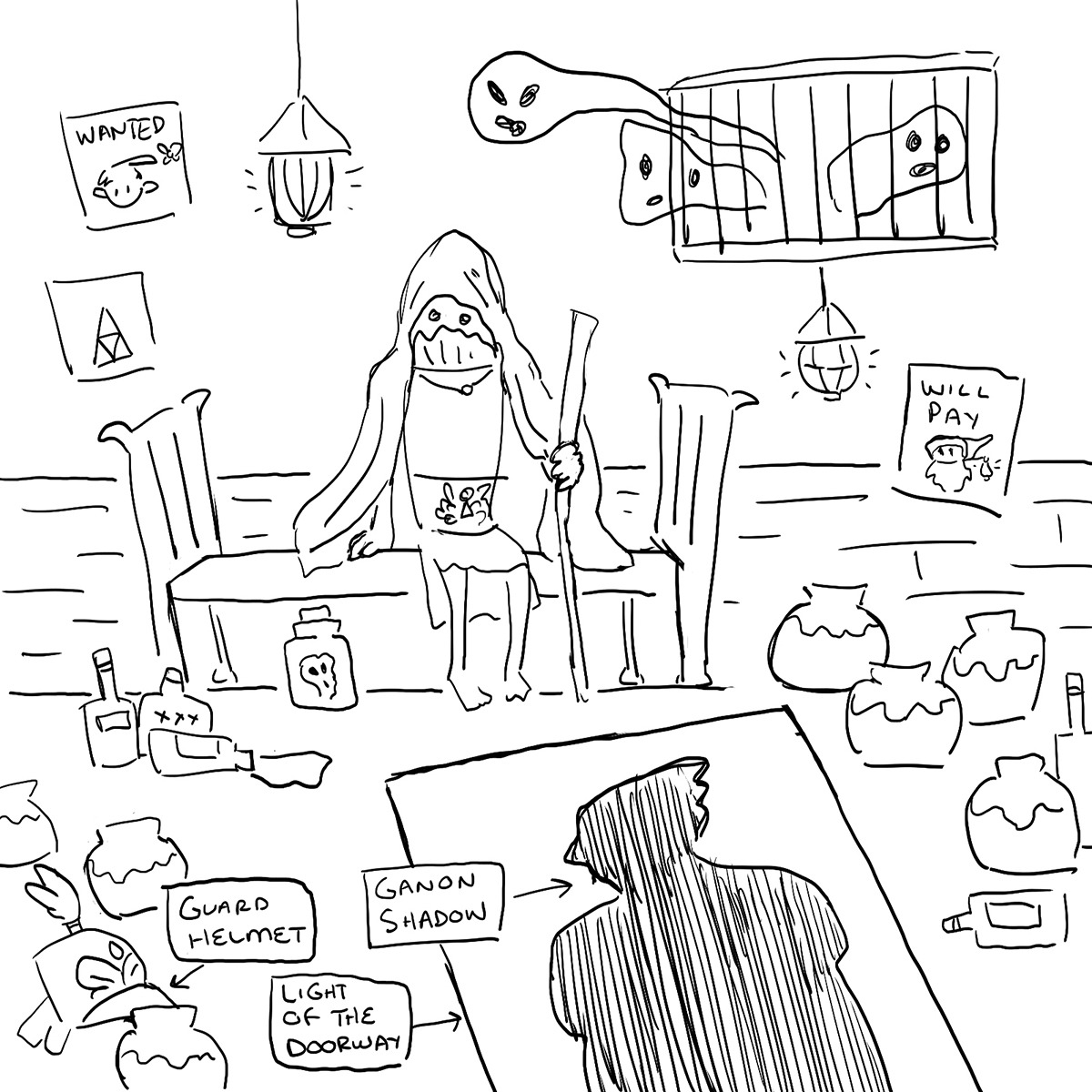
I just posted a short story about the Poe Collector in Ocarina of Time on AO3. It’s a spooky fandom treat for Halloween, and you can read it (here).

This story is about what it might have been like to live in Hyrule after the castle fell to Ganondorf, and I really enjoyed exploring the postapocalyptic environment. The story is also about standing up to power and the abuse of authority, even when it won’t benefit you in any way. Grand acts of heroism are all well and good, but it’s also nice to be too weird to care about what people think of you.

The illustration is by Frankiesbugs, whose creepy-cute art you can find on Instagram (here) and on Tumblr (here). They actually created two color variations, the one with the Halloween-inspired palette that I posted above, and a more Film Noir style version that I posted along with the fic on AO3 – and that they posted on Tumblr (here). It was difficult to choose between such gorgeous and stylish pieces! If you’d like to get a better understanding of just how brilliant Frankiesbugs is, you can check out the concept sketch I sent them (here). This artist’s illustrations have been one of my primary inspirations in writing Legend of Zelda horror stories, and it’s always a pleasure to work with them. You can read some of the horror-themed comics we’ve created together (here) and (here).

Crosswalk


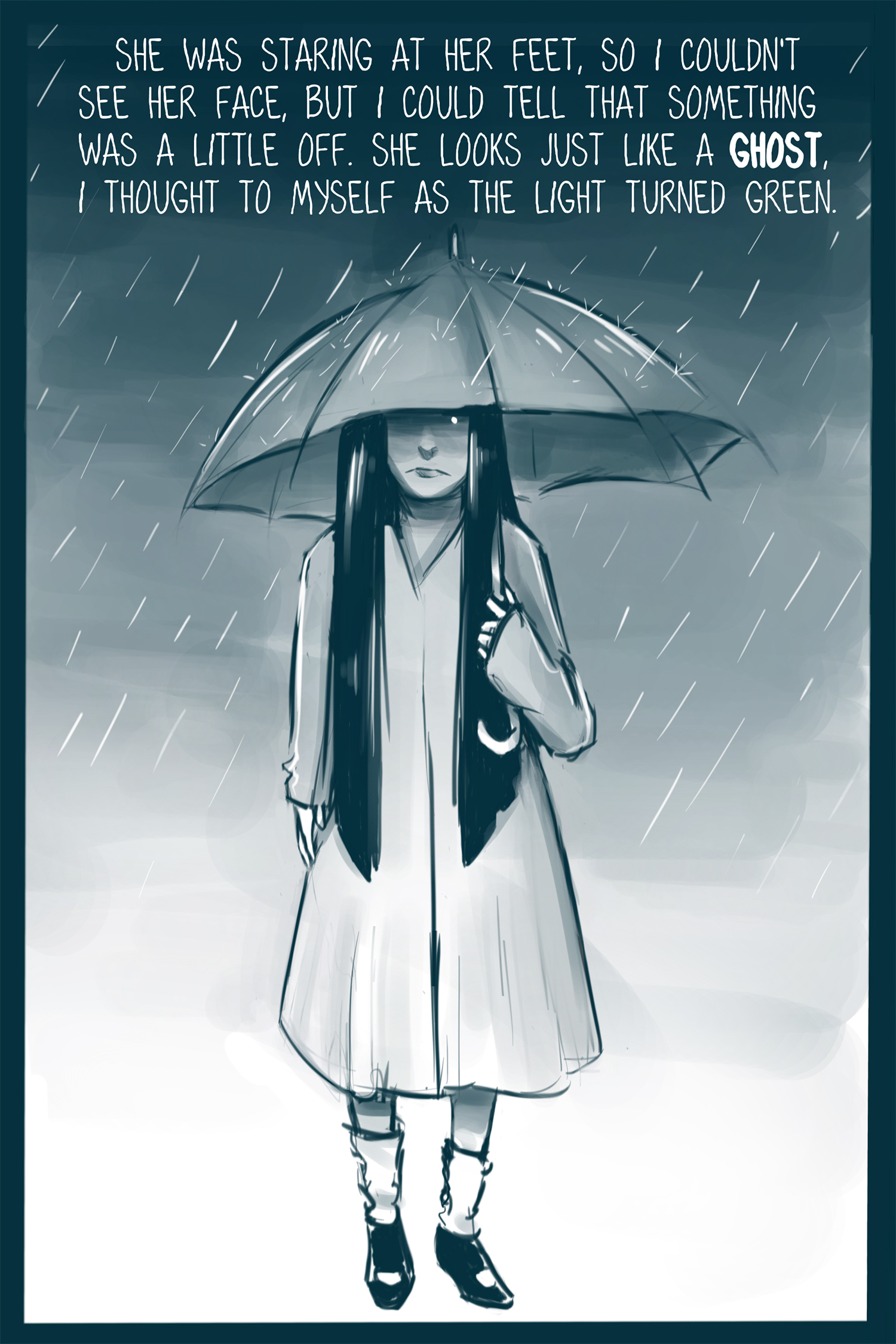
This comic was drawn by Frankiesbugs (@frankiesbugs on Tumblr) and written by me, Kathryn Hemmann (@kathrynthehuman on Twitter).

This actually happened to me in Philadelphia in 2012. It was super creepy, and I still think about it sometimes. Maybe this is just me, but I’m not entirely sure that Philadelphia exists in consensus reality.