Don’t Let Her In

Don’t Let Her In
https://flowerstudio.itch.io/dont-let-her-in

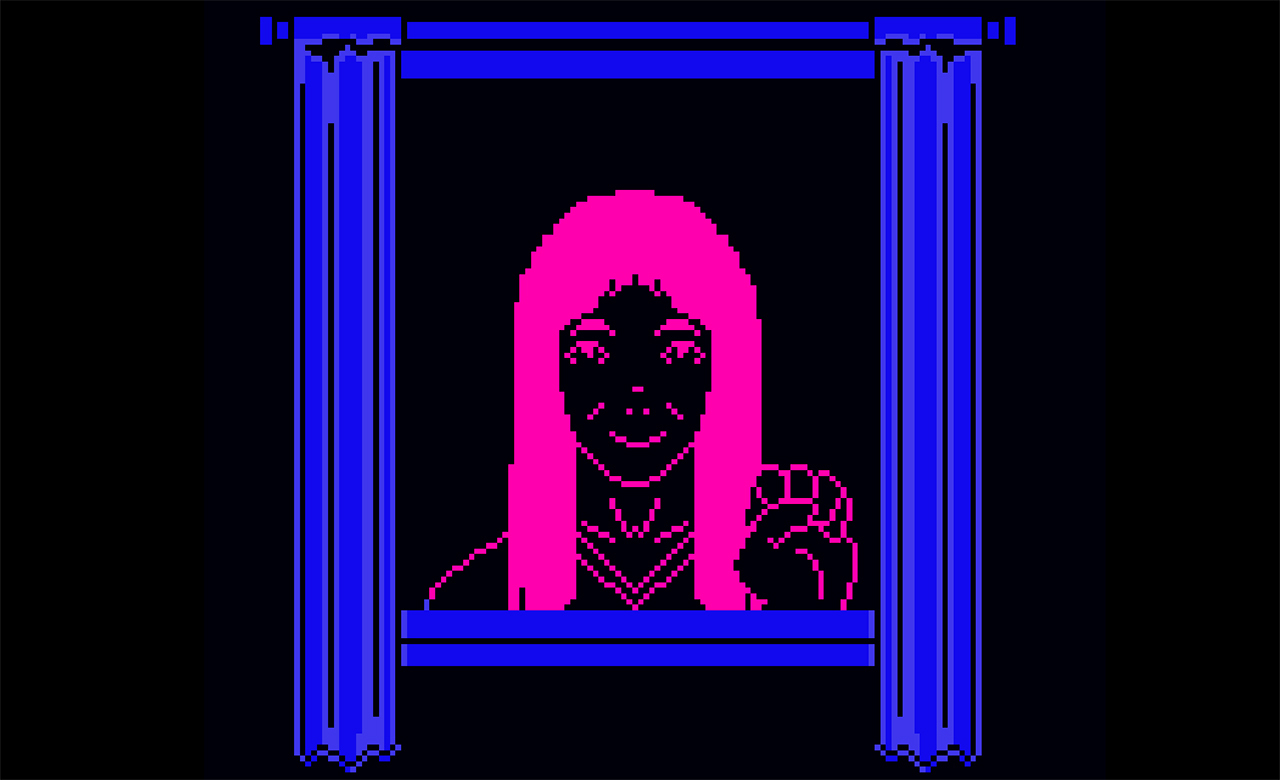
Don’t Let Her In is a free ten-minute horror game that you can play on a Game Boy Color emulator (such as mGBA) or directly in your browser on Itch.io.

You play as a teenager who hasn’t set foot outside the house in several weeks. Their father left a note on the kitchen table with a simple warning: Don’t let her in. As the player, you move through the house while interacting with various objects. You have one job, but you won’t be able to keep yourself safe forever.

Alternatively, you can ignore your father’s warning and invite the creepy woman inside the house as soon as she knocks on the kitchen window. This also leads to a satisfying story, although I’d recommend playing the game straight the first time around. The slow lead to the twist ending is wonderful, and having already experienced this twist makes the second ending much more satisfying.

The game’s graphics are simple but effective, and you might be surprised by how much body horror a few pixels can generate. The subtle worldbuilding is quite intriguing as well. There’s no good ending to this story, and its tone is bleak – there’s no irony or campiness, just horror. Don’t Let Her In may be short, but it’s remarkably effective at creating an atmosphere of loneliness and dread.

Castaway

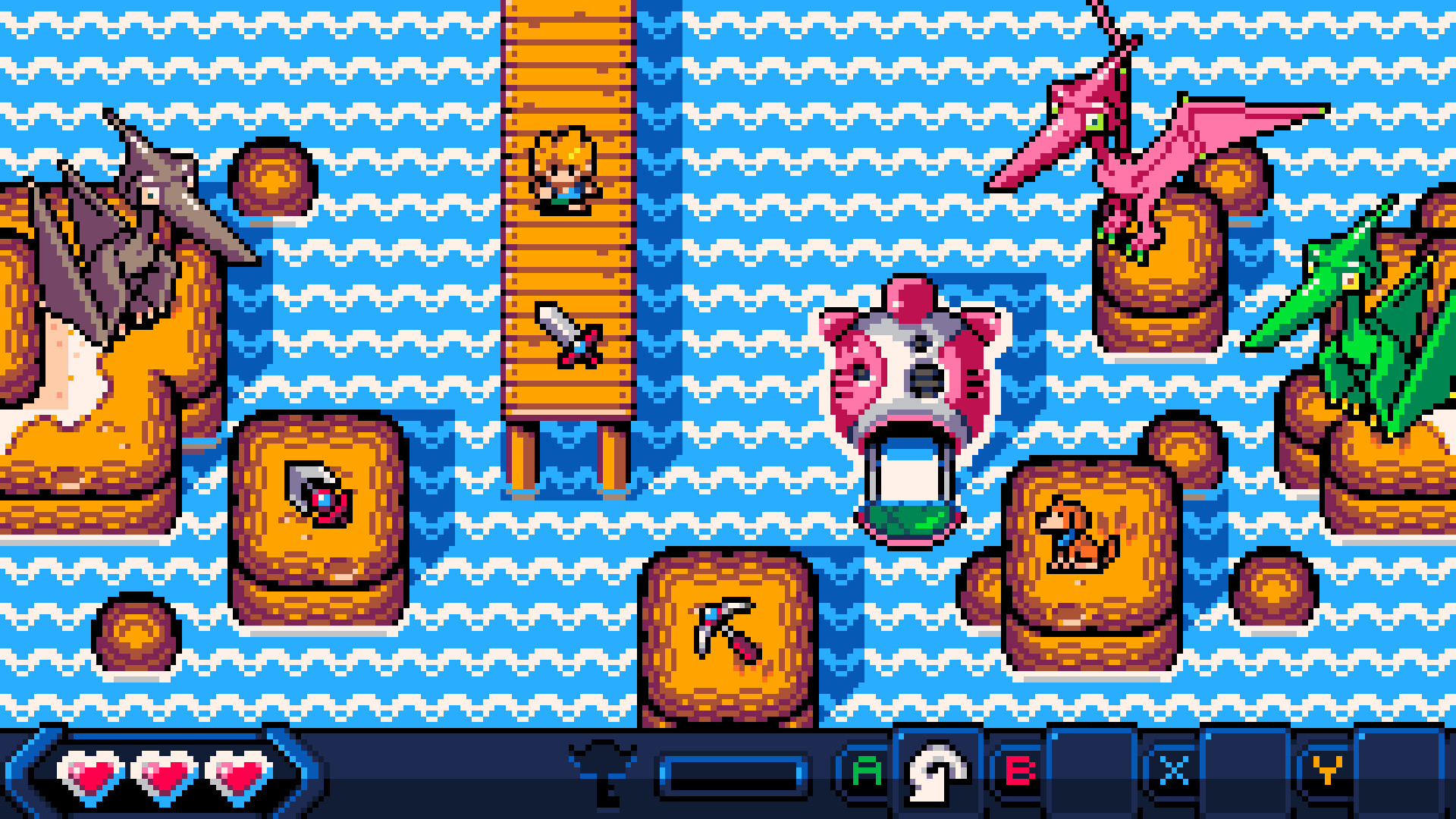
Castaway is a tribute to Link’s Awakening whose story campaign takes about 35 minutes to play. This campaign functions as a tutorial to the game’s Death Tower, in which you have one life to climb fifty simple and static floors with very few health drops and no permanent upgrades. The Death Tower is not for me, but the story campaign was a pocket of pure and unadulterated joy.

You play as a young boy whose escape pod lands on a deserted island after his spaceship blows up. After the crash, pterodactyls steal the boy’s survival tools and his dog, so it’s up to him to unsheathe his trusty sword and explore the island to get everything back.

The island is very small, as are each of the three dungeons. There’s no one to talk to, and there are only four types of enemies. The only aspects of the environment you can interact with are two types of rocks, so all of the puzzles involve sokoban-style block pushing. The two tools you find in the first two dungeons are a pickaxe that allows you to break rocks and a hookshot that allows you to latch onto rocks to cross gaps. If you use your tools to backtrack, you can collect three additional hearts to bolster your health.

The overworld map and dungeons are all tight and precise. More than a true imitation of a Zelda game, Castaway’s story campaign seems to be a stage for speedrunning, and there’s a special Speedrun Mode that allows you to see the clock onscreen. I tend not to care about such things, but the Speedrun Mode was a nice excuse to give the game a second playthrough with a bit more challenge.

The music and sound effects of Castaway are forgettable, but the graphics manage to achieve the trick of using modern technology to reproduce what you thought Game Boy Color games looked like when you were younger. The pixel art of the opening and closing animations is gorgeous, and the interstitial illustrations are lovely as well.

Whether this tiny game is worth $8 is debatable, especially if you’re not interested in speedruns or gauntlet survival challenges. I love Link’s Awakening beyond all reason, so I was happy to put down the money to support indie developers while spending an hour in nostalgia heaven. Still, it would have been nice if Castaway had more substance.

If you’re interested in the concept of Castaway but don’t want to spend money on something that feels like it should be a free demo of a larger game, please consider the alternative of Ocean’s Heart, a beautiful and robust Zeldalike game that’s honestly better than most actual Zelda games. If you’re interested, you can check out my review of Ocean’s Heart (here).

Red Trees

Red Trees by Caramel
https://caramel.itch.io/redtrees

Red Trees is a free nonviolent adventure story game made with RPG Maker in a style that emulates the Game Boy Color. It’s about a small village that might be haunted by ghosts in the woods, and it’s adorable.

The game is divided into three sections: the village’s residential area, its business center to the north, and the forest to the south. In order to progress from one area to another, you embark on an extended trading quest. For example, someone asks you to find their cat. To convince the cat to follow you, you need to feed it fish. In order to procure a fish, you need to give a can of worms to the person fishing at the local pond. The trading sequence isn’t strictly linear, but it’s not so complicated that you’d get lost or frustrated.

Red Trees isn’t a horror game by any means, but it gives me strong Omori vibes. (Although, having made that comparison, I should say that Red Trees was originally released in 2016, four years before Omori.) The music is relaxing, the character portraits are super cute, and the writing is wholesome with a touch of light humor reminiscent of Tumblr circa 2015. I especially love the menu screen’s character log, which collects short profiles of everyone you’ve met. The item portraits and descriptions are lovely as well.

Red Trees takes about an hour to complete, but this is mainly because of the game’s spatial layout. Your character can’t run, and the town is so spacious that it takes time to walk from place to place. This never becomes frustrating, but you may want to download the game so you can save your progress, step away, and come back later. Red Trees is extremely charming, and the experience of playing it is much more enjoyable if you take your time instead of rushing to finish it.

If you’re going to download Red Trees, you have the option of paying $2 to get an extra file folder of illustrations and a PDF booklet with annotated concept and development art. I highly recommend this extra material, but I’d also recommend not checking it out until you finish the game, as it spoils the ending. In fact, the bonus content functions almost like a separate postgame story, and it’s just as sweet and adorable as the game itself.