Dorotea

Dorotea
https://pasquiindustry.itch.io/Dorotea

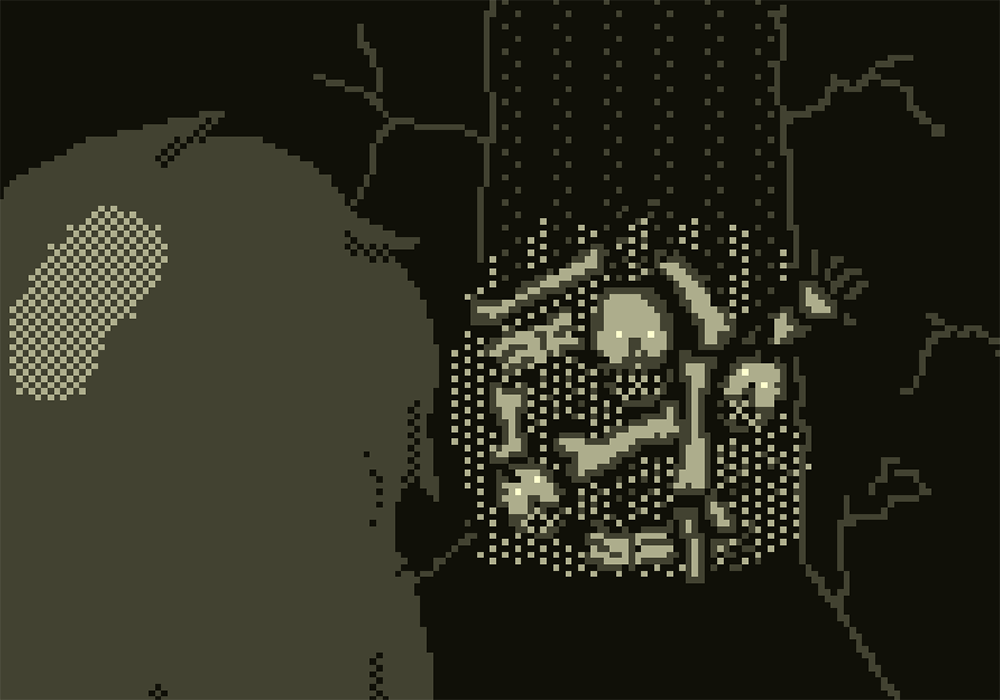
Dorotea is a spooky ten-minute narrative adventure game made in Game Boy Studio and set in the medieval castle town of Conversano in southeast Italy.

You play as Dorotea, a researcher who has been hired by a local museum to catalog the books, manuscripts, and art objects in a neglected storage room housing a collection dating from the 1600s. Upon opening and passing through a strange door at the back of the room, Dorotea finds herself transported to the medieval era, when the museum was still a convent.

Thankfully, Dorotea is intercepted by a nun before she can land herself in trouble, but she’s not entirely out of danger. The lord of the castle on the hill isn’t a good person, and there also seem to be monsters of a more literal sort in the vicinity.

Dorotea features a suspenseful (but no-penalty) chase sequence, but its horror is largely atmospheric. The game’s uncanny pixel-art insert illustrations contribute to the feeling of something being terribly amiss, as do the ghosts and monsters, but the game also explores the anxiety generated by the prospect of being trapped in the past. As much as we might like to romanticize the medieval period, the culture shock experienced by most people – especially women – would likely be atrocious.

Putting its supernatural elements aside, Dorotea dwells in what might be called “archive horror,” or the morbid claustrophobia of a closed room filled with the relics of people long dead. There’s the dankness of the space itself, as well as the fear of the door swinging closed behind you, trapping you inside with nothing but dust. Then there’s the very real possibility that, in all the detritus of the past, you might find something deeply disturbing that you wish you hadn’t seen – or that someone very much wanted to hide. With its retro graphics and creepy pixel illustrations, Dorotea is a fantastic vehicle for conveying a sense of unease.

Dorotea is a short game, but it nevertheless manages to pull off a gut punch of a twist ending while indulging in a few interesting experiments with the ludic medium. The game was created for Italocurso Game Jam 2025, which is themed on folk horror specific to regional cultures in Italy. The 33 entries include a number of games offered in English, and all of them look amazing.

Usurper Ghoul

Usurper Ghoul
https://evandahm.itch.io/usurper-ghoul

Usurper Ghoul is a nonviolent Game Boy adventure game that channels the “ruined kingdom” vibe of Dark Souls. I tend to think that Dark Souls is marred by needless difficulty; and, in the same way, the gameplay elements of Usurper Ghoul are needlessly frustrating. The nonlinear exploration-based gameplay of Usurper Ghoul is on brand for a Soulslike Game Boy game, but it’s not for everyone. Like Dark Souls, Usurper Ghoul becomes more interesting the more you engage with it, but the beginning is rough.

You play as a horned, skull-headed demon who wakes in a garden in the hills overlooking a small village, which in turn overlooks a valley of tombs. In true Dark Souls fashion, no one tells you where to go or what you need to do, and it’s possible to spend a lot of time walking around without getting anywhere. There are a few people scattered across the wilderness, but they’re not particularly helpful.

With no particular goal other than to explore the world, your job is to collect three items from three categories. Flowers allow you to interact with people, sticks allow you to interact with the environment, and rocks allow you to access more knowledge about the world. One stick allows you to unlock doors, for example, while another stick allows you to read written text. The catch is that you can only hold one of each type of item at a time.

The necessity of discarding one item in order to use another fits the broader theme of the game, which is that something must be sacrificed in order for something else to be gained. Unfortunately, switching between items involves a great deal of needless backtracking. The world of Usurper Ghoul isn’t that big, and the game isn’t overly complicated, but it’s big and complicated enough for the backtracking to be annoying. There are no puzzles involved; it’s just donkey work.

One might say that Dark Souls involves needless complications and barriers to progress, but one of the primary attractions of Dark Souls is that it’s gorgeous to look at. You might be continually frustrated over the course of your journey through Lordran, but you tolerate the setbacks because the environment is so beautiful and atmospheric. The world design of Usurper Ghoul is unique and interesting, to be sure, but it’s still rendered with primitive Game Boy graphics. There’s no background music, and the sound design is limited to jarring beeps at odd moments. In other words, it’s not necessarily a pleasure to trek back and forth across the map to switch out one tool for another.

The overall story of Usurper Ghoul is intriguing, but the writing is hit or miss. Most NPCs say decontextualized NPC banalities, and the lore encountered in books and on monuments often feels like a parody of Dark Souls. Although this is never explained, your goal is to enter a tower; and, to do so, you have to collect enough lore to figure out the right order to light torches in front of the tombs in the valley. You need different sticks to unlock gates, to read the writing on the tombs, and to light their torches, so this is a tedious process even if you (like me) lose patience with the game’s obtuse writing and resort to a walkthrough to figure out the order.

Having discussed what’s frustrating about Usurper Ghoul, I now want to explain why I enjoyed it anyway. The next paragraph contains mild gameplay spoilers, but it’s also the coolest part of the game.

For your own nefarious purposes, you can offer three varieties of flowers to NPCs. Comely flowers make people like you, malodorous flowers make people dislike you, and horrid flowers will kill anyone who touches them (except you). In one of the game’s endings, you can climb the tower in the valley and simply leave the kingdom behind without hurting anyone. If you want to experience everything Usurper King has to offer, however, your goal becomes to kill as many NPCs as possible while managing the limitations imposed by each death. Each NPC you kill with a horrid flower leaves a book in the tower whose text emphasizes the theme of sacrifice. For me, this was when the story became worth the trouble of navigating the world.

I found the endgame of Usurper Ghoul to be extremely compelling. And really, despite the initial annoyances, the ideas informing Usurper Ghoul are brilliant. I feel that the success of the execution is limited by the Game Boy technology, and I’d like to give the developer a nice chunk of cash to hire collaborators and develop these ideas into a less bare-bones format, perhaps along the lines of Tunic. Usurper Ghoul is a fascinating proof of concept; and, with a bit of polish, I could easily imagine it becoming a cult classic.

For me, the payoff of Usurper Ghoul was worth the frustration of the gameplay and the occasional Dark Fantasy Generator™ writing, but your mileage may vary. There’s a lot to explore and experiment with in the world of the game, and it’s definitely possible to spend several hours there. I lost patience toward the middle and used (this walkthrough on Reddit) to smooth over some of the rougher bits, and I ended up spending a bit more than two hours with the game. If nothing else, I’m really looking forward to checking out the developer’s comic projects in the near future.

Deep Forest

Deep Forest by Small is Beautiful
https://small.itch.io/deep-forest

Deep Forest is a free GB Studio adventure game that takes about 45 minutes to play. There’s no combat, and the game is driven by puzzle-solving and exploration. You play as a forest witch tasked with helping three trees that have become mysteriously cursed. To purify a tree, you must first find it by exploring the forest. You then enter its nightmare, which functions as a dungeon. Once the tree’s curse is lifted, its thorny roots vanish, thereby allowing you to explore more of the forest.

This is the basic gameplay cycle of the Legend of Zelda series, and the simple puzzles of Deep Forest remind me of certain segments of Oracle of Seasons and Oracle of Ages wherein you:

(1) Use an animal to procure a seed.
(2) Find a patch of soil to plant the seed,
(3) which sprouts into a vine
(4) that allows you to climb a cliff.

If this similarity is intentional, it’s a lovely homage to the debut work of Hidemaro Fujibayashi, who went on to become the director of Breath of the Wild. In addition, I had a nice “Legend of Zelda” moment when I found a secret in Deep Forest. I was delighted when I realized that you can water the single square of roots in front of an otherwise unremarkable cave in order to discover a hidden spring. This moment of discovery lit a spark of excitement that reminded me of exploring Hyrule for the first time.

In terms of its visual style, Deep Forest is reminiscent of the Game Boy games that were released in the West under the “Final Fantasy” logo, which include the first Secret of Mana game and the first three games in the SaGa series. This style feels extremely nostalgic, and it’s cool to see it used to depict a thriving forest.

Deep Forest is fairly linear, and the gameplay mechanics are beautifully intuitive. I would have loved this game as a kid, and I’m extremely fond of it as an adult. It’s exactly the perfect length, and I enjoyed the exploration elements and wholesome story. As a unexpected bonus, the interactive postgame credits sequence is beautiful and genuinely feels like a reward for playing.

Ballad of the Wind Fish

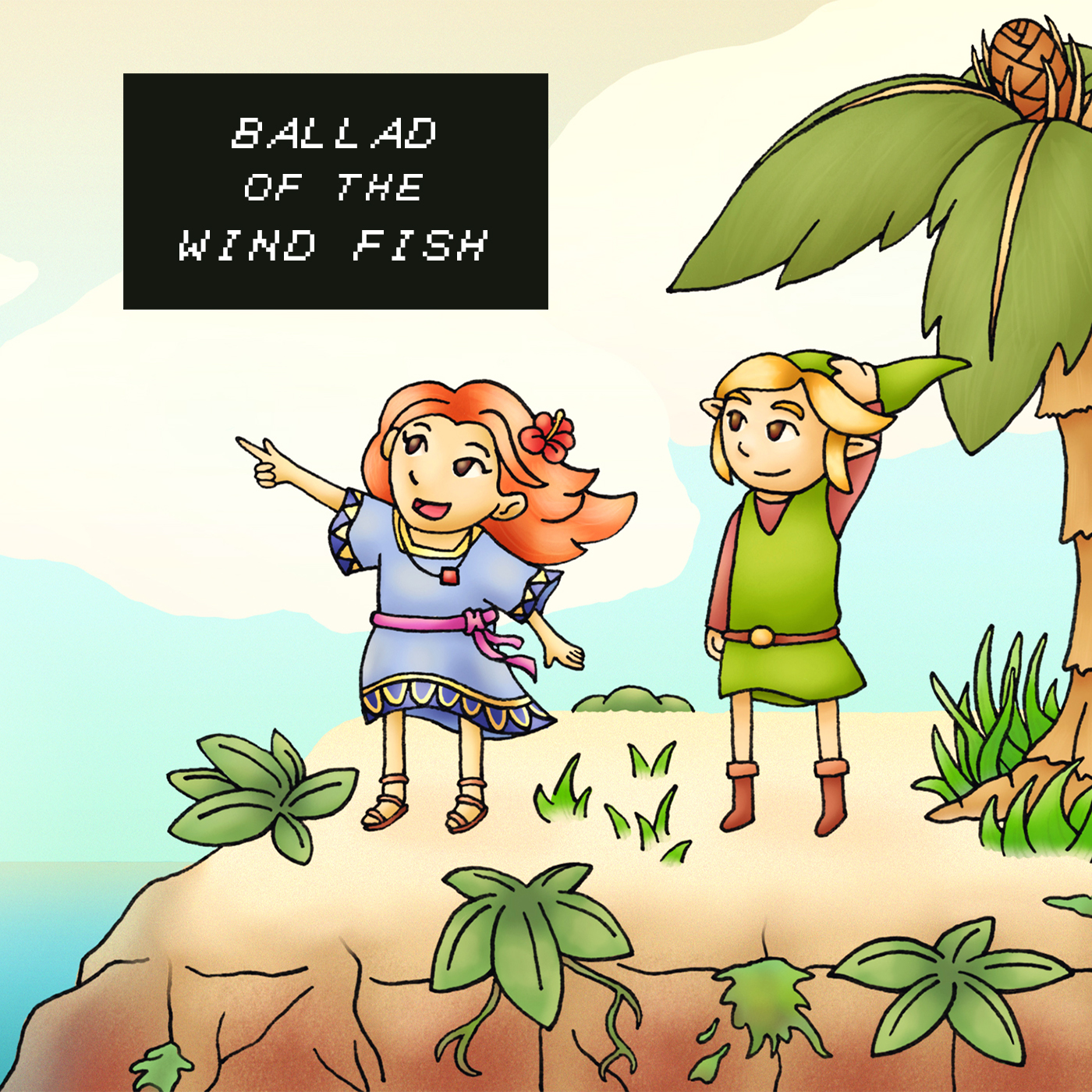
Ballad of the Wind Fish is a bittersweet narrative minicomic that uses the 1993 Game Boy game The Legend of Zelda: Link’s Awakening as a stage to explore the connections between childhood fantasies, nostalgia, and escapism.

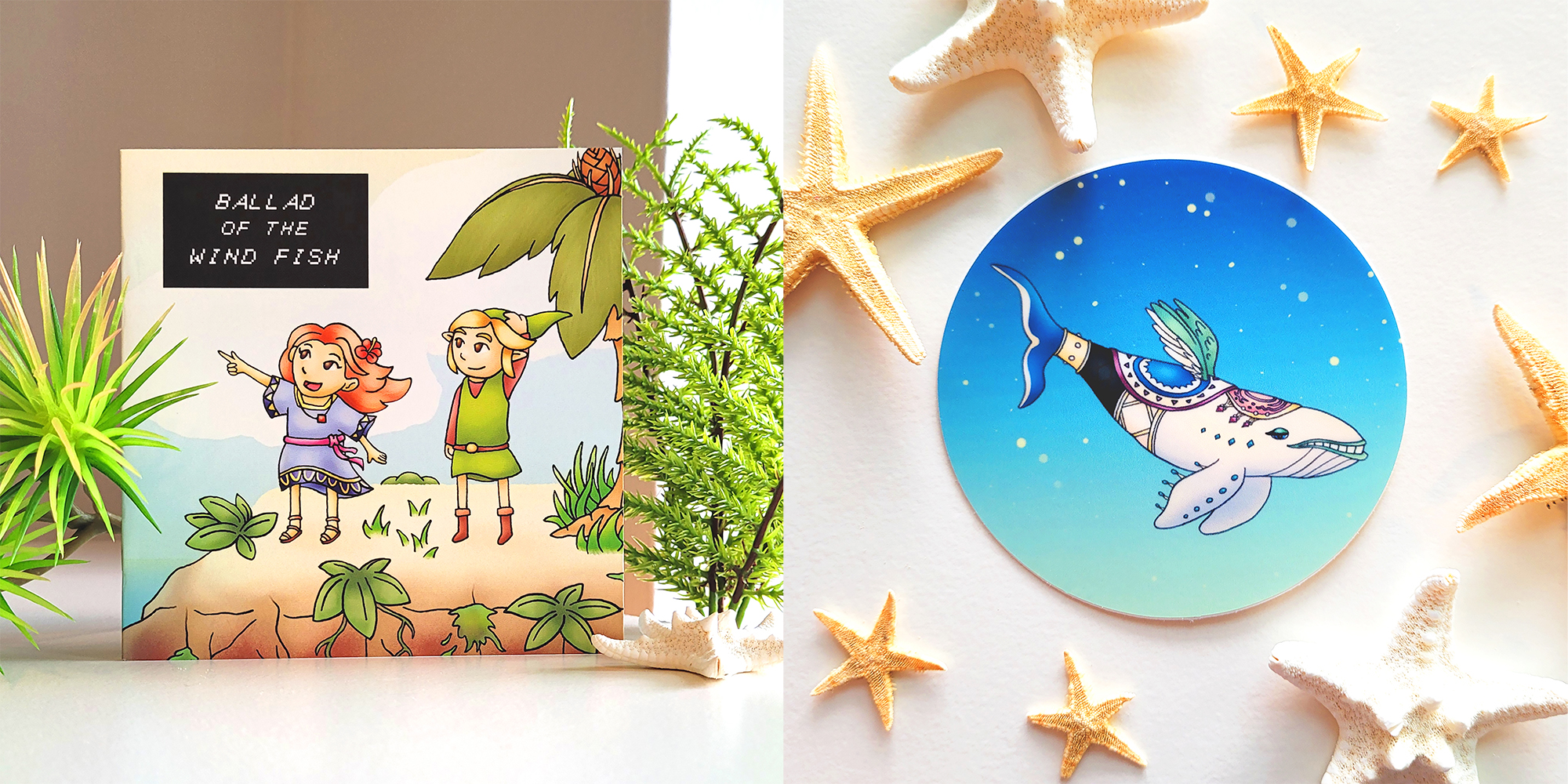
The comic is twelve pages long, with one panel per page. I created it for the #Linktober drawing challenge on Instagram during October 2019, but it’s still very near and dear to my heart. Although the comic is ostensibly about Link’s Awakening, it’s really more of a meta exploration of a certain glitch in the original release of the game, as well as a meditation on being a child of the 1990s. I formatted it into a zine and created two pieces of polished art to use for the cover. It’s my hope that this short comic fills the reader with warm memories and sunny summertime vibes.

You can download a free digital copy from Gumroad:
https://gum.co/windfishzine

If you like, you can buy a physical copy on Etsy:
https://www.etsy.com/listing/1035486197/ballad-of-the-wind-fish-zelda-minicomic

The zine is 4.75” square, or roughly the size of a Nintendo DS game case. It’s professionally printed in vibrant full color, and it comes with a 3” circular vinyl sticker depicting the eponymous Wind Fish.

If you’d rather not bother with any of that, you can read the comic as I originally posted it on Tumblr (here).