Il Mistero di Felina

Il Mistero di Felina
https://spesknight.itch.io/felina

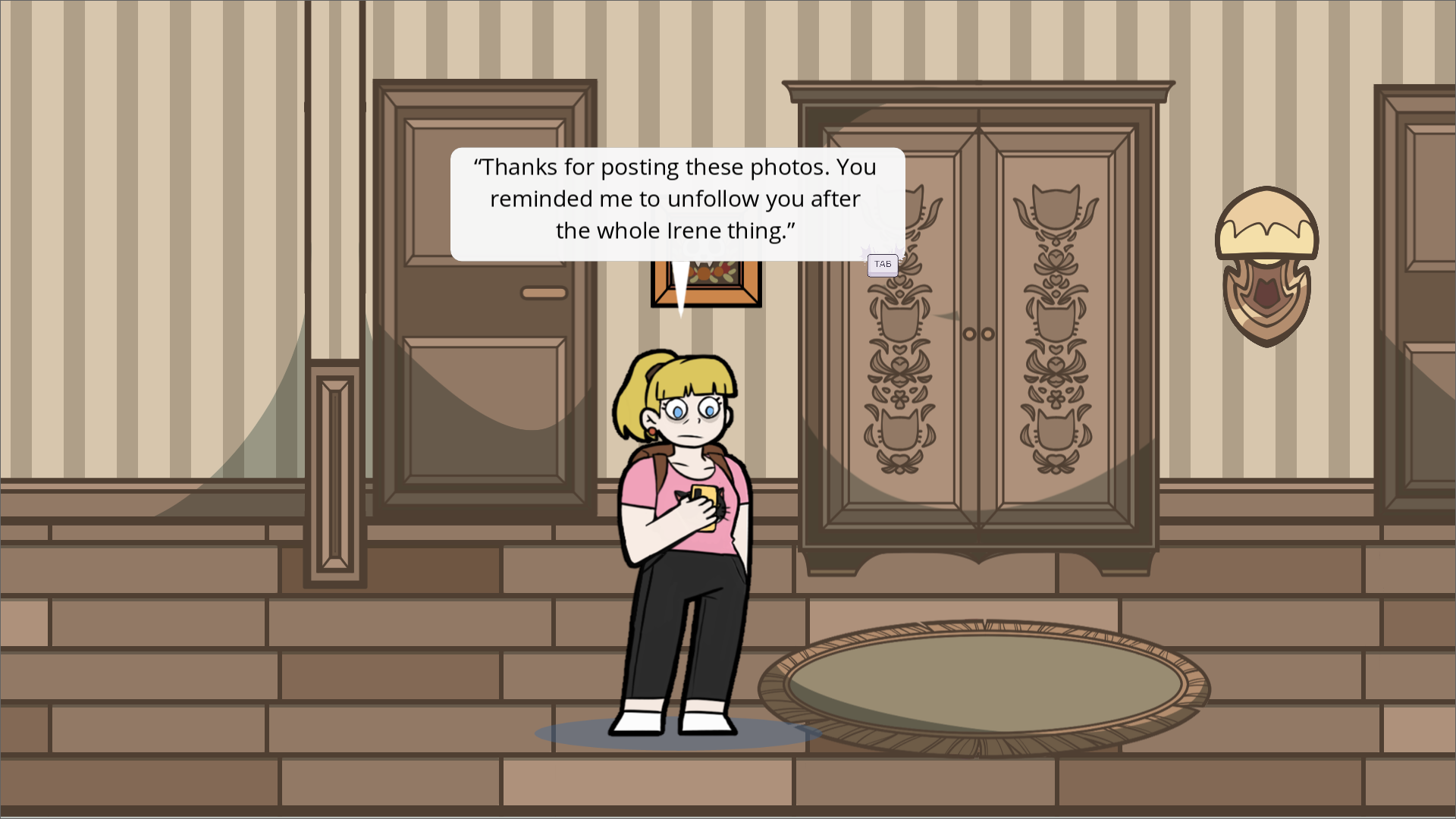
Il Mistero di Felina (The Mystery of Felina) is a free-to-play 2D narrative horror game that takes about twenty minutes to finish. The story follows Lara Lorenzi, a travel influencer who’s been invited to the small island of Felina to participate in a festival that celebrates the island’s cats.

Unfortunately for Lara, there is weirdness afoot. The island’s sheep have been dying, and there seems to be blood on the walls of the local church. In the downstairs tavern of the inn where Lara spends the night, a group of older men have gathered in a somber toast to their friend, who will be “leaving the island” soon. The young man who invited Lara to the island is awkward and sweaty, and he seems to be uncomfortably nervous about something.

Meanwhile, Lara’s been getting strange comments online, presumably about a nasty bit of drama with a fellow influencer. Though she’s picking up bad vibes from the island, Lara is in dire need of positive content, and she can’t afford to waste the opportunity.

As Lara, the player walks around the small town, enjoys the scenery, and advances the story through conversation. There’s also an optional but fun smartphone menu that allows the player to take pictures and upload them for Lara’s followers to enjoy.

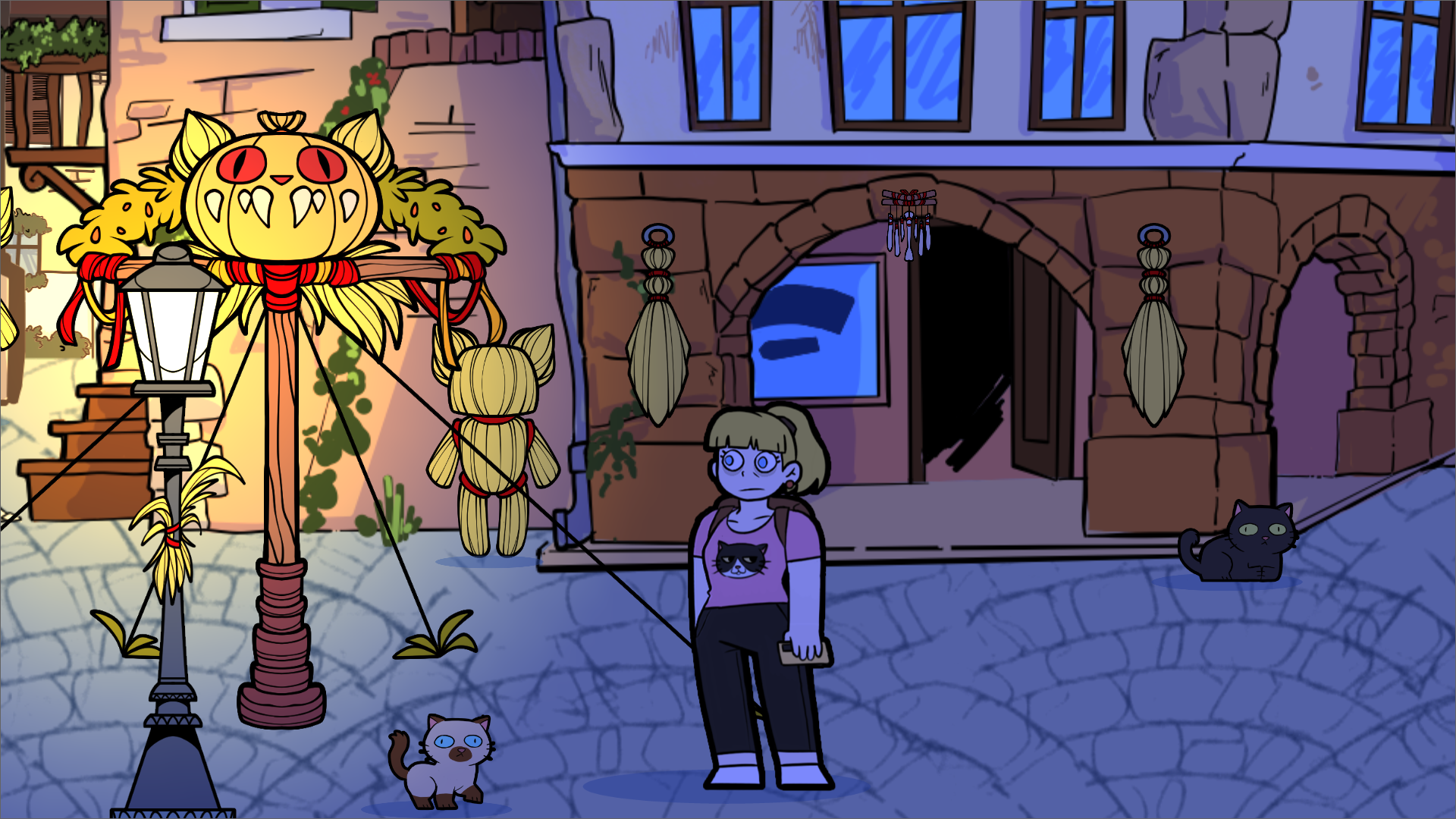
You’ll almost certainly want to take pictures, because the art in this game is wonderful. The architecture is shabby yet quaint, while the interiors are filled with interesting details. The people on the island are all colorful characters, and the festival decorations are very cute yet deeply sinister.

I also appreciate the character animations. The way Lara walks around the island is well-observed, especially in relation to her character design. Later, when Lara crouches while wearing a costume in order to pass herself off as a child, her walking animation is even more artistic. There are a number of cats roaming around the island, and it’s a treat to stand still for a moment and observe their behaviors.

Il Mistero di Felina echoes with hints of classic gothic folk horror like The Wicker Man and The Shadow Over Innsmouth, and it also recalls more contemporary spooky stories like Oxenfree, Night in the Woods, and… Neko Atsume. Still, this unnerving little game is uniquely its own thing, and I would have gladly spent more time on Felina basking in the Mediterranean sunlight while picking apart the dysfunctional personalities of the island’s residents.  

The game has a convenient autosave function, but you can easily play Il Mistero di Felina in one sitting. The story is enjoyably campy but also legitimately creepy, with excellent pacing and a tidy conservation of detail. I’m a fan of the unique aesthetic, whose bright colors work brilliantly to enhance the horror. I love every indie horror game I play, but this one is something special.

I can’t resist closing this without at least one cat pun, so here you go: Il Mistero di Felina is a purrfectly spooky cautionary tale that knows exactly how to sink its claws into contemporary anxieties.

Dorotea

Dorotea
https://pasquiindustry.itch.io/Dorotea

Dorotea is a spooky ten-minute narrative adventure game made in Game Boy Studio and set in the medieval castle town of Conversano in southeast Italy.

You play as Dorotea, a researcher who has been hired by a local museum to catalog the books, manuscripts, and art objects in a neglected storage room housing a collection dating from the 1600s. Upon opening and passing through a strange door at the back of the room, Dorotea finds herself transported to the medieval era, when the museum was still a convent.

Thankfully, Dorotea is intercepted by a nun before she can land herself in trouble, but she’s not entirely out of danger. The lord of the castle on the hill isn’t a good person, and there also seem to be monsters of a more literal sort in the vicinity.

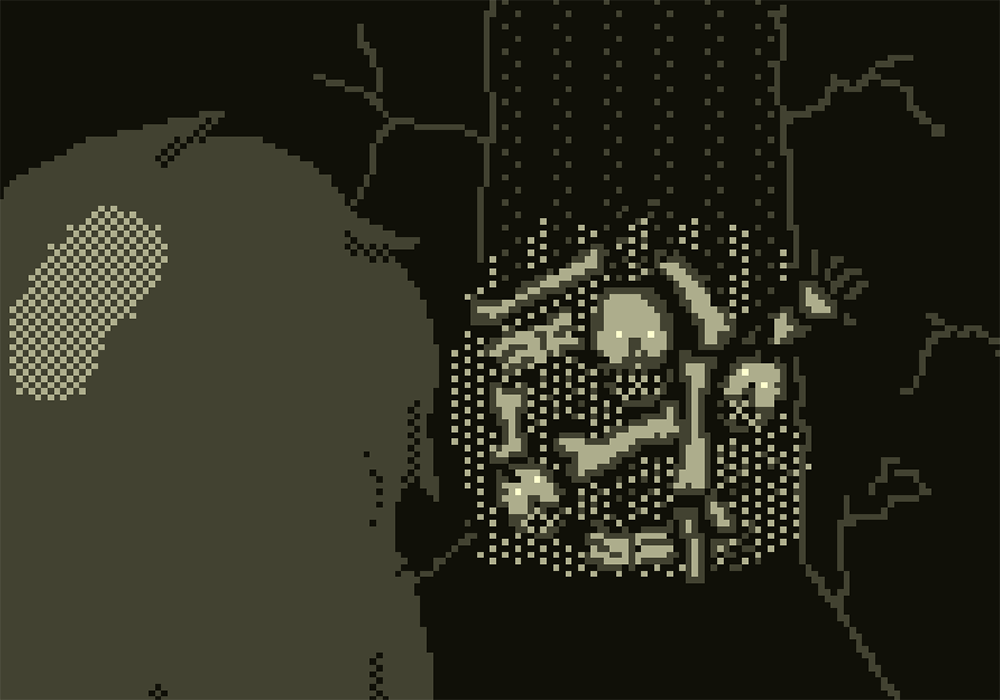
Dorotea features a suspenseful (but no-penalty) chase sequence, but its horror is largely atmospheric. The game’s uncanny pixel-art insert illustrations contribute to the feeling of something being terribly amiss, as do the ghosts and monsters, but the game also explores the anxiety generated by the prospect of being trapped in the past. As much as we might like to romanticize the medieval period, the culture shock experienced by most people – especially women – would likely be atrocious.

Putting its supernatural elements aside, Dorotea dwells in what might be called “archive horror,” or the morbid claustrophobia of a closed room filled with the relics of people long dead. There’s the dankness of the space itself, as well as the fear of the door swinging closed behind you, trapping you inside with nothing but dust. Then there’s the very real possibility that, in all the detritus of the past, you might find something deeply disturbing that you wish you hadn’t seen – or that someone very much wanted to hide. With its retro graphics and creepy pixel illustrations, Dorotea is a fantastic vehicle for conveying a sense of unease.

Dorotea is a short game, but it nevertheless manages to pull off a gut punch of a twist ending while indulging in a few interesting experiments with the ludic medium. The game was created for Italocurso Game Jam 2025, which is themed on folk horror specific to regional cultures in Italy. The 33 entries include a number of games offered in English, and all of them look amazing.

The Smile of the Mountain Demon

Liam is a budding content creator who specializes in guided meditation videos. Seeking to grow his following, he jumps at an Airbnb listing for a spiritual retreat in the Adachigahara mountains of rural Japan. At the end of a long journey, the stylish cabin enclosed within a verdant forest is everything Liam could hope for. The beautiful young woman who manages the property offers a warm welcome, but there’s something strange about her smile…

I was extremely honored to contribute to this year’s 13 Days Advent horror anthology. My story, “The Smile of the Mountain Demon,” is about a 21st century yamauba who entraps a YouTube influencer with Buddhist pretensions by using Airbnb and the language of New Age spirituality. The young man is looking for a scenic “spiritual retreat” to use as a source of content, and the yamauba is looking for a tasty snack.

This story is based on the medieval Adachigahara folktales in which a cunning yamauba entraps a less-than-devout Buddhist priest, as well as Minako Ohba’s beautiful and heartbreaking short story “The Smile of a Mountain Witch.”

If you’re interested, I’ve posted my story on AO3 (here), and you can download a free digital copy of the anthology via its page on Itchio here:

🌟 https://13daysadvent.itch.io/13days-demons-divinity

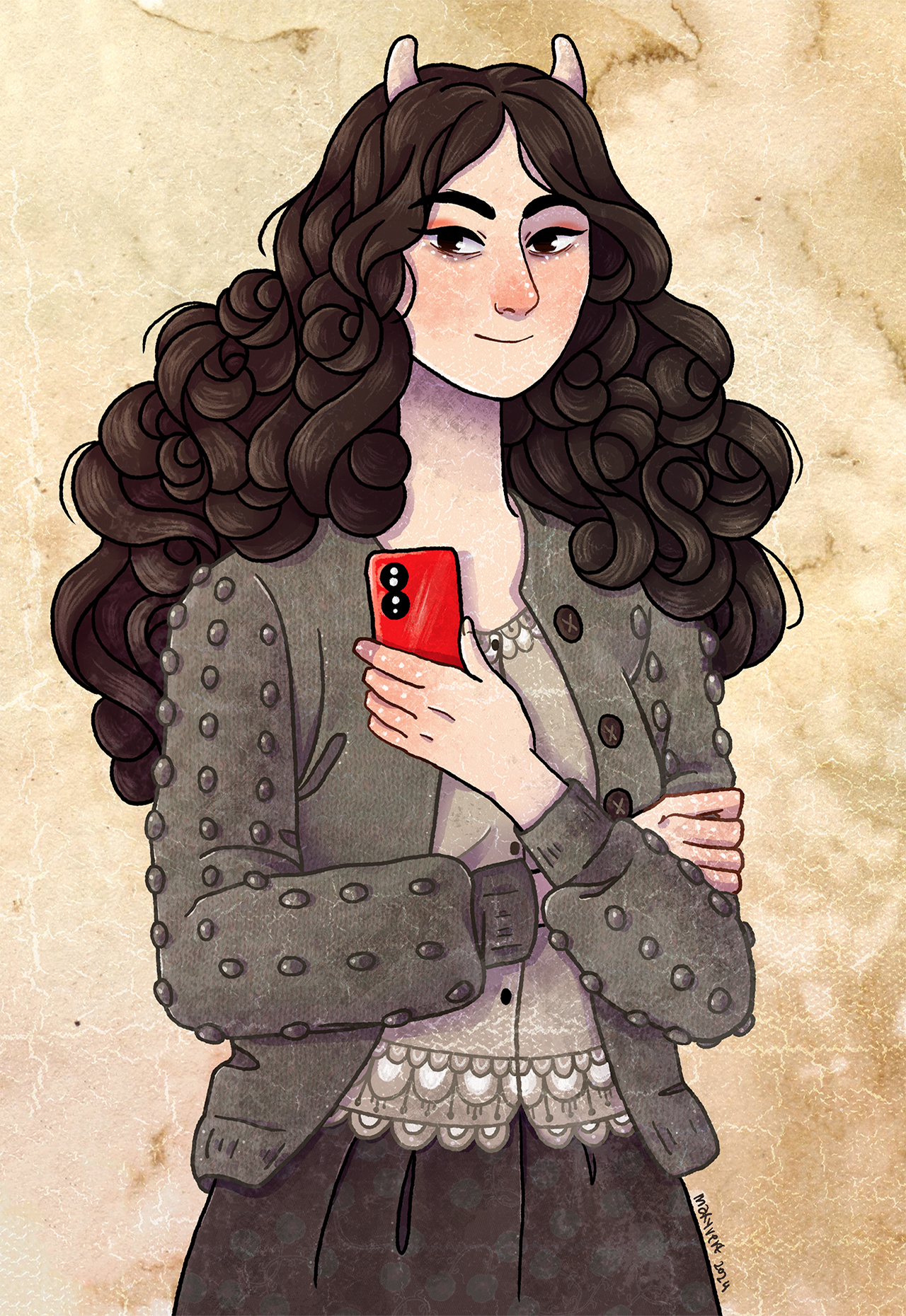
The illustration that accompanies my story was created by the brilliant dark fantasy artist Maxyvert, who posts strange and ethereal paintings on Tumblr (here), on Instagram (here), and on Twitter (here). This artist takes commissions for both digital and physical watercolor portraits (here), and it was an amazing experience to work with them.

Best Horror Comics on How to Love Comics

I had the immense honor of being able to contribute to a list of “The 45 Best Horror Comics You Should Read” on the website How To Love Comics. Here’s how I pitched the eight titles I recommended…

Betwixt: A Manga Horror Anthology, edited by Fawn Lau and Mayuko Hirao
A diverse collection of big-name creators showcasing manga-style stories that focus on urban legends and folk horror.

Bloodborne: The Healing Thirst, by Ales Kot and Piotr Kowalski
A stand-alone story that captures the oppressive gothic atmosphere of Bloodborne while being accessible to readers with no knowledge of the game.

The Crossroads at Midnight, by Abby Howard
A single-artist collection of queer short stories with distinctive monochromatic art and intensely disturbing imagery. 

The Hills of Estrella Roja, by Ashley Robin Franklin
A lushly illustrated graphic novel about a college student on the hunt for cryptids in the beautiful but eerie Texas desert.

Loving, Ohio, by Matthew Erman and Sam Beck
A suburban gothic horror story about a small town quietly controlled by an all-too-realistic cult. 

Not Drunk Enough, by Tess Stone
A colorful and stylish horror comedy about being trapped in a mad science corporation after dark.

PTSD Radio, by Masaaki Nakayama
A quiet but intensely creepy collection of Japanese urban legends loosely connected by an overarching narrative.

The Shadow over Innsmouth, by Gou Tanabe
A painstakingly faithful Lovecraft adaptation with meticulously drafted art and a well-researched translation. 

You can check out the fully annotated list (here). There are a lot of famous heavy hitters on this list, and it was a pleasure to be able to include a few lesser-known manga and indie graphic novels.

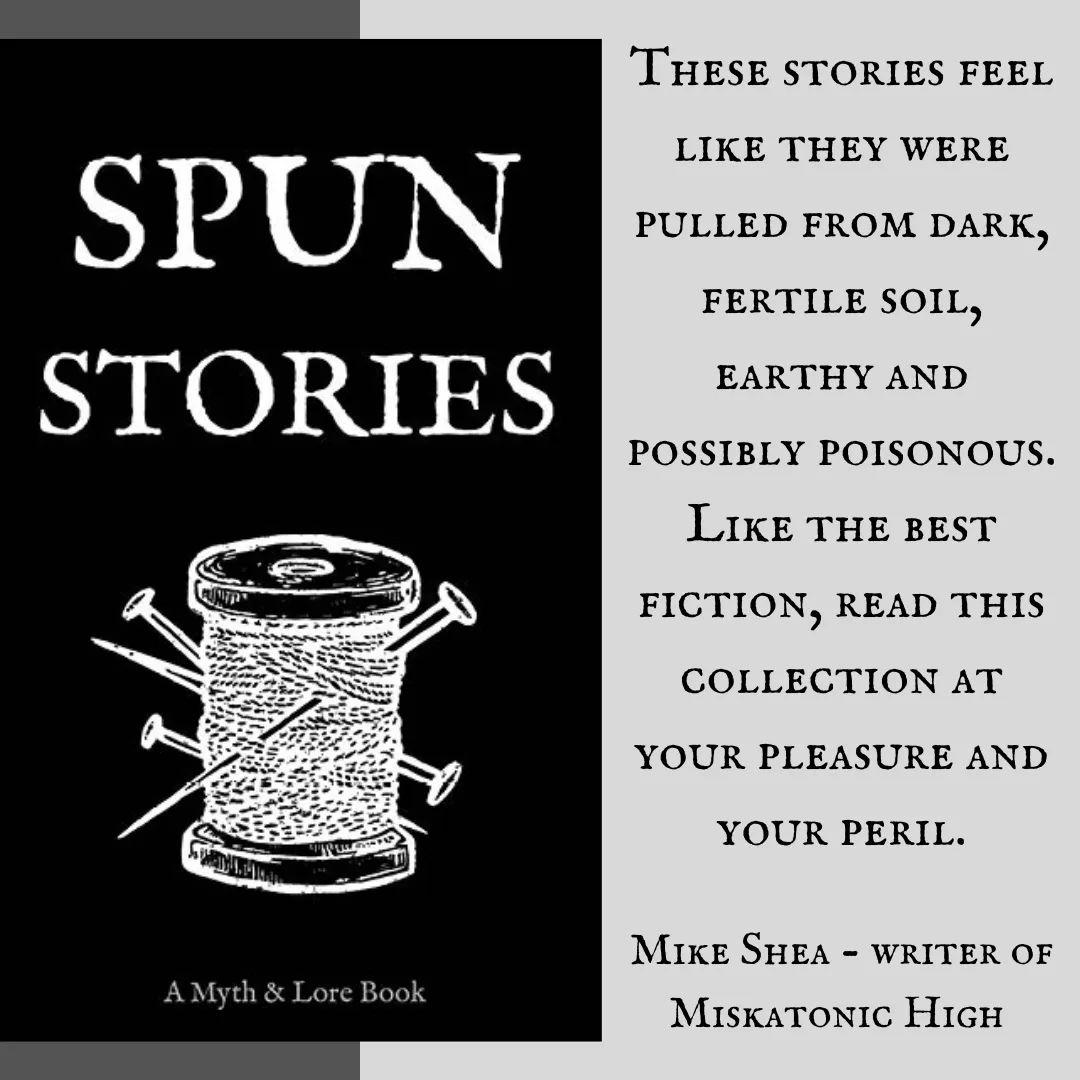
Spun Stories Folk Horror Anthology

I’m honored to have a piece appearing in Spun Stories, the first anthology of short fiction released by Myth & Lore magazine. My folk horror story, “The Cow-Headed Boy,” is about an idealistic young teacher who accepts a position in a village in rural Pennsylvania at the turn of the twentieth century. Many of the village’s Yuletide traditions are quaint and charming, but some are a bit more sinister. Despite my general lack of interest in anything related to Christmas, I ended up doing a lot of research into Germanic pagan solstice traditions, and I hopefully managed to channel a bit of H.P. Lovecraft in the process.     

If you’re interested, you can preorder a copy of the Spun Stories anthology (here), and you can follow Myth & Lore magazine on Twitter (here) and on Instagram (here). I also want to give a shout-out to the editor, a talented artist who goes above and beyond in promoting authors while networking with the indie horror community. If you’re interested in folk horror, it’s definitely worth following Myth & Lore on social media – and perhaps even submitting your own work!