Strange Things Happen in Philadelphia

Strange Things Happen in Philadelphia collects six short pieces of weird fiction about the past, present, and near future of a city where anything can happen. Philadelphia is simultaneously filled with decaying ruins and vibrant cultures, and I see the stories in this zine as a celebration of those of us surviving and thriving during the slow collapse of the American empire. Nothing in these stories is real, of course, but I’ve drawn them from a deep well of local folklore and hearsay.

To tell the truth, I don’t actually know that many people in Philadelphia. I lived here for most of grad school but then moved away to chase various academic jobs. I returned during the pandemic, which wasn’t a great time to meet new people or reconnect with old friends. I’ve tried to apply to local writing groups and workshops but haven’t gotten anywhere (yet).

Don’t get me wrong – I’m fortunate to enjoy the support of various writing communities online. Still, my personal experience of Philadelphia has been mediated by long solitary walks through parts of the city that have a lot of abandoned buildings, many of which have fallen to ruin.

One of these areas is my own neighborhood of Point Breeze, which is a lovely place to live but also filled with decrepit warehouses and other abandoned properties. I myself live next door to a derelict funeral home, and I’m constantly reading threads on various Philadelphia reddit boards about the struggles of homeowners whose townhouses adjoin similarly abandoned buildings.

It’s worth emphasizing that Philadelphia is densely populated. In fact, one of the reasons I love living here is that there are always people on the street at all times of the day and night. In a lot of ways, Philadelphia reminds me of Tokyo. It’s an affordable city with a lot of history, culture, and potential…

…but that’s not really what these stories are about. As I edited this zine, I realized that it’s pervaded by a sense of loneliness. Not an unpleasant loneliness, but rather the unique perspective afforded to a stranger. When you’re alone, you end up seeing things that perhaps other people might miss, and that sense of strangeness is what I wanted to capture in this collection.

I was fortunate to be able to work with Kaylee Rowena, an architectural wizard of the highest order, to create the art for the zine cover. The zine also features a spooky illustration of Mothman by an artist of the odd and surreal who goes by Gravemud on Tumblr, as well as a gorgeously aesthetic illustration of two elegant monsters by the brilliant and stylish Critter Crafter Ally. I’ve also included a half dozen of my own illustrations.

Unlike my previous short fiction zines, Strange Things Happen in Philadelphia is printed in full color, and I’d like to think it’s an attractive little book. If you’re interested, you can download a free digital copy from Itch.io or order a physical copy from Etsy.  

🌇 https://digitalterrarium.itch.io/strange-philly-zine
🌇 https://www.etsy.com/listing/1761448527/strange-philadelphia-fiction-zine
Terrible People

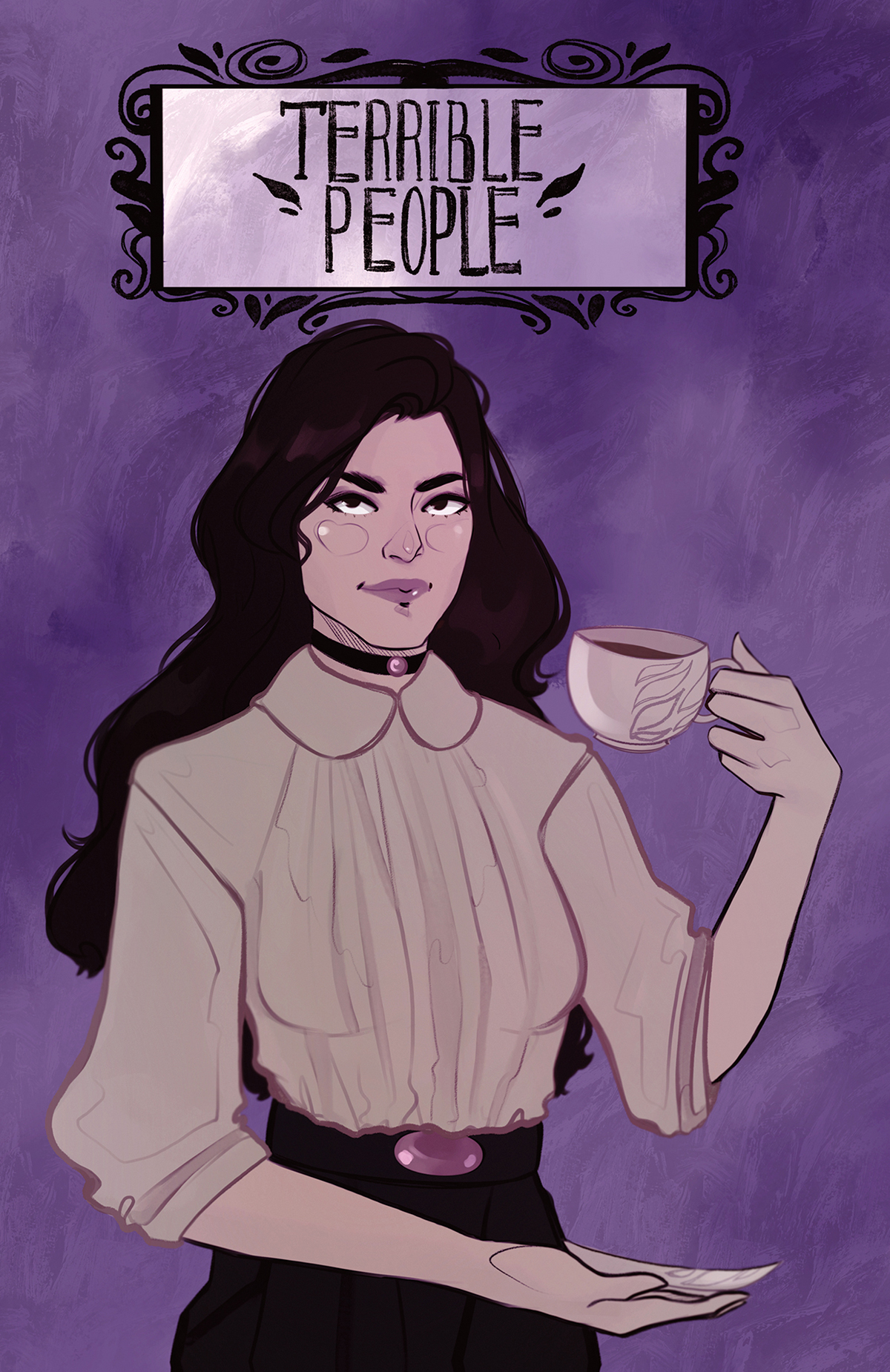
Terrible People collects six short and eerie tales of dark fantasy, unfortunate encounters, and horrible life choices. The writing is accessible to teenagers and adults alike, and there’s a diversity of death, poison, and murder for everyone to enjoy.

Terrible People is my fifth zine of original short fiction, and it’s the first that feels like a real short story collection. Each of the stories in this zine was accepted for publication elsewhere; but unfortunately, every single one of these publications was cursed. To give an example, one online magazine closed their website and deleted their social media accounts less than a month after they accepted one of these stories. To give another example, a small press that published an anthology with another of the stories burned down, meaning that almost all copies of the book were destroyed.  

Perhaps I’m tempting fate by printing these stories on my own. Who can say?

If you’d like to order a (totally not cursed) copy of the zine, it’s on Etsy here:
https://www.etsy.com/listing/1556837985/terrible-people-horror-fiction-zine

At 52 pages, the zine is relatively lengthy, which means I was able to give it a spine. This necessitated extra formatting work, and I feel like I’m slowly starting to understand the art of book design. What I’m thinking of doing in the near future is making a short chapbook from a single story and experimenting with the formatting until it looks more like an actual book. Terrible People is probably the last zine I’m going to make that has the style of formatting I’m using now, which I actually quite like.

I’ve been thinking that perhaps it might be nice to set up a micropress one day. For the time being, however, I’m content simply to continue writing these strange little stories while hoping that the curse haunting my attempts to publish them eventually dissipates.    

Haunted Houses

I recently published a new edition of my horror fiction zine Haunted Houses!

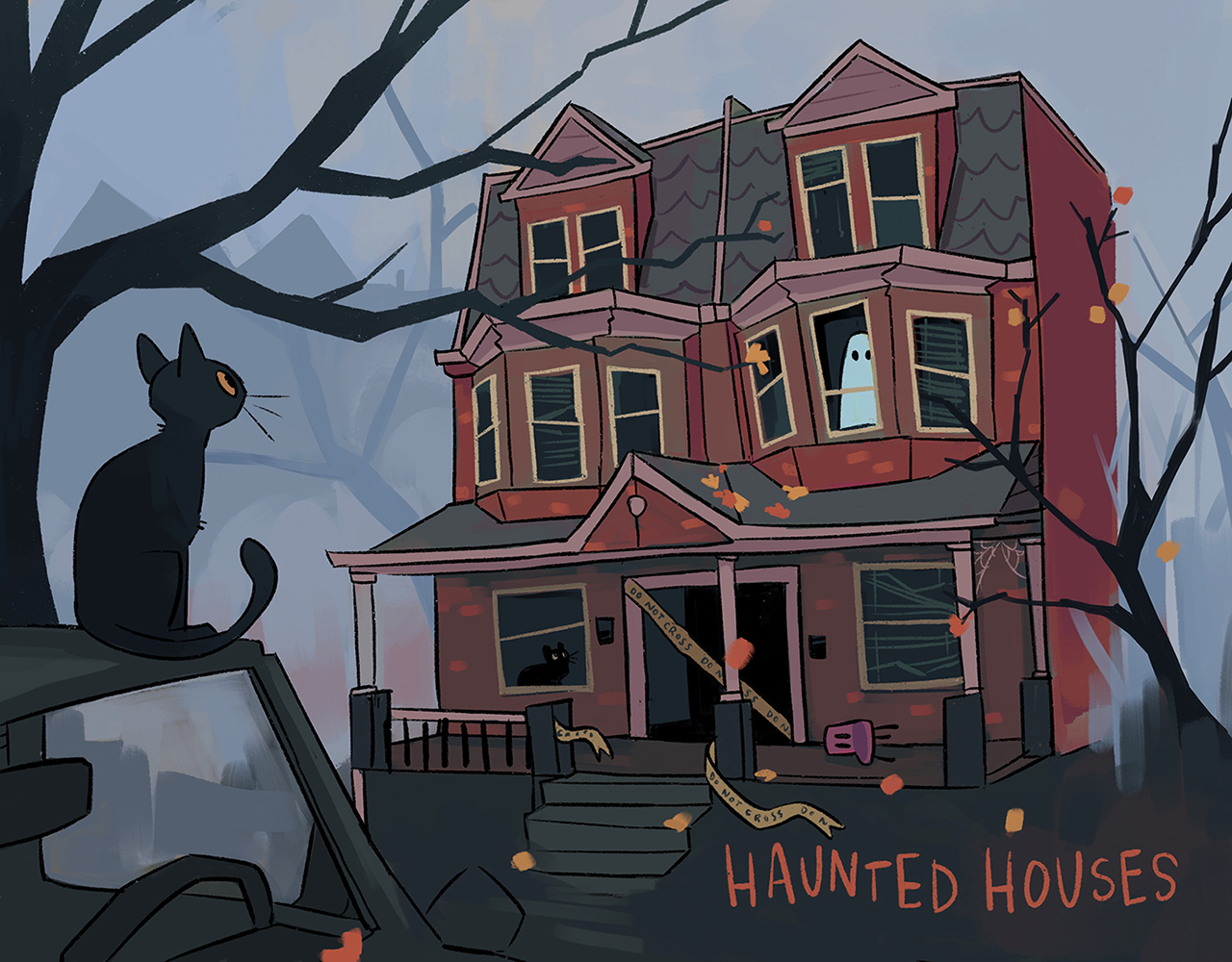
Haunted Houses collects seventeen pieces of surreal flash fiction about haunted spaces and the terrible people who inhabit them. This edition of the zine includes several new stories and illustrations, as well as a gorgeous cover illustration by Megan Crow, who was able to channel the everyday spookiness of West Philadelphia. Although the stories in this zine fit firmly into the mode of magical realism, I wanted to use the medium of fiction to explore a truly terrifying set of real-life themes relating to housing, from gentrification to rent spikes to urban depopulation.

If you’re interested, physical copies of the zine are available on Etsy:
https://www.etsy.com/listing/890744799/haunted-houses-fiction-zine

I’ve also started to host free digital editions of my older zines on Itchio:
https://digitalterrarium.itch.io/

Horror Fiction Zines at Common Meter Press

I’m honored to have three of my zines in stock at Common Meter, a new zine distro and poetry micropress!

These three zines – Ghost Stories, Haunted Houses, and Haunted Haiku – are only available through Common Meter. They’ve done a fantastic job with the listings, which you can find on their website (here). It’s incredible to see my creative work presented in such a cool and stylish way, and I’m beyond impressed by how Common Meter supports the writers and poets they work with. I understand that the press is currently creating a series of original, hand-printed chapbooks, so please check them out if you’re interested in reading (and perhaps publishing) cutting-edge writing.

I also want to recommend Common Meter’s Instagram (here), where they’ve started to post gorgeous photos featuring zines ranging from bright and colorful minicomics to letterpress poetry chapbooks. They’re just getting off the ground, and I can’t wait to see where the wind takes them.

Decomposition: Tales of Botanical Horror

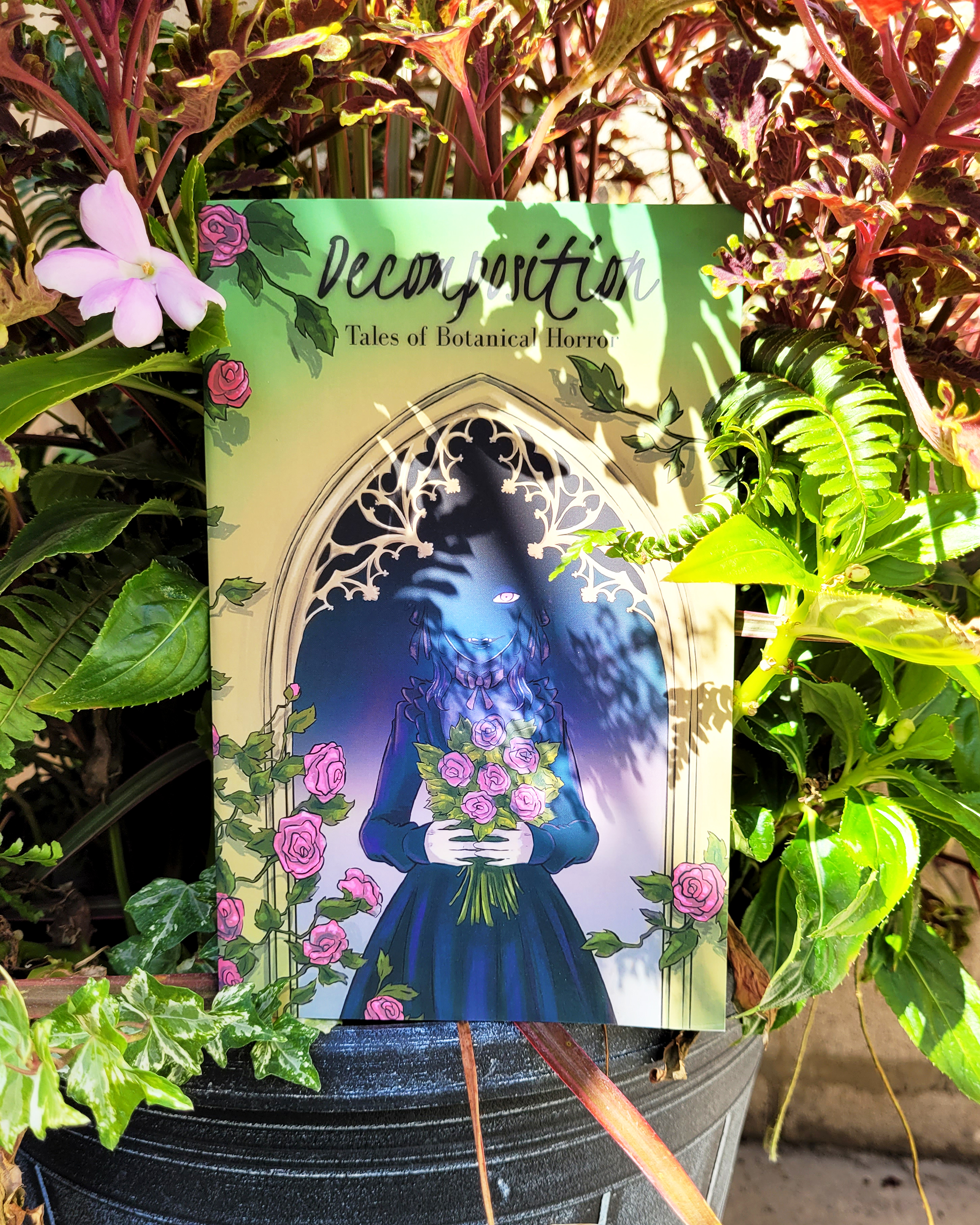
My newest short fiction zine, Decomposition, collects six short stories of botanical horror and dark fantasy. It features a number of guest artists and spot illustrations, as well as a gorgeous cover created by the botanical art wizard Frankiesbugs. I’ve listed the zine on Etsy (here) if you’re interested.

The past few years have been tough for me. It’s become somewhat taboo in American culture to admit that the pandemic wasn’t the best thing to ever happen to you, so the less said about this the better.

I have to admit that I’m a gremlin who doesn’t really care about germs, but for a while I found it very difficult to relate to other people. I didn’t want to see other human beings at all if I could help it. This is why, after I moved to Philadelphia, I started spending a lot of time wandering around abandoned spaces.

Philadelphia is a fun and interesting city with a steadily growing population and multiple vibrant local cultures, and I find it annoying when people take pictures of a normal street or an early-morning empty parking lot and tag their photos as “urban decay” on social media. That’s just rude. Still, I think it’s easier to get funding to build new construction than it is to repair existing structures, so there’s a surprising density of ruins and wild spaces in and around Philadelphia.

What surprised me while walking around the emptier areas of Philadelphia is just how quickly most architecture returns to nature. Maybe stone castles and granite walls and asphalt roads can last for centuries without maintenance, but a normal house or Burger King or whatever is going to last for one or two decades at most. It’s only going to take about five years before the roof goes; and then, once the water damage gets started, that building is finished. The shell of the walls becomes its own little ecosystem, with plants pushing up through the brick and concrete. In Philadelphia, fig trees and sumac shrubs grow wild just about everywhere, providing food and shelter for insects, birds, and larger animals like opossums and raccoons.

On one hand, it’s lovely to see these pockets of green in postindustrial urban areas. On the other hand, it’s a bit creepy how aggressive plants are in taking over space formerly occupied by people. If you think about it, plants have been on this earth for hundreds of millions of years, and they will remain here long after the last human draws its final breath. Their green dreams are beyond our comprehension as their roots silently feed on the soil of our bodies. Plants are forever growing and forever hungry, and they’ll take everything back from us eventually.