Review of Pig Wife on Comics Beat

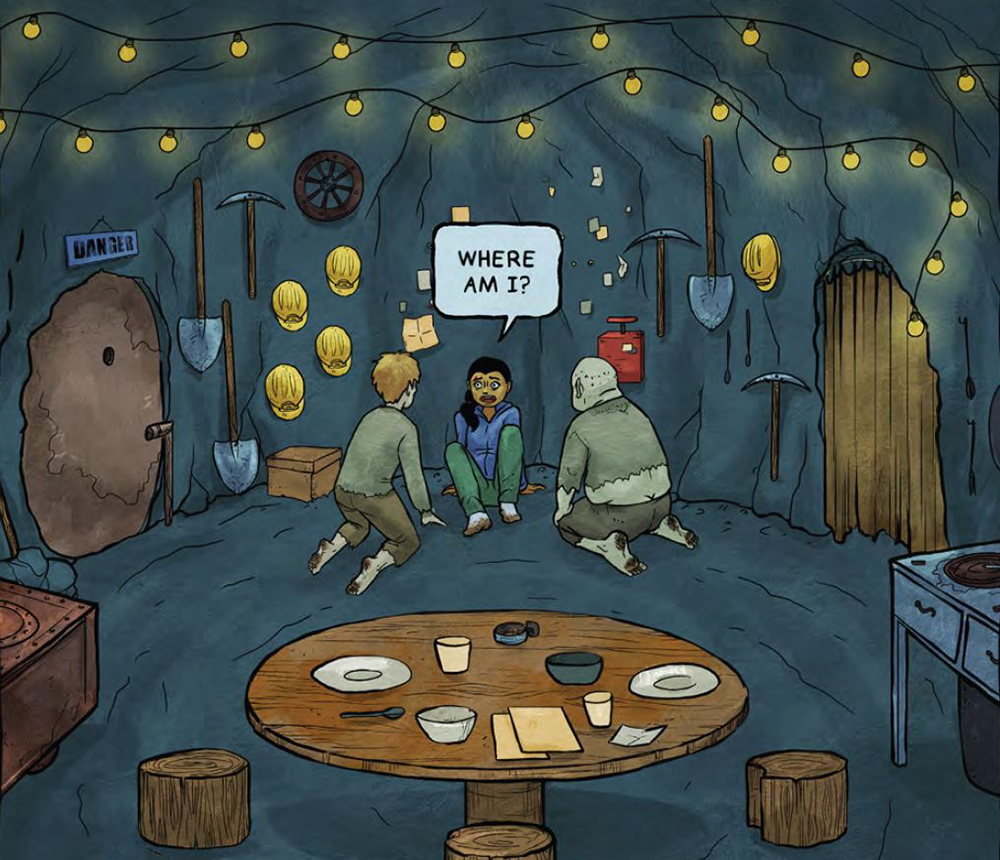
I recently had the immense pleasure of writing a review for Comics Beat about Pig Wife, a massive graphic novel drawn by Abbey Luck, a Hollywood animator who specializes in Adult Swim style bizarro art. Pig Wife is definitely Hollywood, and it’s definitely got a Gen-X style “alternative” edge to it. Neither of these things is to my taste, usually, but I love Pig Wife for what it is: namely, a gothic “weird girl” coming-of-age story set in a not-quite abandoned labyrinth of mine tunnels in rural Pennsyltucky.

I say in my review that it’s easy to read this 500-page book in one sitting, and I mean it. Pig Wife tells an incredibly entertaining story; but, appropriately enough, there’s a lot going on below the surface. Here’s an excerpt from my review:

By forgoing the nuances of character, Pig Wife can focus entirely on plot, and the plot is a well-oiled machine that grabs the reader and aggressively drags them down into the tunnels. Moreover, by virtue of the broad strokes of its characterization, Pig Wife is also able to convey the allegorical elements of its scenario.

The coming-of-age story in which a young hero embarks on a journey has a universal appeal, but teenage girls (and slightly older girls, if they’re trans) often undergo a separate ascent from innocence to experience that I think of as “climbing out of the pit.” By “the pit,” I mean the everpresent tarpit of internalized sexism and misogyny, and the mine tunnels of Pig Wife are as good of a visualization of this pit as any.

You can read the full review on Comics Beat here:
https://www.comicsbeat.com/graphic-novel-review-pig-wife/

Review of Witchcraft on Comics Beat

My most recent review for Comics Beat is about Witchcraft, a graphic novel by Sole Otero, an internationally famous Argentinian comic artist whose style has developed in a cool and unique way during the past decade. Witchcraft is a massive book, but it’s an incredible page turner. The writing is brilliant, and the art is both extremely stylized and exactly what it needs to be to tell the story, a gothic cautionary tale that jumps between the present day and various periods in the history of Buenos Aires. And the story is indeed about witches and magic and power. This book is so goddamn good, and I feel very honored to have been able to write about it. Here’s an excerpt:

Witchcraft is primarily set in Buenos Aires, and the narrative jumps between historical periods when the witches were active and the present day, when the gender politics of their activities are far more complicated. It would be easy to see the witches as feminist saviors as they run women’s clinics and shelter members of the local indigenous population, but their benevolence is called into question by the nature of their magic, which requires the victimization of men and the silent complicity of their fellow women. Instead of a feminist message, what Witchcraft offers is a fast-paced and high-stakes story about cycles of abuse and the human cost of the sacrifices necessary for the marginalized to survive.

You can read the full review on Comics Beat here:
https://www.comicsbeat.com/graphic-novel-review-witchcraft/

Essay about Elden Ring and Dark Academia

I’m excited to share an essay I wrote for Bloodletter Magazine, a stylish biannual anthology of queer and feminist horror. The piece is titled “Dark Academia for Dark Times: Elden Ring and the Fall of the Academy,” and I’m writing about how the haunted lore of the game’s cursed university reflects real-world academic anxieties. 

You can read the essay here:
https://bloodlettermag.com/dark-academia-for-dark-times-elden-ring-and-the-fall-of-the-academy/

While I use the character Rennala from Elden Ring as an illuminating point of focus, my piece is really about the uncanny connections between the crisis currently facing universities and the social media aesthetic of “dark academia” embraced by young women. I’m arguing that the association of dark academia with the corruption of female bodies reflects deeper concerns regarding the ties between academic liberalism and the decay of imperial privilege. 

Basically: Is the wokeness of postcolonial queer feminism ruining college? I would like to believe that it is, and I think this is kind of neat, actually.

My piece is graced with a creepy spot illustration by the magical Katy Horan, who goes by @goodyhoran on Instagram, and you can follow Bloodletter at @bloodlettermag, where they post eye-catching film stills from indie horror movies created by emerging female directors.