Crow Country Essay on Sidequest

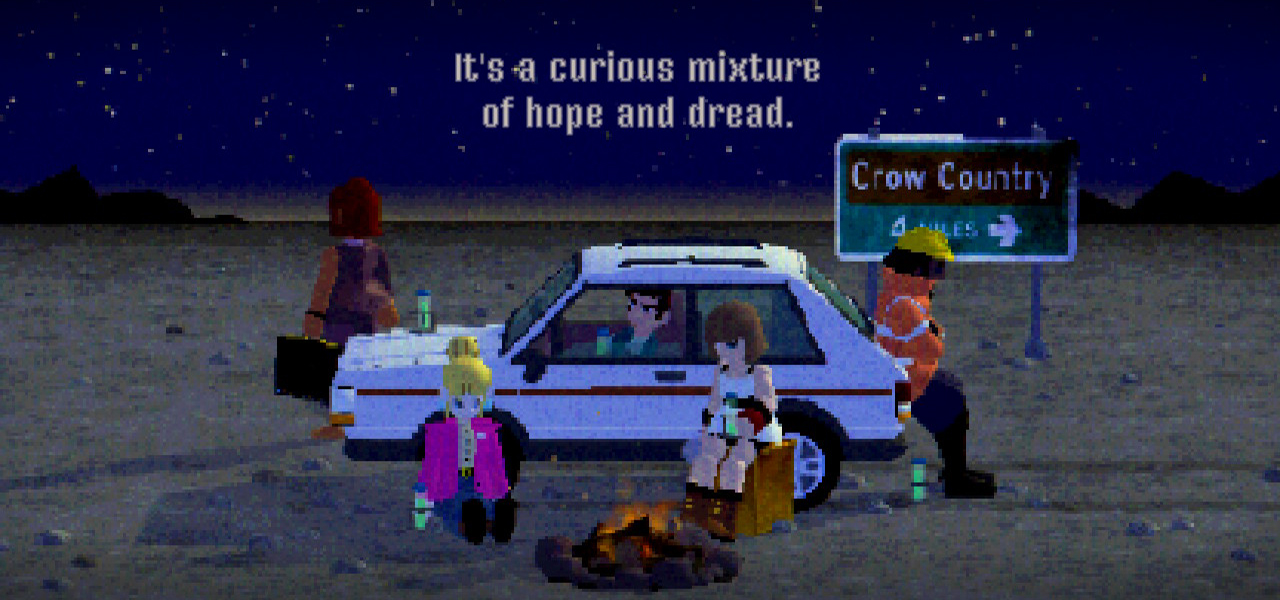
I’m excited to share “Crow Country Is a Game about Climate Change,” an ecocritical analysis of one of my favorite indie games of 2024. This essay also serves as a kind of “Ending Explained” story breakdown that was inspired by a few Reddit discussion threads that missed the point of what (to me at least) is a clear, powerful, and compelling artistic statement. How do we process the reality of climate change, and how can we face the challenges of the future?

Crow Country borrows heavily from the visual design of Resident Evil and Final Fantasy VII, and I argue that it provides an interesting meta-commentary on their themes as well. Specifically, I think Crow Country uses its retro aesthetics to remind players of the political climate of the late 1980s and early 1990s, when environmentalism was considered an important bipartisan issue in the United States.

In my essay, I put Crow Country in conversation with two books, Colette Shade’s Y2K: How the 2000s Became Everything (2025) and David Wallace-Wells’s The Uninhabitable Earth: Life After Warming (2017). I believe that Shade’s discussion of the “lost environmentalism” of 1990s media like Captain Planet and FernGully can be expanded to video games, and I explain how Crow Country plays on that cultural nostalgia. Meanwhile, Wallace-Wells discusses a “crisis in storytelling” about climate change that positions its victims as cute animals instead of actual human beings, but Crow Country subverts this narrative impulse by demonstrating that its “zombie” climate refugees are none other than ourselves.

You can read the essay on Sidequest here:
https://sidequest.zone/2025/04/22/crow-country-climate-change/

Crow Country (on Steam here) is an incredible game, by the way. I enjoyed writing about it, and I enjoyed playing it as well. It takes about four hours to finish, and there’s an optional “no combat” mode that allows players to focus on exploring the space while engaging with the story and puzzles. If you’re interested, I posted a no-spoiler review of the game ( here ).

ETA: This essay was featured on Critical Distance (here). What an honor! I hope a wider audience gets a chance to read this piece, if only so that more people can appreciate the nuanced but powerful message of this incredible game.

In Praise of Moss Disability Zine

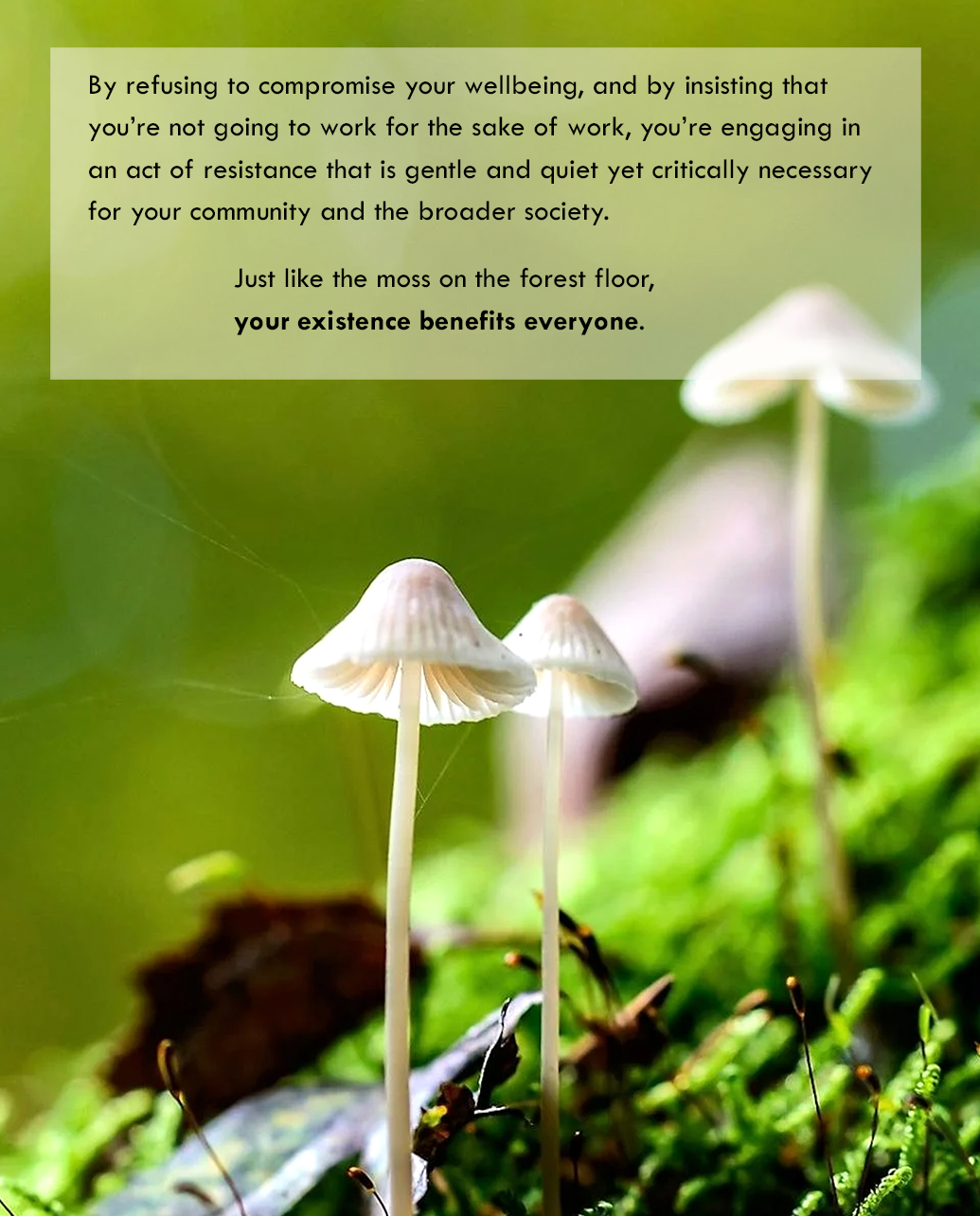
In Praise of Moss is a zine that argues against the myth of productivity while celebrating the value of a diversity of contributions to our culture and communities. Not everyone can be a tree, and that’s okay. Moss is an equally important part of an ecosystem.

I wrote this zine from a perspective that respects people of all abilities, but I think it’s important to acknowledge the more challenging aspects of disability. Disabled people are often expected to “pull their weight,” usually with the assumption that there’s only one way to measure success. In addition, people who live with invisible disabilities are often met with frustration and accusations of laziness when we’re unable to work or behave “normally.”

Moss is a useful metaphor for a recontextualization of what it means for disabled people to be useful to our communities and valued in our relationships. By exploring how moss can support an entire ecosystem, we can craft a model for how disability positivity can benefit society.

In addition, moss is remarkably adept at surviving disaster, which makes it an engaging analogy for resistance against the pressures of self-optimization exerted by neoliberal capitalism. While my focus is on disability, I believe that all readers can benefit from a shift in perspective that encourages us to grow naturally without worrying about productivity. 

When I write about “resisting productivity,” I’m speaking from the position of someone in academia who is directly affected by the myth that hard work will lead to prosperity. I hate the way this myth is weaponized against disabled people in the realm of higher education, and I want to destroy it. Very softly and quietly. Like moss.

While I love the lo-fi DIY aesthetic of many of the disability zines I’ve found on Etsy and in indie bookstores, it was important to me to create an attractively formatted physical object that feels good in my hands and accommodates my own disabilities by being easy to read. I want people who encounter this zine to feel that it’s valuable, and that they’re valuable too. I was fortunate to be able to work with Fireball Printing, a local Philadelphia service that creates gorgeous full-color publications.

If you’re interested, you can order a copy of the zine from Etsy, or you can download a free digital version on Itch.io.

🌿 https://digitalterrarium.itch.io/in-praise-of-moss
🌿 https://www.etsy.com/listing/1881401704/in-praise-of-moss-disability-zine

Article about Ender Lilies on Sidequest

I got to write my dream article for Sidequest about Ender Lilies, one of my favorite games! Here’s the opening paragraph:

In Binary Haze’s 2021 Soulslike Metroidvania Ender Lilies: Quietus of the Knights, a young girl named Lily navigates a hostile postapocalyptic world with the help of grotesquely mutated undead monsters. As the game progresses, Lily becomes increasingly reliant on her monstrous companions as she becomes more monstrous herself. Ender Lilies functions as an intriguing model of mutual aid, especially in relation to its gradual descent into fungal horror. As the world changes around us, Ender Lilies asks, is it really so horrific to develop radical new relationships with the environment?

You can read the full piece on Sidequest here:
https://sidequest.zone/2024/09/05/ender-lilies-fungal-horror/