Dark Souls Fandom Essay on Sidequest

“The Softer Side of Dark Souls Fandom,” my essay about a major shift in internet culture, was published on Sidequest. Everybody loves Bloodborne and Elden Ring now; but, ten years ago, FromSoft fans were a fairly isolated group, not to mention some of the most hateful people I’d ever encountered online. At about 1,400 words, this piece is far shorter than it should be, but I still had a fun time writing about how FromSoft fandom has become much more welcoming and inclusive over the past decade. Here’s an excerpt:

I’ve put untold hundreds of hours into Dark Souls and its sequels. When the game first came out almost fifteen years ago, however, there was nothing I hated more than Dark Souls. I refused to play it. I associated the game with the worst people on the internet, who spewed hate while using Dark Souls memes to shame and attack anyone they felt challenged the hegemony of their male-dominated subculture of video game fandom.

I therefore feel an ironic pleasure in the fact that, these days, Dark Souls and the other FromSoft games have been embraced by women and the queer community, the exact people these angry online gaming communities loved to hate. In a strange twist of fate, the games weaponized to mock diversity have become a sanctuary for many of the people who were once excluded.

You can read the full essay here:
https://sidequest.zone/2025/07/14/dark-souls-fandom/

An earlier version of this essay was published in Act Your Age, Vol. 2: Dark, a fandom memoir anthology zine that you can check out (here).

I decided to publish this piece online when the host of one of my favorite video game podcasts, Bonfireside Chat, came out as transgender. Since she’s not really a public figure, I don’t mention her in the essay itself, but her announcement made me incredibly happy. Regardless of gender and sexuality, I hope everyone can find a place where they feel accepted and supported in their interests… even if their interest is in dark fantasy games about dying in all sorts of grisly and horrifying ways!

The Sleeping Princess

There is a legend in Hyrule that a sleeping princess lies behind the door of a locked room deep under the ruins of the North Castle. When the princess rises, so too will the ancient powers sealed within her dreams. Impa knows the legend is true, and she fears the fate that will befall the kingdom should the first Zelda wake. Yet when a shadow rises on the borders of Hyrule after the birth of a new princess, Impa must make a terrible choice.

I had the honor of contributing a story called “The Sleeping Princess” to Blood Moon Rising: A Zelda Horror Zine. I was interested in exploring the background of Princess Zelda in the original 1986 game, and I thought it might be fun to see her story through the eyes of Impa, who knew about the undead princess who was the first of Zelda’s line. In other words, I’m connecting some of the more disturbing threads between The Legend of Zelda and Zelda II: The Adventure of Link.

“The Sleeping Princess” is a story about maternal love, political sacrifice, and the dark secrets hidden within the labyrinthine dungeons of Hyrule. I was strongly inspired by H.P. Lovecraft’s novel At the Mountains of Madness, which dwells in the geometric terror of monumental architecture built by strange hands, and I did my best to create a sense of ruined grandeur similar to that of Dark Souls and Ico: Castle in the Mist.

For the story’s illustrations, I had the incredible pleasure of working with the devilishly talented Pumpkinsouppe, whose dark arts brought this ruined world to life.

You can find “The Sleeping Princess” on AO3 here:
https://archiveofourown.org/works/62492182

Leftover sales of the zine are open until February 24 on BigCartel (here).

Games like Echoes of Wisdom

Are you excited about Echoes of Wisdom and can’t wait to play it? Thankfully, there’s a wealth of excellent Zelda-style games with female and nonbinary protagonists made by small studios that you can jump into right now on Nintendo Switch. These are eight of my favorites…

Do you wish Zelda got to fight with a sword?
Check out: Ocean’s Heart

Are you nostalgic for the gameplay and dungeons of A Link to the Past?
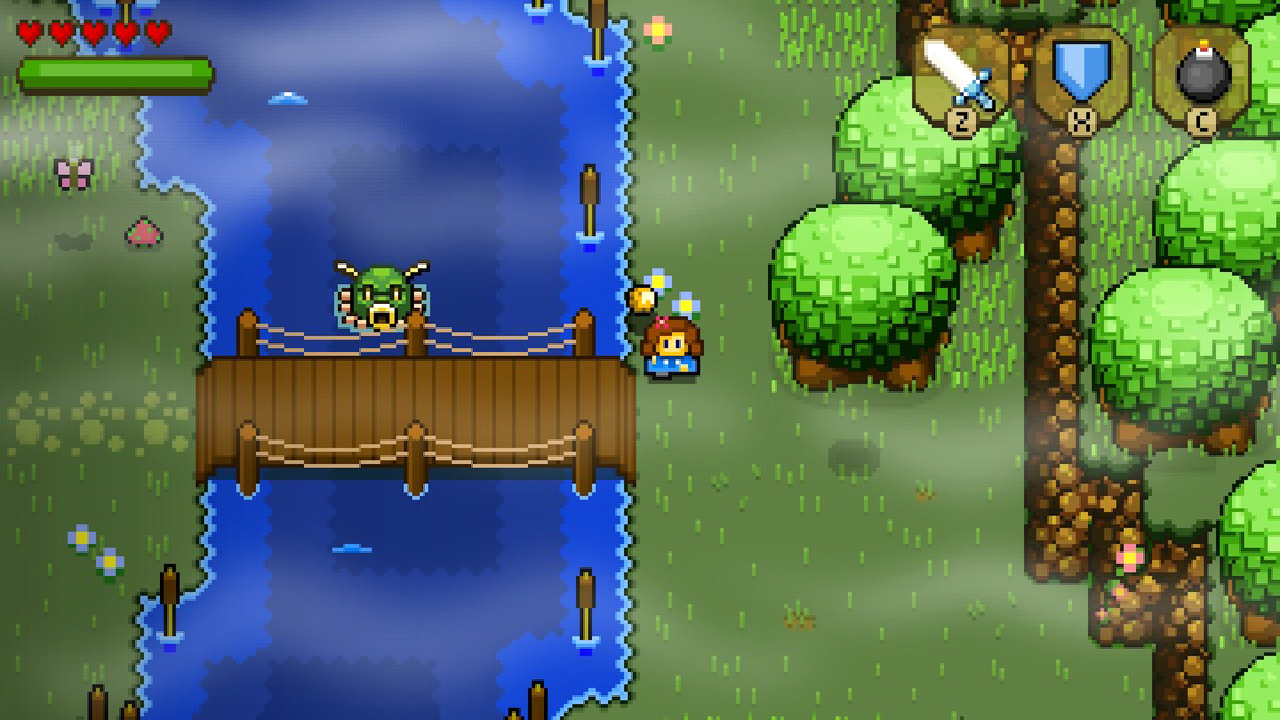
Check out: Blossom Tales: The Sleeping King

Are you hungry for more rock-tossing action?
Check out: Lila’s Sky Ark

Are you looking for cute graphics and a nonbinary protagonist?
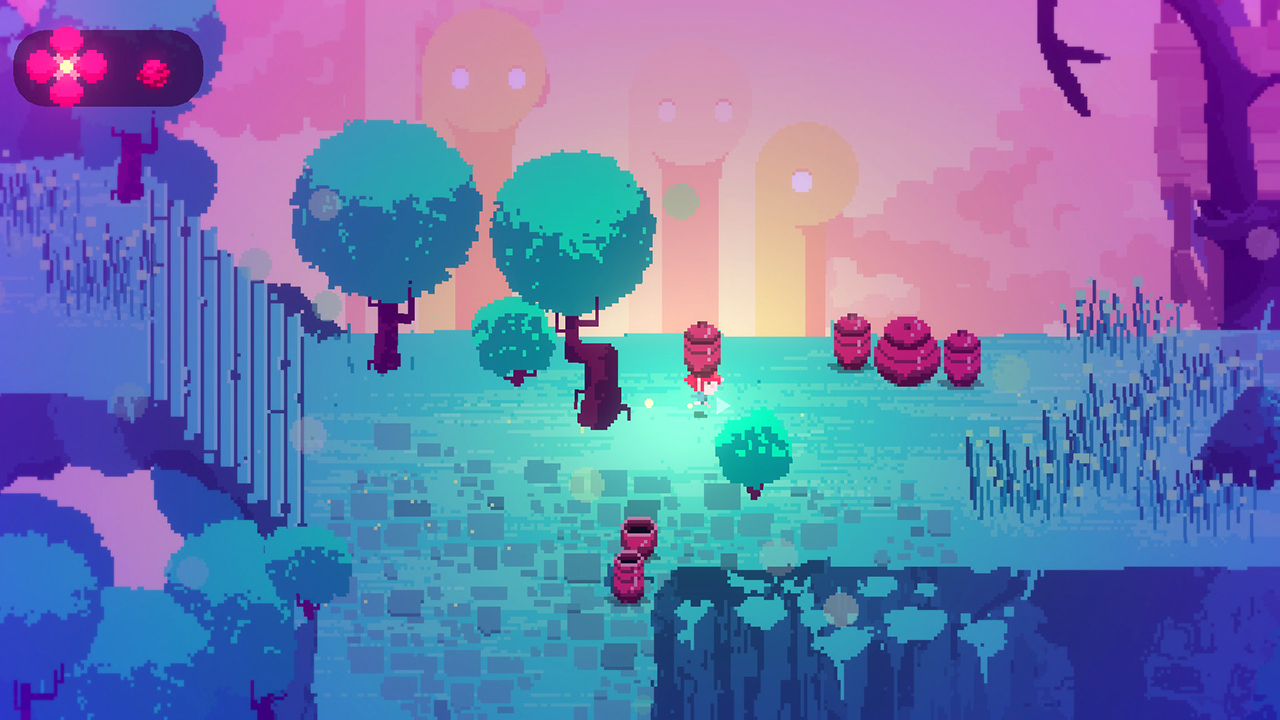
Check out: Frogsong

Would you like a simple and easy game to share with kids?
Check out: Arietta of Spirits

Would you like a challenging game with accessibility options?
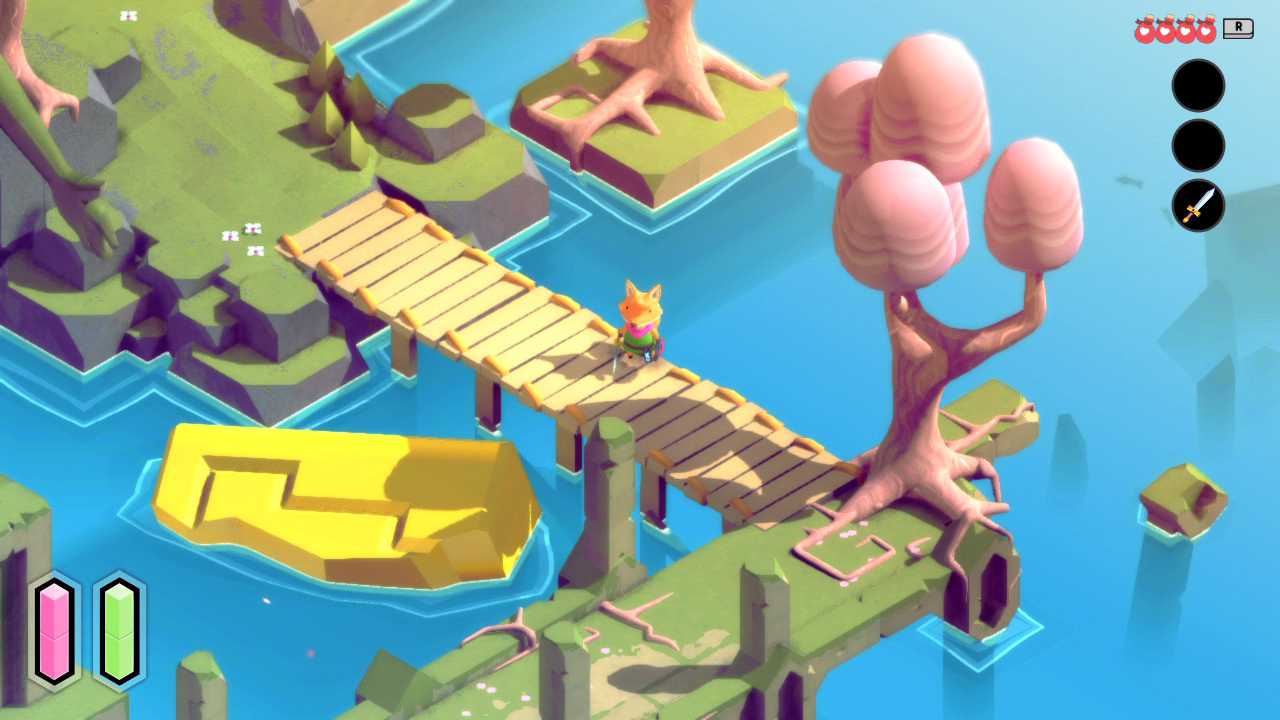
Check out: Tunic

Do you prefer the game to be super difficult and have deep lore?
Check out: Hyper Light Drifter

Do you want your female character to wield both a sword and magic, and will you be satisfied with nothing less than complex and multilayered combat in an exploration-rich dark fantasy world that hides a tragic story about the suffering implicit in the rise and fall of empires? 
Check out, unironically: Dark Souls

Usurper Ghoul

Usurper Ghoul
https://evandahm.itch.io/usurper-ghoul

Usurper Ghoul is a nonviolent Game Boy adventure game that channels the “ruined kingdom” vibe of Dark Souls. I tend to think that Dark Souls is marred by needless difficulty; and, in the same way, the gameplay elements of Usurper Ghoul are needlessly frustrating. The nonlinear exploration-based gameplay of Usurper Ghoul is on brand for a Soulslike Game Boy game, but it’s not for everyone. Like Dark Souls, Usurper Ghoul becomes more interesting the more you engage with it, but the beginning is rough.

You play as a horned, skull-headed demon who wakes in a garden in the hills overlooking a small village, which in turn overlooks a valley of tombs. In true Dark Souls fashion, no one tells you where to go or what you need to do, and it’s possible to spend a lot of time walking around without getting anywhere. There are a few people scattered across the wilderness, but they’re not particularly helpful.

With no particular goal other than to explore the world, your job is to collect three items from three categories. Flowers allow you to interact with people, sticks allow you to interact with the environment, and rocks allow you to access more knowledge about the world. One stick allows you to unlock doors, for example, while another stick allows you to read written text. The catch is that you can only hold one of each type of item at a time.

The necessity of discarding one item in order to use another fits the broader theme of the game, which is that something must be sacrificed in order for something else to be gained. Unfortunately, switching between items involves a great deal of needless backtracking. The world of Usurper Ghoul isn’t that big, and the game isn’t overly complicated, but it’s big and complicated enough for the backtracking to be annoying. There are no puzzles involved; it’s just donkey work.

One might say that Dark Souls involves needless complications and barriers to progress, but one of the primary attractions of Dark Souls is that it’s gorgeous to look at. You might be continually frustrated over the course of your journey through Lordran, but you tolerate the setbacks because the environment is so beautiful and atmospheric. The world design of Usurper Ghoul is unique and interesting, to be sure, but it’s still rendered with primitive Game Boy graphics. There’s no background music, and the sound design is limited to jarring beeps at odd moments. In other words, it’s not necessarily a pleasure to trek back and forth across the map to switch out one tool for another.

The overall story of Usurper Ghoul is intriguing, but the writing is hit or miss. Most NPCs say decontextualized NPC banalities, and the lore encountered in books and on monuments often feels like a parody of Dark Souls. Although this is never explained, your goal is to enter a tower; and, to do so, you have to collect enough lore to figure out the right order to light torches in front of the tombs in the valley. You need different sticks to unlock gates, to read the writing on the tombs, and to light their torches, so this is a tedious process even if you (like me) lose patience with the game’s obtuse writing and resort to a walkthrough to figure out the order.

Having discussed what’s frustrating about Usurper Ghoul, I now want to explain why I enjoyed it anyway. The next paragraph contains mild gameplay spoilers, but it’s also the coolest part of the game.

For your own nefarious purposes, you can offer three varieties of flowers to NPCs. Comely flowers make people like you, malodorous flowers make people dislike you, and horrid flowers will kill anyone who touches them (except you). In one of the game’s endings, you can climb the tower in the valley and simply leave the kingdom behind without hurting anyone. If you want to experience everything Usurper King has to offer, however, your goal becomes to kill as many NPCs as possible while managing the limitations imposed by each death. Each NPC you kill with a horrid flower leaves a book in the tower whose text emphasizes the theme of sacrifice. For me, this was when the story became worth the trouble of navigating the world.

I found the endgame of Usurper Ghoul to be extremely compelling. And really, despite the initial annoyances, the ideas informing Usurper Ghoul are brilliant. I feel that the success of the execution is limited by the Game Boy technology, and I’d like to give the developer a nice chunk of cash to hire collaborators and develop these ideas into a less bare-bones format, perhaps along the lines of Tunic. Usurper Ghoul is a fascinating proof of concept; and, with a bit of polish, I could easily imagine it becoming a cult classic.

For me, the payoff of Usurper Ghoul was worth the frustration of the gameplay and the occasional Dark Fantasy Generator™ writing, but your mileage may vary. There’s a lot to explore and experiment with in the world of the game, and it’s definitely possible to spend several hours there. I lost patience toward the middle and used (this walkthrough on Reddit) to smooth over some of the rougher bits, and I ended up spending a bit more than two hours with the game. If nothing else, I’m really looking forward to checking out the developer’s comic projects in the near future.

Essay about Evergrace on Sidequest

My summer replay of Elden Ring triggered memories of an obscure PlayStation 2 game from 2000 called Evergrace. When I went online to see if anyone else had made the connection between Elden Ring and Evergrace, I was surprised to find that I seem to be one of the few people who remember this game. I did some deep digging and ended up writing an essay for Sidequest about why Evergrace is a forgotten FromSoft classic worthy of critical attention. Here’s an except:

Even in this brief description of the setting of Evergrace, FromSoft fans will notice various seeds of worldbuilding that have since sprouted into more developed forms in later titles, from the Darksign marking the Chosen Undead player-character in Dark Souls to the queen imprisoned in the towering Erdtree in Elden Ring. As I read about Evergrace, I was fascinated by the earlier forms of signature FromSoft leitmotifs that appear in the game, just as I was intrigued by its challenging elements of gameplay that would later evolve into the characteristic trademark of the Soulslike genre of video games.

You can read the full essay on Sidequest here:
https://sidequest.zone/2023/09/25/evergrace-a-forgotten-fromsoft-classic/

I’d love to write a substantial academic article about Evergrace, but I’m hindered by the fact that I can’t actually play the game without investing in a desktop computer that can run a PlayStation 2 emulator. Hopefully this essay presents a strong argument for textual documentation of classic titles, as well as freely accessible video game archives.  

Ender Lilies: Quietus of the Knights

Ender Lilies: Quietus of the Knights is a fantasy-themed 2D adventure-platformer with moderate elements of horror and a moderately high level of difficulty. Unlike many modern Metroidvania games, there is nothing retro about the graphics. The backgrounds are gorgeous works of HD digital art filled with stunning details, and the characters and enemies are all beautifully animated. Both the combat and exploration are a lot of fun, and it’s a joy to move through this ruined world.

You play as a young unnamed priestess (referred to by the user interface as Lily) who wakes in the catacombs beneath a cathedral filled with monsters. You’re greeted by an adult knight (initially called “the Umbral Knight” but later revealed to be named Ferin) who accompanies Lily outside, where the landscape is dark and dripping with the water of a poisonous rain. Everything touched by the rain becomes “blighted,” or monstrous and undead. Lily has the ability to purify monsters by removing the blight from their bodies, thereby allowing them to die. Although the game has no quest-givers to explain what’s going on, it’s easy enough to make the assumption that Lily’s job is to find the source of the blight and purify it.   

Lily is a small child who is physically fragile, and she cannot defend herself on her own. Your attacks are therefore performed by the Umbral Knight, who is gradually joined by other spirits. The Umbral Knight performs a basic sword attack, but Lily meets spirits who can perform heavy attacks, ranged attacks, area-of-effect attacks, and so on. You can equip two sets of three spirits at a time and map them onto whatever buttons you wish in order to create different combos and skill sets appropriate to different bosses and exploration challenges. This is much less complicated that it sounds, and the Umbral Knight is strong and versatile enough to carry you through the game.

You can upgrade these spirits using different types of limited resources that you find through exploration. Aside from Lily, everyone in the world of the game is either dead or undead, and there is no “economy” to speak of – only the relics and resources that Lily can scavenge from corpses. Spirits are acquired by defeating boss monsters, many of which are optional and must also be found by exploration. I really love this system of fighting a powered-up version of a regular monster in order to acquire its abilities, especially since the player should already be familiar with these abilities from having faced a number of such creatures in combat.

The optional minibosses are tricky but fun, but the mandatory zone bosses are legitimately challenging. This challenge is mitigated by the game’s leveling system, in which defeating enemies gives Lily experience points that allow her to gain levels. Health and attack upgrades must be acquired elsewhere, but each new level grants Lily ever-so-slightly better defense and a tiny boost to the power of the Umbral Knight. There is always a save point right before a zone boss fight, as well as an enemy-dense screen on the other side of the save point that provides a good opportunity to level up if needed. The only real way to defeat these bosses is to learn their attack patterns while optimizing your own set of attacks, but the zone leading to each boss does a good job of teaching you the skills you need to survive.

You can also find various relics in the world that grant enhanced abilities, such as giving you more healing charges, increasing the amount healed with each charge, increasing your defense, strengthening certain types of attacks, and so on. In addition, you’ll find items that allow you to equip more relics, as well as items that permanently increase your health bar. Some of these items are hidden behind illusory walls, but these “secrets” are never unmarked, and the game teaches you how to read the environment fairly early on. If you pay attention and don’t mind an occasional bit of backtracking – which you’ll need to do anyway to find a path forward through the interconnected zones – you should be able to strengthen Lily just enough to keep going without having to grind for levels.

Ender Lilies is clearly inspired by Dark Souls and Hollow Knight. It’s not easy, but I would say it’s more “challenging” than “punishing.” The combat is a lot of fun, but the true emphasis is on exploration and paying close attention to the environment. Each screen of the game has its own unique design and artwork, meaning that you’ll be inspired to explore just to see what’s around the next corner. In addition, each relic and spirit and upgrade material you find is valuable, as is every zone boss spirit, all of which grant you an additional exploration ability. I found the gameplay loop of Ender Lilies to be extremely satisfying.

Given that everyone in the world of the game is dead, careful exploration also allows you to find bits and pieces of the story in the form of Fallout-style journals and missives that have been left lying around. Like the gameplay, the story is inspired by Dark Souls and Hollow Knight, and the overarching plot is similar – a morally ambiguous king has made a difficult choice involving arcane forces that were poorly understood by hubristic scientist-wizards. Ender Lilies adds a few interesting twists to this formula, especially towards the end, and the abject tragedy of what happened in this kingdom feels earned, narratively speaking.

What I love about the story is that every textual object you find has a distinct narrative voice. It goes without saying that the presentation of information is not linear, and it’s always a fun surprise to find something written by a blighted monster you encountered much earlier in the game. Some of these characters are much more important than others, but the gradual accumulation of their stories leads the player to the dawning realization that, despite the horror of the situation, the kingdom was filled with flawed but deeply human people who were doing the best they could.

It’s easy to dismiss Ender Lilies as “2D anime Dark Souls for casuals” at a glance, but I ended up being genuinely moved by the story and characters. The horror themes are expressed with creativity and style, and Ender Lilies is nothing if not atmospheric. In terms of gameplay, I think Ender Lilies may be a perfect Metroidvania, and the game features various ease-of-life concessions that help make it more accessible without diminishing the thrill or challenge of the gameplay.

And finally, I appreciate how the spirits Lily has purified hang out with you at save points. There’s nothing I love more than the image of a cute girl sitting amongst weathered ruins surrounded by grotesque monsters as rain falls in the background. That’s the good stuff right there.  

Momodora: Reverie Under The Moonlight

Momodora: Reverie Under The Moonlight is a 2D fantasy Metroidvania with adorable 16-bit pixel graphics and an emphasis on cute magical girls. It has an Easy Mode that’s genuinely chill, and it took me about seven hours to get 100% completion. Momodora features a lot of nods to the Dark Souls games in general and Bloodborne in particular, but I think a more accurate comparison (at least on Easy Mode) is the mellow Nintendo DS adventure-platformer Super Princess Peach.

I came to Momodora not knowing what to expect, and I was pleasantly surprised to find that it’s absolutely delightful. The game is relatively simple, but that’s okay, because it’s very good at what it does.

You play as Kaho, a cute girl wearing a white mage hood over a black miniskirt dress and thigh-high stockings. I get the feeling that her theme is supposed to be “sexy Shintō shrine maiden,” and she uses a giant red maple leaf as a sword. She also has a bow with unlimited arrows whose attack can be charged, an adorable dodge roll, and the ability to double-jump right out of the box. Her animations are lovely, and she’s a lot of fun.

Kaho is a silent protagonist, but what you pick up from other characters is that she’s come from abroad to talk to the Queen of Karst about a curse that has spread from the castle city into her small village. You begin the game on the border of a beautiful and vibrant 16-bit pixel forest before entering Karst, which is what the gothic Victorian city of Yharnam (from Bloodborne) would look like if it were rendered in Chrono Trigger style graphics. Whatever curse is threatening Kaho’s village has subsumed Karst in full force, and Kaho has to fight all manner of cute imps, cute witches, cute sorceresses, and cute devils, all of whom have colorful and interesting anime designs.  

Before you can go into Karst Castle proper, you need to find four seals that unlock its gate. This quest sends you into a maze of interconnected areas that include a flooded graveyard, an overgrown garden, a giant crematorium, and the rafters of a ruined cathedral. All of these areas are beautifully rendered and a joy to explore, and along the way Kaho meets a handful of cute NPCs and picks up a limited arsenal of items whose flavor text provides a hint of worldbuilding in classic Dark Souls fashion. Kaho gains a few more abilities – one in particular is a true blessing and a miracle on this earth, but I won’t spoil it – but Momodora sticks to its core gameplay and never gets too complicated.

In addition, you can find and collect 17 health upgrades, as well as 20 silver bugs to trade to a garden rabbit for prizes. About half of these collectables require minor exploration and backtracking, and the other half are hidden in ridiculous ways that I don’t think most players would be able to find without a walkthrough. Thankfully, if you’re playing on Easy Mode, it’s totally fine not to worry about the collectables you don’t find naturally.

You also pick up currency from defeated enemies that you can use to buy relics (which are essentially magic spells) from various merchants, but none of these items are necessary. Since Kaho doesn’t otherwise gain levels or become more powerful, I can imagine that some of the boss fights might be challenging and require a bit of an extra advantage, but this isn’t an issue in Easy Mode, in which Kaho begins the game with two powerful relics that will carry the player through the entire game.

In conclusion, Momodora is a chill and beautiful Metroidvania style action-exploration game that’s like Bloodborne for people who want to enjoy the gothic story and atmosphere without having to spend dozens of hours slamming their head against a wall to git gud. Also, since almost every character and enemy is a super cute magical girl or sexy adult witch-demon, I guess you could say that Momodora is like Bloodborne for lesbians.

I mean, Bloodborne itself is very much “Bloodborne for lesbians,” but you get what I’m saying.

The Capra Demon Is for the Gays

While waiting for more news about the Breath of the Wild sequel, I started playing Dark Souls on my Nintendo Switch. I’m not into character customization, so my Chosen Undead is the basic male character. I named him Tulip. I am very bad at this game, and Tulip has been having a rough time of it. Yesterday evening, for example, Tulip fell down some stairs and died.

Tulip is currently spending a lot of time with someone called the Capra Demon. The Capra Demon infamously functions as a gatekeeper who blocks the player’s access to the majority of the game. It’s impossible to beat him without knowing exactly what you’re doing or getting help from real-life friends, and the game makes getting help difficult for reasons that are complicated to explain. Everything about this game is complicated to explain, so I hope you’ll forgive me if I leave it at “it’s just very hard to beat this boss.”

The Capra Demon exudes Pyramid Head energy in that he’s extremely fit, shirtless, and carrying two heavy meat-cleaver swords in such a way that his shoulders are pulled back, his chest is thrust forward, and the muscles of his arms are bulging. I made a stupid pastel-colored sketch of him and put it on Twitter, and I immediately lost five followers. I lost five more overnight.

When I say that I hate Pride Month – and sometimes I do hate Pride Month, kind of a lot – what I mean is that I hate the commodification of queer identity, and I hate how this commodification necessitates the sanitization of queer sexuality. Everyone is happy to see cute Disney animals dancing with hearts and rainbows, but nobody actually wants to see gay people being gay. And the Capra Demon is just about as gay as gay can be, which I think is charming and delightful.

I know the history of Pride Month, and I know why it’s important. Still, I wish people were able to accept difference not because it’s fun or attractive, but because… I don’t know, because it’s the right thing to do? Because we’re not animals? Because we’re capable of moral reasoning and extraordinary flexibility concerning what we’re able to accommodate into our worldview? And I just don’t feel that corporate rainbow merch and police-sponsored city pride parades are really helping people outside the community understand that being gay isn’t like Christmas, meaning that it isn’t a “special” thing that we collectively tolerate because it only happens once a year.

Like, being gay is being thirteen years old and playing Dark Souls because your friends are playing it, and then you get to this one boss, and you don’t know what’s going on but there’s just something about him, and the next thing you know you have your pants down and a wad of tissues in your hands, and then when you go to school the next day, maybe the way you talk about this video game character is a little weird, and your friends would never say that they’re homophobic, because of course they aren’t, but there’s just something about you that they don’t like, so they stop talking to you. You’ll make other friends as you find your community, but now you’ll have to live with the anxiety that there’s an element of who you are that a lot of people are always going to understand as being bad and wrong. Just like the Capra Demon is bad and wrong… but don’t his legs look fantastic in that cute little skirt?

I don’t really have a thing for the Capra Demon myself, to be honest, but as soon as I saw him I knew what was up. The Pride Month version of “this is for the gays” has become whatever sweet and wholesome child character is trending from whatever sweet and wholesome children’s cartoon is popular at the moment, but I don’t think that’s an accurate reflection of the reality of queer identity and sexuality. The Capra Demon is for the gays.

Blasphemous

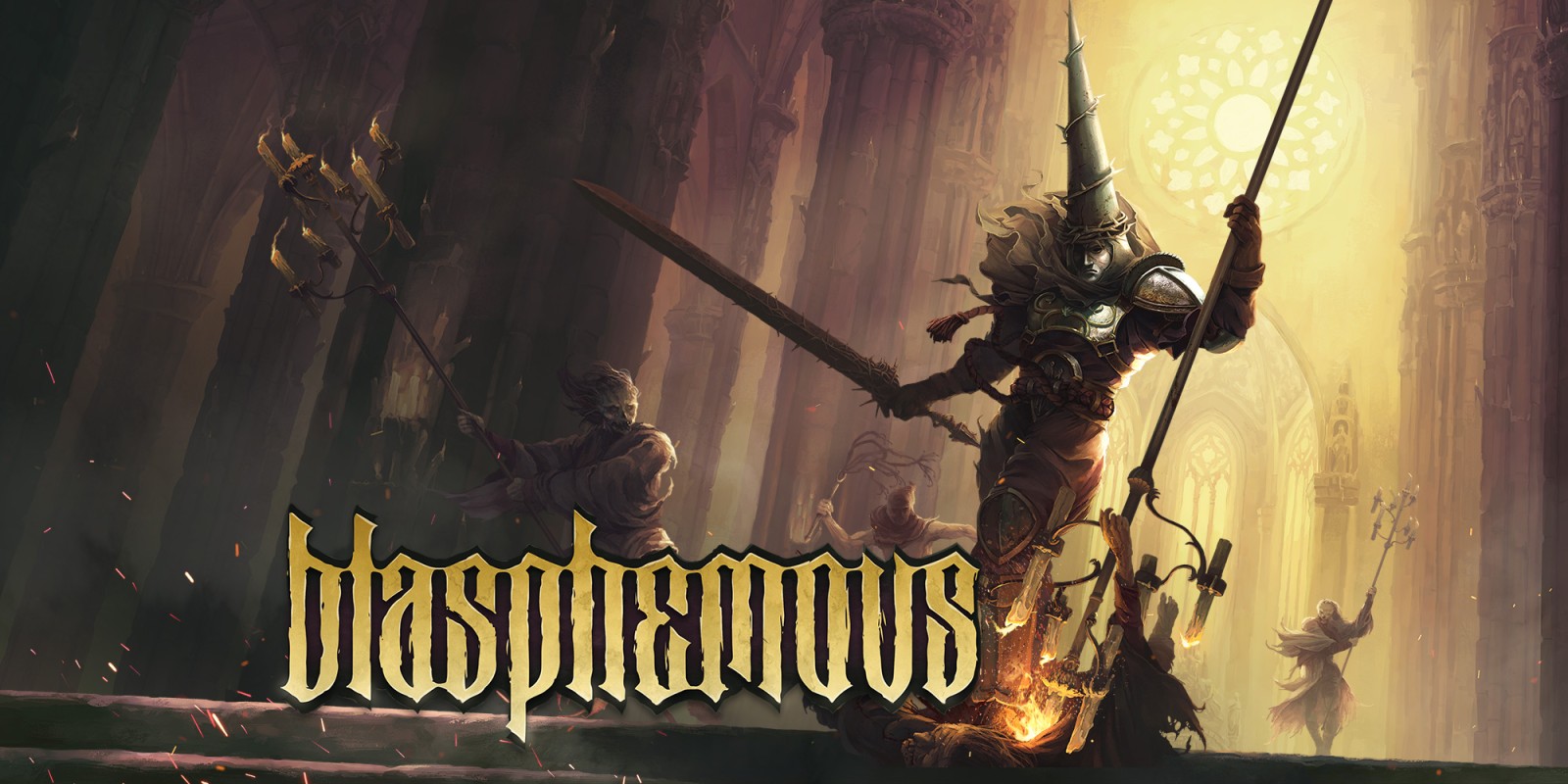
Blasphemous is an ultraviolent 2D Metroidvania with gorgeous 16-bit pixel art and limited but fluid animation. It describes itself as “fast-paced and punishing,” but it’s not really either of those things. The game’s focus is more on strategic combat than on platforming or quick reflexes, and your character moves at a fairly sedate speed. To me at least, the pace feels perfect, both from moment to moment and from one area of the map to the next. In terms of “punishing,” this is how I’d rate Blasphemous on a scale of “this game wants you to feel pain”:

6 – Guacamelee
7 – Blasphemous
8 – Shovel Knight
9 – Hollow Knight
10 – Rain World

In other words, Blasphemous is moderately punishing, but probably not at a level where you’ll give up at the beginning or rage quit in the middle. Granted, Blasphemous makes no attempt to be accessible, and it’s much easier if you use a walkthrough to access the health upgrades in the early part of the game, which are hidden so well (behind unmarked walls, under floors that only break if you jump on a specific spot from a great height, and so on) that you’d never find them unless you already knew where they were. Thankfully, once you get about two hours into the game, you start to understand how it works and don’t really need a walkthrough unless you’re a completionist.

Blasphemous has everything that I love about the Metroidvania genre, and it was worth my time just for the gameplay. The combat is engaging, the area-specific challenges are interesting, and the way in which the areas all eventually connect to each other is on par with Hollow Knight in terms of clever map design. If you enjoy indulging in a bit of exploration and backtracking, it will take about twenty hours to finish Blasphemous with near-perfect completion.

What really got me into Blasphemous is its atmosphere. Everything is compared to Dark Souls these days, but Blasphemous really is Dark Souls in 2D. The level of violence is incredible, and the game gets creative with its brutality. The architecture is similarly brutal and creative. Each area has its own unique character, and the background graphics are beyond fantastic. As for the story, it’s essentially this: You were dead, but now you’re undead for reasons that are unclear; and something bad happened to the world, but we’re not going to tell you what that was. Each collectible item has its own lore, all of which is disturbing.

I never felt as though Blasphemous is just trying to be awful for the sake of shock value, though. As you might guess from the title, it’s based on Spanish Catholicism, and it takes the themes and imagery of Catholicism to their logical extreme. If you’ve ever made a joke about how Catholicism is all about the fetishization of punishment and the worship of death, this game takes that joke seriously. At the same time, it’s so sincere and culturally specific that it never feels disrespectful. I was actually so impressed and curious about the lore and imagery that I looked up a few of the real-world cultural references online, and now I have a greater appreciation for Catholicism. No joke!

( I should say that this game probably isn’t for genuinely religious people, though. It is very literally blasphemous. It also contains all sorts of casual graphic and textual references to real-world torture and hate crimes committed by the church, which perhaps some people might not want to see. Honestly I can’t believe I played this game on a Nintendo console, what a time we live in. )

My favorite part of Blasphemous is its OST, which suits the tone and atmosphere of the game perfectly. About a third of the tracks suffer from dramatic moody bitch disorder, and I can’t remember where they play in the actual game, but most of the OST is mellow acoustic Spanish guitar. Que las Campanas me Doblen is a good representative track, and I really like Y Yo Fuego Te Daré, which manages to be both chill and epic at the same time. A track called Arpegios en Ocre plays in an area called “The Desecrated Cistern,” and it really makes you feel as though you’re exploring a cavernous underground space with a vaulted ceiling. I think the OST holds up well on its own as lo-fi Flamenco beats to chill to, but it’s also a gorgeous backdrop to the game and its ruined world.