The Annotated Kitab al-Azif

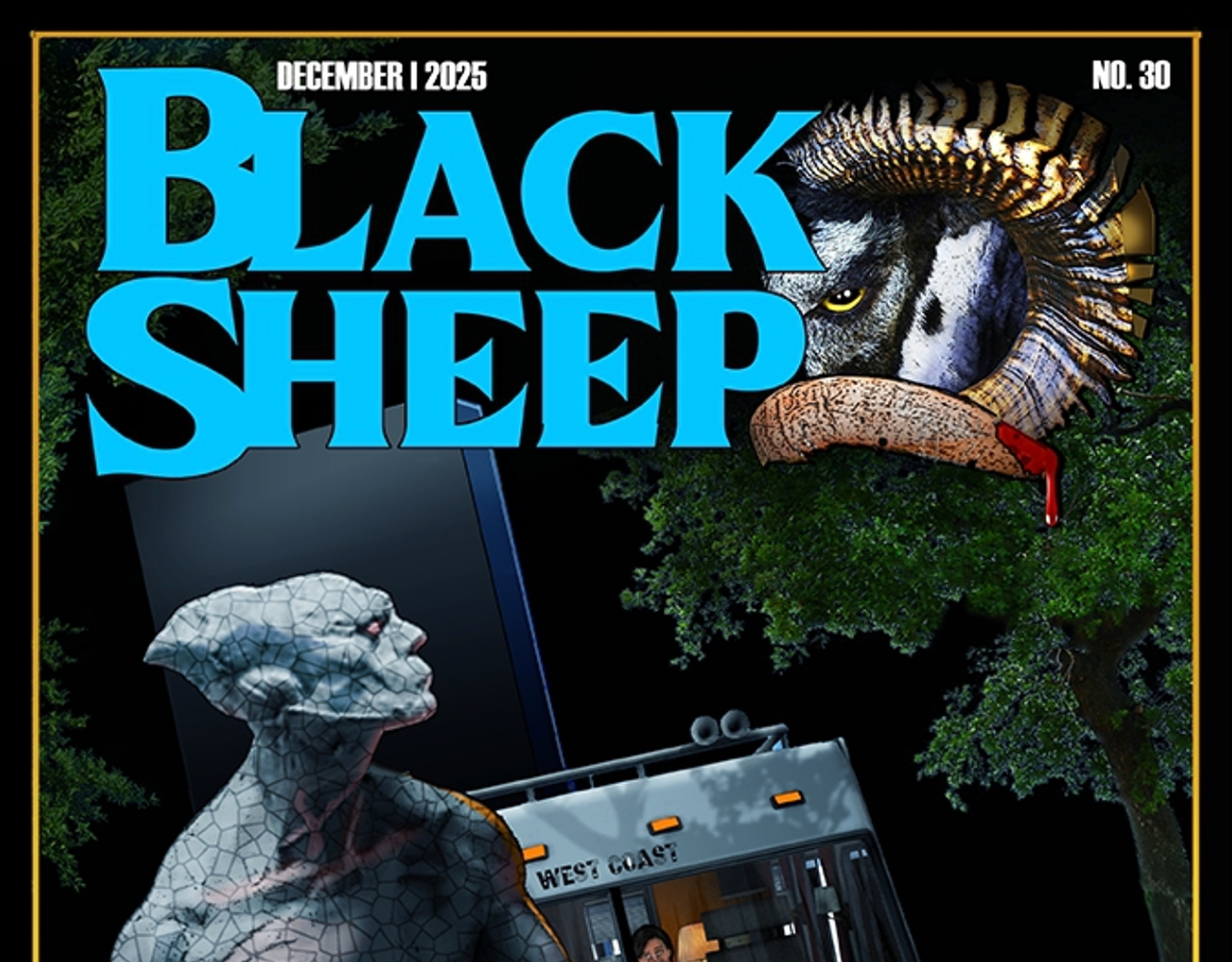
My queer Lovecraftian romance, “The Annotated Kitab al-Azif,” was just published in the latest issue of Black Sheep, a magazine for weird fiction. This story treats the gnostic origins of the Necronomicon with respect while being slightly silly about grad students.

You can order a copy of the issue with my story here:

🐙📖 www.amazon.com/dp/B0G25R82TY

It’s very cool to have the opportunity to publish a Lovecraft pastiche in an honest-to-god pulp magazine, which seems appropriate. At the same time, I definitely feel the friction of using Lovecraft’s own tropes to push back against the ugly Orientalism surrounding the Necronomicon.

The truth is that, while I admire Lovecraft, but I wouldn’t consider myself a fan. Rather, I spent a formative part of my childhood in a small town in the Deep South whose public library was severely limited by budget constraints. The only thing remotely close to fantasy fiction they had on their shelves was Stephen King, the lone second volume of Lord of the Rings, and a handful of ancient paperback collections of H.P. Lovecraft.

I didn’t really have the cultural context to understand Stephen King, and I wouldn’t recommend The Two Towers as the place to start reading Tolkien. Lovecraft grabbed me, though. Even as a kid, I understood the xenophobia expressed in Lovecraft’s stories. Believe me, I understood all too well. Still, I guess I was young enough that this wasn’t a dealbreaker, especially since there was nothing else to read during the summer where I practically lived at this tiny little library.

I had more resources the following year, when I started attending an international school in Atlanta and began to read more widely. But Lovecraft stuck with me, and a small but significant goal of my writing now is to try to capture and explain why that is.

I sincerely believe that people should write whatever they want, but a part of me still questions the value of aligning myself with the work of such a problematic author. The truth remains, though, that these Lovecraft stories only occupy a small closet in the house I’m trying to build with my writing. What I want to do is expand the scope of the small rural library that only had room for Stephen King and HP Lovecraft, as well as to create space for original work that dismantles the toxic feedback loop of preset responses to human difference.

Much love to Black Sheep magazine for giving a home to this story. 

Green Dreams: Tales of Botanical Fantasy

I’m excited to announce that I published a new zine! Green Dreams: Tales of Botanical Fantasy collects six illustrated stories about our relationships with plants and nature.

“Each turn of the seasons brings an end to lives both large and small, but new seeds sprout joyously from the ruins” is the zine’s tagline, and disaster is a major theme of the collection. One of the opening stories is about the gradual effects of climate change; and, in the closing story, environmental catastrophes have become so severe that humans have disappeared completely. The zine also features stories about a medical tragedy narrowly averted, the aftermath of a devastating war, and a porous biological quarantine.

I considered subtitling the zine “Tales of Botanical Dark Fantasy,” but the truth is that none of the stories are actually that “dark.” In fact, I’d say the main theme of the collection is a persistent hope for the future. At this particular moment in history, the state of the world seems very bleak, so it’s good to remember that the environment that surrounds us is much larger – but also much more personal – than whatever horrors are currently unfolding.

Precisely because are so many fires burning in the world, I think it’s important to spend time in thriving green spaces that suggest futures of shifting and changing growth. I believe that a mindful contemplation of our natural environment can also be useful in the uncomfortable but necessary process of decentering normative humanity while challenging the artificial divisions we impose on ourselves and each other.

The incredible cover art by Frankiesbugs captures the mood of these stories perfectly.

Frankie creates bold and imaginative botanical fantasy art, and I asked them to illustrate the pagan archetypes of the flower maiden and the horned god, who together represent the endless natural cycle of death and rebirth. In this zine, I wanted to play with symbols that convey the beauty and mystery of the natural world, and Frankie embraced this theme, tinging the painting with potent Christian motifs and a powerful sense of fertility.

It’s an extremely impressive piece of art, and you to check out more of the artist’s work on Instagram (here), on Bluesky (here), and on Redbubble (here).

In this collection, I did my best to share a sense of fertile “green dreams” for the future. Mostly, though, I just really wanted to write some fun ecofiction about plants and mushrooms.

If you’re interested, you can read a free digital version of the zine on Itch.io or order a print copy from Etsy.

🌿 https://digitalterrarium.itch.io/green-dreams
🌿 https://www.etsy.com/listing/4351990958/green-dreams-fantasy-fiction-zine

Review of Hero Cave on Comics Beat

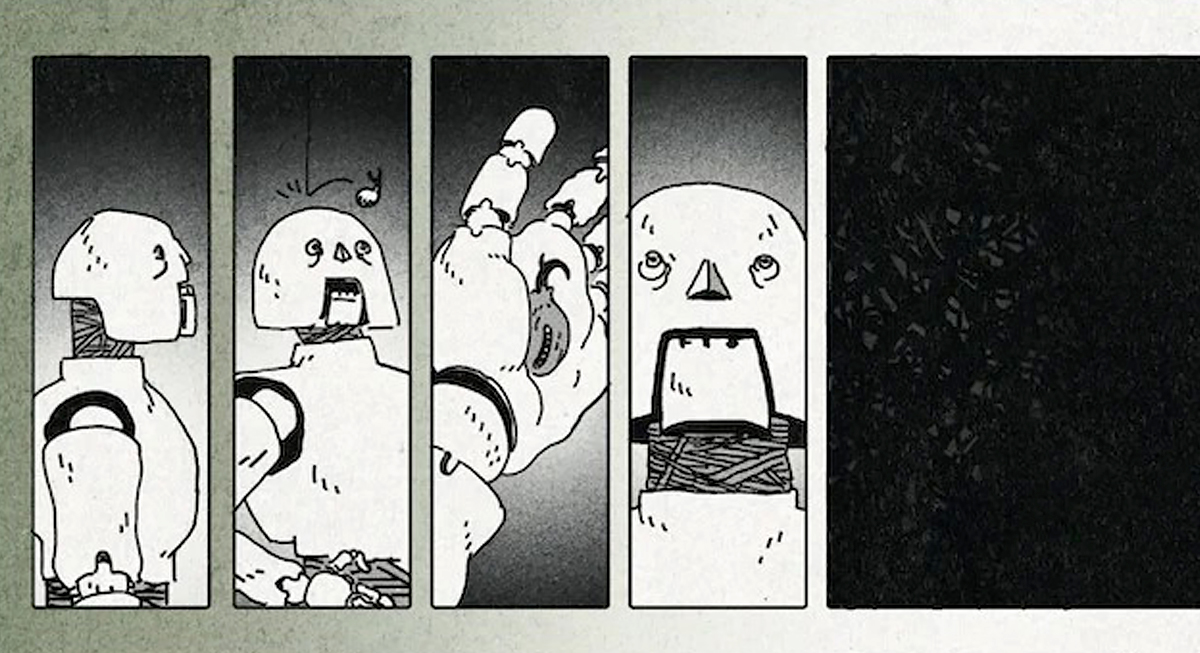
My review of Hero Cave, a dark fantasy comedy, was recently published on Comics Beat (here). This graphic novella is only about fifty pages long, but it’s surprisingly powerful and cathartic. Here’s an excerpt from my review…

It’s easy to look down on NPCs, the “non-player characters” who seem shallow and uninteresting when compared to the protagonists. It’s not so easy to realize that, in certain aspects of your life, you’re not much better than an NPC yourself. In Player vs. Monster: The Making and Breaking of Video Game Monstrosity, Jaroslav Ŝvelch explains how the construction of monsters in Dungeons & Dragons reflects the concerns of the white-collar managerial class. To the dungeon master, even a creature as miraculous as a walking skeleton is little more than a series of numbers to be entered into a spreadsheet. Given how frequently we’re all reduced to data points — by social media algorithms, by insurance companies, and certainly by employers — perhaps it’s worthwhile to extend a bit of sympathy to a low-level skeleton.

You can read the full review on Comics Beat here:
https://www.comicsbeat.com/graphic-novel-review-hero-cave/

As an aside, Hero Cave features a type of nonbinary representation that I love to see. Waifishly thin models with stylishly androgynous faces are all well and good, but it’s frustrating that only attractive and nonthreatening “childlike” body types are commonly understood as being nonbinary. I believe we should have a bit more range in our representation, while also not limiting ourselves to conventional notions of “humanity.”

Why, for example, does a cartoon skeleton need to fit into a binary notion of gender? Also, if a character is an undead eldritch monstrosity, it’s silly to think that their nonbinary gender identity is the most interesting thing about them. Hero Cave demonstrates a refreshing lack of concern for the gender of its skeleton protagonist, but that doesn’t preclude the possibility of queer sexuality serving as an escape from the restrictive confines of hellworld capitalism. I didn’t want to get into this aspect of the book in my review, but it’s brilliant, and it means a lot of me personally.

Review of Bramble on Comics Beat

My review of Hollow Press’s newest publication, Bramble, was posted on Comics Beat!

Hollow Press is an Italian micropress that publishes strategy guides for dark fantasy adventure games that don’t exist. Their most well-known book is Vermis (which I wrote about here), but I think Bramble is probably more accessible to a wider readership. It’s very weird and creative, and the art style is a lot of fun. Here’s an excerpt from my review…

Bramble is a worthy successor to Vermis, and the book proudly stands on its own as an accessible introduction to the emerging genre of original strategy guides. Its story is driven by the forward momentum of a traditional graphic novel and augmented by the intriguingly fragmented worldbuilding presented by digital RPGs. As a physical object, Bramble also suggests the nostalgic mystery of forgotten media, and the reader can easily imagine coming across this book hidden in the back of a closet or buried at the bottom of a box at a flea market. 

You can read the full review on Comics Beat here:
https://www.comicsbeat.com/graphic-novel-review-bramble/

Escaped Chasm

Escaped Chasm
https://tuyoki.itch.io/escaped-chasm

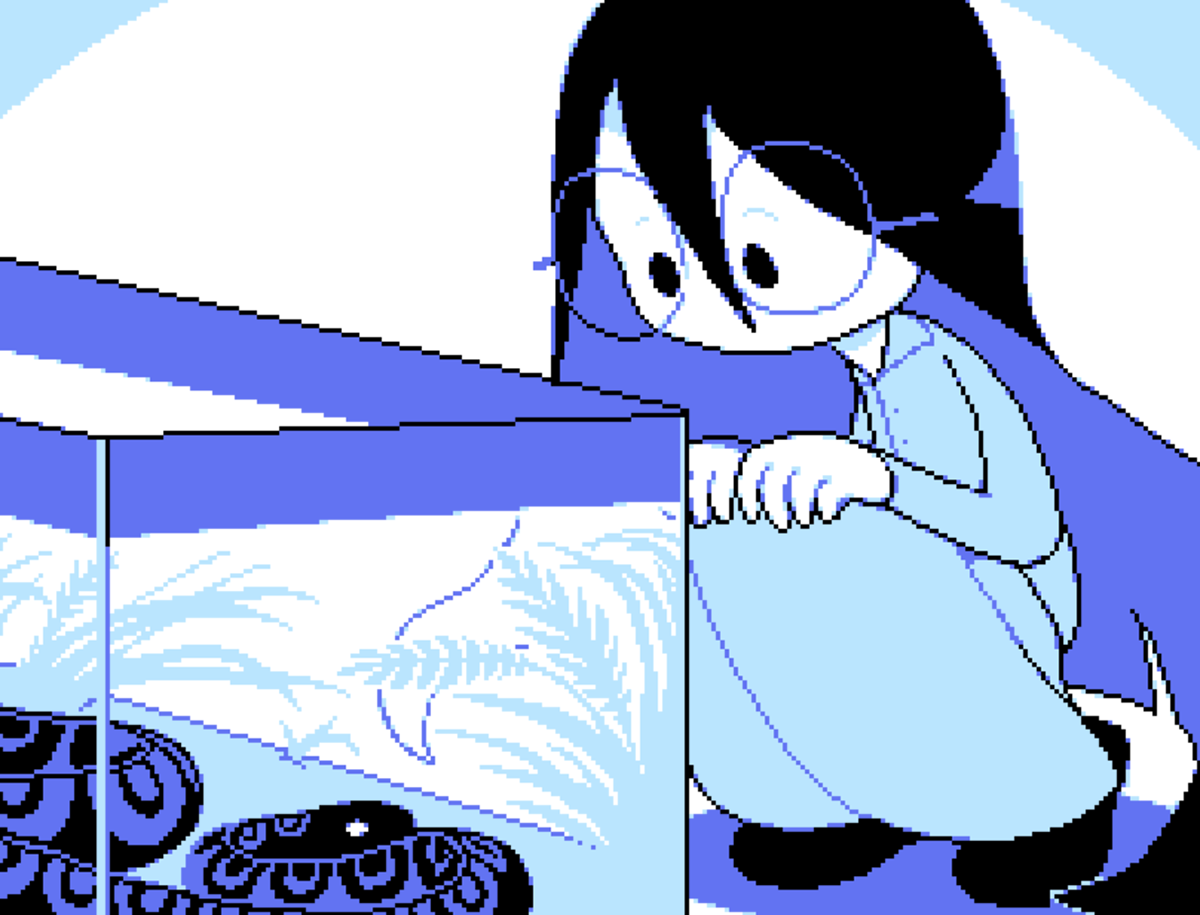
Escaped Chasm is a 25-minute dark fantasy adventure game created in RPG Maker with a mix of retro Game Boy graphics and anime-style cutscenes. Originally released in 2019, it’s the first stand-alone project of Temmie Chang, a longtime collaborator of Toby Fox who contributed character designs and graphics to Undertale and Deltarune.

You play as a young teenage “Lonely Girl” who doesn’t leave the house and lives vicariously through her dreams and art. Her parents appear to have gone missing, and she doesn’t know what to do. To make matters worse, she’s tired all the time, and a strange man has started appearing in her house.

Something is seriously wrong, and the Lonely Girl has four days to figure it out and escape. If leaving the house isn’t an option, where can she go? And how can she find the courage to leave?

Escaped Chasm is free to download, and the zip file contains an illustrated guide to the game’s four endings. I get the feeling that most players will probably see the good ending simply by playing the game naturally, but it’s nice to have grimdark alternatives. After unlocking the good ending, the player is able to enter and explore a bonus “developer’s room” that I love with all my heart. It’s fascinating to read Chang’s thoughts about making the game while checking out extra material that fills out a few gaps in the story.

Both Toby Fox and Temmie Chang were fans of and contributors to Homestuck, and it’s possible to see its influence on Escaped Chasm. It’s difficult to summarize Homestuck, but the webcomic begins as a story about four young teenagers who can’t leave their houses because they’re the last remaining survivors of a universe that’s unraveling around them. I get the sense that the Lonely Girl in Escaped Chasm is based on one of the four teenagers in Homestuck, Jade Harley, and it’s probably not a coincidence that she’s found herself in a remarkably similar situation.

Escaped Chasm is like a bridge between Homestuck and Deltarune in its theme of “using art and imagination to escape into another world,” but it’s also very much its own thing. I love Chang’s illustration style and narrative voice, and I admire how she pushes the boundaries of the medium to create a palpable sense of liminality and dread – and of catharsis and joy. Escaped Chasm is atmospheric horror with a (potentially) happy ending, and it’s idiosyncratic and self-indulgent in interesting ways that elevate it above the level of mere pastiche.

Escaped Chasm is a short test project made in preparation for Dweller’s Empty Path (on Itch.io here), a more extensive Game Boy style narrative adventure game. I really enjoyed Escaped Chasm, and I’m looking forward to jumping into Dweller’s Empty Path.

The Sleeping Princess

There is a legend in Hyrule that a sleeping princess lies behind the door of a locked room deep under the ruins of the North Castle. When the princess rises, so too will the ancient powers sealed within her dreams. Impa knows the legend is true, and she fears the fate that will befall the kingdom should the first Zelda wake. Yet when a shadow rises on the borders of Hyrule after the birth of a new princess, Impa must make a terrible choice.

I had the honor of contributing a story called “The Sleeping Princess” to Blood Moon Rising: A Zelda Horror Zine. I was interested in exploring the background of Princess Zelda in the original 1986 game, and I thought it might be fun to see her story through the eyes of Impa, who knew about the undead princess who was the first of Zelda’s line. In other words, I’m connecting some of the more disturbing threads between The Legend of Zelda and Zelda II: The Adventure of Link.

“The Sleeping Princess” is a story about maternal love, political sacrifice, and the dark secrets hidden within the labyrinthine dungeons of Hyrule. I was strongly inspired by H.P. Lovecraft’s novel At the Mountains of Madness, which dwells in the geometric terror of monumental architecture built by strange hands, and I did my best to create a sense of ruined grandeur similar to that of Dark Souls and Ico: Castle in the Mist.

For the story’s illustrations, I had the incredible pleasure of working with the devilishly talented Pumpkinsouppe, whose dark arts brought this ruined world to life.

You can find “The Sleeping Princess” on AO3 here:
https://archiveofourown.org/works/62492182

Leftover sales of the zine are open until February 24 on BigCartel (here).

An Unfound Door, Chapter 16

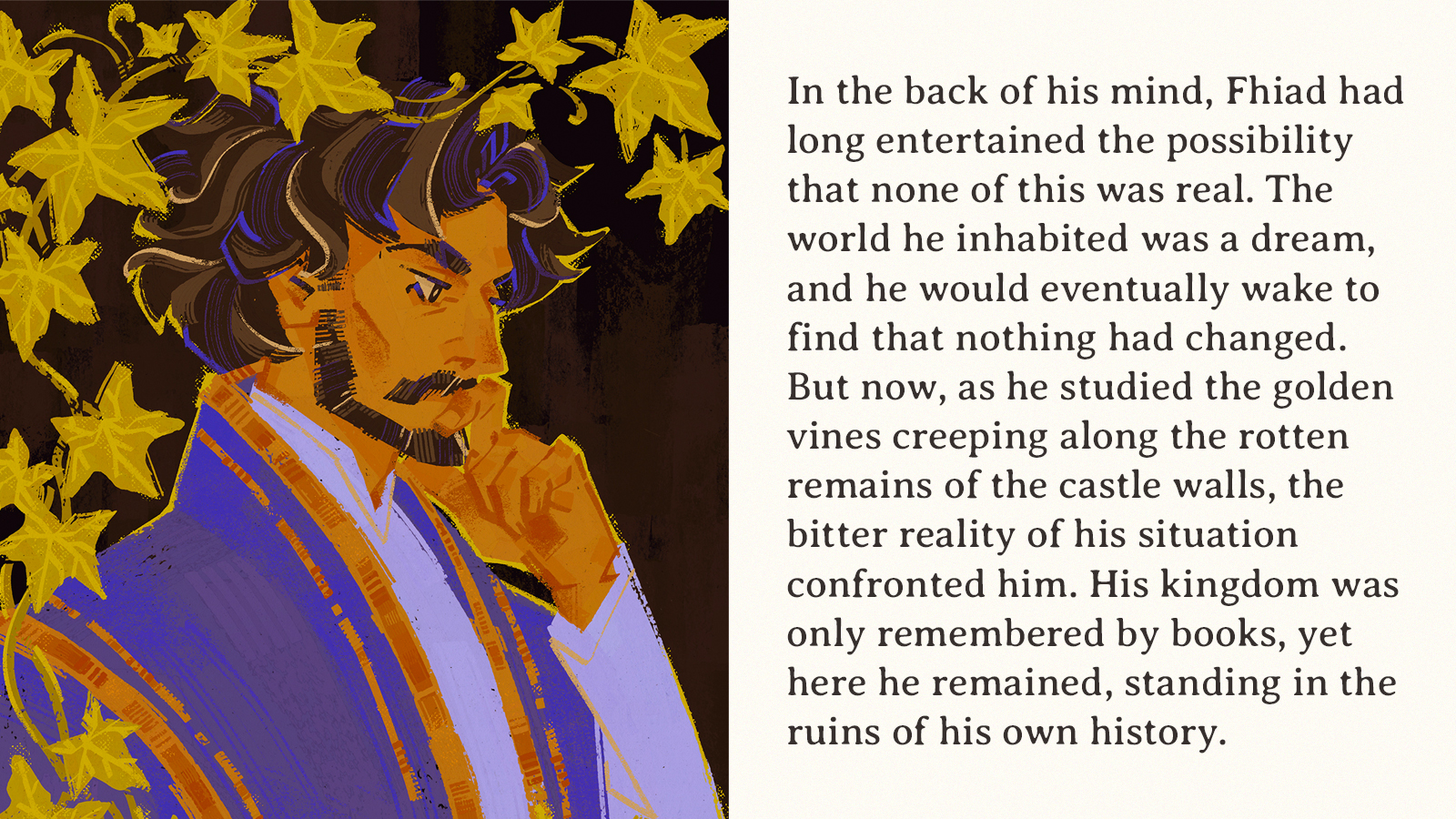
Fhiad reflects on the uncanny emptiness of Erdbhein Castle as he leads Agnes to the queen’s ruined chambers. While describing Erdbhein before the war, Fhiad tells Agnes about his three sisters, all of whom were highly competent administrators. Fhiad confesses that he dreamed of becoming a mage so he could return to Erdbhein to build monumental stone structures aboveground to rival the stonework in the long-abandoned city underneath the castle.

.

This chapter is about Fhiad processing his grief. It would be the perfect opportunity for an exposition dump, but Fhiad isn’t in a good mental state to deliver a lecture at the moment. Like Agnes, he feels like a failure, and he misses his family.

While Fhiad talks about the past, I hope the reader gets a sense of this character belonging to a much larger story. Unfortunately, Fhiad is never going to be able to live that story, and the reader isn’t going to hear much more about it, either. Fhiad mentions spending time in an ancient city in the mountains below Erdbhein, and tells Agnes that he went to university to study architecture because he always dreamed of building something equally grand aboveground.

That’s an intriguing detail, I hope. It adds another layer of foreshadowing regarding Agnes and Fhiad’s final destination, but the reader is never going to encounter another reference to Erdbhein’s history and culture. That’s what it means for an entire group of people to be destroyed; all of their art and memories and folklore are destroyed along with them.

Agnes is deeply disturbed by this loss, as she should be. Meanwhile, Fhiad’s anger regarding the destruction of Erdbhein has drained away, alongside his sense of agency. At the beginning of the story, he was furious and hostile and scary, but he’s become calmer and more introspective as the reality of his situation becomes clear.

Fhiad’s monologue in this chapter mirrors Agnes’s monologue at the beginning of the novel about how she’s the exact wrong person to handle a difficult situation. Agnes was doing something stupid (bringing a demon back to Faloren) because she felt that she had no power to halt her kingdom’s decline on her own. Fhiad was likewise attempting to do something stupid (stealing a relic that could turn back time) because he saw no other way to address what happened in the past. Fhiad knows that his mother or any one of his sisters could have been effective in restoring his kingdom, but he feels that he himself doesn’t have the power to do anything. And honestly, he’s right.

I think that’s a hard lesson to learn, that sometimes you’re just not the right person to fix a messed-up situation. Not everyone can be a hero. At the same time, if a broken situation can’t be fixed by normal people working together and trying their best while using the tools at their disposal, then perhaps the situation isn’t worth fixing.

In The Demon King, a novel I put on hold to focus on writing An Unfound Door, the main character finds himself in a situation that’s somewhat similar to what Fhiad’s going through. This character is going to succeed by virtue of being ten years older and completely unhinged, and his success will destroy him. Fhiad is going to fail, though. His failure isn’t without sadness, but accepting himself and the reality of his circumstances is going to be the best thing that ever happened to him.

The same goes for Agnes, who needs to understand that she can simply walk away from Faloren. The arc of her character development is longer and more complicated; but, from this point forward, it’s going to be Fhiad’s job to support her.

This chapter is relatively quiet, especially after the action in the previous chapter, but it’s the emotional turning point of the novel. So this chapter is about grief, but it’s also about two tired adults taking a much-needed break to have a nice date with delicious tea in a handsome ruined castle overgrown with beautiful bioluminescent flowers.

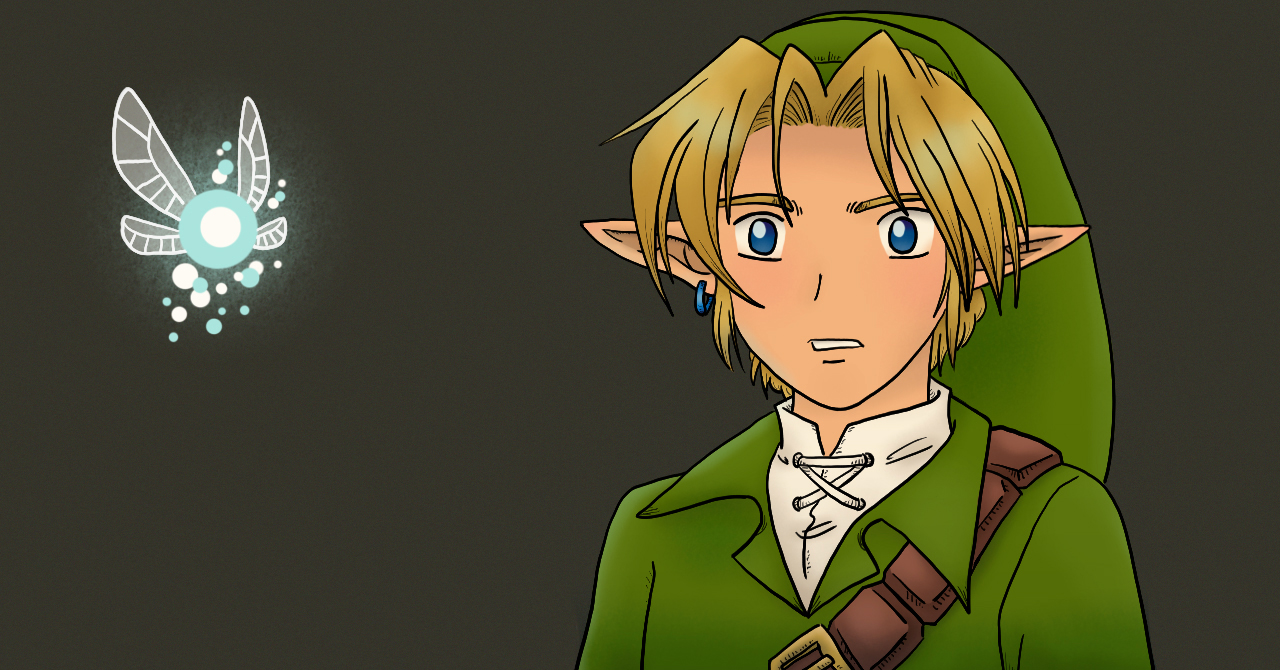
The illustration of Fhiad in this chapter’s preview graphic was created by the bold and brilliant fantasy illustrator Armd39, who posts dynamic and creatively textured artwork on Bluesky (here) and on Instagram (here). You can also find her commission info pinned on Twitter (here) if you’re interested. Arma was wonderful to work with, and the process of creating this illustration was a fantastic experience that easily added a few months to my life.

An Unfound Door, Chapter 15

Now that Fhiad has taken the form of a demon boar, Agnes rides him through the mountain forest on the way to Erdbhein. They make quick progress, stopping only for Agnes to rest. As they approach Erdbhein Castle, Fhiad leads Agnes to an overlook from which she can see the overgrown ruins of the city in the valley.

At the cliffside castle’s back entrance, severely decayed husks emerge from what used to be a village that housed the castle staff. Fhiad is frightened, so Agnes dismounts and comforts him as she leads him across a bridge and into the castle’s rear courtyard. More husks emerge, and Fhiad is paralyzed with fear. Agnes forcibly reverts him to his human form, and they escape into the castle keep.

.

Based on the synopsis, you might think there’s fighting in this chapter, but the truth is that I dislike writing action. As much as I enjoy the choreography of cinematic fight scenes, I find prose descriptions of battles to be tedious. I always skim through action sequences as a reader. Why subject myself to this sort of thing as a writer?

In my defense, neither Fhiad nor Agnes is an action hero. Fhiad is an extremely cowardly demon, and Agnes wields a sword the way I imagine most people would, which is to panic and swing it around wildly. When she actually hits something, she’s horrified and disgusted.

Instead of a thrilling adventure, this chapter is more of an extended meditation on death and decay. In particular, I really enjoyed writing about the slow creep of the husks. My personal take on zombies is that they’re scariest when they take the “persistence predator” aspects of human physicality to an extreme. Fast zombies are a lot of fun! But slow zombies that just keep coming? That’s what really creeps me out.

On a more serious note, zombies are an indirect way to think through the indignity of certain types of death. An Unfound Door isn’t a political novel by any means, but I can’t deny that I wrote this story while watching a genocide unfold. It’s important to bear witness, I think. Still, I’m disturbed by the media spectacle of destruction, in which the victims of war are reduced to nothing more than their blunt physicality in order to sell an enticing narrative to a public that passively consumes death on television or online. As my academic work has (hopefully) demonstrated, I care deeply about these issues, and fiction is another way to explore the complications and consequences of an empire lashing out at imagined enemies as it crumbles from the inside. Let it suffice to say that I have a great deal of sympathy for zombies.

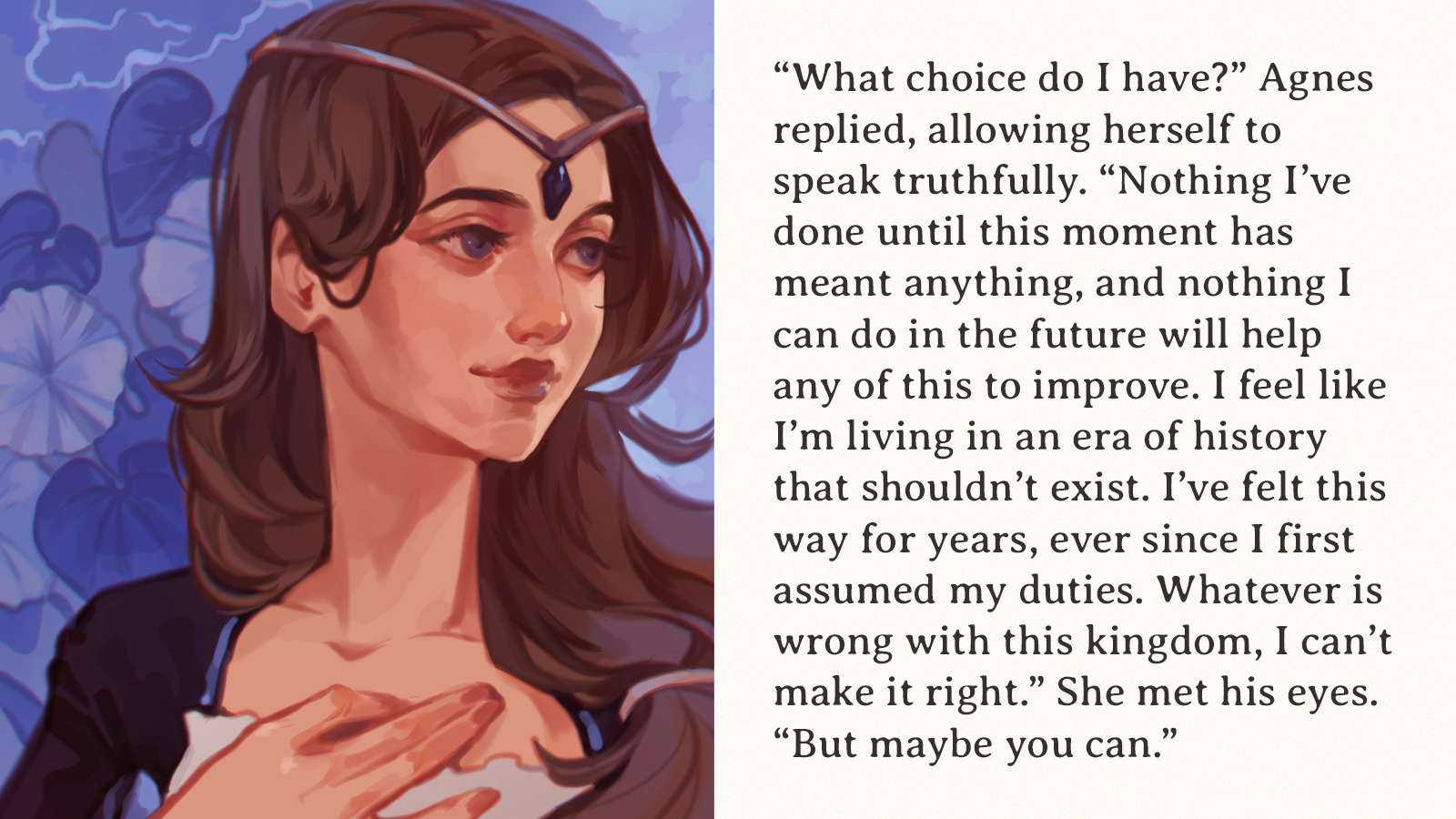
In any case, Agnes isn’t particularly afraid of husks, which she sees as pathetic but harmless. There are a whole lot of husks in this ruined castle, however, and Agnes has a difficult time shepherding Fhiad inside the keep while doing her best to keep both of them safe. Consequently, the main narrative breakthrough that occurs in this chapter is a demonstration that Agnes has become much more sensitive to Fhiad’s emotional state. I guess riding a man through the forest like a horse will do that.

The illustration of Agnes in the chapter preview graphic was created by Loustica Lucia, a bright and shining fantasy artist who posts colorful battle scenes and character portraits on Instagram (here), on Tumblr (here), and on Bluesky (here).

An Unfound Door, Chapter 14

Agnes and Fhiad have a brief conversation with Galien and Caelif before departing from Faloren Castle. Fhiad’s personality becomes warmer and more open as they travel across the countryside. He’s friendly to travelers, and he shares his memories of the university in Cretia with Agnes. In the evenings, Agnes stretches and practices the sword forms that she learned from her mentor Mylah, who left the castle shortly after Fhiad’s arrival and hasn’t returned since.

On the first night after they enter the northern forest, Fhiad watches Agnes practice and confesses that his magic won’t be useful against the dangers they’ll face in Erdbhein. He asks that Agnes remember him as human before transforming himself into a boar.

.

This chapter is the transition stage between narrative acts that Jessica Brody (of Save the Cat Writes a Novel fame) calls “the eye in the calm of the storm.” It’s a seemingly extraneous but actually extremely important part of the story in which the characters take stock of their situation, their relationships, and their goals.

Even before I read Save the Cat, this in-between chapter was always one of my favorite parts of any longer story I wrote. This is especially the case with romances, where this scene is almost always the first intimate moment the characters spend together. If An Unfound Door were a different type of novel, things would have gotten spicy before Fhiad decided to transform himself, but he just kisses her hand. Which is plenty romantic enough, I think.

I end this chapter with the suggestion that Fhiad is going to be reckless and violent as a demonic boar, but this is misdirection. Even in the form of a powerful monster, he isn’t emotionally equipped to handle action, and Agnes is going to have to forcibly transform him back into a human in order to drag him forward in the next chapter.

Even to me, as someone who ostensibly knows how this story ends, it’s been interesting to see how Fhiad has developed as a character. He initially seems strong and dangerous, but his personality becomes more complicated and neurotic as the reality of his trauma sets in. He slowly unravels as he goes from one set of bad behaviors to another, which is always fun to watch. In this chapter, however, Fhiad is a completely normal person, which I think is the key to the story. As long as Fhiad isn’t subjected to the pressure of being involved in history-changing events, he’s fine.

The goal is to get both Fhiad and Agnes to the point where they’re able to accept that they can just leave these ruined kingdoms behind them and start a new life elsewhere. I therefore used this chapter to create foreshadowing that strongly suggests that this is the best possible outcome for them both. Although their respective homelands are beyond redemption, Agnes and Fhiad can still save each other.

The illustration of Agnes for this week’s preview graphic was created by Anta ARF, who posts brilliant and shining fantasy art on Cara (here), on Tumblr (here), and on Twitter (here).

An Unfound Door, Chapter 13

After crossing the bone-covered courtyard of the west wing, Fhiad and Agnes enter the main library of the former magic academy. It’s in an advanced state of decay, but Agnes finds an isolated reading room that’s still in decent condition. While searching the shelves, Fhiad remembers how he was seduced and betrayed by Agatha, the princess of his era.

Fhiad lashes out at Agnes, who weathers his emotional storm and tells him that she’s found a book with illustrations of the three keystones needed to open the door in the courtyard. Two of the stones are in Faloren, but the third is in Fhiad’s home in Erdbhein. Agnes proposes that they travel there, revealing that she has experience fighting the magically preserved corpses called husks that have infested Erdbhein.

.

This is the last chapter of the “Fun and Games” section of Act 3 of An Unfound Door. In this chapter, Fhiad and Agnes visit the third library of the castle. What’s cool about this library is that it’s been partially exposed to the elements, so it’s filled with trees and mushrooms and bats and centipedes. All of the books are rotting. This is my story, so I get to put in all of my favorite things.

Thankfully, one of the smaller reading rooms has been preserved, and this is where Agnes does some detective work while Fhiad has a minor breakdown. Since this chapter is written from Fhiad’s perspective, the reader gets to follow his mental state as he becomes progressively more upset and unnerved. Agnes is generally fairly observant, but she’s having so much fun going on the magical adventure she’s wanted all her life that she doesn’t pick up on Fhiad’s distress until it’s too late.

Fhiad loses himself for a moment and threatens physical violence in a burst of anger that’s partially fueled by his confused attraction. Agnes responds to this as she always confronts adversity, by coldly insisting on getting back to business. Neither of them looks good in this scene.

Still, the characters need room to grow, and there also needs to be an inciting incident that moves the story forward. Agnes has begun to care for Fhiad, and she’s gotten the message that both of them need to get out of the castle.

After leaving Faloren, are Agnes and Fhiad going to a second ruined castle filled with terrible things? Yes they are! I won’t lie, I love writing stories filled with drama in decaying ruins.

The illustration that graces this week’s chapter preview was created by the marvelous Hansoeii, a connoisseur of darkly compelling characters who posts sharp and handsome artwork on Instagram (here), on Tumblr (here), and on Twitter (here).