Out of curiosity, I started experimenting with ChatGPT this semester. There’s not much to say about it, save that it generates stale and flavorless writing that’s easy to recognize once you know what it looks like.
Unfortunately, now that I can recognize text generated by ChatGPT, it’s hard not to see it. It’s also hard not to get my feelings hurt when my students submit work written by ChatGPT. Why would they do me dirty like that?
So I’m not saying that I like ChatGPT. I actually kind of hate it.
Still, the potential for this sort of writing engine is incredible. What if it could work not just as an actually functional grammar checker, but also as a translator between different ways of self-expression? Wouldn’t it be interesting if the model could be developed to “translate” an outline or quickly written sketch of an idea into a piece of writing that was more easily understandable by a broader audience? Wouldn’t it be nice if people who felt embarrassed or otherwise unable to express themselves had a means of putting their thoughts on paper?
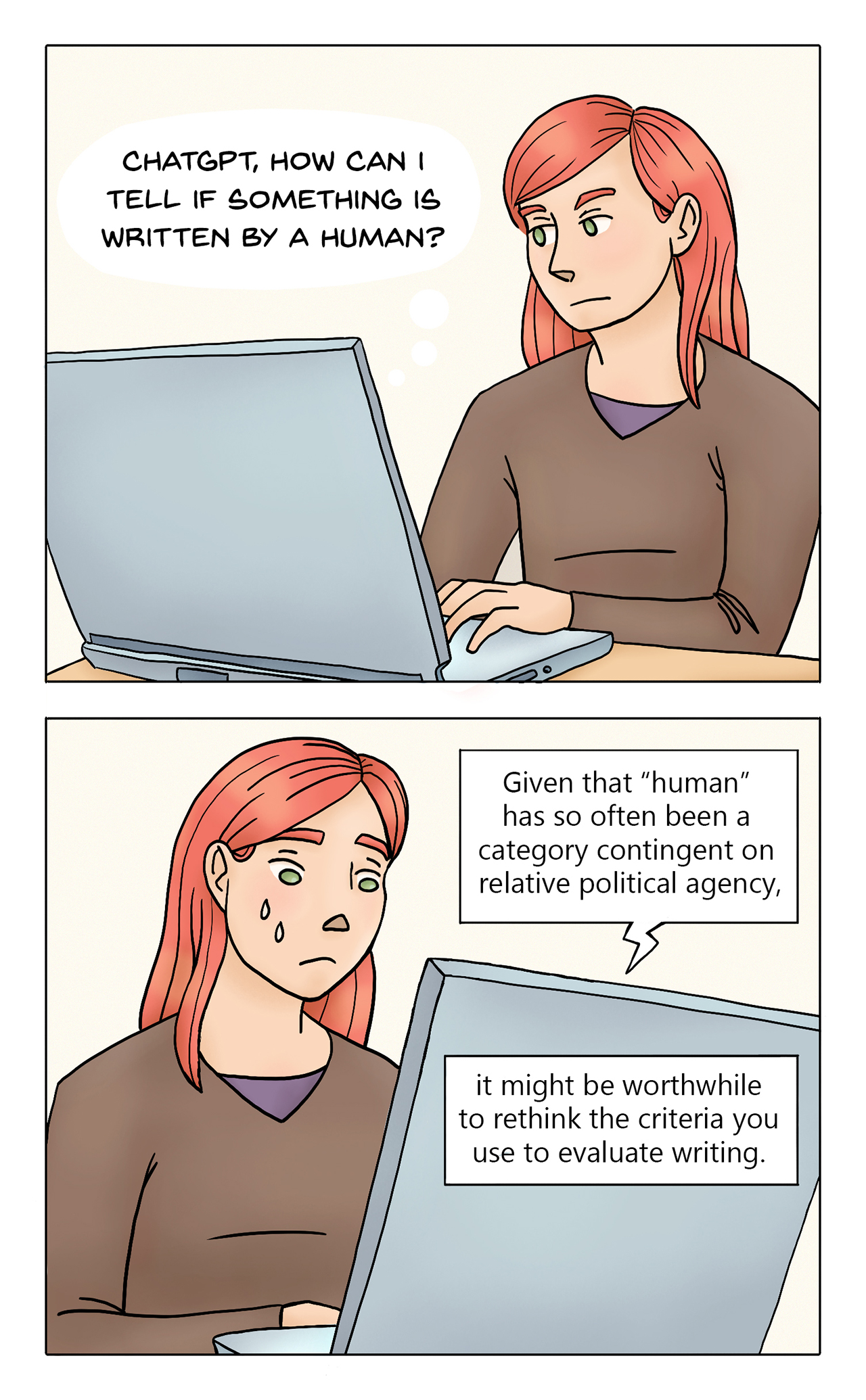
I understand how unrealistic it is to think that ChatGPT won’t be abused by bad-faith actors, and I also understand that there’s no point of people in marginalized positions having a voice if the venues where they could be heard are shut down due to AI-generated content spamming. At the same time, I think it’s probably healthy to keep an open mind and be as inclusive as possible when defining who (and what) counts as “human.”
August 2026 Update: I made this post in December 2023, when LLMs had just started to enter mainstream use. I didn’t articulate the point I was attempting to make as thoroughly as I could have, so I think it’s worth adding that I was speaking from the position of someone who supports disability rights and generally wants to give the benefit of the doubt to accessibility aids.
I also now feel more comfortable saying that I was writing in the direct aftermath of the October 7, 2023 event that precipitated the most recent flare-up in Israel’s ongoing colonial aggression against the Palestinian people. What I saw in those two months were people who didn’t speak English as a native language using LLMs to create English-language text in urgent cries for international help. The thought of condemning people for using ChatGPT as a tool to direct attention to severe human rights violations that would shortly escalate into a genocide felt deeply disturbing to me at the time, as it still does today.
Regardless, it has since become clear that the negative consequences of LLMs far outweigh any potential benefits of this technology as an accessibility tool, and it’s almost painful to look back on my earlier optimism, however guarded it may have been. For anyone interested in a more nuanced position, especially with regards to disability, I highly recommend Cory Doctorow’s essay “Pluralistic: The Reverse-Centaur’s Guide to Criticizing AI,” which can be accessed via the author’s website (here).