In Defense of Dondons

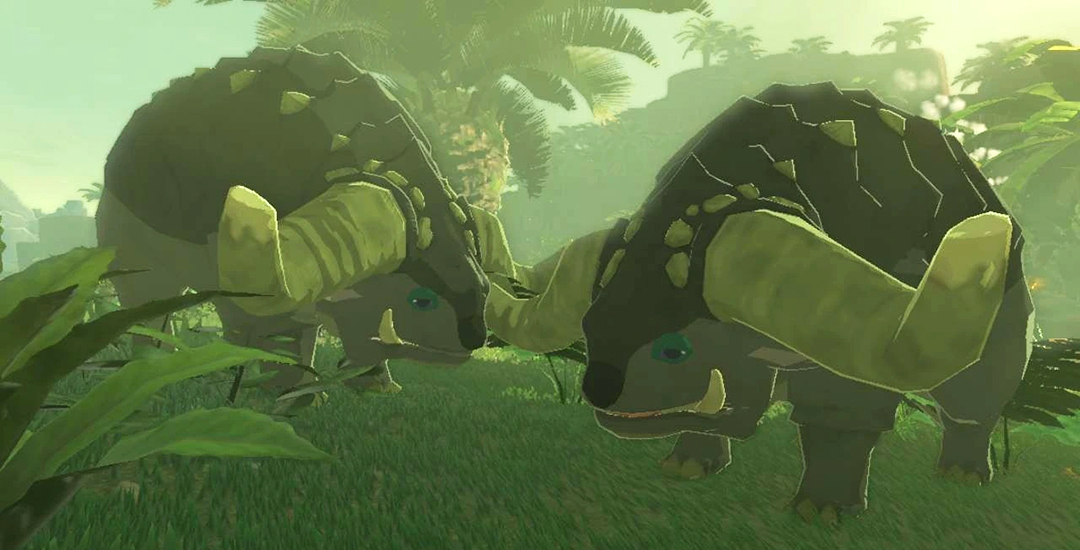
The Dondons are something of an anomaly in Tears of the Kingdom. In a teaser trailer for the not-yet-titled sequel to Breath of the Wild that premiered at E3 in June 2019, Zelda and Link are shown walking through a cavern in the company of an ox-like animal. This cutscene didn’t make it to the final version of the game, but the animals were preserved as a small herd of Dondons in the forest next to Lakeside Stable.

According to Cima, their caretaker, there are only five of these creatures in the world, and we don’t know much about them save that they eat luminous rocks. Aside from providing an inconvenient method of gem farming, the Dondons don’t serve any real purpose. In terms of the game’s story and lore, they feel like an afterthought.

Still, I like the Dondons. One of the things I love about the Legend of Zelda series is how the games include all sorts of heterogeneous elements that aren’t related to the main story and don’t fit into the lore. So I want to try to defend the Dondons, as well as the silliness of the Zelda games in general.
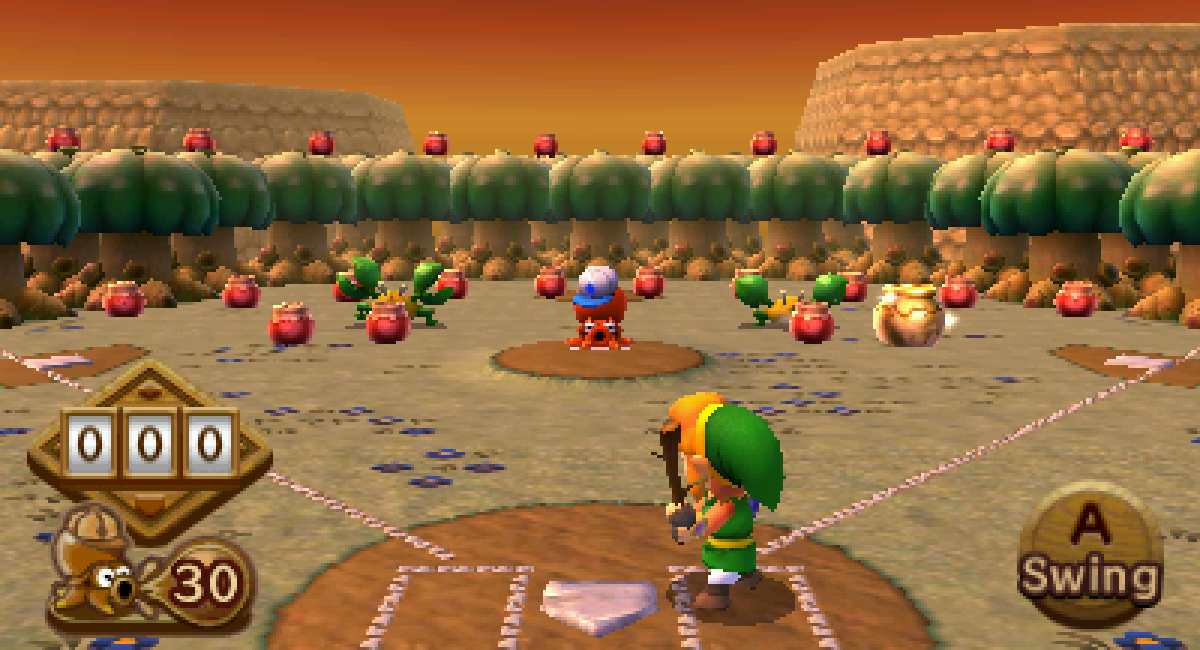
The Octoball Derby in A Link Between Worlds is a good example of what I’m calling a “heterogeneous element,” or something that doesn’t fit into the conventions of the in-game world. In this Lorule minigame, an Octorok pitches baseballs at Link (by shooting them from its mouth, of course) while two of its Hylian friends keep score from the sidelines. This Octorok is named Octo, and it can talk. 

So can all Octoroks talk, or just the ones in Lorule? If Octoroks can talk and be friends with the Hylians in Lorule, what does it mean that Link has been killing them in Hyrule? If the Octoroks in Hyrule don’t have sapience, why not? And… How is there baseball in the Zelda universe?

I don’t think these questions are meaningful. What the Octoball Derby does is to take two characters from A Link to the Past – the two transformed Hylians on top of Death Mountain in the Dark World who tell Link about the Moon Pearl – and put them in a space that wouldn’t otherwise by occupied, while at the same time providing the player with a (questionably) fun minigame. Octoball Derby is pointless and silly, but it adds color to the world.  
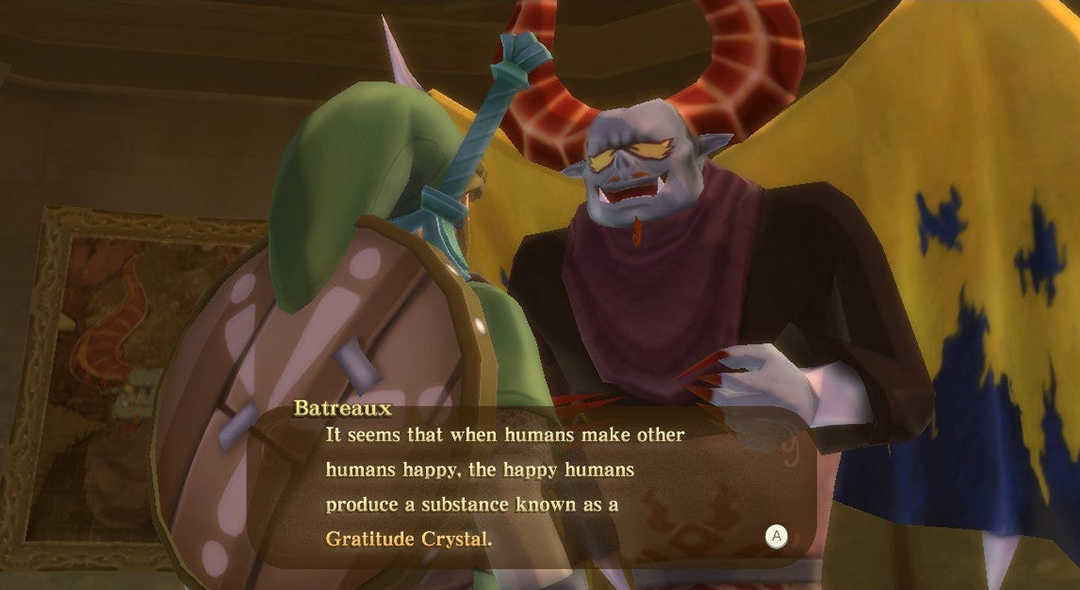
For me, one of the most striking examples of a “it’s best not to think about it too hard” heterogeneous element in a Zelda game is the character Batreaux in Skyward Sword. Batreaux is a demon whose presence in Skyloft makes animals aggressive at night. In terms of personality, though, Batreaux is a sweet older man who wants to shed his demonic nature so he can live among the Hylians.

Since there’s nothing evil or sinister about Batreaux’s actions or personality, what does it mean that he’s a demon? Are demons just normal people who happen to summon monsters simply by existing? Do demons have anything to do with Demise? And what does it say about Skyloft that, when Batreaux achieves his wish to become a Hylian, everyone simply accepts him?

As intriguing as these questions are, they don’t have answers. Batreaux is just the goofy character who gives Link wallet upgrades in exchange for the gratitude crystals the player gets for doing sidequests, and he’s loosely based on the bats who offer similar upgrades in A Link to the Past and Link’s Awakening. Batreaux is meant to be a fun allusion to earlier games, not to pose questions about the ontology of different categories of beings in Hyrule.

I feel like the Dondons belong to the same category. They’re cute animals that eat glowing rocks and shit gemstones, and they may possibly be a time travel paradox created by Zelda. How is it possible that the Dondons, like other manifestations of the Great Upheaval, appeared in Hyrule before Zelda ever traveled back to Rauru and Sonia’s era? Do these creatures come from the Depths? How do they fit into Hyrule’s ecosystem? How did Zelda discover them, and why are there only five? These are interesting questions, but I don’t think they’re supposed to have answers.
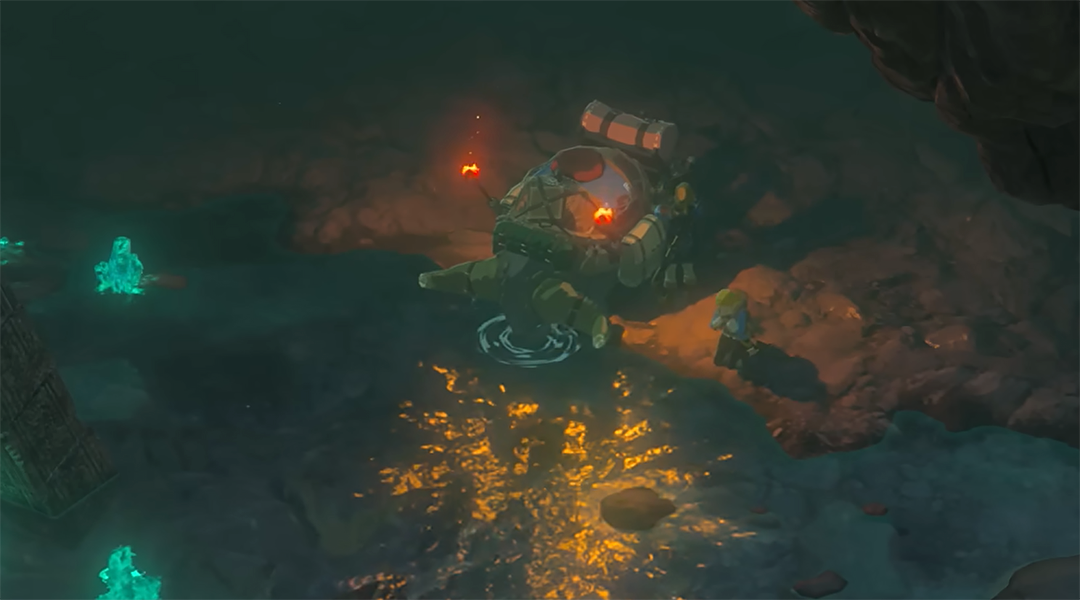
The 2019 “first look” teaser trailer for the not-yet-named sequel to Breath of the Wild drove Legend of Zelda fans into a frenzy of speculation. What do the wall paintings depict? What words do the glowing letters spell? Where is the cave that Zelda and Link are exploring? What would the Ganondorf mummy look like rehydrated? And what sort of creature is Zelda riding?

Like many elements in this initial trailer, the animal that Zelda rode underground was cut from the final version of Tears of the Kingdom – almost. The developers decided to leave a few of these creatures in an out-of-the-way enclosure as a joke about the wild theories that followed the sequel announcement. At every stable, at least one person spreads rumors about a “new animal” that’s appeared in Hyrule, and some of these rumors are more fantastic than others. After seeing the Dondons for himself, Link can report back to each stable to set the record straight, though the degree to which people believe him varies.

The gameplay function of the Dondons is also a bit of a joke. If you give the internet a taste of glowing rocks, the devs seem to be suggesting, lore theorists will produce all sorts of gemstones while you’re not watching.

In terms of the cohesive lore of the game, the Dondons don’t make a lot of sense. In terms of the player’s enjoyment of the game, though, they’re a silly Easter egg for players who go back to talk to the people at the stables a second time, as well as a nod to series fans who weathered four years of speculation.

I’m all for criticizing the design and narratives of Zelda games, and I also love deep dives that ask interesting questions and try to come up with meaningful answers. More than anything, though, I love the games themselves, and what sets The Legend of Zelda apart from other action-adventure series is its sense of goofiness. Not everything has to be serious, and not every puzzle piece needs to fit neatly together. I think it’s the silliness of the NPCs that gives the Zelda series its flavor, and this is why heterogeneous elements like the Dondons are important. These are games, after all, and they’re meant to be playful.
Kakariko Hills

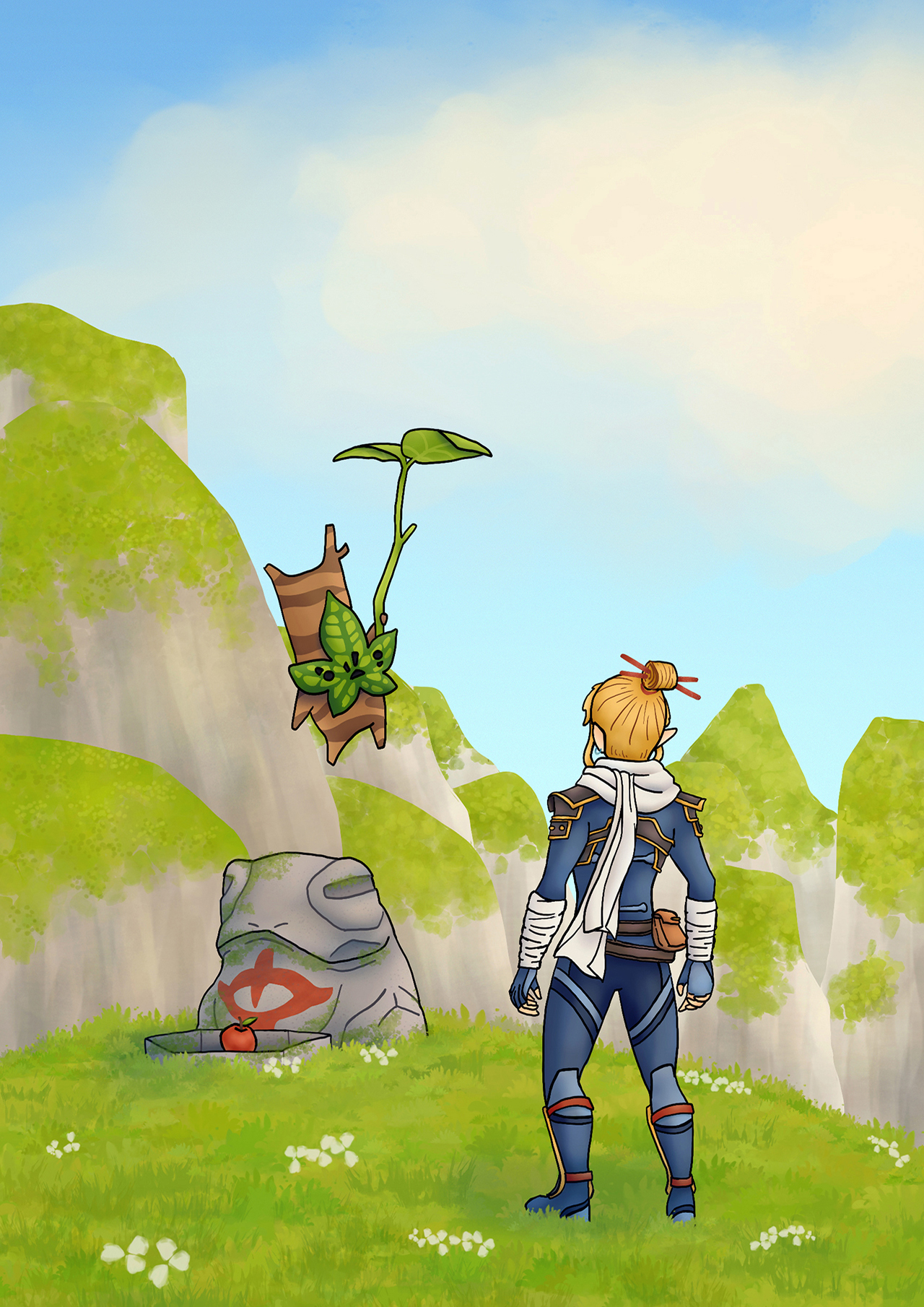
The mountains overlooking Kakariko Village are one of my favorite places in Breath of the Wild.

Most players will visit Kakariko Village early in the game, and it’s possible for a more experienced player to climb the surrounding hills and venture into the mountains. Link can find Koroks by solving little environmental puzzles (in this case, putting an apple in the offering plate in front of the frog statue), and the optional hunt for Koroks encourages the player to explore the hidden corners of the map. There’s no meaningful material reward for finding this Korok, but the scenery is impressive. This experience of discovery is a perfect example of what I love about video games – the joy of the journey.

It’s hard to say I have a favorite game, but I’m a big fan of Breath of the Wild. I live in a neighborhood of Philadelphia that has almost no plants or trees, and the beautiful landscapes in this game provide a much-needed immersion in green space while inspiring me to engage in urban gardening. I love open-world games in general, but Breath of the Wild is the first one I played and the one I keep returning to.

This illustration was my submission to the Videogames Zine published by Coin-Operated Press, a cool zine community based on Scotland that’s open to people from all over the world. You can follow them on Instagram (here), where they post news about events and upcoming calls for submissions.

Everyday Heroines

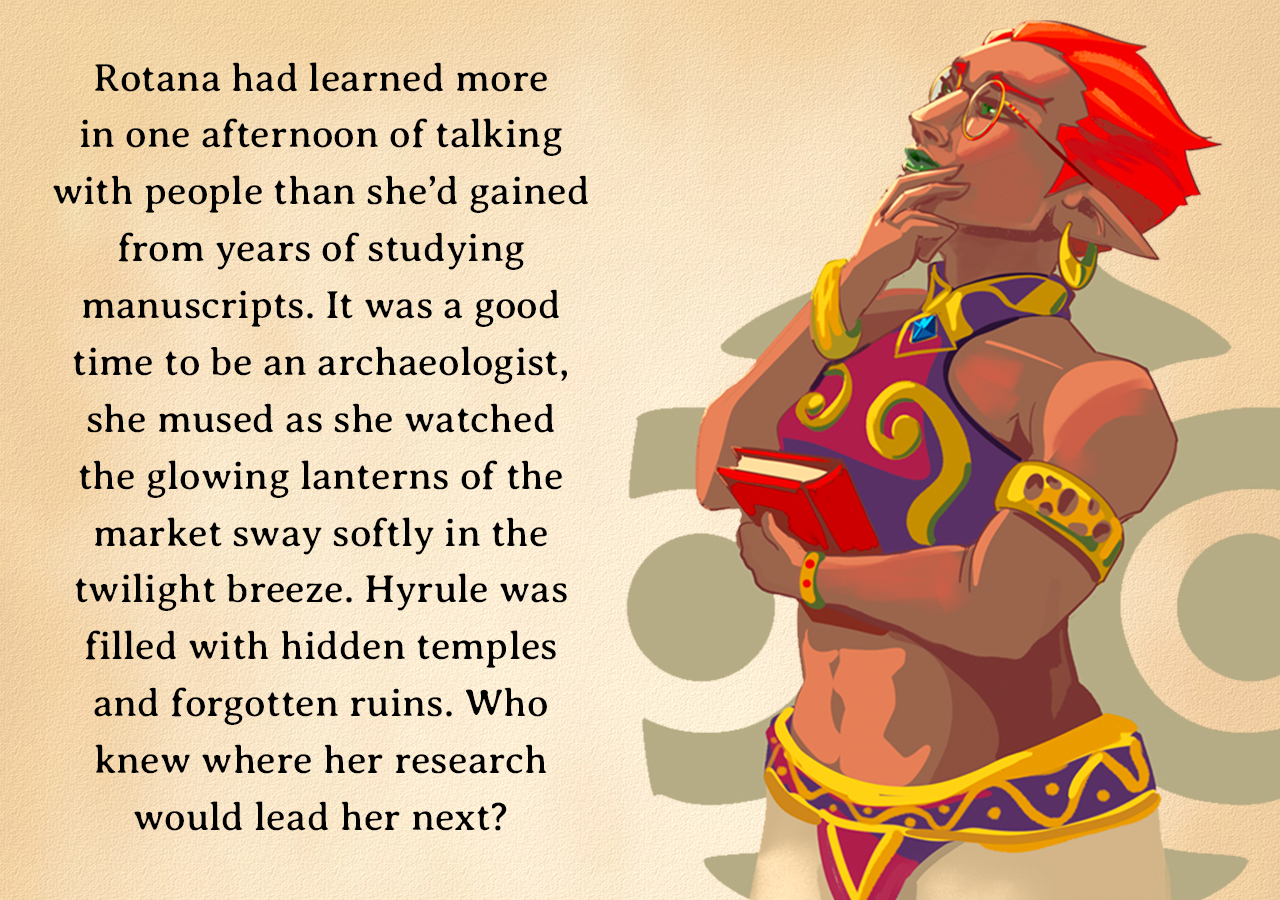
By happy coincidence, the Gibdo attack on Gerudo Town grants the Gerudo archaeologist Rotana a breakthrough in her research on the Seven Heroines. Link’s assistance was invaluable in locating the first mystical orb of the Heroines, but Rotana has resolved to find the others on her own. As she speaks with the residents of Gerudo Town, Rotana becomes acquainted with the virtues espoused by the Heroines and learns that knowledge can be found in surprising places.

I love Rotana as a character, and it’s one of the highlights of Tears of the Kingdom to listen to her lectures. Also, as an academic, it’s a guilty pleasure for me to write about research and fieldwork and the hurdles on the way to publication. Still, what I really wanted to do with this piece was tell a story about everyday life in Hyrule. Because Link is the hero of a video game, everything seems to revolve around him, so it’s interesting to get an outside perspective.

In particular, I wanted to see the characters in Gerudo Town living their best lives and solving their own problems without Link’s help. I hope this story draws the reader into a beautiful setting where the everyday quests of regular people are just as meaningful as Link’s journey to rescue Zelda.

The story is on AO3 here:
https://archiveofourown.org/works/57922744

I’m honored to have contributed this piece to Residents of the Wild, a gorgeous digital fanzine celebrating the NPCs of Breath of the Wild and Tears of the Kingdom. The zine was published on August 3, and you can still order a digital copy during the Zeldathon charity event beginning on August 13.

I consider myself extremely lucky to have my story illustrated by the legendary Linktober veteran Taboonle, who created a radiant portrait of one of Hyrule’s premier scholars. Taboonle draws amazing character art as well as cute comics with a gentle sense of humor, and you can check out his work on Instagram (here) and on Tumblr (here).

Residents of the Wild Fanzine

I’m honored to have a story about the adventures of the Gerudo archaeologist Rotana appearing in Residents of the Wild, a digital Legend of Zelda fanzine celebrating the NPCs of Breath of the Wild and Tears of the Kingdom. All proceeds from the zine will be donated to this year’s Zeldathon charity event. The zine is scheduled to be delivered on August 1, and preorders are open until July 28.

📚 rotwzine.carrd.co
📚 residents-of-the-wild-zine.square.site

A Zelda Game Starring Princess Zelda

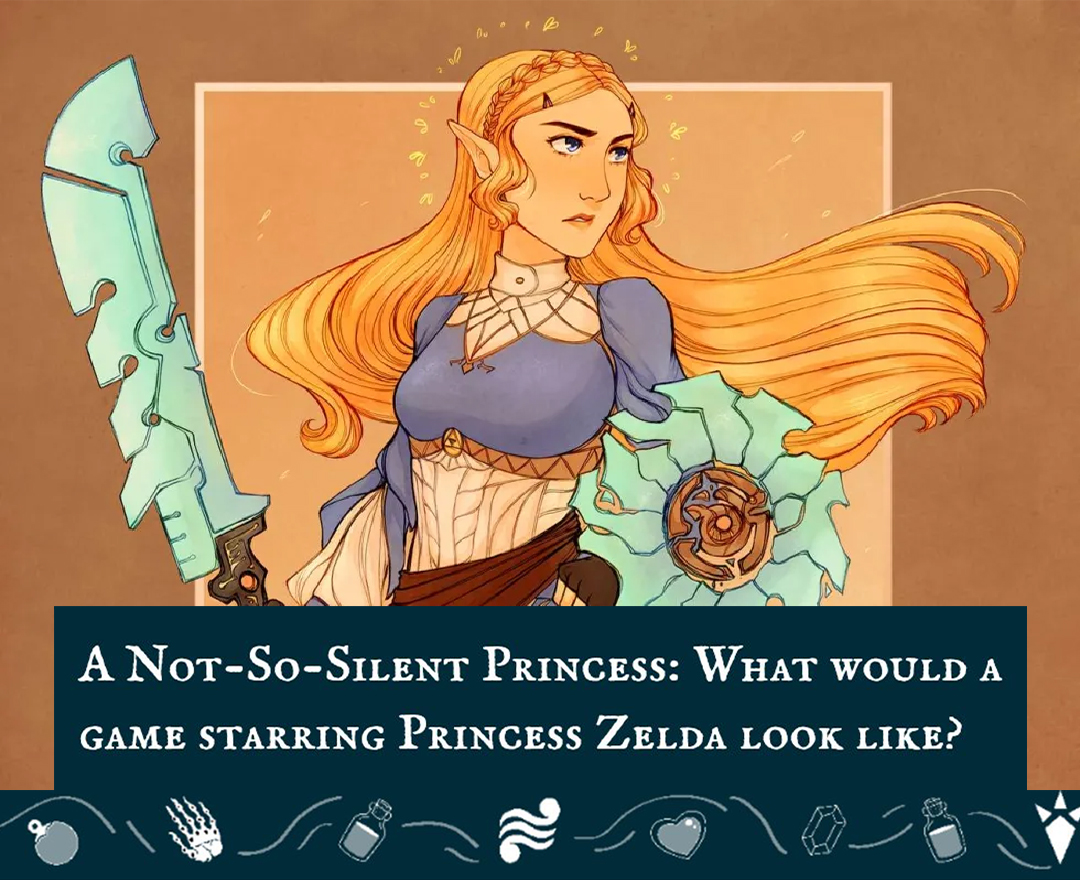
When the first trailer for Tears of the Kingdom was posted in June 2019, fans were excited about Princess Zelda’s new cropped haircut. Perhaps this meant she would be a playable character, people speculated, as it meant that no weapons or armor would have to clip through her hair. In November 2020, Zelda was indeed one of the main playable characters in Age of Calamity. Although it’s great fun to use Zelda’s magical light blasts to part seas of swarming enemies, it was also somewhat disappointing that the gameplay of Age of Calamity positioned Zelda as just another fighter, while Zelda was largely absent from the gameplay of Tears of the Kingdom.

No one can deny that Zelda is an important character in the games that bear her name, but it’s a shame to see her sidelined. My frustration with Tears of the Kingdom made me wonder what the gameplay of a title that focused on Princess Zelda might look like…

I recently had the opportunity to write a short essay for the Zelda Creators community blog based on this month’s creative prompt, “How would you design a Legend of Zelda game?” I’ve been thinking about what Princess Zelda might look like as a video game protagonist for years, and it was a lot of fun to share my ideas. I included some illustrations that I’ve commissioned over the years that envision Princess Zelda as a playable character, and the art used for the preview graphic is by the wise and powerful Benvey0 on Tumblr.

If you’d like to read the full essay, you can find it here:
https://www.zeldacreators.com/blog/a-not-so-silent-princess

The Best Wells in Tears of the Kingdom

“The Best Wells in Tears of the Kingdom” is a series of short travelogue essays celebrating the hidden secrets, environmental storytelling, and understated exploration elements of Tears of the Kingdom.

One of my main criticisms of Breath of the Wild was that its world felt curiously flat. Why wasn’t Link allowed to go underground? What was lurking underneath Hyrule?

When I first discovered that Tears of the Kingdom was filled with wells and caves, I made it my mission to track them all down. Ganondorf would just have to wait. I’m currently taking my time and leisurely enjoying myself as I go cave diving, but I managed to locate all 58 wells before completing the first dungeon. Each of these wells is unique, but what I’ve been most impressed by are the small stories told by the characters who’ve found themselves at the bottom of a well by accident – or by choice.

For the record, these are my favorites:

1. Kakariko Village Well
2. Haran Lakefront Well
3. Rikoka Hills Well
4. Popla Foothills South Well
5. Kara Kara Bazaar Well
6. Zelda’s Secret Well

You can find the annotated list on AO3 here:
https://archiveofourown.org/works/48633913/chapters/122678209

The cover illustration for this piece, which depicts the veteran well explorer Fera, was created by the magical MiroiMirage. You can find their lively and colorful artwork on Twitter (here) and on Instagram (here). It was a joy and an honor to work with Miroi while getting a glimpse into their creative process. All of the groundwork they laid for the final painted illustration was amazing, so much so that I’d like to share one of their preliminary sketches, which you can see (here).

The Ritual of Lomei Labyrinth

A vast labyrinth stretches under the ancient kingdom of Lomei. It is said that this labyrinth serves as the prison for a terrible monster known only as the Calamity. Every seventeen years, a sacrifice is performed in order to appease the monster. As the day of the ritual draws near, a young soldier named Link volunteers himself as the sacrifice, secretly hoping that he will be the one to put an end to the Calamity. It is tradition for the princess of Lomei to lead the sacrifice underground, a ritual for which Zelda has trained her entire life. Inspired by Link’s courage, she dares to reveal a hidden secret of the labyrinth that may save them both – as well as the monster trapped within a maze of deceit.

Since I started writing original horror stories in 2018, I’ve become increasingly fascinated with the Greek myth of Ariadne and the Minotaur. I consider this to be one of the earliest prototypes of gothic fiction, which explores the topos of a young woman navigating a large house that holds a terrible secret.

Earlier this year, I returned to one of my favorite gothic labyrinth stories, Ursula Le Guin’s The Tombs of Atuan. I love the idea of a bratty teenage girl being the priestess of horrific elder gods trapped in an underground maze, and reading The Tombs of Atuan while waiting for the release of Tears of the Kingdom made me think about the Lomei Labyrinths in Breath of the Wild, as well as the mysterious Zonai civilization that created them. Before I could stop myself, I ended up writing a three-chapter short story that casts Zelda in the role of Ariadne. I think Calamity Ganon makes a suitably creepy Minotaur, but hopefully Link is a much more sympathetic character than Theseus!

The story is complete at 5,400 words, and you can find it on AO3 here:
https://archiveofourown.org/works/44979319/chapters/113177725

I had a great time working with one of my favorite character artists, Benveydraws, to create a portrait of Princess Zelda. Benvey replaced Zelda’s characteristic feather motifs with the earthier imagery of golden leaves, and he worked closely with references of Greek statues to give the character a suitable Classical Mythology vibe. Benvey specializes in designing bold and beautiful female characters, and you can find more of his work on Tumblr (here) and on Twitter (here).

Hyrule’s Finest Teas

Link is a second-year college student who works as a barista at a small café on a cobblestone street next to his university. Every day he waters the plants, samples new teas, and listens patiently to the concerns of the people who visit. He especially enjoys the company of one of the regulars, a posh upperclassman named Zelda who comes to the café every day to write. It would be the perfect job if not for his boss, whose excellent taste does little to blunt the edge of his exacting standards.

It took me years of being in fandom to reach this point, but I finally embraced the cliché of writing a Coffeeshop AU. I had an intense Fall 2022 semester, and I wrote “Hyrule’s Finest Teas and Imports” to let off steam during the winter break. This started as a wholesome story about delicious café food, but it gradually transformed into something a bit darker. While I was thinking about why someone like Ganondorf would manage a café, I did a lot of research into the shady real estate practices common around college campuses in the United States. I ultimately decided that it would be fun for Ganondorf to commit tax fraud. As a treat.

The story is complete at four chapters and 9,200 words. It’s on AO3 here:
https://archiveofourown.org/works/43918116/chapters/110424639

I was extremely fortunate to work with the magical Mirarasol on an illustration for this story. Mirarasol creates lovely artwork of cute characters inhabiting stylish interiors, and they’ve done fan art for a number of games in addition to their original illustrations. If you’re interested, you can check out their work on Twitter (here) and on Instagram (here).