Usurper Ghoul

Usurper Ghoul
https://evandahm.itch.io/usurper-ghoul

Usurper Ghoul is a nonviolent Game Boy adventure game that channels the “ruined kingdom” vibe of Dark Souls. I tend to think that Dark Souls is marred by needless difficulty; and, in the same way, the gameplay elements of Usurper Ghoul are needlessly frustrating. The nonlinear exploration-based gameplay of Usurper Ghoul is on brand for a Soulslike Game Boy game, but it’s not for everyone. Like Dark Souls, Usurper Ghoul becomes more interesting the more you engage with it, but the beginning is rough.

You play as a horned, skull-headed demon who wakes in a garden in the hills overlooking a small village, which in turn overlooks a valley of tombs. In true Dark Souls fashion, no one tells you where to go or what you need to do, and it’s possible to spend a lot of time walking around without getting anywhere. There are a few people scattered across the wilderness, but they’re not particularly helpful.

With no particular goal other than to explore the world, your job is to collect three items from three categories. Flowers allow you to interact with people, sticks allow you to interact with the environment, and rocks allow you to access more knowledge about the world. One stick allows you to unlock doors, for example, while another stick allows you to read written text. The catch is that you can only hold one of each type of item at a time.

The necessity of discarding one item in order to use another fits the broader theme of the game, which is that something must be sacrificed in order for something else to be gained. Unfortunately, switching between items involves a great deal of needless backtracking. The world of Usurper Ghoul isn’t that big, and the game isn’t overly complicated, but it’s big and complicated enough for the backtracking to be annoying. There are no puzzles involved; it’s just donkey work.

One might say that Dark Souls involves needless complications and barriers to progress, but one of the primary attractions of Dark Souls is that it’s gorgeous to look at. You might be continually frustrated over the course of your journey through Lordran, but you tolerate the setbacks because the environment is so beautiful and atmospheric. The world design of Usurper Ghoul is unique and interesting, to be sure, but it’s still rendered with primitive Game Boy graphics. There’s no background music, and the sound design is limited to jarring beeps at odd moments. In other words, it’s not necessarily a pleasure to trek back and forth across the map to switch out one tool for another.

The overall story of Usurper Ghoul is intriguing, but the writing is hit or miss. Most NPCs say decontextualized NPC banalities, and the lore encountered in books and on monuments often feels like a parody of Dark Souls. Although this is never explained, your goal is to enter a tower; and, to do so, you have to collect enough lore to figure out the right order to light torches in front of the tombs in the valley. You need different sticks to unlock gates, to read the writing on the tombs, and to light their torches, so this is a tedious process even if you (like me) lose patience with the game’s obtuse writing and resort to a walkthrough to figure out the order.

Having discussed what’s frustrating about Usurper Ghoul, I now want to explain why I enjoyed it anyway. The next paragraph contains mild gameplay spoilers, but it’s also the coolest part of the game.

For your own nefarious purposes, you can offer three varieties of flowers to NPCs. Comely flowers make people like you, malodorous flowers make people dislike you, and horrid flowers will kill anyone who touches them (except you). In one of the game’s endings, you can climb the tower in the valley and simply leave the kingdom behind without hurting anyone. If you want to experience everything Usurper King has to offer, however, your goal becomes to kill as many NPCs as possible while managing the limitations imposed by each death. Each NPC you kill with a horrid flower leaves a book in the tower whose text emphasizes the theme of sacrifice. For me, this was when the story became worth the trouble of navigating the world.

I found the endgame of Usurper Ghoul to be extremely compelling. And really, despite the initial annoyances, the ideas informing Usurper Ghoul are brilliant. I feel that the success of the execution is limited by the Game Boy technology, and I’d like to give the developer a nice chunk of cash to hire collaborators and develop these ideas into a less bare-bones format, perhaps along the lines of Tunic. Usurper Ghoul is a fascinating proof of concept; and, with a bit of polish, I could easily imagine it becoming a cult classic.

For me, the payoff of Usurper Ghoul was worth the frustration of the gameplay and the occasional Dark Fantasy Generator™ writing, but your mileage may vary. There’s a lot to explore and experiment with in the world of the game, and it’s definitely possible to spend several hours there. I lost patience toward the middle and used (this walkthrough on Reddit) to smooth over some of the rougher bits, and I ended up spending a bit more than two hours with the game. If nothing else, I’m really looking forward to checking out the developer’s comic projects in the near future.

RiME

Rime (stylized as RiME) is an atmospheric 3D exploration adventure game released in May 2017. Its aesthetics are heavily influenced by The Legend of Zelda: The Wind Waker, while its nonviolent gameplay is a tribute to Journey. You’d think this game would be made specifically for me, but I didn’t like it. The music and graphics are beautiful, but the gameplay is abysmal, while the larger story is almost laughably trite. What I’d like to do is try to explain why Rime didn’t work for me.

Like Journey, Rime doesn’t tell the player how things work but instead helps you figure out the mechanics for yourself through environmental design. At the beginning of the game, a young boy washes up on a deserted island, and within the first few minutes he’s given the task of activating four statues. Each of these statues is marked by a bright blue beam that serves as an obvious goalpost indicator. One statue is just off the main path from the beach to the interior of the island, one requires the boy to feed fruit to a boar so that it will move out of his way, and one requires the boy to dive and swim through an underwater passage in order to reach a small offshore structure.

Rime gently guides the player through the actions needed to achieve the first of these three goals. When the boy stands next to the first statue, the triangle button appears onscreen, showing the player how to activate it with the “voice” command. When the boy stands close to the fruit bushes next to the second statue, the square button appears onscreen, showing the player how to pick the fruit with the “interact” command. When the boy swims to the small structure in the bay, the cross button appears onscreen, showing the player how to dive using a variation on the “jump” command. No problems here.

The difficulty with the fourth statue is that it’s far away from the point of specialist action needed to reach it. Moreover, this target point is not flagged in any way. What the player is supposed to do is use the circle button (which otherwise makes the boy perform a somersault) to drop down from a cliff so that the boy hangs from it by his fingertips. He then shimmies along its edge until he can jump to another cliff before following a path to the other side of the island.

There are plenty of cliffs on the island, but most players will have learned that they mark boundaries, as jumping off of them will result in death. Climbable ledges are marked by white erosion patterns, but the player can’t see these patterns from above. Since the cliff the boy needs to navigate is so far away from the actual statue, it would stand to reason that the circle button would appear onscreen when the player approaches this particular cliff – but it doesn’t.

I therefore spent a good 45 minutes running around and trying to jump over or climb up or somersault through piles of rocks close to the fourth statue, all to no avail. I finally had to give up and resort to a video walkthrough. This sort of failure in accessible design wouldn’t be a flaw in a game that’s meant to be difficult, perhaps. Unfortunately, it’s definitely a problem in Rime, which consistently feels twitchy and stressful instead of expansive and atmospheric.

Where Rime succeeds are its striking and brightly colored landscapes, but the game forces the player to spend an inordinate amount of time in unlit interiors fooling around with finicky moving block puzzles hindered by awkward camera angles. On top of that, Rime‘s platforming elements are atrocious. The boy’s jumps won’t successfully land unless he’s positioned in exactly the right place and at exactly the right angle. Again, the camera angle often doesn’t help. The character moves so slowly that returning to the jump point is often a tedious process, especially later in the game when chains of jumps must be completed.

The narrative payoff for the platforming and block puzzles is that the player gradually learns the boy’s story. I suspected that, like other indie games in which a child must complete trials in an otherwise empty world, the boy might already be dead. If that was the case, I wasn’t sure that the emotional payoff of the game would be worth the frustration.

It turns out that the boy is in fact dead, having fallen overboard during a storm while on a boat with his father. It’s not clear whether you play as the kid’s soul making the transition from life to death or whether you play as the father imagining the kid’s fantasy adventures as he navigates his grief, but the last bit of the game involves the father walking around the kid’s room and picking up the kid’s toys, each of which played a symbolic role in the game (a stuffed fox is the fox spirit that leads you through the early stages, and so on). I am predisposed to cry at video games, but this revelation came so totally out of left field that I had no reaction at all.

I think I would have preferred a more straightforward story of a kid being shipwrecked on an island and discovering the remains of an ancient civilization. The game is structured so that the boy is able to visit the island in what seems to be different time periods. In one era, it’s lush and green. In another, it’s filled with ghosts and sand-choked ruins. In yet another, there are robots. Many of the game’s puzzles involve circles, orbits, the sun and moon, light and darkness, and other elements that suggest the cyclical nature of time. It would therefore make sense, both in terms of game design and gameplay, to have the game’s theme be the ultimate ephemerality of human achievement within the endless flow of time.

I can imagine a number of interesting endings in line with this theme. It would be cool if the boy gradually realized that he’s the heir to this ancient civilization but then left everything behind on the island so that he can go home, for instance. Or perhaps the boy might inadvertently (or deliberately) destroy everything on the island, but this wouldn’t be a tragedy to him. Or maybe the boy was sent to the island as some sort of trial or pilgrimage in order to become an adult.

At first glance, Rime seems to have a lot of potential, but I was disappointed that it isn’t more thematically cohesive. As it stands, the game feels like a waste of what could have been a gorgeous work of environmental storytelling. I’m not sure that even the most resonant of themes or the most brilliant storytelling could make up for Rime’s endless series of needlessly frustrating puzzles and godawful platforming, though. In the end, all the art and atmosphere in the world can’t compensate for a poorly-designed game that feels bad to play.

Still, I don’t have it in my heart to say that there’s nothing good or interesting about Rime. It’s not a long game, maybe only about seven or eight hours, and parts of it are genuinely beautiful and clever, especially toward the beginning. Since there’s no payoff at the end, my recommendation would be to get Rime when it’s on sale and enjoy it until it stops being fun.

Oxenfree

Oxenfree is a horror-themed teenage friendship drama conversation simulator set on a haunted island in the Pacific Northwest. Originally released in 2016, Oxenfree is available on all consoles, and it takes about four and a half hours to finish the story.

You play as a teenage girl named Alex who takes the last ferry out to Edwards Island with her pothead friend Ren and her edgy stepbrother Jonas. They plan to spend the night on the beach, where two girls named Clarissa and Nona are waiting for them with a cooler of beer. There’s an urban legend that old-fashioned transistor radios can pick up strange signals on the island, and Ren leads Alex and Jonas to a sea cave where the signal distortions are rumored to be strong. By tuning into the radio transmissions, Alex ends up opening a portal to a parallel dimension.

I really enjoyed Oxenfree, both when I first played it and when I revisited it earlier this year. The graphic design is gorgeous, the OST is ambient and chill, and the elements of horror are genuinely creepy. The story of Oxenfree is intriguing, and walking across the island while navigating Alex’s relationships with the other characters is a fun and interesting experience.

Still, as a game, Oxenfree suffers from two major problems.

The first of these problems is that Alex walks very slowly. This makes sense, as a major element of gameplay is choosing Alex’s response in real time during ongoing conversations. The relaxed speed of travel also encourages the player to enjoy the scenery and the ambiance. Unfortunately, backtracking is a slog. The frustration engendered by Alex’s sluggish walking speed is exacerbated by the fact that the load times between screens are obscene, usually exceeding sixty seconds. As a result, I felt strongly discouraged against unguided exploration.

In order to uncover the full story of what’s happening, the player needs to embark on a scavenger hunt to collect a dozen letters scattered across the island. Because of the slow character movement and unbearable loading times, I had to give up on finding the letters myself. I was reduced to searching for spoilers online, which isn’t ideal.

As far as I can tell, a Cold War era submarine somehow managed to get itself caught in a dimensional paradox just offshore, and the Edward Island’s “ghosts” are the manifestations of the sailors trying to free themselves. These ghosts are secondary to the main story of Oxenfree, which is about the relationships between the teenage characters.

Although I think the friendship drama might have been more compelling if I had encountered the game at a younger age, Oxenfree’s second major problem is that its writing feels strange and awkward, at least to me.

I really wanted Alex to spend time with the two other teenage girls on the island. I like Nona and Clarissa a lot. I found them to be interesting characters, and I wanted to know more about them. Unfortunately, Oxenfree doesn’t give Alex many dialogue options to interact with either girl that aren’t petty, condescending, or downright bitchy. This isn’t the way that normal people talk to one another, even if they’re teenagers.

It’s clear that Oxenfree expects Alex to spend the majority of its playtime with Jonas and Ren, both of whom tend to respond poorly if the player chooses conversation options that don’t read as stereotypically “masculine.”

To give an example, after something terrible and upsetting happens, Jonas tells Alex that he’s scared. If she demonstrates sympathy or empathy by responding with “Are you okay?” or “I’m scared too,” Jonas will become annoyed or openly hostile. Meanwhile, the uncomfortably callous response of “You’re fine, let’s keep going” is configured as “correct” and doesn’t result in a string of passive-aggressive insults.

There are several different variations on Alex’s personality that the player can choose to express, but Oxenfree doesn’t give the player many opportunities to be chill, or friendly, or sincere, or emotionally vulnerable, or just curious about what’s going on. Each conversation choice generally has three options, but there’s always an additional option of not saying anything. As I played, I gradually found myself “choosing” not to say anything, especially not to the boys.

In other words, the opportunities for roleplaying the character of Alex are limited. I don’t think Alex is supposed to be unsympathetic, but the writer/director’s understanding of how interpersonal communication works feels very specific to a personality and worldview that I don’t understand. The portrayal of these teenagers – especially the teenage girls – is just so mean. The voice actors all give wonderful performances that help the player better understand the characters, but I wish the writing were as nuanced as the acting.

Granted, Alex ends up being the villain of Oxenfree II, so another interpretation might be that she is in fact a bad and selfish person who doesn’t care if she hurts people. If this is indeed the case, though, I wish that the writing had signposted her personality more clearly, or at least given more concrete hints regarding how the true nature of the situation on Edwards Island has affected her character.

Oxenfree has been universally praised, and I’ve even seen people refer to it as a “cozy game,” meaning that it presumably creates a sense of warmth in the player by being unchallenging to play while focusing on a story with themes of friendship and personal growth. I can understand the affective positivity of this reaction, but I also think it’s important to explain why Oxenfree can be difficult and frustrating, especially to someone playing the game in 2024.

Oxenfree is gorgeous to look at and features engaging conversation-based gameplay mechanics, but this is a horror game with slow movement speed and long loading times in which characters are often seriously unpleasant to one another. I maintain that Oxenfree is a unique and interesting game that’s well worth checking out – especially given its relatively short length – but it’s always good to have an accurate understanding of what you’re getting into.

While doing some research about the game’s reception, I learned that Netflix acquired the Oxenfree development team, Night School Studio, in 2021. Netflix produced Oxenfree II, and I read that there’s a live-action series adaptation of Oxenfree in production. This sounds nice, to be honest. Crossmedia adaptations don’t always succeed, but I get the impression that Oxenfree might actually work much better if it weren’t an interactive video game.

Giraffe and Annika

Giraffe and Annika is an extremely chill 3D adventure story game with anime-style character designs and panel-by-panel manga cutscenes. The game takes about four hours to finish, and I suppose that whether it’s worth $30 depends on how much you value this type of experience. I played Giraffe and Annika in short stretches during the day to get a bit of emotional sunshine, and it was lovely.

You play as Annika, a ten-year-old catgirl who mysteriously finds herself on a beautiful forested island. There’s a bit of an Alice in Wonderland flavor to the scenario, as Annika doesn’t worry too much about where she is or how she got there, and she begins the story as something of a blank slate. After investigating an empty house belonging to someone named Lisa, Annika goes back outside to find a blue-haired catboy named Giraffe waiting for her. Giraffe tells Annika that she has special powers, and he asks her to visit three dungeons on the island in order to restore starlight to a magical pendant.

The dungeons are themed open-air environments inhabited by roaming ghosts that will drain Annika’s health meter if they get too close. Thankfully, the dungeons are also filled with numerous health-restoring crystals. At the end of each dungeon is a boss battle that takes the form of a simple rhythm game. It’s possible to die from ghost attacks and other environmental hazards in the dungeons; and, in fact, I died a lot. Thankfully, save points and respawn points are so frequent that this isn’t an issue. There is zero stress in this game.

By clearing the dungeons, Annika will unlock exploration abilities such as a floaty space jump and the ability to swim underwater. She’ll also perform small fetch-quest tasks for NPCs who will help her bypass other obstacles. There are various objects that Annika can interact with across the island, but the optional collectibles are just for fun. Objectives are clearly marked, and you’ll never be in danger of getting lost or going off-track from the main quest.

The island is very lush and green and beautiful, and there’s a short day-night cycle that adds a touch of visual flair. I also appreciate the cuteness of the designs of the game’s sizeable cast of NPCs. In order to access the second dungeon, for example, you need to feed carrots to a sea turtle; and, to get the carrots, you have to round up a family of rabbits. The rabbits look like a Studio Ghibli adaptation of Beatrix Potter, and they’re adorable. Meanwhile, the sea turtle is completely photorealistic, which is a good illustration of the game’s gentle sense of humor.

It’s always a pleasure to encounter and interact with new characters, and I really enjoyed the manga-style cutscenes, which play out panel by panel. The character art is comically expressive, and the bright pastel colors are lovely.

It’s difficult to critique Giraffe and Annika, as it’s very sweet and competently constructed. Still, the main 3D playspace of the game can feel a bit textureless, and I also felt that the game wears out its welcome when it starts trying to challenge the player at the very end. I actually appreciate the occasionally amateurish design, as it fills me with a sense of nostalgia for the early 3D adventure games of the PlayStation era. Even though Giraffe and Annika sometimes looks as though it was built with out-of-the-box 3D graphic assets, it’s clear that the creators put a lot of effort into creating unique environments with a distinct sense of character.

Giraffe and Annika probably won’t appeal to someone looking for a deep story or challenging gameplay, but I can imagine that it would be a perfect starter game for its target audience of younger players. As for me, it provided a pleasant and much-needed mood boost during a dismal week in February. Giraffe and Annika is a bright and simple fantasy adventure with cute characters and no unnecessary cooking or crafting elements, and sometimes that’s exactly what you need in your life.

Afterdream

Afterdream is a 2D horror adventure game with puzzle elements and lo-fi pixelated graphics that takes between two to three hours to finish. It’s on Steam, but I played it on Nintendo Switch and had a fantastic time. Afterdream drops you right into the story and immediately grabs your attention, and its pacing is impeccable. The horror is mostly atmospheric, but the game features a great set of jumpscares mixed with short segments of heightened tension.

Afterdream isn’t for people who can’t tolerate horror, but I’d happily recommend it to anyone else who’s interested in trying out a short, original, and creative story game. The puzzles are fun but not too difficult, and the environmental design is really something special.

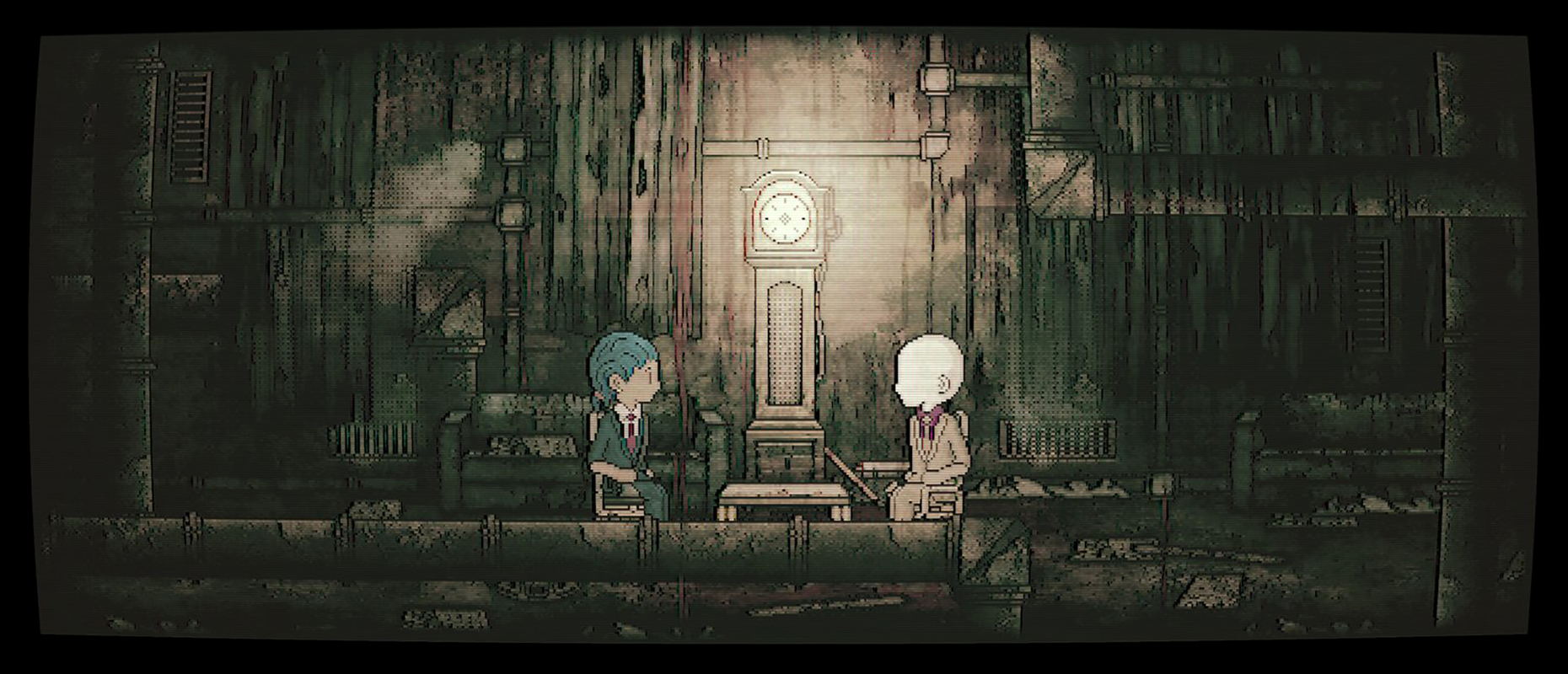
You play as a woman named Jennifer who wakes up in a filthy derelict room wearing a suit she doesn’t own. During the intermittent frame story, Jennifer relates this situation to an older man who seems to be a psychiatrist, claiming that she’s experienced an unusually realistic nightmare.

Within this nightmare, Jennifer’s job is to navigate a series of haunted houses while finding a series of objects for a series of NPCs. There are no Professor Layton style puzzles relating to number games or spatial arrangement challenges; rather, Afterdream’s puzzles are mainly fetch quests reminiscent of old-school adventure games in which a certain object needs to be applied to a certain environmental obstacle, like a key being needed to unlock a door.

The challenge, such as it is, lies in being able to form a mental map of each area and remembering what goes where. The game mechanics are extremely simple and intuitive, and there are no inventory limits or menu screens to distract the player from the immersive environment. It’s always clear what you can interact with, and the in-game text isn’t cryptic about what needs to happen.

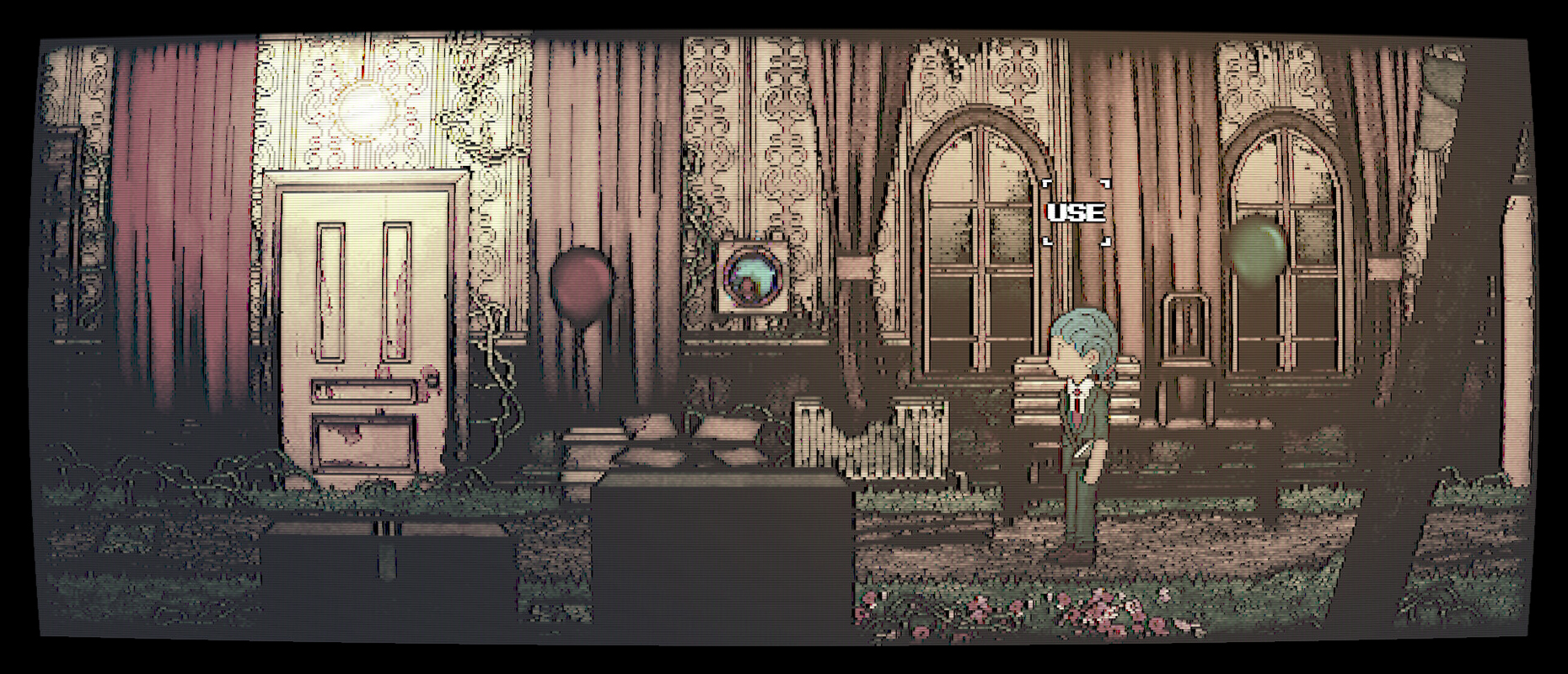
The haunted houses don’t reveal their secrets willingly, but Jennifer is aided by a Polaroid ghost camera that she can use to scan her surroundings. The oddities exposed through the camera’s viewfinder become real once photographed. You might hear an odd ticking sound, for example, in which case your camera will reveal a ghostly clock on the wall. It’s a neat game mechanic, and it’s put to good use in a nice variety of situations.

Jennifer begins in an old and rotting apartment building and then progresses to a fancier but similarly ruined mansion, wherein a helpful ghost tells her that she’s been given an opportunity to make contact with the spirit of her recently deceased father. In order to summon his ghost, Jennifer must first find a special “portal object” hidden within the liminal space between life and the afterlife. Unfortunately, no one can say what this object looks like or where it’s hidden.

Still, Jennifer has no choice but to keep moving forward through progressively spookier areas. As a special present to me personally, there’s a dark and grimy sewer level, and it’s wonderful. There’s also a “creepy little town” level, and it’s beautiful and I love it.

Even though the game is divided into discrete stages, its story isn’t formulaic. To lighten the heavy atmosphere, the writing employs humor at key moments, with both Jennifer and the NPC ghosts occasionally poking fun at the absurdity of various situations. I really enjoyed the instances when I thought something horrible was going to happen but everything actually turned out to be perfectly wholesome. The pacing is excellent, with plenty of fun character interactions and chill periods of downtime between the creepy bits and jumpscares.

Afterdream is the perfect length for its story, and its gameplay goes from strength to strength as its setting becomes stranger and more disturbing. It might not be to the taste of people looking for more action or more explicit horror, but it was perfect for me.

One final thing: When I first saw the game’s trailer, I was like, “This looks cool, but I hope you can turn off the strobe effects.” And thankfully, you can in fact turn off the strobe effects. It’s always nice when game developers take this sort of accessibility issue into consideration.

Review of Soul Void on Sidequest

I recently had the pleasure of writing a review of the Game Boy horror adventure game Soul Void for the online gaming magazine Sidequest. I love Soul Void, and I’d describe it as Undertale for people who love quirky adventures with elements of horror but hate bullet hell. Although the horror elements of Soul Void are quite gruesome, it’s accessible to players of all skill levels. The game is free to play on Itchio (here), but I’d recommend playing it on a Game Boy emulator like mGBA, which you can download (here). Here’s an excerpt from my review:

Soul Void is a dark fantasy Game Boy adventure game that takes about three hours to finish. Its story of a young woman navigating the perils of the underworld is intriguing and cathartic, and its art design makes incredible use of the eeriness of its retro pixel graphics. For anyone who enjoyed the characters and worldbuilding of Undertale, Soul Void offers a similarly offbeat odyssey of mystery and friendship illustrated with disturbing but brilliantly creative horror art.

You can read the full review here:
https://sidequest.zone/2023/08/21/review-soul-void-dives-deep-into-retro-body-horror/

I want to give a big shout-out to my editor, Maddi Butler, for helping me get my thoughts in order and work through some of the more interesting themes of this game. I’d also like to thank the Sidequest Editor in Chief, Melissa Brinks, for giving me an opportunity to write about Soul Void, and for allowing me to expand on my thoughts about this amazing game. For excellent writing and commentary on video games, you can follow Maddi on Bluesky (here) + Melissa on Twitter (here). If you’re in the mood for gorgeous horror art, you can follow Soul Void’s creator, Kabadura, on Twitter (here) and on Instagram (here).

Deadeus

Deadeus
https://izma.itch.io/deadeus

Deadeus is a retro Game Boy horror adventure game in which you have three days before the apocalypse. If you play the game straight, you quietly enjoy your remaining time in your small seaside town before climbing a scenic hilltop to watch the sky fall. If you discover the hidden passageway underneath the town church, however, you can join an evil cult and get the party started early.

You play as a young boy who lives with his mother. Attendance at the local school is voluntary, so you’re free to explore anywhere you like in your town, which is large but not unmanageably so. The town consists of about thirty screens (not including indoor areas), and you can pull up a map with Select if you need it. There are about forty people you can talk with, and their dialogue changes every day. There’s no time limit to these days, which end when you decide to go to bed. If you’re doing a pacifist run, it takes about twenty minutes to explore everything each day has to offer.

The premise of Deadeus is that all the town children are having bad dreams. In the first of these dreams, an eldritch horrorterror informs the children that it will manifest in three days. The town itself seems quaint and utopian; but, as you talk to people and read various documents in the library, you learn that the area has a dark history. There have been waves of unexplained disappearances, for instance, as well as a surprising number of attempted murders.  

If you want, you can steal a ceremonial knife from the town cult and attempt some murders yourself. The game subtly guides you in this direction, and this is where most of the potential gameplay lies.

Deadeus has eleven endings, and the more interesting of these endings involve killing people in specific ways. In order to get the most satisfying (by which I mean the most gruesome) ending, you need to play through the three days while collecting objects to use in a cult ritual.

Meanwhile, the most gameplay-intensive ending involves killing every single NPC in town without getting caught. Deadeus has no combat, so this is largely a matter of stealth and strategy. A few murders require you to be clever, and I enjoyed the challenge.

Still, you don’t have to hurt anyone, and the default ending of Deadeus stands on its own. I think this might actually be the ending I prefer, especially considering what you learn about yourself and your town.

If you make use of your Game Boy emulator’s Save State function, it takes about three hours to see everything there is to see in Deadeus. Some of the endings are much better than others, so I recommend consulting the list of endings (here) and following your heart. The spoiler-free town map (here) is also useful.

A lot of homebrew Game Boy horror games are rough around the edges, but Deadeus is extremely polished. The gameplay is great, the art is perfect, the writing is decent, and even the music choices are interesting. Despite the disturbing imagery, there are no jumpscares in the game, and it’s entirely up to the player how gory they want their experience to be. It’s also up to the player how much reading they want to do, and there’s a fair bit of text on offer if you’re into lore hunting.

And finally, I like how your character’s eyes seem to be bleeding throughout the entire game. Understated pixel horror is always appreciated.

An Autumn With You

An Autumn With You
https://leafthief.itch.io/autumn

An Autumn With You is a short and nonviolent Game Boy adventure game that you can play for free in your browser window. You are Daynese, who is five and three quarters years old, and you’ve just moved with your parents from the city to your nana’s house in the country.

On the game’s Itchio page, the creator says An Autumn With You was inspired by My Neighbor Totoro, and I can see the influence. The forest around your nana’s house is home to magical creatures called Wichu that are attracted to acts of kindness. As her parents deal with their own issues, Daynese explores the beautiful area around her new house and makes a friend.

The interesting pull from My Neighbor Totoro isn’t the forest creatures, however; it’s the way Daynese creatively engages with her environment in to help her process what’s going on with her parents. Like Mei and Satsuki’s father, Daynese’s mother is a scholar working on a manuscript, and her writing schedule is intense. Meanwhile, Daynese’s father seems to have lost his job, and the family couldn’t afford to stay in the city on an academic salary.

I imagine this situation will be spookily relatable to the many Millennial parents who had to move back in with their own parents during the pandemic, or perhaps during the prolonged economic depression preceding it. Daynese is five (and three quarters) years old, and she just wants to play outside. Meanwhile, her parents aren’t doing well. In between Daynese’s jaunts into the forest, the player watches her parents gradually break down while her grandmother stands outside and waits for the storm to pass.

The main narrative drive of An Autumn With You is figuring out whether Daynese’s parents are going to be okay. It’s a short game that should take about ten to fifteen minutes to play, but I nevertheless managed to become extremely invested the story.

Unfortunately, a few of gameplay elements toward the end of the game are somewhat opaque. To give an example, I had to consult a video playthrough (here) in order to figure out the next-to-last action necessary to finish the game. You know you have to fetch food for Daynese’s forest creature friend, but there are no clues to indicate that the game expects you to go fishing with the fishing rod in the back of the car parked outside the house. If your family just moved from the city, why would there be a fishing rod in their car? I spent a solid ten minutes searching for something to interact with in and around the house before I finally gave up and went online.

If you’ve just read the above paragraph, however, then you already know about the fishing rod, and rest of the game shouldn’t be too tricky. In fact, I’d say that An Autumn With You is a perfect game for its length, not to mention a wonderful use of the medium to tell a story. The art is lovely, and An Autumn With You is filled with small but significant grace notes that add color and depth to its world.

Lily’s Well

Lily’s Well
https://pureiceblue.itch.io/lilys-well

Lily’s Well is a lo-fi horror adventure game with a charming top-down NES aesthetic. You play as an anime girl named Lily who hears a voice calling for help from the well by her isolated cabin in the woods. Your job is to explore the house and its surroundings while collecting materials to make a rope. Depending on how many materials you assemble, you’ll be able to descend to a different level of the well. Each of the ten levels is its own horrible ending.

There are ten “good” materials and another five “bad” materials that you can find. If you incorporate a bad material into your rope, it will break. Lily will die, and you’ll have to start over again from the beginning. The game doesn’t signpost which materials are good or bad, so you have to go through them one by one and figure this out for yourself using the process of elimination. I got very frustrated very quickly, but this could have just been me being impatient.

I found the guide (here) to be extremely useful. This isn’t so much a walkthrough as it is a list of materials and a FAQ, and you’ll still have to put the pieces of the game together yourself. While using the guide, it took me about three hours to get all of the endings.

If you use the guide judiciously, you can finish the game in about 45 minutes. This involves spending 25 minutes to get to the bottom of the well, and another 20 minutes to explore what’s down there. Every other ending is an instant gruesome death for Lily, while the bottom of the well is essentially the second half of the game. In all fairness, the game’s true ending has a much better payoff if you die a few times first, and there are all sorts of fun little secrets to play with between runs, including certain events that only trigger on multiple playthroughs.

I said at the beginning that Lily’s Well has an NES aesthetic, but it’s really more of an early 1990s MS DOS game. The graphics are primitive, but the game uses them extremely well and puts a lot of care into the adventure elements. There’s all sorts of text for anything you care to interact with; and, if you’re patient, it’s possible to figure everything out on your own without using a guide.

The adventure game elements of Lily’s Well were hit-or-miss for me, and what I really enjoyed was the game’s dark humor. It was fun to see this cute anime girl die in all sorts of fun and creative ways, and I loved how over-the-top gruesome each ending is. I kept playing to dig deeper into the lore and see just how gleefully horrible Lily’s world could get under its placid surface, and I was not disappointed.

Ocean’s Heart

Ocean’s Heart is a top-down 16-bit adventure game in the style of A Link to the Past or The Minish Cap. You play as Tilia, the daughter of a former soldier who manages a tavern on a small island. After the island is attacked by pirates, Tilia’s father sails away to chase them down. He doesn’t return, so Tilia leaves the village to look for him.  

Ocean’s Heart is set on an archipelago of interconnected islands. Most of the map can be navigated on foot, while sailing serves as a form of fast travel. The archipelago is densely populated, with multiple large cities and smaller towns, but it’s also filled with beautiful green spaces. The primary biome of the islands is “forest,” but there’s an incredible amount of diversity within this biome, from alpine pine forests to leafy old-growth oak forests to swampy mangrove forests.

The green spaces of Ocean’s Heart are gorgeous, and the pixel art is a true feast for the eyes.

When I was a kid, I remember being disappointed by the 3D graphics of the N64 and the PlayStation. Now I find the visual style of games like Ocarina of Time and Final Fantasy VII to be charming, but for a long time (until there were better alternatives) I thought the blocky polygons and difficult-to-read environments of “next gen” games looked like garbage. I kept thinking that what I really wanted was for developers to use next-gen technology to make pixel art more polished, intricate, and interactive.

Ocean’s Heart is exactly the sort of game I wanted. Flowers and grass rustle in the wind, falling leaves drift across the screen, and birds take flight as you approach. The overworld map is dense with interaction points, all of which are visually signaled without being obtrusive. The landscape is also dense with scenery that does nothing but add magic and wonder to the environment. Towns and cities are filled with uniquely designed stores and characters, and each center of population has its own distinct visual character.

Even aside from the graphics, Ocean’s Heart is a lovely game. Although it doesn’t disrupt the basic Legend of Zelda gameplay formula, the way Ocean’s Heart structures and populates its world is extremely well executed. Unlike many Zelda-style games, Ocean’s Heart features an excellent balance between gameplay and written text. The dialog offered by the NPCs is substantial, and the player can interact with all manner of books, bookshelves, maps, paintings, documents lying on desks, and so on. Very little of this text is necessary to understanding the game’s story, but it makes the world feel like a living place that exists independently of Tilia and her quest.

The menu screen of Ocean’s Heart offers modern ease-of-use concessions, from the option to save the game at any time to a labeled map to a list of sidequests. Many titles seeking to capture a retro feel – Tunic springs immediately to mind – seem to expect the player to engage with the game through the medium of an online walkthrough, but Ocean’s Heart is entirely self-contained. The player has a great deal of freedom to move across the archipelago, but it’s difficult to become lost. The confidence derived from such a well-curated experience makes exploration all the more enjoyable.

As in any Zelda-style game, Ocean’s Heart contains about half a dozen mandatory dungeons. These dungeons have no maps, but they’re laid out in a way that feels easy to navigate and speaks to thoughtful game design. Careful exploration of the world will reveal another dozen optional dungeons with more specialized themes. My favorite of these optional “dungeons” was an entire Mediterranean-themed island with its own fully populated town of cafés and street musicians and people sitting on terraces while drinking and enjoying the sea breeze.

Ocean’s Heart comes equipped with an optional hard mode that you can trigger early on and reverse any time you want, but the default level of difficulty is well balanced. You don’t have much health at first, and healing items are extremely limited. More than anything else, this early-game difficulty seems intended to keep players on the critical path. As you power up Tilia and her sword through various collectables scattered throughout the world, exploration becomes more comfortable. Many players may have to resign themselves to dying several times at the beginning of Ocean’s Heart, but the difficulty curve balances out about an hour or two into the game’s playtime, which is roughly eight to ten hours.  

I haven’t encountered any discussion of Ocean’s Heart in the Legend of Zelda fan community, so I was surprised to learn that it was originally released in January 2021. I’m amazed that I hadn’t heard of it before I saw it on sale on the Nintendo Switch store, because this game is really good. The gameplay is solid, the writing is fun, and the beautiful pixel art is everything I ever wanted. Ocean’s Heart is also inexpensive and accessible to players of all skill levels, and I’d recommend it to anyone who’s up for a chill and rewarding island adventure.