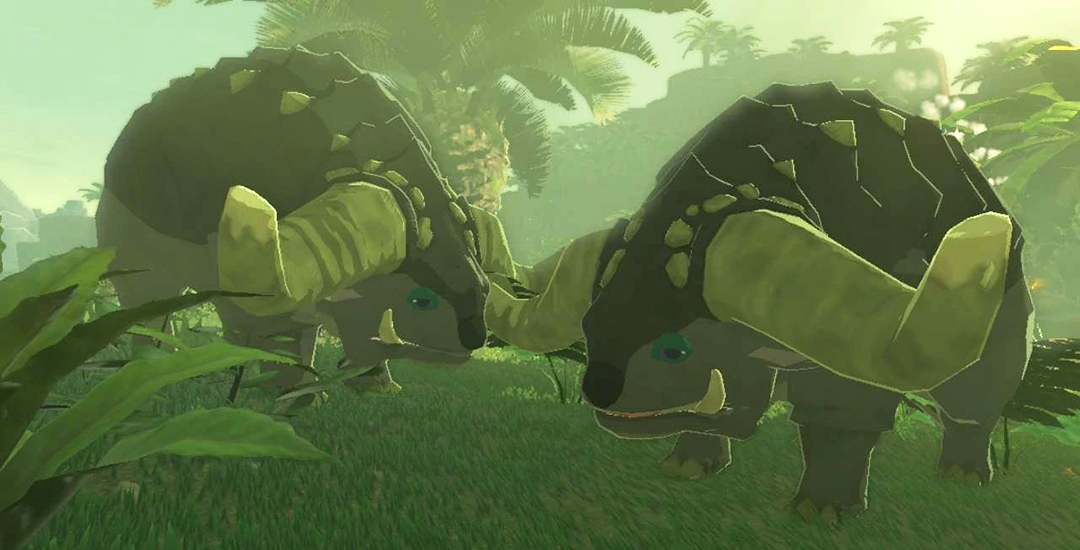
The Dondons are something of an anomaly in Tears of the Kingdom. In a teaser trailer for the not-yet-titled sequel to Breath of the Wild that premiered at E3 in June 2019, Zelda and Link are shown walking through a cavern in the company of an ox-like animal. This cutscene didn’t make it to the final version of the game, but the animals were preserved as a small herd of Dondons in the forest next to Lakeside Stable.
According to Cima, their caretaker, there are only five of these creatures in the world, and we don’t know much about them save that they eat luminous rocks. Aside from providing an inconvenient method of gem farming, the Dondons don’t serve any real purpose. In terms of the game’s story and lore, they feel like an afterthought.
Still, I like the Dondons. One of the things I love about the Legend of Zelda series is how the games include all sorts of heterogeneous elements that aren’t related to the main story and don’t fit into the lore. So I want to try to defend the Dondons, as well as the silliness of the Zelda games in general.
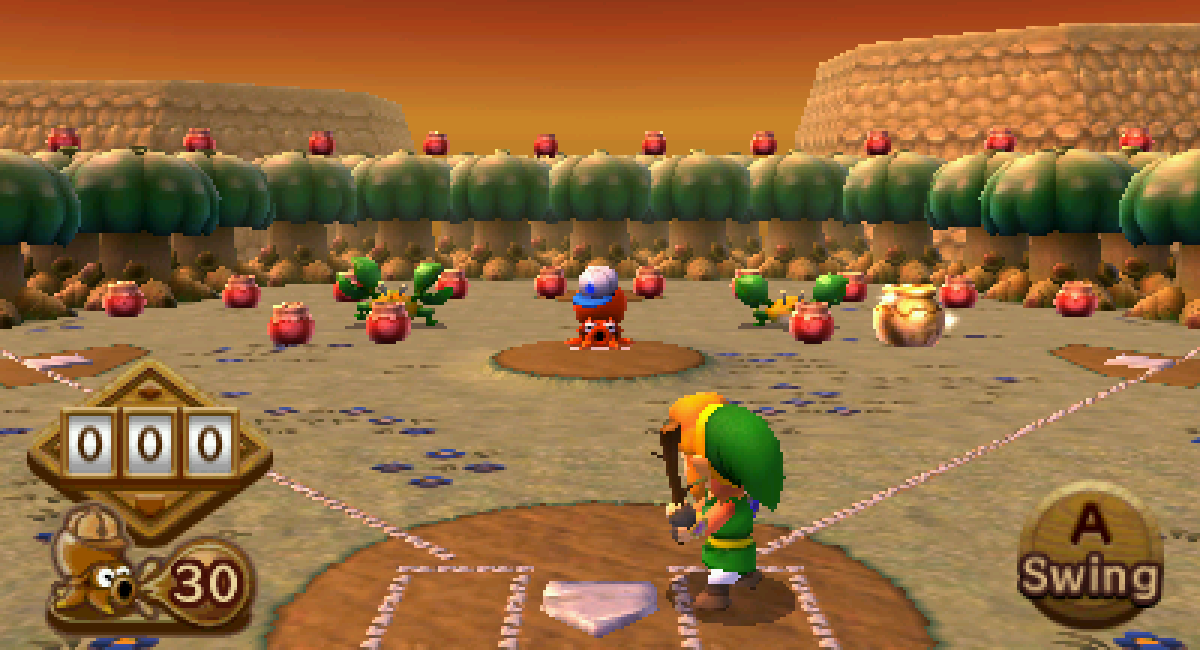
The Octoball Derby in A Link Between Worlds is a good example of what I’m calling a “heterogeneous element,” or something that doesn’t fit into the conventions of the in-game world. In this Lorule minigame, an Octorok pitches baseballs at Link (by shooting them from its mouth, of course) while two of its Hylian friends keep score from the sidelines. This Octorok is named Octo, and it can talk.
So can all Octoroks talk, or just the ones in Lorule? If Octoroks can talk and be friends with the Hylians in Lorule, what does it mean that Link has been killing them in Hyrule? If the Octoroks in Hyrule don’t have sapience, why not? And… How is there baseball in the Zelda universe?
I don’t think these questions are meaningful. What the Octoball Derby does is to take two characters from A Link to the Past – the two transformed Hylians on top of Death Mountain in the Dark World who tell Link about the Moon Pearl – and put them in a space that wouldn’t otherwise by occupied, while at the same time providing the player with a (questionably) fun minigame. Octoball Derby is pointless and silly, but it adds color to the world.
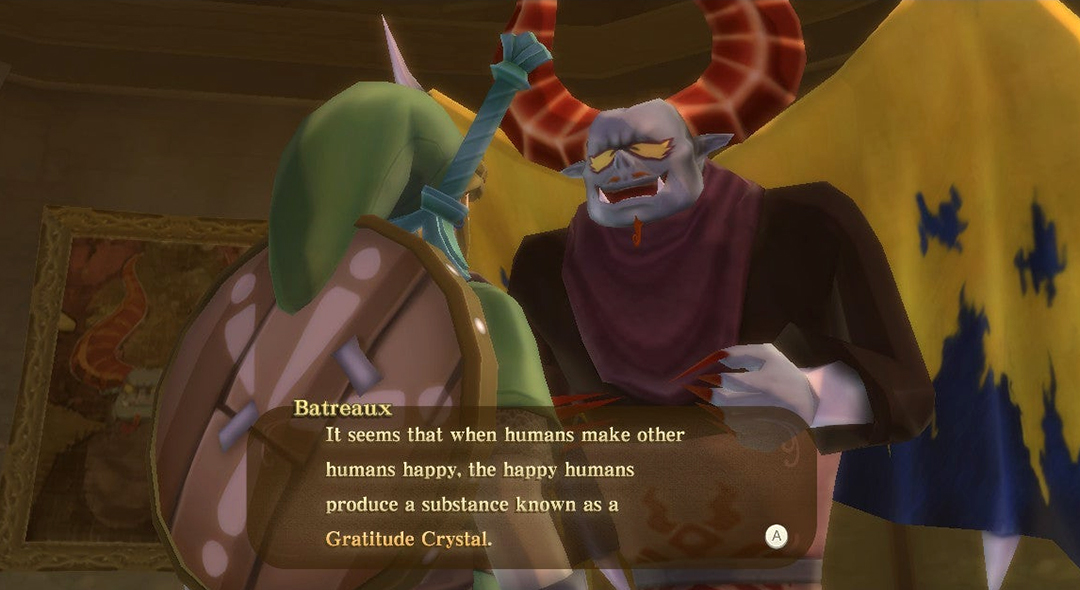
For me, one of the most striking examples of a “it’s best not to think about it too hard” heterogeneous element in a Zelda game is the character Batreaux in Skyward Sword. Batreaux is a demon whose presence in Skyloft makes animals aggressive at night. In terms of personality, though, Batreaux is a sweet older man who wants to shed his demonic nature so he can live among the Hylians.
Since there’s nothing evil or sinister about Batreaux’s actions or personality, what does it mean that he’s a demon? Are demons just normal people who happen to summon monsters simply by existing? Do demons have anything to do with Demise? And what does it say about Skyloft that, when Batreaux achieves his wish to become a Hylian, everyone simply accepts him?
As intriguing as these questions are, they don’t have answers. Batreaux is just the goofy character who gives Link wallet upgrades in exchange for the gratitude crystals the player gets for doing sidequests, and he’s loosely based on the bats who offer similar upgrades in A Link to the Past and Link’s Awakening. Batreaux is meant to be a fun allusion to earlier games, not to pose questions about the ontology of different categories of beings in Hyrule.
I feel like the Dondons belong to the same category. They’re cute animals that eat glowing rocks and shit gemstones, and they may possibly be a time travel paradox created by Zelda. How is it possible that the Dondons, like other manifestations of the Great Upheaval, appeared in Hyrule before Zelda ever traveled back to Rauru and Sonia’s era? Do these creatures come from the Depths? How do they fit into Hyrule’s ecosystem? How did Zelda discover them, and why are there only five? These are interesting questions, but I don’t think they’re supposed to have answers.
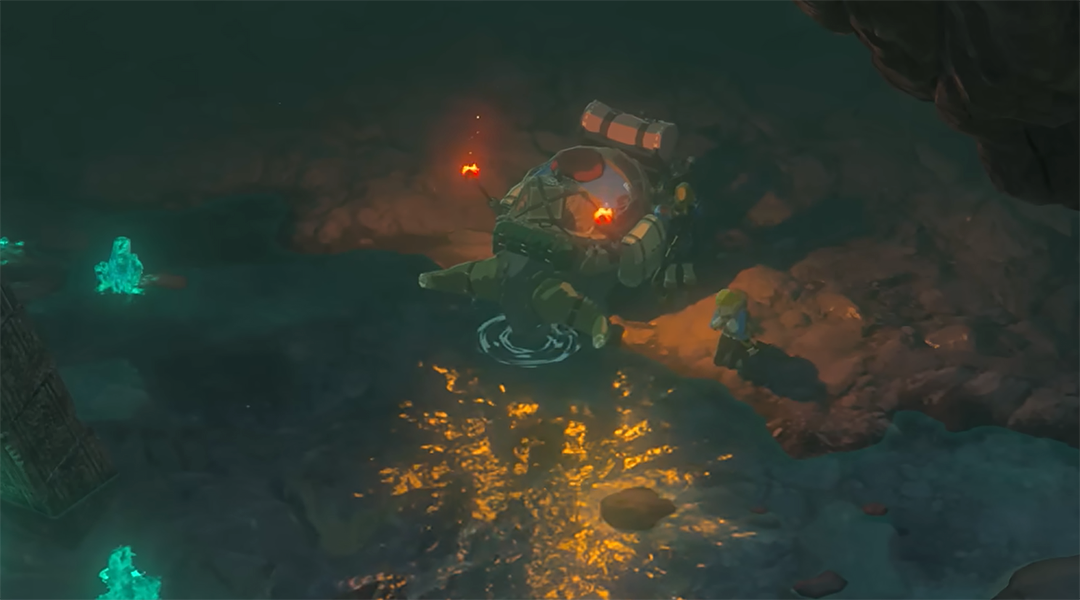
The 2019 “first look” teaser trailer for the not-yet-named sequel to Breath of the Wild drove Legend of Zelda fans into a frenzy of speculation. What do the wall paintings depict? What words do the glowing letters spell? Where is the cave that Zelda and Link are exploring? What would the Ganondorf mummy look like rehydrated? And what sort of creature is Zelda riding?
Like many elements in this initial trailer, the animal that Zelda rode underground was cut from the final version of Tears of the Kingdom – almost. The developers decided to leave a few of these creatures in an out-of-the-way enclosure as a joke about the wild theories that followed the sequel announcement. At every stable, at least one person spreads rumors about a “new animal” that’s appeared in Hyrule, and some of these rumors are more fantastic than others. After seeing the Dondons for himself, Link can report back to each stable to set the record straight, though the degree to which people believe him varies.
The gameplay function of the Dondons is also a bit of a joke. If you give the internet a taste of glowing rocks, the devs seem to be suggesting, lore theorists will produce all sorts of gemstones while you’re not watching.
In terms of the cohesive lore of the game, the Dondons don’t make a lot of sense. In terms of the player’s enjoyment of the game, though, they’re a silly Easter egg for players who go back to talk to the people at the stables a second time, as well as a nod to series fans who weathered four years of speculation.
I’m all for criticizing the design and narratives of Zelda games, and I also love deep dives that ask interesting questions and try to come up with meaningful answers. More than anything, though, I love the games themselves, and what sets The Legend of Zelda apart from other action-adventure series is its sense of goofiness. Not everything has to be serious, and not every puzzle piece needs to fit neatly together. I think it’s the silliness of the NPCs that gives the Zelda series its flavor, and this is why heterogeneous elements like the Dondons are important. These are games, after all, and they’re meant to be playful.


