Misao

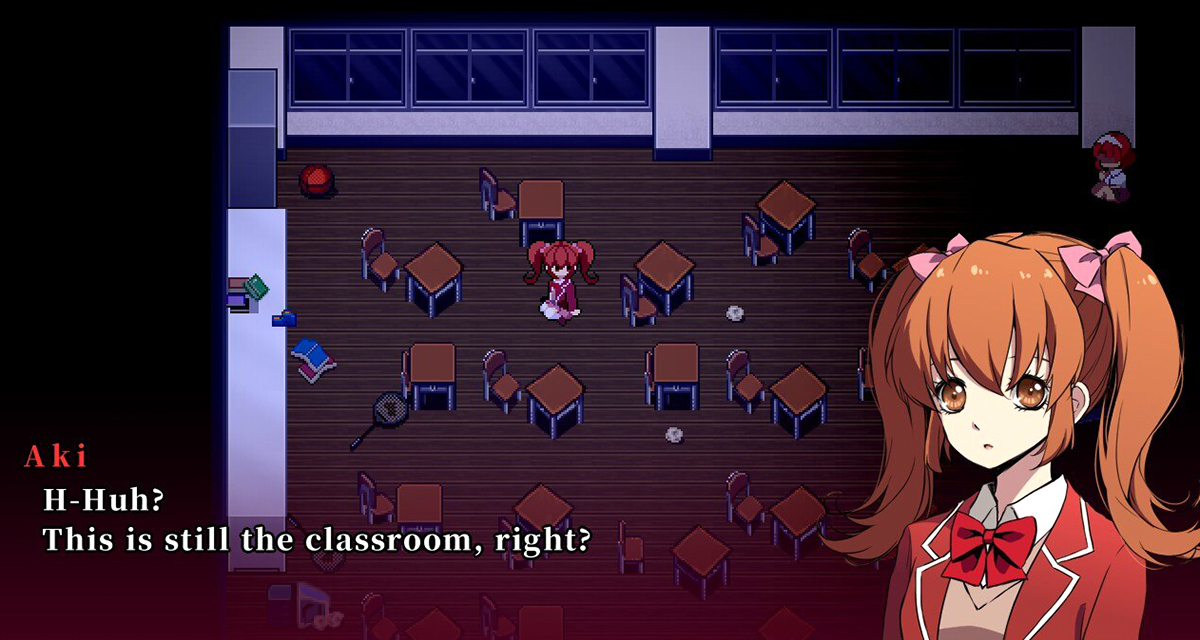
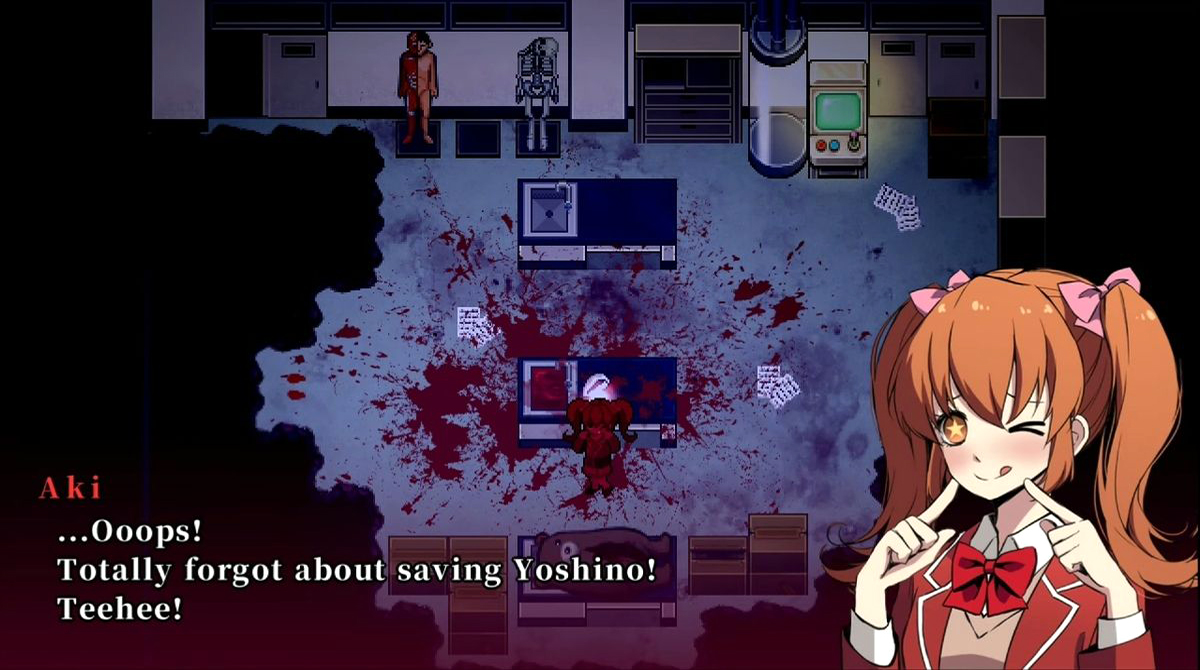
Misao is a short 16-bit indie survival horror game originally released in 2011 and then published on Steam (here) as a remastered edition in 2024. The game is set in a high school that’s been transported to a demonic realm by the vengeful spirit of the eponymous Misao, a beautiful but quiet girl who mysteriously disappeared three months prior to the opening of the story. 

You play as a girl (or optionally as a boy, in the HD version) named Aki who suddenly hears Misao’s voice in the middle of class, asking someone to “find me.” The classroom is cloaked in darkness, an earthquake hits, and the school begins to fall apart in the aftershocks. As Aki explores the mostly abandoned building, she learns that four of her classmates were bullying Misao with the compliance of their homeroom teacher. Despite the intensity of the bullying, Misao didn’t kill herself – but someone else did.

The gameplay consists of navigating the school while collecting six objects necessary to piece together Misao’s story. There’s no set order to acquiring these items, meaning that the game starts off as somewhat confounding but gradually comes to make more sense. Once you get your bearings, what you need to do becomes fairly self-evident, but a walkthrough is recommended for players (such as myself) who might find themselves overwhelmed at first. There are several excellent guides posted to Steam, but I recommend (this one) on account of its helpful division into sections.

Like Mad Father (reviewed here), which was also published by Miscreant’s Room, Misao is essentially a haunted house simulator in which your player-character can die in dozens of delightfully gruesome ways. Thanks to a handy quicksave function, there’s no penalty for dying, and the player is encouraged to get into all sorts of trouble for the sole purpose of seeing what will happen. Aside from two short chase sequences, very little skill is needed to survive, just a bit of trial and error.
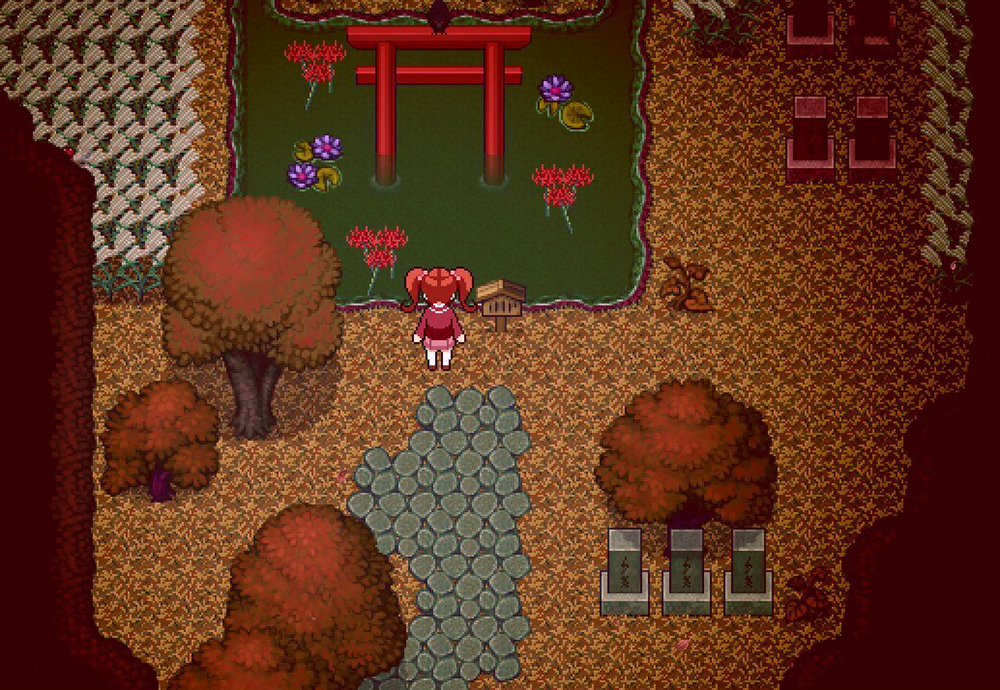
What I love about Misao is how much fun this game has with the tropes and imagery of a haunted high school. The laboratory is staffed by a mad scientist who has a chainsaw and will take advantage of any excuse to use it. The hamburgers in the cafeteria are made of unspeakable meat, and the seating area in front of the open kitchen is filthy with blood and entrails. The toilets haven’t been cleaned for a very long time, nor has the secret zombie cave under the school. The Shinto shrine in the courtyard is beautiful, but the rituals performed there are anything but.

Misao’s story mixes high school bullying and friendship drama with a mystery surrounding a twisted serial killer, and everyone gets exactly what they deserve. Still, for players who think high school kids shouldn’t be condemned to eternal damnation, Aki can rescue her classmates from their personal hells in a short epilogue. A few of the characters Aki encounters are native to the demon realm, and they’re all having the time of their lives. My favorite is the student librarian, who’s fully aware of the bloodshed surrounding her but just wants to make friends. She is a treasure.

If you’re not a completionist, Misao takes about two hours to finish, allowing the story to make an impact without testing the player’s patience through needless puzzles or gameplay challenges. The haunted high school setting is creatively rendered and a lot of fun to explore, even if the open-world structure is a bit overwhelming at the beginning.

The deaths are all creative and disturbing, but the retro graphics allow the game to feel campy instead of creepy, so much so that Misao sometimes feels more like a comedy than a horror story. I grew to feel a begrudging sort of affection for the characters, but I can’t deny that I had a huge smile on my face as I watched them get picked off – and really, good for Misao. I support her.
Tales of the Black Forest

Tales of the Black Forest
https://store.steampowered.com/app/1093910/Tales_of_the_Black_Forest/

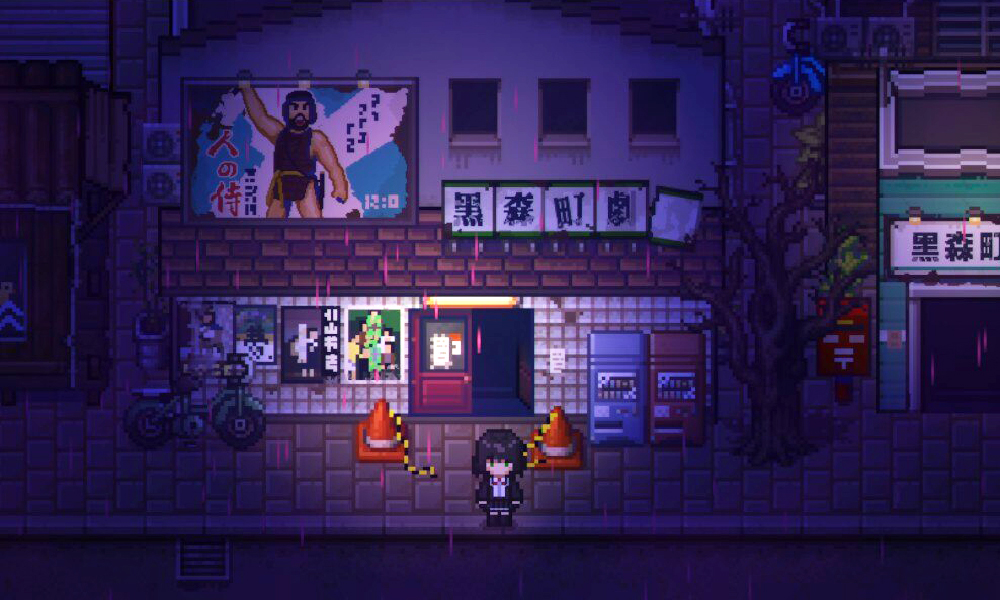
Tales of the Black Forest is a 16-bit RPG Maker narrative adventure game whose tone is split evenly between wholesome cuteness and graphic horror. Although Tales of the Black Forest features a dozen simple puzzles, a few short chase sequences, and limited elements of exploration, it might be more accurate to call it a visual novel instead of a classic adventure game. Tales of the Black Forest takes about three and a half hours to play, and more than half of this time is spent reading character dialog as you progress through a linear story.

The game’s story follows a high school student named Kihara Kashin who wakes up on a bench outside an abandoned train station. Kihara has somehow been transported to a depopulated town called Kuromori (whose name means “black forest”), where she used to live as a child before her mother died in a car accident. Inside the derelict station, Kihara meets a mysterious shape-shifting woman named Kiritani Yuki, who tells her that she has been trapped in the ruins of Kuromori by a curse. The only way to escape Kuromori is to use Nensha, a magical power that allows Kihara to travel back in time by touching retro electronic devices. By going back to the 1990s with Kiritani as her guide, Kihara can learn the origin of the curse and hopefully break it. 

The overall story arc of Tales of the Black Forest admittedly doesn’t make much sense. Thankfully, the game is split into three distinct chapters, each of which showcases the stand-alone character story of a cute yōkai girl while allowing the player to explore her environment. Each of the three chapters also explores the intersection between an urban legend and a social issue of the 1990s.

The first chapter is about a deserted village, Shiranaki (a play on the urban legend of Inunaki Village), and rural depopulation. The second chapter is about a magical ghost train and a fictional version of the Aum Shinrikyō “new religious movement” that carried out the Tokyo Subway Sarin Gas Attacks in March 1995. The third chapter is about a haunted movie theater that serves as a case study for how many small businesses that thrived during the postwar Shōwa era were forced to close during the prolonged economic recession of the 1990s.

Along with urban legends and social issues, Tales of the Black Forest is strongly inspired by the movies of Studio Ghibli, and its magical world is filled with quirky yōkai and gentle kami. The character illustrations of cute girls that accompany the dialog text are somewhat generic, but the game’s developers clearly put a great deal of love and attention into the 16-bit character sprites and their environments. There’s not a single part of this game that doesn’t make a gorgeous screenshot.

Alongside its whimsy and beauty, however, Tales of the Black Forest contains serious and sometimes graphically violent scenarios with disturbing themes and imagery. The overall tone of the game’s story emphasizes character drama more than horror, but the gruesome and upsetting elements are still there. You’ll be talking to adorable cats in the beautiful green yard of a forest café, and fifteen minutes later you’ll be watching a young woman beaten to death by a deranged cultist.

This mix of wholesome and horror worked for me, but both tonal aspects of the story are equally prominent. Accordingly, I wouldn’t recommend Black Forest to anyone who can’t sit through the creepier moments of The Ring, nor would I recommend it to anyone who can’t tolerate the more sentimental moments of My Neighbor Totoro.

Tales of the Black Forest was made by a Chinese studio in an obvious homage to Japanese popular culture, and its story occasionally feels like an attempt to filter a lecture from an “Introduction to Contemporary Japanese Society” university course through the medium of fiction. I personally found the references to Japanese social problems of the 1990s to be interesting and well-intentioned, but I could understand that some players might find these elements of the story a bit cringe in the way that early 2000s “onigiri means rice ball desu” North American anime fandom was a bit cringe.

Tales of the Black Forest was originally written in Chinese, and the English translation feels as though it was created by someone without much experience in localization. It’s serviceable, but it can be awkward at times. I tend to think the concept of “standard English” is nonsense, and I found the translation to be charming, especially because it reminded me of how pirated anime used to have English subtitles created by people whose first language was Chinese. In keeping with the retro theme of the game, I very much appreciated this unintentional element of nostalgia.

Tales of the Black Forest isn’t perfect, but it’s a solid 7/10 game that’s elevated to an 8/10 by virtue of the love and care that the two-person development team put into every aspect of its creation. This game caters to Japanese pop culture nerds who are fans of both cute anime characters and creepy urban legends, and I’m surprised it hasn’t attracted more attention since it was released on Steam in 2019. Tales of the Black Forest is a small but shining hidden treasure.

Ocean’s Heart

Ocean’s Heart is a top-down 16-bit adventure game in the style of A Link to the Past or The Minish Cap. You play as Tilia, the daughter of a former soldier who manages a tavern on a small island. After the island is attacked by pirates, Tilia’s father sails away to chase them down. He doesn’t return, so Tilia leaves the village to look for him.  

Ocean’s Heart is set on an archipelago of interconnected islands. Most of the map can be navigated on foot, while sailing serves as a form of fast travel. The archipelago is densely populated, with multiple large cities and smaller towns, but it’s also filled with beautiful green spaces. The primary biome of the islands is “forest,” but there’s an incredible amount of diversity within this biome, from alpine pine forests to leafy old-growth oak forests to swampy mangrove forests.

The green spaces of Ocean’s Heart are gorgeous, and the pixel art is a true feast for the eyes.

When I was a kid, I remember being disappointed by the 3D graphics of the N64 and the PlayStation. Now I find the visual style of games like Ocarina of Time and Final Fantasy VII to be charming, but for a long time (until there were better alternatives) I thought the blocky polygons and difficult-to-read environments of “next gen” games looked like garbage. I kept thinking that what I really wanted was for developers to use next-gen technology to make pixel art more polished, intricate, and interactive.

Ocean’s Heart is exactly the sort of game I wanted. Flowers and grass rustle in the wind, falling leaves drift across the screen, and birds take flight as you approach. The overworld map is dense with interaction points, all of which are visually signaled without being obtrusive. The landscape is also dense with scenery that does nothing but add magic and wonder to the environment. Towns and cities are filled with uniquely designed stores and characters, and each center of population has its own distinct visual character.

Even aside from the graphics, Ocean’s Heart is a lovely game. Although it doesn’t disrupt the basic Legend of Zelda gameplay formula, the way Ocean’s Heart structures and populates its world is extremely well executed. Unlike many Zelda-style games, Ocean’s Heart features an excellent balance between gameplay and written text. The dialog offered by the NPCs is substantial, and the player can interact with all manner of books, bookshelves, maps, paintings, documents lying on desks, and so on. Very little of this text is necessary to understanding the game’s story, but it makes the world feel like a living place that exists independently of Tilia and her quest.

The menu screen of Ocean’s Heart offers modern ease-of-use concessions, from the option to save the game at any time to a labeled map to a list of sidequests. Many titles seeking to capture a retro feel – Tunic springs immediately to mind – seem to expect the player to engage with the game through the medium of an online walkthrough, but Ocean’s Heart is entirely self-contained. The player has a great deal of freedom to move across the archipelago, but it’s difficult to become lost. The confidence derived from such a well-curated experience makes exploration all the more enjoyable.

As in any Zelda-style game, Ocean’s Heart contains about half a dozen mandatory dungeons. These dungeons have no maps, but they’re laid out in a way that feels easy to navigate and speaks to thoughtful game design. Careful exploration of the world will reveal another dozen optional dungeons with more specialized themes. My favorite of these optional “dungeons” was an entire Mediterranean-themed island with its own fully populated town of cafés and street musicians and people sitting on terraces while drinking and enjoying the sea breeze.

Ocean’s Heart comes equipped with an optional hard mode that you can trigger early on and reverse any time you want, but the default level of difficulty is well balanced. You don’t have much health at first, and healing items are extremely limited. More than anything else, this early-game difficulty seems intended to keep players on the critical path. As you power up Tilia and her sword through various collectables scattered throughout the world, exploration becomes more comfortable. Many players may have to resign themselves to dying several times at the beginning of Ocean’s Heart, but the difficulty curve balances out about an hour or two into the game’s playtime, which is roughly eight to ten hours.  

I haven’t encountered any discussion of Ocean’s Heart in the Legend of Zelda fan community, so I was surprised to learn that it was originally released in January 2021. I’m amazed that I hadn’t heard of it before I saw it on sale on the Nintendo Switch store, because this game is really good. The gameplay is solid, the writing is fun, and the beautiful pixel art is everything I ever wanted. Ocean’s Heart is also inexpensive and accessible to players of all skill levels, and I’d recommend it to anyone who’s up for a chill and rewarding island adventure.

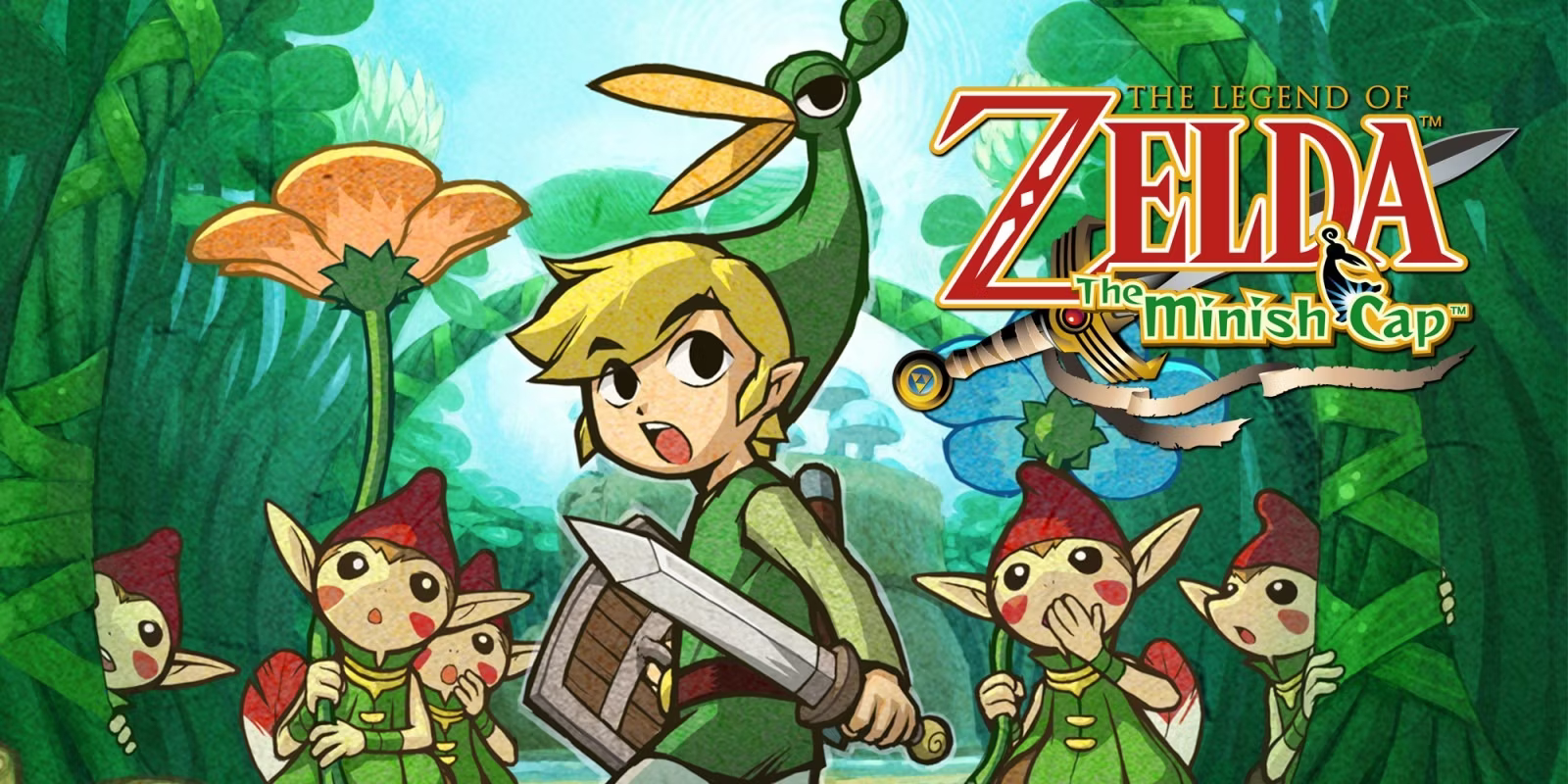
The Minish Cap

Nintendo recently released The Minish Cap on the Game Boy Advance virtual console included with its Nintendo Switch Online + Expansion Pack subscription service. This service costs $50 a year, and you have to pay the annual fee all at once. As a reminder: It is always morally correct to pirate Nintendo games.

The Minish Cap came out around the same time as The Wind Waker, and it translates a lot of The Wind Waker’s characters and enemy designs into a 16-bit pixel aesthetic modeled on A Link to the Past. As a Zelda game, the structure of The Minish Cap is very conventional: There are five themed dungeons in five themed zones. You must beat these dungeons in order, as the item you find in each dungeon allows you to access more of the world. All of the dungeons are well-designed, and it’s fun to navigate each of the five zones.

To me, there are three things that make The Minish Cap special. The first is a core game mechanic that’s brilliant and magical; the second is a minor game mechanic I hate; and the third is the game’s lighthearted tone.

The main conceit of The Minish Cap is that Link is able to shrink down to the size of the Minish, tiny little mouse-elves who live in adorable mushroom houses, hollowed-out books, and so on. The Minish spaces in the game are a Studio Ghibli fantasy on par with The Secret World of Arrietty, and there are a number of fun navigation puzzles that require Link to alternate between human size and Minish size. This is especially enjoyable during an item quest that requires you to return three books to the library, which necessitates navigating the central hub of Hyrule Castle Town at Minish size.

Unfortunately, the Minish are obsessed with fusing kinstones. A kinstone is a broken medallion, and several dozen NPCs are willing to connect their half of a kinstone with a matching half in your possession. A successful fusion will result in a small change somewhere in the world – a merchant will come to Castle Town, a treasure chest will appear in a cave, or a special golden monster will appear in the field. These fusions are mostly random, as are the kinstones you find. All of the game’s sidequests (if you can even call them that) are connected to kinstone fusions, and the randomness of the fusions can make these sidequests infuriating. Thankfully, none of the sidequests is necessary, as The Minish Cap is easy enough to play with just the bare minimum of resources.

I imagine that most players will probably think of successful kinstone fusions as fun bonuses, but a Zelda game without sidequests can feel a little empty. In addition, because many of these fusions are made with random NPCs at seemingly random points in the game, none of the sidequests is connected to a narrative.

This lack of substance and specificity is tied to the lighthearted tone of The Minish Cap, which doesn’t have much of a story. The King of Hyrule has been possessed by an evil Minish wizard named Vaati, who turns Princess Zelda to stone during the first ten minutes of the game. Because only children are pure-hearted enough to see the Minish, only Link can save Zelda. Meanwhile, none of the adults care about any of this.

Aside from Zelda and your trusty talking hat Ezlo (who has also been transformed by Vaati), nothing bad happens to anyone in the game. In fact, everyone is quite happy.

In The Wind Waker, the disconnect between the carefree world of the Great Sea and the importance of Link’s quest is a major thematic element of the story. The only person living on the Great Sea who cares about Hyrule is Ganondorf, and the only reason he cares is because he’s been woefully displaced in time. The fact that no one except the King of Red Lions understands Link’s quest emphasizes The Wind Waker’s tone of loneliness, and this is why it’s so emotionally impactful when Link finds someone who appreciates the stakes of what he’s trying to accomplish and volunteers to help.

Meanwhile, in The Minish Cap, Hyrule is densely populated by Hylians and Minish who seem to be doing just fine, even without a government. Aside from poor Zelda, everyone is living their best life, and no one needs your help. I can’t overemphasize that there is not a single element of darkness in this game, which has no narrative tension and very little forward momentum.

A fandom friend who recently played The Minish Cap for the first time said that this is the game they’d recommend to first-time Legend of Zelda players, and I can understand where they’re coming from. The Minish Cap is about as conventional as you can get. Overall, it’s really fun, and neither its combat nor its puzzles are difficult.

Unfortunately, the kinstone fusion sidequests can be hideously annoying, and the game’s “safe for children” cutesy tone makes the world and its story seem unimportant and forgettable. The Minish Cap feels like it was created for casual players, and your mileage may vary on how much you appreciate this.

In the end, The Minish Cap is still a great 8/10 game that’s very much worth playing, but it’s on an entirely different level than A Link Between Worlds, which perfected the top-down 2D Zelda formula while also featuring excellent writing and interesting design work. Given its limitations, I think The Minish Cap will probably appeal most strongly to 16-bit retro game fans, as well as its actual target demographic of ten-year-old kids.

Turnip Boy Commits Tax Evasion

Turnip Boy Commits Tax Evasion is a 16-bit Zelda-style adventure game with cute graphics and meme-heavy writing that takes about two and a half hours to play from start to finish with 100% completion.

Along with a bright and colorful overworld, Turnip Boy Commits Tax Evasion features three formal inside dungeons and two less formal outside dungeons, as well as the usual variety of “go fetch me this thing” sidequests. The game is meant to be accessible to a diversity of players but still presents a range of entertaining challenges. The gameplay isn’t engineered for precision mechanics, which makes the boss fights somewhat more difficult than they perhaps need to be, but you can turn on “god mode” at any time from the menu. Around the middle of the game, Turnip Boy discovers a device that generates portals, and this tool enables are some fun puzzles involving getting bombs and blocks to where they need to be on the map in order to move forward.

Your main goal, as Turnip Boy, is to destroy every single piece of horrible paper you get your (non-existent) hands on. Tax documents? Rip them up. Leases? Rip them up. Receipts? Rip them up. A love letter that the girl you like wants you to deliver to someone who isn’t you, even though she knows you like her? Rip it up right in front of her face. Someone’s uwu anime drawing? Rip that mess up.

It’s very cathartic.

The exploration and puzzles are fun, but what I really enjoyed about Turnip Boy is the dialog, as well as the way your adorable yet feral protagonist’s silence is used for comedic effect. This game uses one of my favorite Earthbound-inspired tropes ever, which is to populate dungeons with people who talk to you, making them feel like towns that happen to be temporarily overrun with monsters. There are also diaries and other documents (that you can rip up!) scattered about in the dungeons that provide lowkey Fallout-style worldbuilding.

So I suppose you could say that Turnip Boy Commits Tax Evasion is a comedy story game that’s set up as a 16-bit Zelda adventure quest. Thankfully, the 16-bit graphics and Zelda-style gameplay elements work really well. The music is super-catchy too.

Is Turnip Boy Commits Tax Evasion worth $15? To me, it definitely was. A team of fifteen people developed this game, and I’m happy to give each of them a dollar. If you’re in the “I want shorter games with worse graphics made by people who are paid more to work less and I’m not kidding” camp, Turnip Boy Commits Tax Evasion is the game for you, especially if you’re in the mood to take an afternoon off and enjoy yourself by exploring a colorful fantasy garden while gleefully smashing capitalism.