Review of Low Orbit on Comics Beat

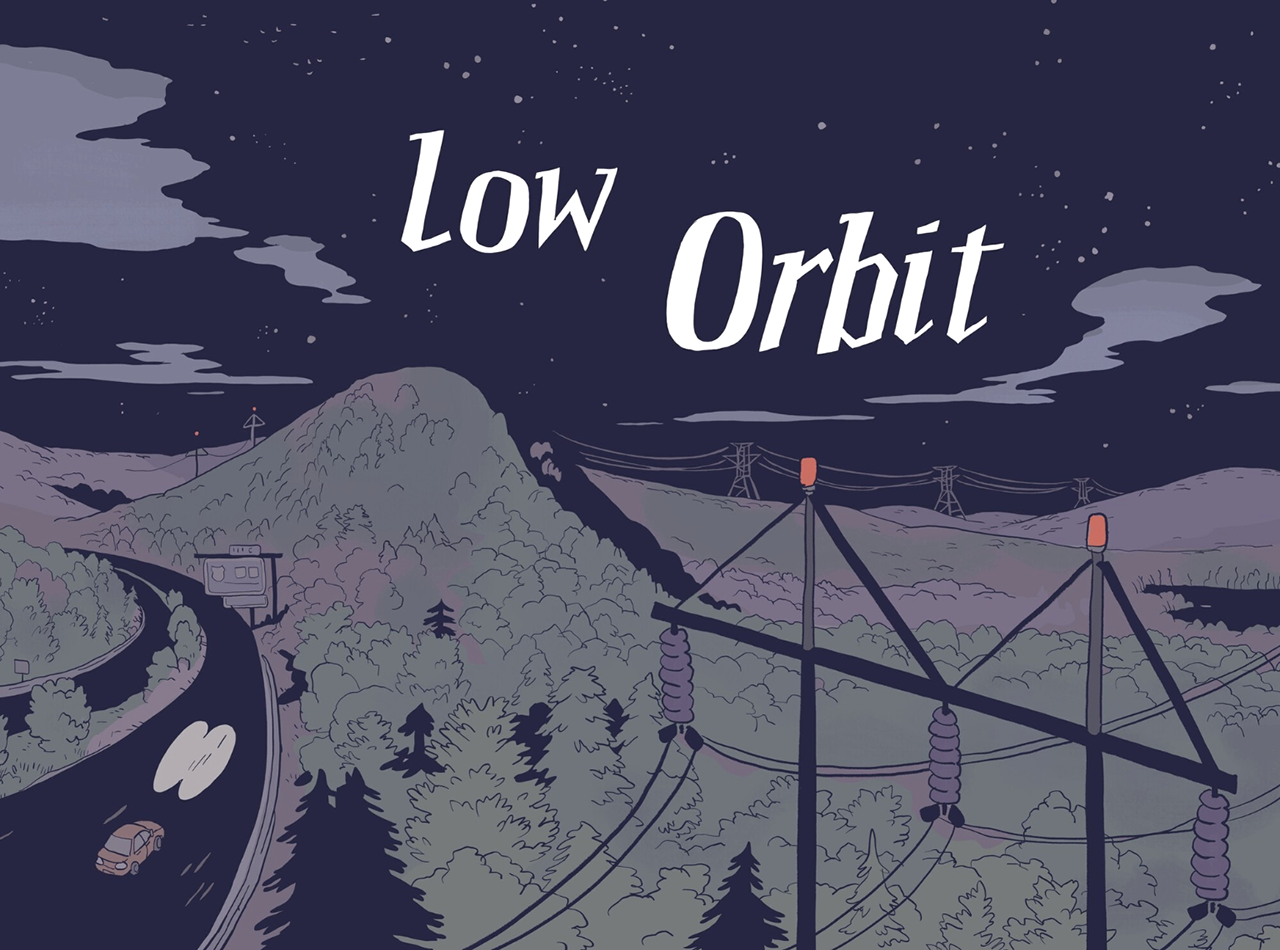
I’m honored to have been able to share a review of the recently published graphic novel Low Orbit on Comics Beat. Kazimir Lee’s debut is about dead malls in Vermont, sci-fi fan conventions in New York, epic space adventures, real-life queer identity, and everything in between. It’s an extremely ambitious story, and I’m in awe of the artist’s ability to pull it off with nuance and sensitivity – and also with some fantastic action scenes. Here’s an excerpt from my review:

At the end of Low Orbit, what lingers is the sensitivity with which Lee captures the slow and often painful process of becoming a person. Azar doesn’t find neat resolutions to her problems, and the adults around her remain as flawed as she is. Still, there’s a quiet clarity in how Azar begins to see them as fellow travelers on an uncertain path. Low Orbit is a stunning debut that’s just as fascinating as adolescence itself, and just as full of hard truths and unexpected kinships.

You can read the full review on Comics Beat here:
https://www.comicsbeat.com/graphic-novel-review-low-orbit-boldly-explores-the-intersections-of-fiction-and-identity/

Urban Gardening with Aerith Gainsborough

I’m excited to share a short story titled “Urban Gardening with Aerith Gainsborough,” which is based on the Final Fantasy VII Remake prequel novel, Traces of Two Pasts. This story is about Aerith’s relationship with the planet, especially how it manifests through her love of plants and flowers.

Despite the nurturing elements of her personality, something I love about Aerith is that she’s always kind but never fails to speak her mind. There’s an edge to her personality that I can’t help but admire, especially when she’s being passive-aggressive. It’s always fun to write characters who have this sort of complexity.  

You can read my story on AO3 here:
https://archiveofourown.org/works/65035672

On a personal note, I live in South Philadelphia, which is about as close as you can get to the Sector 5 slums in real life. I played FFVII Remake for the first time last October, and I fell so head-over-heels in love with Aerith that I was inspired to begin planting flowers in my neighborhood. I know it sounds trite to say “Aerith is an inspiration,” but she really is.

The illustration of Aerith showing off the small garden at the Leaf House orphanage was created by the bright and shining Artofpipeur, who posts colorful character portraits on Instagram (here).

Aviary Attorney

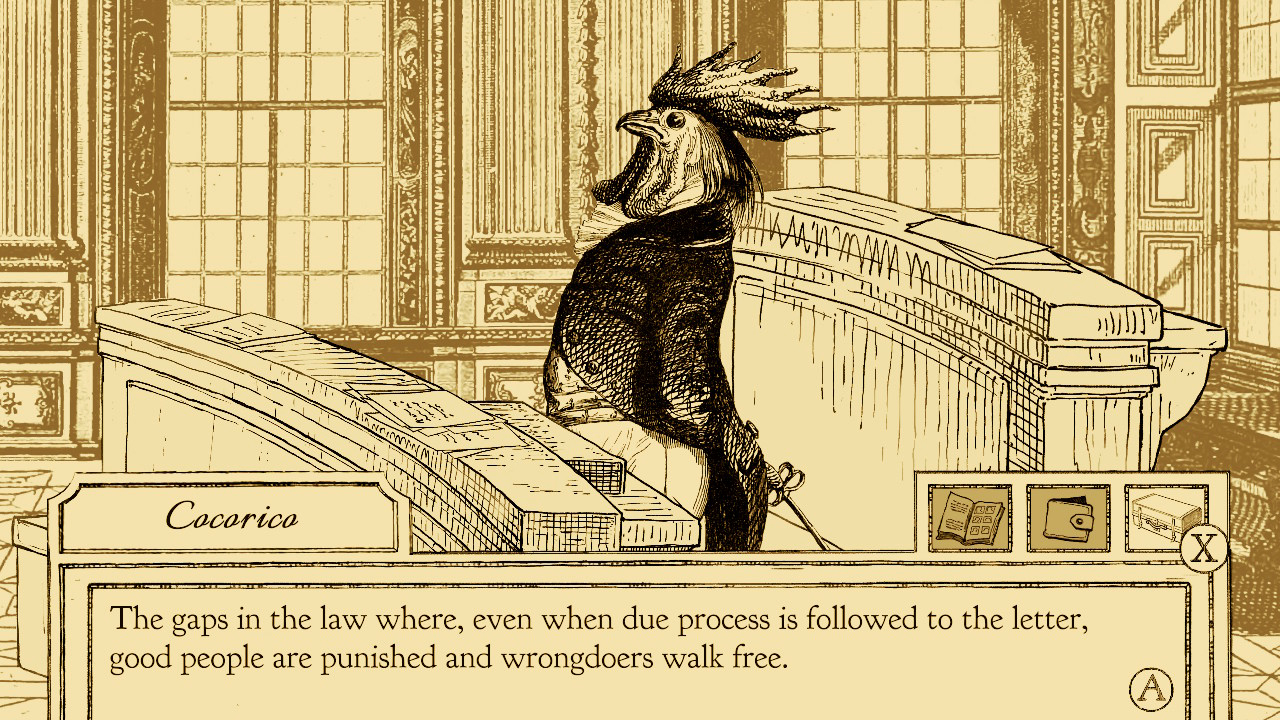
Aviary Attorney is a four-hour visual novel modeled on the Phoenix Wright series and set in Paris in 1848, right on the cusp of the revolution that ushered in the Second Republic.

You take on the role of Jayjay Falcon, a private defense attorney. Jayjay is shadowed by his apprentice Sparrowson, who provides comic relief, and he often butts heads with his rival, the brilliant but arrogant prosecutor Cocorico. The game’s story plays out across four trials. In the days leading to the trial, Jayjay has the opportunity to collect evidence and testimonies by investigating various locations in Paris. During the trial, Jayjay is given the opportunity to present relevant evidence and cross-examine a key witness.

The characters are styled as animal-headed caricatures lifted directly from the line illustrations of J. J. Grandville, an illustrator active in the first half of the nineteenth century known for his detailed line art and his razor-sharp political commentary. As explained in the game’s credits, all of the artwork in Aviary Attorney was taken from Wikipedia and the Internet Archive, and Allison Meier’s article on Hyperallergic (here) presents Granville’s illustrations in their original context. Given how seamlessly all of the game’s assets are integrated, however, a player might be forgiven for assuming that they were custom made. This is a very good-looking game.

Although the story doesn’t strive for realism, the writing is excellent. Each trial has a dramatic twist at the end, and I thought these developments were great fun. If you enjoy ladies doing murder, I think you’ll have a good time too. Even more than the crime, however, what I love is the opportunity to explore Paris while speaking to people from all walks of life and gradually coming to understand why the February Revolution happened.

I also appreciate that, unlike the Phoenix Wright games, the focus of the trials in Aviary Attorney isn’t on catching the culprit or assigning guilt, but rather on ensuring that the accused receives due process under law. Revolution is all well and good, but I admire the characters’ commitment to upholding the practice of civil society. If you manage to achieve the game’s best ending (which I did by using this guide), you’ll learn that Jayjay Falcon is the grandson of Robespierre, the great eighteenth-century French legal theorist. This isn’t a political game, but it’s always a pleasure to see writing that devotes careful attention to historical details while putting itself in conversation with the philosophies of the time.

Aviary Attorney is an interesting exercise in how public domain works can be transformatively reconfigured into contemporary media, but it’s also a great game. Obviously I’d recommend Aviary Attorney to fans of Phoenix Wright and to connoisseurs of visual novels in general, but I really want to encourage anyone who enjoyed the themes and message of Pentiment to give this game a chance. It’s got excellent writing, a unique visual appeal, and a satisfying sense of historical specificity.

Crow Country Essay on Sidequest

I’m excited to share “Crow Country Is a Game about Climate Change,” an ecocritical analysis of one of my favorite indie games of 2024. This essay also serves as a kind of “Ending Explained” story breakdown that was inspired by a few Reddit discussion threads that missed the point of what (to me at least) is a clear, powerful, and compelling artistic statement. How do we process the reality of climate change, and how can we face the challenges of the future?

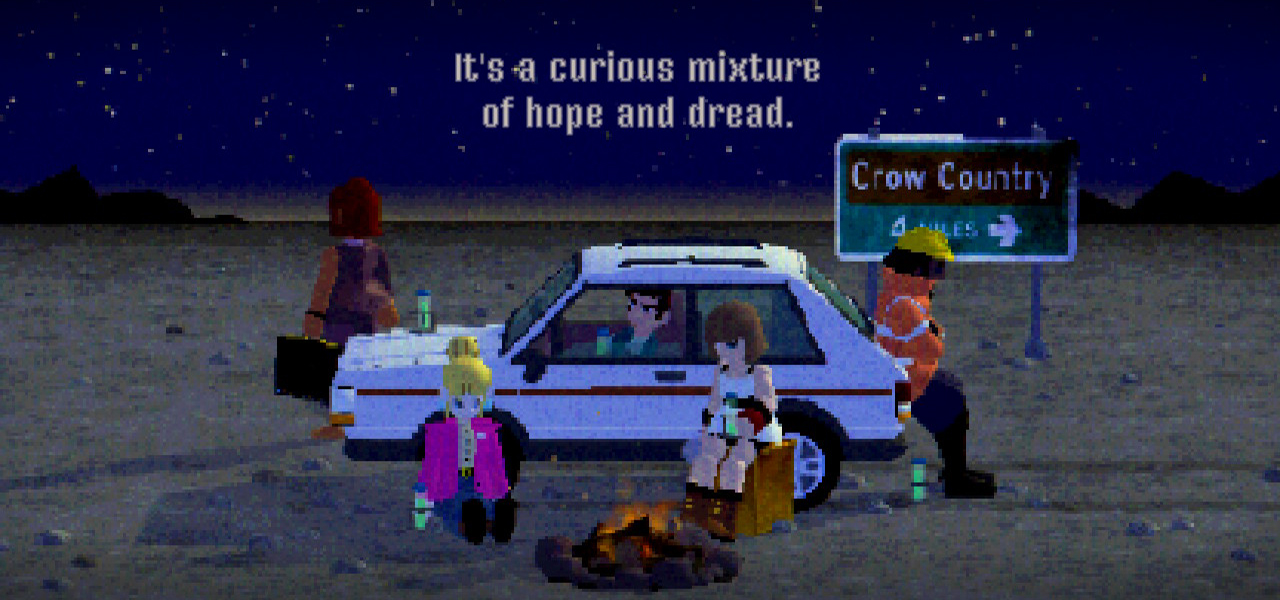
Crow Country borrows heavily from the visual design of Resident Evil and Final Fantasy VII, and I argue that it provides an interesting meta-commentary on their themes as well. Specifically, I think Crow Country uses its retro aesthetics to remind players of the political climate of the late 1980s and early 1990s, when environmentalism was considered an important bipartisan issue in the United States.

In my essay, I put Crow Country in conversation with two books, Colette Shade’s Y2K: How the 2000s Became Everything (2025) and David Wallace-Wells’s The Uninhabitable Earth: Life After Warming (2017). I believe that Shade’s discussion of the “lost environmentalism” of 1990s media like Captain Planet and FernGully can be expanded to video games, and I explain how Crow Country plays on that cultural nostalgia. Meanwhile, Wallace-Wells discusses a “crisis in storytelling” about climate change that positions its victims as cute animals instead of actual human beings, but Crow Country subverts this narrative impulse by demonstrating that its “zombie” climate refugees are none other than ourselves.

You can read the essay on Sidequest here:
https://sidequest.zone/2025/04/22/crow-country-climate-change/

Crow Country (on Steam here) is an incredible game, by the way. I enjoyed writing about it, and I enjoyed playing it as well. It takes about four hours to finish, and there’s an optional “no combat” mode that allows players to focus on exploring the space while engaging with the story and puzzles. If you’re interested, I posted a no-spoiler review of the game ( here ).

ETA: This essay was featured on Critical Distance (here). What an honor! I hope a wider audience gets a chance to read this piece, if only so that more people can appreciate the nuanced but powerful message of this incredible game.

Review of Strange Bedfellows on Comics Beat

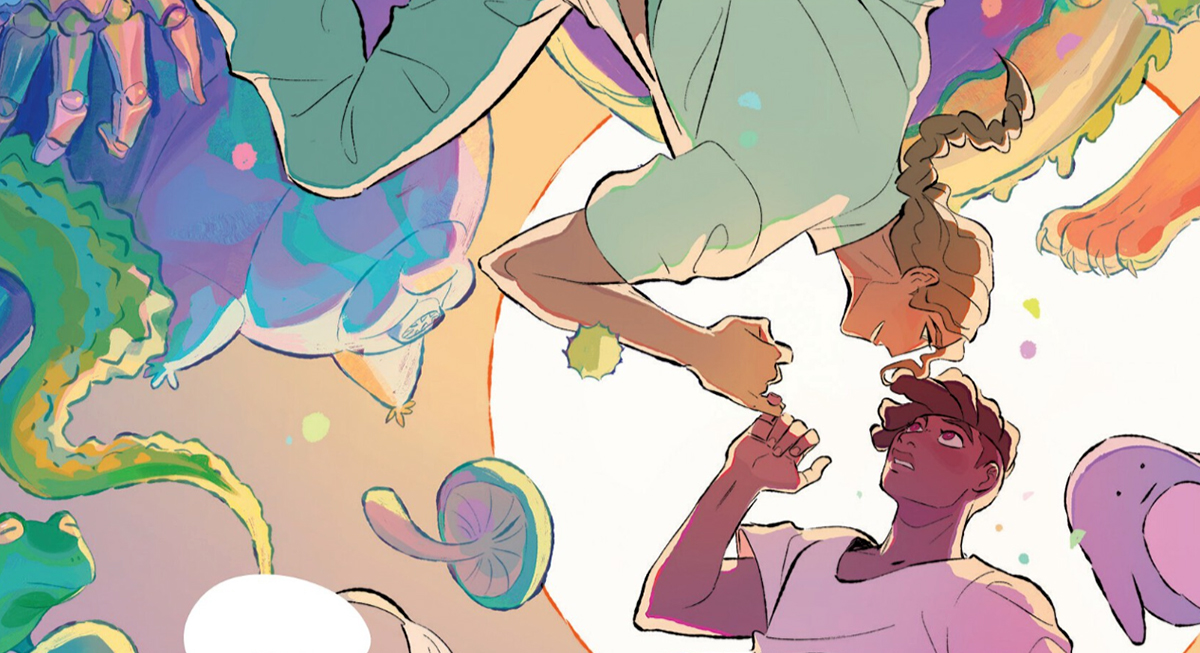
I’m excited to share my review of Ariel Slamet Ries’s newest graphic novel, Strange Bedfellows. This is a solarpunk romantic comedy that’s set in a utopia but still takes the darkness of human nature seriously. The art is gorgeous, and I very much enjoyed the time I spent in this fascinating world with these beautiful trashfire characters. Here’s an excerpt from my review:

Hardship comes to everyone, and romance isn’t always easy. The soft and hopeful message of Oberon’s story is that the flaws and complications in human ambitions are what make our lives interesting and beautiful. Strange Bedfellows assures the reader that, while we may not ever live in a perfect utopia, we don’t have to give up on our dreams of a kinder and greener future.

You can read the full review on Comics Beat here:
https://www.comicsbeat.com/graphic-novel-review-strange-bedfellows-dreams-of-a-romantic-solarpunk-future/

Bloodbark

Bloodbark
https://sirtartarus.itch.io/bloodbark

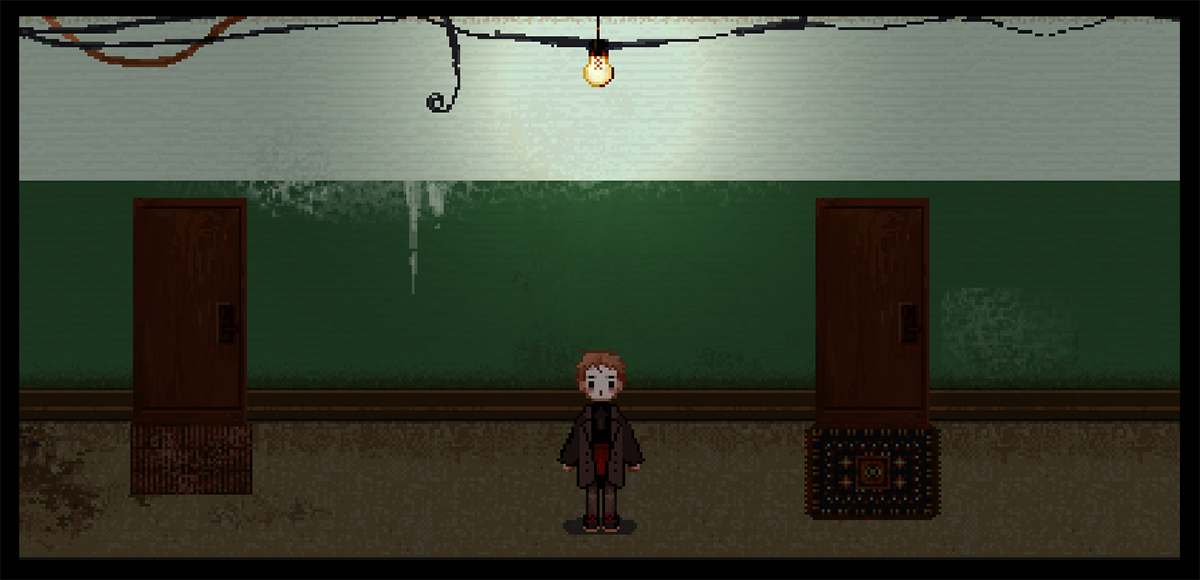
Bloodbark is a forest horror game based on the art of Eduardo Valdés-Hevia that’s free to download and takes about half an hour to play. You play as a lumberjack camping out in a small cabin next to a state park where a new type of tree has been discovered. Although these trees look like normal birches on the outside, their wood is bright red and fetches a high price. The lumberjack’s job is simple – he needs to find the special trees on his employer’s fenced-in property, cut them down, and return the timber to his cabin.

Still, given how much blood is involved… Are you really sure that it’s trees you’re chopping?

The gameplay of Bloodbark is limited to wandering around (with tank controls) and striking various objects with your axe. As you walk, your character’s thoughts automatically appear on the screen as text overlay. The lumberjack is somewhat unwell at the beginning of the game, and he becomes progressively more unhinged as the days pass. Fun times!

The standard route of progression through Bloodbark is fairly well signposted and easy to follow. If you like, however, you can wander to your heart’s content, and the game features a number of achievements and collectibles. Though it won’t have any effect in most circumstances, you can also hack at anything you like. My favorite surprise in the game is a large cocoon suspended from a pole on a dock at the lake. If you manage to find it and get it open, you’re in for an odd little treat.

Although the twist to the story is nothing you wouldn’t expect, the writing leaves a number of interesting questions open to the player’s interpretation. I am not unsympathetic to the lumberjack, who has reasonable doubts about the job he’s been paid to do, and I’m just as annoyed as he is by the car alarms and other annoyances from the neighboring state park. I also think it’s telling that the lumberjack won’t cut down any tree he’s not paid for, no matter how hard the player tries.

My only issue with Bloodbark is that it conveys “darkness” by turning the visual contrast down to zero. Unless you play the game in a sealed room with no external light, the screen appears to be almost solid black. Depending on the quality of your monitor, the parts of the game that take place at night can range from needlessly annoying to impossible to see. It’s a shame, but I’m afraid that this flaw in the game’s visual design may make it inaccessible to many players.

Thankfully, when you can see the game’s graphics, they’re quite lovely. I’m a fan of this sort of lo-fi crispiness to begin with, and I think it creates an interesting contrast with the visual style of many of the secrets you can encounter. To give an example, interacting with three roadside crosses will trigger the brief appearance of a Biblically accurate angel, and the fluidity of this manifestation is a sight to behold against the pixelated mountains and treetops.

If you’re unable to play Bloodbark yourself due to accessibility issues, I’d recommend (this video), which has no voiceover and allows you to watch a streamlined yet still thorough run of the game. Whether you’re watching the game or playing it yourself, Bloodbark is an oddly relaxing game about losing your sanity in the woods, and I’d recommend it to anyone who enjoys the themes and imagery of horror but is happy to dispense with the tension and jumpscares.

Vermis: Lost Dungeons and Forbidden Woods

Vermis is an illustrated strategy guide for a dark fantasy game that doesn’t exist. Plastiboo, the author and artist, has taken the concept of “fake strategy guide” and executed it with absolute sincerity and fidelity. Both the writing and the crusty “screenshots” have a pitch-perfect clarity of tone and style that invites immersion.

Before attempting to describe what this book is, perhaps it might be useful to describe what it isn’t. First, Vermis is entirely original. Although the tenor of its world will be familiar to fans of Dark Souls and FromSoft’s earlier King’s Field series of dungeon crawlers, there are no callbacks or veiled references or tongue-in-cheek jokes about how “it’s dangerous to go alone.” Vermis is entirely its own thing.

Second, though Vermis emulates the style of a strategy guide, Plastiboo has an artistic eye for page layout that many guides published during the 1990s did not. In other words, Vermis is easy to read. It also forms a narrative, albeit not in a novelistic sense. Although the text is fragmented, the reader never struggles to move from page to page. This is not House of Leaves.

Third, Vermis is more “dark fantasy” than “horror.” Although there are stylistic elements of the gothic and grotesque, Vermis never attempts to provoke dread, disgust, or anxiety. I wouldn’t call Vermis “understated,” as it features all manner of unsightly monsters, but its tone is quiet and contemplative. Aside from your character’s constant forward progress, there’s not much action. 

Vermis is written entirely in a second-person point of view, a stylistic choice that works well in this context. The player-character has no set identity, so the “you” of the story is handled lightly and never becomes overbearing. The second-person narration successfully achieves its intention, which is to draw the reader deeper into a sense of playing the game.  

After being introduced to a range of starting classes, you wake into a peaceful area called Deadman’s Garden, whose ferns and mosses are protected by the skeleton of a sleeping giant. You then descend into an isolated crypt, where you loot your first sword from a corpse. You also meet your first NPC, the Lonely Knight.

The Lonely Knight is not hostile, and Vermis reproduces the boxes of dialogue with which he greets you. Although Plastiboo is canny enough to keep the narration of battles to a minimum, the format of Vermis obliquely suggests gameplay. “Despite his imposing appearance,” the text reads, “the Lonely Knight is totally harmless and will not defend himself from any attack.” Underneath this passage, however, is an insert featuring illustrations of the knight’s equipment, which your player presumably receives by killing him.

After navigating through the Isolated Crypt and emerging from its cliffside exit, you then venture into a swamp, a forest, and more crypts and caves, each of which is characterized by its own unique theme.  

Along the way, you cross paths with various NPCs (mostly fellow knights) and pick up a collection of items. The text describing these items and encounters alludes to gameplay that’s never made explicit. The decision to leave the more interactive elements of Vermis to the reader’s imagination works in concert with the second-person narration to draw the reader deeper into the ludic simulacrum.  For example, in this passage…

Once on the other side of the bridge, you notice how the oppressive flutewood landscape is replaced with clear skies and endless hills full of cedars. The breeze blows gently.

After days surrounded by the unrelenting melody of the flutewoods, the absence of the whistles makes for a heavenly silence interrupted only by the chirping of the birds and the wind blowing through the leaves.

An enormous structure rises at the top of the highest hill, casting a shadow that engulfs the landscape. You make your way to the building as the sun goes down. The contrast with the sky makes it difficult to discern what is inside.

…the mechanical process of crossing this space is merely suggested. Instead, the reader is presented with the more subjective elements of the game.

Having just survived a difficult battle on the aforementioned bridge, your sense of relief is reflected in a green and peaceful landscape. The relative silence has a tangible quality. In contrast to the twisting corridors of underground dungeons, here you can hear birds and feel the wind. The sky is open. Nevertheless, the final labyrinth lies ahead, so onward you must go if you wish to reveal the secrets hidden inside.

In his review of Vermis, “The Guide to a Game That Doesn’t Exist,” Patrick Fiorilli writes, “As a strategy guide — precisely insofar as it is a strategy guide — Vermis makes good on the promise that such volumes once made to their readers: that there is a world beyond these pages waiting to be explored.”

Fiorilli continues, “Vermis also builds the speculative world of its own existence: a world where this bygone form of secondary literature, the strategy guide, never disappeared, never dissolved into the slush of the content economy, but instead flourished as an aesthetic form unto itself.”

Fiorilli’s hints regarding the metafictional resonance of the “speculative world” of Vermis are intriguing. There’s an element of liminality to the book that recalls the famous “Candle Cove” online horror story about a half-remembered children’s cartoon that aired on a public access channel that never existed. Describing the “dreamcore” aesthetic of “liminal” videos such those surrounding the mythology of The Backrooms, digital architecture critic Ario Elami notes, “Responses to such imagery often involve claims that one feels dislocated yet aware of a vaguely familiar aspect.” And indeed, Vermis possesses this exact sense of uncanny belonging to a history that almost was.

Still, I’m far more interested in Vermis’s proximity to the “speculative world” that Fiorilli describes at the beginning of his review as he relates his experience of studying the strategy guide for The Wind Waker before playing the game. I once enjoyed similar experiences of engaging with old video games purely through their strategy guides, and I can attest to the pleasures of constructing an interactive experience through grainy images and their accompanying captions.

Through some unholy miracle, Vermis perfectly captures the spirit of “playing” a game through interaction with a paratextual artifact. At the same time, Vermis discards many elements of an actual strategy guide in order to structure its text and layout to form a satisfying narrative. It’s a delicate balance, and I’m in awe of how Plastiboo manages to pull it off.

I spent a month doing internet deep dives while trying to find more books like Vermis, but everything I saw people recommend – from Fever Knights to Tales from the Loop – didn’t scratch the same itch. Thankfully, Vermis has a “sequel,” Vermis II, which is a fascinating evolution of the formula that engages with the meta while still offering an adventure that stands on its own. In addition, Plastiboo’s publisher, Hollow Press, also offers three similar titles: Age of Rot, Leyre, and Godhusk. They’re all fantastic, albeit slightly edgier and more tonally graphic than Vermis.

Of all the books published by Hollow Press, Vermis remains my favorite. I’d recommend it especially to people who don’t want to play Dark Souls (or King’s Field) but are still curious about the atmosphere and flavor of this genre of games. I’d also offer the book to connoisseurs of experimental fiction who want to feel creatively invigorated by a uniquely stylized way of constructing a world through words. Vermis is really something special, and my gratitude goes out to Michele Nitri for making his dream of Hollow Press a darkly fascinating reality.

Review of Hourglass on Comics Beat

I had the immense honor of publishing a review of Barbara Mazzi’s graphic novella Hourglass on Comics Beat. Hourglass is gorgeous, and it explores the full speculative potential of steampunk. It has its gears and smashes them too, all the while being incredibly stylish. I’m ambivalent about steampunk, but I have nothing but love for this fantastic book. Here’s a short excerpt from my review…

Barbara Mazzi’s stylish artwork is the perfect vehicle for these characters and their world. Instead of moldering in the usual steampunk attachment to the Victorian era, Hourglass delights in the lavish luxury of the 1920s. Designs inspired by Art Deco contrast strong angles against delicate filigree. Meanwhile, the interior of the machine is a chaos of detail that reminds me of the detailed mechanical designs of Studio Ghibli films like Castle in the Sky. Mazzi’s warm shades of gray convey the warmth of the machine’s interior, while the mellow gold of the spot color emphasizes the magic of this world and the humanity of its inhabitants.

You can read the full review on Comics Beat here:
https://www.comicsbeat.com/graphic-novel-review-hourglass-gears-are-powered-by-adventure/

In Praise of Moss Disability Zine

In Praise of Moss is a zine that argues against the myth of productivity while celebrating the value of a diversity of contributions to our culture and communities. Not everyone can be a tree, and that’s okay. Moss is an equally important part of an ecosystem.

I wrote this zine from a perspective that respects people of all abilities, but I think it’s important to acknowledge the more challenging aspects of disability. Disabled people are often expected to “pull their weight,” usually with the assumption that there’s only one way to measure success. In addition, people who live with invisible disabilities are often met with frustration and accusations of laziness when we’re unable to work or behave “normally.”

Moss is a useful metaphor for a recontextualization of what it means for disabled people to be useful to our communities and valued in our relationships. By exploring how moss can support an entire ecosystem, we can craft a model for how disability positivity can benefit society.

In addition, moss is remarkably adept at surviving disaster, which makes it an engaging analogy for resistance against the pressures of self-optimization exerted by neoliberal capitalism. While my focus is on disability, I believe that all readers can benefit from a shift in perspective that encourages us to grow naturally without worrying about productivity. 

When I write about “resisting productivity,” I’m speaking from the position of someone in academia who is directly affected by the myth that hard work will lead to prosperity. I hate the way this myth is weaponized against disabled people in the realm of higher education, and I want to destroy it. Very softly and quietly. Like moss.

While I love the lo-fi DIY aesthetic of many of the disability zines I’ve found on Etsy and in indie bookstores, it was important to me to create an attractively formatted physical object that feels good in my hands and accommodates my own disabilities by being easy to read. I want people who encounter this zine to feel that it’s valuable, and that they’re valuable too. I was fortunate to be able to work with Fireball Printing, a local Philadelphia service that creates gorgeous full-color publications.

If you’re interested, you can order a copy of the zine from Etsy, or you can download a free digital version on Itch.io.

🌿 https://digitalterrarium.itch.io/in-praise-of-moss
🌿 https://www.etsy.com/listing/1881401704/in-praise-of-moss-disability-zine

Legend of Zelda Forest Zine Preorders Open

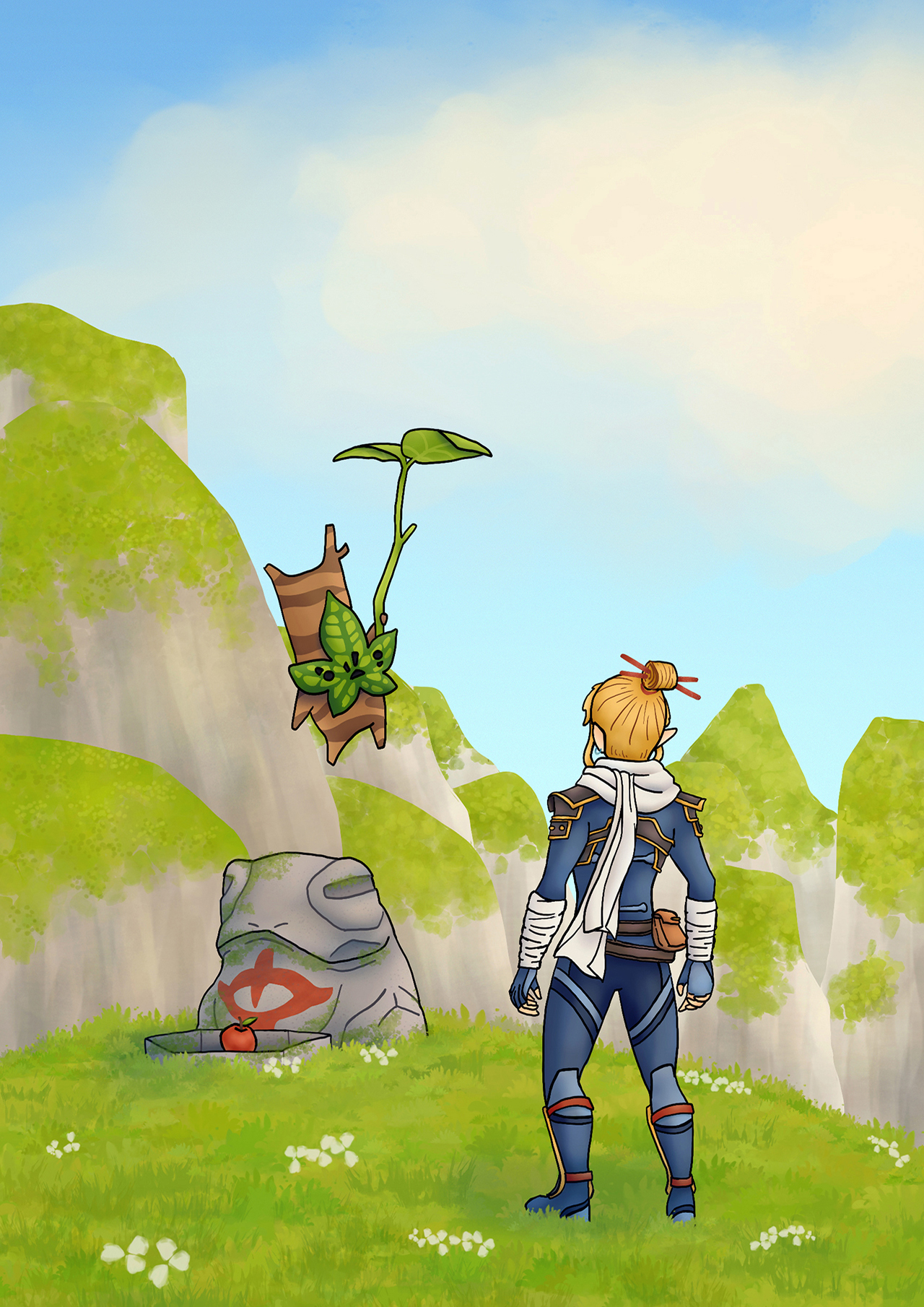
I’m excited to share the news that preorders are now open for The Whispers of Hyrule, a Legend of Zelda fanzine celebrating Hyrule’s beautiful green spaces and the creatures that make their homes in the trees.

I contributed a short story about Majora’s Mask titled “The Brave Tale of the Heroic Swamp Princess.” My story follows Link and the Deku Princess as they venture through the swamp on their way home from the Woodfall Temple. I did my best to capture the exuberant spirit of the Deku Princess, who helps Link work through the trauma he experienced in Ocarina of Time, as well as the warm atmosphere created by the vibrant plant growth in the swamp.

It’s been a privilege to see the drafts shared by the writers, artists, and musicians who have joined me on this journey. From sunlit meadows to deep forest shadows, everyone has worked hard to convey the wonder and mystery of getting lost in the woods. I know I say this about every fanzine, but this book is going to be gorgeous.

Preorders for the zine are open until April 23, and three stretch goals have already been exceeded. If you’re interested, you can check out the project at the following links:

🌿 https://thewhispersofhyrule.bigcartel.com/
🌿 https://culturesofhyrulezines.tumblr.com/
🌿 https://thewhispersofhyrule.carrd.co/