The Last Campfire

The Last Campfire is a puzzle-centric exploration game with no combat or danger that should take most players between three to five hours to finish.

If we can posit that there are three main genres of video games – shooting, it’s about depression, and Nintendo – The Last Campfire is definitely about depression. You play as a childlike little creature called an “ember” (who are like the red-robed creatures in Journey, but baby) that is either dying or already dead, and your goal is to move on to the afterlife. Along the way, you’re tasked with helping other embers that have gotten psychologically stuck and are unable to complete the journey on their own.

There are four main areas of the game – forest, swamp, marsh, and cave – and you have to help four embers from each area before you can progress to the next. To help an ember, you must first locate it in the overworld before entering its inner world, which consists of a single puzzle or short series of puzzles, all of which are spatial in nature and generally involve moving blocks or floor tiles. None of the puzzles are timed or involve physical dexterity, and you can reset each puzzle by leaving the headspace of the ember and returning. There’s no penalty for this, and loading times are super short, thankfully.

The game has an easy mode that simplifies the puzzles, but all of the puzzles are already so simple and self-explanatory (even for a dumb-dumb like myself) that this isn’t necessary. In fact, I’m going to say that playing on easy mode might actually be more difficult, as it removes some of the discrete steps intended to teach you how the game wants you to solve each puzzle. Either way, nothing important is actively hidden from the player, so you can solve most puzzles just by fooling around with them for long enough.

The difficult thing about The Last Campfire is locating the lost embers in the first place. Like a Zelda game, the overworld has its own share of puzzles, and it’s rarely self-evident where you’re supposed to go. There is zero signposting, and all of the screens that comprise an area have multiple entrances and exits (some of which are one-way), meaning that it’s easy to get lost. It’s also not immediately clear what you can and can’t interact with, and I have to admit that I had to consult a walkthrough very early on to learn that the player is expected to find and physically touch the ossified bodies of the lost embers in order to solve their puzzles and progress through the game.

Unlike the individual ember puzzles, it’s easy to get stuck in the overworld and not know what the game wants you to do. Although it’s fun to explore the beautiful environments, I think The Last Campfire would have greatly benefited from some sort of map. For me, this was the difference between the game taking three hours (which I think is supposed to be an optimal playtime) and taking almost six hours, which I mainly spent getting lost and having to consult various YouTube videos to figure out where I was supposed to go and what specific object I was supposed to interact with.  

I think that the game could also have benefited from giving you the option to turn off the voice acting. The English version of the game is narrated by a woman with the exact accent and vocal pitch and timbre of Björk. While this narration was cool at first, it gradually began to grate on me, especially when I would get frustrated. The actress sometimes puts a heavy “w” sound in some of her lines (as in, “the ember had mispwaced a memowy”), which can get a little too close to Elmer Fudd territory if you’re listening to the same line being repeated for the fifth time while re-entering an area or restarting a puzzle.

(I should say that I don’t mean to hate on Icelandic accents, which are lovely. Still, I think creating a Pavlovian association between frustration and someone’s voice has the potential to generate annoyance at anyone’s accent and vocal patterns.)

The Last Campfire isn’t as chill and relaxing as it seems to want to be, and most people are probably going to have to play it at least partially with a walkthrough; not because it’s actually difficult, but rather because of what I think it’s fair to call a certain immaturity of game design. Still, it’s an interesting little game, especially during the periods when it’s better about subtly guiding the player forward.

In a lot of ways, The Last Campfire reminds me of a 1992 Super Nintendo game called Soul Blazer, which was a very simple and sweet game about freeing the souls of a cursed world’s inhabitants by entering the dungeonlike spaces of their minds. It’s a neat concept, especially in the visual contrast both games display between the lush natural spaces of the outer world and the barren and overly complicated spaces of the inner worlds of individual minds. I also appreciate that both games acknowledge and respect the fact that not everyone wants to be “saved” by a hero. As one ember in The Last Campfire puts it: Not every problem is a puzzle to be solved.

More than anything, it’s the visual landscape of The Last Campfire that appealed to me, especially in combination with the atmospheric ambient music and the crisp sound design. I think that, if you enjoy this sort of game, the merits of The Last Campfire outweigh its flaws. I also think it has a decent replay value, if only in the sense that it may be more enjoyable to play for the second time once you know where everything is and what you’re supposed to do.   

Almost everyone who’s written about The Last Campfire has mentioned encountering a few glitches and frame rate issues. I played the game on the Nintendo Switch Lite and had no problems with that sort of thing at all. The game can easily be divided into short sessions (and its autosave feature is completely unobtrusive and stress-free), so I think it may be better suited to a small-screen portable experience.    

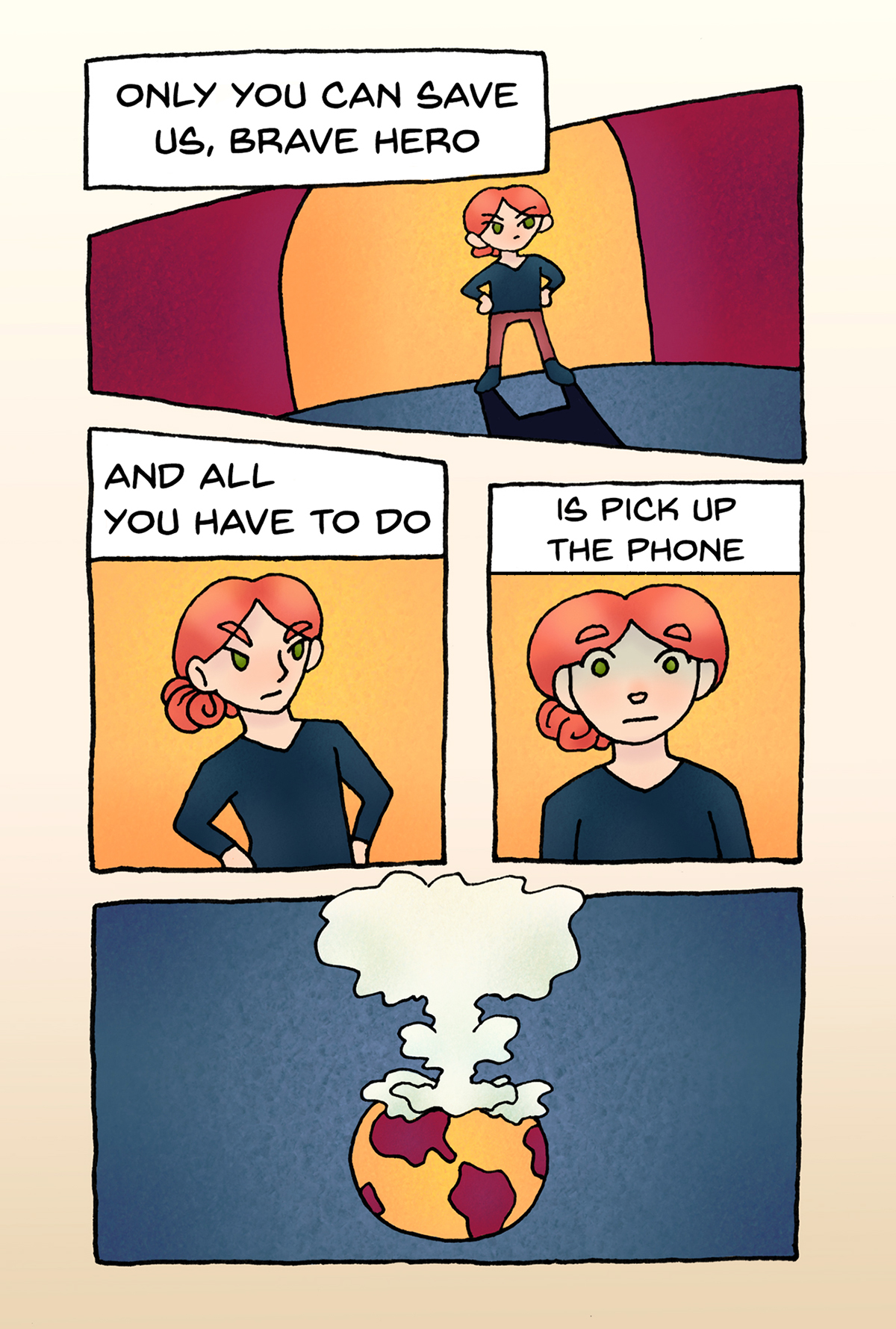
You Are Filled with Determination

I made this comic to psyche myself up to apply to a fandom zine I was 99% sure would reject me.

They did in fact reject me, but I’m glad I applied. While I was putting together a portfolio to submit to them, I realized just how far I’ve come with visual art, and this filled me with determination to keep improving.

I should acknowledge that this piece is also a study in paneling based on a page of Aliza Layne‘s fantastic graphic novel Beetle & the Hollowbones, which I can’t recommend highly enough. I worked with Aliza to create a short comic awhile back, and it was an incredibly inspiring experience!

A Short Hike

A Short Hike was released for Nintendo Switch about three weeks ago, and my only regret is that I waited so long to download it.

You play as an anthropomorphic bird named Claire who’s spending the weekend on holiday visiting her Aunt May in Hawk Peak Provincial Park, and your goal is to climb to the top of the mountain so that you can get reception on your phone. Since you’re a bird, you can jump down and glide whenever and wherever you feel the need. You can also fly for short periods of time, and you can collect Golden Feather upgrades to extend your flying time. There’s no combat, no danger, and no puzzles to solve. Although you’re free to go anywhere you like, the main climbing trail is clearly marked. If you get lost, you can just jump down and glide to an earlier point on the trail. It’s all very relaxing, and the soundtrack is adaptive, meaning that the music changes depending on the altitude and weather.

Because the game is so overtly referential, I don’t think it’s lazy to call it a cross between Animal Crossing and Night in the Woods. Some of the (completely optional) mechanics, such as fishing and digging up X marks on the ground, are pure Animal Crossing, as are the character designs. The dialogue never gets grim or dark, but it’s a little weirder and less performatively wholesome than Animal Crossing. The writing is unobtrusive but clever, and Claire has a lot in common with Mae from Night in the Woods.

Meanwhile, the exploration elements are very Legend of Zelda, and the game looks a lot like Phantom Hourglass and Spirit Tracks, from the cell shading to the head-to-body proportions to the 3D modeling of the landscape. There’s an option to increase the frame rate and make the graphics less pixelated, but the Nintendo DS style visual atmosphere is lovely even if you don’t harbor any particular nostalgia for that era of gaming.

If you go straight up and down the mountain, the game takes maybe half an hour to play, but you can easily spend another half hour going off on side trails and having conversations with the various people you meet during your climb. I imagine that you could spend even more time with the game if you wanted to find every Golden Feather and record every species of fish in your journal, but the game’s menu screen isn’t set up in a way that makes you feel compelled to do so.

I’ve read a few reviews that criticized A Short Hike for being too, well, short, but I don’t think that’s a problem. I am no stranger to the task of collecting all 900 forest sprite poos or evolving all 900+ species of battle monsters or getting all of my fantasy fighters to Level 99, but I also love being surprised and delighted by short, self-contained, and immensely satisfying small-studio games.

I’m not sure how I feel about Nintendo asking $20 for this game, which is a bit expensive for its category, but honestly that seems like a reasonable price to pay for the experience of a solid hour of uninterrupted joy.

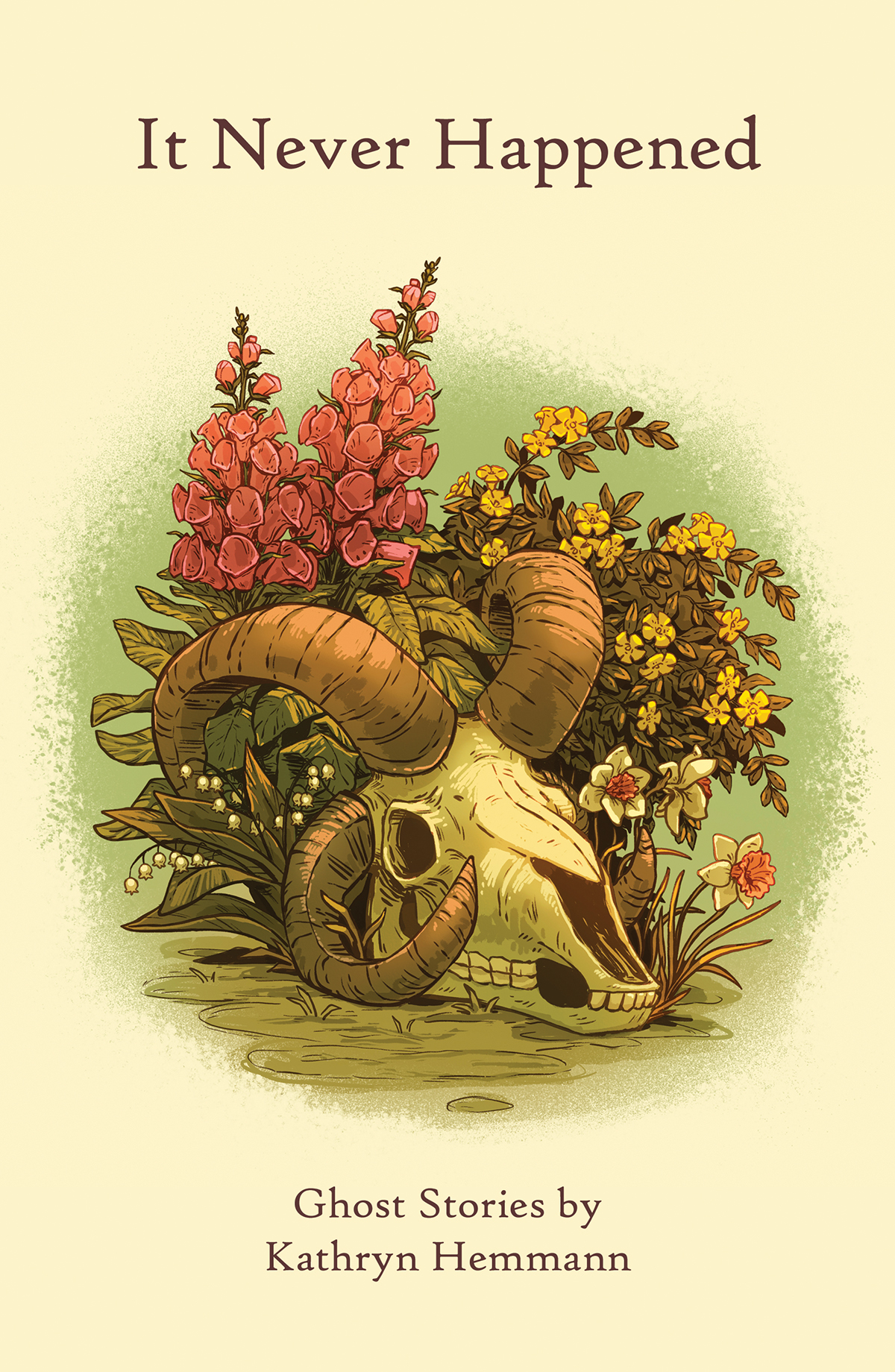
It Never Happened

It Never Happened is my second zine of horror-themed flash fiction. It collects fifteen very short stories, as well as a spooky comic (that you can find here) by the artist Frankiesbugs.

This is the zine description:

This zine collects fifteen short stories about finding oneself in strange circumstances and adjusting to a new normal. Nothing that takes place in these stories actually happened, of course. Most of what transpires is a little creepy, but it’s important to remember that none of this is real. If you read these stories, you might not be real either, but don’t let that stop you.

I love autobio comics, and a lot of these stories came from my failed attempts to write comic scripts. What I realized during this process is that it’s very difficult for me to talk about myself. Although I obviously have no trouble sharing my opinions, I never know what to say when I try to describe my own life. All of the stories in this zine are based on real experiences; but, as the title suggests, none of this ever actually happened.

Or rather, that’s not entirely true. One of these stories is 100% factually accurate, but I’m not going to say which one.

If you’re interested, there are still a few copies of this zine (on Etsy).

Malice

(The above illustration is by the amazing @mehkuno on Tumblr.)

In my writing logs, I keep mentioning the fanfic novel based on the Breath of the Wild sequel trailer that I’m writing, so I thought I’d try to describe the project. Here goes!

Story
When the long-dormant Guardians begin attacking Hyrule, Zelda, Link, and Ganondorf go underground to try to find the source of energy powering them.

Background Setting
This is an urban fantasy set in a modern-day version of Hyrule based on New York City. In this setting, the cave that Link and Zelda are exploring in the BotW sequel trailer translates to the sewer tunnels underneath the old site of Hyrule Castle, which has been converted into government offices. Everything that happened in BotW took place about three hundred years prior to the present day, but all mentions of magic, the Triforce, and the true nature of the Calamity have been erased from history. Ancient technology is exhibited in museums, but people treat it like art and have no understanding that it’s actually machinery. When the Guardians and other artifacts of ancient technology start going berserk, no one knows what’s happening.

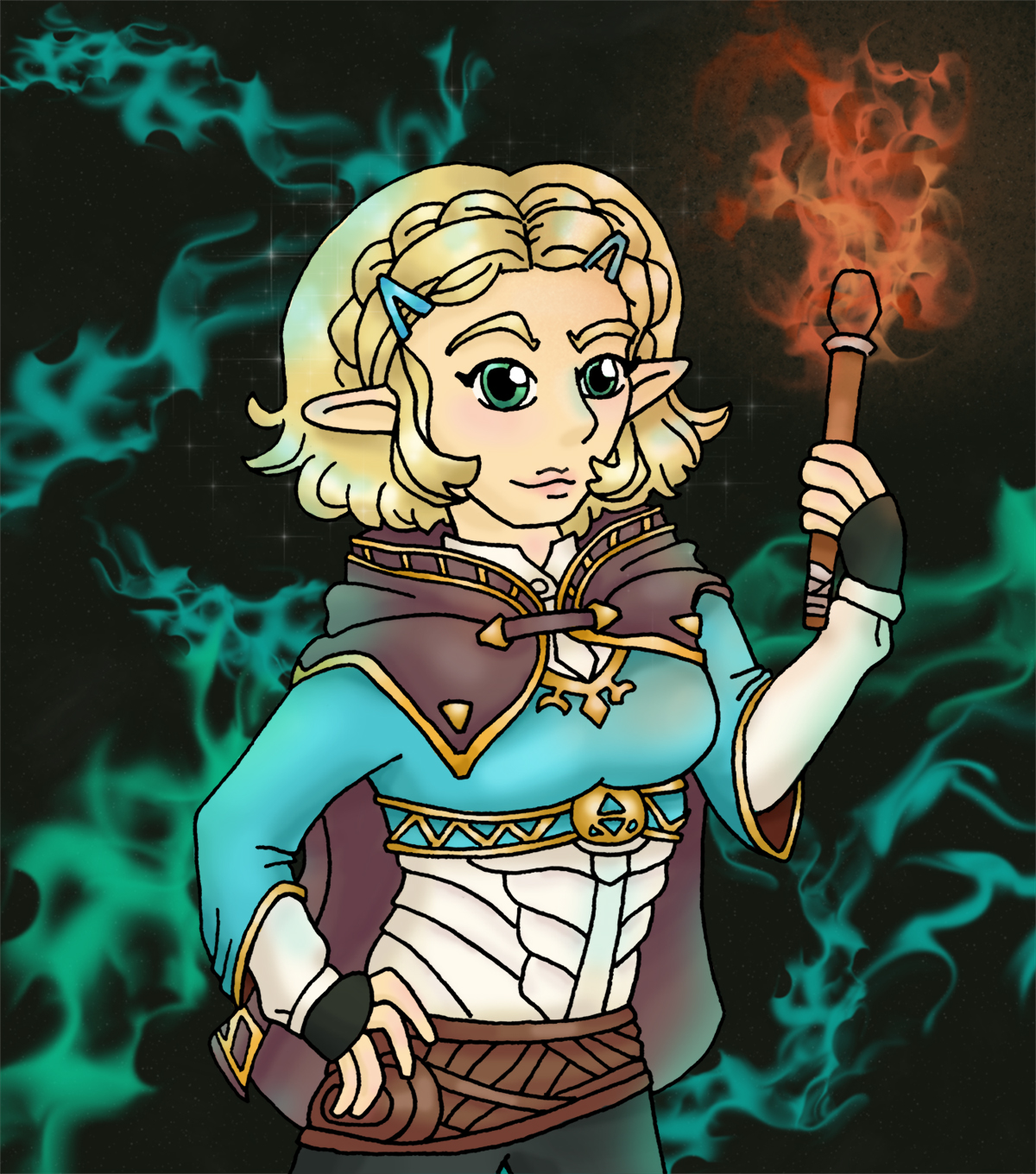
Zelda (visual reference)
Although she comes from a powerful political family, Zelda is interested in the history and functionality of ancient technology. She’s 26 years old and about one or two years out of a Master’s program in Chemistry. She wants to get away from her family’s influence, so she currently works as a lab technician. Her intention is to succeed through her own efforts while pursuing her research. She was reserved and uptight when she was younger, but her relationships with Link and Ganondorf have helped her to become braver and more self-confident.

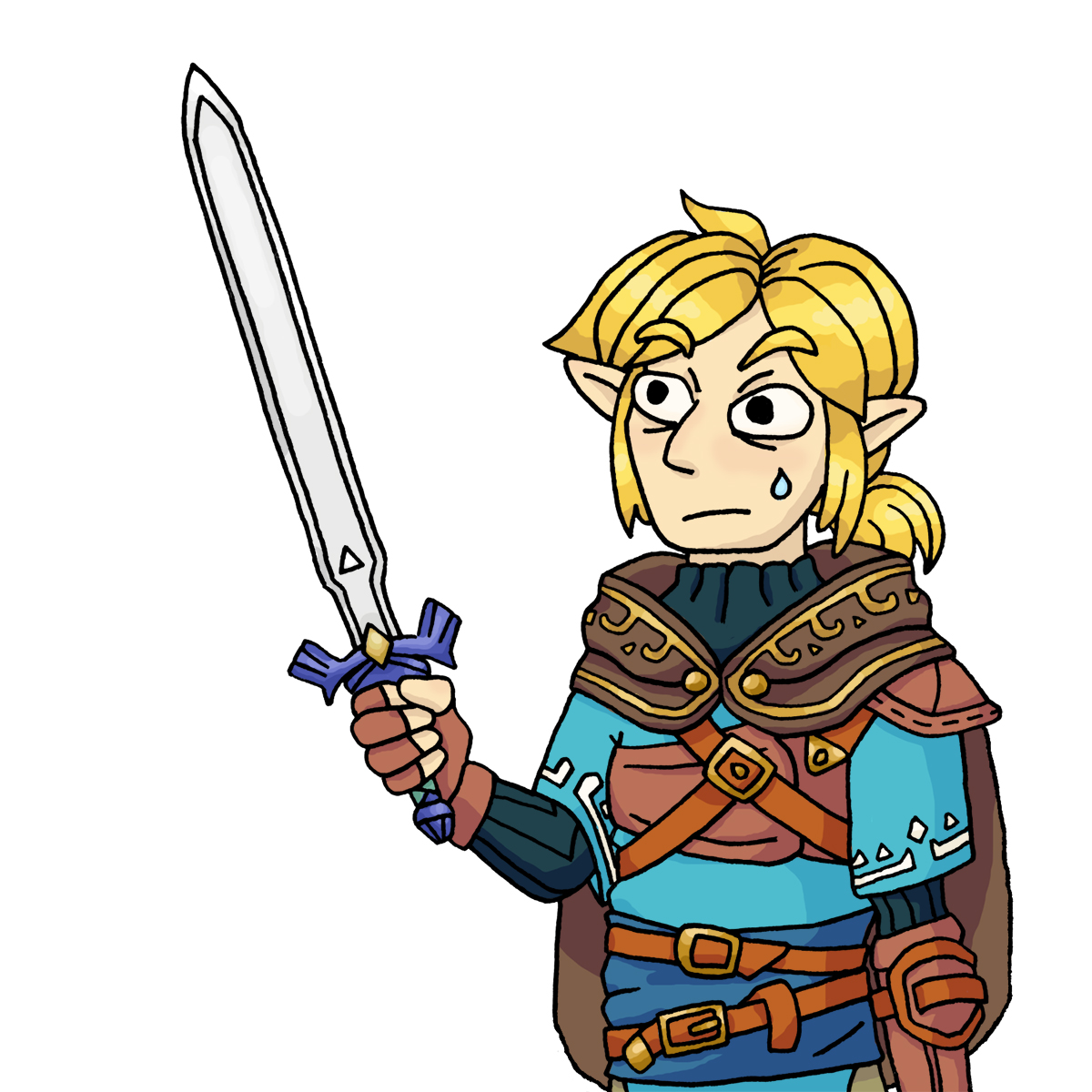
Link (visual reference)
He works as a courier for a delivery company, and there’s nothing he loves more than driving around Hyrule on his motorcycle. He’s into urban exploration and has a hugely popular account on Skyloft (Hyrule’s equivalent to Instagram). Like Link in BotW after he’s lost his memories of being constantly under pressure, this Link is easygoing, clever with his words, and a lot of fun to be around. He’s a year older than Zelda, and he gradually becomes friendly with her while making deliveries to her lab. As Zelda discovers odd inconsistencies regarding Hyrule’s history and technology, Link corroborates her suspicions by offering evidence of the strange things he’s seen with his own eyes in some of the city’s more out-of-the-way places.

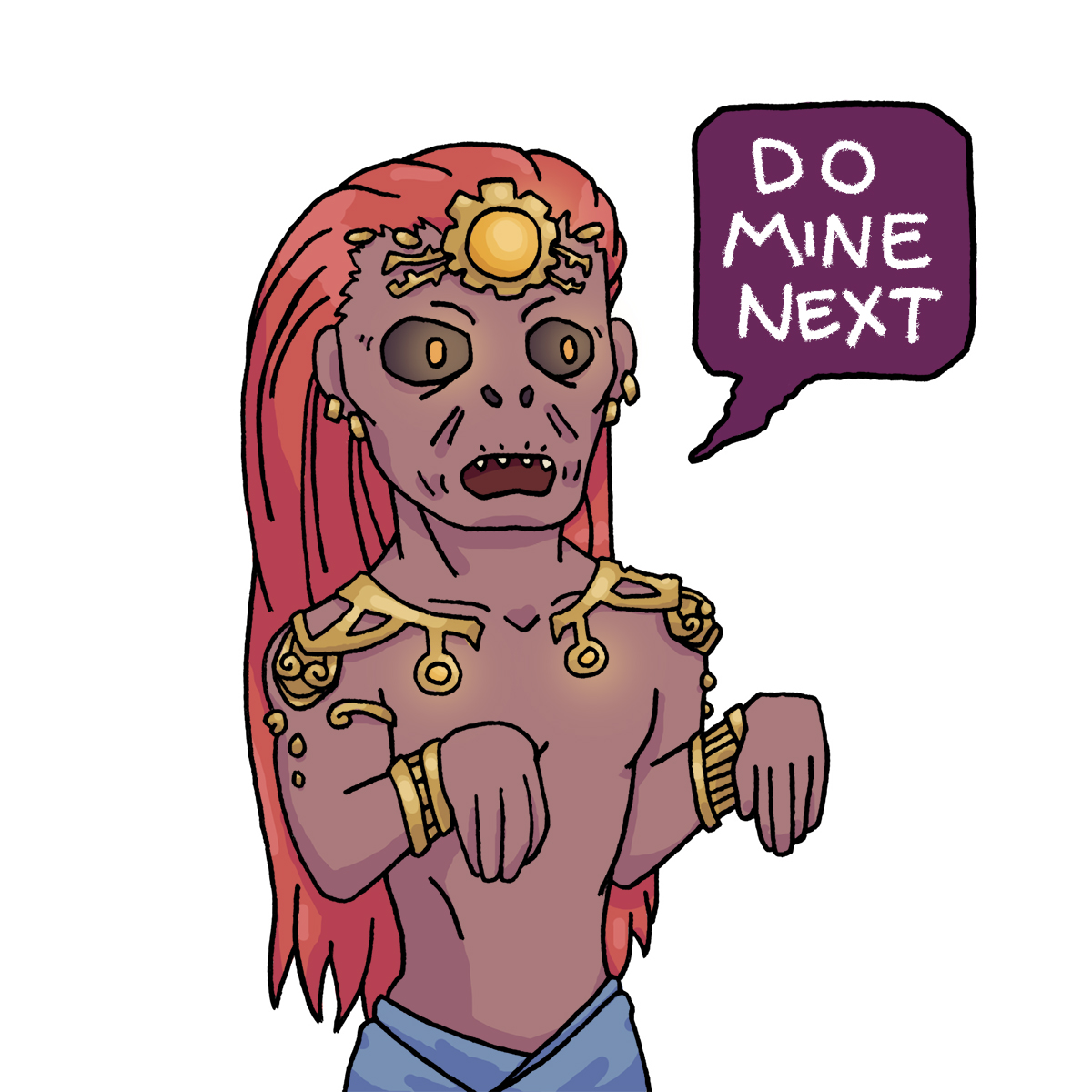
Ganondorf (visual reference)
He works at a prestigious investment firm that specializes in technology. He’s only around thirty years old, but he’s inhumanly good at what he does and has managed to become extremely wealthy. Unlike Zelda and Link, Ganondorf was never in doubt that magic exists, mainly because he himself is a powerful wizard who is able to control both hardware and software. He knows what ancient technology is and what it can do, and he’d like to figure out a way to make it profitable. When his path crosses with Zelda’s, he becomes interested in her research, and he inadvertently becomes friendly with Link in the process. He’s an intense and unpleasant person, but being with Link and Zelda mellows him out and helps give him a sense of humor and perspective.

. . . . . . . . . . . . . . .

I’m afraid that I may have misrepresented this story as a lighthearted adventure. It’s a psychosexual melodrama with some fairly dark themes.

Link is smart, hard-working, attractive, and charming, but he doesn’t come from privilege, so he’s been jumping from one pointless temp job to another. He does good and interesting work on social media, but he can’t monetize it, which makes him bitter. He doesn’t feel as though he’s allowed to express negative emotions, though, so he comes off as fairly shallow. Later in the story he is going to snap and go feral.

Zelda was horribly abused as a child by her family, who tried to use psychiatric medication to control her. She represents a conflict between science as an incredible driving force of civilization and science as a means of social control, but she’s also my vehicle for working through my own experiences with how I’ve been dehumanized by the mental healthcare industry.

What’s going on with Ganondorf is something of a spoiler, but it’s distinctly unpleasant. On top of some Akira-style body horror, he’s an immigrant in a country where there’s a distinct possibility that the police could arrest (or even murder) him for no good reason. Even though he has an excellent grasp on human psychology, he sees empathy as a luxury he can’t afford, and the way this mentality influences his behavior toward Zelda can be creepy and uncomfortable.

I don’t openly talk about mental illness, but Zelda and Ganondorf are both coping with intense trauma. Neither of them is mentally “healthy,” and I don’t clearly signpost their toxic behavior as such. There’s no violence or angst or abuse for the sake of being edgy, but there’s not a lot of healing. Their character development goes from “bad” to “bad in a different way,” with “empowerment” being an unhealthy but necessary response to horrible circumstances.

When I started writing, I told myself that I would allow this story to become as dark as it needed to be, and it has gone to some places.