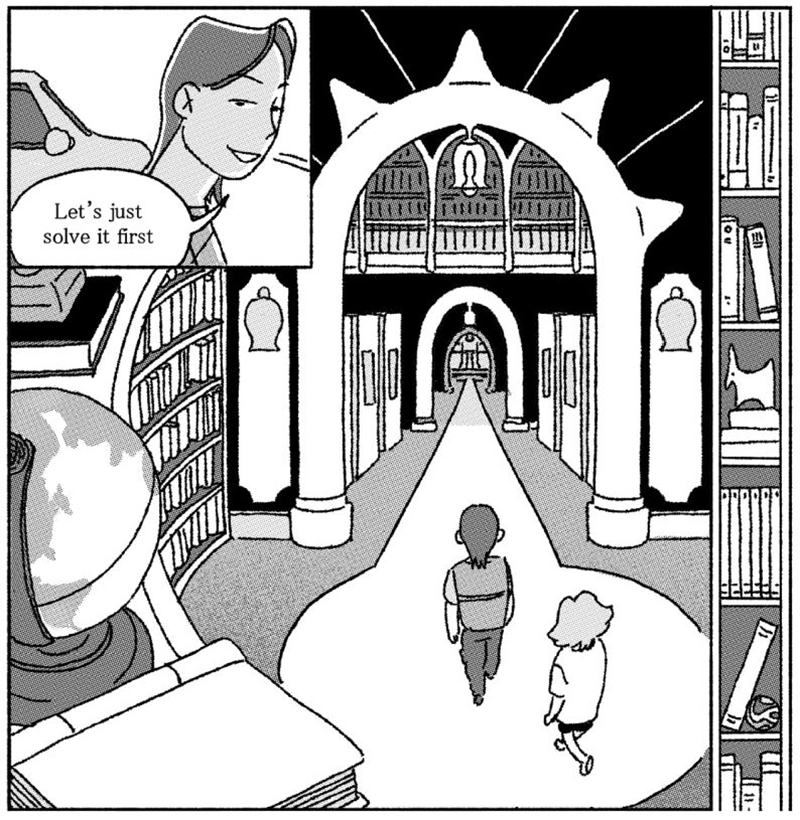
I really enjoyed Tan Juan Gee’s Model Five Murder, which was just published by Silver Sprocket. This graphic novella is an intriguing sci-fi noir mystery with stylish art that investigates the issues of AI, technology, and labor. I’m very lucky to have been able to write a review for Comics Beat. Here’s an excerpt…
Model Five Murder is a thematically rich murder mystery that plays with the question of whether concepts like “victim” and “murderer” have any meaning in a situation involving artificial life and artificial intelligence. If memories and consciousness can be transferred between bodies, is it murder to shoot an android? If androids are proprietary technology owned by a corporation, who has the legal right to make decisions about their bodies?
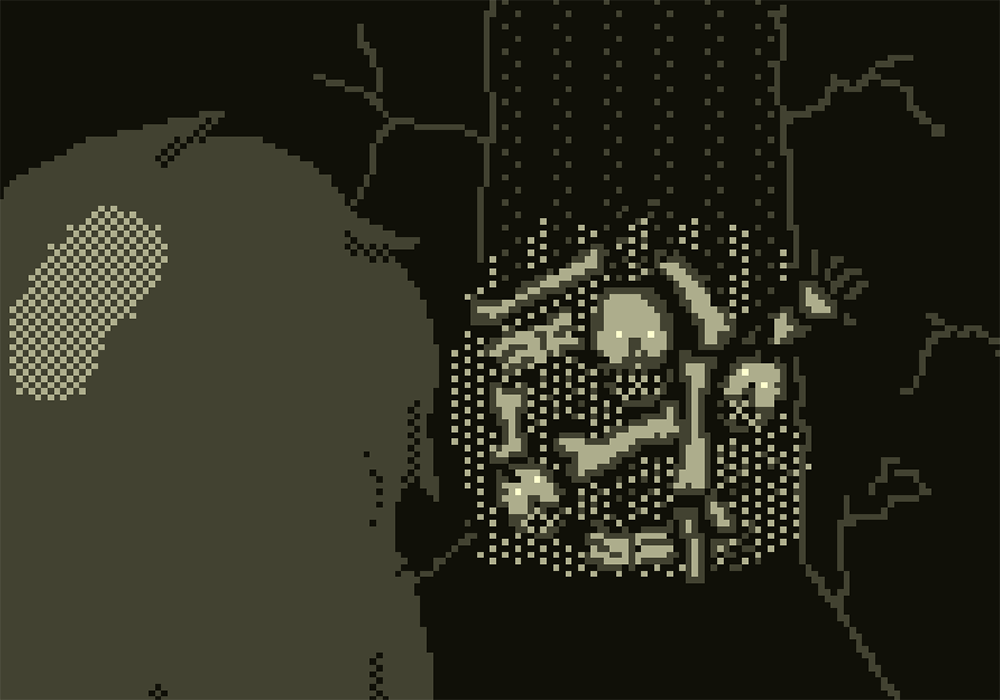
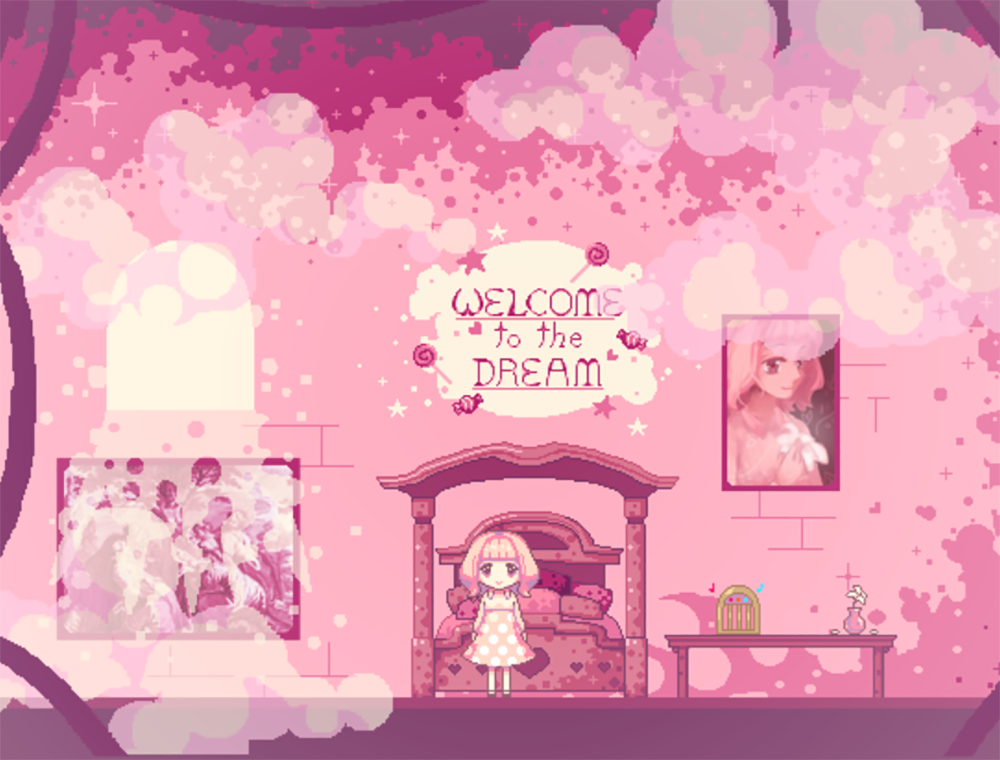
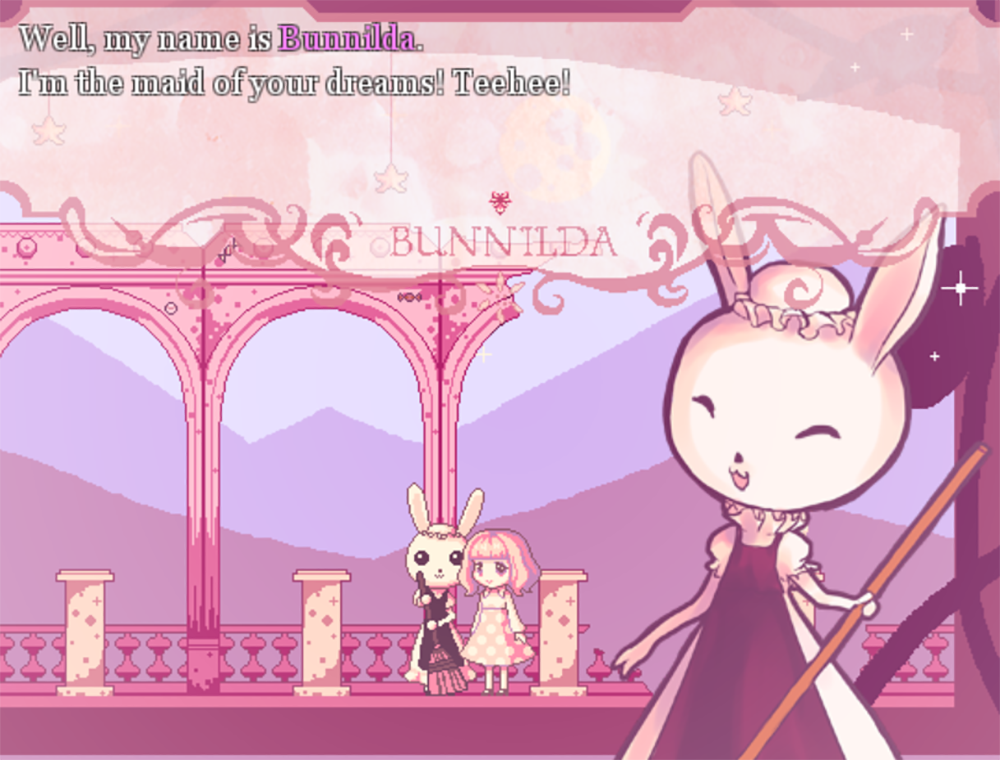
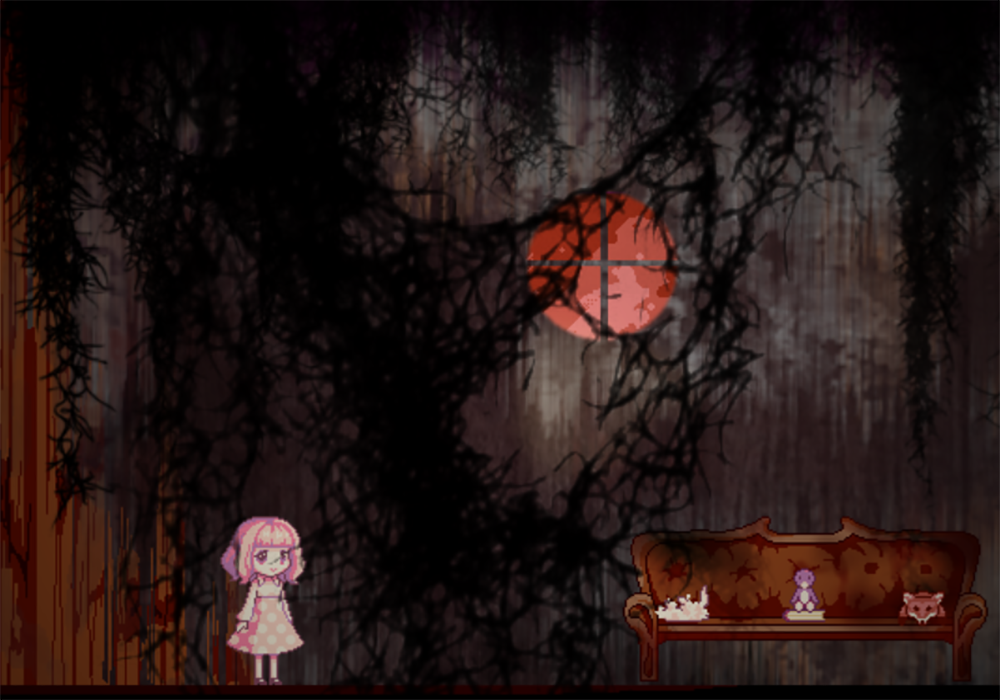
Escaped Chasm is a 25-minute dark fantasy adventure game created in RPG Maker with a mix of retro Game Boy graphics and anime-style cutscenes. Originally released in 2019, it’s the first stand-alone project of Temmie Chang, a longtime collaborator of Toby Fox who contributed character designs and graphics to Undertale and Deltarune.
You play as a young teenage “Lonely Girl” who doesn’t leave the house and lives vicariously through her dreams and art. Her parents appear to have gone missing, and she doesn’t know what to do. To make matters worse, she’s tired all the time, and a strange man has started appearing in her house.
Something is seriously wrong, and the Lonely Girl has four days to figure it out and escape. If leaving the house isn’t an option, where can she go? And how can she find the courage to leave?
Escaped Chasm is free to download, and the zip file contains an illustrated guide to the game’s four endings. I get the feeling that most players will probably see the good ending simply by playing the game naturally, but it’s nice to have grimdark alternatives. After unlocking the good ending, the player is able to enter and explore a bonus “developer’s room” that I love with all my heart. It’s fascinating to read Chang’s thoughts about making the game while checking out extra material that fills out a few gaps in the story.
Both Toby Fox and Temmie Chang were fans of and contributors to Homestuck, and it’s possible to see its influence on Escaped Chasm. It’s difficult to summarize Homestuck, but the webcomic begins as a story about four young teenagers who can’t leave their houses because they’re the last remaining survivors of a universe that’s unraveling around them. I get the sense that the Lonely Girl in Escaped Chasm is based on one of the four teenagers in Homestuck, Jade Harley, and it’s probably not a coincidence that she’s found herself in a remarkably similar situation.
Escaped Chasm is like a bridge between Homestuck and Deltarune in its theme of “using art and imagination to escape into another world,” but it’s also very much its own thing. I love Chang’s illustration style and narrative voice, and I admire how she pushes the boundaries of the medium to create a palpable sense of liminality and dread – and of catharsis and joy. Escaped Chasm is atmospheric horror with a (potentially) happy ending, and it’s idiosyncratic and self-indulgent in interesting ways that elevate it above the level of mere pastiche.
Escaped Chasm is a short test project made in preparation for Dweller’s Empty Path (on Itch.io here), a more extensive Game Boy style narrative adventure game. I really enjoyed Escaped Chasm, and I’m looking forward to jumping into Dweller’s Empty Path.
Symbiosis is a free-to-play RPG Maker horror game about a murderous mad scientist living in a house in the woods with an adorable child. The story has two endings, and it takes about 25 minutes to play through the game once.
You play as Magnolia, a geneticist who left her university post after a mysterious fire broke out in her lab when her research came under public scrutiny. She now lives in isolation with Mint, a curious and precociously intelligent young boy whom she’s raising as her son. According to local rumors, Magnolia is a witch. It doesn’t help that hikers have a tendency to disappear in the forest surrounding her property.
The game begins as Magnolia carves up the corpse of someone she caught sneaking into her house. She’s interrupted by Mint, who can’t sleep and wants a bedtime story. Unfortunately, there are three more intruders in the house, and Mint won’t stay in his room. Your job as the player is to turn the remaining intruders into corpses – for science! – while ensuring that Mint remains out of harm’s way.
Magnolia’s house isn’t too terribly large, but it’s big enough to have all sorts of nooks and crannies to poke around, as well as various journals and research notes to find. The player can use these clues to figure out who Magnolia is and where Mint came from, although you’ll have to make your own decision regarding Magnolia’s feelings toward Mint and what the fate of the pair will be. The game’s creator has posted a guide for the two endings (here), and this short devlog also contains their thoughts on the story and characters.
What sets Symbiosis apart from the crowd of RPG Maker horror games is the creator’s gleeful willingness to allow Magnolia to be messy and problematic. She initially seems to be a complete sociopath, and her bad behavior is a joy to watch. As you witness her interactions with Mint unfold, however, her character becomes more complicated. Why Magnolia feels affection for Mint is open to interpretation, but I think it’s fair to say that her attachment is genuine.
The way I interpret this relationship is that it’s an analogy for the process of artistic creation (or scientific discovery, as the case may be). In order to create something meaningful, an artist has to be unpleasant, selfish, and more than a little antisocial. Gradually the art comes to take on a life of its own, and it’s up to the artist to decide whether to let it go or to keep it firmly in the orbit of their own dysfunctional personality.
Lest you think I’m spoiling the story, fear not – there’s all sorts of nasty business in Magnolia’s past for the player to discover. This woman is a legitimately horrible person, and her crimes are fantastic fun.
Symbiosis tells a short but grisly story through simple narrative adventure gameplay intercut with stylishly illustrated cutscenes, and I enjoyed it enough to go back and see both endings. I definitely recommend this game to fans of gothic horror, demonic women, and questionable scientific ethics.
I’m excited to say that my essay “Final Fantasy VII Confronts Capitalism: Tifa Lockhart vs. Medical Debt” is now on Sidequest (here)! 👊🌟
I recently read the official Final Fantasy VII Remake prequel novel, Traces of Two Pasts. I was fascinated by Tifa’s backstory, especially how she was driven to the starting point of the game by medical debt. I hadn’t come across a serious discussion of this book in fandom or elsewhere, so I wanted to write a short but accurate summary with substantial analysis. My goal was to situate the book’s anti-capitalist themes in the context of the game’s story, Japan’s economic recession in the 1990s, and our current hellworld.
Here’s an excerpt from my article…
Tifa is twenty years old at the beginning of Final Fantasy VII. Despite her youth, she’s calm and level-headed, yet Tifa willingly becomes a member of Avalanche, an armed militia that conducts terrorist attacks on Midgar’s power grid. Though she questions the use of violence, Tifa understands that aggressive action is necessary.
The juxtaposition between Tifa’s personality and her involvement in an active terrorist organization begs the question of how such a kind and gentle woman could become so politically radicalized. The question Kazushige Nojima asks in Traces of Two Pasts is much sharper: under the circumstances, how could she not? If you had to walk in Tifa’s shoes, wouldn’t you become radicalized too?
I consider myself extremely fortunate to have been an early reader of Antoine Revoy’s newest graphic novel, The Harrowing Game. I love this book, which is strongly inspired by Junji Ito but still very much its own thing. I’m also lucky to have gotten an opportunity to write a review for Comics Beat. Here’s an excerpt…
The Harrowing Game will delight fans of Junji Ito and H.P. Lovecraft, to be sure, and connoisseurs of horror will appreciate Revoy’s intriguing interpretations of familiar tropes. Revoy twists gothic stories into broken reflections of cultural anxieties, and the storytelling is no less dramatic for the subtlety of its social commentary. If nothing else, it’s a pleasure to get lost in the details of Revoy’s spectacular illustrations. Whether you’ll be able to find your way out untouched and undisturbed is another story.
Flesh, Blood, & Concrete is a free-to-play RPG Maker adventure game that bills itself as “an apartment building exploration simulator.” During its 45-minute playtime, the game delves into themes of isolation, mental illness, and existential dread within the confines of a decaying apartment complex.
Players take on the role of Lera, a 28yo architect whose car breaks down in the snow. While seeking refuge from the cold, Lera meets a girl named Nika who, inexplicably, is dressed like an anime maid. Nika invites Lera to warm up inside her “house,” a giant abandoned apartment block at the edge of an unnamed town. As Lera, the player is given free rein to explore the building. The deeper inside you get, the stranger the architecture becomes, and it turns out that the “flesh and blood” of the title are not merely symbolic.
Flesh, Blood, & Concrete has no combat or puzzles. Instead, players explore the building and interact with the environment. In essence, your job is to collect items, which you can examine in the game’s small menu screen at your leisure. As you move from floor to floor and poke around all the vacant units, you gradually piece together Lera’s backstory through environmental storytelling and occasional conversations with Nika.
While the game’s pacing might feel a bit slow, the deliberate sense of space between incidents gives the player time to reflect on what exactly is going on with Lera. In my interpretation, Lera’s interactions with Nika hint at her desire to flee from the adult world, and I don’t think it’s a stretch to suggest that the dilapidated building is a manifestation of the intensity of Lera’s depression. At the end of the game, the player is confronted with a symbolic choice (the mechanics of which are explained in the creator’s spoiler-free guide), and what constitutes the “good” ending is open to interpretation.
In keeping with the bleakness of the game’s themes, its pixel art is rendered in muted tones. The corridors are desolate stretches of flickering lights and peeling wallpaper, and the individual apartment interiors start off as charming and cozy but gradually descend deeper into the uncanny. The game’s soundtrack complements its visuals, with a blend of ambient sounds and minimalist synth piano pieces working to create a melancholic mood. Any sense of nostalgic coziness won’t last, however – some of the game’s visuals are sublimely gory.
As an aside, I recently played the indie narrative adventure game Indika, and I was thinking that I’d love to see more games set in Eastern Europe. Flesh, Blood, & Concrete is a universal story, but the specificity of the game’s Russian setting adds a unique and interesting flavor to its narrative and visuals. I also appreciate that this “apartment exploration simulator” takes the darker aspects of mental illness seriously but still delights in the playfulness of its morbid style of creative expression. It’s one of the more intriguing RPG Maker horror games I’ve encountered, and I’d recommend giving it a shot if you can handle the (literal) viscerality of its imagery.
The mountains overlooking Kakariko Village are one of my favorite places in Breath of the Wild.
Most players will visit Kakariko Village early in the game, and it’s possible for a more experienced player to climb the surrounding hills and venture into the mountains. Link can find Koroks by solving little environmental puzzles (in this case, putting an apple in the offering plate in front of the frog statue), and the optional hunt for Koroks encourages the player to explore the hidden corners of the map. There’s no meaningful material reward for finding this Korok, but the scenery is impressive. This experience of discovery is a perfect example of what I love about video games – the joy of the journey.
It’s hard to say I have a favorite game, but I’m a big fan of Breath of the Wild. I live in a neighborhood of Philadelphia that has almost no plants or trees, and the beautiful landscapes in this game provide a much-needed immersion in green space while inspiring me to engage in urban gardening. I love open-world games in general, but Breath of the Wild is the first one I played and the one I keep returning to.
This illustration was my submission to the Videogames Zine published by Coin-Operated Press, a cool zine community based on Scotland that’s open to people from all over the world. You can follow them on Instagram (here), where they post news about events and upcoming calls for submissions.
I’m honored to have been able to share a review of the recently published graphic novel Low Orbit on Comics Beat. Kazimir Lee’s debut is about dead malls in Vermont, sci-fi fan conventions in New York, epic space adventures, real-life queer identity, and everything in between. It’s an extremely ambitious story, and I’m in awe of the artist’s ability to pull it off with nuance and sensitivity – and also with some fantastic action scenes. Here’s an excerpt from my review:
At the end of Low Orbit, what lingers is the sensitivity with which Lee captures the slow and often painful process of becoming a person. Azar doesn’t find neat resolutions to her problems, and the adults around her remain as flawed as she is. Still, there’s a quiet clarity in how Azar begins to see them as fellow travelers on an uncertain path. Low Orbit is a stunning debut that’s just as fascinating as adolescence itself, and just as full of hard truths and unexpected kinships.
I’m excited to share a short story titled “Urban Gardening with Aerith Gainsborough,” which is based on the Final Fantasy VII Remake prequel novel, Traces of Two Pasts. This story is about Aerith’s relationship with the planet, especially how it manifests through her love of plants and flowers.
Despite the nurturing elements of her personality, something I love about Aerith is that she’s always kind but never fails to speak her mind. There’s an edge to her personality that I can’t help but admire, especially when she’s being passive-aggressive. It’s always fun to write characters who have this sort of complexity.
On a personal note, I live in South Philadelphia, which is about as close as you can get to the Sector 5 slums in real life. I played FFVII Remake for the first time last October, and I fell so head-over-heels in love with Aerith that I was inspired to begin planting flowers in my neighborhood. I know it sounds trite to say “Aerith is an inspiration,” but she really is.
The illustration of Aerith showing off the small garden at the Leaf House orphanage was created by the bright and shining Artofpipeur, who posts colorful character portraits on Instagram (here).
Aviary Attorney is a four-hour visual novel modeled on the Phoenix Wright series and set in Paris in 1848, right on the cusp of the revolution that ushered in the Second Republic.
You take on the role of Jayjay Falcon, a private defense attorney. Jayjay is shadowed by his apprentice Sparrowson, who provides comic relief, and he often butts heads with his rival, the brilliant but arrogant prosecutor Cocorico. The game’s story plays out across four trials. In the days leading to the trial, Jayjay has the opportunity to collect evidence and testimonies by investigating various locations in Paris. During the trial, Jayjay is given the opportunity to present relevant evidence and cross-examine a key witness.
The characters are styled as animal-headed caricatures lifted directly from the line illustrations of J. J. Grandville, an illustrator active in the first half of the nineteenth century known for his detailed line art and his razor-sharp political commentary. As explained in the game’s credits, all of the artwork in Aviary Attorney was taken from Wikipedia and the Internet Archive, and Allison Meier’s article on Hyperallergic (here) presents Granville’s illustrations in their original context. Given how seamlessly all of the game’s assets are integrated, however, a player might be forgiven for assuming that they were custom made. This is a very good-looking game.
Although the story doesn’t strive for realism, the writing is excellent. Each trial has a dramatic twist at the end, and I thought these developments were great fun. If you enjoy ladies doing murder, I think you’ll have a good time too. Even more than the crime, however, what I love is the opportunity to explore Paris while speaking to people from all walks of life and gradually coming to understand why the February Revolution happened.
I also appreciate that, unlike the Phoenix Wright games, the focus of the trials in Aviary Attorney isn’t on catching the culprit or assigning guilt, but rather on ensuring that the accused receives due process under law. Revolution is all well and good, but I admire the characters’ commitment to upholding the practice of civil society. If you manage to achieve the game’s best ending (which I did by using this guide), you’ll learn that Jayjay Falcon is the grandson of Robespierre, the great eighteenth-century French legal theorist. This isn’t a political game, but it’s always a pleasure to see writing that devotes careful attention to historical details while putting itself in conversation with the philosophies of the time.
Aviary Attorney is an interesting exercise in how public domain works can be transformatively reconfigured into contemporary media, but it’s also a great game. Obviously I’d recommend Aviary Attorney to fans of Phoenix Wright and to connoisseurs of visual novels in general, but I really want to encourage anyone who enjoyed the themes and message of Pentiment to give this game a chance. It’s got excellent writing, a unique visual appeal, and a satisfying sense of historical specificity.