Animal Well

Animal Well is a no-combat puzzle platformer with an open-world Metroidvania structure. You play as a small seed navigating a mossy system of underground tunnels. The game has no dialogue or diegetic text, nor does it need any. Your job is simply to explore.

Because this is a video game, however, the player needs objectives. Early on in the game, the little seed arrives in what appears to be a central hub with statues of four animals. Each animal’s flame is sealed in a themed quadrant of the map. Although your map is mostly blank at the beginning, the location of each flame is marked, giving you four goals to work toward. Navigation is anything but simple, however, and figuring out where you’re supposed to go is just as much of a puzzle as any of the one-room set pieces.

Since Animal Well gives you so many paths to choose from, the beginning can be confusing. In many ways, this game reminds me of Hollow Knight and Hyper Light Drifter, which are similarly cagey about where the critical path might lie. Thankfully, there’s no wrong way to play Animal Well, so you’ll be fine if you simply choose a direction and start walking. Once you make your way into a level proper, the path forward becomes much easier to follow.  

As you might guess from the title, the vast underground well that serves as the setting of the game is filled with animals that theme the puzzles. In the dog level, for example, you’ll need to find a frisbee that you can throw to distract the dogs that chase after you. In the seahorse level, fish blow bubbles into the air that you can use to reach higher platforms. In the chameleon level, you’ll need to adjust the path of wall-climbing hedgehogs so that they hit otherwise inaccessible switches.

Animal Well offers the player a beautiful and evocative environment to get lost in, and it’s nice to see such a well-designed game that focuses on exploration instead of combat. Most of the platforming puzzles are relatively easy but still very clever, which I appreciate. The pixel art is gorgeous and atmospheric, and each area manages to express its theme while still maintaining a unified aesthetic that ties the various ecosystems together. There’s not much music, but the sound design is fantastic.   

If I have one complaint about Animal Well, it’s that the map is riddled with secret passageways that are completely unmarked. In addition, you can only make it so far into each level without the aid of a tool from another level. In theory, this means that there are eight levels instead of four. In practice, it can be frustrating not to know whether you can’t proceed because you need a tool from a different level or whether you simply missed a hidden path. Unless you happen to be either very good (or very patient) with this sort of thing, I’d strongly recommend playing Animal Well with a walkthrough.

It’s impossible to say how long Animal Well takes to play. According to reviews, it has the potential to be a five-hour game, but I get the feeling that the majority of players aren’t going to have such a smooth experience. If I had to guess, I’d say that most first-time players should expect to spend at least six or seven hours getting to the end. After that, there’s potentially another ten hours of exploration enabled by the tools you find at the end of the final area.

Is the cleverness and charm of Animal Well worth the aggravation of getting lost and not knowing what you’re supposed to do? That depends on the player, of course, and it’s worth saying that this isn’t a casual game. Still, although I wish Animal Well were less opaque, I appreciate that it’s not actually difficult. Exploration is always rewarded, and I never stopped being surprised and amazed by each new bit of the game I managed to find. Every single screen in Animal Well is a work of art.

After finishing Animal Well, I read the TV Tropes page to see if there’s an actual story to the game. Perhaps you can unlock a different ending if you can manage to find all the collectables? From what I can tell, there’s no real story no matter what you do, but there are collectables underneath collectables underneath collectables. There’s also an ARG. None of that is any of my business, but it’s cool I guess. I always appreciate when the people who created a game were living their best lives, and I’m happy to have an excuse to spend more time poking around the beautiful mossy tunnels of Animal Well

Ms. Weaver’s Halloween Candy

I’m proud to see my story “Ms. Weaver’s Halloween Candy” in the newest issue of Suburban Witchcraft.

“Ms. Weaver’s Halloween Candy” is a magical realist suburban gothic fantasy about love, creativity, and the (human) sacrifices necessary to survive as an outsider in academia. The piece begins as a Stephen King style story about a kid on a bike investigating a local legend in a small college town, but it gradually unravels into a veiled reworking of the Ariadne myth as the protagonist learns that the ambitions of her mother extend far beyond the confines of her family.

Suburban Witchcraft Magazine is a gorgeous digital repository of weird writing with a literary bent, and each issue is free to read online. You can check out the issue with my story here:

📚 https://suburbanwitchcraft.com/issue6

Mr. Saitou

Mr. Saitou is an Undertale-style narrative adventure game (with music by Toby Fox) that takes about two hours to finish. You play as Saitou, a white-collar worker who finds himself in the hospital after a failed suicide attempt triggered by stress and overwork. While sleeping, Saitou dreams of himself as a llamaworm (a comically extended groundhog) who goes on an adventure with a cute pink flowerbud named Brandon, the dream persona of a young child Saitou meets in the hospital.

Mr. Saitou has something of slow start, during which the player’s sole job is mashing a button to advance text. Thankfully, the game becomes much more engaging after the first ten minutes, at which point Saitou enters the dream world.

After the introduction, Saitou spends about half an hour in an office of llamaworms that serves as a stage for a gentle comedy about workplace culture. After a ten-minute segment of mandatory afterwork socialization in an izakaya, Saitou returns home to his neighborhood of underground tunnels.

Saitou decides to skip work the next day. This gives him an opportunity to meet Bradon, who wants to visit the Flooded Gem Caverns deeper in the tunnels. The remainder of Mr. Saitou unfolds in a beautiful fantasy-themed underground space enhanced by lowkey elements of exploration and simple puzzles.

What I appreciate most about Mr. Saitou is its creativity, which is driven by cute but thoroughly original character designs and clever writing. Even though most of the gameplay consists of simple conversation-based fetch quests, I never got tired of seeing what was around the next corner, and I always enjoyed talking with each new character.

The game’s humor sits comfortably at the intersection between wholesome and quirky, and the writing subtly references internet culture without relying too heavily on these allusions. The simple spatial puzzles are easy and engaging without feeling as if they were phoned in, and the thematic background music is lovely from start to finish.

I love almost everything about Mr. Saitou, but I should probably mention that there’s an unskippable musical cutscene featuring about three minutes of unremittingly flashing strobe lights toward the end. If you (like me) are photosensitive, this may be worth taking into consideration.

In addition, the sentimentality of the ending may ring hollow for players searching for a more nuanced or complicated story, especially regarding the extent of an individual’s personal responsibility for ensuring their quality of life under late-stage capitalism. This is a valid criticism, of course, but Mr. Saitou is a game about a llamaworm and a talking flower having magical underground adventures. All things considered, I think it’s probably best to enjoy the game for what it is.

Mr. Saitou is a sweet but still surprising game that’s entertaining to read and engaging to play, and I feel that its story earns the right to state its final message clearly: The world is filled with interesting people and beautiful places, and there’s more to life than slowly killing yourself for your job. Good health is a blessing, so you might as well make the most of your time on this earth while you’re still young.

Deepwell

Deepwell is an Undertale-style narrative adventure game that takes about two hours to finish. You play as a blank slate character called “the Cartographer” who has recently arrived in the small forest town of Deepwell, which clings to the southern rim of a massive hole in the ground. Oddly enough, anyone who descends into the hole beyond a certain point gets “blipped,” meaning that they appear at the top of the hole as if nothing had happened. Generations of mystery hunters have sought the solution to this puzzle, but perhaps you might be the one to finally figure it out.

Deepwell is only about two dozen screens large, and there are five main characters to talk to. Most of the game involves engaging in long and meandering conversations with these characters in order to learn their stories. Sokolov manages the town library, and Evan runs the general store. Pierre has created something resembling an art gallery on one side of town, while Lily lives in a field of flowers on the other. At the intersection next to the highway, a robot named Bing helpfully provides information to visitors.  

It stands to reason that everyone living in such an isolated town would be a little weird. Aside from Bing, who is essentially a tutorial robot, each character is a self-contained short story that gradually unfolds as you talk with them. Thankfully, there are no wrong conversation choices, nor is there any missable content. The player is free to walk where they like and talk with the characters as they wish while unlocking a few extra conversation topics by interacting with each character’s environment.

On the eastern edge of town is a waterfall that hides a secret cave. Glyphs drawn onto the wall of this cave indicate whether a character’s dialogue has been exhausted. Once the Cartographer has sufficiently spoken with each of the town’s residents, a new path will open deeper into the forest to reveal a sixth character, who tempts the player with the possibility of an alternate (and much darker) ending.  

You can actually end the game any time you want by simply heading back to the highway and leaving town. You can also choose to wrap up the story at any point by taking a boat across the lake to see what’s on the north side of the giant hole. Although you’re given a choice in the final section of the game that affects the ending, I think Deepwell ties up its thematic threads quite nicely. This is a story about personal purpose and fulfillment, and about why we need art and mystery. How you approach these themes within the context of the game is up to you.

The graphics are primitive yet charming. I was put off by the crunchiness at first, but the lo-fi aesthetic grew on me. Deepwell contains a surprising number of insert illustrations and cutscenes, some of which are extremely well done. This is especially the case with Pierre, whose gallery of art installations closes with a remarkable set piece. I get the feeling that some players may find Pierre pretentious, but I appreciate his sincerity. And he’s not wrong about how visual glossiness is often a disguise for mediocrity. 

Deepwell is akin to a short story anthology that’s easy to pick up for twenty minutes at a time, but I ended up being so fascinated by the overarching narrative that I played the whole game in one sitting. The writing is exceptionally good. It gives me immense joy to know that something like Deepwell exists in the world, and I honestly feel that I’m a better person for having spent time with it.

Deepwell is free to play on Steam here:
https://store.steampowered.com/app/2803660/Deepwell/

Sidequest Article on A Link Between Worlds

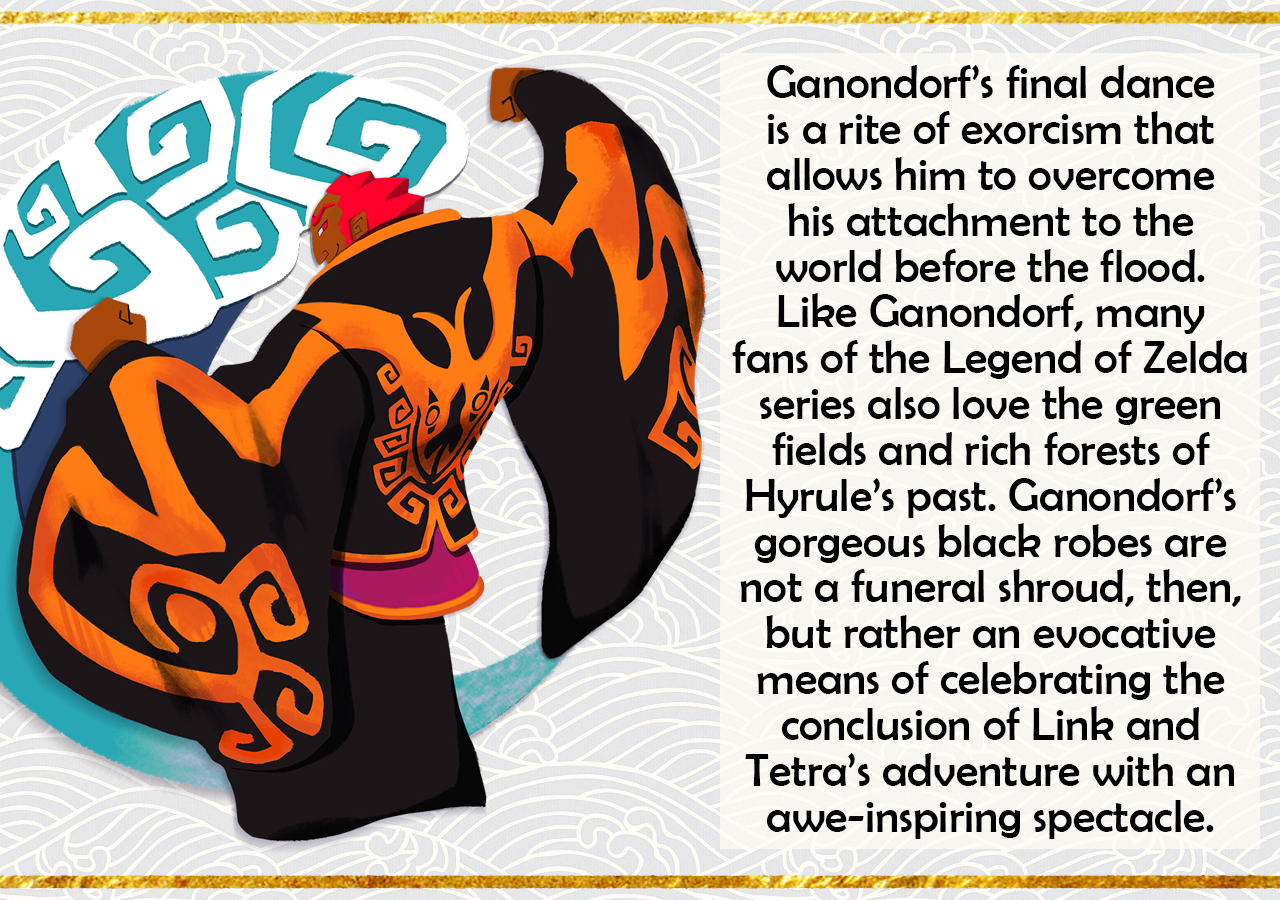
I had the pleasure of writing a fun article for Sidequest about how A Link Between Worlds is a perfect cozy horror game to play during the long summer evenings. It’s a dark twist on Legend of Zelda series traditions and one of my favorite adventure games.

If you’re interested, the article is here:
https://sidequest.zone/2024/08/05/spooky-zelda-game/

Many kudos to the magical LunarChibistry for creating the lovely artwork of Princess Hilda in the promo graphic!

Everyday Heroines

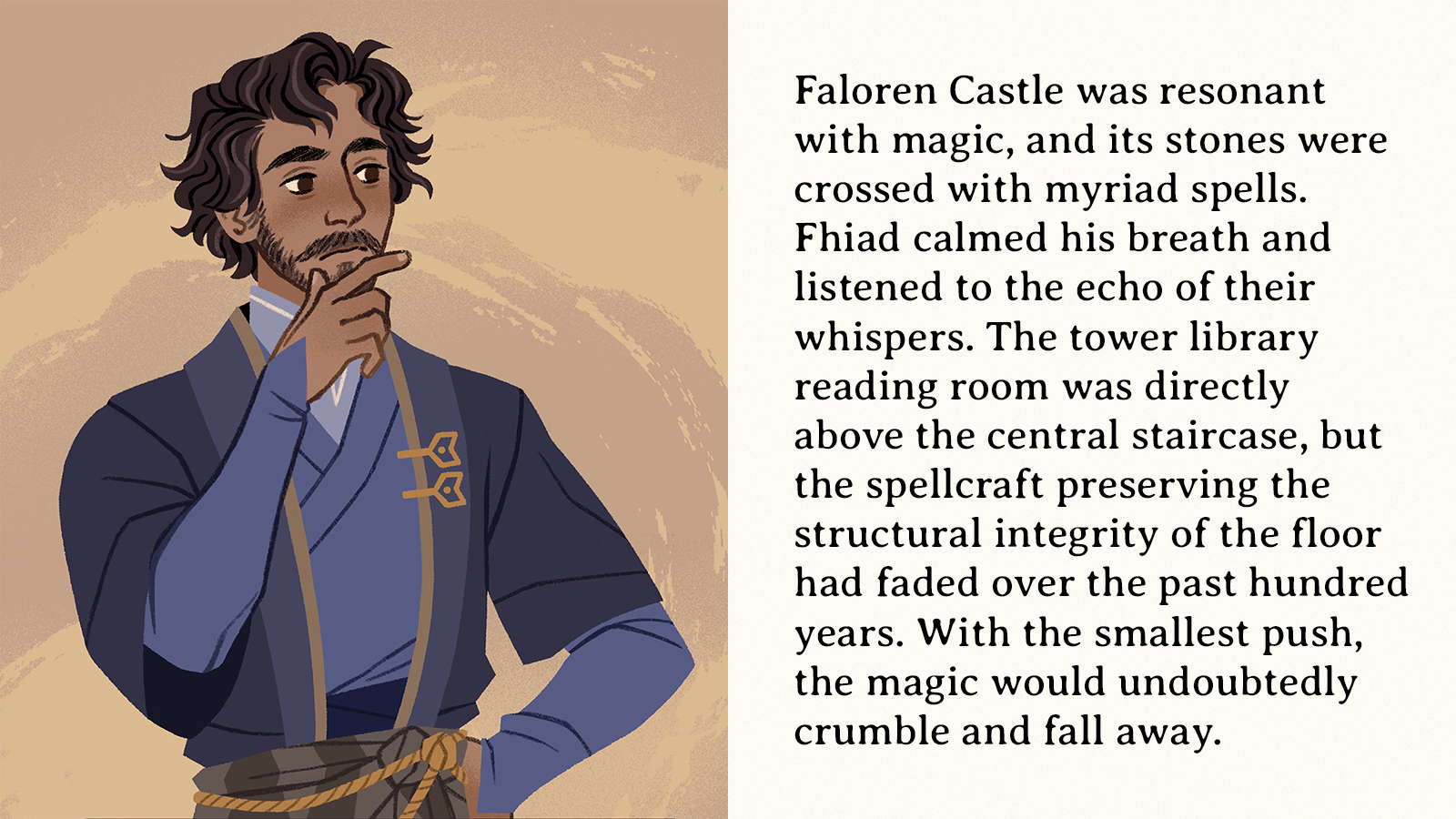
By happy coincidence, the Gibdo attack on Gerudo Town grants the Gerudo archaeologist Rotana a breakthrough in her research on the Seven Heroines. Link’s assistance was invaluable in locating the first mystical orb of the Heroines, but Rotana has resolved to find the others on her own. As she speaks with the residents of Gerudo Town, Rotana becomes acquainted with the virtues espoused by the Heroines and learns that knowledge can be found in surprising places.

I love Rotana as a character, and it’s one of the highlights of Tears of the Kingdom to listen to her lectures. Also, as an academic, it’s a guilty pleasure for me to write about research and fieldwork and the hurdles on the way to publication. Still, what I really wanted to do with this piece was tell a story about everyday life in Hyrule. Because Link is the hero of a video game, everything seems to revolve around him, so it’s interesting to get an outside perspective.

In particular, I wanted to see the characters in Gerudo Town living their best lives and solving their own problems without Link’s help. I hope this story draws the reader into a beautiful setting where the everyday quests of regular people are just as meaningful as Link’s journey to rescue Zelda.

The story is on AO3 here:
https://archiveofourown.org/works/57922744

I’m honored to have contributed this piece to Residents of the Wild, a gorgeous digital fanzine celebrating the NPCs of Breath of the Wild and Tears of the Kingdom. The zine was published on August 3, and you can still order a digital copy during the Zeldathon charity event beginning on August 13.

I consider myself extremely lucky to have my story illustrated by the legendary Linktober veteran Taboonle, who created a radiant portrait of one of Hyrule’s premier scholars. Taboonle draws amazing character art as well as cute comics with a gentle sense of humor, and you can check out his work on Instagram (here) and on Tumblr (here).

Residents of the Wild Fanzine

I’m honored to have a story about the adventures of the Gerudo archaeologist Rotana appearing in Residents of the Wild, a digital Legend of Zelda fanzine celebrating the NPCs of Breath of the Wild and Tears of the Kingdom. All proceeds from the zine will be donated to this year’s Zeldathon charity event. The zine is scheduled to be delivered on August 1, and preorders are open until July 28.

📚 rotwzine.carrd.co
📚 residents-of-the-wild-zine.square.site

Strange Things Happen in Philadelphia

Strange Things Happen in Philadelphia collects six short pieces of weird fiction about the past, present, and near future of a city where anything can happen. Philadelphia is simultaneously filled with decaying ruins and vibrant cultures, and I see the stories in this zine as a celebration of those of us surviving and thriving during the slow collapse of the American empire. Nothing in these stories is real, of course, but I’ve drawn them from a deep well of local folklore and hearsay.

To tell the truth, I don’t actually know that many people in Philadelphia. I lived here for most of grad school but then moved away to chase various academic jobs. I returned during the pandemic, which wasn’t a great time to meet new people or reconnect with old friends. I’ve tried to apply to local writing groups and workshops but haven’t gotten anywhere (yet).

Don’t get me wrong – I’m fortunate to enjoy the support of various writing communities online. Still, my personal experience of Philadelphia has been mediated by long solitary walks through parts of the city that have a lot of abandoned buildings, many of which have fallen to ruin.

One of these areas is my own neighborhood of Point Breeze, which is a lovely place to live but also filled with decrepit warehouses and other abandoned properties. I myself live next door to a derelict funeral home, and I’m constantly reading threads on various Philadelphia reddit boards about the struggles of homeowners whose townhouses adjoin similarly abandoned buildings.

It’s worth emphasizing that Philadelphia is densely populated. In fact, one of the reasons I love living here is that there are always people on the street at all times of the day and night. In a lot of ways, Philadelphia reminds me of Tokyo. It’s an affordable city with a lot of history, culture, and potential…

…but that’s not really what these stories are about. As I edited this zine, I realized that it’s pervaded by a sense of loneliness. Not an unpleasant loneliness, but rather the unique perspective afforded to a stranger. When you’re alone, you end up seeing things that perhaps other people might miss, and that sense of strangeness is what I wanted to capture in this collection.

I was fortunate to be able to work with Kaylee Rowena, an architectural wizard of the highest order, to create the art for the zine cover. The zine also features a spooky illustration of Mothman by an artist of the odd and surreal who goes by Gravemud on Tumblr, as well as a gorgeously aesthetic illustration of two elegant monsters by the brilliant and stylish Critter Crafter Ally. I’ve also included a half dozen of my own illustrations.

Unlike my previous short fiction zines, Strange Things Happen in Philadelphia is printed in full color, and I’d like to think it’s an attractive little book. If you’re interested, you can download a free digital copy from Itch.io or order a physical copy from Etsy.  

🌇 https://digitalterrarium.itch.io/strange-philly-zine
🌇 https://www.etsy.com/listing/1761448527/strange-philadelphia-fiction-zine

Essay on WWAC about Machiko Kyō’s Manga Cocoon

I’m proud to have worked with the brilliant editorial team at Women Write About Comics on my essay “Nature and War Memory in Machiko Kyō’s Cocoon,” in which I discuss the imagery that propels the story of a heartbreaking graphic novel about the Pacific War.

An animated cinematic adaptation of Cocoon is scheduled to be released in Summer 2025. This is a high-profile project commissioned by NHK and directed by the veteran Studio Ghibli artist Hitomi Tateno, whose animation credits range from Spirited Away to The Wind Rises.

Although the essay (like the manga itself) should be approached with sensitivity to its content, I hope I was able to offer a small contribution to the international awareness of the narrative work of Machiko Kyō, a celebrated and prolific Japanese artist who has created some of the most groundbreaking manga of the past decade.

You can find my essay about Cocoon (here) on Women Write About Comics, an award-winning venue for media journalism covering pop culture from a diversity of perspectives. I’m extremely grateful for the support and excellent feedback of Emily Lauer (on Bluesky here), whose critical insight illuminates the discussions and reviews of genre fiction on WWAC.

Games like Echoes of Wisdom

Are you excited about Echoes of Wisdom and can’t wait to play it? Thankfully, there’s a wealth of excellent Zelda-style games with female and nonbinary protagonists made by small studios that you can jump into right now on Nintendo Switch. These are eight of my favorites…

Do you wish Zelda got to fight with a sword?
Check out: Ocean’s Heart

Are you nostalgic for the gameplay and dungeons of A Link to the Past?
Check out: Blossom Tales: The Sleeping King

Are you hungry for more rock-tossing action?
Check out: Lila’s Sky Ark

Are you looking for cute graphics and a nonbinary protagonist?
Check out: Frogsong

Would you like a simple and easy game to share with kids?
Check out: Arietta of Spirits

Would you like a challenging game with accessibility options?
Check out: Tunic

Do you prefer the game to be super difficult and have deep lore?
Check out: Hyper Light Drifter

Do you want your female character to wield both a sword and magic, and will you be satisfied with nothing less than complex and multilayered combat in an exploration-rich dark fantasy world that hides a tragic story about the suffering implicit in the rise and fall of empires? 
Check out, unironically: Dark Souls