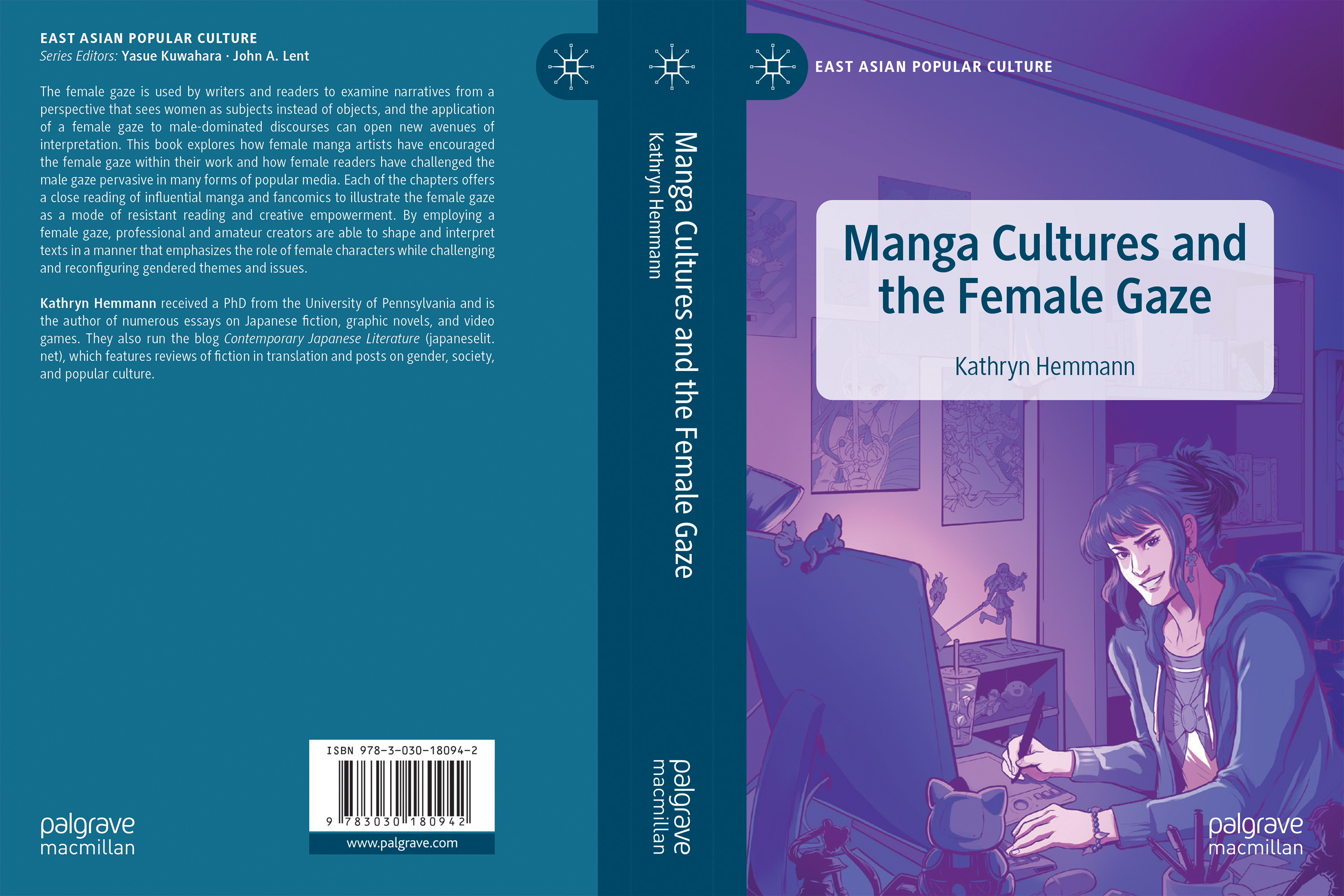
Manga Cultures and the Female Gaze
(Available from Palgrave)
The female gaze is used by writers and readers to examine narratives from a perspective that sees women as subjects instead of objects, and the application of a female gaze to discourses that have traditionally been male-dominated opens new avenues of interpretation. This book focuses on how female manga artists have encouraged the female gaze within their work and how female readers have challenged the male gaze common in many forms of popular media. By employing a female gaze, fans are able to view and interpret texts in a manner that emphasizes the role of female characters and emphasizes feminist themes. In addition, the erotic elements of the female gaze may be used to suggest subversive interpretations of the overt or implicit phallocentrism of many forms of mainstream media.
The central argument of this book is that the male gaze should not be taken for granted in the study of manga and other entertainment media, as an awareness of an active female gaze can broaden the range of ways in which we understand contemporary Japanese popular culture and how it has transformed transnational fan communities. Female readers and writers can find and create enjoyment and messages of empowerment even in works with flawed and problematic representations of femininity. The female gaze thus acts as a mode of resistant reading that allows alternative methods of interpreting the female characters and the gendered themes and issues of a text.
By focusing on watershed manga such as Sailor Moon and the various works of the bestselling artistic collective CLAMP, I demonstrate how the subversion of genre conventions by female authors can exercise a positive influence on the self-perceptions of female readers who have been socialized to understand female characters as the objects of a male gaze. I then use the works of female-identified fandom cultures, such as fanfiction, blog posts, and self-published dōjinshi fan comics, as evidence of the transformative interpretations that these women individually and collectively bestow on media ranging from video games to Hollywood blockbuster cinema. Along the way, I note the subtle and not-so-subtle changes that this fannish involvement has inspired in the mainstream media cultures of Japan and North America while acknowledging the obstacles to more diverse methods of representation and engagement on the part of female and queer fans and creators.
Check out two sample chapters below:
The Maiden and the Witch: CLAMP’s Subversion of Female Character Tropes
This chapter focuses on the work of CLAMP, a prolific four-woman team of writers and artists. Its discussion focuses on three of their most popular titles: Tsubasa Reservoir Chronicle, xxxHolic, and Chobits. These three manga belong to the demographic genres of shōnen (for boys) and seinen (for men), publishing categories designed to target and attract a male-gendered audience. CLAMP employs a female gaze to the conventions of these genres to subvert gendered character tropes, providing a viable means of female empowerment while queering the gendered specificity of manga genres in the 2000s. This chapter thereby offers an alternative reading of common narrative patterns within contemporary Japanese popular culture by demonstrating the agency of female creators and female readers.
Link Is Not Silent: Queer Disability Positivity in Fan Readings of The Legend of Zelda: Breath of the Wild
This chapter uses the video game The Legend of Zelda: Breath of the Wild and the transnational online communities surrounding it as a case study to explore the intersections between configurations of queerness and disability. It discusses how fan artists and writers have created stories of the game’s protagonist negotiating trauma and disability through his queer relationships and friendships while envisioning a positive yet nuanced representations of a society in which difference is enthusiastically accepted. Through an analysis of the visual and narrative strategies employed in fancomics, this chapter argues that multilingual fannish conversations on social media are capable of constructing and normalizing progressive frameworks for how difference is portrayed and accommodated within global gaming cultures.
 Digital Fantasy Diary