Divine Beast

Zelda returns to her original form after the defeat of the Demon King. But, after so many years, is the being that comes back to Link entirely human? Zelda has appetites better suited to claws and fangs, but Link resolves to care for her, no matter the cost. This is a story about Zelda attacking and eating frogs, and cuccos, and horses… and possibly something with even sweeter flesh.

I’ve been enjoying Tears of the Kingdom, but I’m frustrated by its story. I love all the characters, and I think the game’s broad narrative arc is an interesting reimagining of Ocarina of Time. Still, there are many elements of Tears of the Kingdom that I find unsatisfying, especially its ending. I understand the plot mechanics of what happens, which are nicely explained in (this post) on Tumblr, but Zelda’s complete reversion to her human form doesn’t sit easy in my mind. Is it really possible for a transformation of such magnitude to have no lasting effects? Did the sacrifice Zelda made really have such little weight?

Tears of the Kingdom fails to attach meaning to its worldbuilding in a way that very few Legend of Zelda games have in the past. It’s understandable to dismiss these games as childish heroic fantasies. Still, at some point, the true darkness of each game’s story expresses itself. The player may have seen the plot through the limited viewpoint of Link, the teenage “chosen one,” but the crumbling kingdom of Hyrule looks substantially different through the eyes of other characters. Link will emerge triumphant and ride off into the sunset, but everyone else has to live in the ruins, and it’s only very late in his quest that Link realizes this. With this realization, the player can begin to put together the missing pieces of a much larger story.

Despite having an incredible potential to expand on the many mysteries of Hyrule, Tears of the Kingdom does its best to simplify its story to a single one-dimensional layer: Ganon is bad. By defeating Ganon, Link gets rid of everything that’s wrong with the world, meaning that everything in Hyrule is now good again. This is all that matters. What happened in Breath of the Wild doesn’t matter. What happened in the ancient era doesn’t matter. What happened to the Zonai doesn’t matter. None of Hyrule’s past matters, nor does its future. In the endless present of the game, Zelda only exists as a vessel for “good,” and the only important thing is that Link saves her.

As much as I love Zelda, I resent that she only exists as a plot device and a reward for the player. While superficially turning Zelda into a superhero, Tears of the Kingdom robs her of agency. I generally like happy endings, but I hate the conclusion of Tears of the Kingdom. Simply put: it’s happy, but it’s boring. What I therefore wanted to do with “Divine Beast” was to make Zelda’s decision more interesting by ensuring that it has consequences. I also wanted to give the worldbuilding of Tears of the Kingdom a bit of the weight and depth it deserves.

And, more than anything, I want Link and Zelda to be free.

“Divine Beast” is complete at 2,000 words, and you can read it on AO3 here:
https://archiveofourown.org/works/49296496

I drew the illustration myself. You can follow my art on Tumblr (here) or on Instagram (here).

The Flower Thief

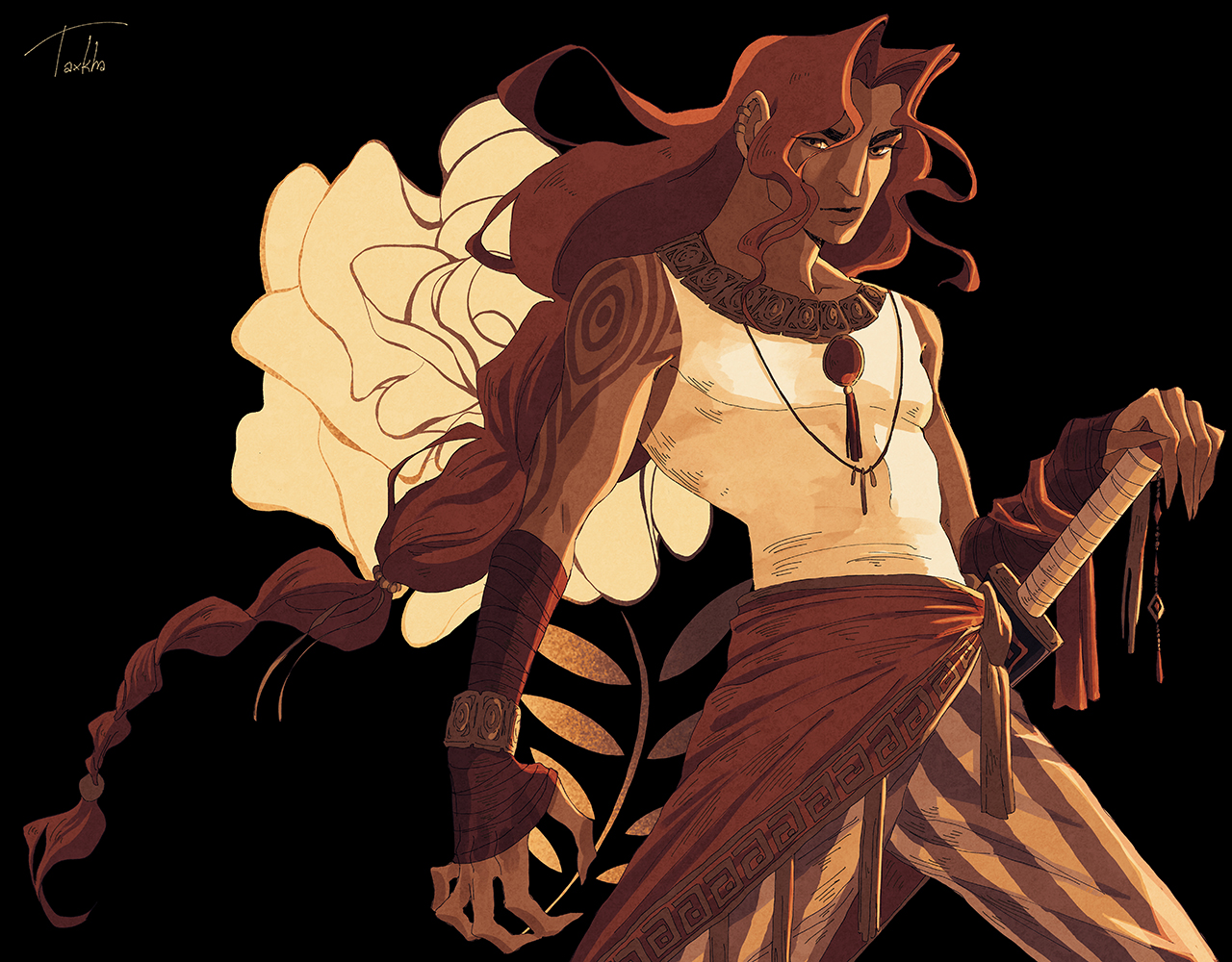
“The Flower Thief” is a story about how Ganondorf visits Hyrule as a child and falls in love with the green and beautiful land, even as he is warned away by the queen who will become Zelda’s mother.

What fascinates me about Ganondorf (at least prior to Tears of the Kingdom) is that he’s a villain whose actions seem far more evil than his character. Given that he’s not necessarily an evil person, what would drive him to such extremes?

In my own experience, evil is boring and mundane. “Evil” is someone who sends hateful messages on social media because they know they can get away with it, or someone who pretends not to see when a colleague is being harassed at work. People who are born into privilege can often be evil without even thinking about it, as the rules that govern the actions of other people don’t apply to them. People in positions of authority are often evil simply because it’s the path of least resistance. So, in most cases, evil is passive; it’s a matter of not challenging the baser impulses of human nature, or not bothering to fix a system that’s become twisted and broken.  

It’s therefore intriguing to me that, when Ganondorf wants “power,” what he’s seeking is the ability to upset the established order. Even if it’s for his own selfish reasons, he aims to transform the world, whether by undoing the mistakes of the past or creating an ideal future. He fails – and he fails miserably – but at least he tries.

I grew up with shōnen adventure manga, and I’m interested in seeing a similar coming-of-age story about someone like Ganondorf, who is talented and works hard but still ends up as the villain. “The Flower Thief” was my attempt to write a story like this for myself, and I think I managed to do a decent job of creating a nice parallel to Link’s first journey to Hyrule Castle in Ocarina of Time.

You can read “The Flower Thief” on AO3 here:
https://archiveofourown.org/works/32033518

This story was written for Ties of Time, an Ocarina of Time and Majora’s Mask fanzine. Ties of Time was published back in 2021, but you can still see the zine’s artwork on Twitter (here), and the zine’s stories have been collected on AO3 (here). The character illustration of teenage Ganondorf is by the bold and daring Taxkha, who shares their art on Tumblr (here) and on Twitter (here).

The Best Wells in Tears of the Kingdom

“The Best Wells in Tears of the Kingdom” is a series of short travelogue essays celebrating the hidden secrets, environmental storytelling, and understated exploration elements of Tears of the Kingdom.

One of my main criticisms of Breath of the Wild was that its world felt curiously flat. Why wasn’t Link allowed to go underground? What was lurking underneath Hyrule?

When I first discovered that Tears of the Kingdom was filled with wells and caves, I made it my mission to track them all down. Ganondorf would just have to wait. I’m currently taking my time and leisurely enjoying myself as I go cave diving, but I managed to locate all 58 wells before completing the first dungeon. Each of these wells is unique, but what I’ve been most impressed by are the small stories told by the characters who’ve found themselves at the bottom of a well by accident – or by choice.

For the record, these are my favorites:

1. Kakariko Village Well
2. Haran Lakefront Well
3. Rikoka Hills Well
4. Popla Foothills South Well
5. Kara Kara Bazaar Well
6. Zelda’s Secret Well

You can find the annotated list on AO3 here:
https://archiveofourown.org/works/48633913/chapters/122678209

The cover illustration for this piece, which depicts the veteran well explorer Fera, was created by the magical MiroiMirage. You can find their lively and colorful artwork on Twitter (here) and on Instagram (here). It was a joy and an honor to work with Miroi while getting a glimpse into their creative process. All of the groundwork they laid for the final painted illustration was amazing, so much so that I’d like to share one of their preliminary sketches, which you can see (here).

You’re Not Lost, You’re Here!

Plenty of people want to leave Possum Springs. But what about the people who are happy to stay? “You’re Not Lost, You’re Here!” is a linked trio of short stories about a day in the life of the strange little town of Possum Springs. Mae’s aunt Molly reflects on the eeriness of depopulation, Mae’s father Stan fantasizes about breaking corporate windows, and Mae’s mother Candy wonders what her daughter will see when she returns home with nightmare eyes.  

Something Night in the Woods does really well, I think, is to offer the player an opportunity to glimpse into the lives of people whose perspectives might be difficult to understand out of context. To give an example, Mae hates the police and teases her Aunt “Mall Cop” Molly with more than touch of hostility, but why would Molly have wanted to become a police officer in the first place? Why would Mae’s father, a former factory technician, embrace worker solidarity but still distrust unions? And why would Mae’s mother, who doesn’t necessarily believe in God, feel such a strong connection to the Possum Springs church that she runs its business office?

It’s easy enough to sympathize with Mae and Bea and Gregg and Angus, whose attitudes of progressive Millennial cosmopolitanism presumably reflect the player’s own, but I think the older characters in Night in the Woods are just as interesting and compelling. I come from a working-class background myself, and I wanted to try to make these secondary characters more relatable as the heroes of their own stories.

You can read this trio of vignettes on AO3 here:
https://archiveofourown.org/works/49029619

I wrote this piece for At the End of Everything, a Night in the Woods fanzine. Their website on Carrd is (here), and you can check out everyone’s artwork on Twitter (here) and on Tumblr (here). If you’re interested in ordering a copy of the zine, leftover sales are open throughout August.

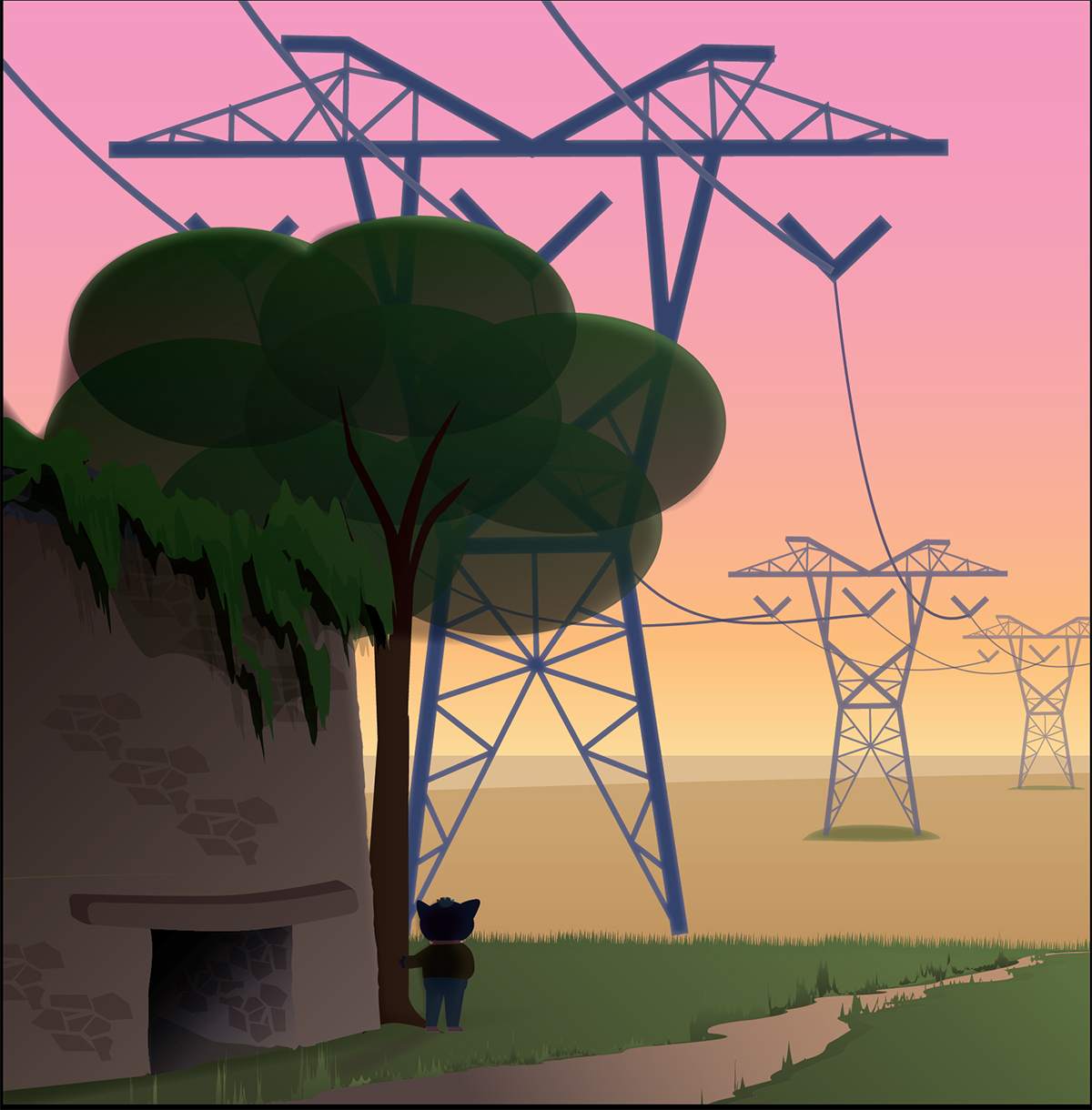
I had the pleasure of working on an illustration with the brilliant and multitalented Wolf Godwin. You can find his art and photography on Instagram (here), his animations on YouTube (here), and his music on Soundcloud (here). Wolf has written lovely piano versions of several songs from the Night in the Woods OST, so please check out his work if you’d like to indulge in some fun and eerie autumn vibes.

The Ritual of Lomei Labyrinth

A vast labyrinth stretches under the ancient kingdom of Lomei. It is said that this labyrinth serves as the prison for a terrible monster known only as the Calamity. Every seventeen years, a sacrifice is performed in order to appease the monster. As the day of the ritual draws near, a young soldier named Link volunteers himself as the sacrifice, secretly hoping that he will be the one to put an end to the Calamity. It is tradition for the princess of Lomei to lead the sacrifice underground, a ritual for which Zelda has trained her entire life. Inspired by Link’s courage, she dares to reveal a hidden secret of the labyrinth that may save them both – as well as the monster trapped within a maze of deceit.

Since I started writing original horror stories in 2018, I’ve become increasingly fascinated with the Greek myth of Ariadne and the Minotaur. I consider this to be one of the earliest prototypes of gothic fiction, which explores the topos of a young woman navigating a large house that holds a terrible secret.

Earlier this year, I returned to one of my favorite gothic labyrinth stories, Ursula Le Guin’s The Tombs of Atuan. I love the idea of a bratty teenage girl being the priestess of horrific elder gods trapped in an underground maze, and reading The Tombs of Atuan while waiting for the release of Tears of the Kingdom made me think about the Lomei Labyrinths in Breath of the Wild, as well as the mysterious Zonai civilization that created them. Before I could stop myself, I ended up writing a three-chapter short story that casts Zelda in the role of Ariadne. I think Calamity Ganon makes a suitably creepy Minotaur, but hopefully Link is a much more sympathetic character than Theseus!

The story is complete at 5,400 words, and you can find it on AO3 here:
https://archiveofourown.org/works/44979319/chapters/113177725

I had a great time working with one of my favorite character artists, Benveydraws, to create a portrait of Princess Zelda. Benvey replaced Zelda’s characteristic feather motifs with the earthier imagery of golden leaves, and he worked closely with references of Greek statues to give the character a suitable Classical Mythology vibe. Benvey specializes in designing bold and beautiful female characters, and you can find more of his work on Tumblr (here) and on Twitter (here).

The Girl in the Screen at the End of the World

It’s been more than twenty years since rumors about a cursed videotape began to spread. The stories were true, and Japan is in ruins. Can the people who survived the collapse of civilization escape Sadako’s curse? Or do they seek her out instead?

“The Girl in the Screen at the End of the World” is a series of four short vignettes about the last living humans making their peace with the end of the world as Sadako bids a gentle goodbye to modern civilization. All of the human characters in the story die, but all the animals go on to live their best lives.

The story is complete at 1,800 words, and it’s on AO3 here:
https://archiveofourown.org/works/47735320

I had the immense privilege of working with an artist who goes by Vani on an illustration for this story. I was inspired by his short Animal Crossing comic about grief (here), and I love the way he draws handsomely rendered characters in lush environments brought to life by bold colors. You can find more of his evocative art on Twitter (here), on Instagram (here), and on Tumblr (here).

Hyrule’s Finest Teas

Link is a second-year college student who works as a barista at a small café on a cobblestone street next to his university. Every day he waters the plants, samples new teas, and listens patiently to the concerns of the people who visit. He especially enjoys the company of one of the regulars, a posh upperclassman named Zelda who comes to the café every day to write. It would be the perfect job if not for his boss, whose excellent taste does little to blunt the edge of his exacting standards.

It took me years of being in fandom to reach this point, but I finally embraced the cliché of writing a Coffeeshop AU. I had an intense Fall 2022 semester, and I wrote “Hyrule’s Finest Teas and Imports” to let off steam during the winter break. This started as a wholesome story about delicious café food, but it gradually transformed into something a bit darker. While I was thinking about why someone like Ganondorf would manage a café, I did a lot of research into the shady real estate practices common around college campuses in the United States. I ultimately decided that it would be fun for Ganondorf to commit tax fraud. As a treat.

The story is complete at four chapters and 9,200 words. It’s on AO3 here:
https://archiveofourown.org/works/43918116/chapters/110424639

I was extremely fortunate to work with the magical Mirarasol on an illustration for this story. Mirarasol creates lovely artwork of cute characters inhabiting stylish interiors, and they’ve done fan art for a number of games in addition to their original illustrations. If you’re interested, you can check out their work on Twitter (here) and on Instagram (here).  

Haunted Houses

I recently published a new edition of my horror fiction zine Haunted Houses!

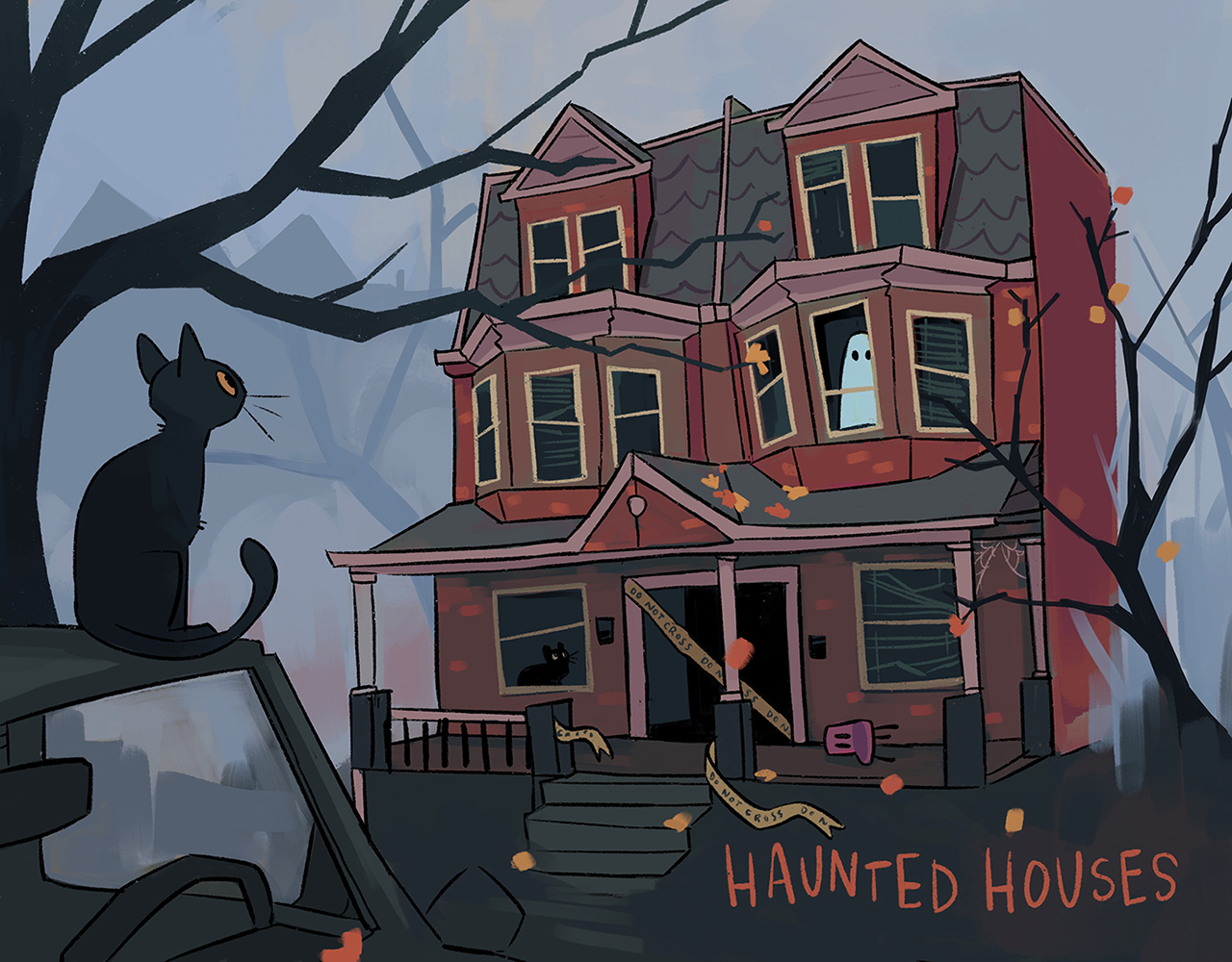
Haunted Houses collects seventeen pieces of surreal flash fiction about haunted spaces and the terrible people who inhabit them. This edition of the zine includes several new stories and illustrations, as well as a gorgeous cover illustration by Megan Crow, who was able to channel the everyday spookiness of West Philadelphia. Although the stories in this zine fit firmly into the mode of magical realism, I wanted to use the medium of fiction to explore a truly terrifying set of real-life themes relating to housing, from gentrification to rent spikes to urban depopulation.

If you’re interested, physical copies of the zine are available on Etsy:
https://www.etsy.com/listing/890744799/haunted-houses-fiction-zine

I’ve also started to host free digital editions of my older zines on Itchio:
https://digitalterrarium.itch.io/

Horror Fiction Zines at Common Meter Press

I’m honored to have three of my zines in stock at Common Meter, a new zine distro and poetry micropress!

These three zines – Ghost Stories, Haunted Houses, and Haunted Haiku – are only available through Common Meter. They’ve done a fantastic job with the listings, which you can find on their website (here). It’s incredible to see my creative work presented in such a cool and stylish way, and I’m beyond impressed by how Common Meter supports the writers and poets they work with. I understand that the press is currently creating a series of original, hand-printed chapbooks, so please check them out if you’re interested in reading (and perhaps publishing) cutting-edge writing.

I also want to recommend Common Meter’s Instagram (here), where they’ve started to post gorgeous photos featuring zines ranging from bright and colorful minicomics to letterpress poetry chapbooks. They’re just getting off the ground, and I can’t wait to see where the wind takes them.

How The Wind Waker Navigated Fan Expectations

I’m excited to have published an essay titled “How Legend of Zelda: The Wind Waker Navigated Fan Expectations” on one of my favorite video game sites, Sidequest.

I’ve been studying fan interpretations of the Legend of Zelda games for about five years, but I’ve mainly focused on fancomics. In this essay, I finally ventured into the stormy territory of IGN forums in an attempt to understand why people disliked The Wind Waker when it came out twenty years ago. Here’s an excerpt from my essay:

For better or worse, gamers have grown up, and video games have developed as an artistic medium alongside us. In the case of The Wind Waker, the Legend of Zelda fandom has matured enough to appreciate the depth of the game’s story and design, as well as the unique character of its graphic style. Meanwhile, the challenge Tears of the Kingdom will face is that many of the younger players who embraced Breath of the Wild are now seven years older, and they expect the game’s sequel to reflect the seven years of cultural progression they experienced alongside gaming fandom on social media.

If you’re interested, the full piece is available to read online here:
https://sidequest.zone/2023/05/02/how-the-wind-waker-navigated-fan-expectations/