Bloodbark

Bloodbark
https://sirtartarus.itch.io/bloodbark

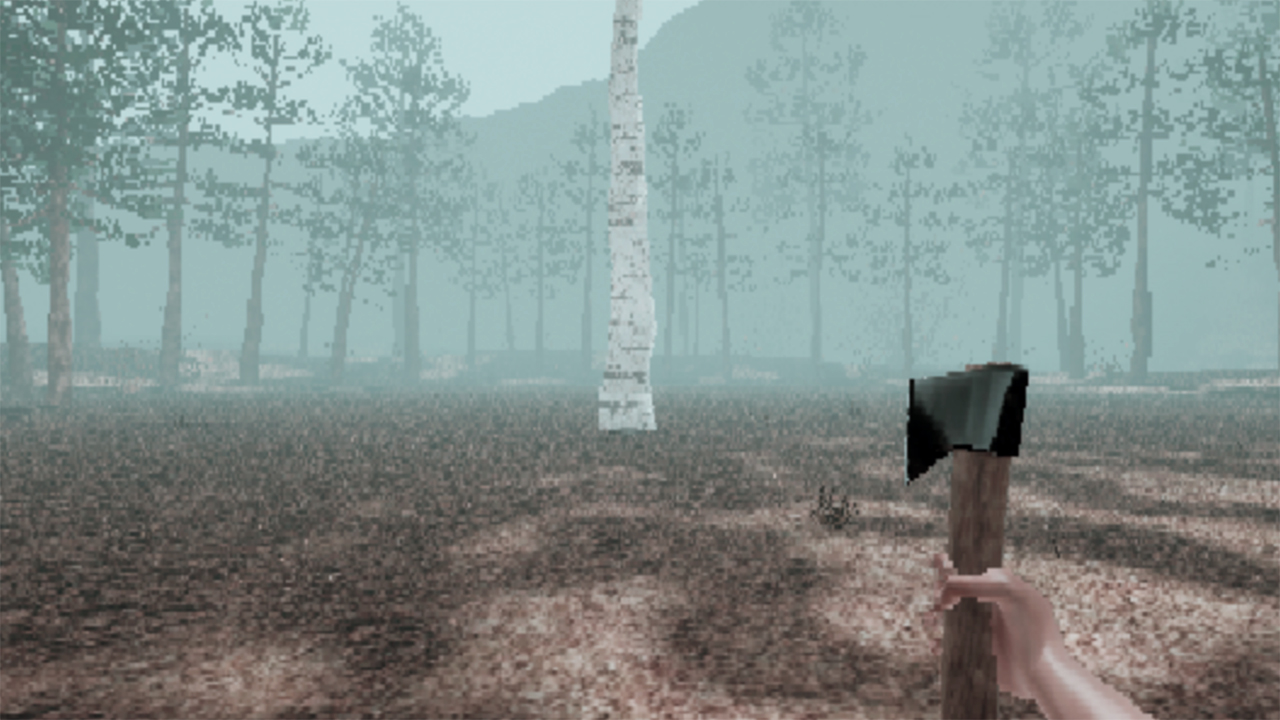
Bloodbark is a forest horror game based on the art of Eduardo Valdés-Hevia that’s free to download and takes about half an hour to play. You play as a lumberjack camping out in a small cabin next to a state park where a new type of tree has been discovered. Although these trees look like normal birches on the outside, their wood is bright red and fetches a high price. The lumberjack’s job is simple – he needs to find the special trees on his employer’s fenced-in property, cut them down, and return the timber to his cabin.

Still, given how much blood is involved… Are you really sure that it’s trees you’re chopping?

The gameplay of Bloodbark is limited to wandering around (with tank controls) and striking various objects with your axe. As you walk, your character’s thoughts automatically appear on the screen as text overlay. The lumberjack is somewhat unwell at the beginning of the game, and he becomes progressively more unhinged as the days pass. Fun times!

The standard route of progression through Bloodbark is fairly well signposted and easy to follow. If you like, however, you can wander to your heart’s content, and the game features a number of achievements and collectibles. Though it won’t have any effect in most circumstances, you can also hack at anything you like. My favorite surprise in the game is a large cocoon suspended from a pole on a dock at the lake. If you manage to find it and get it open, you’re in for an odd little treat.

Although the twist to the story is nothing you wouldn’t expect, the writing leaves a number of interesting questions open to the player’s interpretation. I am not unsympathetic to the lumberjack, who has reasonable doubts about the job he’s been paid to do, and I’m just as annoyed as he is by the car alarms and other annoyances from the neighboring state park. I also think it’s telling that the lumberjack won’t cut down any tree he’s not paid for, no matter how hard the player tries.

My only issue with Bloodbark is that it conveys “darkness” by turning the visual contrast down to zero. Unless you play the game in a sealed room with no external light, the screen appears to be almost solid black. Depending on the quality of your monitor, the parts of the game that take place at night can range from needlessly annoying to impossible to see. It’s a shame, but I’m afraid that this flaw in the game’s visual design may make it inaccessible to many players.

Thankfully, when you can see the game’s graphics, they’re quite lovely. I’m a fan of this sort of lo-fi crispiness to begin with, and I think it creates an interesting contrast with the visual style of many of the secrets you can encounter. To give an example, interacting with three roadside crosses will trigger the brief appearance of a Biblically accurate angel, and the fluidity of this manifestation is a sight to behold against the pixelated mountains and treetops.

If you’re unable to play Bloodbark yourself due to accessibility issues, I’d recommend (this video), which has no voiceover and allows you to watch a streamlined yet still thorough run of the game. Whether you’re watching the game or playing it yourself, Bloodbark is an oddly relaxing game about losing your sanity in the woods, and I’d recommend it to anyone who enjoys the themes and imagery of horror but is happy to dispense with the tension and jumpscares.

Vermis: Lost Dungeons and Forbidden Woods

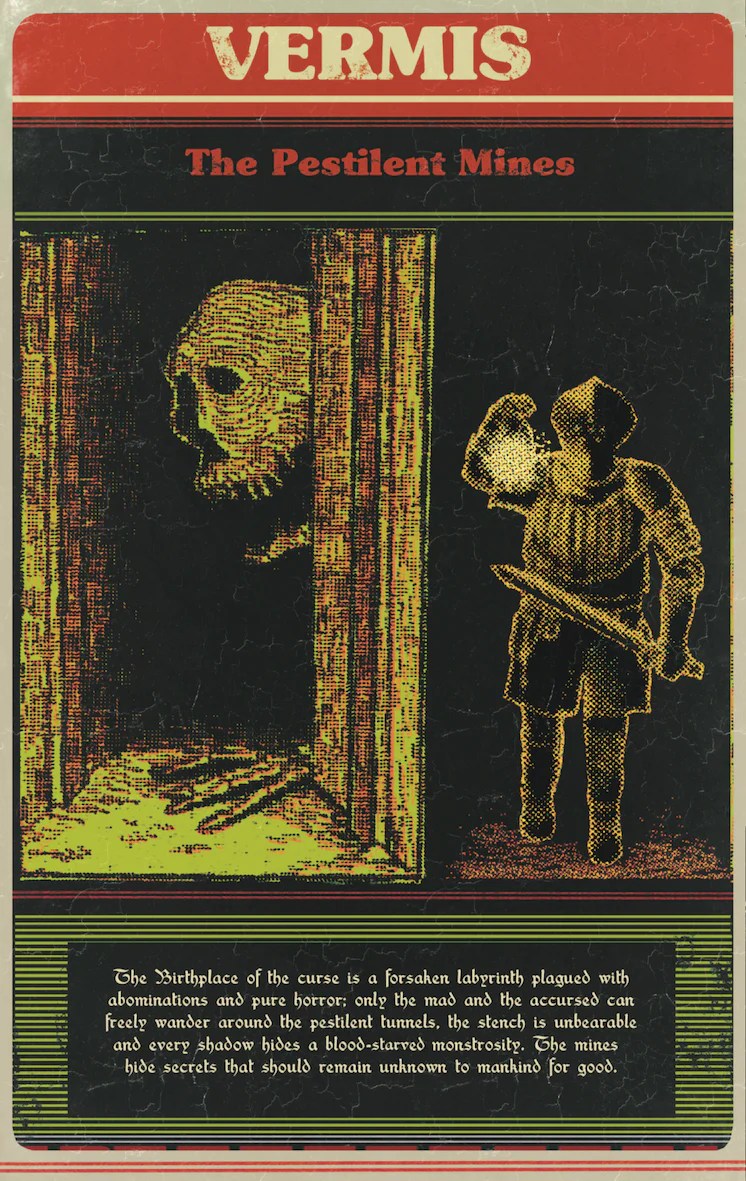
Vermis is an illustrated strategy guide for a dark fantasy game that doesn’t exist. Plastiboo, the author and artist, has taken the concept of “fake strategy guide” and executed it with absolute sincerity and fidelity. Both the writing and the crusty “screenshots” have a pitch-perfect clarity of tone and style that invites immersion.

Before attempting to describe what this book is, perhaps it might be useful to describe what it isn’t. First, Vermis is entirely original. Although the tenor of its world will be familiar to fans of Dark Souls and FromSoft’s earlier King’s Field series of dungeon crawlers, there are no callbacks or veiled references or tongue-in-cheek jokes about how “it’s dangerous to go alone.” Vermis is entirely its own thing.

Second, though Vermis emulates the style of a strategy guide, Plastiboo has an artistic eye for page layout that many guides published during the 1990s did not. In other words, Vermis is easy to read. It also forms a narrative, albeit not in a novelistic sense. Although the text is fragmented, the reader never struggles to move from page to page. This is not House of Leaves.

Third, Vermis is more “dark fantasy” than “horror.” Although there are stylistic elements of the gothic and grotesque, Vermis never attempts to provoke dread, disgust, or anxiety. I wouldn’t call Vermis “understated,” as it features all manner of unsightly monsters, but its tone is quiet and contemplative. Aside from your character’s constant forward progress, there’s not much action. 

Vermis is written entirely in a second-person point of view, a stylistic choice that works well in this context. The player-character has no set identity, so the “you” of the story is handled lightly and never becomes overbearing. The second-person narration successfully achieves its intention, which is to draw the reader deeper into a sense of playing the game.  

After being introduced to a range of starting classes, you wake into a peaceful area called Deadman’s Garden, whose ferns and mosses are protected by the skeleton of a sleeping giant. You then descend into an isolated crypt, where you loot your first sword from a corpse. You also meet your first NPC, the Lonely Knight.

The Lonely Knight is not hostile, and Vermis reproduces the boxes of dialogue with which he greets you. Although Plastiboo is canny enough to keep the narration of battles to a minimum, the format of Vermis obliquely suggests gameplay. “Despite his imposing appearance,” the text reads, “the Lonely Knight is totally harmless and will not defend himself from any attack.” Underneath this passage, however, is an insert featuring illustrations of the knight’s equipment, which your player presumably receives by killing him.

After navigating through the Isolated Crypt and emerging from its cliffside exit, you then venture into a swamp, a forest, and more crypts and caves, each of which is characterized by its own unique theme.  

Along the way, you cross paths with various NPCs (mostly fellow knights) and pick up a collection of items. The text describing these items and encounters alludes to gameplay that’s never made explicit. The decision to leave the more interactive elements of Vermis to the reader’s imagination works in concert with the second-person narration to draw the reader deeper into the ludic simulacrum.  For example, in this passage…

Once on the other side of the bridge, you notice how the oppressive flutewood landscape is replaced with clear skies and endless hills full of cedars. The breeze blows gently.

After days surrounded by the unrelenting melody of the flutewoods, the absence of the whistles makes for a heavenly silence interrupted only by the chirping of the birds and the wind blowing through the leaves.

An enormous structure rises at the top of the highest hill, casting a shadow that engulfs the landscape. You make your way to the building as the sun goes down. The contrast with the sky makes it difficult to discern what is inside.

…the mechanical process of crossing this space is merely suggested. Instead, the reader is presented with the more subjective elements of the game.

Having just survived a difficult battle on the aforementioned bridge, your sense of relief is reflected in a green and peaceful landscape. The relative silence has a tangible quality. In contrast to the twisting corridors of underground dungeons, here you can hear birds and feel the wind. The sky is open. Nevertheless, the final labyrinth lies ahead, so onward you must go if you wish to reveal the secrets hidden inside.

In his review of Vermis, “The Guide to a Game That Doesn’t Exist,” Patrick Fiorilli writes, “As a strategy guide — precisely insofar as it is a strategy guide — Vermis makes good on the promise that such volumes once made to their readers: that there is a world beyond these pages waiting to be explored.”

Fiorilli continues, “Vermis also builds the speculative world of its own existence: a world where this bygone form of secondary literature, the strategy guide, never disappeared, never dissolved into the slush of the content economy, but instead flourished as an aesthetic form unto itself.”

Fiorilli’s hints regarding the metafictional resonance of the “speculative world” of Vermis are intriguing. There’s an element of liminality to the book that recalls the famous “Candle Cove” online horror story about a half-remembered children’s cartoon that aired on a public access channel that never existed. Describing the “dreamcore” aesthetic of “liminal” videos such those surrounding the mythology of The Backrooms, digital architecture critic Ario Elami notes, “Responses to such imagery often involve claims that one feels dislocated yet aware of a vaguely familiar aspect.” And indeed, Vermis possesses this exact sense of uncanny belonging to a history that almost was.

Still, I’m far more interested in Vermis’s proximity to the “speculative world” that Fiorilli describes at the beginning of his review as he relates his experience of studying the strategy guide for The Wind Waker before playing the game. I once enjoyed similar experiences of engaging with old video games purely through their strategy guides, and I can attest to the pleasures of constructing an interactive experience through grainy images and their accompanying captions.

Through some unholy miracle, Vermis perfectly captures the spirit of “playing” a game through interaction with a paratextual artifact. At the same time, Vermis discards many elements of an actual strategy guide in order to structure its text and layout to form a satisfying narrative. It’s a delicate balance, and I’m in awe of how Plastiboo manages to pull it off.

I spent a month doing internet deep dives while trying to find more books like Vermis, but everything I saw people recommend – from Fever Knights to Tales from the Loop – didn’t scratch the same itch. Thankfully, Vermis has a “sequel,” Vermis II, which is a fascinating evolution of the formula that engages with the meta while still offering an adventure that stands on its own. In addition, Plastiboo’s publisher, Hollow Press, also offers three similar titles: Age of Rot, Leyre, and Godhusk. They’re all fantastic, albeit slightly edgier and more tonally graphic than Vermis.

Of all the books published by Hollow Press, Vermis remains my favorite. I’d recommend it especially to people who don’t want to play Dark Souls (or King’s Field) but are still curious about the atmosphere and flavor of this genre of games. I’d also offer the book to connoisseurs of experimental fiction who want to feel creatively invigorated by a uniquely stylized way of constructing a world through words. Vermis is really something special, and my gratitude goes out to Michele Nitri for making his dream of Hollow Press a darkly fascinating reality.
Legend of Zelda Forest Zine Preorders Open

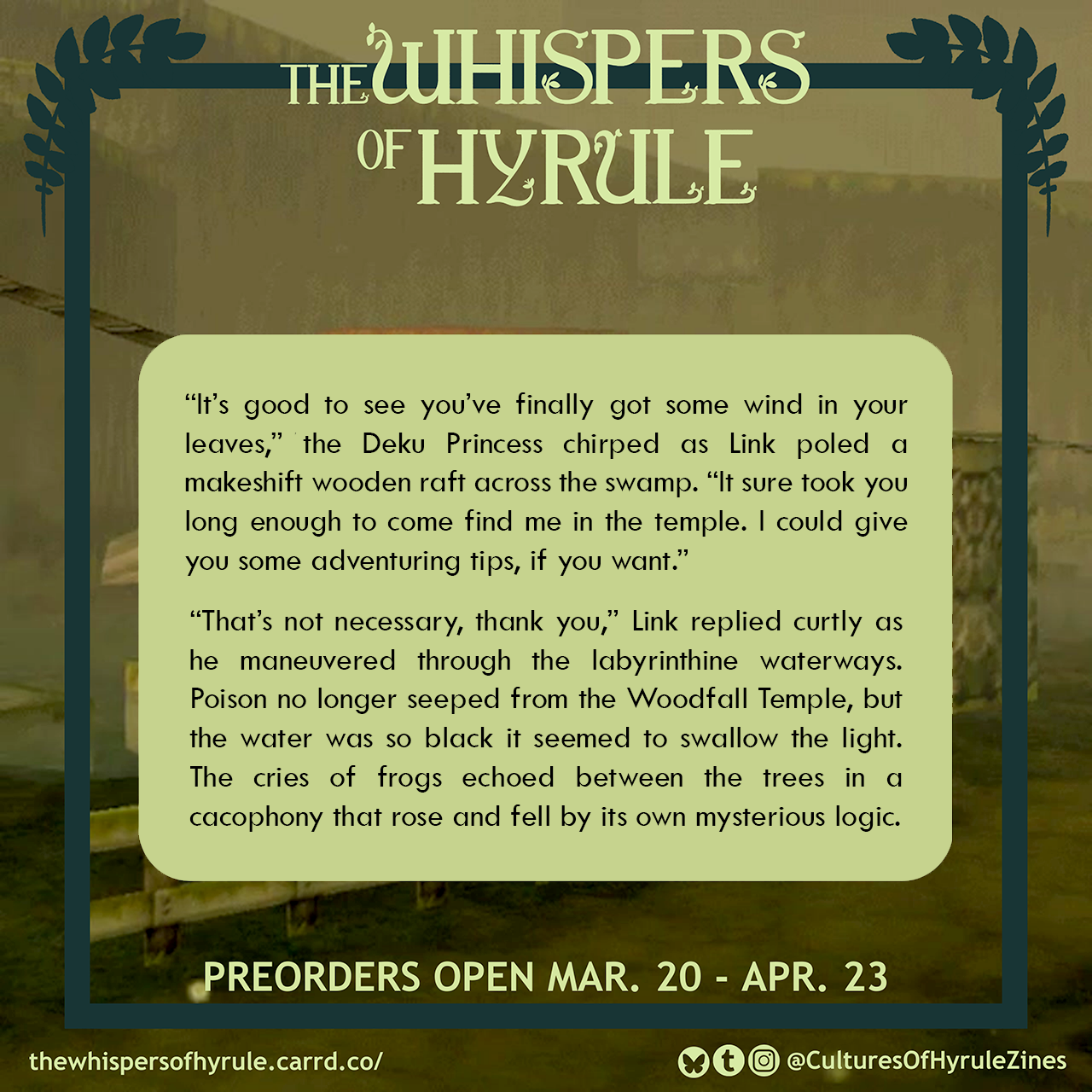
I’m excited to share the news that preorders are now open for The Whispers of Hyrule, a Legend of Zelda fanzine celebrating Hyrule’s beautiful green spaces and the creatures that make their homes in the trees.

I contributed a short story about Majora’s Mask titled “The Brave Tale of the Heroic Swamp Princess.” My story follows Link and the Deku Princess as they venture through the swamp on their way home from the Woodfall Temple. I did my best to capture the exuberant spirit of the Deku Princess, who helps Link work through the trauma he experienced in Ocarina of Time, as well as the warm atmosphere created by the vibrant plant growth in the swamp.

It’s been a privilege to see the drafts shared by the writers, artists, and musicians who have joined me on this journey. From sunlit meadows to deep forest shadows, everyone has worked hard to convey the wonder and mystery of getting lost in the woods. I know I say this about every fanzine, but this book is going to be gorgeous.

Preorders for the zine are open until April 23, and three stretch goals have already been exceeded. If you’re interested, you can check out the project at the following links:

🌿 https://thewhispersofhyrule.bigcartel.com/
🌿 https://culturesofhyrulezines.tumblr.com/
🌿 https://thewhispersofhyrule.carrd.co/

Whispering Willows

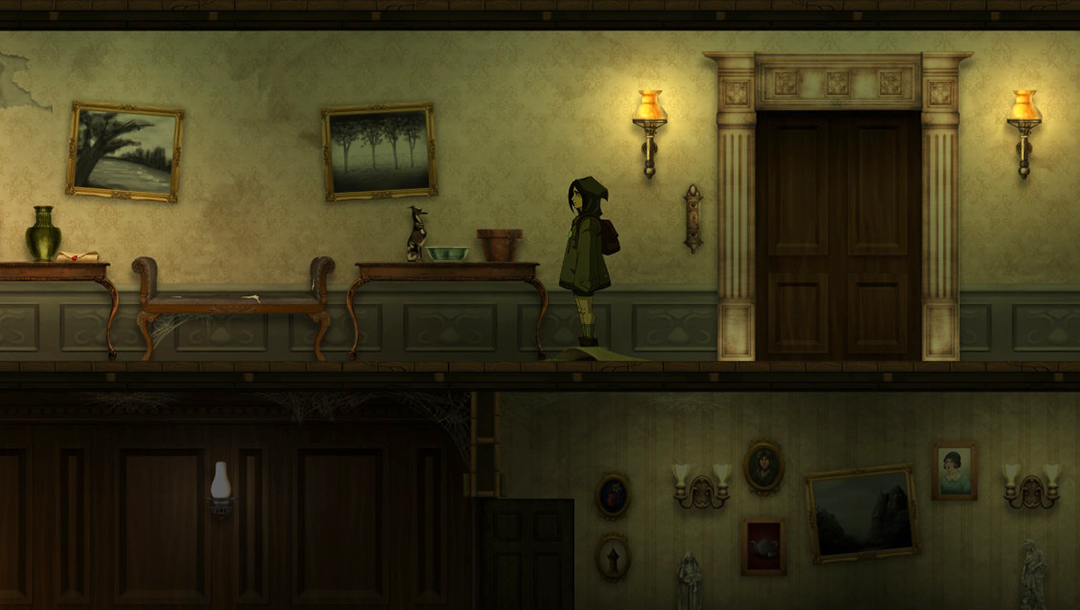
Whispering Willows (on Steam here) is a 2D adventure game set in a haunted mansion. There’s no combat, and the game takes about three hours to finish. It’s a small indie game made in 2014, and it’s not perfect. Still, I enjoyed the time I spent in Willows Mansion, and I’d recommend giving this game a shot if you’re into spooky gothic stories.

You play as Elena Elkhorn, a teenage girl whose father works as the groundskeeper at the derelict and abandoned Willows Mansion. Elena’s father doesn’t return one night, and she has a bad feeling about the mansion. Hoping to bring her father home, Elena sneaks onto the property and immediately falls headlong into an underground crypt. There she meets the ghost of her ancestor, who teaches her how to use the power of her magical pendant to leave her body to go spiritwalking. In a cursed mansion filled with phantoms, this is an extremely useful ability to have.  

Before I jump into the many things I love about this game, let me be upfront about its flaws:

– There’s not much actual gameplay.
– The hand-drawn cutscene art is unpolished.
– The writing is good but a bit uneven.
– The background music is limited.
– Your character walks very slowly.
– There’s no map to help you navigate.

Essentially, this is a small indie game that indeed looks and feels like a small indie game. I’m not complaining about the rough edges of Whispering Willows; I just want to make it clear that it’s a game made ten years ago on a tiny budget earned from a Kickstarter campaign. Still, I found its simplicity and amateurish aspects charming, and it has many strong points.

To begin with, the map is surprisingly large, and there’s a lot of space to navigate. You’ll explore the mansion’s crypt, its garden, and various outbuildings; but mainly you’re going to be walking around the house itself. The mansion is impossibly large and includes all the standard gothic flourishes: locked doors, grisly kitchens, moldy bathrooms, crooked paintings, peeling wallpaper, taxidermied hunting trophies, creepy dolls, and all the secret passageways you could ever want.

Of course there are all manner of notes lying around, and these notes collectively tell a suitably gothic story about the very wealthy but very evil man who built the mansion. This story never quite comes together in terms of plot or themes, and the character motivations are ridiculous. Still, all the individual bits and pieces are gothic catnip, from a lover kept in a secret room to a murdered best friend to a servant driven mad by what he’s seen.

This all takes place in California during the Wild West days, meaning that the land occupied by the mansion had to be taken from someone. It turns out that it was forcibly wrested from Elena’s own ancestors. Alongside his more intimate crimes, then, the mansion’s owner became the mayor of a frontier town by means of enacting war and genocide on First Nations people.

We tend to think of gothic mansions as being located in Europe, or perhaps New England. There are definitely nineteenth-century mansions in California, though (like the Carson Mansion), and they’re built on land soaked in blood.

Importantly, the First Nations people in Whispering Willows aren’t all ghosts. Elena and her father are very much alive, and they’re not tempted by the faded pseudo-grandeur of the former colonists. At the end of the game, it’s extremely satisfying to see Elena essentially say “fuck all this” as she walks away from the mansion with her father.  

This is an interesting perspective on classic gothic story tropes that I love to see. And honestly, Whispering Willows isn’t such a bad game. The puzzles are easy, but the lack of difficulty is a selling point for me. Also, the gameplay mechanic of Elena spiritwalking to interact with the numinous aspects of the environment is used in clever ways, and it’s a lot of fun.  

Aside from Elena’s slow walking speed, my only real complaint is that this game would benefit immensely from a map. Even though navigation isn’t particularly complicated, I got lost a few times and had to resort to a walkthrough (this one here) a few times, which wouldn’t have been necessary if the player could just pull up a subscreen.

Whispering Willows definitely feels like an indie game, but it’s got a delightfully grisly story and an excellent sense of atmosphere, and it’s worth checking out if you’re interested in Wild West Gothic from an indigenous perspective.

As a side note, this was apparently the game that launched Akupara Games, a publisher that specializes in quirky indie games with a strong sense of style and setting. Two of my favorite titles they’ve helped get off the ground are Rain World and Mutazione, and it’s cool to know that this was where they started.  

Essay about Elden Ring and Dark Academia

I’m excited to share an essay I wrote for Bloodletter Magazine, a stylish biannual anthology of queer and feminist horror. The piece is titled “Dark Academia for Dark Times: Elden Ring and the Fall of the Academy,” and I’m writing about how the haunted lore of the game’s cursed university reflects real-world academic anxieties. 

You can read the essay here:
https://bloodlettermag.com/dark-academia-for-dark-times-elden-ring-and-the-fall-of-the-academy/

While I use the character Rennala from Elden Ring as an illuminating point of focus, my piece is really about the uncanny connections between the crisis currently facing universities and the social media aesthetic of “dark academia” embraced by young women. I’m arguing that the association of dark academia with the corruption of female bodies reflects deeper concerns regarding the ties between academic liberalism and the decay of imperial privilege. 

Basically: Is the wokeness of postcolonial queer feminism ruining college? I would like to believe that it is, and I think this is kind of neat, actually.

My piece is graced with a creepy spot illustration by the magical Katy Horan, who goes by @goodyhoran on Instagram, and you can follow Bloodletter at @bloodlettermag, where they post eye-catching film stills from indie horror movies created by emerging female directors. 

Video Game Sewers on Sidequest

I love video game sewer levels! I understand that not many people share my fascination with creepy underground tunnels, so I wrote an article for Sidequest to share my appreciation of the hidden mysteries and strange beauty of video game sewers. Here’s an excerpt:

A common complaint regarding sewer levels holds that the uniformity of their twisting corridors acts as an excuse for developers to create a generic maze with a minimum of effort. If designed with creativity, however, slight variations in an otherwise uniform environment can have a heightened effect, especially if the design of the sewers subtly reflects the layout of the city above.

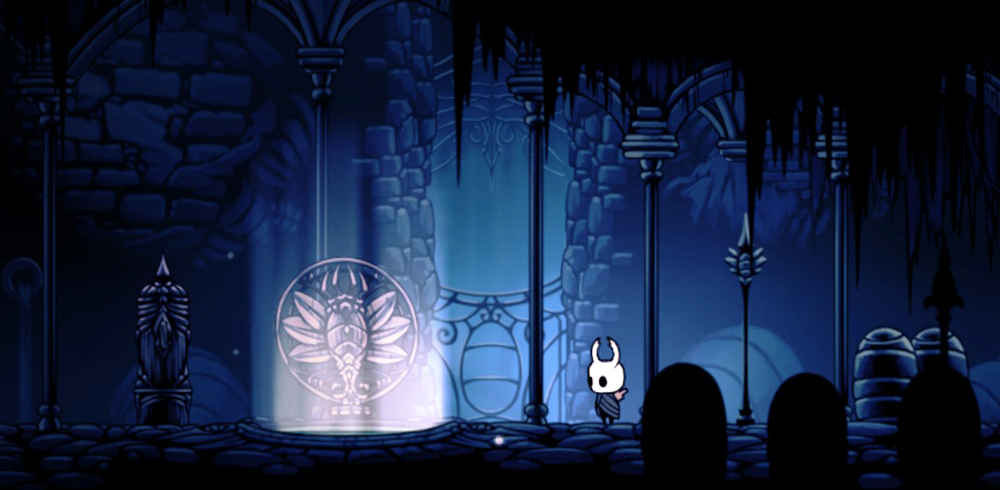
A perpetual rain falls on the ruined City of Tears in Hollow Knight, and this water flows into the Royal Waterways below. At the edges of the settlement, the sewer channels are falling apart and choked with debris. Directly under the city, however, the rainwater pools into gentle streams whose luminescence casts soft shadows of light onto the darkness of the tunnel walls.

You can read the full piece on Sidequest here:
https://sidequest.zone/2025/03/03/video-game-sewers/

Sidequest Article on Fantasy America

I often write about Japanese culture in video games, so I thought it might be fun to explore how Japanese games represent American culture. I’m a fan of thematically curated lists, which can help draw parallels and comparisons that invite deeper investigation.

Here in February 2025, it’s a weird time in the United States. To say that we’re living through a crisis of national identity feels like an understatement. The piece I wrote for Sidequest isn’t political, but I still found it interesting and meaningful that Japanese fantasies of the United States are incredibly diverse. In fact, I might even say that “diversity” is a major aspect of the appeal of America as a video game setting.

You can check out the piece on Sidequest here:
🍔 https://sidequest.zone/2025/02/10/five-japanese-games-set-in-fantasy-america/

Beacon Pines

Beacon Pines is an isometric narrative adventure game that takes about four hours to finish. You play as a 12yo boy named Luka who decides to explore a mysterious abandoned factory over summer break and accidentally uncovers the dark secret of his quiet mountain town in the process.

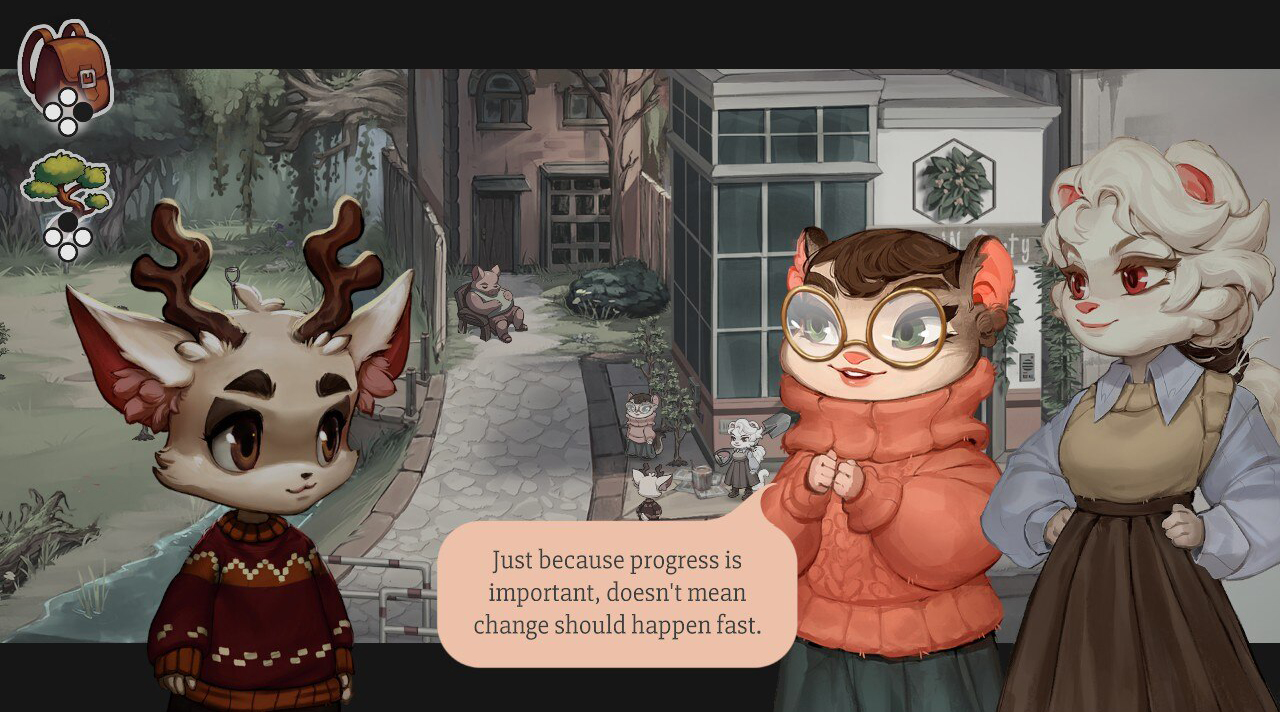
In terms of its playspace, Beacon Pines is relatively small. Not counting a few plot-specific locations that you only visit once, there are about fifteen outdoor screens in the game, along with perhaps half as many indoor screens. Each of these screens is beautifully painted, with each point of interaction clearly indicated. 

What gives Beacon Pines a sense of scale is its structure. The game envisions its story as a tree and gives the player the option to make a key choice at each divided branch. While progressing through the separate branches of the story, the player will naturally pick up “charms,” or words that can be used to slightly adjust the narrative at critical points.

You can always return to an earlier choice with zero backtracking when you get a new charm, and the story’s pacing is excellent. The time spent on each branch is relatively short, which makes it easy to remember what’s going on when you switch to another branch. The way everything fits together as you progress is a masterpiece of narrative craftsmanship.

The tone and level of the writing is consistent with Luka’s age, and the first three Harry Potter novels are the easiest analogy. Each character in the expansive cast has a limited yet well-defined personality, and the story scenarios are improbable yet intriguing. There’s not much psychological depth, and the plot is pure fantasy, but I still had a great time with Beacon Pines. It was a pleasant shock the first time I saw the first dead-end branch of the story, which was delightfully morbid.

There’s one true ending of Beacon Pines, but players should expect to see about a dozen premature endings before they get there. In other words, it’s a linear story, but it’s told in a creatively nonlinear manner that takes every “what if” scenario into account. Again, the narrative craftsmanship is superb.

It’s easy to make a comparison with Night in the Woods, as you directly control a character who makes progress by walking around a beautiful small town and talking to every NPC. The themes of the story are similar as well, as the town of Beacon Pines suffers from corporate ownership of its fertilizer factory in the same way that Possum Springs suffers from corporate ownership of its mines. As in Night in the Woods, there are supernatural elements at play, although Beacon Pines is more concerned with mad science than cosmic horror. The major difference is that I wouldn’t give Night in the Woods to a child, while Beacon Pines is suitable for middlegrade (10-14yo) players.

I am not the target audience for “all-ages” fiction, but I enjoyed Beacon Pines regardless. Most of the adult characters in the game are problematic and relatable, and the story’s environmental themes are worth considering beyond a superficial level. The villains are a lot of fun, as are the more horror-themed elements of the plot.

It’s also important to note that the character art is gorgeous. The animal characters were clearly drawn by a furry artist in a way that the characters in Night in the Woods were not, but I have nothing but love for this art style. Despite the relatively large cast of characters, the character designs are all unique and visually interesting. I’m not a furry myself, but I was still able to appreciate the high polish of the art. There is no cringe here, just beauty and creativity.

The environmental art is gorgeous as well. The pleasant façade of Beacon Pines is indeed pleasant, with lovely trees and handsome buildings adorning each screen. Although we don’t see much of the town’s dark secret, the visual design of the spaces it affects fit the theme perfectly. 

In terms of gameplay, I always felt directly engaged with the story. There’s nothing missable or collectable, and the game doesn’t get cute with achievements. There are two optional minigames, and they’re both unobtrusive and enjoyable.

Beacon Pines is short, inexpensive, and accessible. If you’re a fan of Night in the Woods, or if you’d like to play a visual novel with more interactivity, I’d definitely recommend giving Beacon Pines a shot. Since it comes off a bit like a generic cozy game on its Steam page, I had no idea Beacon Pines would be as interesting as it is, but it’s an amazing treasure of a game.

Apartment Complex

Apartment Complex
https://kinerus.itch.io/apartment-complex

Apartment Complex is a short and free-to-download narrative exploration game set in a mostly abandoned apartment building. The only human occupants of this building are its two landlords. You play as one of the owners, who is middle-aged, jobless, and depressed. In an effort to do something with his life, your character takes it upon himself to check in with the tenants, who are not even remotely human.

The game only takes about twenty minutes to play, and the gameplay consists of walking through the three-story building and talking to the tenants. Just to put this out on front street, Apartment Complex has a message, and that message is that landlords are bad. I don’t disagree, but the game isn’t shy about being didactic. Putting the armchair Marxism aside, the writing is a lot of fun.

Each of the eight tenants (inasmuch as they can be counted) is a Lovecraftian monstrosity that defies Euclidean logic but still needs a place to stay on this particular plane of reality. Perhaps because of his depression, your character isn’t the least bit bothered by the ontology of these beings. Regardless of whether he’s talking to the fungus-infested remains of the former co-landlord, a divorced dad with multiple alligator mouths, or a colossal all-seeing eye of the abyss, this guy takes each of these conversations in stride.

And honestly, this is such a mood. I get it. Sanity-altering cosmic abnormalities are a dime a dozen, but you know what’s really fucked up? The unequal distribution of wealth across class lines. Again, Apartment Complex has a message, but it’s not wrong.

Also, given that the creator is only twenty years old, I admire the accuracy of the game’s portrayal of the jaded middle-aged mindset. Like does it really matter that your neighbor is an eldritch abomination who exists in the shadows of reality? Does it even matter.

Where Apartment Complex shines is the boldness and creativity of its 16-bit pixel art. The floorplan and room layouts of the building are bog-standard, but the way each tenant occupies the space has to be seen to be believed. If you’ve ever wondered just how weird Earthbound-style graphics can get, this game is for you. The character portraits displayed during conversations are incredible.

From its eye-catching color palette to the dry tone of its absurdist humor, Apartment Complex makes me nostalgic for Welcome to Night Vale in the best possible way. This is a chill and fantastically creative game about monster friends and postmodern malaise, and honestly? It’s super relatable.

Vacant

Vacant
https://doublecrow.itch.io/vacant

Vacant is a free-to-play 2D narrative adventure game that takes about 35 minutes to finish. You play as a camerawoman named Elena who accompanies her friend Priya to a hotel that was abandoned shortly after it was built. Priya runs a ghost hunting video channel, and she wants to make it big by solving the mystery of the unexplained disappearances of Masthill Lodge.

Following a short hike through the woods, Elena and Priya enter the abandoned hotel, which has two floors and a basement. There’s a kitchen and a few staff rooms on the first floor, and the guestrooms are on the second floor. The space is large enough to be fun to explore but small enough to be manageable. All points of interaction are clearly marked, and there are no puzzles. The occasional dialogue choices are fun but don’t seem to affect the story, which is fairly linear.

After you poke around a bit, Elena and Priya have a heart-to-heart talk about why Priya makes these videos despite her firm belief that ghosts don’t exist. Her work is about the craft and the connection with her audience, she says, giving a perfectly reasonable explanation for why so many people enjoy ghost hunting videos.

Regardless, there’s something not quite right about Masthill Lodge. How did 54 people disappear here, exactly? And why has no information about any of them turned up in the ten years since?

The tension comes to a head when a man suddenly appears outside the lodge. “Don’t make a sound,” Priya says, and this is when the strength of the medium comes into play. As the player, you have to move forward, and your choices are limited for the worst possible reasons. I don’t generally get creeped out by horror games, but let me be honest – this one got me.

The writing in Vacant is excellent, and the characters are human and believable. The pixel graphics and sound design contribute to the subtly creepy atmosphere. The pacing is perfect, with a good balance of character drama, humor, mystery, and horror. The ending is fantastic.

There’s no way to save your progress, so you’ll need to sit down and play the whole story in one go. I didn’t mind, as the game is so well crafted that it’s easy to become immersed in the fiction. If you’re a fan of the character writing of Night in the Woods or the magical realism of The Magnus Archives, I’d definitely recommend checking out Vacant.