Tsuboniwa

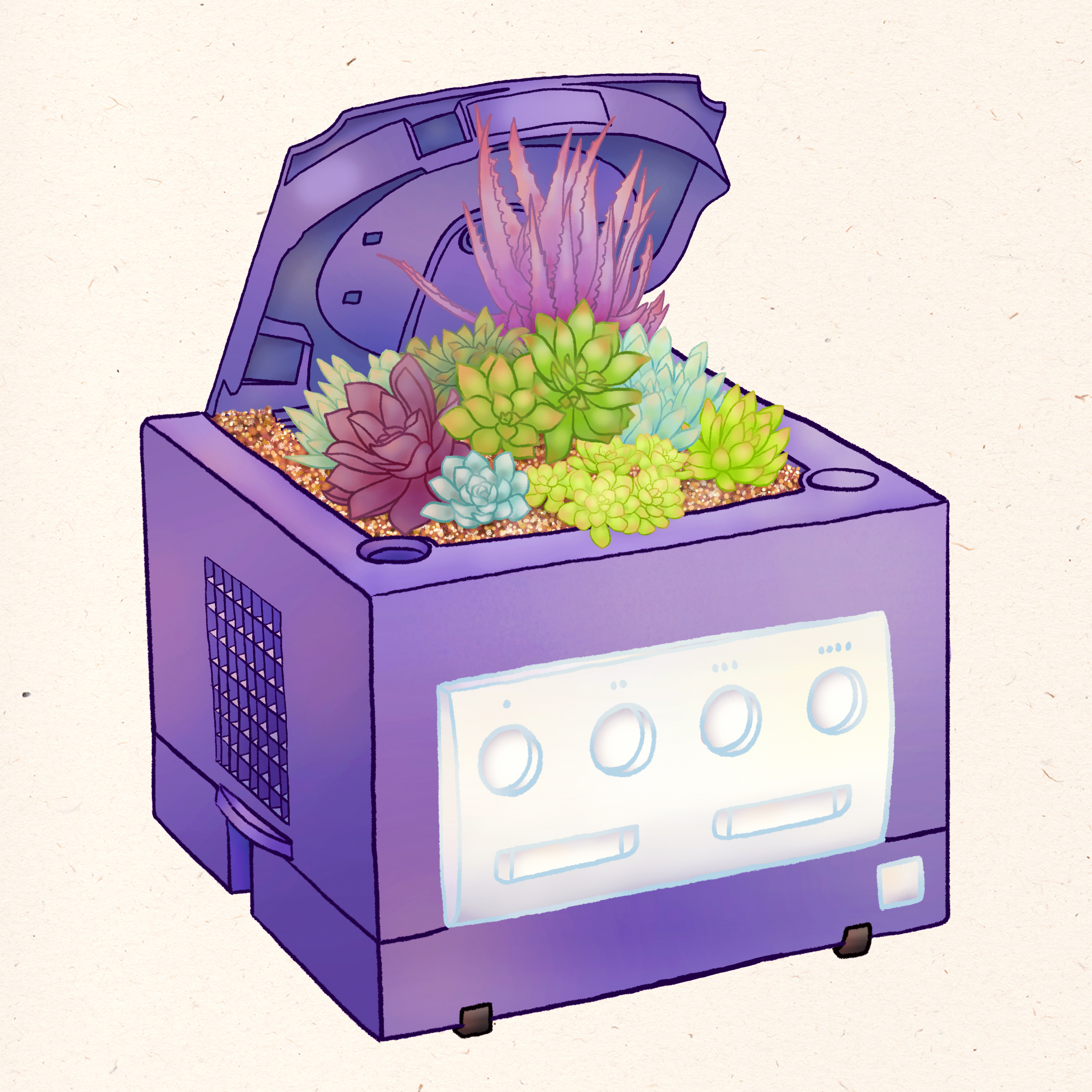
Shigeru Miyamoto has famously said that he envisions video games as small gardens. He uses the Japanese word tsuboniwa, which refers to the tiny courtyard gardens of traditional Kyoto machiya townhouses that are narrow but long enough to have a private garden in the middle. This is how video games have always felt to me. When I enter one of these virtual worlds, I can explore the green space at my leisure while taking a quiet moment to rest and reflect.

. . . . . . . . . .

I created this piece to include in the Philly Zine Fest 2021 Anthology. You can check out this year’s event on their Instagram account (here) and their website (here).

Flowerblight Ganon

I posted a short story on AO3 (here) about a minor character in Breath of the Wild named Magda, who is affectionately known by the fandom as “Flowerblight Ganon.”

In Breath of the Wild, Malice is a tangible substance that infests objects and locations controlled by Ganon, including the four Divine Beasts, Hyrule Castle, and the Akkala Citadel Ruins. It also infects the dragon spirit Lanayru who guards the Spring of Wisdom.

While writing this story, I wondered if it were possible for Malice to infect regular people. If so, the woman who zealously guards the garden of flowers surrounding Hila Rao Shrine is as good of a candidate as anyone.

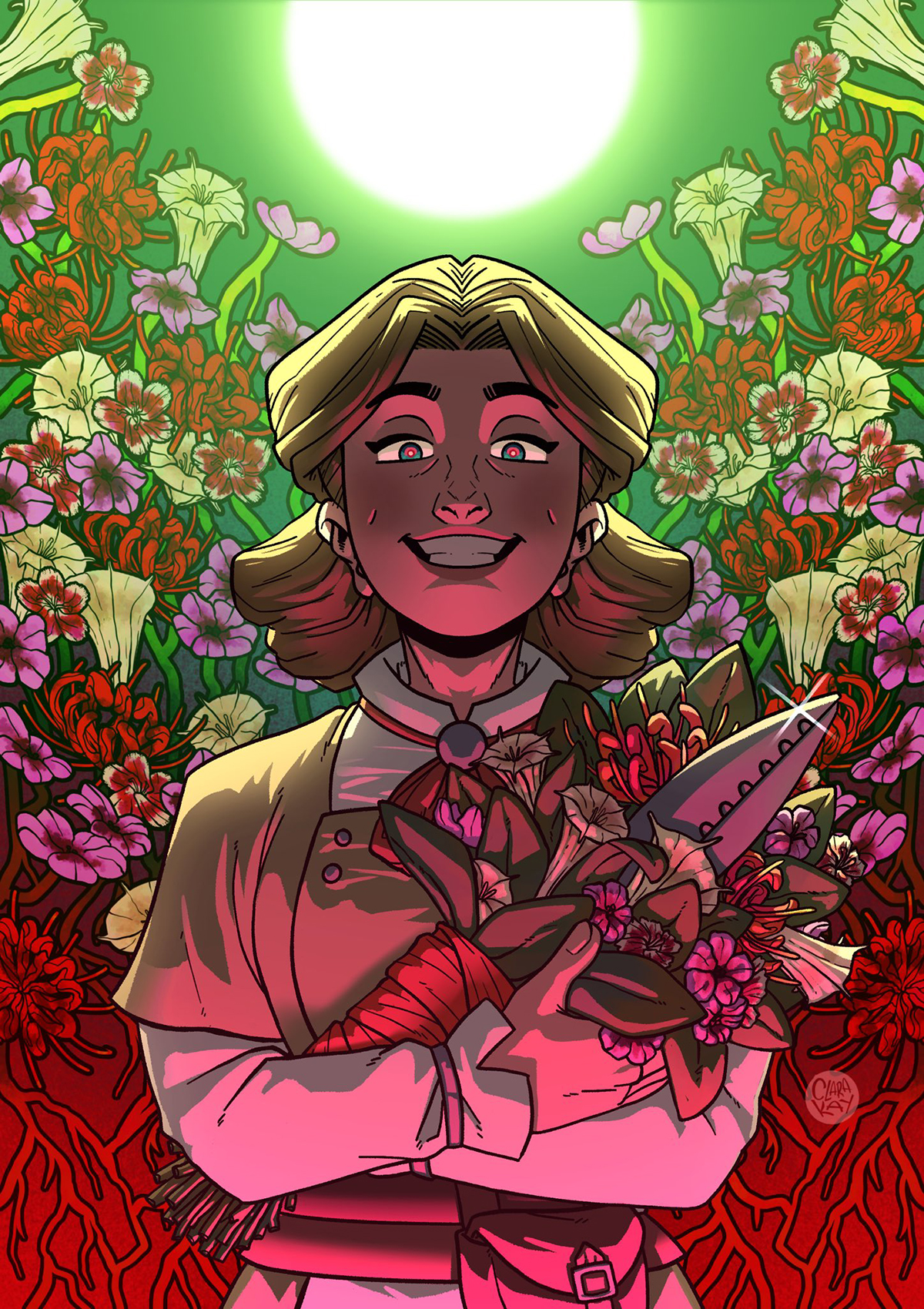
The story illustration is by Clara Kay, whose gorgeously monstrous horror art can be found on Twitter (here) and on Instagram (here). I really enjoyed working with Clara, and I also want to give a shout-out to her store (here), which has all sorts of cool Legend of Zelda merch!

I’d like to share a bit of the artist’s description of this piece, because it’s fascinating:

There’s a lot of symbolism packed into the flowers here. The petunias (pink) represent anger and resentment, the devil’s trumpet (the tall white one) represents power and caution, the spider lily (big spiny red one) represents death and reincarnation, and the carnation (white with red ring) is considered the ‘flower of the gods’ and represents admiration, passion, and love.

Carnations represent “passion and love” because they’re thought to be white flowers dyed red with blood, which is entirely appropriate for this story. “Flowerblight Ganon” is my first foray into botanical horror, and I don’t think it’s necessary to be familiar with Breath of the Wild to understand what’s going on. Magda is a regular woman enjoying gardening, quiet living, and occasional tea with friends in a dying postapocalyptic world, and if she lives her best life by indulging in murder every once in a while, then at least her flowers are well fertilized.

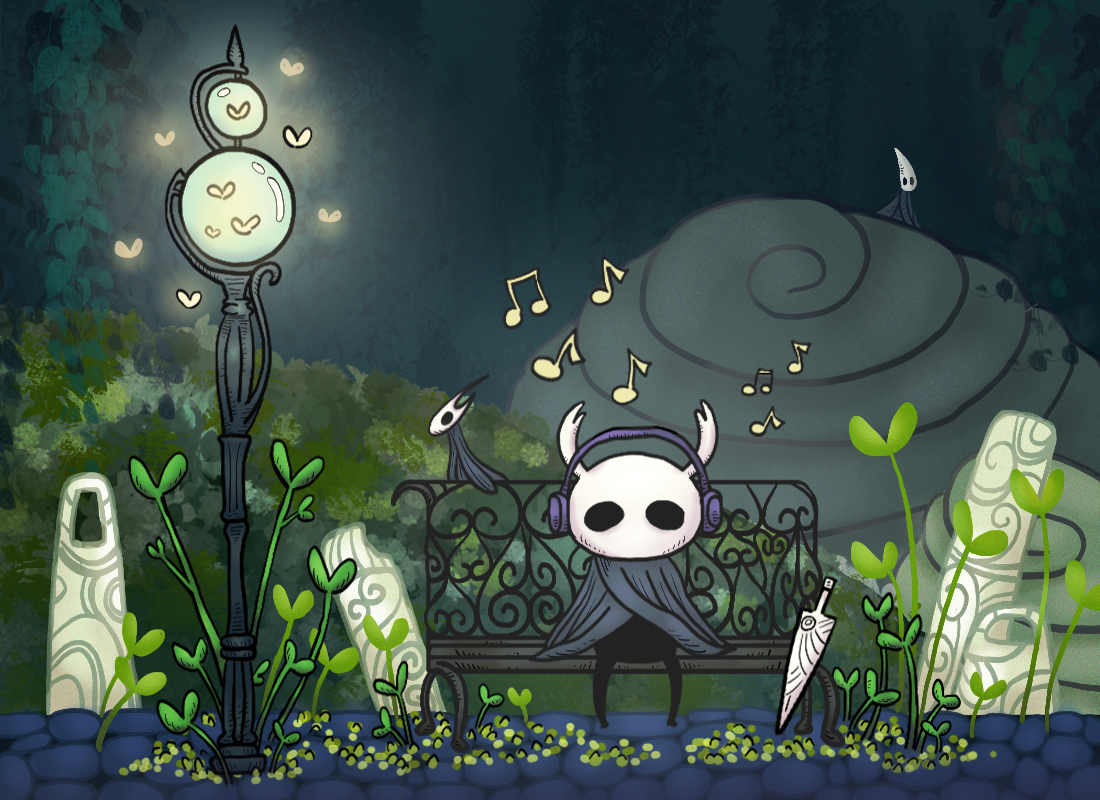
Greenpath

Hollow Knight is a Metroidvania-style adventure game set in the forgotten underground kingdom of Hallownest. The kingdom fell to ruin after a viral blight infected its citizens, transforming them into mindless husks. As a knight in the form of a small beetle wielding a nail, you venture below the surface through a secret entrance in an old well to challenge the mysteries of Hallownest.

The old underground roads are long abandoned, and there are no helpful signs to guide the player through the maze of passages. The necessity of careful exploration as you find your own path forward is one of the primary appeals of Hollow Knight, but it’s easy to lose your way and fall victim to the undead husks or become trapped in the dilapidated infrastructure.

The tiny protagonist’s journey through Hallownest is lonely, but the ruins of the old kingdom are far from empty. Where there were once cities and markets and train stations, dense vegetation now breaks through the paving stones and covers crumbling structures in blankets of flowering plants. Nowhere is this postapocalyptic explosion of nature more apparent than an area called Greenpath, where small birdlike creatures flutter through the underbrush while giant dragonflies glide in lazy circles above bubbling pools of acid water.

Hollow Knight’s soundtrack, written and digitally performed by the Australian composer Christopher Larkin, captures both the loneliness and wonder of the kingdom of Hallownest. I find the background music for Greenpath especially atmospheric and evocative. It begins with bright and gentle strings that suggest the twinkling of fresh dew and the whisper of wind over moss. Soft and airy notes from a flute and xylophone join the song to create a melody reminiscent of the rustling of leaves as you scuttle through the bushes. 

The environmental music in Hollow Knight is adaptive, meaning that it changes according to gameplay. Some of the more challenging sections of Greenpath necessitate precisely timed jumps over deadly beds of tangled thorns, and the song crescendos into string chords as staccato as your character’s footsteps as you rush through the beautiful yet menacing jungle. You feel as though you’re truly exploring overgrown ruins, brushing aside vines as you navigate the twisting stone corridors.

The quietly elegiac environmental songs of the Hollow Knight soundtrack are oddly relaxing and make excellent ambient background music. If you’re in the mood for something more upbeat, the boss fight battle songs are fantastic as well. You can listen to the complete album on Spotify and YouTube, and (this link) will take you directly to the song “Greenpath” on Bandcamp. 

. . . . . . . . . . . .

This essay was published in the “Playlist” issue of the West Philly Dog Bowl Zine, which debuted at the Philly Comics Expo this past weekend. You can download a free digital version of the zine via their Linktree site (here).

Half Past Fate

Half Part Fate is a visual romance novel by an American developer that follows three couples on their journey to their first date. There’s a long list of possible achievements to unlock, but the story itself is entirely linear. Although the characters are adults, the tone is 100% PG, and everything is very sweet and wholesome.

The game is divided into twelve chapters, each of which takes about ten to fifteen minutes to complete depending on how quickly you read and how much you want to explore. You play each chapter as one of the romantic leads in a top-down environment, each of which functions as a small and self-contained stage reminiscent of the “town” sections of a 16-bit JRPG. Your job is to walk around and talk to people, and the gameplay elements are limited: Person A will give you Object B, but only if you trade it for Object C that you get from Person D. There are (mercifully) no puzzles or reflex-based minigames, making Half Past Fate a chill and relaxing experience.

The environments are a lot of fun. The game is set in a romanticized hybrid of Los Angeles and Austin, and there is no crime, poverty, or infrastructural decay. Everything is clean and neat and aesthetically pleasing, and no one is rude or creepy. You can therefore walk around urban environments like coffee shops, public parks, outdoor shopping arcades, and waterfront bars without worrying that someone is going to report you to the police for striking up conversations with strangers. Half Past Fate reminds me a lot of Earthbound in that it offers the player an opportunity to stroll around a contemporary city and read quirky flavor text while catching small glimpses of people’s lives.

The three love stories are just as cute and charming as the pixel art. One couple has been friends since college but never found the right time to confess their feelings, and now they find themselves realizing how much they mean to each other as their artistic careers have started to take off. One couple meets randomly at a tea-themed street fair and has a lovely afternoon together, but then the boy loses the girl’s phone number and has to track her down. The third couple is entangled in a high-stakes game of money and power and deception, and it admittedly takes a willing suspension of disbelief to fit them into the same world as the other characters, but I still liked their story a lot.

The three main couples are straight, but they’re surrounded by representatives of a rainbow of genders and sexualities. Many of the queer side characters are involved in romantic dramas that you can piece together if you take your time exploring, and queerness is so open and omnipresent that the straightness of the main characters doesn’t feel forced.

In addition, the diversity of the cast is taken entirely for granted, which I appreciate. The racial and ethnic identities of the characters are specific and affect more than their family names and physical appearance, but they’re never the sum total of any character’s personality or backstory. Speaking personally, it’s rare to see multiethnic friend groups represented in popular media in a way that doesn’t involve tokenism, but the characters’ networks of relationships felt very real and natural to me.

I picked up Half Past Fate on Nintendo’s online storefront, and I enjoyed playing it as a handheld portable game on the Switch Lite. I’m not sure if the full $10 list price will be worth the three hours of gameplay for everyone, but it definitely was for me (especially considering that paperback novels cost almost $20 these days). Although I would have preferred a bit more bite and tension in the storytelling, the art and graphics are wonderful, and I’m a big fan of this retro JRPG style of structuring a visual novel. I’ve already downloaded the second game in the series, Half Past Fate: Romantic Distancing, and I’m looking forward to sitting down with it the next time I want to spend a relaxing afternoon in a softer and brighter version of reality.

The Coming Storm

This is a tribute to the iconic Zac Gorman comic, but with a twist.

I sometimes think about how Ganondorf more than likely didn’t start out as evil. I imagine that he probably went on a journey that paralleled Link’s, but his reaction to the secrets he found in hidden caves and forgotten temples was substantially different due to the circumstances of his life and destiny. While the Legend of Zelda games contain subtle elements of melancholy from Link’s perspective, Ganondorf’s story is more like a full-on Greek tragedy.

Mad Father

Mad Father is a retro survival horror game about a cute girl named Aya who lives in an isolated mansion with her father. As you might be able to guess from the title, her dad is not 100% sane.

The game was originally designed with RPG Maker and released on Steam in 2012, but it’s been remastered for Nintendo Switch with updated graphics and sound design, as well as a few postgame bonus segments. It takes about three hours to play, and I felt that it was a good value when I bought it on sale on Nintendo’s digital storefront for $5. The horror is ghoulishly cheesy, and the jump scares are a lot of fun.

The opening of the game is nonlinear, as Aya has the run of the entire aboveground portion of the mansion. It’s somewhat difficult to understand what to do at first, and I admit that I had to consult a walkthrough to figure out how to get started. Once you gain access to the family’s sprawling underground murder dungeon, however, the path forward becomes easier to discern. Also, once you figure out how the environmental puzzles are supposed to work, they become much more entertaining.

As you grow accustomed to Mad Father during the first hour of playing, the jump scares become less effective, and the game compensates by leaning hard into camp. I don’t mean to suggest that anime can’t be scary, but Mad Father’s combination of over-the-top character portraits and cute pixel art amps up the carnivalesque elements of the story. By the time the dad starts chasing you with a chainsaw, my main reaction to the various horrors on display was delighted amusement.

There is one genuinely creepy moment toward the beginning of the game involving the father’s (nonsexual) reaction to the distress of a naked preteen girl, and it’s creepy because the game knows this reaction is upsetting but still treats it as perfectly natural. The killer dolls and unquiet ghosts haunting the tunnels of the murder dungeon aren’t actually all that scary, but the “kind” behavior of the father during the sepia-tinted nostalgia flashbacks is super disturbing. Mad Father is officially rated Teen, but it’s definitely not for kids (or adults sensitive to depictions of child abuse).

The basement of this family’s house is truly epic, by the way. The other day I was reading that a lot of families who live in McMansions don’t actually have any furniture in most of the rooms, and that makes sense to me. If you’re not imprisoning people to use as subjects for occult medical experiments, then what are you supposed to do with all that space, exactly? If nothing else, I suppose Aya’s dad is to be commended for his commitment to his interior decorating theme. It’s a shame that this theme is “horrible grotesque murder,” but if he’s paying the property tax on all those rooms then he might as well put them to good use.

Anodyne

After starting and abandoning Anodyne a few times on various platforms, I downloaded it onto my Nintendo Switch. Being able to play this retro-styled adventure game on a handheld console turned out to be just what I needed in order to appreciate the experience, and I got completely sucked into its world. Because of its horror elements, I’m not sure Anodyne is for everyone, but I had a great time working my way through the game while eagerly anticipating what sort of strange and grotesque imagery I would encounter next.

The game has Pokémon Ruby/Sapphire style Game Boy Advance era graphics. The pixel art is by turns allusive and unique, and it’s occasionally genuinely gorgeous or horrifying.

The screen-by-screen dungeon and overworld layouts remind me a lot of the two Legend of Zelda Oracle games, and the gameplay is like what those games could have been if they had focused on their core strengths instead of distracting the player with extraneous marginalia. If you’re willing to explore a bit, you can learn to jump fairly in the game, and it’s a neat ability to incorporate into the Zelda-style gameplay.

Anodyne also gives off strong Yume Nikki vibes. You start off on a fairly generic quest, but it quickly becomes clear that you’re exploring a manifestation of the subconscious mind of the protagonist, who is not doing okay. There are clear references to addition, depression, and suicidal ideation, and each of the dungeons is themed after a specific fear. The first dungeon is about the fear of not being able to see, the second dungeon is about the fear of being born from the bloody entrails of your mother’s body, the third dungeon is about the fear of being generic and unnecessary, and so on.

Anodyne also reminds me of the original The Legend of Zelda in that there’s zero guidance – the game has no interest in telling you where to go or what to do. This is why I abandoned it the first few times I tried to play it, as I arrived at its open field area and became overwhelmed. Once I decided to stick with it and finally figured out the small environmental clues meant to lead the player forward, it was a lot of fun to be able to go anywhere and do anything while unearthing a few secrets along the way.

Anodyne’s structure is balanced between the overworld areas and the dungeons, and each of the dungeons is a perfect puzzle box. Despite the gameplay mechanics being deliberately limited and basic, some of the puzzles are very clever. The controls are a little loose, but it’s not really a combat-heavy game. There’s no real penalty for dying, and I died a good three dozen times out of sheer laziness but didn’t feel frustrated even once.

It took me about six hours to finish Anodyne, and I enjoyed every minute. It seems there’s a lot of postgame content that involves revisiting various locations, talking to important characters again, and using a new ability to access a bonus dungeon. This game is subtly but undeniably disturbing, and I’m looking forward to seeing just how weird it can get after the first “quest” has been completed. Or maybe the player-character finally works through his trauma and gets better? That would be good too. I guess.

To summarize: Anodyne is a 16-bit nightmare adventure for a mature audience, sort of like a re-imagining of Majora’s Mask in which characters are allowed to say fuck. Putting the edginess aside, it’s super fun to play, and the dungeons are ghoulishly creative.
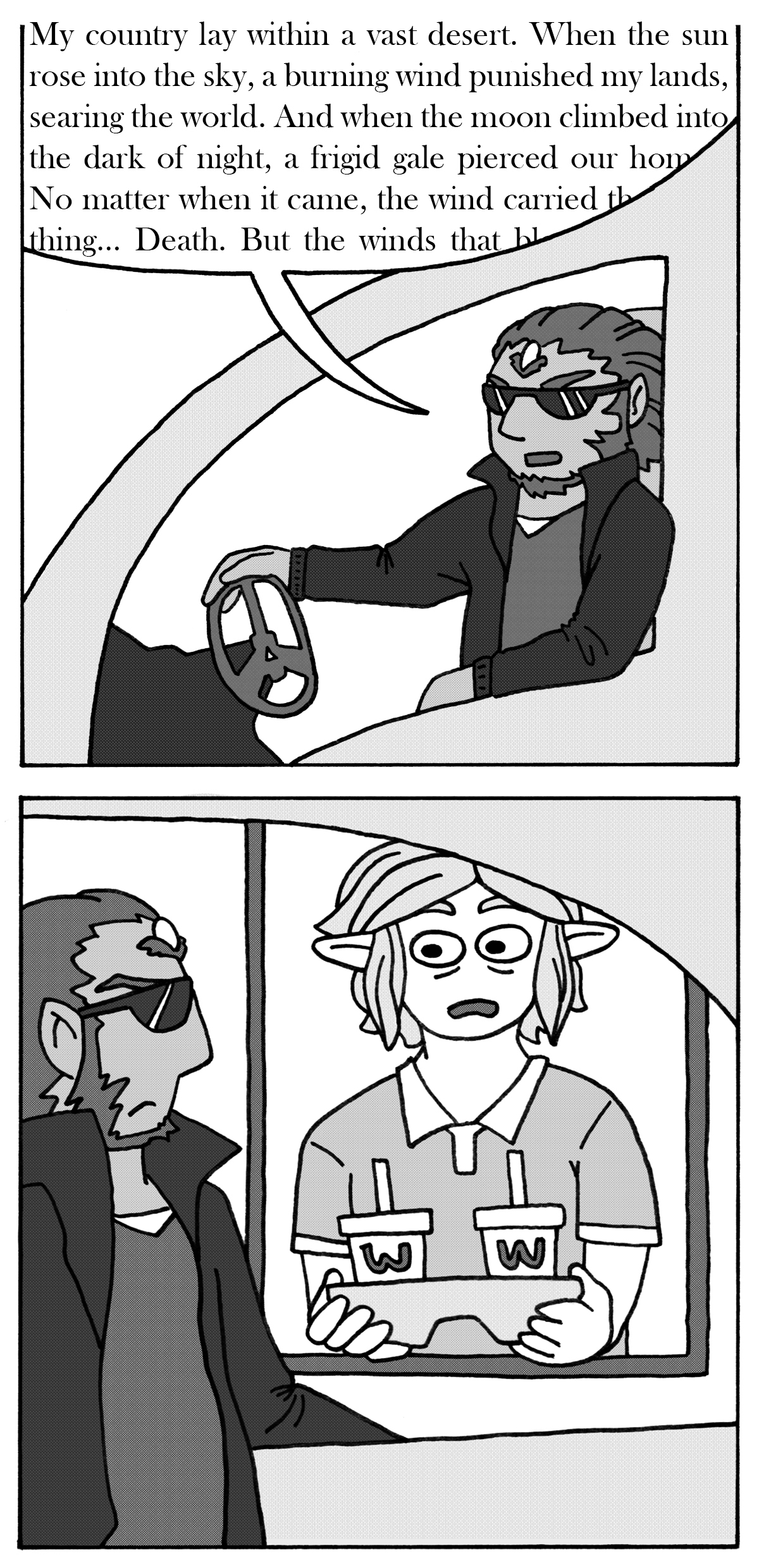
Turnip Boy Commits Tax Evasion

Turnip Boy Commits Tax Evasion is a 16-bit Zelda-style adventure game with cute graphics and meme-heavy writing that takes about two and a half hours to play from start to finish with 100% completion.

Along with a bright and colorful overworld, Turnip Boy Commits Tax Evasion features three formal inside dungeons and two less formal outside dungeons, as well as the usual variety of “go fetch me this thing” sidequests. The game is meant to be accessible to a diversity of players but still presents a range of entertaining challenges. The gameplay isn’t engineered for precision mechanics, which makes the boss fights somewhat more difficult than they perhaps need to be, but you can turn on “god mode” at any time from the menu. Around the middle of the game, Turnip Boy discovers a device that generates portals, and this tool enables are some fun puzzles involving getting bombs and blocks to where they need to be on the map in order to move forward.

Your main goal, as Turnip Boy, is to destroy every single piece of horrible paper you get your (non-existent) hands on. Tax documents? Rip them up. Leases? Rip them up. Receipts? Rip them up. A love letter that the girl you like wants you to deliver to someone who isn’t you, even though she knows you like her? Rip it up right in front of her face. Someone’s uwu anime drawing? Rip that mess up.

It’s very cathartic.

The exploration and puzzles are fun, but what I really enjoyed about Turnip Boy is the dialog, as well as the way your adorable yet feral protagonist’s silence is used for comedic effect. This game uses one of my favorite Earthbound-inspired tropes ever, which is to populate dungeons with people who talk to you, making them feel like towns that happen to be temporarily overrun with monsters. There are also diaries and other documents (that you can rip up!) scattered about in the dungeons that provide lowkey Fallout-style worldbuilding.

So I suppose you could say that Turnip Boy Commits Tax Evasion is a comedy story game that’s set up as a 16-bit Zelda adventure quest. Thankfully, the 16-bit graphics and Zelda-style gameplay elements work really well. The music is super-catchy too.

Is Turnip Boy Commits Tax Evasion worth $15? To me, it definitely was. A team of fifteen people developed this game, and I’m happy to give each of them a dollar. If you’re in the “I want shorter games with worse graphics made by people who are paid more to work less and I’m not kidding” camp, Turnip Boy Commits Tax Evasion is the game for you, especially if you’re in the mood to take an afternoon off and enjoy yourself by exploring a colorful fantasy garden while gleefully smashing capitalism.

A Noble Pursuit

None of the lessons from the Gerudo Classroom have prepared Rhondson for married life with Hudson, who has grown restless and disappeared from Tarrey Town a year after its founding. She travels to the Akkala Citadel Ruins to hunt for her husband while reflecting on the bridges that will need to be rebuilt in order for Hyrule to embrace a peaceful future.

“A Noble Pursuit” is a short story that explores the theme of cultural differences, including different attitudes regarding the preservation of historic sites, via the Akkala Citadel Ruins.

As the Gerudo tailor Rhondson crosses the Sokkala Bridges, she’s impressed by how sturdy and practical they are; and, at the end of the story, she considers how building more bridges – both literal and cultural – might help make the Akkala Citadel habitable once more.

At the end of the story, Rhondson finds that her missing husband Hudson has made friends with the monstrous Hinox who’s always snoozing away on the citadel’s parade grounds. She realizes that both the Hinox and her husband need a renewed sense of purpose, and she encourages Hudson to direct his energy into rebuilding the ruins of the Akkala Citadel into a place better suited to cultural exchange.  

This story about archaeology, castles, ruins, giant monster friends, and what it means “to live happily ever after” was written for Memorabilia, a Breath of the Wild fanzine​ that you can check out on Twitter (here) and on Tumblr (here). The accompanying illustrations are by the stylish scholar Pocketwei, whose art of handsome characters and beautiful landscapes can be found on Twitter (here) and on Instagram (here).

You can read “A Noble Pursuit” on AO3 (here).