Watching from the Shadows

I contributed a story about Impa and Princess Zelda titled “Watching from the Shadows” to Goddess Reborn, a zine celebrating the female characters of the Legend of Zelda series. You can check out the zine’s Twitter account (here), and you can read my story on AO3 (here). Here’s a short description of the story…

Impa prepares to train Princess Zelda as a Sheikah warrior during the year following the fall of Hyrule Castle. Zelda is tired of hiding and eager to fight, so Impa shares stories from the past to demonstrate that there is wisdom in waiting for the right moment to strike.

This spot illustration was created by the magical and marvelously skilled Frankiesbugs, whose sharp and deadly work can be found on Tumblr, on Twitter, and on Instagram.

Hylia’s Chosen Knight

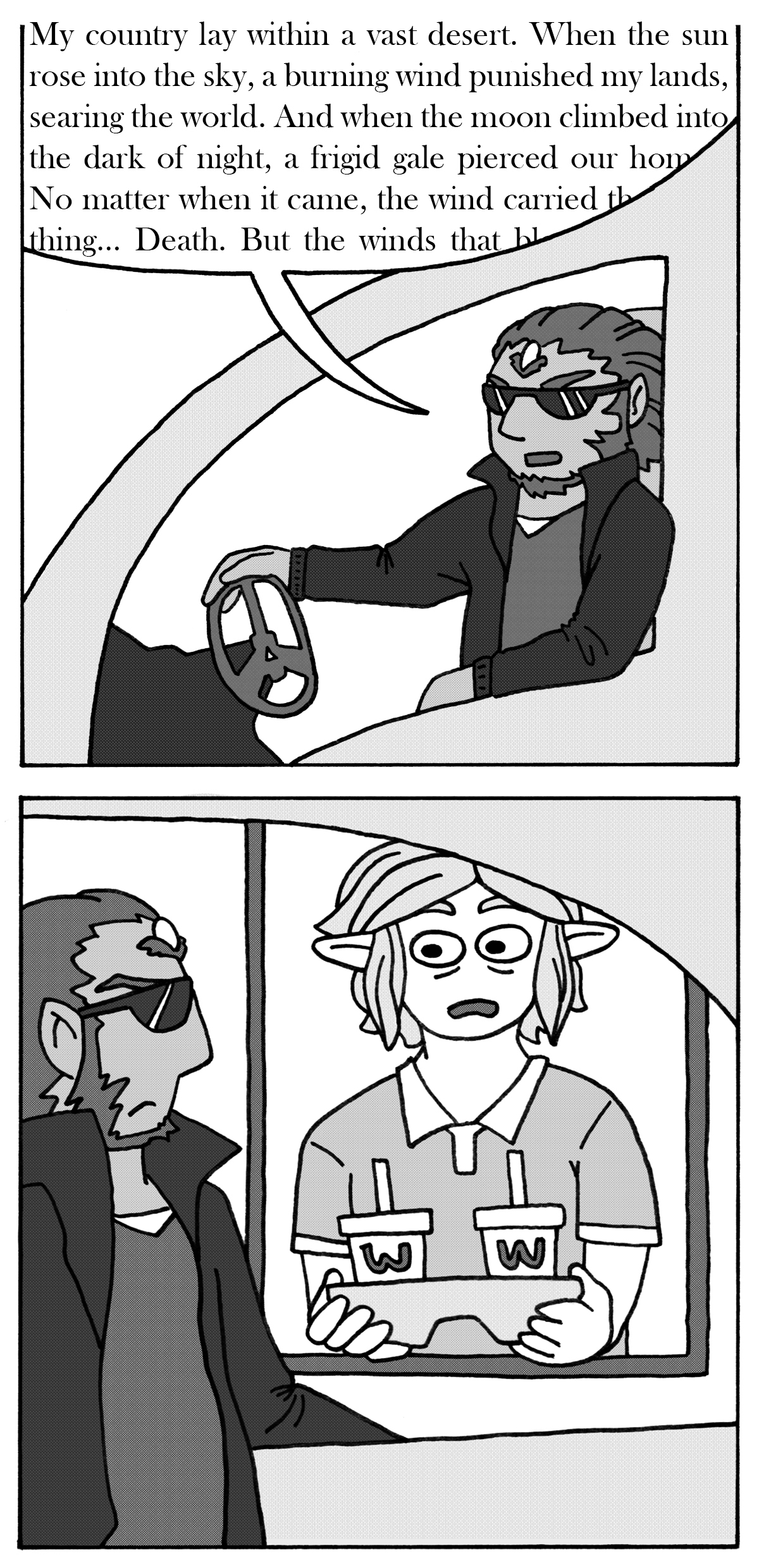
I had a horrible thought about the Legend of the Zelda mythology the other day. Demise’s curse supposedly follows the bloodline of the goddess Hylia, so all she needs to do to release Hyrule from an endless cycle of destruction is to stop reincarnating as a mortal. Why she insists on being reincarnated isn’t clear, but Skyward Sword strongly suggests that it’s because she loves Link so much. This is a little creepy…

…but I have nothing but unironic respect for ancient deities who behave like teenage girls!

Once I started thinking about Hylia being creepy, all sorts of interesting possibilities presented themselves. What if Hylia isn’t just a “goddess,” but also completely inhuman? What if she isn’t a sky goddess, but a being from beyond the sky? And what if it’s not necessarily Link she loved, but Hyrule? The idea of an eldritch cosmic entity who wants to become human because she loves the earth is beautiful. It’s also romantic, sort of like The Little Mermaid but endlessly apocalyptic.

Then I started thinking about the Sheikah, the group of people who have historically served Hyrule’s royal family from the shadows. In Breath of the Wild, the ancient Sheikah built incredibly sophisticated technology that is completely at odds with the otherwise medieval world of the game. In addition, their technology also features cosmic and sidereal motifs. What if the Sheikah always knew what Hylia was?

I was partially inspired by (this) comic about how potentially creepy Hylia is in Skyward Sword, and by (this) illustration of Zelda as subtly but undeniably monstrous. I’m fascinated by darker interpretations of the Legend of Zelda universe, and I would love to see more horror-themed Zelda art in the world. While I’m waiting for the sequel to Breath of the Wild to be released, I figured that I might as well create some myself.

Frankiesbugs is one of my all-time favorite horror artists, and I was beyond thrilled when she accepted my commission to draw this comic. She had the brilliant idea to model Hylia on Ebrietas from Bloodborne, who bears the sobriquet “Daughter of the Cosmos” and is theorized to have enabled the dystopian world of the game because of her desire to coexist with humans. Frankiesbugs also drew a connection between the iconic eye motif of the Sheikah and the possibility of Hylia having multiple eyes as someone who watches the earth from the skies – or as someone who always keeps watch over her chosen hero.

Frankiesbugs posts original horror art and video game fan art on Instagram, on Tumblr, and on Twitter, as well as on Teepublic and on Redbubble if you’re interested in wearing some creepy-cute graphic design.

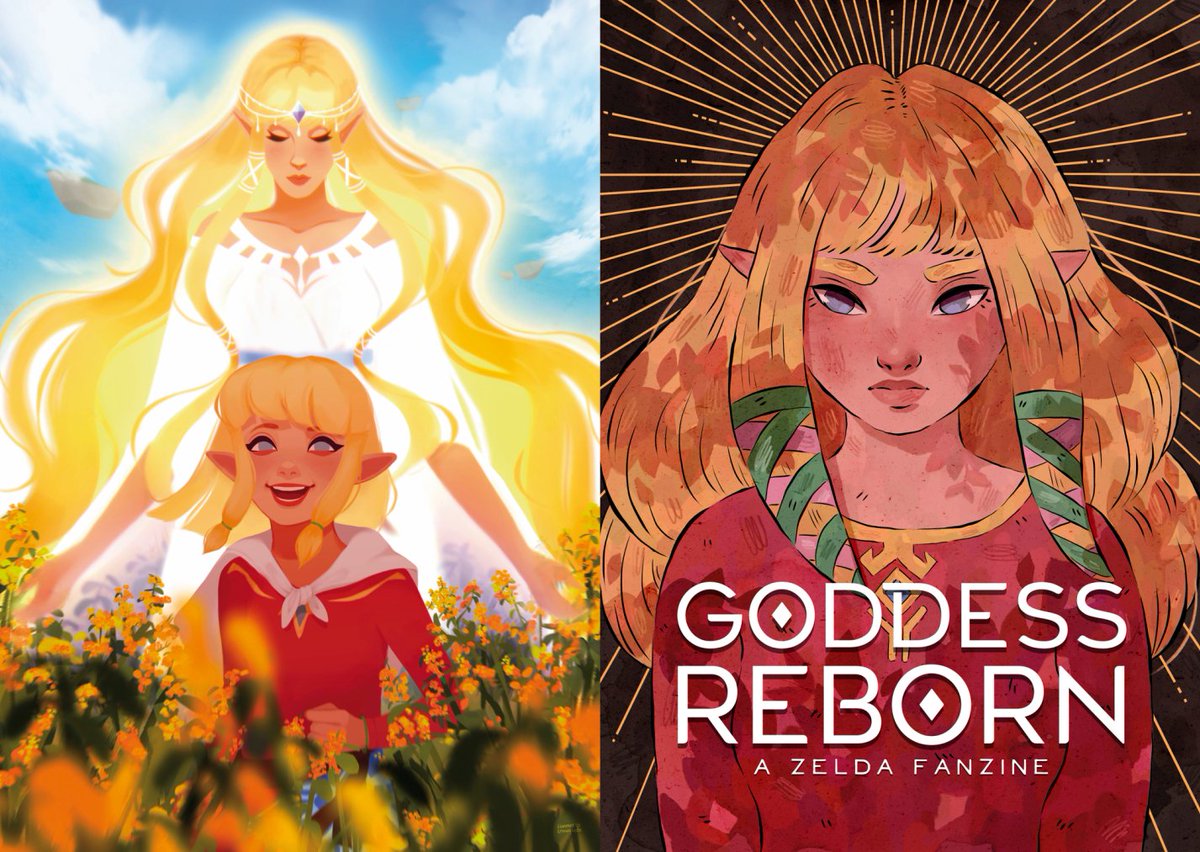
Goddess Reborn Zelda Fanzine

I’m excited to share a preview of the story I contributed to Goddess Reborn, a collection of art and fiction that celebrates the female characters of the Legend of Zelda series.

The zine is beautifully inclusive, and the amount of love that has gone into this project has been incredibly uplifting. I can’t wait for everyone to share their full pieces, but you can check out previews on Twitter (here) in the meantime. Preorders are open until May 31, and all proceeds go to international women’s charities.

goddessreborn.etsy.com

Deep Forest

Deep Forest by Small is Beautiful
https://small.itch.io/deep-forest

Deep Forest is a free GB Studio adventure game that takes about 45 minutes to play. There’s no combat, and the game is driven by puzzle-solving and exploration. You play as a forest witch tasked with helping three trees that have become mysteriously cursed. To purify a tree, you must first find it by exploring the forest. You then enter its nightmare, which functions as a dungeon. Once the tree’s curse is lifted, its thorny roots vanish, thereby allowing you to explore more of the forest.

This is the basic gameplay cycle of the Legend of Zelda series, and the simple puzzles of Deep Forest remind me of certain segments of Oracle of Seasons and Oracle of Ages wherein you:

(1) Use an animal to procure a seed.
(2) Find a patch of soil to plant the seed,
(3) which sprouts into a vine
(4) that allows you to climb a cliff.

If this similarity is intentional, it’s a lovely homage to the debut work of Hidemaro Fujibayashi, who went on to become the director of Breath of the Wild. In addition, I had a nice “Legend of Zelda” moment when I found a secret in Deep Forest. I was delighted when I realized that you can water the single square of roots in front of an otherwise unremarkable cave in order to discover a hidden spring. This moment of discovery lit a spark of excitement that reminded me of exploring Hyrule for the first time.

In terms of its visual style, Deep Forest is reminiscent of the Game Boy games that were released in the West under the “Final Fantasy” logo, which include the first Secret of Mana game and the first three games in the SaGa series. This style feels extremely nostalgic, and it’s cool to see it used to depict a thriving forest.

Deep Forest is fairly linear, and the gameplay mechanics are beautifully intuitive. I would have loved this game as a kid, and I’m extremely fond of it as an adult. It’s exactly the perfect length, and I enjoyed the exploration elements and wholesome story. As a unexpected bonus, the interactive postgame credits sequence is beautiful and genuinely feels like a reward for playing.

The Legend We Create

The courageous hero loves the wise princess, but they are bound by their fate and must put their feelings aside for the sake of a world floating above the ruins of an ancient kingdom.

…or so the legend goes, but some storytellers have a slightly different interpretation.

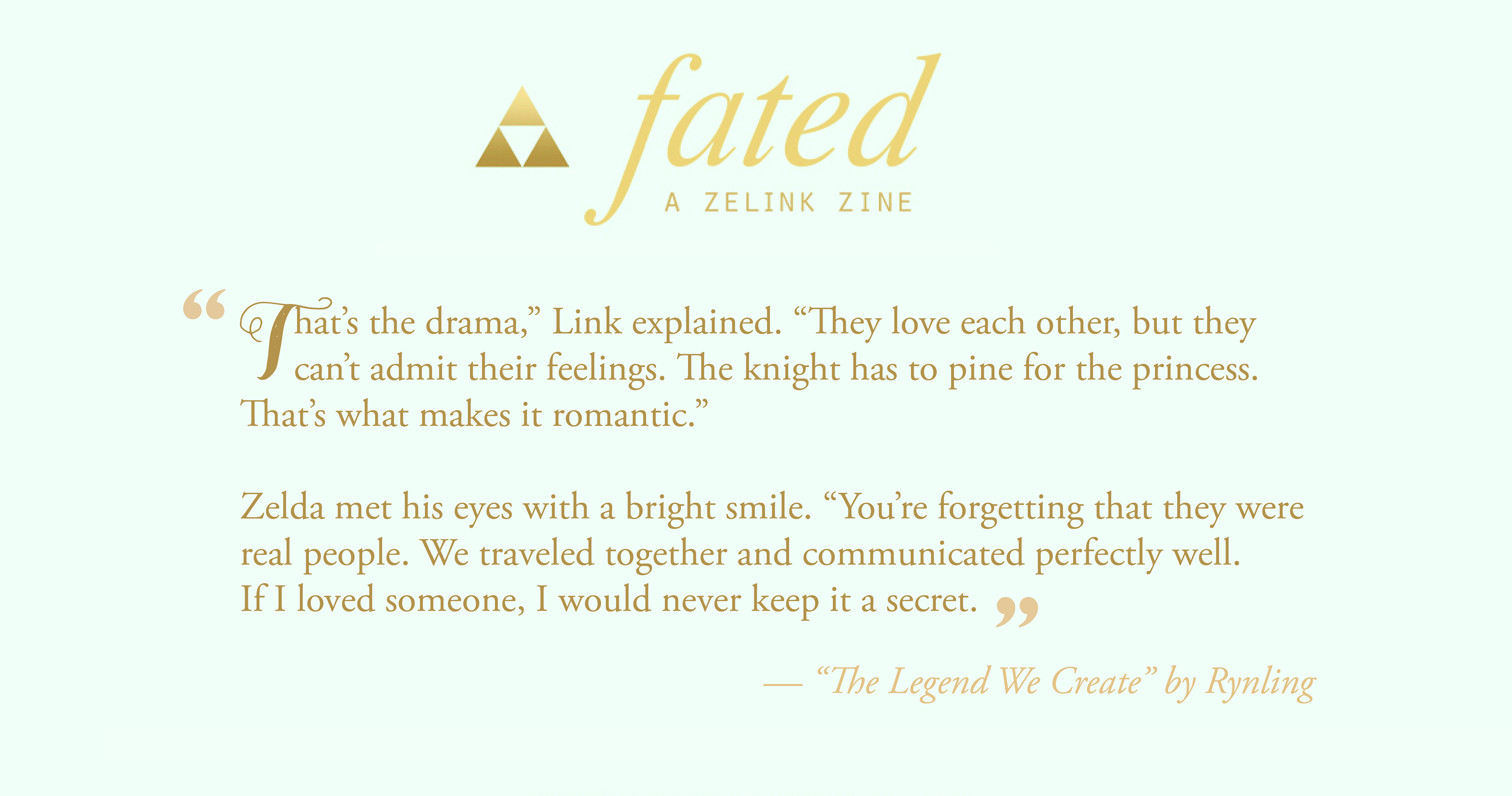
The Legend We Create is a tale of mutual pining and second-chance romance on the Great Sea, as well as a meditation on how each new generation heals the wounds of history by telling their own narratives about the past. You can read this short story on AO3 (here).

This story was published in Fated: A Zelink Zine. You check out the work of the other contributors on the zine’s Twitter account (here).

The Shadows of Hyrule

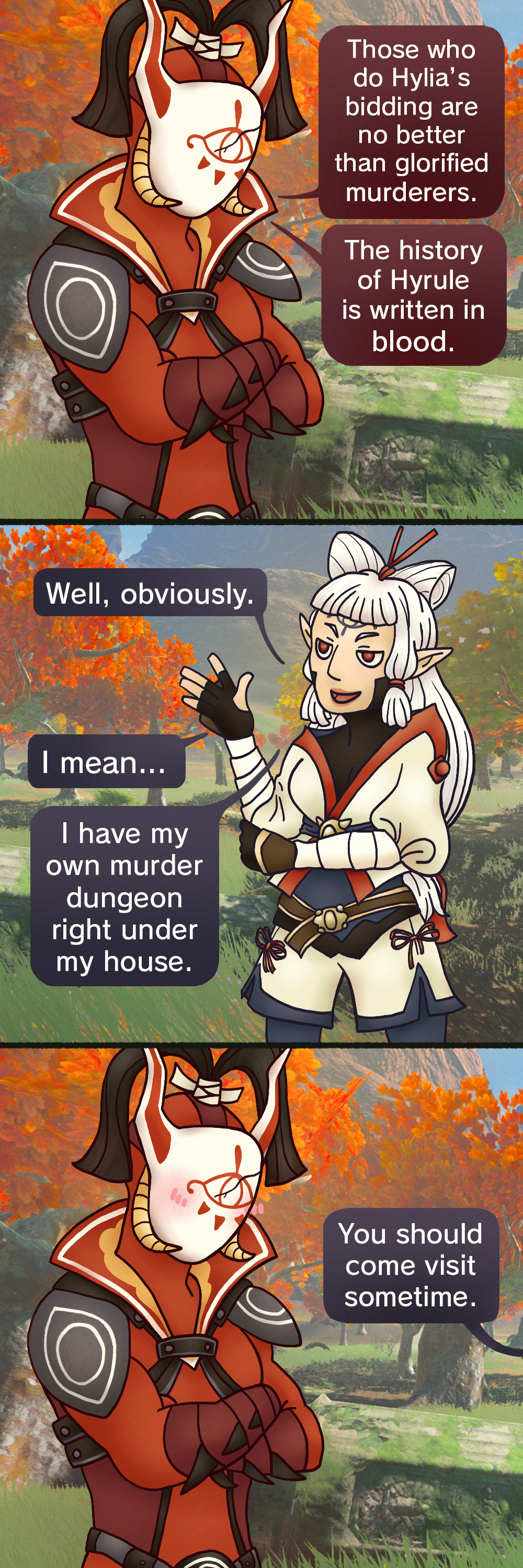
Honey, everyone has a murder dungeon in Kakariko Village.

The joke is that, while the “evil” Yiga Clan is characterized as violent and bloodthirsty in Breath of the Wild, the “good” Sheikah Clan is canonically just as disturbing. They’re all magical ninja assassins. What do you expect?

These two characters are Sooga and Impa from the Breath of the Wild AU melee fighting game Age of Calamity, and this is fan art of the four-part Sooga/Impa fancomic Shadow Folk by Frankiesbugs on Tumblr. You can read Shadow Folk on Tumblr starting (here), or you can donate 1€ to download a PDF version (here). I have to admit that I never considered any sort of relationship between Impa and Sooga until I read this comic, but the art is stylish and beautiful and the story is a lot of fun.

Growing Up with The Legend of Zelda

The Legend of Zelda series has been criticized for its formulaic writing, but one of the strengths of its archetypal characters is that they allow room for multiple interpretations. I was born in the same year as the Zelda series, and my perspective on these characters and their stories has shifted as I’ve grown older.

When I was a kid, I loved Link. I had no innate skill as a gamer, but I enjoyed the thrill of running wild in Hyrule. I may not have fully understood the game mechanics, but this meant I was always discovering new things. Despite my many deaths, I reveled in the certainty that I was a force of good fighting for justice, and it was comforting to know that all I had to do in order to succeed was to follow the marks on my map.  

In my late teens, I began to identify more with Princess Zelda. As my view of the world became wider, I realized that it wasn’t always the best course of action to charge forward with an unsheathed sword. I also came to understand that it was impossible for me to be a lone hero. There were times when I would be at the mercy of forces beyond my control, and sometimes I would need to rely on the strength of other people to achieve my goals.  

Now that I’m an adult, I can’t help but sympathize with Ganondorf. The world is infinitely complicated and filled with impossible decisions. Even though you may have the best of intentions, it’s inevitable that some people will see you as a villain when you challenge the status quo. If you want the power to change the world, you have to forge your own path, and no one will give you a map marked with signposted quests to complete. Still, as long as you’re making your own rules, you might as well be stylish and have gorgeous hair.

The Legend of Zelda series has become a type of modern mythology. The games continue to be relevant not just because of the strength of their gameplay, but also because of the resonance of their archetypes in the lives of the people who grow up with their stories. Instead of growing out of the Zelda series, I’ve found that I’ve grown to appreciate it more now that I can relate to the characters through multiple levels of lived experience.

. . . . . . . . . . . . . . . . . . .

This essay and its accompanying illustration were originally published in Coin-Operated Press’s Nerd! Zine anthology. You can check out the zine on the press’s website (here).

Flowerblight Ganon

I posted a short story on AO3 (here) about a minor character in Breath of the Wild named Magda, who is affectionately known by the fandom as “Flowerblight Ganon.”

In Breath of the Wild, Malice is a tangible substance that infests objects and locations controlled by Ganon, including the four Divine Beasts, Hyrule Castle, and the Akkala Citadel Ruins. It also infects the dragon spirit Lanayru who guards the Spring of Wisdom.

While writing this story, I wondered if it were possible for Malice to infect regular people. If so, the woman who zealously guards the garden of flowers surrounding Hila Rao Shrine is as good of a candidate as anyone.

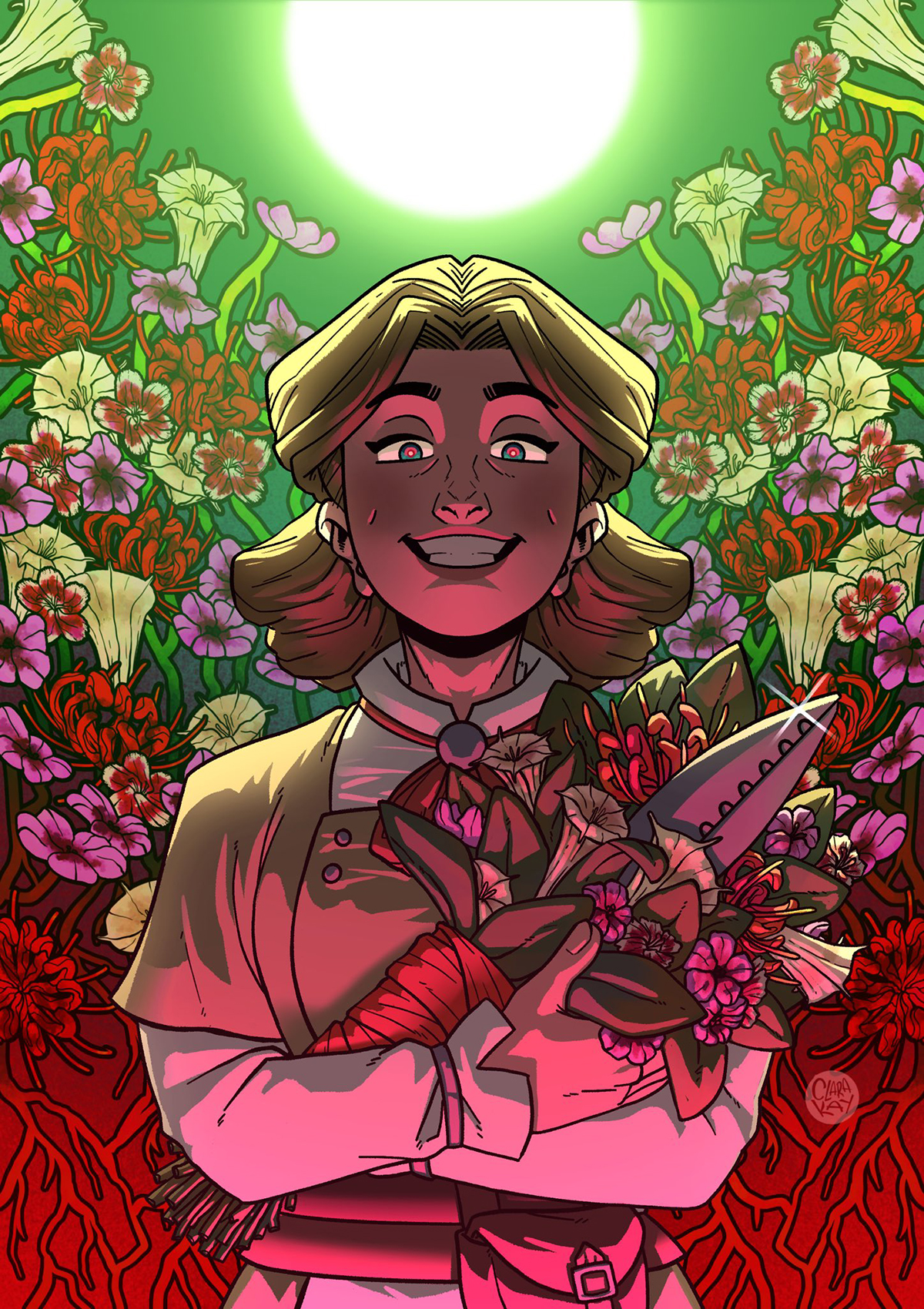
The story illustration is by Clara Kay, whose gorgeously monstrous horror art can be found on Twitter (here) and on Instagram (here). I really enjoyed working with Clara, and I also want to give a shout-out to her store (here), which has all sorts of cool Legend of Zelda merch!

I’d like to share a bit of the artist’s description of this piece, because it’s fascinating:

There’s a lot of symbolism packed into the flowers here. The petunias (pink) represent anger and resentment, the devil’s trumpet (the tall white one) represents power and caution, the spider lily (big spiny red one) represents death and reincarnation, and the carnation (white with red ring) is considered the ‘flower of the gods’ and represents admiration, passion, and love.

Carnations represent “passion and love” because they’re thought to be white flowers dyed red with blood, which is entirely appropriate for this story. “Flowerblight Ganon” is my first foray into botanical horror, and I don’t think it’s necessary to be familiar with Breath of the Wild to understand what’s going on. Magda is a regular woman enjoying gardening, quiet living, and occasional tea with friends in a dying postapocalyptic world, and if she lives her best life by indulging in murder every once in a while, then at least her flowers are well fertilized.

The Ghost Shop

I just posted a short story about the Poe Collector in Ocarina of Time on AO3. It’s a spooky fandom treat for Halloween, and you can read it (here).

This story is about what it might have been like to live in Hyrule after the castle fell to Ganondorf, and I really enjoyed exploring the postapocalyptic environment. The story is also about standing up to power and the abuse of authority, even when it won’t benefit you in any way. Grand acts of heroism are all well and good, but it’s also nice to be too weird to care about what people think of you.

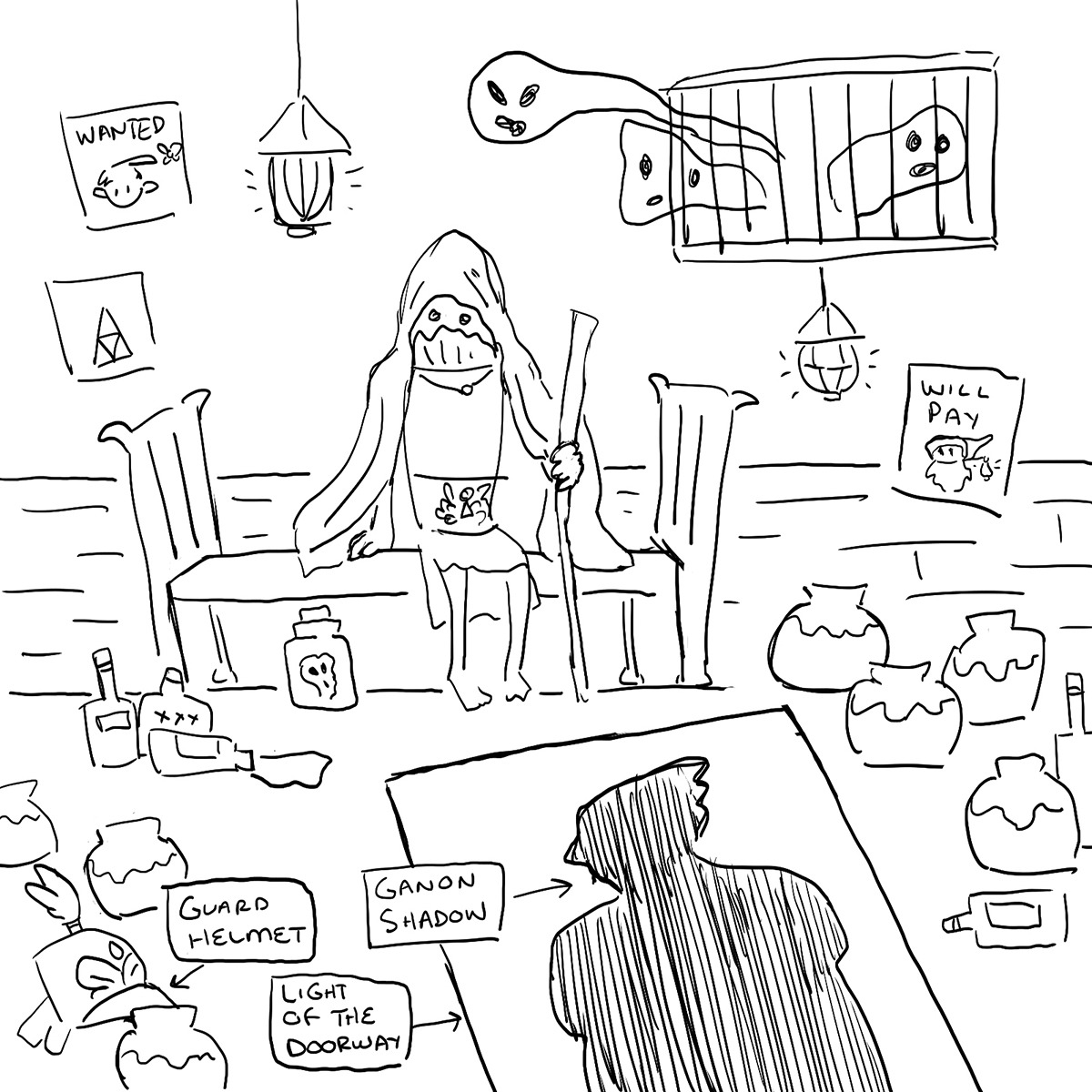
The illustration is by Frankiesbugs, whose creepy-cute art you can find on Instagram (here) and on Tumblr (here). They actually created two color variations, the one with the Halloween-inspired palette that I posted above, and a more Film Noir style version that I posted along with the fic on AO3 – and that they posted on Tumblr (here). It was difficult to choose between such gorgeous and stylish pieces! If you’d like to get a better understanding of just how brilliant Frankiesbugs is, you can check out the concept sketch I sent them (here). This artist’s illustrations have been one of my primary inspirations in writing Legend of Zelda horror stories, and it’s always a pleasure to work with them. You can read some of the horror-themed comics we’ve created together (here) and (here).