It’s Not Me, It’s My Basement

It’s Not Me, It’s My Basement
https://arcadekitten.itch.io/its-not-me-its-my-basement

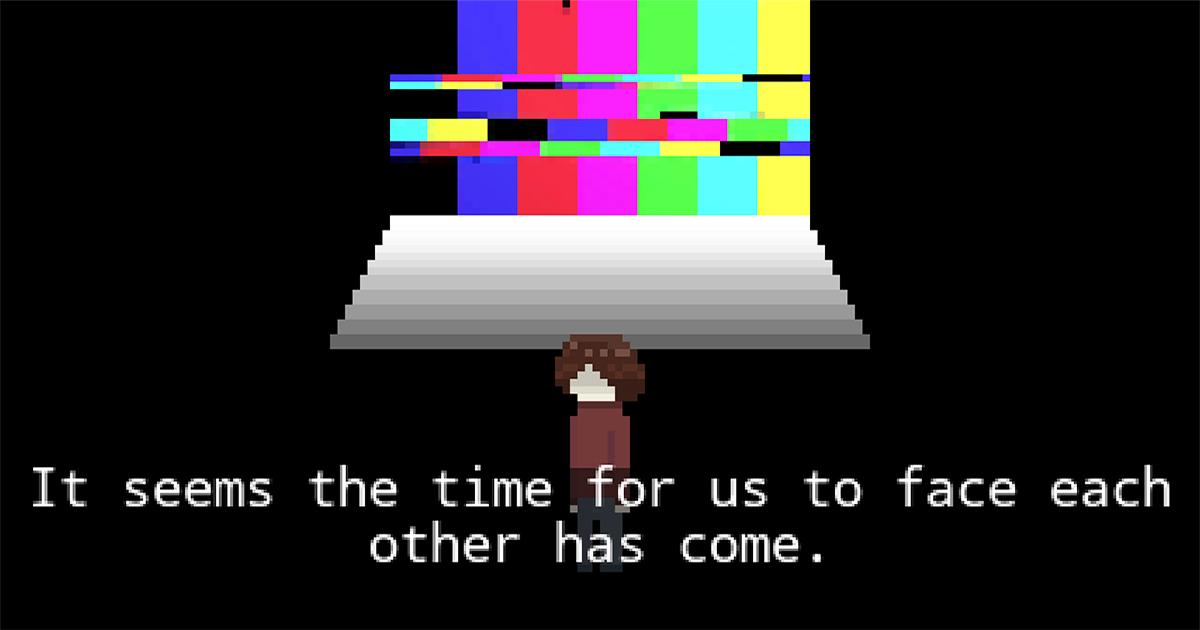
It’s Not Me, It’s My Basement is an RPG Maker gothic horror game from 2021 along the lines of The Witch’s House and Mad Father. It takes about 35 minutes to finish, and it’s free to download from Itchio.

You play as a kid named Embry whose parents have been eaten by monsters. Embry has managed to padlock the basement door, but the monsters are constantly hungry. The player is therefore tasked with feeding the monsters so they don’t escape and eat Embry. The game consists of navigating between Embry’s kitchen and the town market while stopping at the basement door a few times along the way.

The story is divided into three days, during which food becomes progressively scarce and the monsters become increasingly hungry. Each night, after feeding the monsters, Embry has a dream. All three dreams end with an extremely mild jumpscare, but the game is more concerned with creating an oppressive atmosphere than it is with trying to shock you.

What I appreciate is that it’s unclear what the monsters are or where they came from, just as it’s occasionally unclear what Embry is feeding them. Although you have the choice to enter the basement in one of Embry’s dreams, you never learn exactly what’s going on down there, and sometimes not knowing is worse.

If you’re worried that I just spoiled the game, please don’t be. There’s a lot going on here.

The creator has a few shorter games available on Itchio, some of which are loosely connected through a shared universe. The reason I chose to play It’s Not Me, It’s My Basement is because this game has a surprisingly large online fandom. Seriously, it even has its own page on TV Tropes (here).

It’s Not Me, It’s My Basement feels a bit like Homestuck run through a few filters. Everything about this game is catnip for edgy tweens. Even if that doesn’t sound appealing to you, It’s Not Me, It’s My Basement presents an interesting and open-ended story, and the game is a fun experience that doesn’t bother the player with any puzzle elements that impede the flow – or the steadily mounting creepiness – of the delivery.

An Autumn With You

An Autumn With You
https://leafthief.itch.io/autumn

An Autumn With You is a short and nonviolent Game Boy adventure game that you can play for free in your browser window. You are Daynese, who is five and three quarters years old, and you’ve just moved with your parents from the city to your nana’s house in the country.

On the game’s Itchio page, the creator says An Autumn With You was inspired by My Neighbor Totoro, and I can see the influence. The forest around your nana’s house is home to magical creatures called Wichu that are attracted to acts of kindness. As her parents deal with their own issues, Daynese explores the beautiful area around her new house and makes a friend.

The interesting pull from My Neighbor Totoro isn’t the forest creatures, however; it’s the way Daynese creatively engages with her environment in to help her process what’s going on with her parents. Like Mei and Satsuki’s father, Daynese’s mother is a scholar working on a manuscript, and her writing schedule is intense. Meanwhile, Daynese’s father seems to have lost his job, and the family couldn’t afford to stay in the city on an academic salary.

I imagine this situation will be spookily relatable to the many Millennial parents who had to move back in with their own parents during the pandemic, or perhaps during the prolonged economic depression preceding it. Daynese is five (and three quarters) years old, and she just wants to play outside. Meanwhile, her parents aren’t doing well. In between Daynese’s jaunts into the forest, the player watches her parents gradually break down while her grandmother stands outside and waits for the storm to pass.

The main narrative drive of An Autumn With You is figuring out whether Daynese’s parents are going to be okay. It’s a short game that should take about ten to fifteen minutes to play, but I nevertheless managed to become extremely invested the story.

Unfortunately, a few of gameplay elements toward the end of the game are somewhat opaque. To give an example, I had to consult a video playthrough (here) in order to figure out the next-to-last action necessary to finish the game. You know you have to fetch food for Daynese’s forest creature friend, but there are no clues to indicate that the game expects you to go fishing with the fishing rod in the back of the car parked outside the house. If your family just moved from the city, why would there be a fishing rod in their car? I spent a solid ten minutes searching for something to interact with in and around the house before I finally gave up and went online.

If you’ve just read the above paragraph, however, then you already know about the fishing rod, and rest of the game shouldn’t be too tricky. In fact, I’d say that An Autumn With You is a perfect game for its length, not to mention a wonderful use of the medium to tell a story. The art is lovely, and An Autumn With You is filled with small but significant grace notes that add color and depth to its world.

Lily’s Well

Lily’s Well
https://pureiceblue.itch.io/lilys-well

Lily’s Well is a lo-fi horror adventure game with a charming top-down NES aesthetic. You play as an anime girl named Lily who hears a voice calling for help from the well by her isolated cabin in the woods. Your job is to explore the house and its surroundings while collecting materials to make a rope. Depending on how many materials you assemble, you’ll be able to descend to a different level of the well. Each of the ten levels is its own horrible ending.

There are ten “good” materials and another five “bad” materials that you can find. If you incorporate a bad material into your rope, it will break. Lily will die, and you’ll have to start over again from the beginning. The game doesn’t signpost which materials are good or bad, so you have to go through them one by one and figure this out for yourself using the process of elimination. I got very frustrated very quickly, but this could have just been me being impatient.

I found the guide (here) to be extremely useful. This isn’t so much a walkthrough as it is a list of materials and a FAQ, and you’ll still have to put the pieces of the game together yourself. While using the guide, it took me about three hours to get all of the endings.

If you use the guide judiciously, you can finish the game in about 45 minutes. This involves spending 25 minutes to get to the bottom of the well, and another 20 minutes to explore what’s down there. Every other ending is an instant gruesome death for Lily, while the bottom of the well is essentially the second half of the game. In all fairness, the game’s true ending has a much better payoff if you die a few times first, and there are all sorts of fun little secrets to play with between runs, including certain events that only trigger on multiple playthroughs.

I said at the beginning that Lily’s Well has an NES aesthetic, but it’s really more of an early 1990s MS DOS game. The graphics are primitive, but the game uses them extremely well and puts a lot of care into the adventure elements. There’s all sorts of text for anything you care to interact with; and, if you’re patient, it’s possible to figure everything out on your own without using a guide.

The adventure game elements of Lily’s Well were hit-or-miss for me, and what I really enjoyed was the game’s dark humor. It was fun to see this cute anime girl die in all sorts of fun and creative ways, and I loved how over-the-top gruesome each ending is. I kept playing to dig deeper into the lore and see just how gleefully horrible Lily’s world could get under its placid surface, and I was not disappointed.

Leftovers

Leftovers
https://realmpact.itch.io/leftovers

Leftovers is a free narrative horror game that takes about 20 to 25 minutes to play. Your mother has ten servings of leftover food, and she wants you to deliver them to the other tenants of your rundown apartment building. As you might imagine, each of these tenants is super creepy.

You can answer the tenants’ questions by nodding or shaking your head, and “failing” the interaction will cause you to run home to the top floor. Your mother will get progressively angrier each time you return, and you’ll have to walk down all the flights of stairs again. My recommendation would be to set the camera at max speed before starting the game, as this can potentially save several minutes of stair climbing.   

The concept of Leftovers is great; but, as this was created for a game jam, it was made under time constraints. The 3D space of the apartment building is about as basic as it could be. There’s no background music, and there are only two or three instances of sound effects. Since you have to start over from the beginning so often, I wish there had been a few changes to the environment between runs.

Still, I had a lot of fun with Leftovers. The hand-drawn 2D character designs are great, as is the writing. I was impressed by how much story fit into just a few lines of dialogue, and I really enjoyed how the individual tenant stories gradually begin to fit together into a cohesive narrative. It’s definitely worth playing the game a second time in order to appreciate the story details and foreshadowing.

Leftovers stands well enough on its own as an experimental prototype, but I would love to see the developers return to the game and polish it into something stranger and gorier and even more disturbing.  

See You Soon

See You Soon
https://not-jacob.itch.io/see-you-soon

See You Soon is a free narrative horror game on Itchio that takes about seven minutes to play. You wake up in the middle of the night because the phone won’t stop ringing, a classic setup that takes an interesting turn. I can’t say much more without spoiling the surprise, but there’s a fun twist in the middle.

See You Soon has 2D graphics with very simple controls, and there are only four screens to navigate. There are two endings, and one of them results in a special surprise if you the launch the game again. That was delightful. Also, if you decide to let one of the monsters catch you, you get a fun little jump scare.

There’s a brief moment of tension when something starts (very slowly) chasing you, but I felt that See You Soon is more silly than spooky. The writing is a little awkward, but I found its earnestness to be almost wholesome. The simplistic pixel art is charming, and the monsters are kind of cute.

To me, See You Soon has the vibe of a chihuahua going aggro. Sure, it’s doing its best to be nasty and unpleasant, but it’s just a little guy. See You Soon is definitely a horror game and probably won’t appeal to people who aren’t fans of the genre, but it made me smile from start to finish.

As a sidenote: See You Soon opens with a content warning about flashing lights. I’m generally sensitive to such things, but nothing in this game gave me any trouble. There are no strobe effects, only quick jump cuts.

Ocean’s Heart

Ocean’s Heart is a top-down 16-bit adventure game in the style of A Link to the Past or The Minish Cap. You play as Tilia, the daughter of a former soldier who manages a tavern on a small island. After the island is attacked by pirates, Tilia’s father sails away to chase them down. He doesn’t return, so Tilia leaves the village to look for him.  

Ocean’s Heart is set on an archipelago of interconnected islands. Most of the map can be navigated on foot, while sailing serves as a form of fast travel. The archipelago is densely populated, with multiple large cities and smaller towns, but it’s also filled with beautiful green spaces. The primary biome of the islands is “forest,” but there’s an incredible amount of diversity within this biome, from alpine pine forests to leafy old-growth oak forests to swampy mangrove forests.

The green spaces of Ocean’s Heart are gorgeous, and the pixel art is a true feast for the eyes.

When I was a kid, I remember being disappointed by the 3D graphics of the N64 and the PlayStation. Now I find the visual style of games like Ocarina of Time and Final Fantasy VII to be charming, but for a long time (until there were better alternatives) I thought the blocky polygons and difficult-to-read environments of “next gen” games looked like garbage. I kept thinking that what I really wanted was for developers to use next-gen technology to make pixel art more polished, intricate, and interactive.

Ocean’s Heart is exactly the sort of game I wanted. Flowers and grass rustle in the wind, falling leaves drift across the screen, and birds take flight as you approach. The overworld map is dense with interaction points, all of which are visually signaled without being obtrusive. The landscape is also dense with scenery that does nothing but add magic and wonder to the environment. Towns and cities are filled with uniquely designed stores and characters, and each center of population has its own distinct visual character.

Even aside from the graphics, Ocean’s Heart is a lovely game. Although it doesn’t disrupt the basic Legend of Zelda gameplay formula, the way Ocean’s Heart structures and populates its world is extremely well executed. Unlike many Zelda-style games, Ocean’s Heart features an excellent balance between gameplay and written text. The dialog offered by the NPCs is substantial, and the player can interact with all manner of books, bookshelves, maps, paintings, documents lying on desks, and so on. Very little of this text is necessary to understanding the game’s story, but it makes the world feel like a living place that exists independently of Tilia and her quest.

The menu screen of Ocean’s Heart offers modern ease-of-use concessions, from the option to save the game at any time to a labeled map to a list of sidequests. Many titles seeking to capture a retro feel – Tunic springs immediately to mind – seem to expect the player to engage with the game through the medium of an online walkthrough, but Ocean’s Heart is entirely self-contained. The player has a great deal of freedom to move across the archipelago, but it’s difficult to become lost. The confidence derived from such a well-curated experience makes exploration all the more enjoyable.

As in any Zelda-style game, Ocean’s Heart contains about half a dozen mandatory dungeons. These dungeons have no maps, but they’re laid out in a way that feels easy to navigate and speaks to thoughtful game design. Careful exploration of the world will reveal another dozen optional dungeons with more specialized themes. My favorite of these optional “dungeons” was an entire Mediterranean-themed island with its own fully populated town of cafés and street musicians and people sitting on terraces while drinking and enjoying the sea breeze.

Ocean’s Heart comes equipped with an optional hard mode that you can trigger early on and reverse any time you want, but the default level of difficulty is well balanced. You don’t have much health at first, and healing items are extremely limited. More than anything else, this early-game difficulty seems intended to keep players on the critical path. As you power up Tilia and her sword through various collectables scattered throughout the world, exploration becomes more comfortable. Many players may have to resign themselves to dying several times at the beginning of Ocean’s Heart, but the difficulty curve balances out about an hour or two into the game’s playtime, which is roughly eight to ten hours.  

I haven’t encountered any discussion of Ocean’s Heart in the Legend of Zelda fan community, so I was surprised to learn that it was originally released in January 2021. I’m amazed that I hadn’t heard of it before I saw it on sale on the Nintendo Switch store, because this game is really good. The gameplay is solid, the writing is fun, and the beautiful pixel art is everything I ever wanted. Ocean’s Heart is also inexpensive and accessible to players of all skill levels, and I’d recommend it to anyone who’s up for a chill and rewarding island adventure.

Good Reads from 2022

Big Press Graphic Novel:
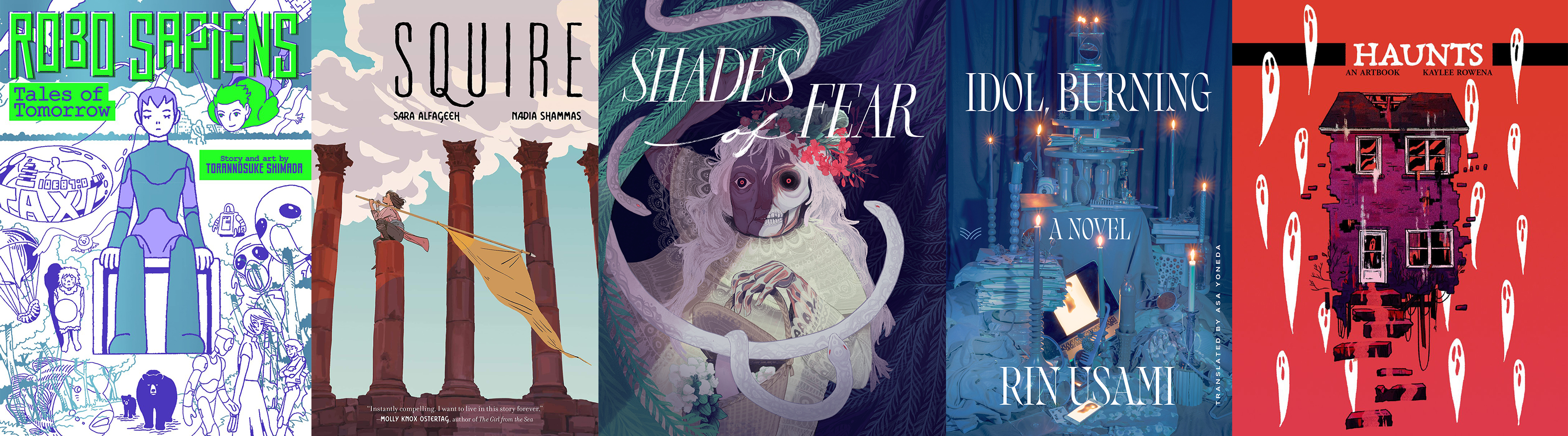
Squire by Sara Alfageeh and Nadia Shammas (HarperCollins Publishers)

Sara Alfageeh and Nadia Shammas’s graphic novel Squire is a low fantasy coming-of-age story about teenage recruits to an imperial army supposedly intent on “preserving the peace” of an arid land inhabited by different ethnic groups. We see this world through the eyes of Aiza, a fourteen-year-old from a minority ethnicity who intends to become a knight in order to gain citizenship and thereby ameliorate the poverty of her marginalized community.

Aiza’s fellow knights-in-training are a fascinating cast of characters, especially her friend Husni, who would much prefer to be a historian than a soldier and occasionally threatens to steal the show with his witty sense of humor and expressive body language. When Aiza begins training with the grizzled retired knight Doruk, the delicate layers of the story begin to unpeel as Aiza’s dream of assimilation is shattered by the realities of a collapsing empire.

Nadia Shammas’s writing is powerful and nuanced, and Sara Alfageeh’s art builds a world beautifully inspired by our own. Adrienne Resha’s review of Squire on Women Write About Comics unpacks the historical and contemporary cultural references behind the Middle Eastern and Arab-American inspirations of the graphic novel, and you can check out a few preview pages on the artist’s website.

Small Press Comic Anthology:
Shades of Fear, edited by Ashanti Fortson & Allison O’Toole (Balustrade Press)

Ashanti Fortson and Allison O’Toole’s Shades of Fear anthology collects ten short horror comics themed according to the strong use of a single color. The artwork is nothing short of spectacular, offering the reader both dazzling beauty and horrific imagery. As befitting the rich banquets of color, many of the stories share the theme of being devoured, either metaphorically through toxic relationships and generational trauma – or quite literally.

My favorite piece is Mar Julia’s “Bellies,” a work of poetic yet intense body horror about an order of immortal priestesses who dine well so that they may endow themselves with the fortitude necessary to make appropriate sacrifices to a (mercifully) unseen deity. The narrative depth of every short comic in the anthology recalls the gothic masterpieces of Emily Carroll, and I’ve often found myself returning to Shades of Fear to dig deeper for creative inspiration and visceral chills.

Manga:
Robo Sapiens: Tales of Tomorrow by Toranosuke Shimada (Seven Seas)

Toranosuke Shimada’s Robo Sapiens: Tales of Tomorrow is a one-volume graphic novel that begins in the near future and spans many hundreds of years of cosmic time. The manga’s ambitious narrative is pieced together from smaller and more intimate stories about the lives of individual robots and their human companions. Shimada is not concerned with whether robots have sapience; rather, these stories take the dignity and legal rights of artificial intelligence for granted in order to ask questions about what personal happiness might look like should “humanity” be separated from its current embodiment.

Shimada’s artwork is deceptively simple and allows the reader ample space to appreciate the timelessness of each character’s story even as the world around them changes. Despite the gaps between chapters, I found it profoundly moving when the narrative threads began to connect toward the end of the manga. Robo Sapiens contains a number of subtle references to the pioneering work of Osamu Tezuka, but Shimada’s speculation on a posthuman future brings a fresh and nuanced perspective to familiar tropes.

Fiction:
Idol, Burning by Rin Usami (HarperCollins Publishers)

Rin Usami’s Idol, Burning is only 115 pages long, but it’s a whirlwind ride through the psychology of boy band fandom. The narrator is failing out of high school because the Japanese education system refuses to accommodate her learning style, and her world begins to fall apart when the pop star she idolizes becomes the target of social media discourse. Usami is unflinching in her portrayal of online fandom cultures, and she’s refreshingly honest about the adverse effects that flamewars can have on vulnerable people seeking support in fandom communities. It’s not always easy to read Idol, Burning, but I couldn’t put it down. 

The English translation of the book includes short essays by the author and her translator, as well as statements from the cover designer (surrealist photographer Delaney Allen) and the illustrator (comic artist Leslie Hung). The novel’s story stands on its own, but it’s a treat to read about the inspirations of the writers and artists who brought it to life.

Zine:
Haunts by Kaylee Rowena

I recently had the pleasure of flipping through Kaylee Rowena’s zine Haunts, which collects the American comic artist’s illustrations of haunted houses. I especially appreciate the epilogue, which takes the form of a short essay about houses and hauntings and memory. It’s a fantastic piece of writing, and Rowena acknowledges the influence of a YouTube video called “Control, Anatomy, and the Legacy of the Haunted House” by the video game critic Jacob Geller

This video discusses the trope of the haunted house through the two games mentioned in the title, but it has deeper cultural resonance and doesn’t require any prior knowledge. It’s also my favorite type of video essay: it’s only twenty minutes long, it has subtitles, and it’s not necessary to watch the video footage if you just want to listen to the audio. I’ve been feeling a bit more homebound since the weather has gotten colder, and the combination of Rowena’s colorful art and Geller’s video essay have helped me appreciate the magic and mystery of walls that continue upright and doors that remain sensibly shut.

Video Game:
Stray, developed by BlueTwelve Studio and published by Annapurna Interactive

You may have seen your favorite artists posting tributes to the game Stray, which was released in July by Annapurna Interactive, a publisher that specializes in unique and stylish narrative games. The game’s website describes it as “a third-person cat adventure game set amidst the detailed, neon-lit alleys of a decaying cybercity,” but really it’s about hope and friendship. The story is divided into twelve chapters that alternate between nonviolent 3D platforming segments and more text-based exploration segments, the combination of which provide a fun and interesting mix of narrative elements. Stray is accessible to a diverse range of gamers, and the rich and detailed visual splendor of the posthuman cityscape will be a delight to fans of cyberpunk comics and manga.

. . . . . . . . . . . . . . .

All of these mini-reviews were originally published as part of the monthly “WWACommendations” roundtables on the website Women Write About Comics. You can find these posts on the WWAC website (here) and follow WWAC on Twitter (here).

13 Sentinels: Aegis Rim

13 Sentinels: Aegis Rim is half sci-fi visual novel and half real-time tower defense tactics game with a moderately robust system of mecha customization. It’s an amazing work of nonlinear digital storytelling, but it’s also about 25 hours long and difficult to talk about without spoiling certain elements of the plot. I’m therefore going to spoil a few small bits of the game’s premise, which I hope will make this review easier to follow.

To simplify the story significantly, 13 Sentinels is about teenage mecha pilots from different decades in modern Japan. Although the timeline stretches from 1945 to 2188, the primary setting of the game is an urban high school in the year 1985. Time travel is introduced into the story fairly early on, but it gradually becomes apparent that the various pilots’ movements between decades may not be time travel at all. In addition, a few of the characters are very concerned with “loops,” which seem to be connected to the different “generations” of mecha you control during the tower-defense sequences.

Your job, as the player, is twofold. First, you need to defend the city during a multi-stage final battle against invading alien mecha; and second, you need to follow each of the thirteen characters’ stories in order to figure out how they got to the point at which the final battle begins.

The tactics battles are short and linear, and you can repeat battles to grind for experience or meet certain challenge conditions. You can choose the difficulty level for these battles, which end in victory automatically if the tower does not fall within the time limit. The visual presentation of the battles is somewhat simplistic and occasionally confusing, but they’re easy to cheese through multi-target long-range missiles.

Personally speaking, I’m not big into tower defense tactics, but I found the mecha battles in 13 Sentinels to be extremely addictive. If you, like me, are interested primarily in the narrative aspects of the game, I would say not to worry too much about the mecha battles. They’re easy and fun!

Meanwhile, the visual novel portion of the game plays out in a series of roughly five-minute segments. There are thirteen viewpoint characters, and each character’s story is divided into six to eight episodes. Although some of the episodes have conditions that need to be met before they’re unlocked, you can switch between characters and play through the episodes in whatever order you like. You can also complete a lot of the story without doing the mecha battles, and vice versa.    

The story segments are set up like a 2.5D (Paper Mario style) adventure game in which you navigate between connected screens while talking to NPCs. Most of these story segments are linear, by which I mean that they necessitate specific actions performed in a specific order. Each character’s story has its own style of gameplay-adjacent narration, and certain segments of two of the characters (Juro Kurabe and Yuki Takamiya) might necessitate using a walkthrough. For the most part, though, each story episode is fairly intuitive and self-explanatory, and the player can sit back and enjoy the art and writing and voice acting without having to worry about making decisions.  

Although each individual battle and story episode is relatively short, there are a lot of them in aggregate, and the game will take at least twenty hours to finish. Unfortunately, you have no control over the opening tutorial sequence, which takes about an hour to complete. Because this tutorial takes so long, I think it’s important to let people going into 13 Sentinels know that it doesn’t reflect the content of the vast majority of the game.

I recently listened to a discussion of 13 Sentinels in which two people who’d played the game attempted to explain it to a larger group, and one of them made an embarrassed comment about “anime tropes.” I think it’s worth discussing these tropes (without spoilers), as they appear primarily in the opening tutorial and may turn off many players to an otherwise excellent game.

The first anime trope is fanservice, by which I mean “male gaze anime pedo bullshit.” For whatever reason, this fanservice is frontloaded into the tutorial and then more or less disappears. In other words, it’s a little gross at the beginning, but then it stops being an issue. It’s kind of like the opening of Final Fantasy XII, where you have to get intimately acquainted with the dimples in Penelo’s ass and watch Fran straddle a flying motorcycle in lingerie before the game drops the fanservice pretense and gets down to the business of telling a story in which the characters aren’t sexualized at all.

The second anime trope is basic netto uyoku brainrot. This is concentrated at the beginning of one character’s story but then stops being an issue. There’s not much to say about this, save that it’s fairly common in a lot of anime-adjacent work that came out of Japan in the late 2010s, and that it will probably go over the heads of most people playing the game in English. I’m generally sensitive to this sort of thing, but it’s such a minor part of the overall story that it was easy to roll my eyes and not be bothered by it. Also, that character’s storyline gets much better later in the game.

The third anime trope is “giant mecha that can only be piloted by teenagers in high school.” As someone who generally dislikes this trope, what I would say is that the diegetic explanation is very good, and that the narrative payoff is a lot of fun. The explanation and payoff don’t happen until late in the game, but they’re worth suspending disbelief for.  

In a lot of ways, 13 Sentinels has strong Final Fantasy VIII vibes, and it’s good to remind people (mainly myself) that Final Fantasy VIII was actually a really smart and interesting game. The conceit of all the characters being in high school is admittedly silly, but the “daily life” nonsense at the beginning of the game exists primarily to serve as a contrast for what you learn about the story as it progresses.

I don’t want to say that anyone’s enjoyment of 13 Sentinels will be dependent on their tolerance for anime tropes, but what I would say is that you might need to be patient with the game during the first hour. Like any other JRPG, 13 Sentinels gets so much better once you’re free from the mandatory tutorial.

Given that 13 Sentinels levies a tax of an hour of your life before you’re allowed to start the game in earnest, I want to try to explain why the experience of playing it is worth the price of admission.  

To begin with, 13 Sentinels is a gorgeous game. The character designs are gorgeous. The backgrounds are gorgeous. The lighting effects are gorgeous. The animation is limited, but it’s gorgeous as well. Every tiny detail is just so incredibly gorgeous, and the game constantly reveals new details.

I also appreciate that 13 Sentinels isn’t so much a traditional visual novel as it is a nonviolent adventure game. I love this style of interactive storytelling, and I love to see it done with a proper budget. You don’t just passively watch the characters and look at all the gorgeous art; you get to move through the lushly detailed environments and interact with them using standard JRPG mechanics that help guide you through the story.

While the writing doesn’t draw attention to itself at the level of its prose, it’s a marvel how everything comes together in bits and pieces in a way that makes perfect sense. Some character episodes must be unlocked, so there are a few gates regulating how much the player knows at any given time, but 13 Sentinels showcases nonlinear storytelling at its best.

The game also features a good mix of subgenres. Some characters are normal high school students who gradually get sucked into the larger story, while other characters begin right in the middle of a hardcore sci-fi action movie. Some of the characters have love stories, while others have murder stories. A surprising number of the characters’ stories look deeply into ontological definitions of humanity. Meanwhile, there are some characters you don’t get to play as, an aspect of narrative gameplay that generates its own set of themes and questions.

If you get bored with one character, you can always switch to another. All of the stories are connected, so you might uncover something that causes you to view the formerly boring character in a different light. Some of the characters resonated more strongly with my own interests while others left me a bit cold, but all of the characters have fully realized narrative arcs that somehow manage to keep developing deep into the endgame.

I can’t say too much about the game without spoiling it, but I was constantly dazzled by the storytelling. When I say that the narrative payoff of the anime tropes is worth the initial silliness, I mean it – the ending of 13 Sentinels feels satisfying and well-earned.

Because it’s divided into bite-sized chunks, 13 Sentinels is a great portable handheld game, and it’s perfect for the Nintendo Switch. Its load times are almost nonexistent, so it’s easy to pick up and put down and pick back up again. I gradually played 13 Sentinels over the course of about two months, but I imagine the game’s structure would make it a lot of fun for people who prefer to binge stories.

So, despite the slog of the opening tutorial, I’d definitely recommend 13 Sentinels if you’re interested in a smart and fun sci-story that’s also a smart and fun game.

Ground Down

Ground Down
https://inverts.itch.io/ground-down

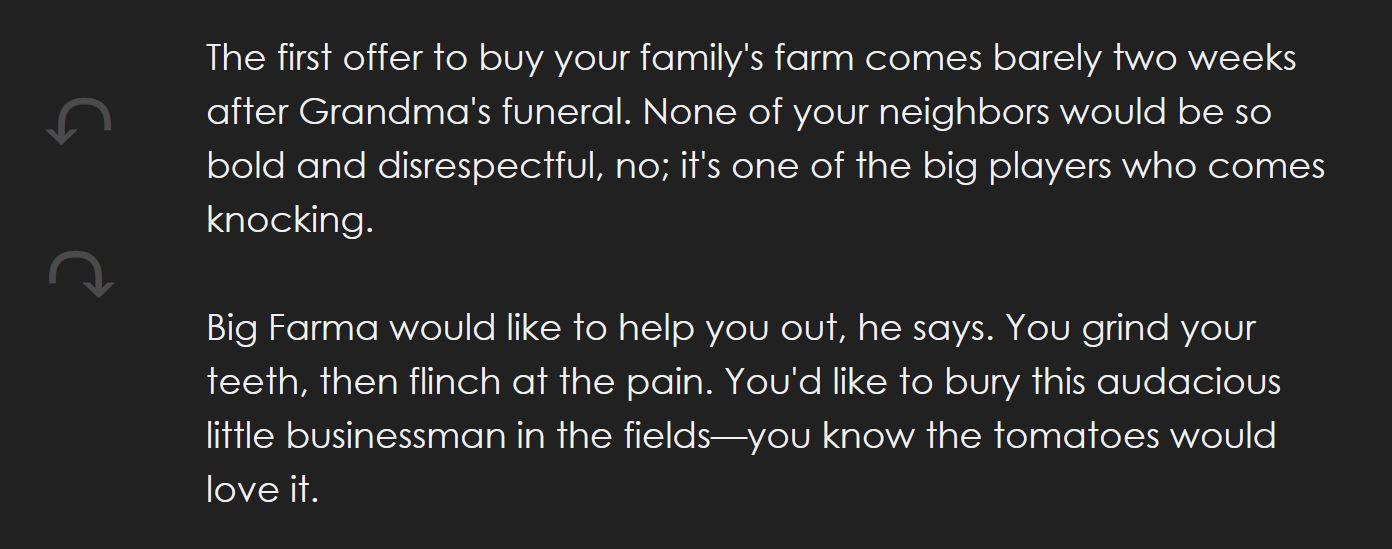
Ground Down is a short botanical horror story presented in the form of a Twine game. The player is occasionally offered choices concerning how to proceed, but there’s only one ending. Depending on your choices and your reading speed, I’d say Ground Down takes about ten to twenty minutes to finish.

You play as a young farmer whose grandmother has just passed away, leaving you the farm you’ve grown up on. You also have your grief, a house full of mementos, and debts to pay. On top of that, you’ve started to grind your teeth, but you have neither the time nor the money to visit a dentist.

I should say that, if you’re unusually squeamish about teeth, you might want to give this game a pass.

Personally speaking, I’m a little squeamish about teeth and dental pain in general, but I very much enjoyed this game. I felt some mild discomfort at the beginning, but the way the theme of “teeth as a symbol of agency” comes back at the end of the story is nothing short of brilliant.

The writing of Ground Down is fantastic in general. Each sentence is perfectly constructed, and each word is chosen with care. There’s a Raymond Carver feel of resonant simplicity to the prose, which is a pleasure to read and to reflect on. The gradual build of the narrative tension is subtle but palpable, and the ending is gorgeously cathartic.

The creator describes Ground Down as a “kinetic novel,” and there’s an interesting rhythm to the text, which sometimes speeds up and slows down. The choices you can and can’t make are interesting as well. Although your choices don’t affect the ending, they’ll color your understanding of what happens.

It’s also worth noting that the Century Gothic font is easy to read, and the contrast between the dark gray background and the light gray text is easy on the eyes, especially if you’re playing the game on your phone. The ambient background music, Kevin MacLeod’s “Decline,” is perfect.

Really, everything about Ground Down is perfect. I played the game twice, and I’m looking forward to playing it again soon. The story’s theme of protecting the roots of your identity from the erosion of late-stage capitalism resonated with me, and the imagery is delicious. And, as a fun bonus, you can name and pet your hen!

The Minish Cap

Nintendo recently released The Minish Cap on the Game Boy Advance virtual console included with its Nintendo Switch Online + Expansion Pack subscription service. This service costs $50 a year, and you have to pay the annual fee all at once. As a reminder: It is always morally correct to pirate Nintendo games.

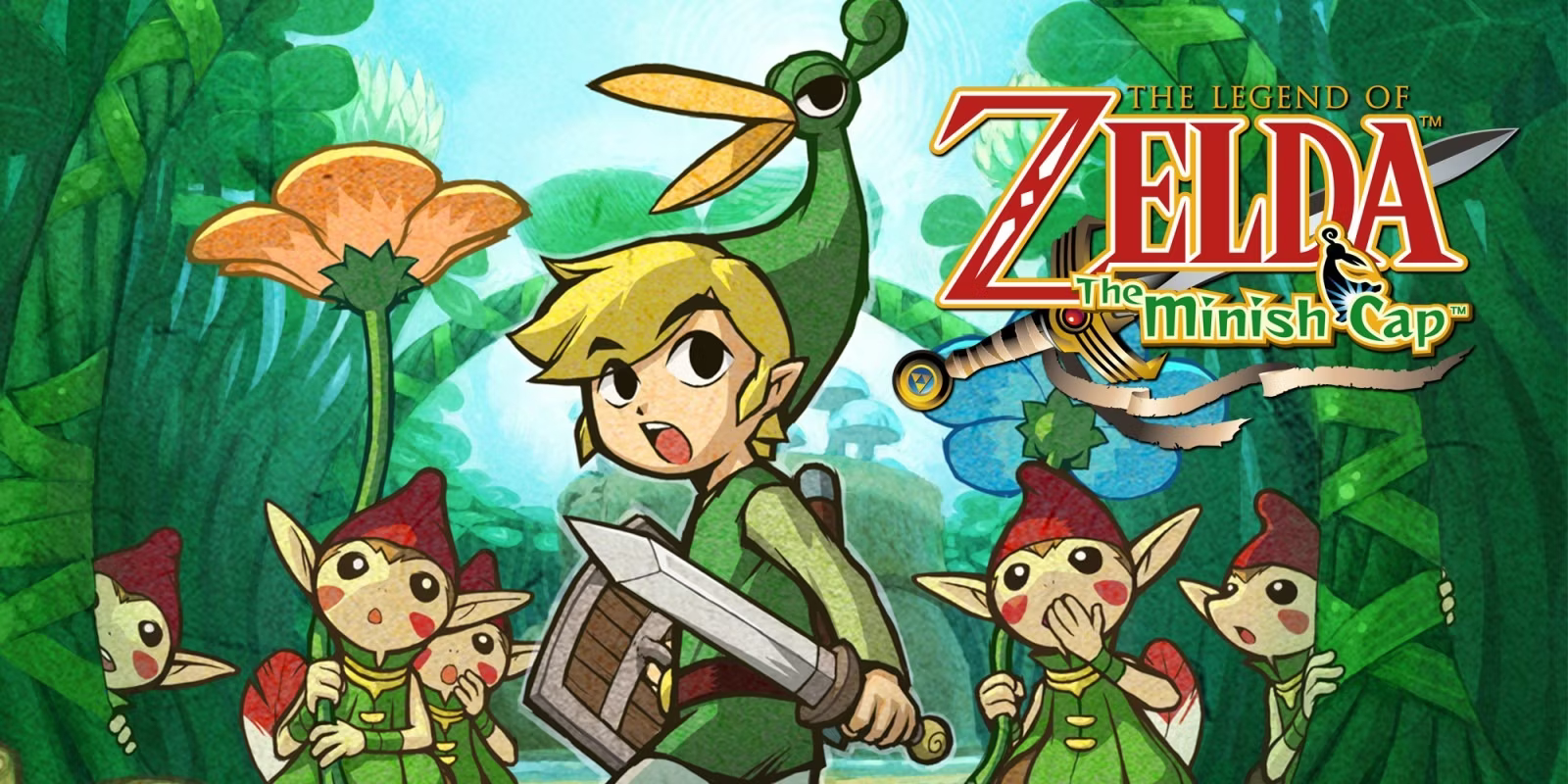
The Minish Cap came out around the same time as The Wind Waker, and it translates a lot of The Wind Waker’s characters and enemy designs into a 16-bit pixel aesthetic modeled on A Link to the Past. As a Zelda game, the structure of The Minish Cap is very conventional: There are five themed dungeons in five themed zones. You must beat these dungeons in order, as the item you find in each dungeon allows you to access more of the world. All of the dungeons are well-designed, and it’s fun to navigate each of the five zones.

To me, there are three things that make The Minish Cap special. The first is a core game mechanic that’s brilliant and magical; the second is a minor game mechanic I hate; and the third is the game’s lighthearted tone.

The main conceit of The Minish Cap is that Link is able to shrink down to the size of the Minish, tiny little mouse-elves who live in adorable mushroom houses, hollowed-out books, and so on. The Minish spaces in the game are a Studio Ghibli fantasy on par with The Secret World of Arrietty, and there are a number of fun navigation puzzles that require Link to alternate between human size and Minish size. This is especially enjoyable during an item quest that requires you to return three books to the library, which necessitates navigating the central hub of Hyrule Castle Town at Minish size.

Unfortunately, the Minish are obsessed with fusing kinstones. A kinstone is a broken medallion, and several dozen NPCs are willing to connect their half of a kinstone with a matching half in your possession. A successful fusion will result in a small change somewhere in the world – a merchant will come to Castle Town, a treasure chest will appear in a cave, or a special golden monster will appear in the field. These fusions are mostly random, as are the kinstones you find. All of the game’s sidequests (if you can even call them that) are connected to kinstone fusions, and the randomness of the fusions can make these sidequests infuriating. Thankfully, none of the sidequests is necessary, as The Minish Cap is easy enough to play with just the bare minimum of resources.

I imagine that most players will probably think of successful kinstone fusions as fun bonuses, but a Zelda game without sidequests can feel a little empty. In addition, because many of these fusions are made with random NPCs at seemingly random points in the game, none of the sidequests is connected to a narrative.

This lack of substance and specificity is tied to the lighthearted tone of The Minish Cap, which doesn’t have much of a story. The King of Hyrule has been possessed by an evil Minish wizard named Vaati, who turns Princess Zelda to stone during the first ten minutes of the game. Because only children are pure-hearted enough to see the Minish, only Link can save Zelda. Meanwhile, none of the adults care about any of this.

Aside from Zelda and your trusty talking hat Ezlo (who has also been transformed by Vaati), nothing bad happens to anyone in the game. In fact, everyone is quite happy.

In The Wind Waker, the disconnect between the carefree world of the Great Sea and the importance of Link’s quest is a major thematic element of the story. The only person living on the Great Sea who cares about Hyrule is Ganondorf, and the only reason he cares is because he’s been woefully displaced in time. The fact that no one except the King of Red Lions understands Link’s quest emphasizes The Wind Waker’s tone of loneliness, and this is why it’s so emotionally impactful when Link finds someone who appreciates the stakes of what he’s trying to accomplish and volunteers to help.

Meanwhile, in The Minish Cap, Hyrule is densely populated by Hylians and Minish who seem to be doing just fine, even without a government. Aside from poor Zelda, everyone is living their best life, and no one needs your help. I can’t overemphasize that there is not a single element of darkness in this game, which has no narrative tension and very little forward momentum.

A fandom friend who recently played The Minish Cap for the first time said that this is the game they’d recommend to first-time Legend of Zelda players, and I can understand where they’re coming from. The Minish Cap is about as conventional as you can get. Overall, it’s really fun, and neither its combat nor its puzzles are difficult.

Unfortunately, the kinstone fusion sidequests can be hideously annoying, and the game’s “safe for children” cutesy tone makes the world and its story seem unimportant and forgettable. The Minish Cap feels like it was created for casual players, and your mileage may vary on how much you appreciate this.

In the end, The Minish Cap is still a great 8/10 game that’s very much worth playing, but it’s on an entirely different level than A Link Between Worlds, which perfected the top-down 2D Zelda formula while also featuring excellent writing and interesting design work. Given its limitations, I think The Minish Cap will probably appeal most strongly to 16-bit retro game fans, as well as its actual target demographic of ten-year-old kids.