Momodora: Reverie Under The Moonlight

Momodora: Reverie Under The Moonlight is a 2D fantasy Metroidvania with adorable 16-bit pixel graphics and an emphasis on cute magical girls. It has an Easy Mode that’s genuinely chill, and it took me about seven hours to get 100% completion. Momodora features a lot of nods to the Dark Souls games in general and Bloodborne in particular, but I think a more accurate comparison (at least on Easy Mode) is the mellow Nintendo DS adventure-platformer Super Princess Peach.

I came to Momodora not knowing what to expect, and I was pleasantly surprised to find that it’s absolutely delightful. The game is relatively simple, but that’s okay, because it’s very good at what it does.

You play as Kaho, a cute girl wearing a white mage hood over a black miniskirt dress and thigh-high stockings. I get the feeling that her theme is supposed to be “sexy Shintō shrine maiden,” and she uses a giant red maple leaf as a sword. She also has a bow with unlimited arrows whose attack can be charged, an adorable dodge roll, and the ability to double-jump right out of the box. Her animations are lovely, and she’s a lot of fun.

Kaho is a silent protagonist, but what you pick up from other characters is that she’s come from abroad to talk to the Queen of Karst about a curse that has spread from the castle city into her small village. You begin the game on the border of a beautiful and vibrant 16-bit pixel forest before entering Karst, which is what the gothic Victorian city of Yharnam (from Bloodborne) would look like if it were rendered in Chrono Trigger style graphics. Whatever curse is threatening Kaho’s village has subsumed Karst in full force, and Kaho has to fight all manner of cute imps, cute witches, cute sorceresses, and cute devils, all of whom have colorful and interesting anime designs.  

Before you can go into Karst Castle proper, you need to find four seals that unlock its gate. This quest sends you into a maze of interconnected areas that include a flooded graveyard, an overgrown garden, a giant crematorium, and the rafters of a ruined cathedral. All of these areas are beautifully rendered and a joy to explore, and along the way Kaho meets a handful of cute NPCs and picks up a limited arsenal of items whose flavor text provides a hint of worldbuilding in classic Dark Souls fashion. Kaho gains a few more abilities – one in particular is a true blessing and a miracle on this earth, but I won’t spoil it – but Momodora sticks to its core gameplay and never gets too complicated.

In addition, you can find and collect 17 health upgrades, as well as 20 silver bugs to trade to a garden rabbit for prizes. About half of these collectables require minor exploration and backtracking, and the other half are hidden in ridiculous ways that I don’t think most players would be able to find without a walkthrough. Thankfully, if you’re playing on Easy Mode, it’s totally fine not to worry about the collectables you don’t find naturally.

You also pick up currency from defeated enemies that you can use to buy relics (which are essentially magic spells) from various merchants, but none of these items are necessary. Since Kaho doesn’t otherwise gain levels or become more powerful, I can imagine that some of the boss fights might be challenging and require a bit of an extra advantage, but this isn’t an issue in Easy Mode, in which Kaho begins the game with two powerful relics that will carry the player through the entire game.

In conclusion, Momodora is a chill and beautiful Metroidvania style action-exploration game that’s like Bloodborne for people who want to enjoy the gothic story and atmosphere without having to spend dozens of hours slamming their head against a wall to git gud. Also, since almost every character and enemy is a super cute magical girl or sexy adult witch-demon, I guess you could say that Momodora is like Bloodborne for lesbians.

I mean, Bloodborne itself is very much “Bloodborne for lesbians,” but you get what I’m saying.
Review of Japanese Role-Playing Games

This past summer I was given an opportunity to review an academic essay collection titled Japanese Role-Playing Games: Genre, Representation, and Liminality in the JRPG. The work the two editors did for this collection is incredible, and every single essay is fantastic. Here’s a short excerpt from the book review that I published in the journal Asian Studies Review:

Japanese Role-Playing Games: Genre, Representation, and Liminality in the JRPG is the first English-language collection of essays focusing entirely on a genre of Japanese games known for their complex stories and rich worldbuilding. The fourteen essays in this collection cover the construction of the JRPG genre, the formation of transcultural gaming communities, and the representation of issues such as nationality, gender, and disability.

Japan Studies scholars with varying degrees of familiarity with the specific titles used as case studies will find a wealth of information and resources in these essays, which briefly summarize the games while explaining why they are representative, important, and connected to broader currents in Japanese history and society. Meanwhile, Game Studies scholars will find approachable yet intellectually rigorous discussions of culture and national origin, which have thus far been relatively few and far between in the field outside of the work of a few specialists.

If you’d like to read the full review, you can find it (here). I understand that not everyone has institutional access to academic journals, so I’m also hosting the PDF on my own website (here). In addition, you can find Japanese Role-Playing Games on the publisher’s website (here), and you can follow the journal Asian Studies Review on Twitter (here).

Fruiting Bodies Review on WWAC

I recently had the honor of writing a review of Ashley Robin Franklin’s graphic novella Fruiting Bodies for the website Women Write About Comics. Here’s an excerpt:

Franklin joins Silvia Moreno-Garcia and Jeff Vandermeer in the pantheon of contemporary writers and artists who have celebrated the uncanny invisible world that stretches deep below our feet and proliferates in the warmth of our bodies. Classical botanical horror has its roots in concerns over cultural hybridization, but Fruiting Bodies resists the genre’s Victorian anxieties in favor of a probing exploration of the primal fears surrounding the collapse of bodily autonomy. In the end, Franklin suggests, human social distinctions of gender and sexuality are meaningless to a natural world that devours everyone equally.

You can read the full review (here), and you can find the book’s page on Silver Sprocket’s website (here). You can follow Ashley Robin Franklin on Instagram (here), and I also recommend checking out her other short comics on her Etsy store (here). As always, I want to acknowledge the good work of my patient and brilliant editor, whom you can follow on Twitter (here).

Himawari House Review on WWAC

I recently had the honor of writing a review of Harmony Becker’s graphic novel Himawari House for the website Women Write About Comics. Here’s an excerpt:

Himawari House is an interesting and meaningful follow-up to They Called Us Enemy, Becker’s collaboration with actor and activist George Takei about the illegal internment of Japanese-Americans during the Second World War. While They Called Us Enemy is about how individual lives were subsumed under the cultural identity of “Japanese,” which was foreign to many people to whom it was forcibly applied, Himawari House is about finding and negotiating Japanese cultural heritage as a chosen aspect of individual identity.

You can read the full review (here). You can also check out the book’s page on the publisher’s website (here) and follow the artist on Instagram (here). I’d also like to acknowledge the fantastic work of my brilliant editor, whom you can follow on Twitter (here).

The Cruel King and the Great Hero

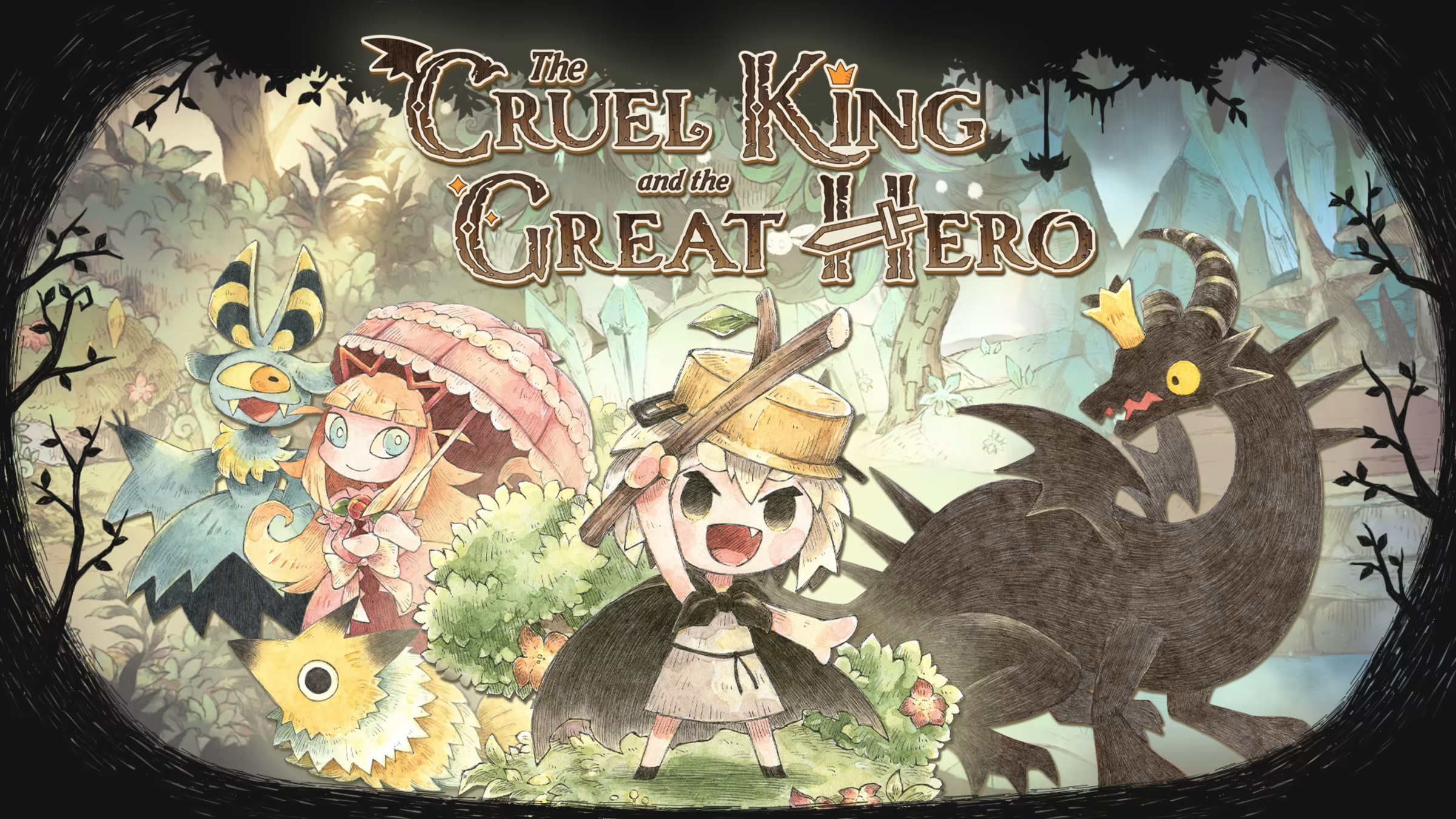
The Cruel King and the Great Hero was developed and published by Nippon Ichi Software, and it’s the spiritual successor to the studio’s 2018 title The Liar Princess and the Blind Prince. Just as The Liar Princess is a simplistic puzzle-platformer set apart by its distinctive manga art style, The Cruel King is a JRPG that’s so traditional it would probably be considered retro were it not so visually gorgeous and beautifully animated.  

When I say that The Cruel King is “traditional,” what I mean is that there are a lot of random encounters. The battles are turn-based and controlled solely through text menus. There’s a bit of strategy involved, but not much. Your character walks slowly, and there’s a not-insignificant amount of backtracking. If you suspect that you’ll find this frustrating, then The Cruel King probably isn’t for you.

If you’re looking for a more relaxed gameplay experience, however, The Cruel King is a delightful way to spend about 20 to 25 hours. Personally speaking, it took a few play sessions for me to readjust my expectations of how quickly the battles should progress, but I became hooked on the gameplay once I got used to the pace.

You play as Yuu, a young human girl who has been adopted by The Cruel Dragon King as his daughter. Every night before bed, the Dragon King tells the girl about her “real” father, a great hero who defeated an evil demon king. The girl wants to become a hero like her father, so the Dragon King decides to make her dream come true by coming up with little quests for her to undertake. These quests are in service to the various monsters who live in the Dragon King’s territory, and the girl becomes involved in a series of adorable sidequests.

Most of these sidequests are optional. Because the game isn’t difficult, the sidequest rewards aren’t strictly necessary. Rather, the real reward is the friendship you find along the way. In less cliché terms, the reward for playing the game is being able to experience more of the game.

The environment is not quite 2D and not quite isometric, and it reminds me a lot of the style of the Paper Mario games. There are no puzzles and no platforming, but your character gradually gains abilities that allow her to bypass environmental obstacles and thereby gain access to more of the map. Like most of the sidequests, exploration isn’t strictly necessary. Still, if you want to poke around a bit, the map screen is annotated in a way that’s easy to understand and keep track of, and there will never be any need to consult an online walkthrough. The player has access to a quest log that visually signposts the objectives for each quest, and you can instantly return to the central village hub whenever you wish.

Your adventuring party only has two characters at a time, Yuu and another character specific to each chapter of the game. This can occasionally cause difficulties when a group of enemies is designed to take advantage of an earlier companion’s special abilities, but most players will never experience anything beyond mild inconvenience. Your characters’ skill points are limited but naturally renew after each turn of battle, and it’s fun to play around with different skills and strategies without having to worry about conserving resources.  

The chill and low-stress gameplay allows the player to appreciate the most notable feature of The Cruel King, which is its gorgeous artwork. Playing the game feels like walking through the pages of a storybook, albeit one that’s beautifully animated. All of the characters and environments are hand-drawn, and each screen is filled with unique details. The illustrated bestiary that you can gradually complete as you find and defeat enemies is a treasure.

I’ve gotten used to ambient background noise in contemporary video games, so it was a treat to realize that each area of The Cruel King has its own theme music. I thought this music was nothing special at first, but over time I found that I enjoyed the fantasy flavor it adds to each section of the game. None of the character lines are voiced, but the actress who narrates the storybook-style cutscenes in Japanese gives a lovely performance (although you can silence her voice and fast-forward through these scenes if you like).

The translation is of uneven quality, but this didn’t bother me. Most of the dialog is cute and quirky but still feels natural, and many of the characters have distinctive ways of speaking that are fun without being annoying. The translation for the third-person narrative cutscenes tends to be a bit shaky, both in terms of style and grammar. I don’t think the errors were intentional (especially since the original Japanese text is relatively polished), but I still appreciate them, as the amateurish writing style made the storybook sections feel more intimate. It reminded me of Super Nintendo JRPGs, whose imperfect translations were a significant part of their charm.

Without spoiling anything, I think it’s fair to say that The Liar Princess and the Blind Prince was a horror game that got especially dark toward the end. The Cruel King and the Great Hero doesn’t have any nasty tricks up its sleeves, but the story ends up being much more interesting and nuanced than you might expect. If nothing else, you get to be friends with all sorts of monsters, and who doesn’t want a kind and supportive Dragon King for a dad?

The Greatest Thing Review on WWAC

I recently had the immense pleasure of writing a review of Sarah Winifred Searle’s graphic novel The Greatest Thing for the website Women Write About Comics. Here’s an excerpt:

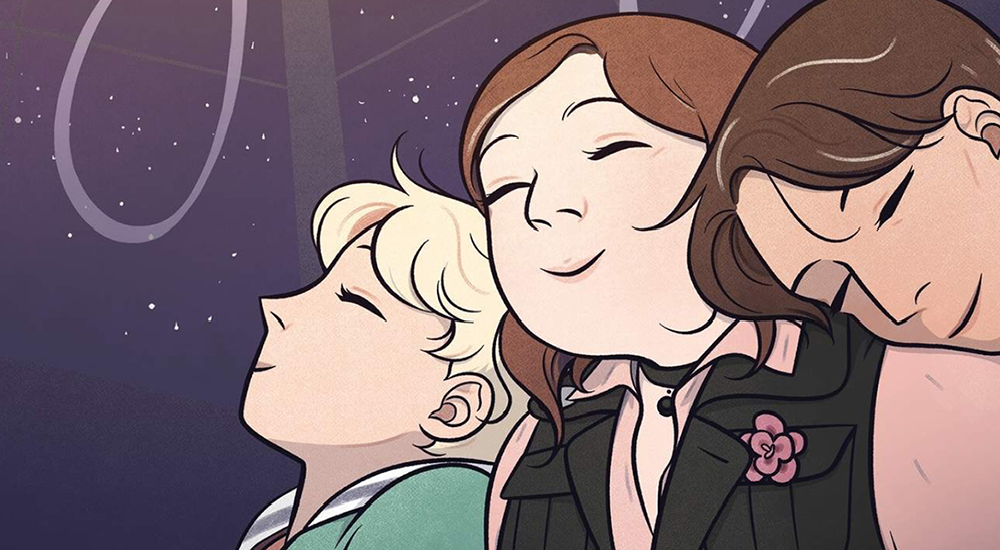
Searle paints a soft pastel portrait of what it was like to grow up in the 2000s before smartphones and social media. Relatively few people talked about what it means to be gay, but the queer kids nevertheless managed to find each other. The Greatest Thing has no epic kisses or dazzling rainbows or flashy pride parades, just a quiet and gentle acknowledgment that growing up means learning to be true to yourself.

If you’re interested, you can read the full review (here). You can also check out the book’s page on the publisher’s website (here) and follow the artist on Twitter (here). Much appreciation and respect to my excellent editor, whom you can follow on Twitter (here).

Infernax

Infernax is an 8-bit 2D Metroidvania style game with platforming elements and dark themes that feed into a morality system. The retro graphics, music, and gameplay remind me of Shovel Knight, save that Infernax is the opposite of Shovel Knight‘s brand of quirky and wholesome family fun. Infernax boasts buckets of blood and plenty of creatively disturbing imagery, but the uniquely upsetting aspect of this game is its sidequests, which force the player to make distinctly unpleasant choices.

You play as Alcedor, a duke who served as a knight in the Holy War and returns to his homeland only to find it overrun with the undead. Your job is to infiltrate the five demon strongholds and thereby break the magical seal on your own castle, which is occupied by the big boss demon. You navigate the 2D overworld with the various skills that you acquire in the five 2D dungeons, and along the way you accumulate experience points and money that you can use to upgrade your abilities and equipment.

Infernax bills itself as having a “tough-as-nails” level of difficulty. I found that it isn’t actually that hard until the final two levels, in which the platforming is a bit too precision-oriented for the game mechanics. If you prefer, you can get around this difficulty by using Game Genie style cheat codes (these ones right here) on a menu that’s available at every save point. Using this system to allow yourself infinite lives and access a double-jump ability can really help you out toward the end of the game, where failure at the platforming segments is unduly punished.

I think it’s important to be realistic and accurate about the difficulty level of a game like this, as not everyone is looking for a super hyper mega challenge. Maybe some people just want to stroll around a horror-themed digital theme park while fighting skeletons and zombies, and that’s cool. Infernax lets you turn the cheat codes on and off at any point you like and doesn’t penalize you for using them, and it offers a decent but not impossible challenge to anyone who wants to play the game straight.

The parts where you might need to use a walkthrough are when Infernax asks you to make a binary choice. This choice is usually between showing mercy to monsters or outright killing them. The key to these choices is presented to the player at the very beginning of the game, when you’re asked to make a decision regarding whether to spare someone who has been possessed by a demon. If you’re a decent person and choose to spare him, he kills several people and forces you to kill him anyway.

In order to get the “ultimate good” ending, the player has to continue to choose to kill monsters. This isn’t always easy. Later in the game, for example, a town under siege has trapped another possessed person in a cage. The townspeople claim that the possessed man has killed people, and that he needs to be put to death. Succumbing to the will of an angry mob with torches in order to enact violence on a seemingly defenseless person in a small cage isn’t great. If you let him go, however, he kills everyone. Should you allow the townspeople to set the possessed man on fire, it takes a long time for him to burn, and he screams and thrashes in pain the entire time.

This violence is somewhat mitigated by the 8-bit pixel graphics, which add a layer of campiness to the grimdark world. What Infernax celebrates isn’t just the visuals and gameplay of 8-bit games, but also their unironic and unapologetic violence. Infernax leans into this goriness by having its overworld enemies constantly attack and kill soldiers right in front of you. You can save some of these people, but most become zombie food. Sometimes you’re forced to kill other humans, which can be bloody business as well. If you like, you can aim for the “ultimate evil” ending and kill other humans by choice. This makes the game more difficult in terms of gameplay but also more interesting from a narrative perspective.

Infernax delights in violence for the sake of violence. It’s not actually that deep, but it’s quite fun. Even as they’ve created a dungeon whose theme is literally “piles of dead babies,” the developers are sensitive to the needs of a diversity of players and allow you to customize the level of difficulty to suit your preferences. In addition, there are multiple guides online that will help you unlock all the various silly bonuses the game has to offer, which include letting you run around with a machine gun and giving you free rein to zip through the overworld on a motorcycle.

If you’re bad at games like I am, Infernax might take about ten to fifteen hours to finish without cheat codes. If you’re good at games – or if you use cheat codes – it can be finished in under five hours, which makes the prospect of exploring multiple morality paths more intriguing. Overall, I spent about twenty hours in ultraviolent medieval zombie demon hell, and I regret nothing.

Sumire

Sumire is a short nonviolent story game in which you play as the eponymous Sumire, a young girl who lives in a small town in rural Japan. Sumire’s grandmother recently died, and her father has left home. To make matters worse, Sumire’s childhood friend has progressed from ignoring her to outright bullying her. One morning, a magical talking flower (who is not evil, thank goodness) shows up at Sumire’s house and tells her that he has the power to help her experience one perfect day, at the end of which she might be able to see her grandmother again.

Sumire makes a checklist of what would constitute “a perfect day” and then sets out with her flower companion to achieve all of her goals, which include making peace with her former friend and confessing her feelings to a boy she likes. Along the way, you’re free to explore Sumire’s hometown, which is divided into about half a dozen small and manageable sections. The flower’s magic allows Sumire to speak with animals, plants, and a few inanimate objects, and each section of the town is filled with interesting characters and conversations.

At several points in the story, your character is asked to make a binary choice. One of these choices is always “be a decent human being,” while the other is “I wonder if this game has a genocide route.” Reviews of this game tend to make this seem far more complicated than it actually is, like…

Reviews: The game asks you to make difficult choices.

The game: A cute baby frog asks you to carry him to the river, which requires no effort on your part. Do you happily agree, or do you tell him that he’s disgusting and that you wouldn’t touch him even if he paid you? If you agree, you get a tangible reward and some extra dialog; and if you don’t, he doesn’t talk to you again.

Reviews: The game forces you to think about the consequences of your actions.

The game: Are you friendly to the slightly nerdy kid who’s friends with the boy you like, or do you tell him that he’s a fat fuck who deserves to be bullied? If you’re friendly, this unlocks a fun but entirely optional minigame; and if you’re not, he doesn’t talk to you again.

To me, it was always crystal clear what choices Sumire should make in order to achieve her goals, which are written in the form of a checklist on a piece of paper that you can access from the menu screen. For example, one of your goals is basically “tell Mom I love her.” So, when you trigger a scene in which you have an option to tell your mom you love her… You should probably do that!

The joy of this game is being able to roleplay what it feels like to be friendly and kind and have your kindness acknowledged and rewarded. There are no trick questions, and there are no decisions that don’t turn out the way you expect. For example, if you tell your mother that you love her, she doesn’t respond by accusing you of being emotionally manipulative for demanding attention when she clearly wants to be alone; this just isn’t that sort of game.

When I say “that sort of game,” I’m specifically thinking of Spiritfarer, which is written about adults for an intended audience of other adults. Spiritfarer is about as wholesome as a game can be, but it acknowledges that not everyone is going respond to kindness with gratitude. Meanwhile, I’m pretty sure that Sumire is intended for a younger audience, or at least an older audience that wants to feel nostalgia for a childhood that isn’t complicated by a more mature understanding of human behavior.

That being said, I’m curious about what would happen if you were to consistently choose the antisocial dialog options. Does the game get dark and creepy? Because that would be interesting. I couldn’t find anything about this online, so perhaps it might be worth experimenting with in the future.

Aside from the (probably?) limited satisfaction of trying out different dialog choices, I’m not sure if Sumire has any replay value in the traditional sense, as you can experience everything the game has to offer during a single two-hour playthrough. Regardless, the world of the game is so beautiful and charming that I’m already looking forward to returning to it in the future. Sumire is the video game equivalent of comfort food, and it’s perfect for a rainy afternoon when you need some flowers and sunshine in your life.

Blasphemous

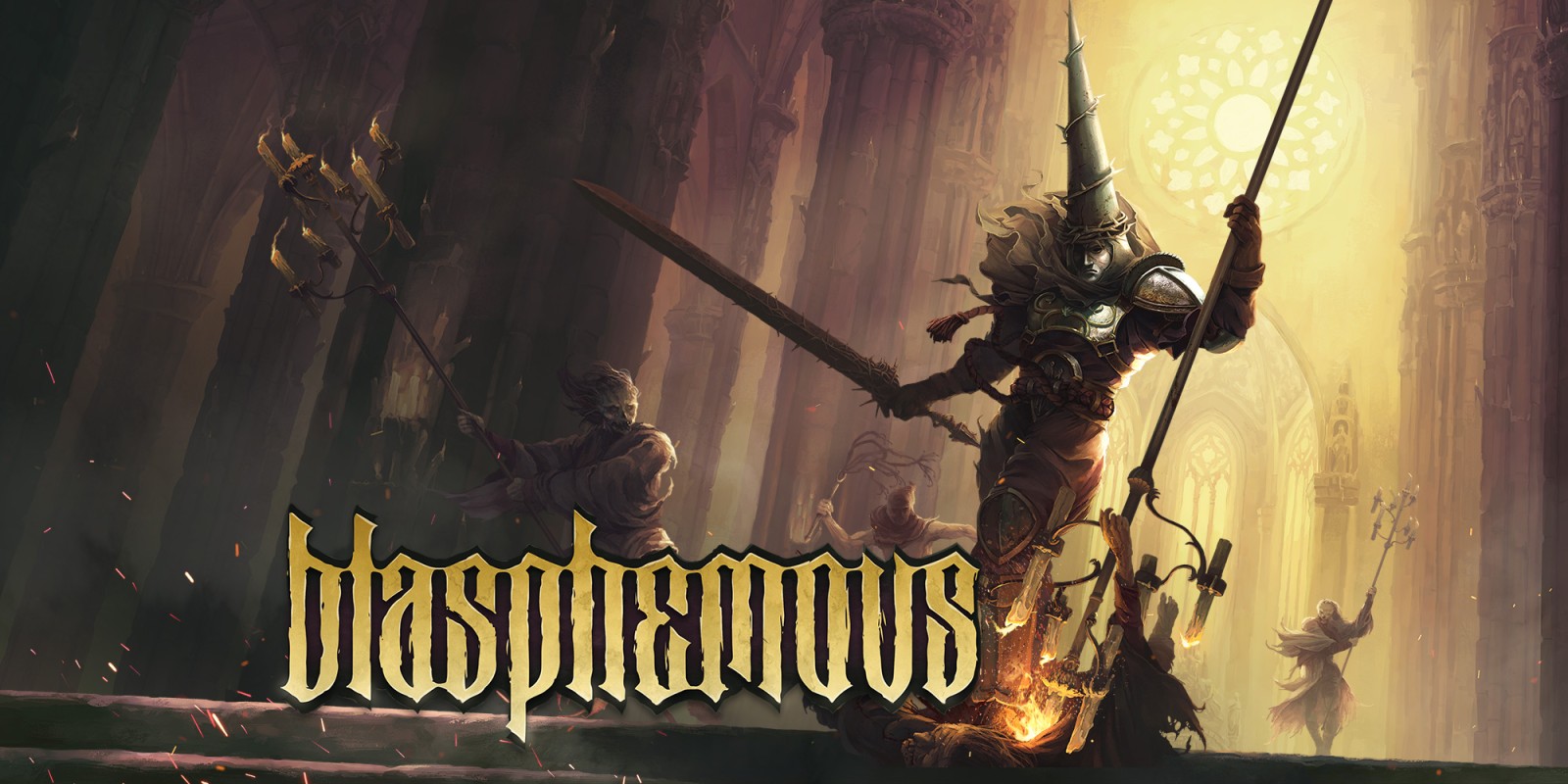
Blasphemous is an ultraviolent 2D Metroidvania with gorgeous 16-bit pixel art and limited but fluid animation. It describes itself as “fast-paced and punishing,” but it’s not really either of those things. The game’s focus is more on strategic combat than on platforming or quick reflexes, and your character moves at a fairly sedate speed. To me at least, the pace feels perfect, both from moment to moment and from one area of the map to the next. In terms of “punishing,” this is how I’d rate Blasphemous on a scale of “this game wants you to feel pain”:

6 – Guacamelee
7 – Blasphemous
8 – Shovel Knight
9 – Hollow Knight
10 – Rain World

In other words, Blasphemous is moderately punishing, but probably not at a level where you’ll give up at the beginning or rage quit in the middle. Granted, Blasphemous makes no attempt to be accessible, and it’s much easier if you use a walkthrough to access the health upgrades in the early part of the game, which are hidden so well (behind unmarked walls, under floors that only break if you jump on a specific spot from a great height, and so on) that you’d never find them unless you already knew where they were. Thankfully, once you get about two hours into the game, you start to understand how it works and don’t really need a walkthrough unless you’re a completionist.

Blasphemous has everything that I love about the Metroidvania genre, and it was worth my time just for the gameplay. The combat is engaging, the area-specific challenges are interesting, and the way in which the areas all eventually connect to each other is on par with Hollow Knight in terms of clever map design. If you enjoy indulging in a bit of exploration and backtracking, it will take about twenty hours to finish Blasphemous with near-perfect completion.

What really got me into Blasphemous is its atmosphere. Everything is compared to Dark Souls these days, but Blasphemous really is Dark Souls in 2D. The level of violence is incredible, and the game gets creative with its brutality. The architecture is similarly brutal and creative. Each area has its own unique character, and the background graphics are beyond fantastic. As for the story, it’s essentially this: You were dead, but now you’re undead for reasons that are unclear; and something bad happened to the world, but we’re not going to tell you what that was. Each collectible item has its own lore, all of which is disturbing.

I never felt as though Blasphemous is just trying to be awful for the sake of shock value, though. As you might guess from the title, it’s based on Spanish Catholicism, and it takes the themes and imagery of Catholicism to their logical extreme. If you’ve ever made a joke about how Catholicism is all about the fetishization of punishment and the worship of death, this game takes that joke seriously. At the same time, it’s so sincere and culturally specific that it never feels disrespectful. I was actually so impressed and curious about the lore and imagery that I looked up a few of the real-world cultural references online, and now I have a greater appreciation for Catholicism. No joke!

( I should say that this game probably isn’t for genuinely religious people, though. It is very literally blasphemous. It also contains all sorts of casual graphic and textual references to real-world torture and hate crimes committed by the church, which perhaps some people might not want to see. Honestly I can’t believe I played this game on a Nintendo console, what a time we live in. )

My favorite part of Blasphemous is its OST, which suits the tone and atmosphere of the game perfectly. About a third of the tracks suffer from dramatic moody bitch disorder, and I can’t remember where they play in the actual game, but most of the OST is mellow acoustic Spanish guitar. Que las Campanas me Doblen is a good representative track, and I really like Y Yo Fuego Te Daré, which manages to be both chill and epic at the same time. A track called Arpegios en Ocre plays in an area called “The Desecrated Cistern,” and it really makes you feel as though you’re exploring a cavernous underground space with a vaulted ceiling. I think the OST holds up well on its own as lo-fi Flamenco beats to chill to, but it’s also a gorgeous backdrop to the game and its ruined world.

Red Trees

Red Trees by Caramel
https://caramel.itch.io/redtrees

Red Trees is a free nonviolent adventure story game made with RPG Maker in a style that emulates the Game Boy Color. It’s about a small village that might be haunted by ghosts in the woods, and it’s adorable.

The game is divided into three sections: the village’s residential area, its business center to the north, and the forest to the south. In order to progress from one area to another, you embark on an extended trading quest. For example, someone asks you to find their cat. To convince the cat to follow you, you need to feed it fish. In order to procure a fish, you need to give a can of worms to the person fishing at the local pond. The trading sequence isn’t strictly linear, but it’s not so complicated that you’d get lost or frustrated.

Red Trees isn’t a horror game by any means, but it gives me strong Omori vibes. (Although, having made that comparison, I should say that Red Trees was originally released in 2016, four years before Omori.) The music is relaxing, the character portraits are super cute, and the writing is wholesome with a touch of light humor reminiscent of Tumblr circa 2015. I especially love the menu screen’s character log, which collects short profiles of everyone you’ve met. The item portraits and descriptions are lovely as well.

Red Trees takes about an hour to complete, but this is mainly because of the game’s spatial layout. Your character can’t run, and the town is so spacious that it takes time to walk from place to place. This never becomes frustrating, but you may want to download the game so you can save your progress, step away, and come back later. Red Trees is extremely charming, and the experience of playing it is much more enjoyable if you take your time instead of rushing to finish it.

If you’re going to download Red Trees, you have the option of paying $2 to get an extra file folder of illustrations and a PDF booklet with annotated concept and development art. I highly recommend this extra material, but I’d also recommend not checking it out until you finish the game, as it spoils the ending. In fact, the bonus content functions almost like a separate postgame story, and it’s just as sweet and adorable as the game itself.