Crow Country Essay on Sidequest

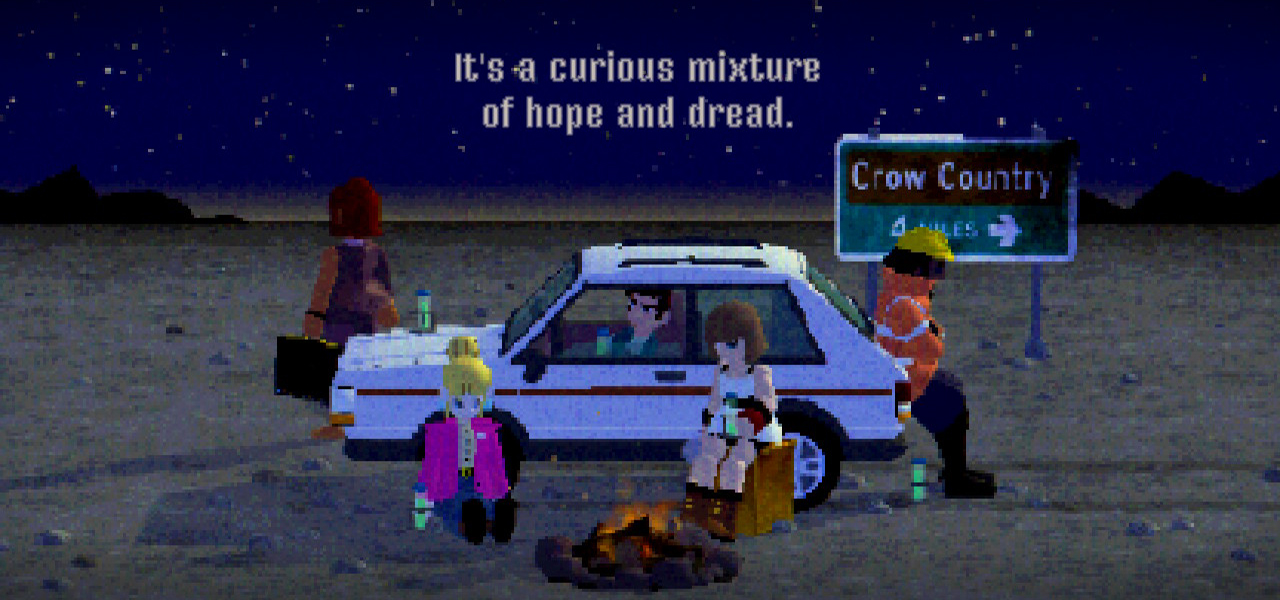
I’m excited to share “Crow Country Is a Game about Climate Change,” an ecocritical analysis of one of my favorite indie games of 2024. This essay also serves as a kind of “Ending Explained” story breakdown that was inspired by a few Reddit discussion threads that missed the point of what (to me at least) is a clear, powerful, and compelling artistic statement. How do we process the reality of climate change, and how can we face the challenges of the future?

Crow Country borrows heavily from the visual design of Resident Evil and Final Fantasy VII, and I argue that it provides an interesting meta-commentary on their themes as well. Specifically, I think Crow Country uses its retro aesthetics to remind players of the political climate of the late 1980s and early 1990s, when environmentalism was considered an important bipartisan issue in the United States.

In my essay, I put Crow Country in conversation with two books, Colette Shade’s Y2K: How the 2000s Became Everything (2025) and David Wallace-Wells’s The Uninhabitable Earth: Life After Warming (2017). I believe that Shade’s discussion of the “lost environmentalism” of 1990s media like Captain Planet and FernGully can be expanded to video games, and I explain how Crow Country plays on that cultural nostalgia. Meanwhile, Wallace-Wells discusses a “crisis in storytelling” about climate change that positions its victims as cute animals instead of actual human beings, but Crow Country subverts this narrative impulse by demonstrating that its “zombie” climate refugees are none other than ourselves.

You can read the essay on Sidequest here:
https://sidequest.zone/2025/04/22/crow-country-climate-change/

Crow Country (on Steam here) is an incredible game, by the way. I enjoyed writing about it, and I enjoyed playing it as well. It takes about four hours to finish, and there’s an optional “no combat” mode that allows players to focus on exploring the space while engaging with the story and puzzles. If you’re interested, I posted a no-spoiler review of the game ( here ).

ETA: This essay was featured on Critical Distance (here). What an honor! I hope a wider audience gets a chance to read this piece, if only so that more people can appreciate the nuanced but powerful message of this incredible game.
Review of Strange Bedfellows on Comics Beat

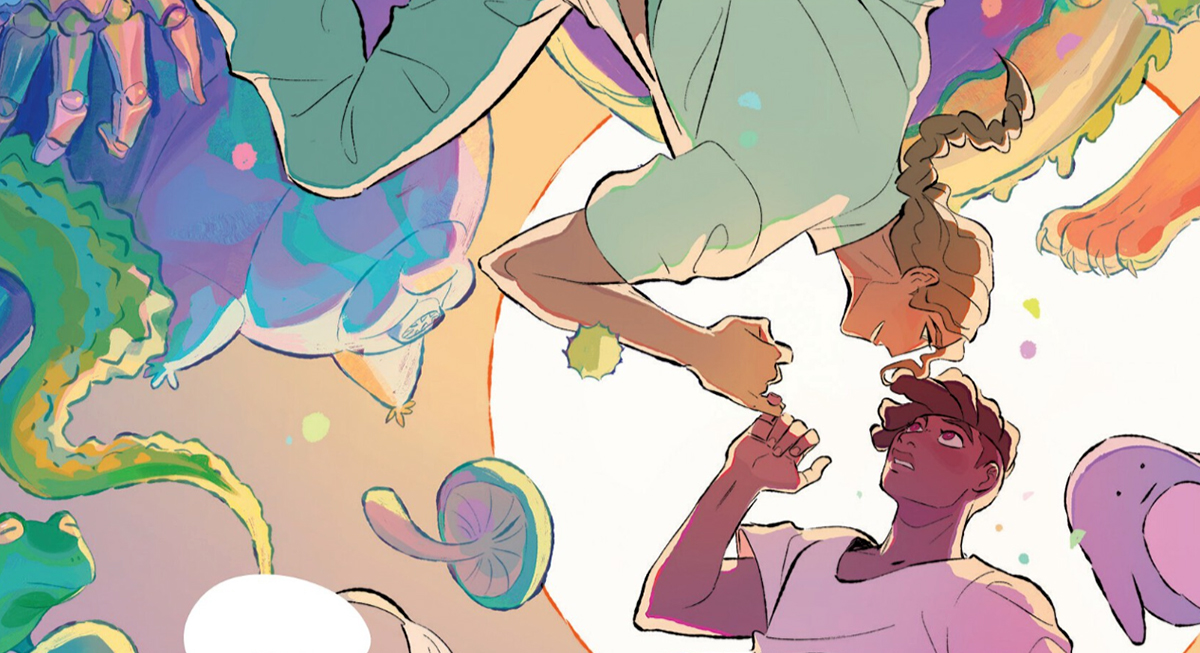
I’m excited to share my review of Ariel Slamet Ries’s newest graphic novel, Strange Bedfellows. This is a solarpunk romantic comedy that’s set in a utopia but still takes the darkness of human nature seriously. The art is gorgeous, and I very much enjoyed the time I spent in this fascinating world with these beautiful trashfire characters. Here’s an excerpt from my review:

Hardship comes to everyone, and romance isn’t always easy. The soft and hopeful message of Oberon’s story is that the flaws and complications in human ambitions are what make our lives interesting and beautiful. Strange Bedfellows assures the reader that, while we may not ever live in a perfect utopia, we don’t have to give up on our dreams of a kinder and greener future.

You can read the full review on Comics Beat here:
https://www.comicsbeat.com/graphic-novel-review-strange-bedfellows-dreams-of-a-romantic-solarpunk-future/

Review of Hourglass on Comics Beat

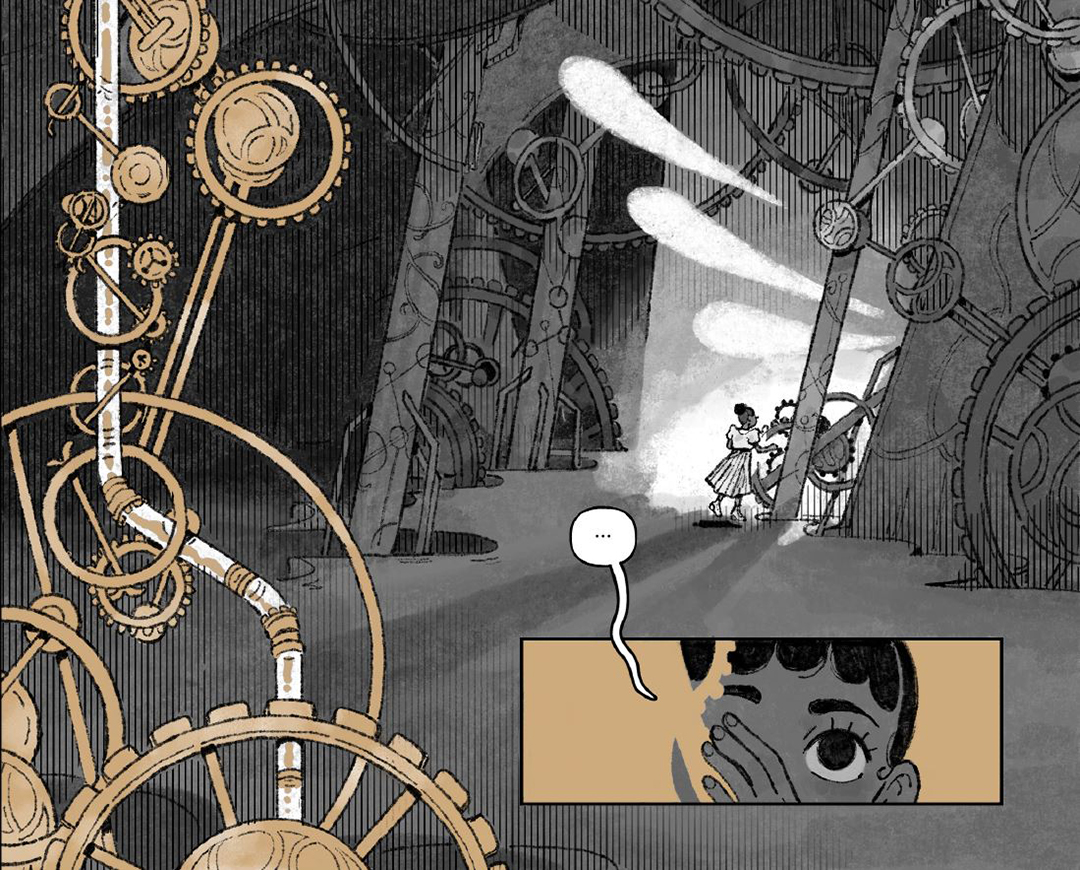
I had the immense honor of publishing a review of Barbara Mazzi’s graphic novella Hourglass on Comics Beat. Hourglass is gorgeous, and it explores the full speculative potential of steampunk. It has its gears and smashes them too, all the while being incredibly stylish. I’m ambivalent about steampunk, but I have nothing but love for this fantastic book. Here’s a short excerpt from my review…

Barbara Mazzi’s stylish artwork is the perfect vehicle for these characters and their world. Instead of moldering in the usual steampunk attachment to the Victorian era, Hourglass delights in the lavish luxury of the 1920s. Designs inspired by Art Deco contrast strong angles against delicate filigree. Meanwhile, the interior of the machine is a chaos of detail that reminds me of the detailed mechanical designs of Studio Ghibli films like Castle in the Sky. Mazzi’s warm shades of gray convey the warmth of the machine’s interior, while the mellow gold of the spot color emphasizes the magic of this world and the humanity of its inhabitants.

You can read the full review on Comics Beat here:
https://www.comicsbeat.com/graphic-novel-review-hourglass-gears-are-powered-by-adventure/

In Praise of Moss Disability Zine

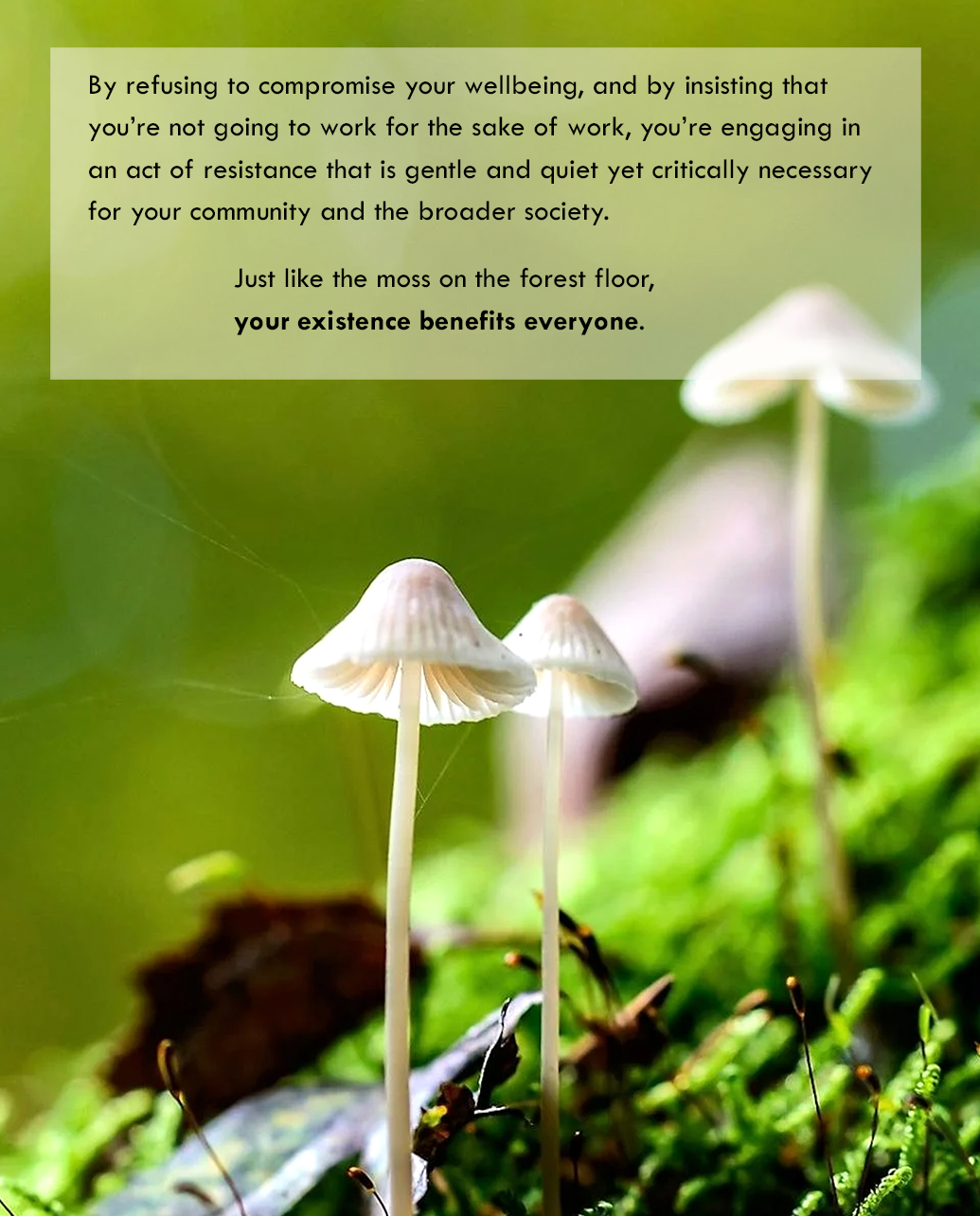
In Praise of Moss is a zine that argues against the myth of productivity while celebrating the value of a diversity of contributions to our culture and communities. Not everyone can be a tree, and that’s okay. Moss is an equally important part of an ecosystem.

I wrote this zine from a perspective that respects people of all abilities, but I think it’s important to acknowledge the more challenging aspects of disability. Disabled people are often expected to “pull their weight,” usually with the assumption that there’s only one way to measure success. In addition, people who live with invisible disabilities are often met with frustration and accusations of laziness when we’re unable to work or behave “normally.”

Moss is a useful metaphor for a recontextualization of what it means for disabled people to be useful to our communities and valued in our relationships. By exploring how moss can support an entire ecosystem, we can craft a model for how disability positivity can benefit society.

In addition, moss is remarkably adept at surviving disaster, which makes it an engaging analogy for resistance against the pressures of self-optimization exerted by neoliberal capitalism. While my focus is on disability, I believe that all readers can benefit from a shift in perspective that encourages us to grow naturally without worrying about productivity. 

When I write about “resisting productivity,” I’m speaking from the position of someone in academia who is directly affected by the myth that hard work will lead to prosperity. I hate the way this myth is weaponized against disabled people in the realm of higher education, and I want to destroy it. Very softly and quietly. Like moss.

While I love the lo-fi DIY aesthetic of many of the disability zines I’ve found on Etsy and in indie bookstores, it was important to me to create an attractively formatted physical object that feels good in my hands and accommodates my own disabilities by being easy to read. I want people who encounter this zine to feel that it’s valuable, and that they’re valuable too. I was fortunate to be able to work with Fireball Printing, a local Philadelphia service that creates gorgeous full-color publications.

If you’re interested, you can order a copy of the zine from Etsy, or you can download a free digital version on Itch.io.

🌿 https://digitalterrarium.itch.io/in-praise-of-moss
🌿 https://www.etsy.com/listing/1881401704/in-praise-of-moss-disability-zine

Legend of Zelda Forest Zine Preorders Open

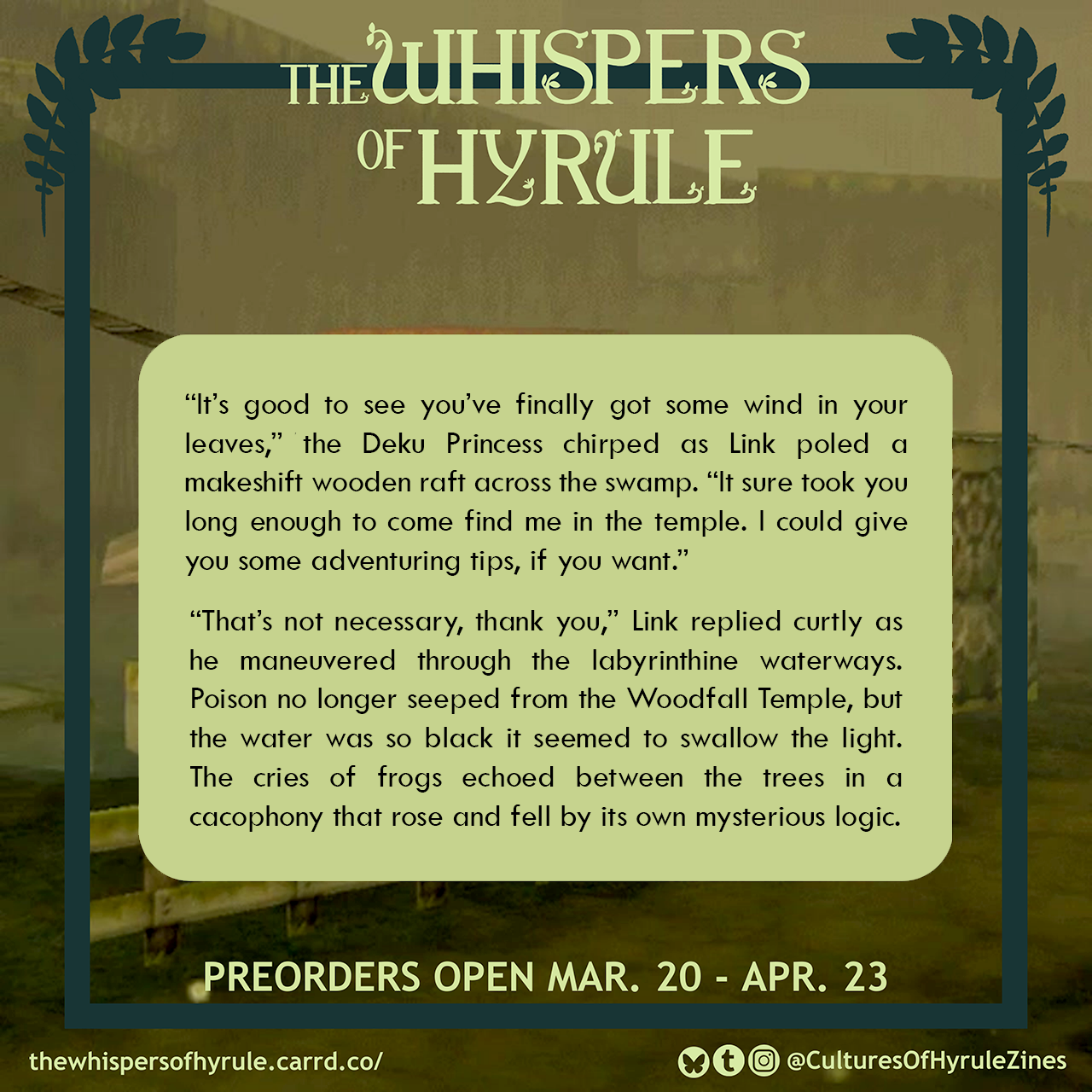
I’m excited to share the news that preorders are now open for The Whispers of Hyrule, a Legend of Zelda fanzine celebrating Hyrule’s beautiful green spaces and the creatures that make their homes in the trees.

I contributed a short story about Majora’s Mask titled “The Brave Tale of the Heroic Swamp Princess.” My story follows Link and the Deku Princess as they venture through the swamp on their way home from the Woodfall Temple. I did my best to capture the exuberant spirit of the Deku Princess, who helps Link work through the trauma he experienced in Ocarina of Time, as well as the warm atmosphere created by the vibrant plant growth in the swamp.

It’s been a privilege to see the drafts shared by the writers, artists, and musicians who have joined me on this journey. From sunlit meadows to deep forest shadows, everyone has worked hard to convey the wonder and mystery of getting lost in the woods. I know I say this about every fanzine, but this book is going to be gorgeous.

Preorders for the zine are open until April 23, and three stretch goals have already been exceeded. If you’re interested, you can check out the project at the following links:

🌿 https://thewhispersofhyrule.bigcartel.com/
🌿 https://culturesofhyrulezines.tumblr.com/
🌿 https://thewhispersofhyrule.carrd.co/

Review of Textual Cacophony

I was honored to write a review for Pacific Affairs of Daniel Johnson’s 2023 monograph Textual Cacophony, a critical analysis of Japanese internet culture between roughly 2006 and 2014. Johnson is especially interested in the anonymous message board 2channel and the video sharing site Niconico, and my review highlights why the online subcultures associated with these sites are still relevant and worth studying. Here’s the opening paragraph:

It’s no secret that a great deal of twenty-first century media has been influenced by internet subcultures; unfortunately, much of this culture has been lost to time. Many emergent online cultures of the 2000s have proved tragically ephemeral, with the scarce documentation that exists often falling into the trappings of cultural nostalgia. Thankfully, Daniel Johnson’s Textual Cacophony: Online Video and Anonymity in Japan functions as a critical analysis that documents and preserves an important moment in Japanese media history that continues to resonate across national borders.

You can read the full review on the Pacific Affairs website here:
https://pacificaffairs.ubc.ca/book-reviews/textual-cacophony-online-video-and-anonymity-in-japan-by-daniel-johnson/

Essay about Elden Ring and Dark Academia

I’m excited to share an essay I wrote for Bloodletter Magazine, a stylish biannual anthology of queer and feminist horror. The piece is titled “Dark Academia for Dark Times: Elden Ring and the Fall of the Academy,” and I’m writing about how the haunted lore of the game’s cursed university reflects real-world academic anxieties. 

You can read the essay here:
https://bloodlettermag.com/dark-academia-for-dark-times-elden-ring-and-the-fall-of-the-academy/

While I use the character Rennala from Elden Ring as an illuminating point of focus, my piece is really about the uncanny connections between the crisis currently facing universities and the social media aesthetic of “dark academia” embraced by young women. I’m arguing that the association of dark academia with the corruption of female bodies reflects deeper concerns regarding the ties between academic liberalism and the decay of imperial privilege. 

Basically: Is the wokeness of postcolonial queer feminism ruining college? I would like to believe that it is, and I think this is kind of neat, actually.

My piece is graced with a creepy spot illustration by the magical Katy Horan, who goes by @goodyhoran on Instagram, and you can follow Bloodletter at @bloodlettermag, where they post eye-catching film stills from indie horror movies created by emerging female directors. 

Video Game Sewers on Sidequest

I love video game sewer levels! I understand that not many people share my fascination with creepy underground tunnels, so I wrote an article for Sidequest to share my appreciation of the hidden mysteries and strange beauty of video game sewers. Here’s an excerpt:

A common complaint regarding sewer levels holds that the uniformity of their twisting corridors acts as an excuse for developers to create a generic maze with a minimum of effort. If designed with creativity, however, slight variations in an otherwise uniform environment can have a heightened effect, especially if the design of the sewers subtly reflects the layout of the city above.

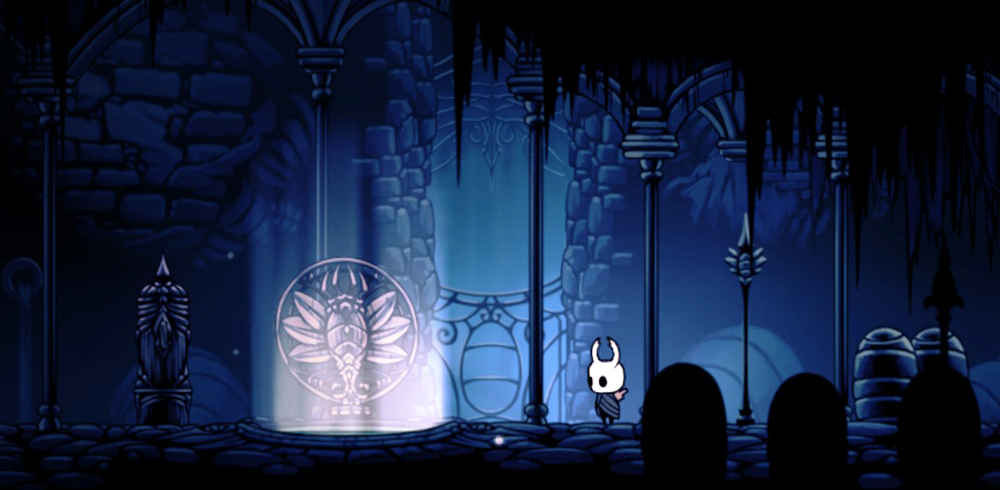
A perpetual rain falls on the ruined City of Tears in Hollow Knight, and this water flows into the Royal Waterways below. At the edges of the settlement, the sewer channels are falling apart and choked with debris. Directly under the city, however, the rainwater pools into gentle streams whose luminescence casts soft shadows of light onto the darkness of the tunnel walls.

You can read the full piece on Sidequest here:
https://sidequest.zone/2025/03/03/video-game-sewers/

Review of Hunger’s Bite on The Beat

I’m thrilled to have published another graphic novel review on Comics Beat. I got to write about Hunger’s Bite, a work of historical fantasy set on a luxury passenger ship during the 1920s. I was pleasantly surprised by how hard the artist leans into an anti-capitalist message, and I appreciate how he 100% owns and supports this stance in his author bio. The kids are all right.

Here’s an excerpt of my review:

Hunger’s Bite is an engaging work of historical fantasy that indulges in fun steampunk tropes like plucky young heroes, cigar-smoking villains in sharp suits, and secret magical societies. At the same time, the artist handles the historical reality of the story’s 1920s setting with a critical eye and respect for its startling inequalities. Taylor Robin’s graphic novel will provide ample food for thought for more mature teens in the YA bracket, as well as readers of any age who enjoy period fantasy with a bite.

You can read the full piece on The Beat here:
https://www.comicsbeat.com/graphic-novel-review-hungers-bite-historical-fantasy-inequities-of-the-1920s/

Review of The Skin You’re In on The Beat

I’m excited to have published my first review on The Comics Beat, and I’m honored that I got to write about The Skin You’re In, a handsome hardcover collection of queer horror comics drawn by Ashley Robin Franklin and published by Silver Sprocket. Here’s an excerpt of my review:

Each of the seven stories in The Skin You’re In is eerily beautiful and unnerving. Even as Franklin’s queer and female characters exist in a world that doesn’t perceive their humanity as normative, these stories provide a visceral reminder that there’s nothing “normal” about being a human on a planet that hosts a vast array of organisms.

You can read the full piece on The Beat here:
https://www.comicsbeat.com/graphic-novel-review-the-skin-youre-in-pushes-the-uncanny-boundaries-of-humanity/