That One Matt Bors Comic

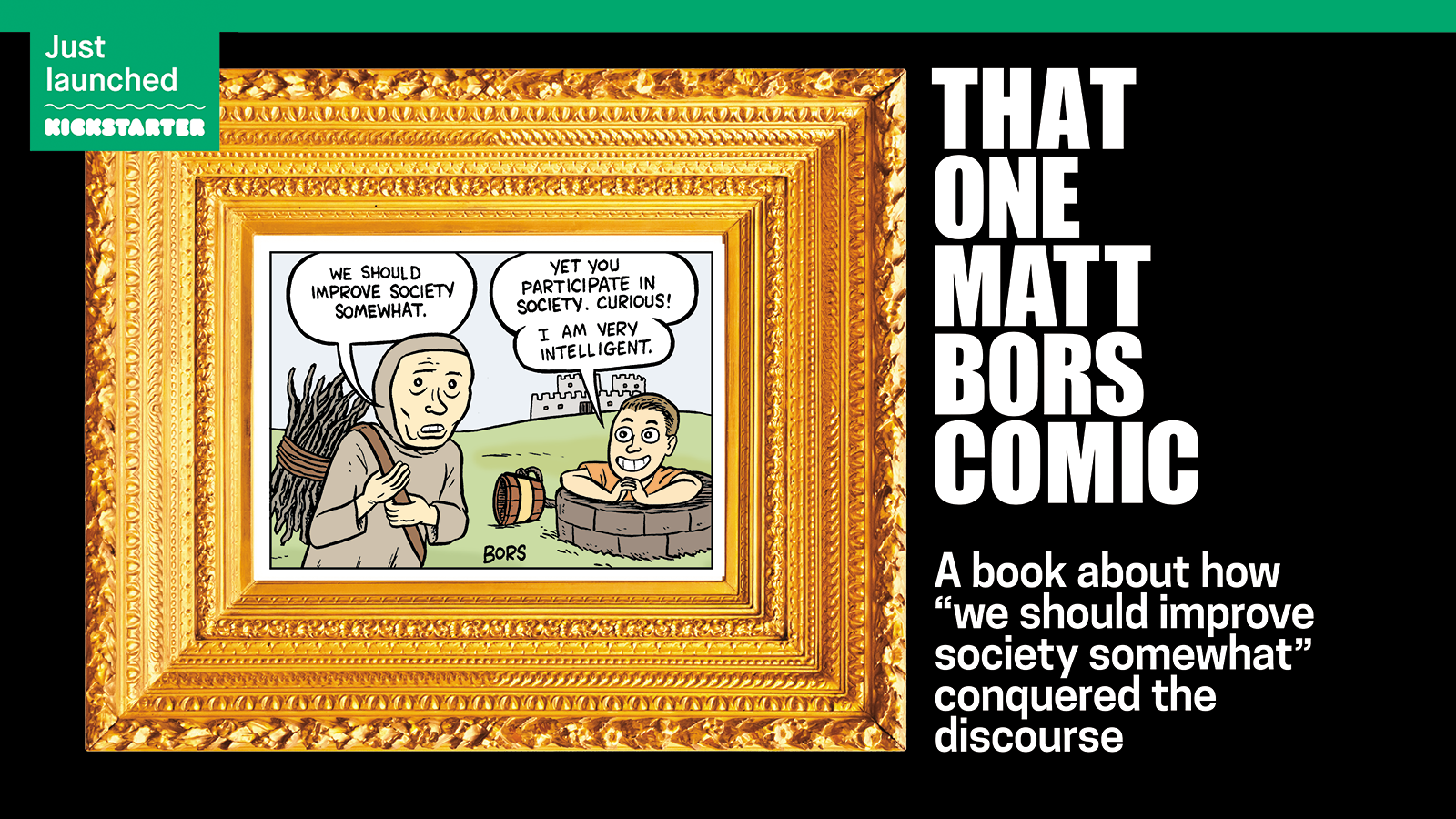
I have an essay appearing in a book called That One Matt Bors Comic, an anthology about internet meme culture that has a lineup of incredible names attached, including Ryan North of Dinosaur Comics fame and Ryan Broderick, the host of Panic World podcast. Many of the artists who work with the comics journalism website The Nib are onboard, as is the amazing Matt Bors himself.

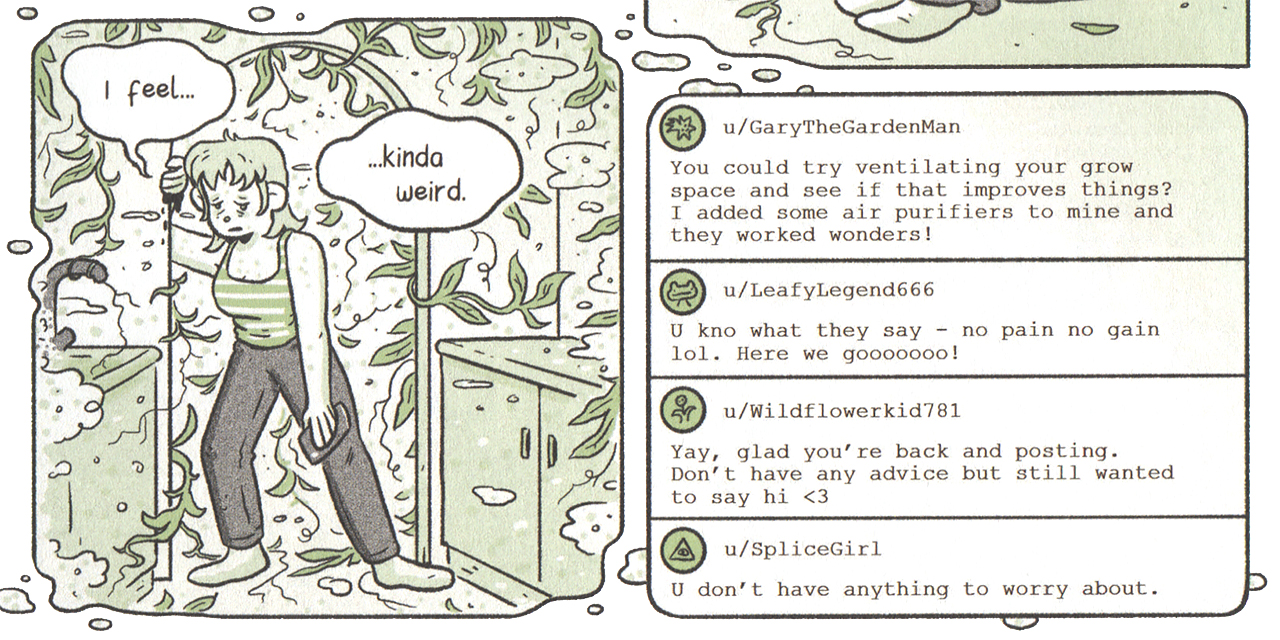
I’m not entirely sure why I’m included in this constellation of stars, but I’m not complaining! I have a lot to say about online discourse, especially in progressive spaces. When people talk about “how the internet warps our minds and culture,” I think there’s a tendency to focus on right-wing discourse on mainstream platforms like Twitter and TikTok, but people in left-wing communities on Tumblr definitely have their moments as well.

The book is currently crowdfunding on Kickstarter here:
https://www.kickstarter.com/projects/glennf/that-one-matt-bors-comic

Review of The Art of Slay the Princess on Comics Beat

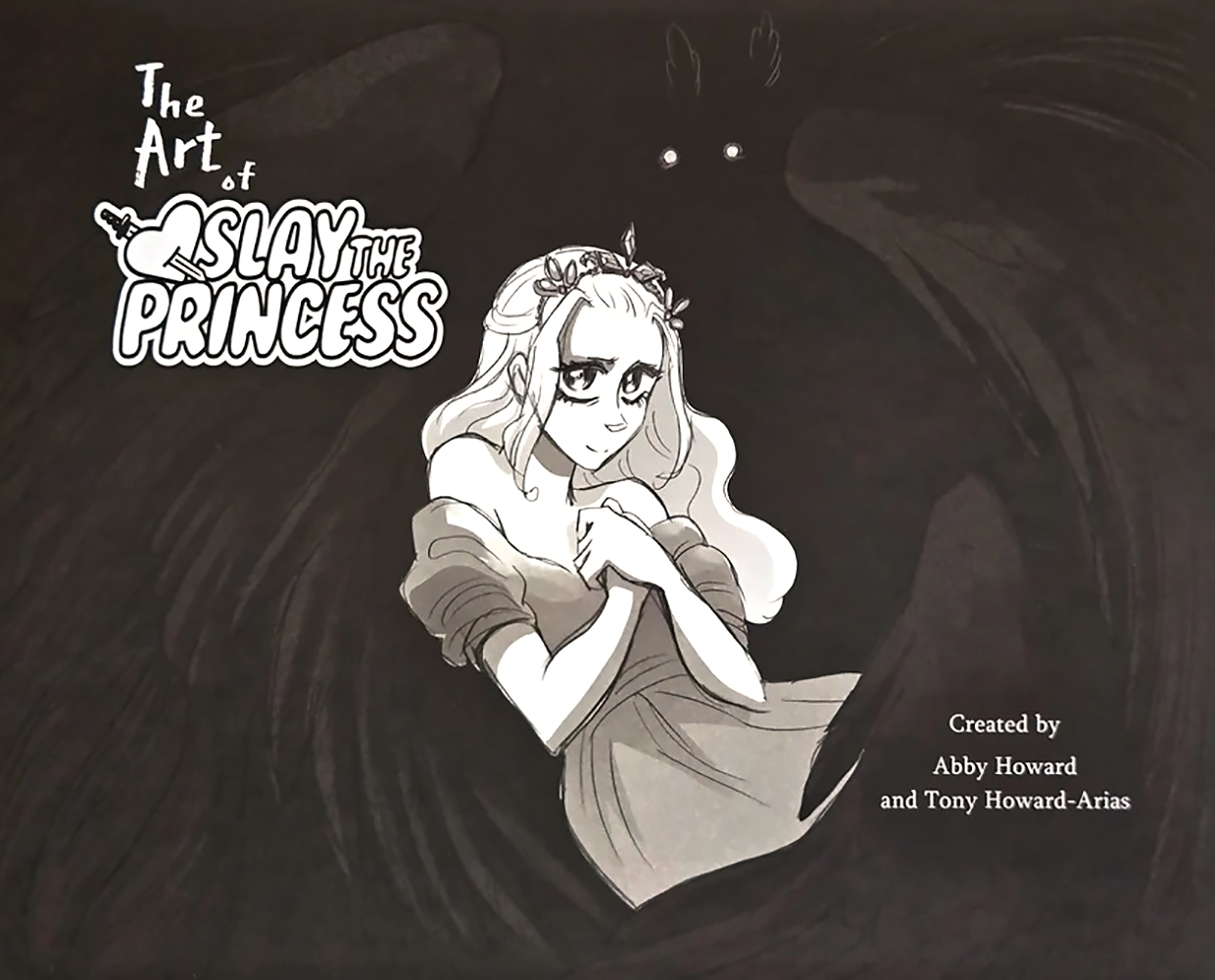
Although this book came out back in October 2025, Comics Beat offered me the opportunity to write a review of The Art of Slay the Princess, which is something like a graphic novel adaptation of the horror game (on Steam here).

It’s difficult to summarize the story of Slay the Princess, and a serious discussion could easily turn into a substantial essay. What I therefore ended up doing in my review was discussing the success of the cross-media adaptation. You might wonder how a print book would be able to convey the multiplicity of the game’s branching storylines, and the answer is that it does so in a remarkably artful way.

Here’s an excerpt from my review:

In order to function as a book, The Art of Slay the Princess omits a substantial amount of text from the game’s script. By necessity, many of the game’s multimedia horror elements, including its viscerally upsetting soundscapes, are also missing. Regardless, Howard’s illustration work is sufficiently disturbing even in a montage of static frames, and the page layout is utilized to showcase the various forms of the Princess in their full uncanny glory. Though it’s not a traditionally linear reading experience, The Art of Slay the Princess is still more than capable of immersing the reader in its dark and labyrinthine world.

You can read the review on Comics Beat here:
https://www.comicsbeat.com/the-art-of-slay-the-princess-review/

Review of Pig Wife on Comics Beat

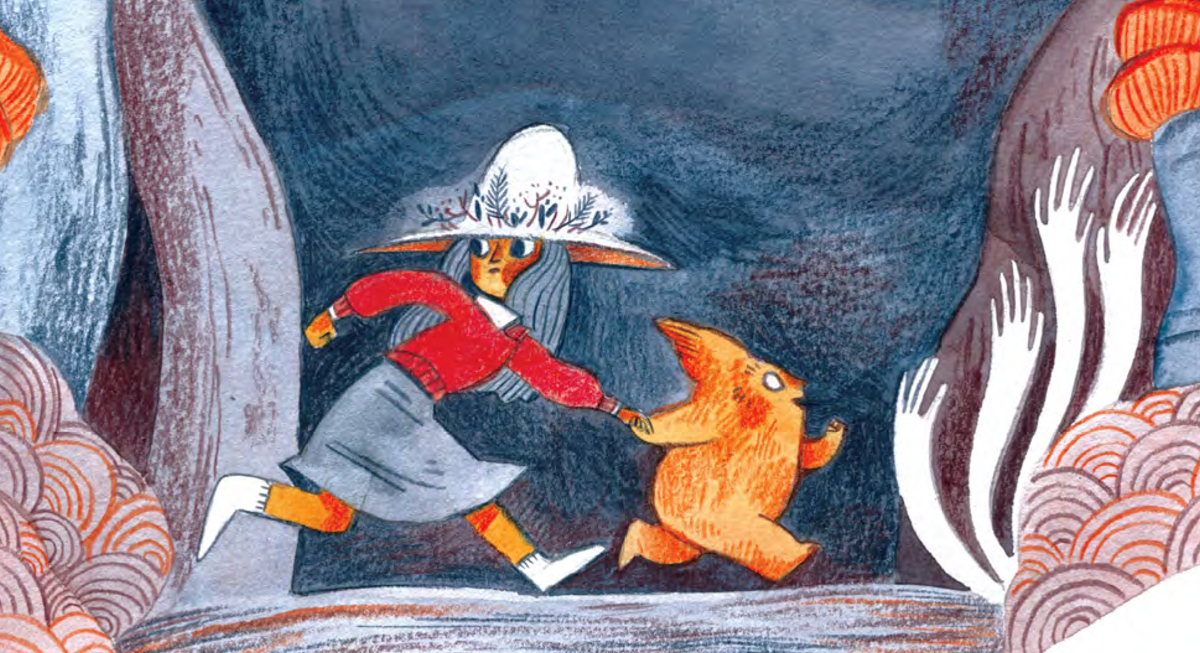
I recently had the immense pleasure of writing a review for Comics Beat about Pig Wife, a massive graphic novel drawn by Abbey Luck, a Hollywood animator who specializes in Adult Swim style bizarro art. Pig Wife is definitely Hollywood, and it’s definitely got a Gen-X style “alternative” edge to it. Neither of these things is to my taste, usually, but I love Pig Wife for what it is: namely, a gothic “weird girl” coming-of-age story set in a not-quite abandoned labyrinth of mine tunnels in rural Pennsyltucky.

I say in my review that it’s easy to read this 500-page book in one sitting, and I mean it. Pig Wife tells an incredibly entertaining story; but, appropriately enough, there’s a lot going on below the surface. Here’s an excerpt from my review:

By forgoing the nuances of character, Pig Wife can focus entirely on plot, and the plot is a well-oiled machine that grabs the reader and aggressively drags them down into the tunnels. Moreover, by virtue of the broad strokes of its characterization, Pig Wife is also able to convey the allegorical elements of its scenario.

The coming-of-age story in which a young hero embarks on a journey has a universal appeal, but teenage girls (and slightly older girls, if they’re trans) often undergo a separate ascent from innocence to experience that I think of as “climbing out of the pit.” By “the pit,” I mean the everpresent tarpit of internalized sexism and misogyny, and the mine tunnels of Pig Wife are as good of a visualization of this pit as any.

You can read the full review on Comics Beat here:
https://www.comicsbeat.com/graphic-novel-review-pig-wife/

The Annotated Kitab al-Azif on The New Absurdist

I’m excited to announce that my short story “The Annotated Kitab al-Azif” is free to read on The New Absurdist here:

📖 https://newabsurdist.com/editors-picks/the-annotated-kitab-al-azif/

“The Annotated Kitab al-Azif” is a queer Lovecraftian romance about the slow decline of American academia and the supernatural perils of translation. In this story, a burnt-out Millennial podcaster flees the high rent of Boston and accepts a position as a departmental admin assistant in the suburban Miskatonic University, which is suffering from budget cuts and declining enrollments. During the lull of his first summer on the job, the podcaster meets a grad student working on the Gnostic religious traditions of the southern Mediterranean while attempting a translation of the Kitab al-Azif, more popularly known as the Necronomicon.

As you might imagine, this area of study has consequences for the grad student. The podcaster isn’t too concerned, however. He’s already seen all manner of awful things while doing research online, and why let something as trivial as ageless extradimensional horrors get in the way of a budding relationship?

Though I’ve never accidentally summoned an eldritch abomination, the setting of “The Annotated Kitab al-Azif” is partially based on my own experience as a grad student at the University of Pennsylvania. The “horror” part of this experience is the constant scramble for funding, the awkward negotiations with libraries for access to research material, and the unspoken expectation that you’ll work in decaying buildings that haven’t been maintained since the early twentieth century.

Meanwhile, the “romance” part is the opportunity to share space with people from all over the world. When you use the same office (and the same refrigerator and bathroom) with other people, pre-existing differences in culture, language, and nationality quickly become secondary to the warmth of the personal relationships that form between you. Universities aren’t cultural melting pots by any means, but they’re as good of a place as any to realize that cultural differences really don’t matter all that much in the face of genuine friendship.

Though I’ve largely set aside my ambitions to become a translator, one of the reasons I got into academia was to model the positive change I wanted to see in the broader field of literary studies, especially with regards to de-mystifying stories written by authors from “non-Western” countries. Even when it’s done respectfully, the academic tendency to treat these stories as “subaltern” and “marginalized” is frustrating. To begin with, nobody thinks of their own language and culture as “other”; but, more importantly, people are just people.   

The Necronomicon is an interesting base for an exploration of this theme. In my understanding of the lore of the Cthulhu mythos, the Necronomicon is essentially an expression of popular turn-of-the-century Spiritualism, which was in turn inspired by the various strands of medieval Gnostic thought that sprung up along the Silk Road.

Though this sort of spiritually inclusive worldview may have seemed “mystical” to people living in Christian-majority cultures in the late nineteenth century, it’s completely normal to someone coming from a Buddhist or a Hindu tradition. All things considered, the cyclical view of time and the multidimensional view of space suggested by the Necronomicon are completely normal for many people who weren’t raised as Christian, and it’s interesting to consider the real-world foundations of this infamous fictional text without the narrative trappings of Orientalism.

But also…… What if magic were genuinely real? What then?

I’m grateful to The New Absurdist for taking a chance on this odd piece of weird fiction. I also want to express my appreciation to the story’s cover artists, Katie Rejto and Wally Tigerland, for creating such a unique and intriguing illustration.

If your curiosity is piqued by the prospect of true-to-life dark academia haunted by a touch of cosmic horror, please check out my story on The New Absurdist (here).

Review of Shadows of the Sea on Comics Beat

I recently had the privilege of writing a review for Comics Beat about Cathy Malkasian’s new graphic novel, Shadows of the Sea. I have to admit that I struggled with Malkasian’s previous books, which are brilliant but tonally dark and emotionally devastating. Shadows of the Sea is just as strange and heartbreaking as the artist’s earlier work, but it ends on a gloriously high note that gives me hope for the future. I was prepared to write a review about the value of portraying despair in dark times, but man. Hope is good too.

Here’s an excerpt:

In his review on The Beat, John Seven assesses Malkasian’s 2017 graphic novel Eartha as one of the artist’s characteristic “gloomy, apocalyptic parables that don’t make you feel so great about humankind.” It’s difficult to disagree, as Eartha is deeply disquieting. In contrast, Shadows of the Sea feels like a gentler turn of the same thematic wheel, presenting a story that’s smaller in scope but richer in emotional immediacy. The fantastic world Malkasian has painted is cruel and strange, to be sure, but it still affords the possibility of healing. Shadows of the Sea lingers not because of its darkness, but because of the hope that emerges after a brave confrontation with bitter truths.

You can read the full review on Comics Beat here:
https://www.comicsbeat.com/graphic-novel-review-shadows-of-the-sea/

The Annotated Kitab al-Azif

My queer Lovecraftian romance, “The Annotated Kitab al-Azif,” was just published in the latest issue of Black Sheep, a magazine for weird fiction. This story treats the gnostic origins of the Necronomicon with respect while being slightly silly about grad students.

You can order a copy of the issue with my story here:

🐙📖 www.amazon.com/dp/B0G25R82TY

It’s very cool to have the opportunity to publish a Lovecraft pastiche in an honest-to-god pulp magazine, which seems appropriate. At the same time, I definitely feel the friction of using Lovecraft’s own tropes to push back against the ugly Orientalism surrounding the Necronomicon.

The truth is that, while I admire Lovecraft, but I wouldn’t consider myself a fan. Rather, I spent a formative part of my childhood in a small town in the Deep South whose public library was severely limited by budget constraints. The only thing remotely close to fantasy fiction they had on their shelves was Stephen King, the lone second volume of Lord of the Rings, and a handful of ancient paperback collections of H.P. Lovecraft.

I didn’t really have the cultural context to understand Stephen King, and I wouldn’t recommend The Two Towers as the place to start reading Tolkien. Lovecraft grabbed me, though. Even as a kid, I understood the xenophobia expressed in Lovecraft’s stories. Believe me, I understood all too well. Still, I guess I was young enough that this wasn’t a dealbreaker, especially since there was nothing else to read during the summer where I practically lived at this tiny little library.

I had more resources the following year, when I started attending an international school in Atlanta and began to read more widely. But Lovecraft stuck with me, and a small but significant goal of my writing now is to try to capture and explain why that is.

I sincerely believe that people should write whatever they want, but a part of me still questions the value of aligning myself with the work of such a problematic author. The truth remains, though, that these Lovecraft stories only occupy a small closet in the house I’m trying to build with my writing. What I want to do is expand the scope of the small rural library that only had room for Stephen King and H.P. Lovecraft, as well as to create space for original work that dismantles the toxic feedback loop of preset responses to human difference.

Much love to Black Sheep magazine for giving a home to this story. 

Review of The Corus Wave on Comics Beat

I really enjoyed writing a review of Karenza Sparks’s debut graphic novel, The Corus Wave, for Comics Beat.

The Corus Wave is a cozy science mystery about a grad student who inadvertently tumbles down a research rabbit hole while writing her thesis about an unusual (and potentially supernatural) fossil. The story quickly becomes a low-stakes Da Vinci Code adventure with a lot of local color borrowed from the artist’s home in Cornwall, and it’s super charming. I really love this book.

Here’s an excerpt from my review:

The Corus Wave is a celebration of the joys of research. The hunt for Corus’ manuscripts begins with a footnote that becomes a rabbit hole, but the story evolves in a more practical direction as the two students find friendship and support in a scholarly community. Their fieldwork provides opportunities to appreciate the human stories behind a built environment whose unique design flourishes might otherwise be taken for granted. The Corus Wave is about going offline and touching grass, the pleasure of which is conveyed through gentle and attractive art that presents lively and expressive characters navigating interior spaces that only reveal their secrets under close observation.

You can read the full review on Comics Beat here:
https://www.comicsbeat.com/graphic-novel-review-the-corus-wave/

Dreamcore Limited

“Dreamcore Limited” was my submission to the Halloween flash fiction contest hosted by Bloodletter Magazine. This piece was selected as one of the three winners, and it was awarded a cover illustration by the horror artist Rialin Jose! You can read the stories and bask in the spookiness of their illustrations on Bloodletter’s account on Instagram (here).

The theme of this contest was “liminality,” and what better setting than a dead mall? Nostalgia is creepy, and the horror of dead malls is the uncanniness of feeling your history collapse into a marketing demographic that no longer fits.

I was inspired by Maria-Gemma Brown’s academic article “Ghost in the Mall: The Affective and Hauntological Potential of Dead Mall Ruins,” which is a fantastic piece of scholarship that’s interesting and accessible to a broad general audience. The article is open-access, and you can read it or download a PDF copy on the website of Capacious: Journal for Emerging Affect Inquiry (here).

Retro Horror Games on Sidequest

My annual roundup of free-to-play retro horror games on Itch.io is now on Sidequest. There’s a gritty mix of fresh blood and decayed favorites in this year’s creepypixel harvest, from the recent haunted forest simulator Bloodbark to the Tumblr-favorite Flesh, Blood, & Concrete to the first game created by Deltarune artist Temmie Chang, Escaped Chasm.

You can check out the post here:
https://sidequest.zone/2025/10/15/retro-horror-games-on-itchio/

And there’s also my lists from October 2024 and October 2023, which are somehow even more liminal and retro.

I’m overjoyed to have commissioned a banner illustration from the shining Teller-of-Tragedies, who shares gorgeous and immersive dreamcore pixel art on Tumblr (here) and on Instagram (here).

Essay about Analog Nostalgia on Shelfdust

I’m honored to have published an essay on Shelfdust about the gentle anti-capitalist use of cultural nostalgia in the French graphic novel Onibi: Diary of a Yokai Ghost Hunter, which is an autobiographical account of a summer the artists spent in rural northern Japan. When I used this book as a course text in my “Japanese Ghost Stories” class last fall, I was surprised by the warmth of the students’ response, which I suspect is tied to the trend of “analog nostalgia” that seems to be big on social media at the moment. I’d always thought of nostalgia as a reactionary cultural movement, but I have to admit that Onibi presents a welcome challenge to this assumption.

Here’s an excerpt from the beginning of my essay:

Onibi demonstrates a fascination with retro objects and aesthetics, which are presented as a refuge from hustle and productivity. As concerns regarding pressing issues such as unemployment and climate change grow ever more pressing, so too do anxieties concerning the speed and waste demanded by capitalism. I believe that the recent fascination with retro and analog technologies is partially a response to these anxieties. Given that comics have emerged as an increasingly visible and viable space for public discourse, I’d like to take a look at how Brun and Pichard use analog nostalgia to translate local culture into an argument for a break with contemporary capitalism’s insistence on constant growth. 

You can read the full piece here:
https://shelfdust.com/2025/10/15/analog-nostalgia-and-gentle-degrowth-in-onibi-diary-of-a-yokai-ghost-hunter/