Review of Shadows of the Sea on Comics Beat

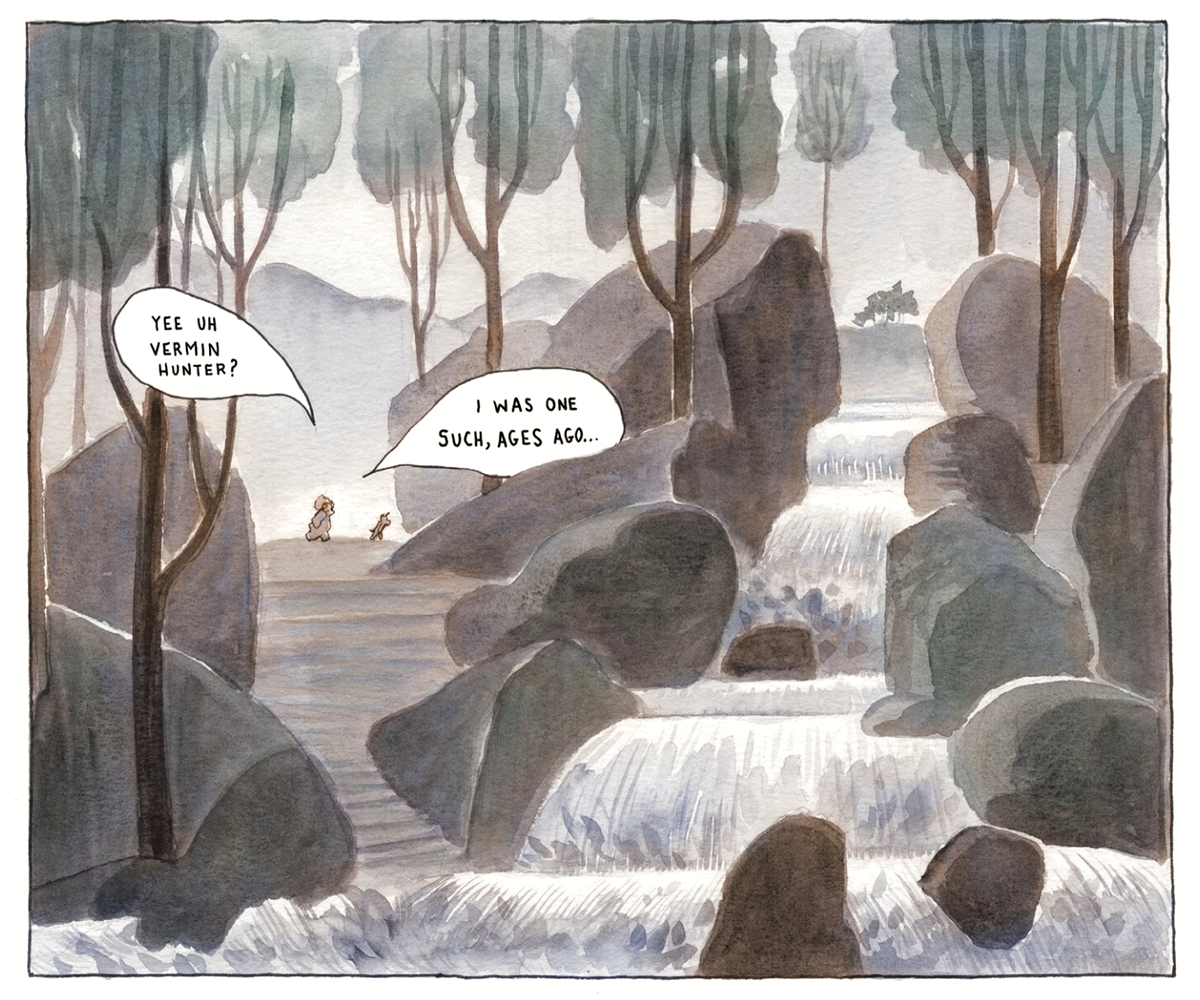
I recently had the privilege of writing a review for Comics Beat about Cathy Malkasian’s new graphic novel, Shadows of the Sea. I have to admit that I struggled with Malkasian’s previous books, which are brilliant but tonally dark and emotionally devastating. Shadows of the Sea is just as strange and heartbreaking as the artist’s earlier work, but it ends on a gloriously high note that gives me hope for the future. I was prepared to write a review about the value of portraying despair in dark times, but man. Hope is good too.

Here’s an excerpt:

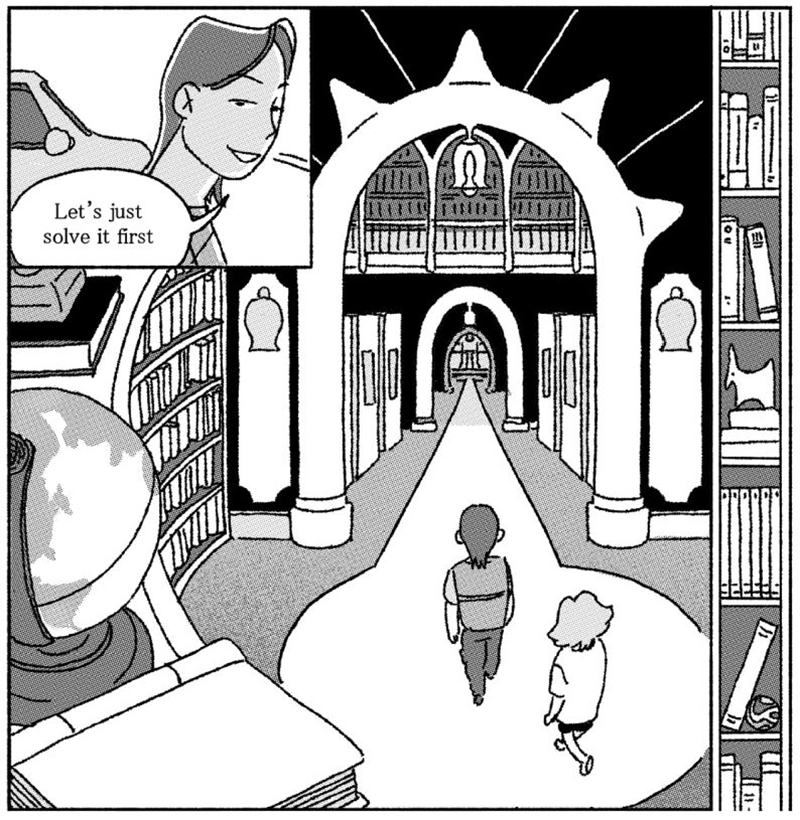
In his review on The Beat, John Seven assesses Malkasian’s 2017 graphic novel Eartha as one of the artist’s characteristic “gloomy, apocalyptic parables that don’t make you feel so great about humankind.” It’s difficult to disagree, as Eartha is deeply disquieting. In contrast, Shadows of the Sea feels like a gentler turn of the same thematic wheel, presenting a story that’s smaller in scope but richer in emotional immediacy. The fantastic world Malkasian has painted is cruel and strange, to be sure, but it still affords the possibility of healing. Shadows of the Sea lingers not because of its darkness, but because of the hope that emerges after a brave confrontation with bitter truths.

You can read the full review on Comics Beat here:
https://www.comicsbeat.com/graphic-novel-review-shadows-of-the-sea/

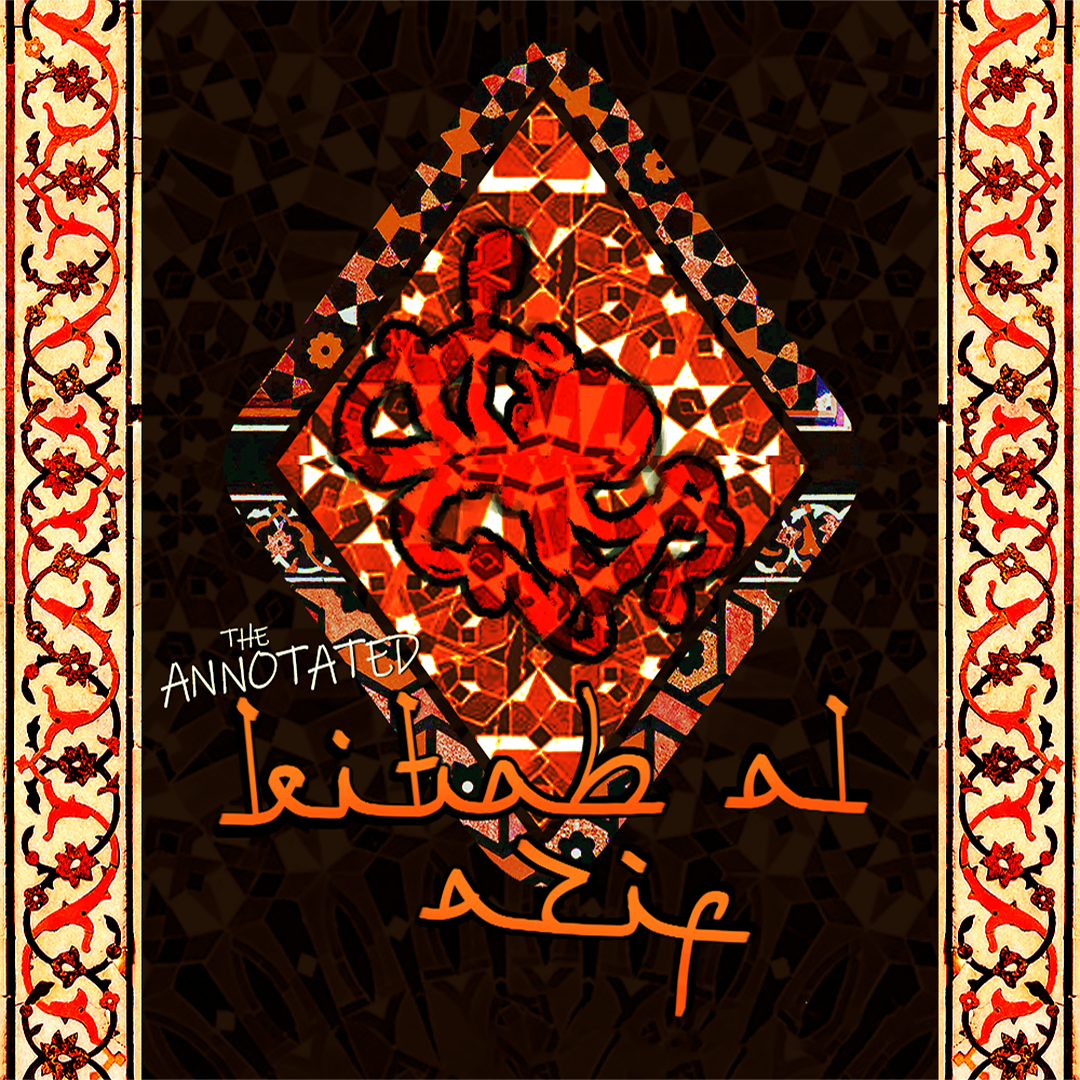
The Annotated Kitab al-Azif

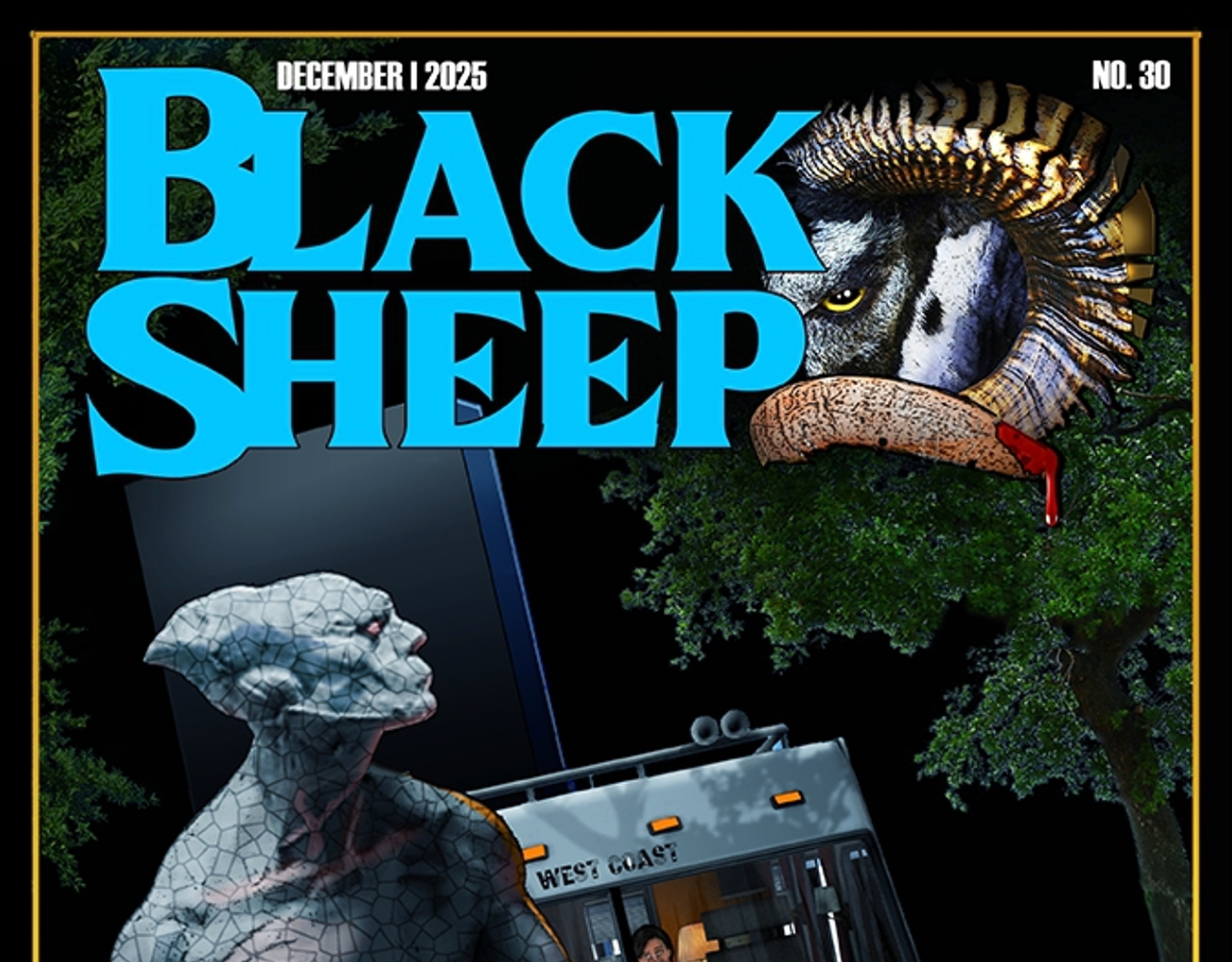
My queer Lovecraftian romance, “The Annotated Kitab al-Azif,” was just published in the latest issue of Black Sheep, a magazine for weird fiction. This story treats the gnostic origins of the Necronomicon with respect while being slightly silly about grad students.

You can order a copy of the issue with my story here:

🐙📖 www.amazon.com/dp/B0G25R82TY

It’s very cool to have the opportunity to publish a Lovecraft pastiche in an honest-to-god pulp magazine, which seems appropriate. At the same time, I definitely feel the friction of using Lovecraft’s own tropes to push back against the ugly Orientalism surrounding the Necronomicon.

The truth is that, while I admire Lovecraft, but I wouldn’t consider myself a fan. Rather, I spent a formative part of my childhood in a small town in the Deep South whose public library was severely limited by budget constraints. The only thing remotely close to fantasy fiction they had on their shelves was Stephen King, the lone second volume of Lord of the Rings, and a handful of ancient paperback collections of H.P. Lovecraft.

I didn’t really have the cultural context to understand Stephen King, and I wouldn’t recommend The Two Towers as the place to start reading Tolkien. Lovecraft grabbed me, though. Even as a kid, I understood the xenophobia expressed in Lovecraft’s stories. Believe me, I understood all too well. Still, I guess I was young enough that this wasn’t a dealbreaker, especially since there was nothing else to read during the summer where I practically lived at this tiny little library.

I had more resources the following year, when I started attending an international school in Atlanta and began to read more widely. But Lovecraft stuck with me, and a small but significant goal of my writing now is to try to capture and explain why that is.

I sincerely believe that people should write whatever they want, but a part of me still questions the value of aligning myself with the work of such a problematic author. The truth remains, though, that these Lovecraft stories only occupy a small closet in the house I’m trying to build with my writing. What I want to do is expand the scope of the small rural library that only had room for Stephen King and HP Lovecraft, as well as to create space for original work that dismantles the toxic feedback loop of preset responses to human difference.

Much love to Black Sheep magazine for giving a home to this story. 

Review of The Corus Wave on Comics Beat

I really enjoyed writing a review of Karenza Sparks’s debut graphic novel, The Corus Wave, for Comics Beat.

The Corus Wave is a cozy science mystery about a grad student who inadvertently tumbles down a research rabbit hole while writing her thesis about an unusual (and potentially supernatural) fossil. The story quickly becomes a low-stakes Da Vinci Code adventure with a lot of local color borrowed from the artist’s home in Cornwall, and it’s super charming. I really love this book.

Here’s an excerpt from my review:

The Corus Wave is a celebration of the joys of research. The hunt for Corus’ manuscripts begins with a footnote that becomes a rabbit hole, but the story evolves in a more practical direction as the two students find friendship and support in a scholarly community. Their fieldwork provides opportunities to appreciate the human stories behind a built environment whose unique design flourishes might otherwise be taken for granted. The Corus Wave is about going offline and touching grass, the pleasure of which is conveyed through gentle and attractive art that presents lively and expressive characters navigating interior spaces that only reveal their secrets under close observation.

You can read the full review on Comics Beat here:
https://www.comicsbeat.com/graphic-novel-review-the-corus-wave/

Dreamcore Limited

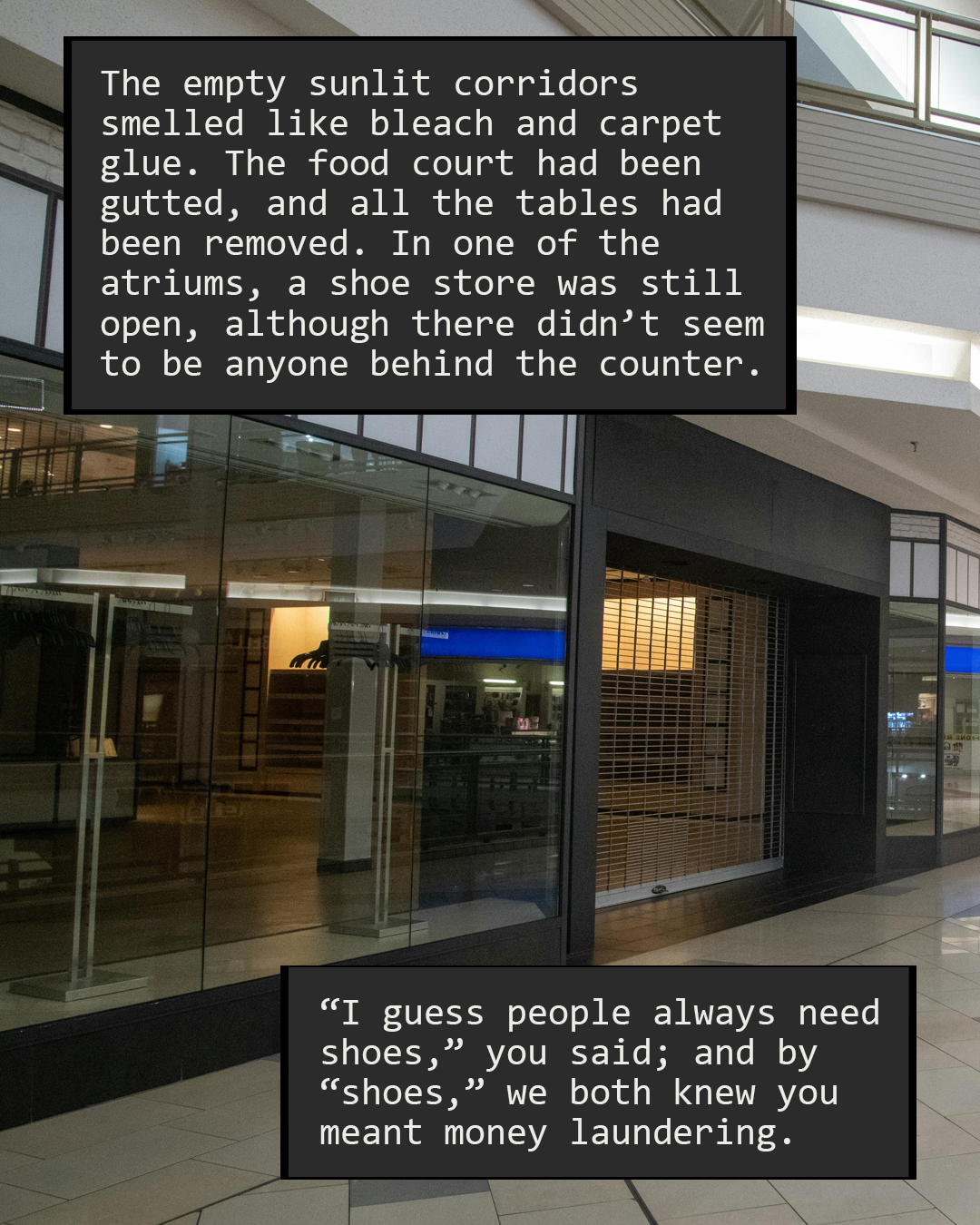
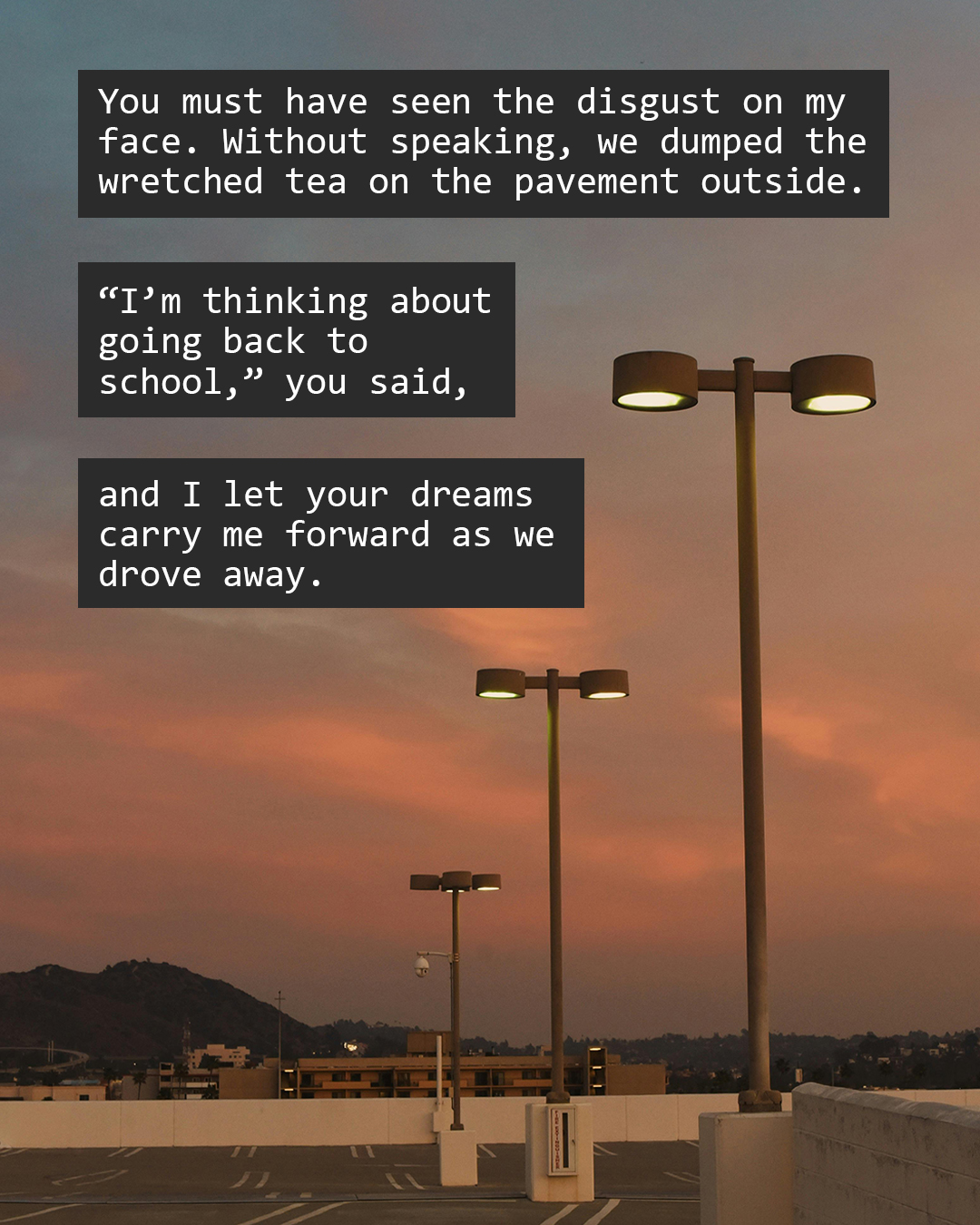
“Dreamcore Limited” was my submission to the Halloween flash fiction contest hosted by Bloodletter Magazine. This piece was selected as one of the three winners, and it was awarded a cover illustration by the horror artist Rialin Jose! You can read the stories and bask in the spookiness of their illustrations on Bloodletter’s account on Instagram (here).

The theme of this contest was “liminality,” and what better setting than a dead mall? Nostalgia is creepy, and the horror of dead malls is the uncanniness of feeling your history collapse into a marketing demographic that no longer fits.

I was inspired by Maria-Gemma Brown’s academic article “Ghost in the Mall: The Affective and Hauntological Potential of Dead Mall Ruins,” which is a fantastic piece of scholarship that’s interesting and accessible to a broad general audience. The article is open-access, and you can read it or download a PDF copy on the website of Capacious: Journal for Emerging Affect Inquiry (here).

Retro Horror Games on Sidequest

My annual roundup of free-to-play retro horror games on Itch.io is now on Sidequest. There’s a gritty mix of fresh blood and decayed favorites in this year’s creepypixel harvest, from the recent haunted forest simulator Bloodbark to the Tumblr-favorite Flesh, Blood, & Concrete to the first game created by Deltarune artist Temmie Chang, Escaped Chasm.

You can check out the post here:
https://sidequest.zone/2025/10/15/retro-horror-games-on-itchio/

And there’s also my lists from October 2024 and October 2023, which are somehow even more liminal and retro.

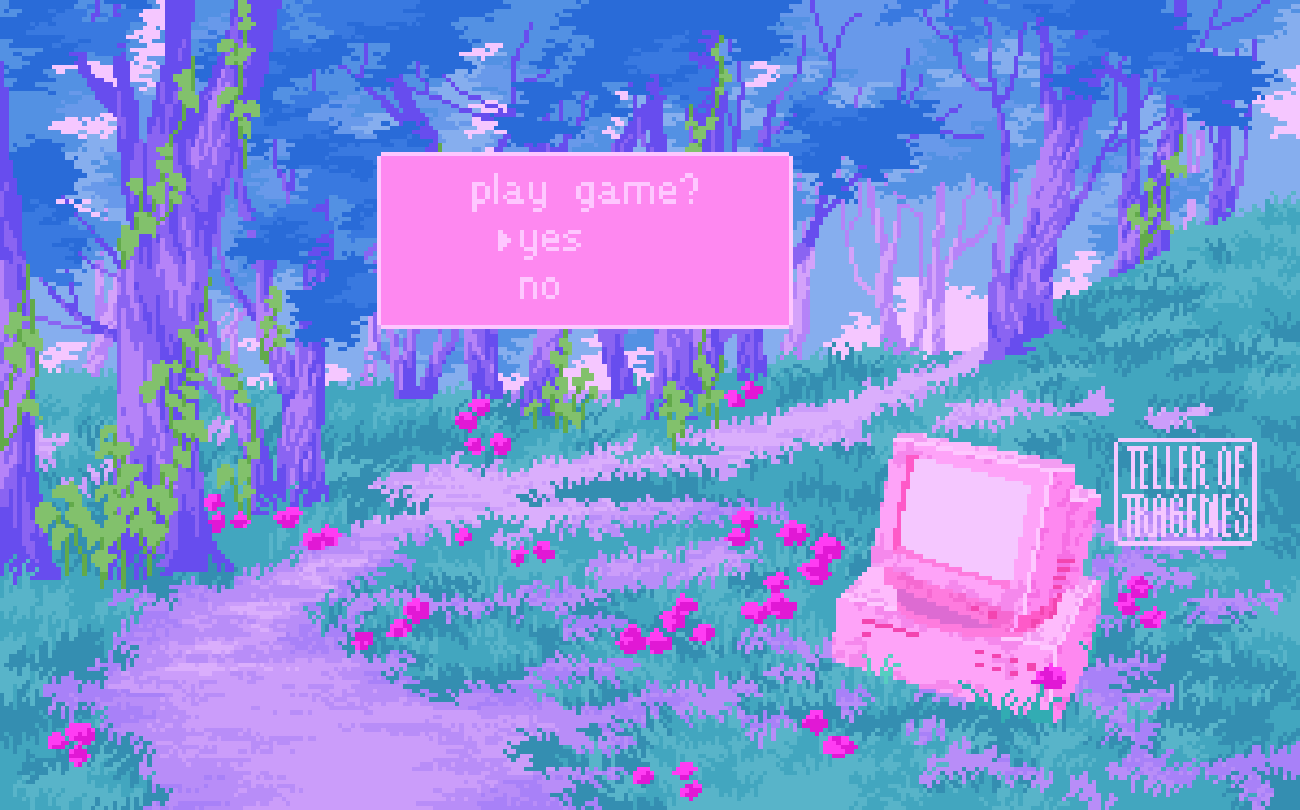
I’m overjoyed to have commissioned a banner illustration from the shining Teller-of-Tragedies, who shares gorgeous and immersive dreamcore pixel art on Tumblr (here) and on Instagram (here).

Essay about Analog Nostalgia on Shelfdust

I’m honored to have published an essay on Shelfdust about the gentle anti-capitalist use of cultural nostalgia in the French graphic novel Onibi: Diary of a Yokai Ghost Hunter, which is an autobiographical account of a summer the artists spent in rural northern Japan. When I used this book as a course text in my “Japanese Ghost Stories” class last fall, I was surprised by the warmth of the students’ response, which I suspect is tied to the trend of “analog nostalgia” that seems to be big on social media at the moment. I’d always thought of nostalgia as a reactionary cultural movement, but I have to admit that Onibi presents a welcome challenge to this assumption.

Here’s an excerpt from the beginning of my essay:

Onibi demonstrates a fascination with retro objects and aesthetics, which are presented as a refuge from hustle and productivity. As concerns regarding pressing issues such as unemployment and climate change grow ever more pressing, so too do anxieties concerning the speed and waste demanded by capitalism. I believe that the recent fascination with retro and analog technologies is partially a response to these anxieties. Given that comics have emerged as an increasingly visible and viable space for public discourse, I’d like to take a look at how Brun and Pichard use analog nostalgia to translate local culture into an argument for a break with contemporary capitalism’s insistence on constant growth. 

You can read the full piece here:
https://shelfdust.com/2025/10/15/analog-nostalgia-and-gentle-degrowth-in-onibi-diary-of-a-yokai-ghost-hunter/

Review of Witchcraft on Comics Beat

My most recent review for Comics Beat is about Witchcraft, a graphic novel by Sole Otero, an internationally famous Argentinian comic artist whose style has developed in a cool and unique way during the past decade. Witchcraft is a massive book, but it’s an incredible page turner. The writing is brilliant, and the art is both extremely stylized and exactly what it needs to be to tell the story, a gothic cautionary tale that jumps between the present day and various periods in the history of Buenos Aires. And the story is indeed about witches and magic and power. This book is so goddamn good, and I feel very honored to have been able to write about it. Here’s an excerpt:

Witchcraft is primarily set in Buenos Aires, and the narrative jumps between historical periods when the witches were active and the present day, when the gender politics of their activities are far more complicated. It would be easy to see the witches as feminist saviors as they run women’s clinics and shelter members of the local indigenous population, but their benevolence is called into question by the nature of their magic, which requires the victimization of men and the silent complicity of their fellow women. Instead of a feminist message, what Witchcraft offers is a fast-paced and high-stakes story about cycles of abuse and the human cost of the sacrifices necessary for the marginalized to survive.

You can read the full review on Comics Beat here:
https://www.comicsbeat.com/graphic-novel-review-witchcraft/

Strange Tales and Modern Legends

My zine Strange Tales and Modern Legends collects three illustrated short stories based on demonic Japanese folklore.

When I was an undergrad, I had the honor of taking a class called “Demonic Women in Japanese Fiction” with a professor I truly admire. This course was a foundational experience, and I ended up writing a lengthy senior thesis with the same title. The project served as an introduction to literary theory and feminist thought; but, more than anything, I really enjoyed stories about women behaving badly.

I taught my own “Demonic Women” class at the University of Pennsylvania for the first time in Spring 2024, and it was a resounding success. Everyone in this class was just as fascinated by the stories as I was, which was a minor miracle. In all fairness – demonic women are a lot of fun.

Though I teach and publish (and blog) about Japanese literature, and though I’ve spent a significant amount of time living in and around Tokyo, I generally don’t write original fiction set in Japan. Still, I love demonic folklore so much that I couldn’t help but be inspired by the literature in my “Demonic Women” class. I therefore put together a short zine that collects two previously published stories and one original piece of flash fiction, and I commissioned a coven of talented artists to create illustrations.

In the zine’s opening story, “The Smile of a Mountain Demon,” a 21st century yamauba entraps a YouTube influencer with Buddhist pretensions by using Airbnb and the language of New Age spirituality. The young man is looking for a scenic “spiritual retreat” to use as a source of content, and the yamauba is looking for a tasty snack. I was inspired by the medieval Adachigahara folktales in which a cunning yamauba entraps a less-than-devout Buddhist priest, as well as Minako Ohba’s beautiful and heartbreaking short story “The Smile of a Mountain Witch.”

The zine’s main story, “The Kumo Diary,” is set in the Meiji period, the era of Japan’s industrial revolution. As Japan established itself as a nation that could compete with Western powers, its intelligentsia were motivated to create a unified sense of “Japanese culture.” Scholars were therefore tasked with making The Tale of Genji a respectable classic to be held in esteem by a modern nation. While I was studying the history of The Tale of Genji, I couldn’t help but wonder about all the apocryphal chapters that never made it into the canonical version, and I created a few fragments of a medieval text to be discovered by a reader who dwells in the shadows cast by the light of modernity.

The final story, “Hanahaki,” is about a neglected cat who vows revenge on the small child that has monopolized his beloved human’s attention. The title comes from a trope in underground manga and fancomics of the late 2000s and early 2010s. In these stories, someone suffering from unrequited love painfully coughs up (haki) delicate flower petals (hana) in lieu of the words they can’t say. The cat in this story is unable to communicate in human language, but he still finds a way to make his displeasure clear. If nothing else, the child must go.

Strange Tales and Modern Legends explores themes that have fascinated me for years, specifically the intersections of folklore, feminism, and the unruly joy of problematic characters. I hope readers find these stories as delightfully unsettling as I did when I wrote them.

If you’re interested, you can order a paper copy of the zine from Etsy or download a free digital version from Itch.io.

👹 https://digitalterrarium.itch.io/strange-tales
👹 https://www.etsy.com/listing/4299187840/strange-tales-horror-fiction-zine

The art at the top of this post, which is one of the illustrations featured in the zine, was created by Le Soldat Mort, a dark fantasy artist who shares their work on Bluesky (here) and on Instagram (here).

Review of Let Me in Your Window on Comics Beat

I’m super grateful to Comics Beat for giving me the opportunity to review the newest horror comics collection from Adam Ellis, Let Me in Your Window. These gorgeously drawn stories offer disturbing insights into the murky shadows of internet culture, as well as brilliant speculation on potential digital futures.

Something I always appreciate about Ellis is how he documents the many absurdities of both corporate platform policies and social media subcultures alike. It’s easy to read the stories in Let Me in Your Window as spooky urban legends with no allegory… but also, I feel extremely Seen by Ellis’s characteristic take on digital horror. Here’s an excerpt from my review:

Adam Ellis’s second horror comic collection, Let Me in Your Window, is digital horror at its finest. As the successor to Ellis’s 2024 collection Bad Dreams in the Night, Let Me in Your Window ventures even deeper into the wires as it speaks to anxieties surrounding the omnipresent ghosts that speak to us through our screens. Even if most of us are content to allow these phantoms to pass unnoticed, it can be unnerving to realize that we’re ghosts as well – ghosts being watched, ghosts being catalogued, and ghosts that constantly leave behind traces of our former selves. The ten stories collected in Let Me in Your Window invite the reader to reflect on what it means to inhabit the constantly unfolding urban legends of online culture.

You can read the full review on Comics Beat here:
https://www.comicsbeat.com/graphic-novel-review-let-me-in-your-window/

Review of Hero Cave on Comics Beat

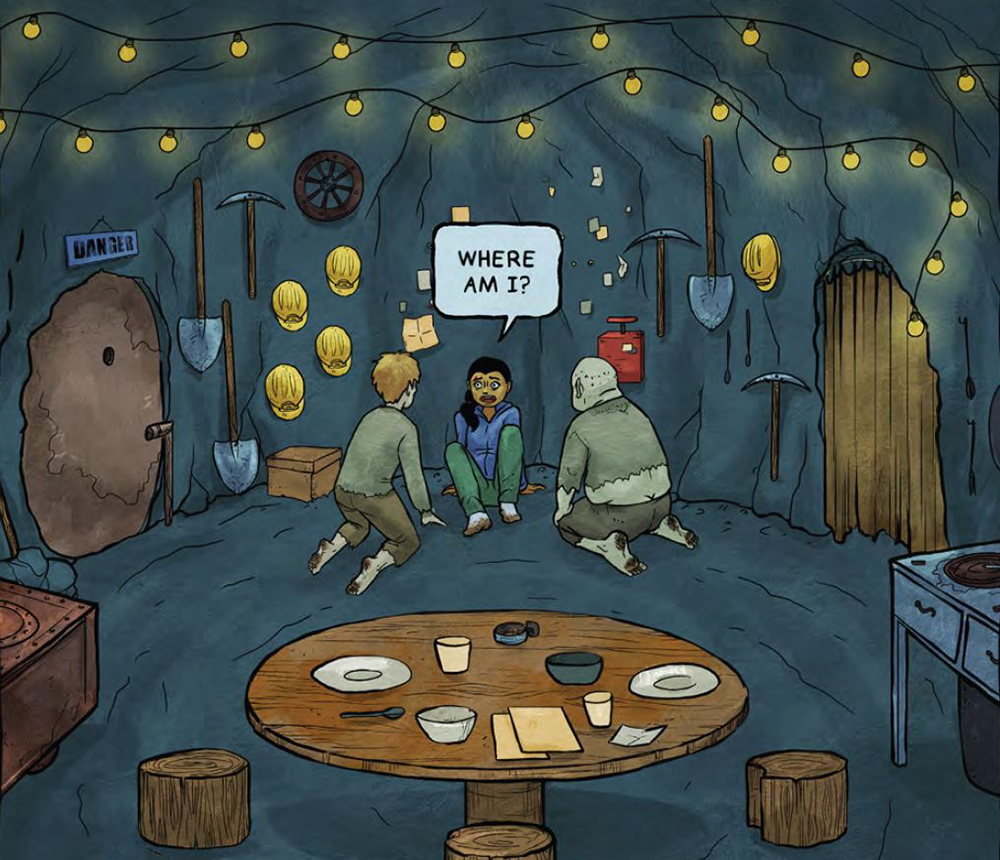
My review of Hero Cave, a dark fantasy comedy, was recently published on Comics Beat (here). This graphic novella is only about fifty pages long, but it’s surprisingly powerful and cathartic. Here’s an excerpt from my review…

It’s easy to look down on NPCs, the “non-player characters” who seem shallow and uninteresting when compared to the protagonists. It’s not so easy to realize that, in certain aspects of your life, you’re not much better than an NPC yourself. In Player vs. Monster: The Making and Breaking of Video Game Monstrosity, Jaroslav Ŝvelch explains how the construction of monsters in Dungeons & Dragons reflects the concerns of the white-collar managerial class. To the dungeon master, even a creature as miraculous as a walking skeleton is little more than a series of numbers to be entered into a spreadsheet. Given how frequently we’re all reduced to data points — by social media algorithms, by insurance companies, and certainly by employers — perhaps it’s worthwhile to extend a bit of sympathy to a low-level skeleton.

You can read the full review on Comics Beat here:
https://www.comicsbeat.com/graphic-novel-review-hero-cave/

As an aside, Hero Cave features a type of nonbinary representation that I love to see. Waifishly thin models with stylishly androgynous faces are all well and good, but it’s frustrating that only attractive and nonthreatening “childlike” body types are commonly understood as being nonbinary. I believe we should have a bit more range in our representation, while also not limiting ourselves to conventional notions of “humanity.”

Why, for example, does a cartoon skeleton need to fit into a binary notion of gender? Also, if a character is an undead eldritch monstrosity, it’s silly to think that their nonbinary gender identity is the most interesting thing about them. Hero Cave demonstrates a refreshing lack of concern for the gender of its skeleton protagonist, but that doesn’t preclude the possibility of queer sexuality serving as an escape from the restrictive confines of hellworld capitalism. I didn’t want to get into this aspect of the book in my review, but it’s brilliant, and it means a lot of me personally.