The Annotated Kitab al-Azif

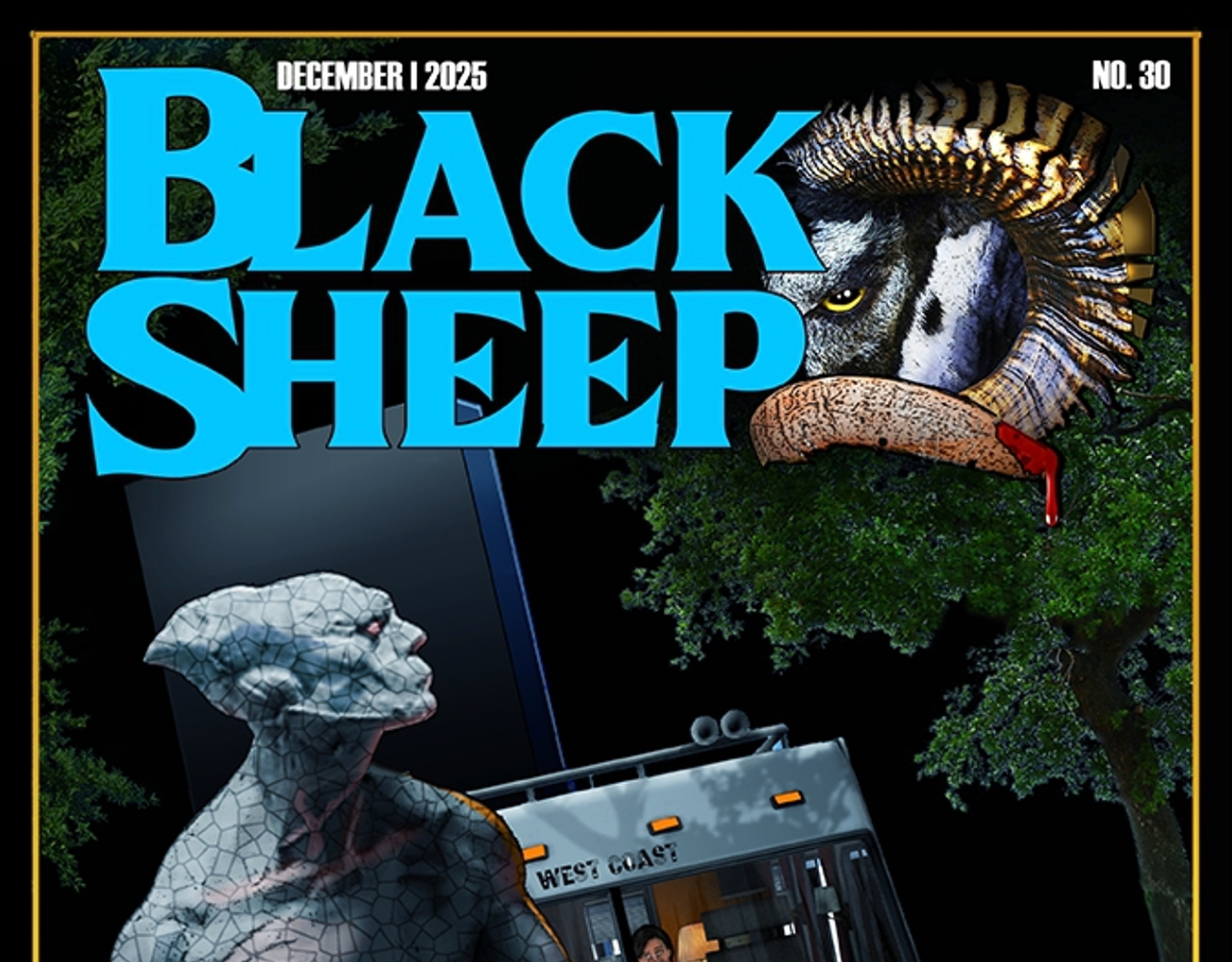
My queer Lovecraftian romance, “The Annotated Kitab al-Azif,” was just published in the latest issue of Black Sheep, a magazine for weird fiction. This story treats the gnostic origins of the Necronomicon with respect while being slightly silly about grad students.

You can order a copy of the issue with my story here:

🐙📖 www.amazon.com/dp/B0G25R82TY

It’s very cool to have the opportunity to publish a Lovecraft pastiche in an honest-to-god pulp magazine, which seems appropriate. At the same time, I definitely feel the friction of using Lovecraft’s own tropes to push back against the ugly Orientalism surrounding the Necronomicon.

The truth is that, while I admire Lovecraft, but I wouldn’t consider myself a fan. Rather, I spent a formative part of my childhood in a small town in the Deep South whose public library was severely limited by budget constraints. The only thing remotely close to fantasy fiction they had on their shelves was Stephen King, the lone second volume of Lord of the Rings, and a handful of ancient paperback collections of H.P. Lovecraft.

I didn’t really have the cultural context to understand Stephen King, and I wouldn’t recommend The Two Towers as the place to start reading Tolkien. Lovecraft grabbed me, though. Even as a kid, I understood the xenophobia expressed in Lovecraft’s stories. Believe me, I understood all too well. Still, I guess I was young enough that this wasn’t a dealbreaker, especially since there was nothing else to read during the summer where I practically lived at this tiny little library.

I had more resources the following year, when I started attending an international school in Atlanta and began to read more widely. But Lovecraft stuck with me, and a small but significant goal of my writing now is to try to capture and explain why that is.

I sincerely believe that people should write whatever they want, but a part of me still questions the value of aligning myself with the work of such a problematic author. The truth remains, though, that these Lovecraft stories only occupy a small closet in the house I’m trying to build with my writing. What I want to do is expand the scope of the small rural library that only had room for Stephen King and H.P. Lovecraft, as well as to create space for original work that dismantles the toxic feedback loop of preset responses to human difference.

Much love to Black Sheep magazine for giving a home to this story. 

Review of Hero Cave on Comics Beat

My review of Hero Cave, a dark fantasy comedy, was recently published on Comics Beat (here). This graphic novella is only about fifty pages long, but it’s surprisingly powerful and cathartic. Here’s an excerpt from my review…

It’s easy to look down on NPCs, the “non-player characters” who seem shallow and uninteresting when compared to the protagonists. It’s not so easy to realize that, in certain aspects of your life, you’re not much better than an NPC yourself. In Player vs. Monster: The Making and Breaking of Video Game Monstrosity, Jaroslav Ŝvelch explains how the construction of monsters in Dungeons & Dragons reflects the concerns of the white-collar managerial class. To the dungeon master, even a creature as miraculous as a walking skeleton is little more than a series of numbers to be entered into a spreadsheet. Given how frequently we’re all reduced to data points — by social media algorithms, by insurance companies, and certainly by employers — perhaps it’s worthwhile to extend a bit of sympathy to a low-level skeleton.

You can read the full review on Comics Beat here:
https://www.comicsbeat.com/graphic-novel-review-hero-cave/

As an aside, Hero Cave features a type of nonbinary representation that I love to see. Waifishly thin models with stylishly androgynous faces are all well and good, but it’s frustrating that only attractive and nonthreatening “childlike” body types are commonly understood as being nonbinary. I believe we should have a bit more range in our representation, while also not limiting ourselves to conventional notions of “humanity.”

Why, for example, does a cartoon skeleton need to fit into a binary notion of gender? Also, if a character is an undead eldritch monstrosity, it’s silly to think that their nonbinary gender identity is the most interesting thing about them. Hero Cave demonstrates a refreshing lack of concern for the gender of its skeleton protagonist, but that doesn’t preclude the possibility of queer sexuality serving as an escape from the restrictive confines of hellworld capitalism. I didn’t want to get into this aspect of the book in my review, but it’s brilliant, and it means a lot of me personally.

Dark Souls Fandom Essay on Sidequest

“The Softer Side of Dark Souls Fandom,” my essay about a major shift in internet culture, was published on Sidequest. Everybody loves Bloodborne and Elden Ring now; but, ten years ago, FromSoft fans were a fairly isolated group, not to mention some of the most hateful people I’d ever encountered online. At about 1,400 words, this piece is far shorter than it should be, but I still had a fun time writing about how FromSoft fandom has become much more welcoming and inclusive over the past decade. Here’s an excerpt:

I’ve put untold hundreds of hours into Dark Souls and its sequels. When the game first came out almost fifteen years ago, however, there was nothing I hated more than Dark Souls. I refused to play it. I associated the game with the worst people on the internet, who spewed hate while using Dark Souls memes to shame and attack anyone they felt challenged the hegemony of their male-dominated subculture of video game fandom.

I therefore feel an ironic pleasure in the fact that, these days, Dark Souls and the other FromSoft games have been embraced by women and the queer community, the exact people these angry online gaming communities loved to hate. In a strange twist of fate, the games weaponized to mock diversity have become a sanctuary for many of the people who were once excluded.

You can read the full essay here:
https://sidequest.zone/2025/07/14/dark-souls-fandom/

An earlier version of this essay was published in Act Your Age, Vol. 2: Dark, a fandom memoir anthology zine that you can check out (here).

I decided to publish this piece online when the host of one of my favorite video game podcasts, Bonfireside Chat, came out as transgender. Since she’s not really a public figure, I don’t mention her in the essay itself, but her announcement made me incredibly happy. Regardless of gender and sexuality, I hope everyone can find a place where they feel accepted and supported in their interests… even if their interest is in dark fantasy games about dying in all sorts of grisly and horrifying ways!

Review of Strange Bedfellows on Comics Beat

I’m excited to share my review of Ariel Slamet Ries’s newest graphic novel, Strange Bedfellows. This is a solarpunk romantic comedy that’s set in a utopia but still takes the darkness of human nature seriously. The art is gorgeous, and I very much enjoyed the time I spent in this fascinating world with these beautiful trashfire characters. Here’s an excerpt from my review:

Hardship comes to everyone, and romance isn’t always easy. The soft and hopeful message of Oberon’s story is that the flaws and complications in human ambitions are what make our lives interesting and beautiful. Strange Bedfellows assures the reader that, while we may not ever live in a perfect utopia, we don’t have to give up on our dreams of a kinder and greener future.

You can read the full review on Comics Beat here:
https://www.comicsbeat.com/graphic-novel-review-strange-bedfellows-dreams-of-a-romantic-solarpunk-future/

Essay on WWAC about Machiko Kyō’s Manga Cocoon

I’m proud to have worked with the brilliant editorial team at Women Write About Comics on my essay “Nature and War Memory in Machiko Kyō’s Cocoon,” in which I discuss the imagery that propels the story of a heartbreaking graphic novel about the Pacific War.

An animated cinematic adaptation of Cocoon is scheduled to be released in Summer 2025. This is a high-profile project commissioned by NHK and directed by the veteran Studio Ghibli artist Hitomi Tateno, whose animation credits range from Spirited Away to The Wind Rises.

Although the essay (like the manga itself) should be approached with sensitivity to its content, I hope I was able to offer a small contribution to the international awareness of the narrative work of Machiko Kyō, a celebrated and prolific Japanese artist who has created some of the most groundbreaking manga of the past decade.

You can find my essay about Cocoon (here) on Women Write About Comics, an award-winning venue for media journalism covering pop culture from a diversity of perspectives. I’m extremely grateful for the support and excellent feedback of Emily Lauer (on Bluesky here), whose critical insight illuminates the discussions and reviews of genre fiction on WWAC.

Love in the Time of Gloom Spawn

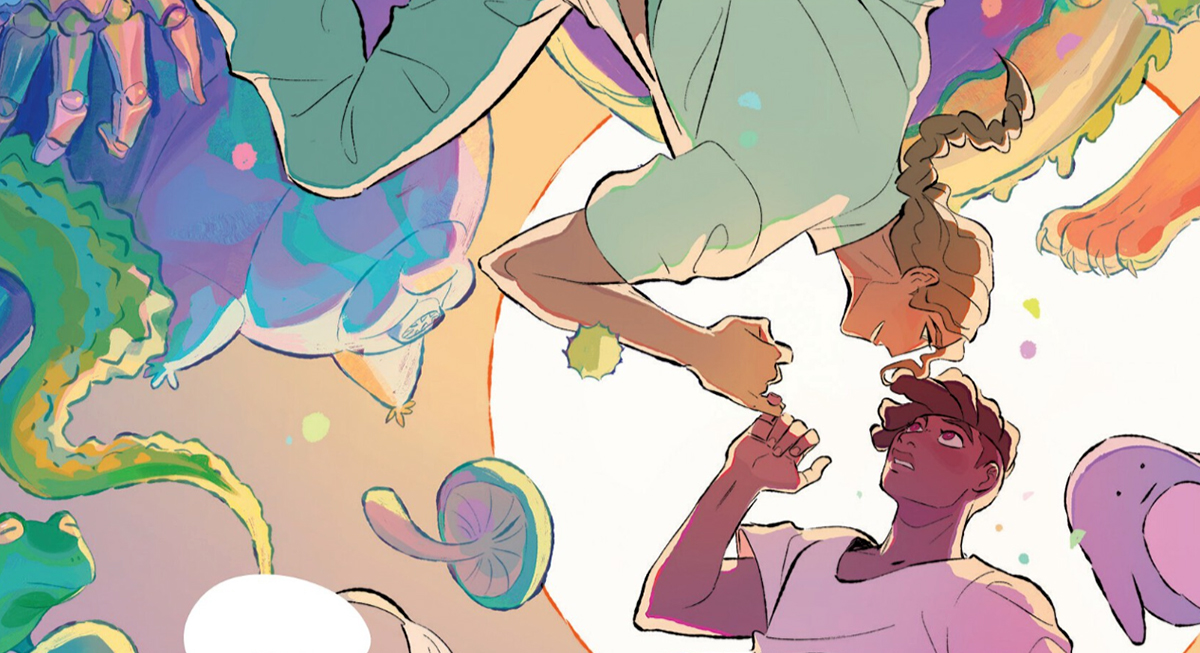
After years spent investigating the mysterious shrines of East Necula, Dr. Calip has joined the Zonai Survey Team’s efforts to study the Ring Ruins of Kakariko Village. The ancient structures are fascinating, but what has captured Calip’s attention is the chasm in the forest on the hill. While Calip has been gazing into the abyss, however, the leader of the Zonai Survey Team has been gazing at him.

As I grow more impatient with grand narratives of nation-building and heroic destiny, I’ve become more interested in how epic fantasy universes appear to normal people. Hyrule is especially fascinating as a case study, as the privileges enjoyed by Link clearly aren’t applicable to everyone else. This is especially true of the knowledge Link accumulates over his journey, during which the secrets of prior eras are revealed to him alone.

In the present postapocalyptic era of Breath of the Wild, it seems the only person trying to study and understand Hyrule is a scholar named Calip, who lives in an isolated cabin as he attempts to stage an archaeological investigation into the site of one of the ancient Sheikah shrines. As an academic, Calip is a pompous asshole. Regardless of “Dr.” Calip’s self-serving motives, I admire him as a character who investigates the world and tries to understand it instead of simply killing things and accumulating treasure.  

Perhaps because of the popularity of the fandom’s speculation and study of Hyrule, Tears of the Kingdom leans into the ethos of archaeological inquiry with the establishment of a large and diverse set of NPCs forming the Zonai Survey Team. This Sheikah-funded research organization is led by a brick house of a character named Tauro. Tauro has set himself up in Kakariko Village, which has been beset by ruins falling from sky islands and a giant pit opening in the forest on the eastern hill.

Given their interests, it’s only natural that Calip and Tauro would interact. When you read the diaries that Calip has left at his former cabin and at his desk in his office in Kakariko, you learn that Calip is undeniably attracted to Tauro, who apparently went out of his way to invite Calip to work with him. Late in the game, the two men abandon their duties to run off and do research together. I think is a sweet lowkey love story – and even Kotaku agrees, apparently!

The emphasis on archaeological excavation in Tears of the Kingdom is somewhat problematic. In essence, the kingdom of Hyrule had a state-building myth that justified its sovereignty over the surrounding regions, and the result of the archaeological study performed by state-sponsored Zonai Survey Team is the demonstration that these myths were true in the most literal sense. Yes, there are evil outsiders who will kill everyone if they get the chance; and yes, only the royal family and its servants can protect everyone; and yes, the royal family is literally descended from gods/dragons. It’s all kind of gross.

What I therefore appreciate about the implied love story between Calip and Tauro is that they turn their backs on the politics of ancient texts and leave Kakariko so that they can go out into the woods and look at ruins together. For them, curiosity about the world has nothing to do with national mythologies and everything to do with the connection they feel to the people who lived on the land before them – and the connection they have with each other.

Because I am apparently incapable of creating anything that doesn’t have monsters, however, the story I wrote about Calip and Tauro ended up being a horror story as much as it is a love story. It has a happy ending, but it also has a healthy dose of eldritch horrorterrors. Phantom Ganon also makes an appearance, because of course he does.

The story is complete at 4,000 words, and you can read it on AO3 here:
https://archiveofourown.org/works/51328888

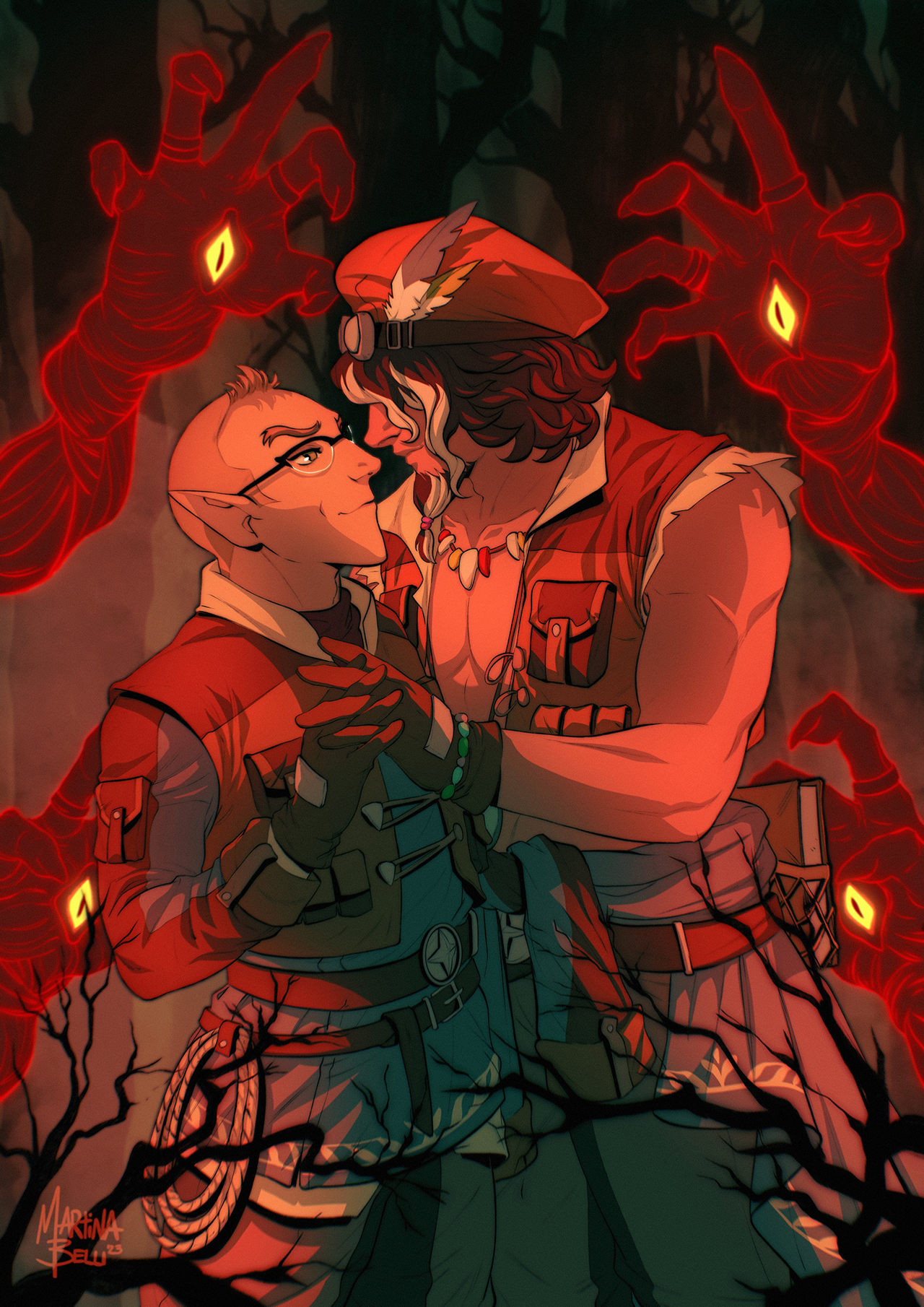
The illustration is by the marvelously talented Martina Belli, whose magical artwork helped me bring these two characters and their story to life. Marty paints dynamic portraits of fantasy characters and dramatic science fiction scenes, and she excels at creating compositions that draw the viewer into the world of her art. It was a lot of fun to work with her, and I highly recommend following her creations on Twitter (here).
Review of A Guest in the House on WWAC

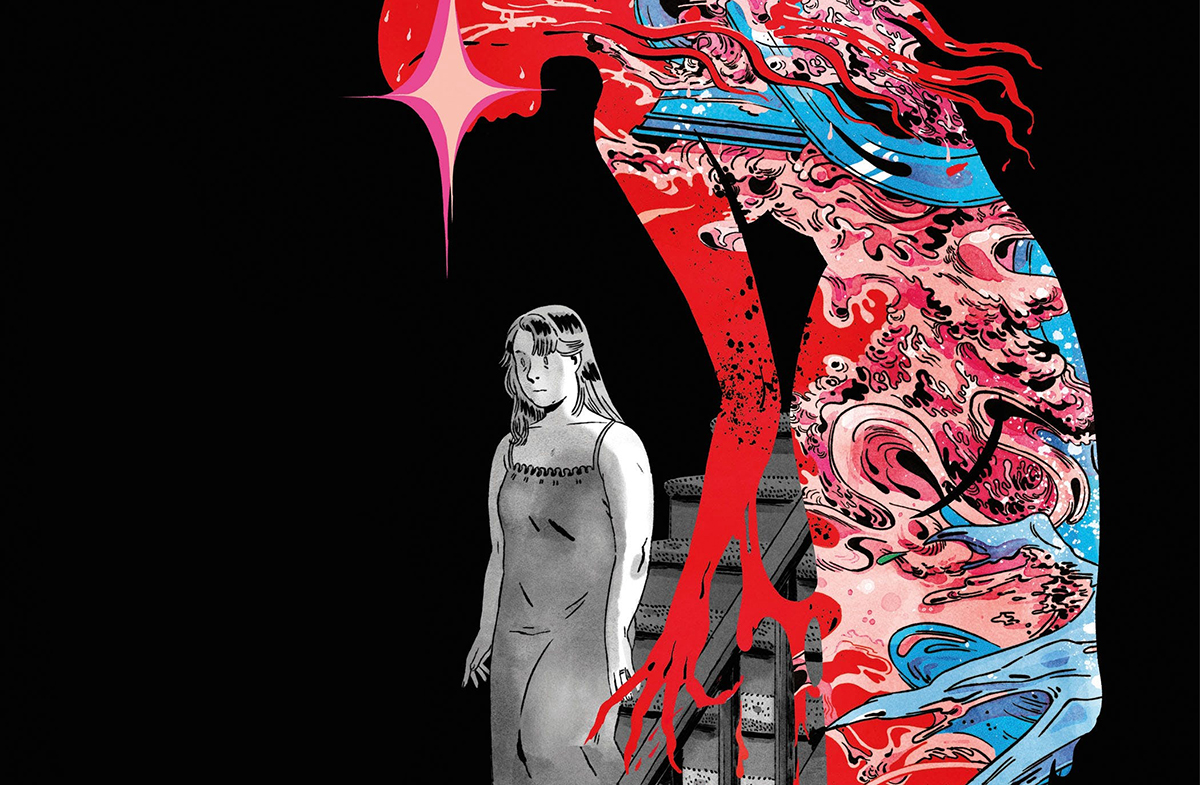
I had the pleasure of writing a review of Emily Carroll’s darkly brilliant graphic novel, A Guest in the House, for Women Write About Comics. The story gazes into the moonlit shadows of “traditional” families, and it’s gothic horror at its sexiest and most subversive. Here’s an excerpt from my review:

Carroll’s visual representation of Abby’s inner world is brilliantly strange and gorgeously queer. In her more introspective moments, Abby indulges in a fantasy of herself as a heroic knight fighting dragons, who lay waiting for her, hot and wet in their dark caves. Having slain a dragon while remaining protected and genderless inside her full-body armor, Abby seeks comfort in the arms of the beautiful ladies that await her arrival. While the majority of the artwork in A Guest in the House is painted in black ink with gradations of gray, Abby’s fantasies practically scream from the page in lurid full color that slowly begins to bleed into Abby’s waking life.

You can read the full review here:
https://womenwriteaboutcomics.com/2023/10/a-guest-in-the-house-review/

If you’re interested, I also recommend checking out Emily Carroll’s website (here) for a curated selection of horror art and short comics. It’s not for the faint of heart, but it’s one of the best sites on the internet.

While I was writing this review, I told a friend that A Guest in the House is like Dark Souls, but if Dark Souls were about a housewife in rural Canada in the 1990s. I stand by this evaluation, and I think it makes sense given the artist’s love of FromSoft games. Carroll recently released a short fancomic about Bloodborne, and you can download it for free from Itchio (here). As with A Guest in the House, I might offer a content warning for body horror and violence, but the art and writing are gorgeous.

Review of The Hills of Estrella Roja on WWAC

I recently had the immense honor of being able to review emerging artist Ashley Robin Franklin’s brilliant Southwest Gothic graphic novel, The Hills of Estrella Roja, for Women Write About Comics.

Here’s an excerpt:

Even as Kat and Mari enjoy queer teen solidarity, they’re inducted into an adult world of queerness that was previously denied to them. Mari’s side of the story is especially interesting in this regard, as she gradually comes to understand that her identity isn’t just a matter of her own lived experiences, but also a product of the heritage shaped by the experiences of her extended family. The art of The Hills of Estrella Roja cleverly suggests connections between generations in subtle allusions and callbacks while immersing the characters in a gorgeous world that constantly reaches out (sometimes literally!) to pull Mari and Kat deeper into the natural environment that surrounds them.

You can read the full review here:
https://womenwriteaboutcomics.com/2023/08/the-hills-of-estrella-roja-review/

As always, I have nothing but gratitude for my editor, Kat Overland. Kat gave me the go-ahead to write a review of Franklin’s minicomic Fruiting Bodies and then helped me get in touch with Clarion Books to request an advance review copy of The Hills of Estrella Roja. I’m not used to playing in the big leagues, so Kat’s support was invaluable, as were their notes as a native Texan. For excellent taste and good-sense takes on comics, politics, and pop culture, you can follow Kat on Twitter (here) and on Bluesky (here).

You can follow Ashley Robin Franklin on Instagram (here), where she posts cute and colorful botanical studies and shorter autobiographical comics that are touching, relatable, and well worth reading.