List of Cozy Horror Games on Sidequest

To celebrate Halloween and everything autumn, Sidequest created a list of cozy horror games for people who enjoy the themes and aesthetics of spooky season but aren’t into jumpscares or explicitly ghoulish imagery. I love every game on this list, and I had a lot of fun writing about three favorites of my own. Here’s a set of excerpts:

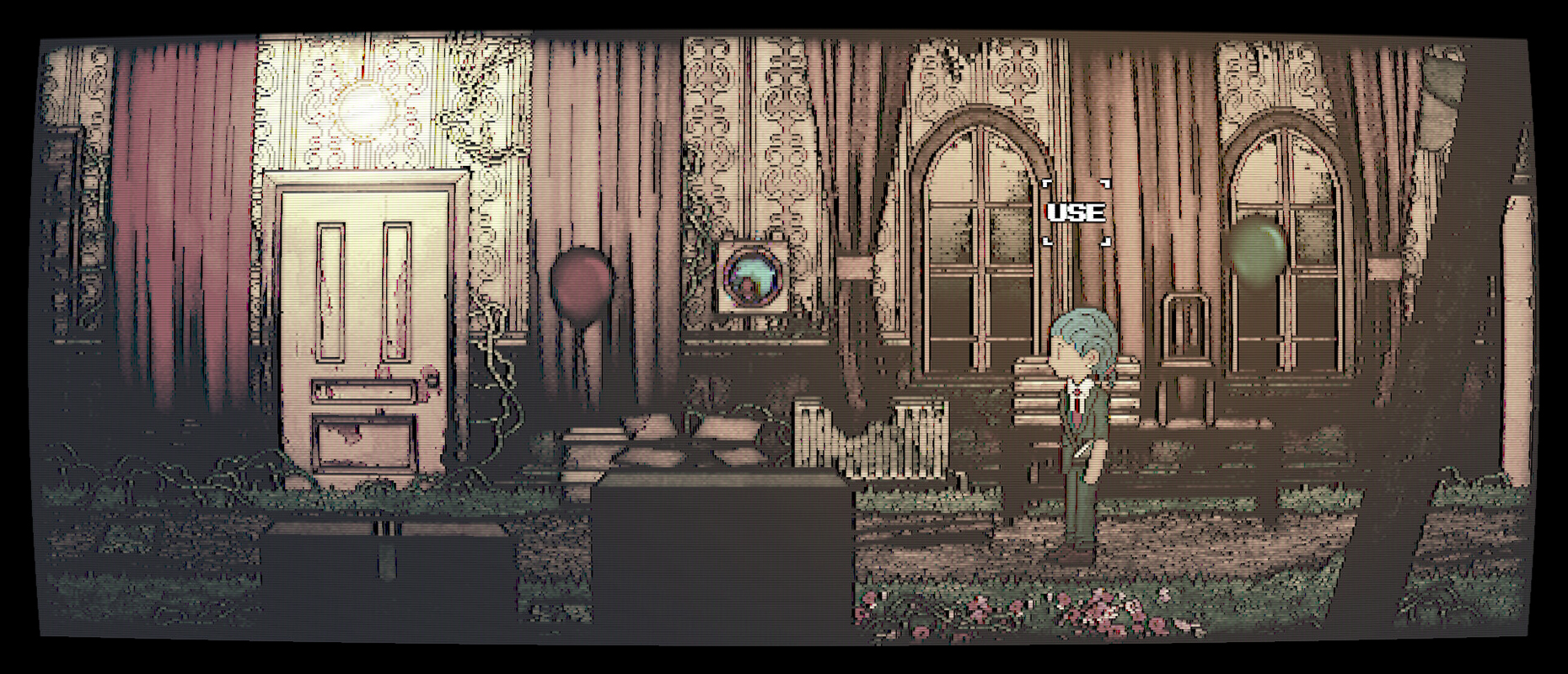
Six Cats Under

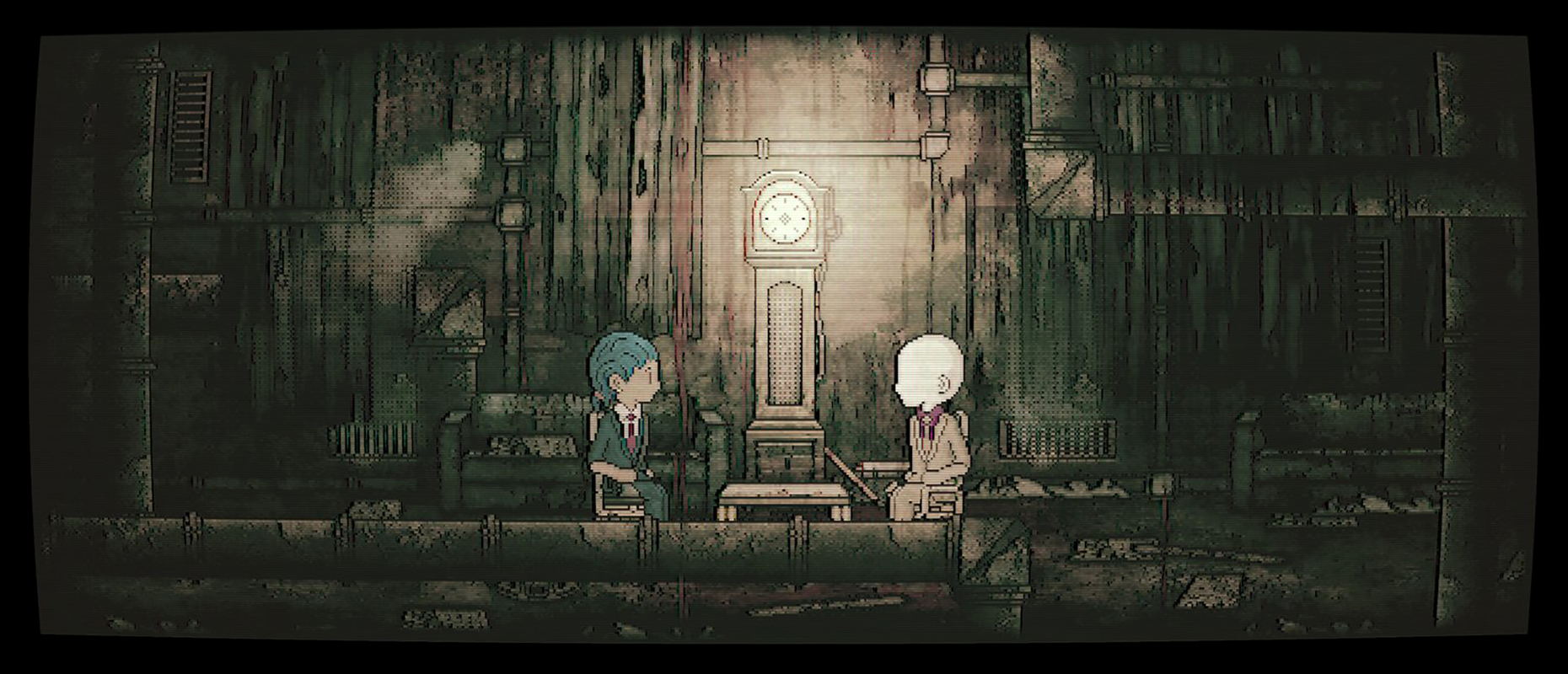
Despite its grim premise, Six Cats Under is a chill game with cute pixel graphics and an ambient lo-fi soundtrack. Even watching a short playthrough on YouTube is relaxing.

What Remains of Edith Finch

This is the perfect Pacific Northwest Gothic setting for a haunted house story, but Edith’s former home is actually quite beautiful and charming. Adding to the game’s coziness is its comfortable two-hour playtime, as well its clearly signposted guidance along the critical path.

Night in the Woods

Although you’ll gradually uncover the town’s secrets during the days leading to and following Halloween, your main goal is to reconnect with old friends in dead malls and empty grocery store parking lots after spending your afternoons strolling through streets filled with gorgeous fall foliage.

I think it’s worth commenting on my criteria for what makes a game “cozy.”

Accessibility is a major factor. You should be able to play a cozy game at your own pace without having to worry about the anxiety of time limits or the frustration of losing progress. Another key element of cozy games is their ability to inspire a sense of comfort through visual presentation. “Cozy graphics” aren’t disposable Instagram aesthetics, but rather a commitment to a distinct visual style that feels hand-crafted and deliberate in its expression of the game’s themes.  

More than anything, a cozy game uses its relaxed vibes to create a safe space to ask meaningful questions that the player wouldn’t have the energy to engage with otherwise. Cozy games should be thought-provoking but casual, like a conversation with a friend in front of a fire.  “Cozy horror” isn’t an oxymoron, then, as cozy games are perfect for the long nights when you can bundle up, get comfortable, and take the time to study the shadows lurking in the darkness.

You can check out Sidequest’s full list of cozy horror games here:
https://sidequest.zone/2023/10/30/sidequests-favorite-cozy-horror-games-for-weenies/

Review of A Guest in the House on WWAC

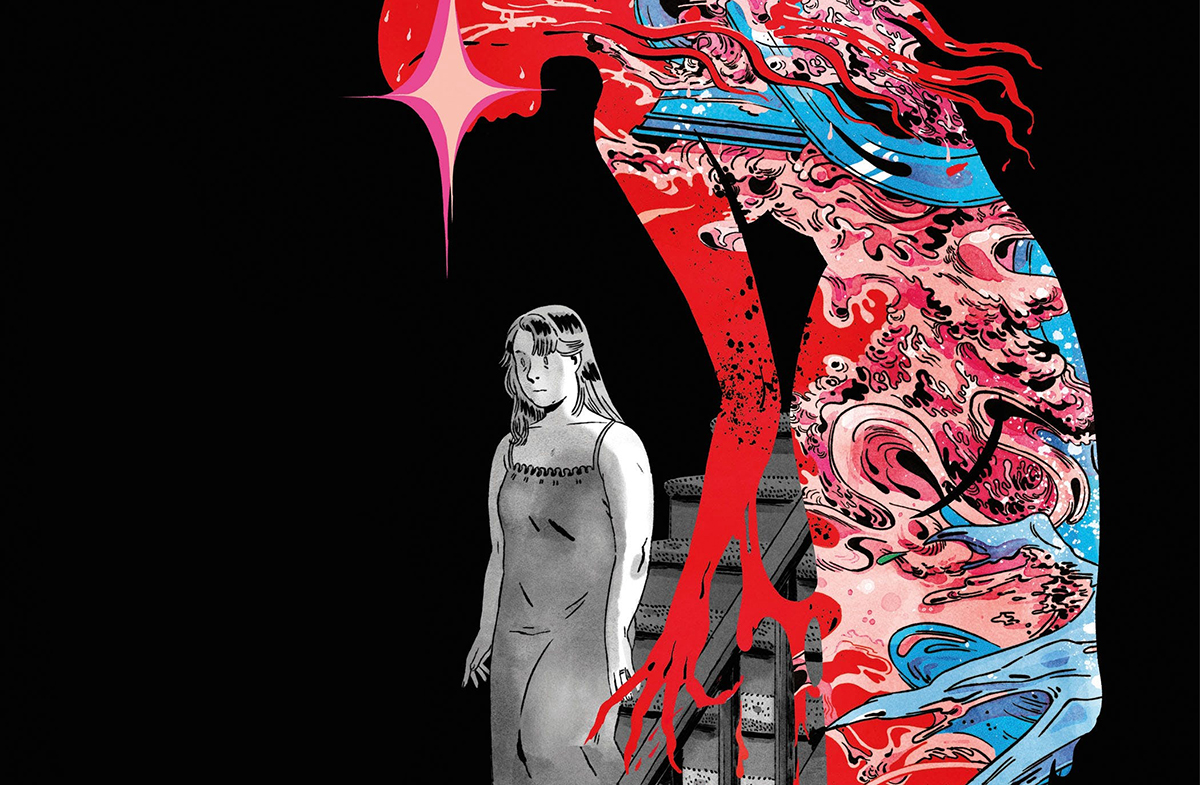
I had the pleasure of writing a review of Emily Carroll’s darkly brilliant graphic novel, A Guest in the House, for Women Write About Comics. The story gazes into the moonlit shadows of “traditional” families, and it’s gothic horror at its sexiest and most subversive. Here’s an excerpt from my review:

Carroll’s visual representation of Abby’s inner world is brilliantly strange and gorgeously queer. In her more introspective moments, Abby indulges in a fantasy of herself as a heroic knight fighting dragons, who lay waiting for her, hot and wet in their dark caves. Having slain a dragon while remaining protected and genderless inside her full-body armor, Abby seeks comfort in the arms of the beautiful ladies that await her arrival. While the majority of the artwork in A Guest in the House is painted in black ink with gradations of gray, Abby’s fantasies practically scream from the page in lurid full color that slowly begins to bleed into Abby’s waking life.

You can read the full review here:
https://womenwriteaboutcomics.com/2023/10/a-guest-in-the-house-review/

If you’re interested, I also recommend checking out Emily Carroll’s website (here) for a curated selection of horror art and short comics. It’s not for the faint of heart, but it’s one of the best sites on the internet.

While I was writing this review, I told a friend that A Guest in the House is like Dark Souls, but if Dark Souls were about a housewife in rural Canada in the 1990s. I stand by this evaluation, and I think it makes sense given the artist’s love of FromSoft games. Carroll recently released a short fancomic about Bloodborne, and you can download it for free from Itchio (here). As with A Guest in the House, I might offer a content warning for body horror and violence, but the art and writing are gorgeous.

They Only Come Out at Night

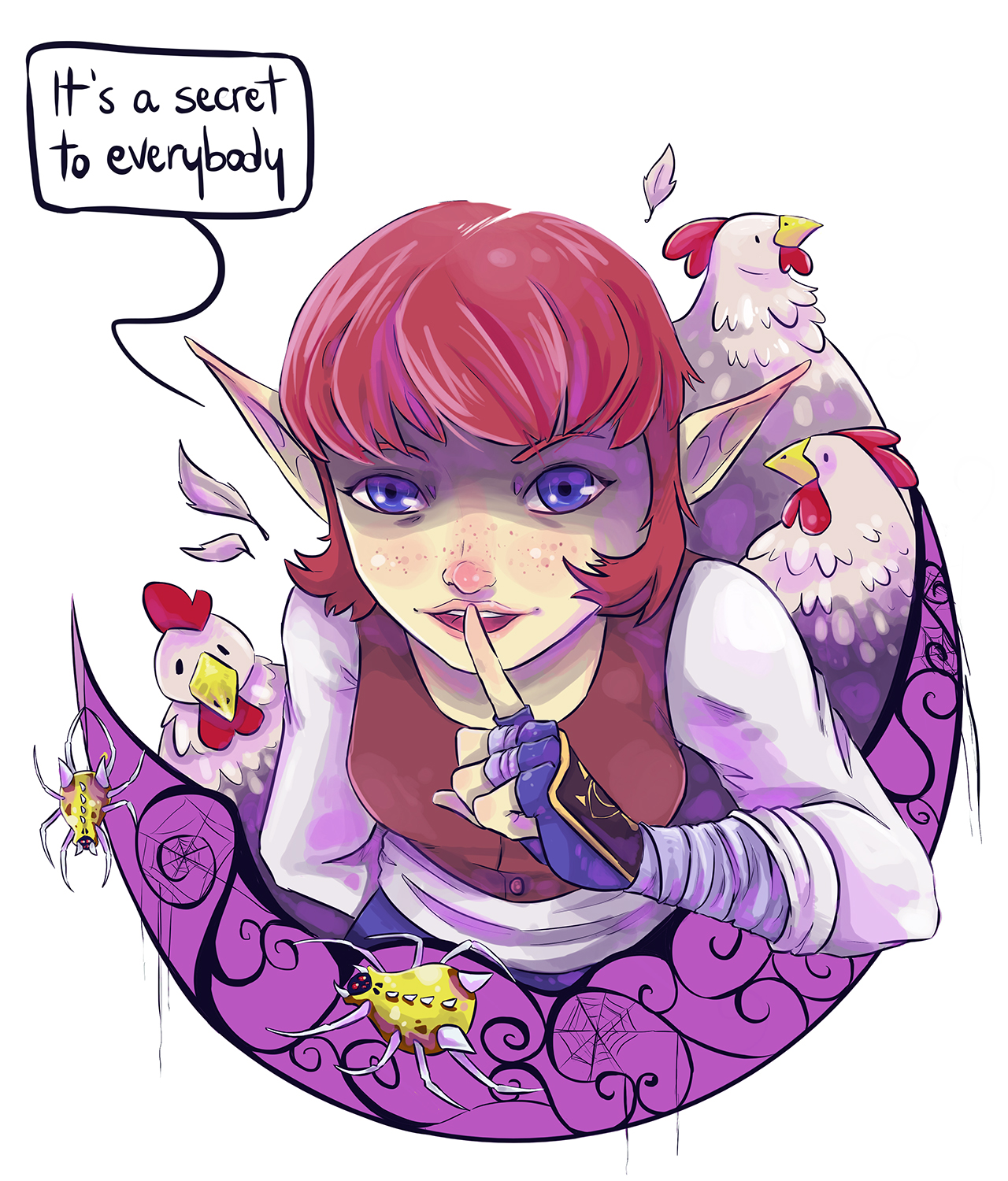
Grog has noticed a number of peculiarities in Kakariko Village. Eerie lights flicker in the mountain valley after dark. Murky black water fills the old stone well that no one uses. Golden spiders spin their webs under the eaves of abandoned buildings. Little does Grog know that the legendary Sheikah of Kakariko still live, and that they are watching.

I’m one of the many children of the 1990s who read Stephen King way too young. I think I must have been ten years old when I first encountered the IT, and I read the novel like it was Harry Potter. I was too young to understand a lot of what was going on, but what I took away from the story was a lifelong fascination with haunted towns.

This is one of the many reasons why I love Kakariko Village in Ocarina of Time. Like Derry, Kakariko seems pleasant and idyllic in the daytime, but all manner of horrors creep through its sewers. Over the course of his journey through Hyrule, Link learns that Kakariko is a Disneyland-style stage setting that covers an underground labyrinth of corpse-choked dungeons. Impa opened the depopulated village to the refugees from the civil war that left Link an orphan, which means many of the people living in Kakariko have no idea what their homes are standing on top of.

I’m curious about the perspective of normal people who live in fantastic worlds, and I’m particularly interested in Grog, the odd young man who greets Link at the entrance to Kakariko after dark. His dialog is iconic: “People are disgusting. My own father and mother are disgusting. You must be disgusting, too!”

When Link returns to Kakariko after seven years, Grog is nowhere in sight. No longer a surly teenager who resents his parents, Grog has gotten himself caught up in some truly strange business. It was only when I played Ocarina of Time as an adult that I was able to put together all the pieces of Grog’s story, which ends with his death (or perhaps suicide) in the Lost Woods.

I think Grog’s unfortunate fate is representative of what happens to people in Hyrule who see too much or ask too many questions. He’s therefore a fun character to use to look at Kakariko from an outsider’s perspective while speculating on what may have happened to the Sheikah. “They Only Come Out at Night” uses some of my favorite Stephen King tropes to tell a story about a deeply haunted village, and I really enjoyed writing it.

If you’re interested in peering into the shadows, the story is on AO3 here:
https://archiveofourown.org/works/51149224

I wrote this piece for The Eyes of Hyrule, a Legend of Zelda fanzine about the mysterious Sheikah clan. The zine will hold leftover sales on Etsy (here) during November, and you can check out more of the work appearing in the zine on Twitter (here) and on Tumblr (here).

For the story illustration, I was fortunate to be able to join forces with Frankiesbugs, a true master of cute and creepy art. You can follow their work on Instagram (here) and on Tumblr (here). I also recommend checking out their current video game project in development, which is on Steam (here) and on Instagram (here).

List of Free Short Horror Games on Sidequest

I’m excited to share a project I’ve been working on for several months: an annotated list of ten retro horror games that are free to play on Itchio. I posted reviews of many of these games here on this blog over the summer, and I’m grateful to the amazing editors at Sidequest for allowing me to refine my thoughts and present everything in one article.

To me, one of the fun things about indie retro horror games is that many of them deliver their central idea with as much concision and impact as possible, allowing the player to become thoroughly spooked in one sitting. So that readers can get a decent idea of what to expect, I organized my list according to roughly how long each game takes to play.

If you’re interested, you can check out the article here:
https://sidequest.zone/2023/10/23/ten-short-horror-games-on-itchio/

I really enjoyed putting this list together, and I’m looking forward to making another one next year!

The Kumo Diary

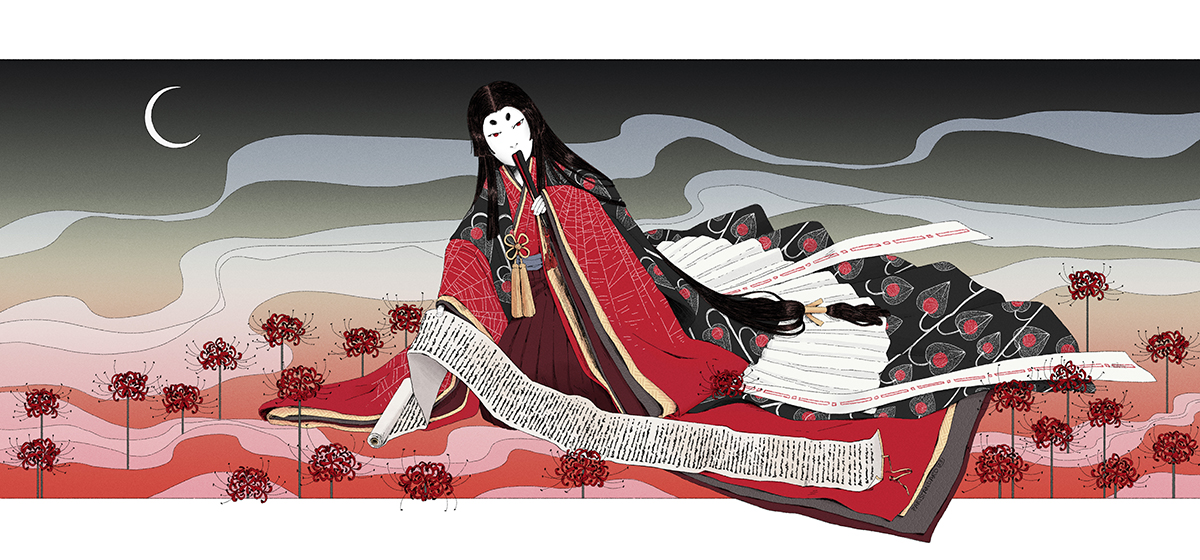
A professor’s assistant at Tokyo Imperial University uncovers a curious manuscript whose author weaves an elegant tale of the twilight years of the Heian court. As she reads between the gossamer lines of the narrator’s account of a moonlit assignation, the quiet and unassuming scholar reflects on what happens in the shadows cast by civilization and enlightenment.

This story is a play on The Tale of Genji that I contributed to Carpe Noctem: Vampires Through the Ages, an anthology of historical fantasy fiction, illustrations, and comics about vampires in historically specific settings.

I wouldn’t say I’m a “fan” of The Tale of Genji in the same way that I’m a fan of the Legend of Zelda series, but I’ve read multiple translations of the book and enjoyed them all. When you engage with a story so deeply, it’s difficult not to come up with fun theories. I certainly wouldn’t be the first person in Japanese literary history to make this suggestion, but please consider: Why are the characters in The Tale of Genji always described as being so pale, and why are many of them only active between dusk and dawn?

“The Kumo Diary” is set in the Meiji period (1868-1912), Japan’s industrial era of “civilization and enlightenment.” As Japan attempted to establish itself as a nation that could compete with Western powers, its intelligentsia were motivated to create a unified “Japanese culture.” The Tale of Genji occupied an interesting place in this movement. On one hand, it could easily be regarded as the quintessential work of classical Japanese literature. On the other hand, its plot is largely concerned with the love affairs of a rotating cast of beautiful but neurotic women. Japanese scholars were therefore tasked with making The Tale of Genji a respectable classic to be held in esteem by a modern nation.

Scholars had been compiling and revising the chapters of The Tale of Genji for centuries, so it was necessary to create a “definitive” version of the text. While I was studying the history of The Tale of Genji, I couldn’t help but wonder about all the apocryphal chapters that never made it into the canonical text.

It took me ten years, but finally I wrote one of these apocryphal chapters myself. I embedded the so-called “Kumo Diary” into a frame story about a woman who finds the manuscript and decides not to share it with the stodgy male professor who employs her. It’s interesting to imagine there being a secret history of The Tale of Genji, and I really enjoyed writing the ending of my story. After all, who’s to say there aren’t demonic women pulling the strings from the shadows? If they do their work correctly, we’d never know they were there at all.

I’ve posted the story on AO3, and you can read it here:
https://archiveofourown.org/works/50802628

The illustration is by the darkly brilliant Paristandard, whose creepy and creative illustrations can be found (on Twitter), (on Tumblr), and (on Instagram). It was an amazing experience to work with them, and I can’t recommend them enough for character designs, book covers, short comics, and other illustration projects. For this project in particular, the historical specificity of their costume design was uncanny, and I am in awe.

Terrible People

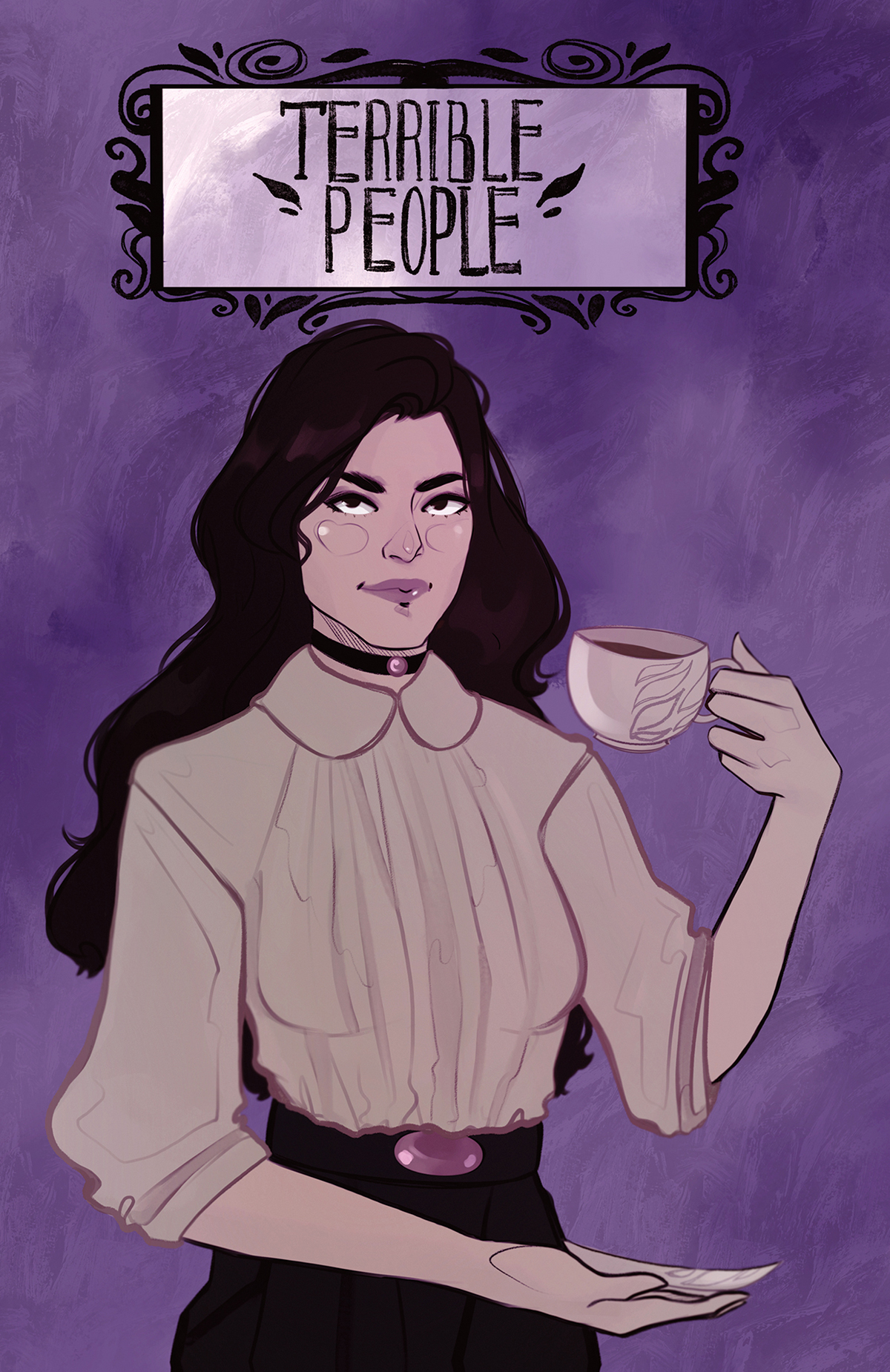
Terrible People collects six short and eerie tales of dark fantasy, unfortunate encounters, and horrible life choices. The writing is accessible to teenagers and adults alike, and there’s a diversity of death, poison, and murder for everyone to enjoy.

Terrible People is my fifth zine of original short fiction, and it’s the first that feels like a real short story collection. Each of the stories in this zine was accepted for publication elsewhere; but unfortunately, every single one of these publications was cursed. To give an example, one online magazine closed their website and deleted their social media accounts less than a month after they accepted one of these stories. To give another example, a small press that published an anthology with another of the stories burned down, meaning that almost all copies of the book were destroyed.  

Perhaps I’m tempting fate by printing these stories on my own. Who can say?

If you’d like to order a (totally not cursed) copy of the zine, it’s on Etsy here:
https://www.etsy.com/listing/1556837985/terrible-people-horror-fiction-zine

At 52 pages, the zine is relatively lengthy, which means I was able to give it a spine. This necessitated extra formatting work, and I feel like I’m slowly starting to understand the art of book design. What I’m thinking of doing in the near future is making a short chapbook from a single story and experimenting with the formatting until it looks more like an actual book. Terrible People is probably the last zine I’m going to make that has the style of formatting I’m using now, which I actually quite like.

I’ve been thinking that perhaps it might be nice to set up a micropress one day. For the time being, however, I’m content simply to continue writing these strange little stories while hoping that the curse haunting my attempts to publish them eventually dissipates.    

Review of The Hills of Estrella Roja on WWAC

I recently had the immense honor of being able to review emerging artist Ashley Robin Franklin’s brilliant Southwest Gothic graphic novel, The Hills of Estrella Roja, for Women Write About Comics.

Here’s an excerpt:

Even as Kat and Mari enjoy queer teen solidarity, they’re inducted into an adult world of queerness that was previously denied to them. Mari’s side of the story is especially interesting in this regard, as she gradually comes to understand that her identity isn’t just a matter of her own lived experiences, but also a product of the heritage shaped by the experiences of her extended family. The art of The Hills of Estrella Roja cleverly suggests connections between generations in subtle allusions and callbacks while immersing the characters in a gorgeous world that constantly reaches out (sometimes literally!) to pull Mari and Kat deeper into the natural environment that surrounds them.

You can read the full review here:
https://womenwriteaboutcomics.com/2023/08/the-hills-of-estrella-roja-review/

As always, I have nothing but gratitude for my editor, Kat Overland. Kat gave me the go-ahead to write a review of Franklin’s minicomic Fruiting Bodies and then helped me get in touch with Clarion Books to request an advance review copy of The Hills of Estrella Roja. I’m not used to playing in the big leagues, so Kat’s support was invaluable, as were their notes as a native Texan. For excellent taste and good-sense takes on comics, politics, and pop culture, you can follow Kat on Twitter (here) and on Bluesky (here).

You can follow Ashley Robin Franklin on Instagram (here), where she posts cute and colorful botanical studies and shorter autobiographical comics that are touching, relatable, and well worth reading.

Divine Beast

Zelda returns to her original form after the defeat of the Demon King. But, after so many years, is the being that comes back to Link entirely human? Zelda has appetites better suited to claws and fangs, but Link resolves to care for her, no matter the cost. This is a story about Zelda attacking and eating frogs, and cuccos, and horses… and possibly something with even sweeter flesh.

I’ve been enjoying Tears of the Kingdom, but I’m frustrated by its story. I love all the characters, and I think the game’s broad narrative arc is an interesting reimagining of Ocarina of Time. Still, there are many elements of Tears of the Kingdom that I find unsatisfying, especially its ending. I understand the plot mechanics of what happens, which are nicely explained in (this post) on Tumblr, but Zelda’s complete reversion to her human form doesn’t sit easy in my mind. Is it really possible for a transformation of such magnitude to have no lasting effects? Did the sacrifice Zelda made really have such little weight?

Tears of the Kingdom fails to attach meaning to its worldbuilding in a way that very few Legend of Zelda games have in the past. It’s understandable to dismiss these games as childish heroic fantasies. Still, at some point, the true darkness of each game’s story expresses itself. The player may have seen the plot through the limited viewpoint of Link, the teenage “chosen one,” but the crumbling kingdom of Hyrule looks substantially different through the eyes of other characters. Link will emerge triumphant and ride off into the sunset, but everyone else has to live in the ruins, and it’s only very late in his quest that Link realizes this. With this realization, the player can begin to put together the missing pieces of a much larger story.

Despite having an incredible potential to expand on the many mysteries of Hyrule, Tears of the Kingdom does its best to simplify its story to a single one-dimensional layer: Ganon is bad. By defeating Ganon, Link gets rid of everything that’s wrong with the world, meaning that everything in Hyrule is now good again. This is all that matters. What happened in Breath of the Wild doesn’t matter. What happened in the ancient era doesn’t matter. What happened to the Zonai doesn’t matter. None of Hyrule’s past matters, nor does its future. In the endless present of the game, Zelda only exists as a vessel for “good,” and the only important thing is that Link saves her.

As much as I love Zelda, I resent that she only exists as a plot device and a reward for the player. While superficially turning Zelda into a superhero, Tears of the Kingdom robs her of agency. I generally like happy endings, but I hate the conclusion of Tears of the Kingdom. Simply put: it’s happy, but it’s boring. What I therefore wanted to do with “Divine Beast” was to make Zelda’s decision more interesting by ensuring that it has consequences. I also wanted to give the worldbuilding of Tears of the Kingdom a bit of the weight and depth it deserves.

And, more than anything, I want Link and Zelda to be free.

“Divine Beast” is complete at 2,000 words, and you can read it on AO3 here:
https://archiveofourown.org/works/49296496

I drew the illustration myself. You can follow my art on Tumblr (here) or on Instagram (here).

Review of Soul Void on Sidequest

I recently had the pleasure of writing a review of the Game Boy horror adventure game Soul Void for the online gaming magazine Sidequest. I love Soul Void, and I’d describe it as Undertale for people who love quirky adventures with elements of horror but hate bullet hell. Although the horror elements of Soul Void are quite gruesome, it’s accessible to players of all skill levels. The game is free to play on Itchio (here), but I’d recommend playing it on a Game Boy emulator like mGBA, which you can download (here). Here’s an excerpt from my review:

Soul Void is a dark fantasy Game Boy adventure game that takes about three hours to finish. Its story of a young woman navigating the perils of the underworld is intriguing and cathartic, and its art design makes incredible use of the eeriness of its retro pixel graphics. For anyone who enjoyed the characters and worldbuilding of Undertale, Soul Void offers a similarly offbeat odyssey of mystery and friendship illustrated with disturbing but brilliantly creative horror art.

You can read the full review here:
https://sidequest.zone/2023/08/21/review-soul-void-dives-deep-into-retro-body-horror/

I want to give a big shout-out to my editor, Maddi Butler, for helping me get my thoughts in order and work through some of the more interesting themes of this game. I’d also like to thank the Sidequest Editor in Chief, Melissa Brinks, for giving me an opportunity to write about Soul Void, and for allowing me to expand on my thoughts about this amazing game. For excellent writing and commentary on video games, you can follow Maddi on Bluesky (here) + Melissa on Twitter (here). If you’re in the mood for gorgeous horror art, you can follow Soul Void’s creator, Kabadura, on Twitter (here) and on Instagram (here).

Speed Dating for Ghosts

Originally released on Valentine’s Day in 2018, Speed Dating for Ghosts is a short and simple roleplaying visual novel (or rather, visual short story collection) in which you can date your choice of nine ghosts. The version currently available on Steam, on Switch, and on Itchio includes the “Go to Hell” expansion, which includes three more postgame ghosts to date and an epilogue in the form of a beach party in Hell.

You play as yourself. Presumably you are dead, and also a ghost. You have registered for a speed dating event that is, predictably, run by a ghost. At this event, you choose between three rooms, each of which contains three ghosts. You have two short conversations with each of the three ghosts. If a ghost likes you, you can go on a date with them. Thankfully, it’s not difficult to convince the ghosts to warm up to you, and you can go on a date with all of them without having to replay the initial conversations.

These “dates,” such as they are, involve helping each ghost take care of their unfinished business. Instead of romancing the ghosts, what you’re really trying to do is learn their stories. After you complete a date, you’re rewarded with more information about the ghost via a character sheet on the “Graveyard” page of the game’s main menu. Once you date the first nine ghosts, you’re given the option to visit Hell for postgame content.

The gameplay consists of choosing between dialog options and being friendly. The art is simple and stylized but manages to achieve a good balance of creepy and cute. The writing is wonderful.

For me, playing through one speed dating room + going on three dates took about 25 minutes. Technically, you can convince a ghost not to date you, but I don’t know why you’d do this. All of the dialog choices make sense, and I can’t imagine needing to use a walkthrough. The postgame content is a bit trickier, and two of the ghosts in Hell might require some extra effort to date. The third ghost in Hell is a dog, and you can pet him. I love him forever.

Aside from the ghost dog, I’m also a fan of Spooky Peter, the plague doctor ghost who’s been around for centuries and has found a vocation in frightening the living. If you agree to apprentice under him, he inducts you into one of the more arcane mysteries of the afterlife, and I appreciated the worldbuilding of his story. There are also two older ghosts (Vera and Gary) who were involved in murder mysteries, and both of their plot arcs are fantastic. One of these stories was so emotionally satisfying that it made me tear up a little, while the other thoroughly creeped me out.

Speed Dating for Ghosts is a fun collection of short stories tied together by an interesting framing device, and I enjoyed the two hours I spent with it. Based on the dry tone of its humor, I’d say that the game is aimed at a mature audience, but there’s nothing particularly grim or edgy or upsetting about it. The writing and art contain elements of horror, but they’re very mild. I didn’t know what to expect from Speed Dating for Ghosts, and I was surprised by how creative and clever it is. It’s always a pleasure to find a weird little game like this that uses the medium to craft a unique and engaging piece of storytelling.