Review of Shadows of the Sea on Comics Beat

I recently had the privilege of writing a review for Comics Beat about Cathy Malkasian’s new graphic novel, Shadows of the Sea. I have to admit that I struggled with Malkasian’s previous books, which are brilliant but tonally dark and emotionally devastating. Shadows of the Sea is just as strange and heartbreaking as the artist’s earlier work, but it ends on a gloriously high note that gives me hope for the future. I was prepared to write a review about the value of portraying despair in dark times, but man. Hope is good too.

Here’s an excerpt:

In his review on The Beat, John Seven assesses Malkasian’s 2017 graphic novel Eartha as one of the artist’s characteristic “gloomy, apocalyptic parables that don’t make you feel so great about humankind.” It’s difficult to disagree, as Eartha is deeply disquieting. In contrast, Shadows of the Sea feels like a gentler turn of the same thematic wheel, presenting a story that’s smaller in scope but richer in emotional immediacy. The fantastic world Malkasian has painted is cruel and strange, to be sure, but it still affords the possibility of healing. Shadows of the Sea lingers not because of its darkness, but because of the hope that emerges after a brave confrontation with bitter truths.

You can read the full review on Comics Beat here:
https://www.comicsbeat.com/graphic-novel-review-shadows-of-the-sea/

Green Dreams: Tales of Botanical Fantasy

I’m excited to announce that I published a new zine! Green Dreams: Tales of Botanical Fantasy collects six illustrated stories about our relationships with plants and nature.

“Each turn of the seasons brings an end to lives both large and small, but new seeds sprout joyously from the ruins” is the zine’s tagline, and disaster is a major theme of the collection. One of the opening stories is about the gradual effects of climate change; and, in the closing story, environmental catastrophes have become so severe that humans have disappeared completely. The zine also features stories about a medical tragedy narrowly averted, the aftermath of a devastating war, and a porous biological quarantine.

I considered subtitling the zine “Tales of Botanical Dark Fantasy,” but the truth is that none of the stories are actually that “dark.” In fact, I’d say the main theme of the collection is a persistent hope for the future. At this particular moment in history, the state of the world seems very bleak, so it’s good to remember that the environment that surrounds us is much larger – but also much more personal – than whatever horrors are currently unfolding.

Precisely because are so many fires burning in the world, I think it’s important to spend time in thriving green spaces that suggest futures of shifting and changing growth. I believe that a mindful contemplation of our natural environment can also be useful in the uncomfortable but necessary process of decentering normative humanity while challenging the artificial divisions we impose on ourselves and each other.

The incredible cover art by Frankiesbugs captures the mood of these stories perfectly.

Frankie creates bold and imaginative botanical fantasy art, and I asked them to illustrate the pagan archetypes of the flower maiden and the horned god, who together represent the endless natural cycle of death and rebirth. In this zine, I wanted to play with symbols that convey the beauty and mystery of the natural world, and Frankie embraced this theme, tinging the painting with potent Christian motifs and a powerful sense of fertility.

It’s an extremely impressive piece of art, and you to check out more of the artist’s work on Instagram (here), on Bluesky (here), and on Redbubble (here).

In this collection, I did my best to share a sense of fertile “green dreams” for the future. Mostly, though, I just really wanted to write some fun ecofiction about plants and mushrooms.

If you’re interested, you can read a free digital version of the zine on Itch.io or order a print copy from Etsy.

🌿 https://digitalterrarium.itch.io/green-dreams
🌿 https://www.etsy.com/listing/4351990958/green-dreams-fantasy-fiction-zine

Review of Hero Cave on Comics Beat

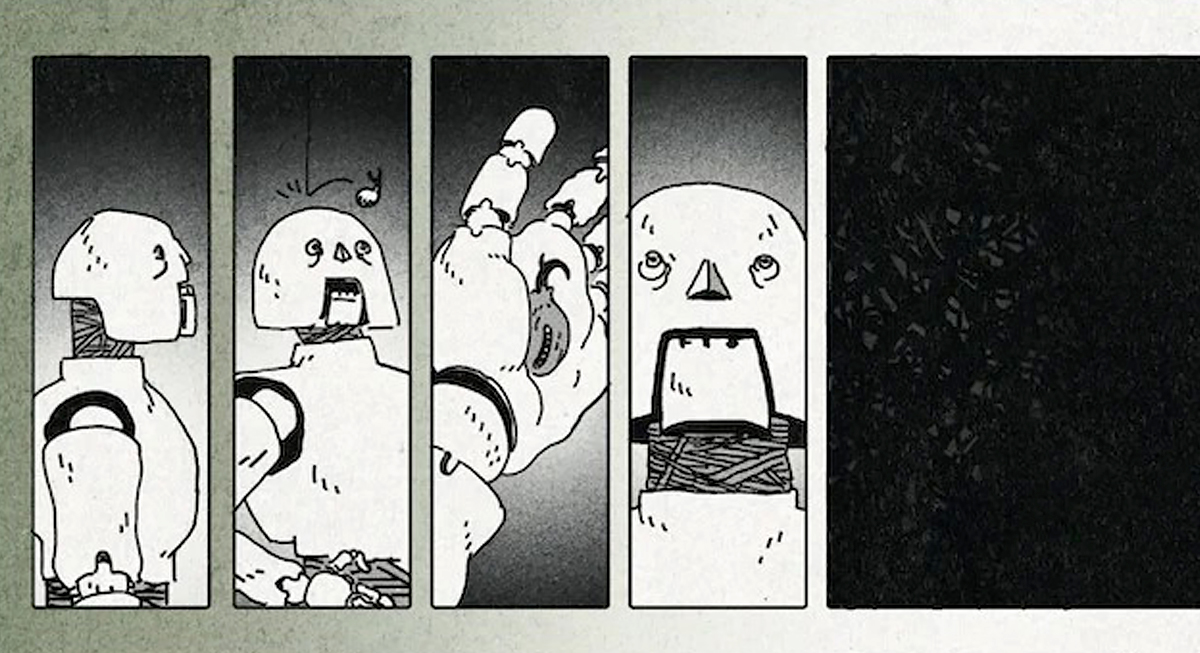
My review of Hero Cave, a dark fantasy comedy, was recently published on Comics Beat (here). This graphic novella is only about fifty pages long, but it’s surprisingly powerful and cathartic. Here’s an excerpt from my review…

It’s easy to look down on NPCs, the “non-player characters” who seem shallow and uninteresting when compared to the protagonists. It’s not so easy to realize that, in certain aspects of your life, you’re not much better than an NPC yourself. In Player vs. Monster: The Making and Breaking of Video Game Monstrosity, Jaroslav Ŝvelch explains how the construction of monsters in Dungeons & Dragons reflects the concerns of the white-collar managerial class. To the dungeon master, even a creature as miraculous as a walking skeleton is little more than a series of numbers to be entered into a spreadsheet. Given how frequently we’re all reduced to data points — by social media algorithms, by insurance companies, and certainly by employers — perhaps it’s worthwhile to extend a bit of sympathy to a low-level skeleton.

You can read the full review on Comics Beat here:
https://www.comicsbeat.com/graphic-novel-review-hero-cave/

As an aside, Hero Cave features a type of nonbinary representation that I love to see. Waifishly thin models with stylishly androgynous faces are all well and good, but it’s frustrating that only attractive and nonthreatening “childlike” body types are commonly understood as being nonbinary. I believe we should have a bit more range in our representation, while also not limiting ourselves to conventional notions of “humanity.”

Why, for example, does a cartoon skeleton need to fit into a binary notion of gender? Also, if a character is an undead eldritch monstrosity, it’s silly to think that their nonbinary gender identity is the most interesting thing about them. Hero Cave demonstrates a refreshing lack of concern for the gender of its skeleton protagonist, but that doesn’t preclude the possibility of queer sexuality serving as an escape from the restrictive confines of hellworld capitalism. I didn’t want to get into this aspect of the book in my review, but it’s brilliant, and it means a lot of me personally.

Review of Bramble on Comics Beat

My review of Hollow Press’s newest publication, Bramble, was posted on Comics Beat!

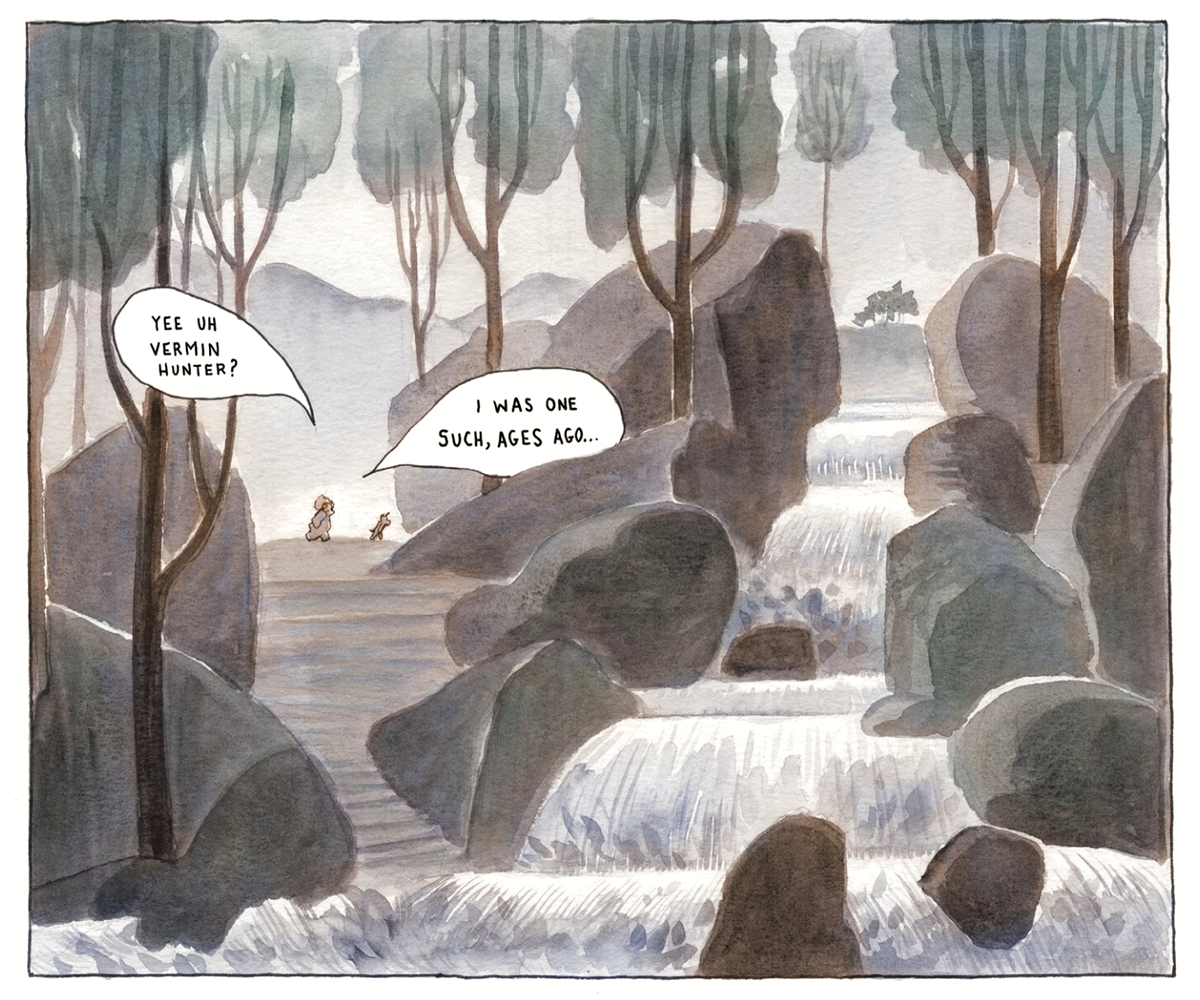
Hollow Press is an Italian micropress that publishes strategy guides for dark fantasy adventure games that don’t exist. Their most well-known book is Vermis (which I wrote about here), but I think Bramble is probably more accessible to a wider readership. It’s very weird and creative, and the art style is a lot of fun. Here’s an excerpt from my review…

Bramble is a worthy successor to Vermis, and the book proudly stands on its own as an accessible introduction to the emerging genre of original strategy guides. Its story is driven by the forward momentum of a traditional graphic novel and augmented by the intriguingly fragmented worldbuilding presented by digital RPGs. As a physical object, Bramble also suggests the nostalgic mystery of forgotten media, and the reader can easily imagine coming across this book hidden in the back of a closet or buried at the bottom of a box at a flea market. 

You can read the full review on Comics Beat here:
https://www.comicsbeat.com/graphic-novel-review-bramble/

The Wisdom of the Waiting Princess

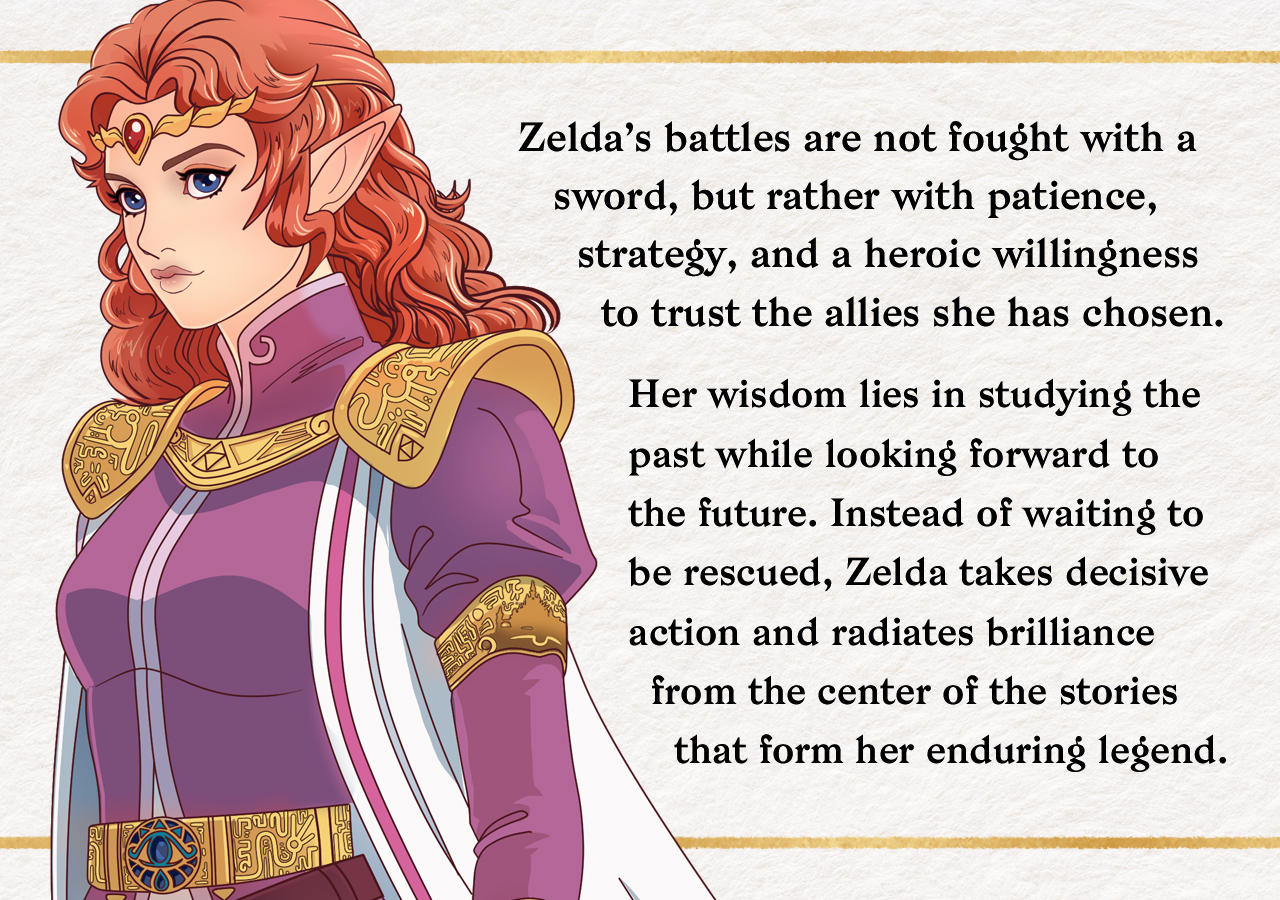
The Wisdom of the Waiting Princess is an empowering feminist reading of how the trope of the “captive princess” applies to the Zelda of the original 1986 game. While this Zelda is an action hero in her own right, her wisdom manifests in her remarkable ability to lay plans for the future.

You can read the essay on AO3 here:
https://archiveofourown.org/works/67410167

I had the honor of contributing this essay to Silent Princess: A Zelda Zine. The zine’s website is on Carrd (here), and you can check out the art and writing featured in the zine on its Tumblr site (here). Leftover sales of the zine merch are currently open (here), and you can still pick up a digital copy of the zine (here). All profits from zine sales will go to support Doctors Without Borders.

This original design for Princess Zelda was created by Hollarity, who put an incredible amount of love and care into portraying the character as a courageous young woman who is fully capable of going on her own adventures. You can find more of Holly’s gorgeous artwork on her website (here).

Escaped Chasm

Escaped Chasm
https://tuyoki.itch.io/escaped-chasm

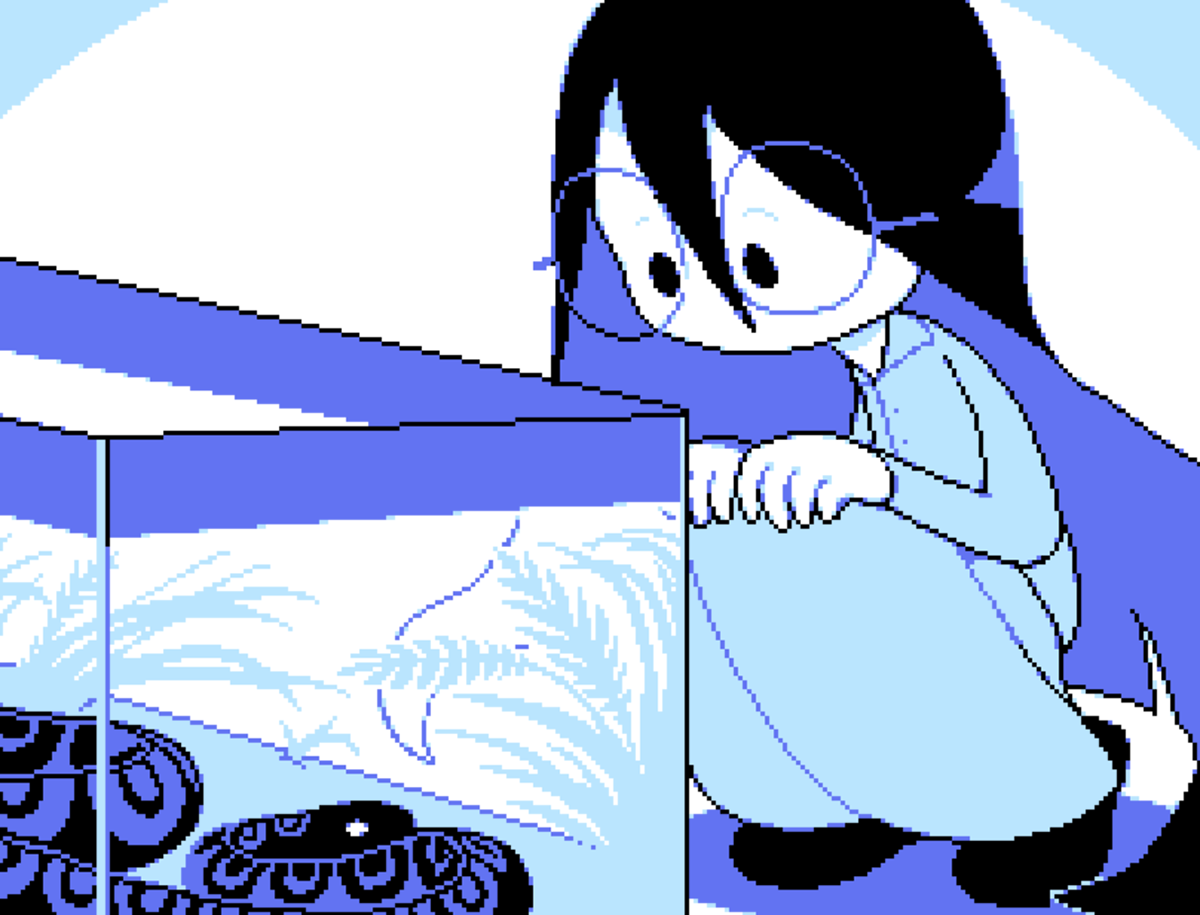
Escaped Chasm is a 25-minute dark fantasy adventure game created in RPG Maker with a mix of retro Game Boy graphics and anime-style cutscenes. Originally released in 2019, it’s the first stand-alone project of Temmie Chang, a longtime collaborator of Toby Fox who contributed character designs and graphics to Undertale and Deltarune.

You play as a young teenage “Lonely Girl” who doesn’t leave the house and lives vicariously through her dreams and art. Her parents appear to have gone missing, and she doesn’t know what to do. To make matters worse, she’s tired all the time, and a strange man has started appearing in her house.

Something is seriously wrong, and the Lonely Girl has four days to figure it out and escape. If leaving the house isn’t an option, where can she go? And how can she find the courage to leave?

Escaped Chasm is free to download, and the zip file contains an illustrated guide to the game’s four endings. I get the feeling that most players will probably see the good ending simply by playing the game naturally, but it’s nice to have grimdark alternatives. After unlocking the good ending, the player is able to enter and explore a bonus “developer’s room” that I love with all my heart. It’s fascinating to read Chang’s thoughts about making the game while checking out extra material that fills out a few gaps in the story.

Both Toby Fox and Temmie Chang were fans of and contributors to Homestuck, and it’s possible to see its influence on Escaped Chasm. It’s difficult to summarize Homestuck, but the webcomic begins as a story about four young teenagers who can’t leave their houses because they’re the last remaining survivors of a universe that’s unraveling around them. I get the sense that the Lonely Girl in Escaped Chasm is based on one of the four teenagers in Homestuck, Jade Harley, and it’s probably not a coincidence that she’s found herself in a remarkably similar situation.

Escaped Chasm is like a bridge between Homestuck and Deltarune in its theme of “using art and imagination to escape into another world,” but it’s also very much its own thing. I love Chang’s illustration style and narrative voice, and I admire how she pushes the boundaries of the medium to create a palpable sense of liminality and dread – and of catharsis and joy. Escaped Chasm is atmospheric horror with a (potentially) happy ending, and it’s idiosyncratic and self-indulgent in interesting ways that elevate it above the level of mere pastiche.

Escaped Chasm is a short test project made in preparation for Dweller’s Empty Path (on Itch.io here), a more extensive Game Boy style narrative adventure game. I really enjoyed Escaped Chasm, and I’m looking forward to jumping into Dweller’s Empty Path.

Vermis: Lost Dungeons and Forbidden Woods

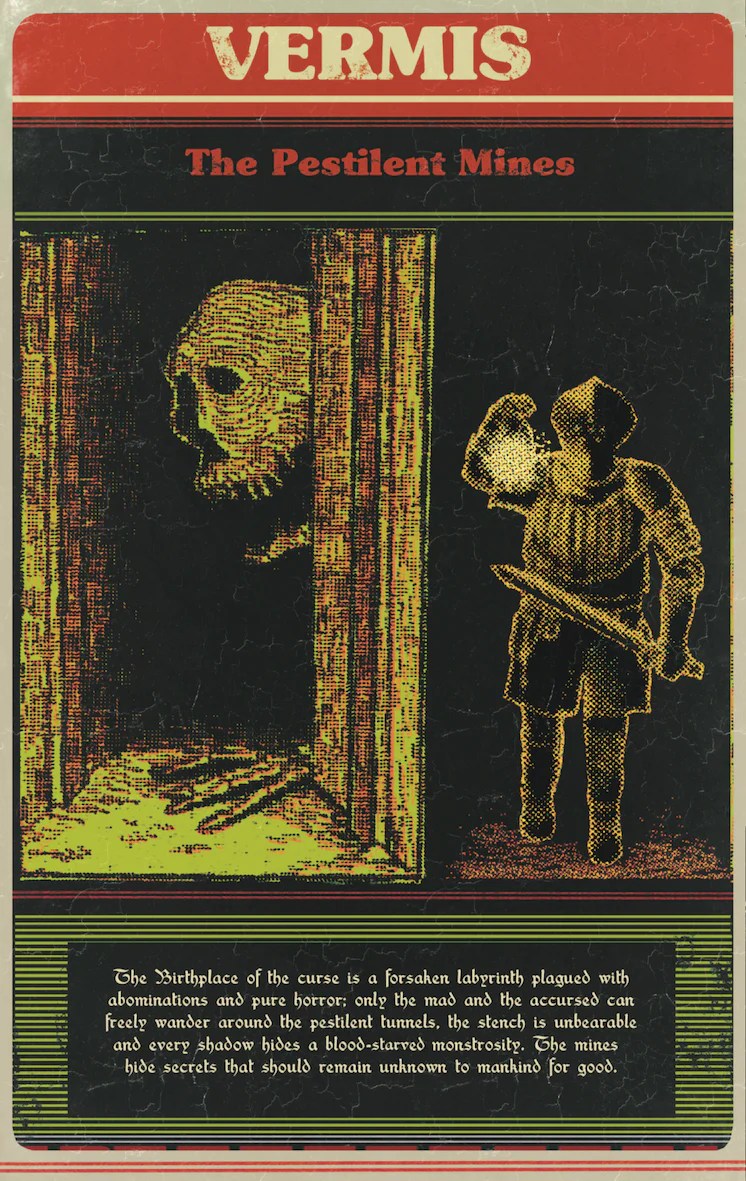
Vermis is an illustrated strategy guide for a dark fantasy game that doesn’t exist. Plastiboo, the author and artist, has taken the concept of “fake strategy guide” and executed it with absolute sincerity and fidelity. Both the writing and the crusty “screenshots” have a pitch-perfect clarity of tone and style that invites immersion.

Before attempting to describe what this book is, perhaps it might be useful to describe what it isn’t. First, Vermis is entirely original. Although the tenor of its world will be familiar to fans of Dark Souls and FromSoft’s earlier King’s Field series of dungeon crawlers, there are no callbacks or veiled references or tongue-in-cheek jokes about how “it’s dangerous to go alone.” Vermis is entirely its own thing.

Second, though Vermis emulates the style of a strategy guide, Plastiboo has an artistic eye for page layout that many guides published during the 1990s did not. In other words, Vermis is easy to read. It also forms a narrative, albeit not in a novelistic sense. Although the text is fragmented, the reader never struggles to move from page to page. This is not House of Leaves.

Third, Vermis is more “dark fantasy” than “horror.” Although there are stylistic elements of the gothic and grotesque, Vermis never attempts to provoke dread, disgust, or anxiety. I wouldn’t call Vermis “understated,” as it features all manner of unsightly monsters, but its tone is quiet and contemplative. Aside from your character’s constant forward progress, there’s not much action. 

Vermis is written entirely in a second-person point of view, a stylistic choice that works well in this context. The player-character has no set identity, so the “you” of the story is handled lightly and never becomes overbearing. The second-person narration successfully achieves its intention, which is to draw the reader deeper into a sense of playing the game.  

After being introduced to a range of starting classes, you wake into a peaceful area called Deadman’s Garden, whose ferns and mosses are protected by the skeleton of a sleeping giant. You then descend into an isolated crypt, where you loot your first sword from a corpse. You also meet your first NPC, the Lonely Knight.

The Lonely Knight is not hostile, and Vermis reproduces the boxes of dialogue with which he greets you. Although Plastiboo is canny enough to keep the narration of battles to a minimum, the format of Vermis obliquely suggests gameplay. “Despite his imposing appearance,” the text reads, “the Lonely Knight is totally harmless and will not defend himself from any attack.” Underneath this passage, however, is an insert featuring illustrations of the knight’s equipment, which your player presumably receives by killing him.

After navigating through the Isolated Crypt and emerging from its cliffside exit, you then venture into a swamp, a forest, and more crypts and caves, each of which is characterized by its own unique theme.  

Along the way, you cross paths with various NPCs (mostly fellow knights) and pick up a collection of items. The text describing these items and encounters alludes to gameplay that’s never made explicit. The decision to leave the more interactive elements of Vermis to the reader’s imagination works in concert with the second-person narration to draw the reader deeper into the ludic simulacrum.  For example, in this passage…

Once on the other side of the bridge, you notice how the oppressive flutewood landscape is replaced with clear skies and endless hills full of cedars. The breeze blows gently.

After days surrounded by the unrelenting melody of the flutewoods, the absence of the whistles makes for a heavenly silence interrupted only by the chirping of the birds and the wind blowing through the leaves.

An enormous structure rises at the top of the highest hill, casting a shadow that engulfs the landscape. You make your way to the building as the sun goes down. The contrast with the sky makes it difficult to discern what is inside.

…the mechanical process of crossing this space is merely suggested. Instead, the reader is presented with the more subjective elements of the game.

Having just survived a difficult battle on the aforementioned bridge, your sense of relief is reflected in a green and peaceful landscape. The relative silence has a tangible quality. In contrast to the twisting corridors of underground dungeons, here you can hear birds and feel the wind. The sky is open. Nevertheless, the final labyrinth lies ahead, so onward you must go if you wish to reveal the secrets hidden inside.

In his review of Vermis, “The Guide to a Game That Doesn’t Exist,” Patrick Fiorilli writes, “As a strategy guide — precisely insofar as it is a strategy guide — Vermis makes good on the promise that such volumes once made to their readers: that there is a world beyond these pages waiting to be explored.”

Fiorilli continues, “Vermis also builds the speculative world of its own existence: a world where this bygone form of secondary literature, the strategy guide, never disappeared, never dissolved into the slush of the content economy, but instead flourished as an aesthetic form unto itself.”

Fiorilli’s hints regarding the metafictional resonance of the “speculative world” of Vermis are intriguing. There’s an element of liminality to the book that recalls the famous “Candle Cove” online horror story about a half-remembered children’s cartoon that aired on a public access channel that never existed. Describing the “dreamcore” aesthetic of “liminal” videos such those surrounding the mythology of The Backrooms, digital architecture critic Ario Elami notes, “Responses to such imagery often involve claims that one feels dislocated yet aware of a vaguely familiar aspect.” And indeed, Vermis possesses this exact sense of uncanny belonging to a history that almost was.

Still, I’m far more interested in Vermis’s proximity to the “speculative world” that Fiorilli describes at the beginning of his review as he relates his experience of studying the strategy guide for The Wind Waker before playing the game. I once enjoyed similar experiences of engaging with old video games purely through their strategy guides, and I can attest to the pleasures of constructing an interactive experience through grainy images and their accompanying captions.

Through some unholy miracle, Vermis perfectly captures the spirit of “playing” a game through interaction with a paratextual artifact. At the same time, Vermis discards many elements of an actual strategy guide in order to structure its text and layout to form a satisfying narrative. It’s a delicate balance, and I’m in awe of how Plastiboo manages to pull it off.

I spent a month doing internet deep dives while trying to find more books like Vermis, but everything I saw people recommend – from Fever Knights to Tales from the Loop – didn’t scratch the same itch. Thankfully, Vermis has a “sequel,” Vermis II, which is a fascinating evolution of the formula that engages with the meta while still offering an adventure that stands on its own. In addition, Plastiboo’s publisher, Hollow Press, also offers three similar titles: Age of Rot, Leyre, and Godhusk. They’re all fantastic, albeit slightly edgier and more tonally graphic than Vermis.

Of all the books published by Hollow Press, Vermis remains my favorite. I’d recommend it especially to people who don’t want to play Dark Souls (or King’s Field) but are still curious about the atmosphere and flavor of this genre of games. I’d also offer the book to connoisseurs of experimental fiction who want to feel creatively invigorated by a uniquely stylized way of constructing a world through words. Vermis is really something special, and my gratitude goes out to Michele Nitri for making his dream of Hollow Press a darkly fascinating reality.

Legend of Zelda Forest Zine Preorders Open

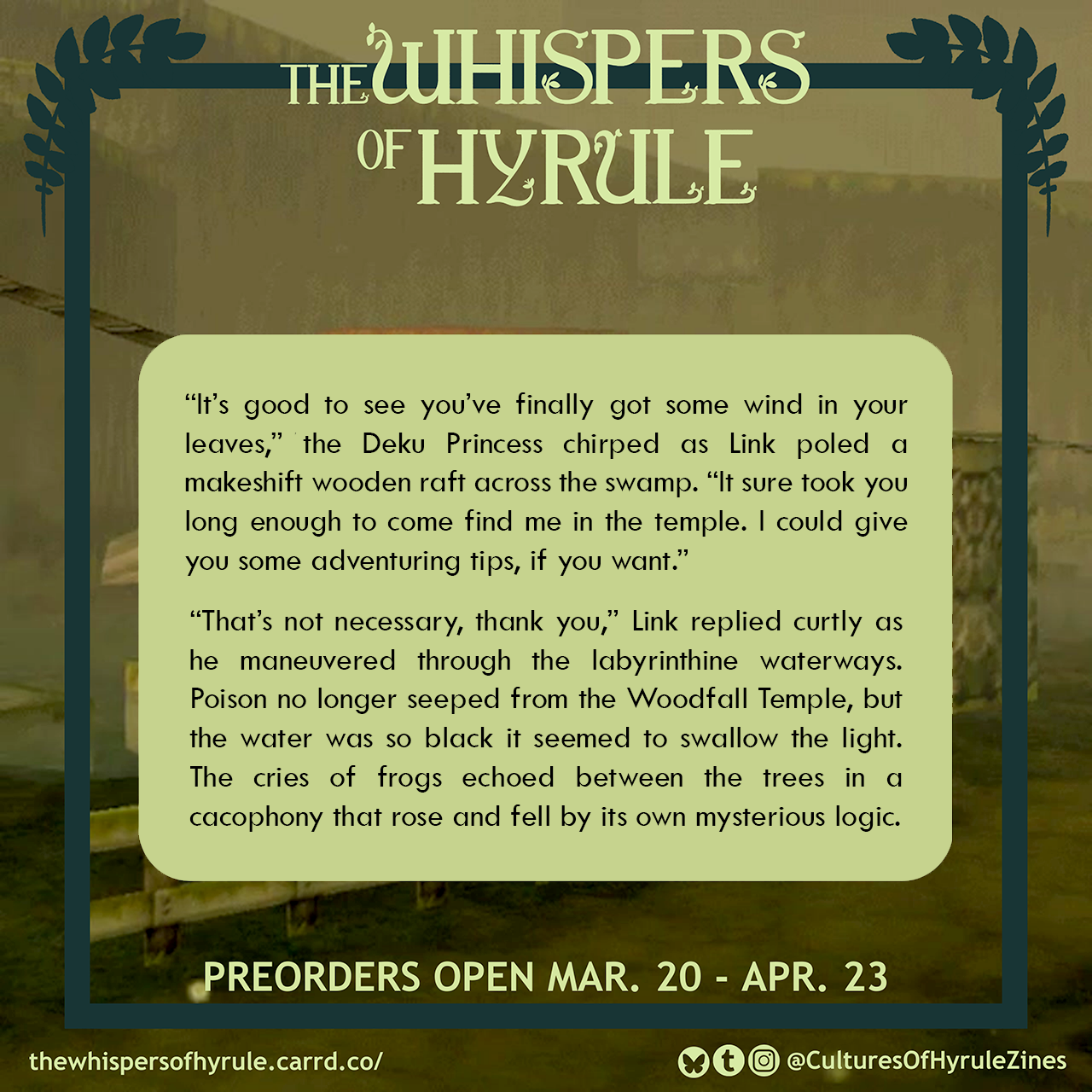
I’m excited to share the news that preorders are now open for The Whispers of Hyrule, a Legend of Zelda fanzine celebrating Hyrule’s beautiful green spaces and the creatures that make their homes in the trees.

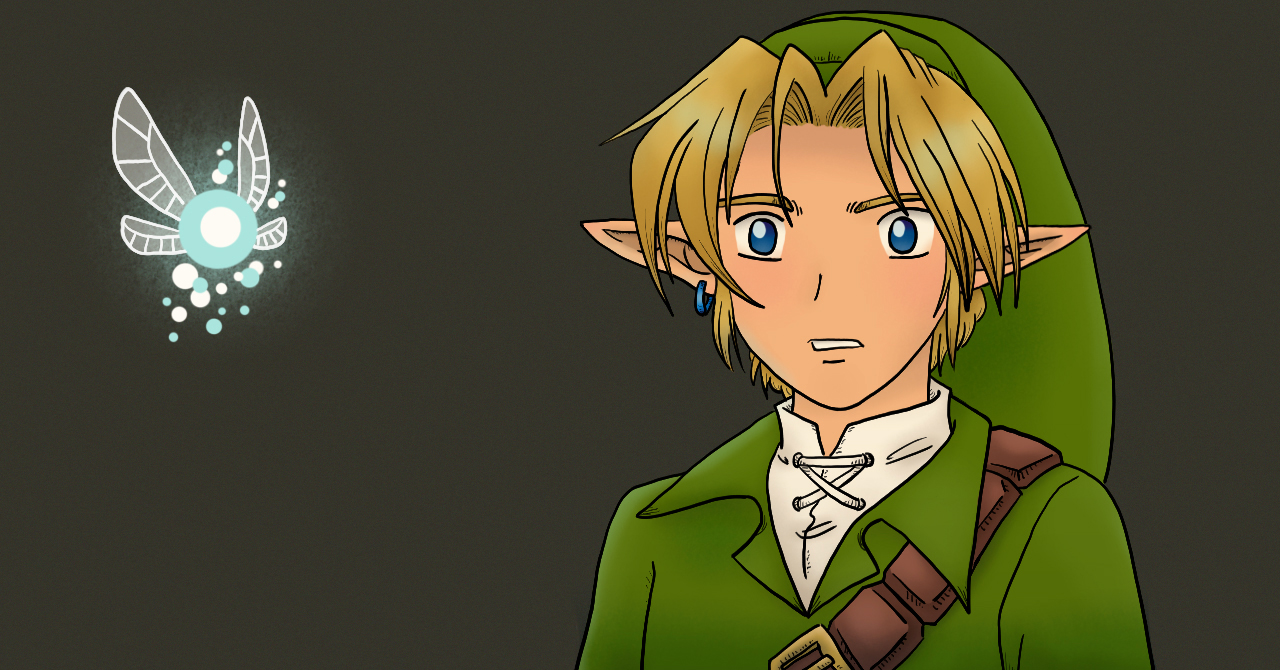
I contributed a short story about Majora’s Mask titled “The Brave Tale of the Heroic Swamp Princess.” My story follows Link and the Deku Princess as they venture through the swamp on their way home from the Woodfall Temple. I did my best to capture the exuberant spirit of the Deku Princess, who helps Link work through the trauma he experienced in Ocarina of Time, as well as the warm atmosphere created by the vibrant plant growth in the swamp.

It’s been a privilege to see the drafts shared by the writers, artists, and musicians who have joined me on this journey. From sunlit meadows to deep forest shadows, everyone has worked hard to convey the wonder and mystery of getting lost in the woods. I know I say this about every fanzine, but this book is going to be gorgeous.

Preorders for the zine are open until April 23, and three stretch goals have already been exceeded. If you’re interested, you can check out the project at the following links:

🌿 https://thewhispersofhyrule.bigcartel.com/
🌿 https://culturesofhyrulezines.tumblr.com/
🌿 https://thewhispersofhyrule.carrd.co/

Essay about Elden Ring and Dark Academia

I’m excited to share an essay I wrote for Bloodletter Magazine, a stylish biannual anthology of queer and feminist horror. The piece is titled “Dark Academia for Dark Times: Elden Ring and the Fall of the Academy,” and I’m writing about how the haunted lore of the game’s cursed university reflects real-world academic anxieties. 

You can read the essay here:
https://bloodlettermag.com/dark-academia-for-dark-times-elden-ring-and-the-fall-of-the-academy/

While I use the character Rennala from Elden Ring as an illuminating point of focus, my piece is really about the uncanny connections between the crisis currently facing universities and the social media aesthetic of “dark academia” embraced by young women. I’m arguing that the association of dark academia with the corruption of female bodies reflects deeper concerns regarding the ties between academic liberalism and the decay of imperial privilege. 

Basically: Is the wokeness of postcolonial queer feminism ruining college? I would like to believe that it is, and I think this is kind of neat, actually.

My piece is graced with a creepy spot illustration by the magical Katy Horan, who goes by @goodyhoran on Instagram, and you can follow Bloodletter at @bloodlettermag, where they post eye-catching film stills from indie horror movies created by emerging female directors. 

The Sleeping Princess

There is a legend in Hyrule that a sleeping princess lies behind the door of a locked room deep under the ruins of the North Castle. When the princess rises, so too will the ancient powers sealed within her dreams. Impa knows the legend is true, and she fears the fate that will befall the kingdom should the first Zelda wake. Yet when a shadow rises on the borders of Hyrule after the birth of a new princess, Impa must make a terrible choice.

I had the honor of contributing a story called “The Sleeping Princess” to Blood Moon Rising: A Zelda Horror Zine. I was interested in exploring the background of Princess Zelda in the original 1986 game, and I thought it might be fun to see her story through the eyes of Impa, who knew about the undead princess who was the first of Zelda’s line. In other words, I’m connecting some of the more disturbing threads between The Legend of Zelda and Zelda II: The Adventure of Link.

“The Sleeping Princess” is a story about maternal love, political sacrifice, and the dark secrets hidden within the labyrinthine dungeons of Hyrule. I was strongly inspired by H.P. Lovecraft’s novel At the Mountains of Madness, which dwells in the geometric terror of monumental architecture built by strange hands, and I did my best to create a sense of ruined grandeur similar to that of Dark Souls and Ico: Castle in the Mist.

For the story’s illustrations, I had the incredible pleasure of working with the devilishly talented Pumpkinsouppe, whose dark arts brought this ruined world to life.

You can find “The Sleeping Princess” on AO3 here:
https://archiveofourown.org/works/62492182

Leftover sales of the zine are open until February 24 on BigCartel (here).