Review of Shadows of the Sea on Comics Beat

I recently had the privilege of writing a review for Comics Beat about Cathy Malkasian’s new graphic novel, Shadows of the Sea. I have to admit that I struggled with Malkasian’s previous books, which are brilliant but tonally dark and emotionally devastating. Shadows of the Sea is just as strange and heartbreaking as the artist’s earlier work, but it ends on a gloriously high note that gives me hope for the future. I was prepared to write a review about the value of portraying despair in dark times, but man. Hope is good too.

Here’s an excerpt:

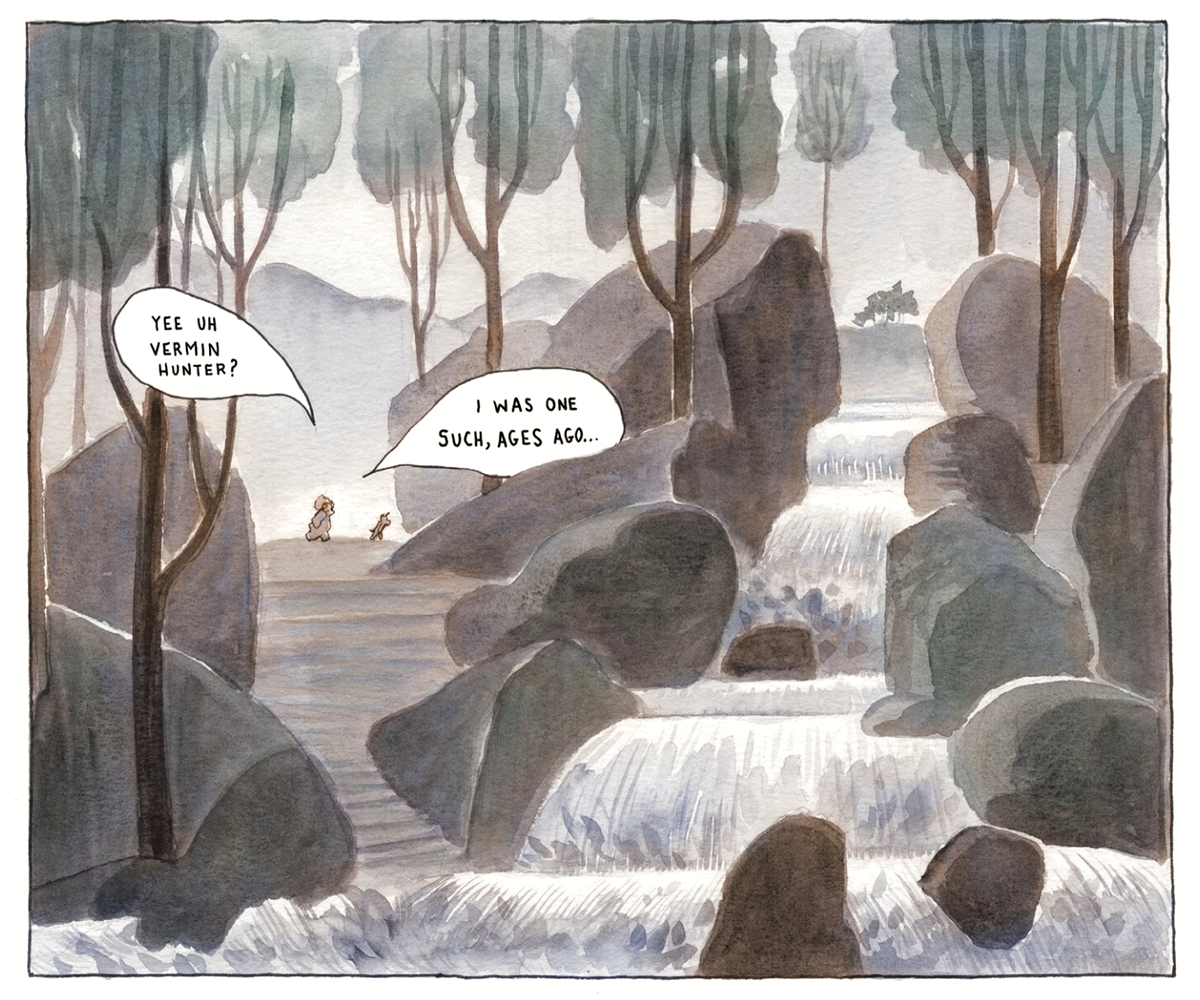
In his review on The Beat, John Seven assesses Malkasian’s 2017 graphic novel Eartha as one of the artist’s characteristic “gloomy, apocalyptic parables that don’t make you feel so great about humankind.” It’s difficult to disagree, as Eartha is deeply disquieting. In contrast, Shadows of the Sea feels like a gentler turn of the same thematic wheel, presenting a story that’s smaller in scope but richer in emotional immediacy. The fantastic world Malkasian has painted is cruel and strange, to be sure, but it still affords the possibility of healing. Shadows of the Sea lingers not because of its darkness, but because of the hope that emerges after a brave confrontation with bitter truths.

You can read the full review on Comics Beat here:
https://www.comicsbeat.com/graphic-novel-review-shadows-of-the-sea/

Review of The Corus Wave on Comics Beat

I really enjoyed writing a review of Karenza Sparks’s debut graphic novel, The Corus Wave, for Comics Beat.

The Corus Wave is a cozy science mystery about a grad student who inadvertently tumbles down a research rabbit hole while writing her thesis about an unusual (and potentially supernatural) fossil. The story quickly becomes a low-stakes Da Vinci Code adventure with a lot of local color borrowed from the artist’s home in Cornwall, and it’s super charming. I really love this book.

Here’s an excerpt from my review:

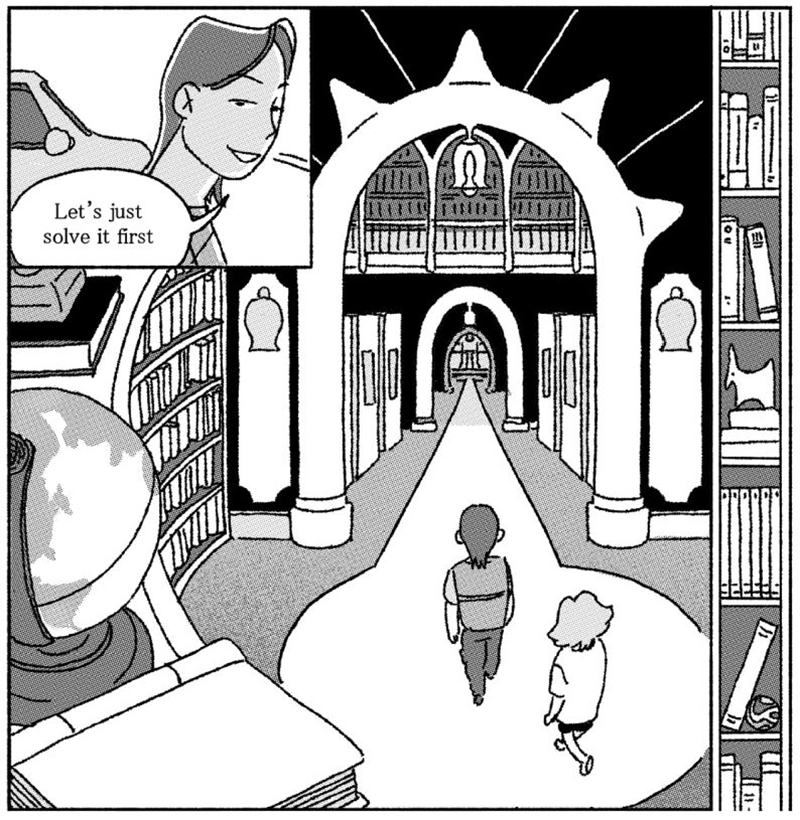
The Corus Wave is a celebration of the joys of research. The hunt for Corus’ manuscripts begins with a footnote that becomes a rabbit hole, but the story evolves in a more practical direction as the two students find friendship and support in a scholarly community. Their fieldwork provides opportunities to appreciate the human stories behind a built environment whose unique design flourishes might otherwise be taken for granted. The Corus Wave is about going offline and touching grass, the pleasure of which is conveyed through gentle and attractive art that presents lively and expressive characters navigating interior spaces that only reveal their secrets under close observation.

You can read the full review on Comics Beat here:
https://www.comicsbeat.com/graphic-novel-review-the-corus-wave/

Review of Witchcraft on Comics Beat

My most recent review for Comics Beat is about Witchcraft, a graphic novel by Sole Otero, an internationally famous Argentinian comic artist whose style has developed in a cool and unique way during the past decade. Witchcraft is a massive book, but it’s an incredible page turner. The writing is brilliant, and the art is both extremely stylized and exactly what it needs to be to tell the story, a gothic cautionary tale that jumps between the present day and various periods in the history of Buenos Aires. And the story is indeed about witches and magic and power. This book is so goddamn good, and I feel very honored to have been able to write about it. Here’s an excerpt:

Witchcraft is primarily set in Buenos Aires, and the narrative jumps between historical periods when the witches were active and the present day, when the gender politics of their activities are far more complicated. It would be easy to see the witches as feminist saviors as they run women’s clinics and shelter members of the local indigenous population, but their benevolence is called into question by the nature of their magic, which requires the victimization of men and the silent complicity of their fellow women. Instead of a feminist message, what Witchcraft offers is a fast-paced and high-stakes story about cycles of abuse and the human cost of the sacrifices necessary for the marginalized to survive.

You can read the full review on Comics Beat here:
https://www.comicsbeat.com/graphic-novel-review-witchcraft/

Review of Let Me in Your Window on Comics Beat

I’m super grateful to Comics Beat for giving me the opportunity to review the newest horror comics collection from Adam Ellis, Let Me in Your Window. These gorgeously drawn stories offer disturbing insights into the murky shadows of internet culture, as well as brilliant speculation on potential digital futures.

Something I always appreciate about Ellis is how he documents the many absurdities of both corporate platform policies and social media subcultures alike. It’s easy to read the stories in Let Me in Your Window as spooky urban legends with no allegory… but also, I feel extremely Seen by Ellis’s characteristic take on digital horror. Here’s an excerpt from my review:

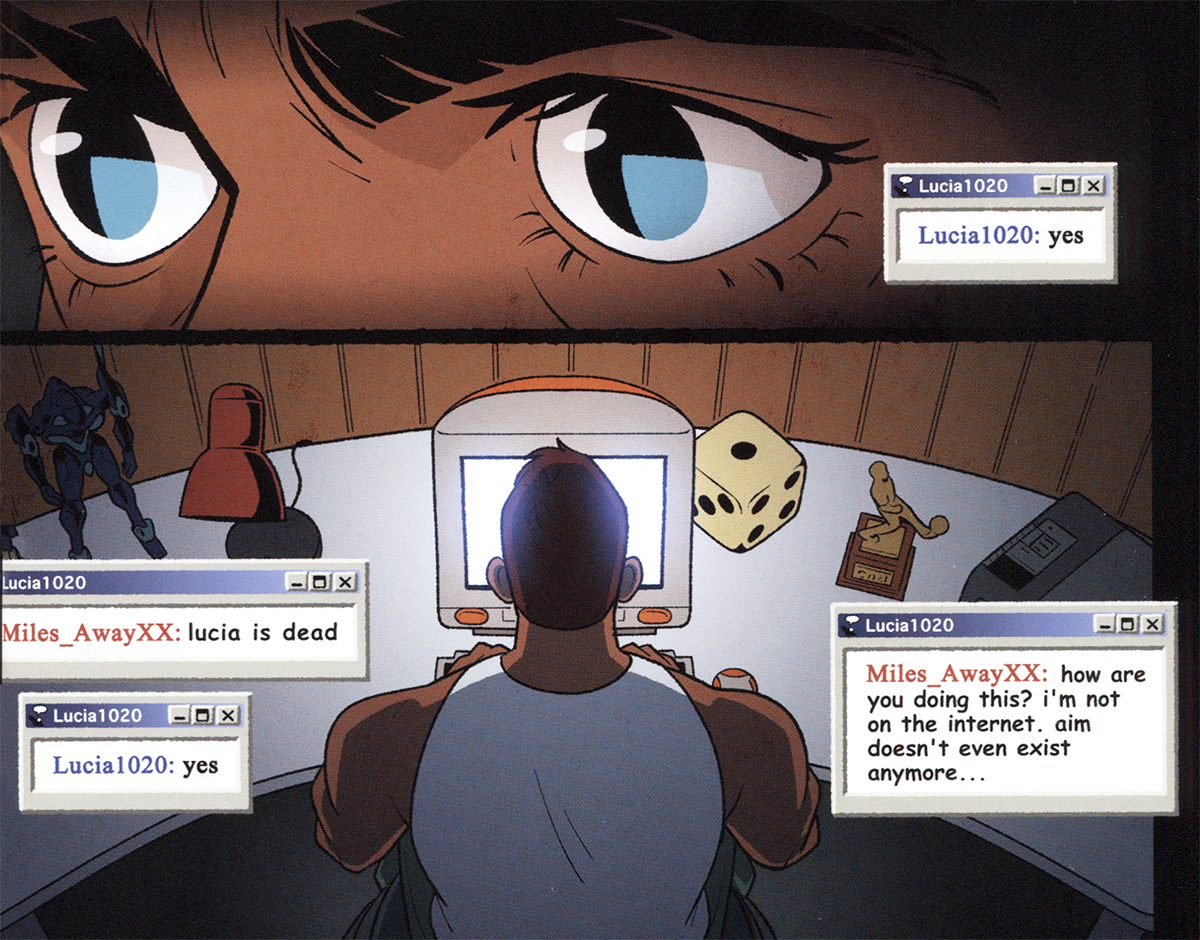
Adam Ellis’s second horror comic collection, Let Me in Your Window, is digital horror at its finest. As the successor to Ellis’s 2024 collection Bad Dreams in the Night, Let Me in Your Window ventures even deeper into the wires as it speaks to anxieties surrounding the omnipresent ghosts that speak to us through our screens. Even if most of us are content to allow these phantoms to pass unnoticed, it can be unnerving to realize that we’re ghosts as well – ghosts being watched, ghosts being catalogued, and ghosts that constantly leave behind traces of our former selves. The ten stories collected in Let Me in Your Window invite the reader to reflect on what it means to inhabit the constantly unfolding urban legends of online culture.

You can read the full review on Comics Beat here:
https://www.comicsbeat.com/graphic-novel-review-let-me-in-your-window/

Review of Hero Cave on Comics Beat

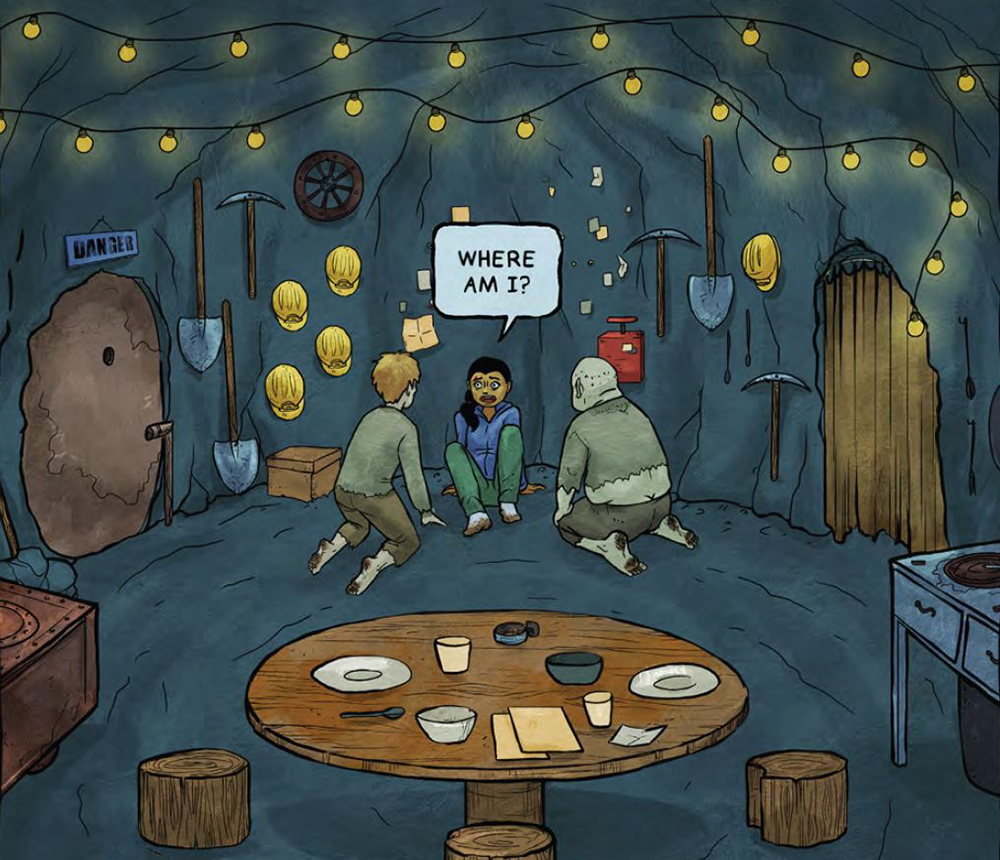
My review of Hero Cave, a dark fantasy comedy, was recently published on Comics Beat (here). This graphic novella is only about fifty pages long, but it’s surprisingly powerful and cathartic. Here’s an excerpt from my review…

It’s easy to look down on NPCs, the “non-player characters” who seem shallow and uninteresting when compared to the protagonists. It’s not so easy to realize that, in certain aspects of your life, you’re not much better than an NPC yourself. In Player vs. Monster: The Making and Breaking of Video Game Monstrosity, Jaroslav Ŝvelch explains how the construction of monsters in Dungeons & Dragons reflects the concerns of the white-collar managerial class. To the dungeon master, even a creature as miraculous as a walking skeleton is little more than a series of numbers to be entered into a spreadsheet. Given how frequently we’re all reduced to data points — by social media algorithms, by insurance companies, and certainly by employers — perhaps it’s worthwhile to extend a bit of sympathy to a low-level skeleton.

You can read the full review on Comics Beat here:
https://www.comicsbeat.com/graphic-novel-review-hero-cave/

As an aside, Hero Cave features a type of nonbinary representation that I love to see. Waifishly thin models with stylishly androgynous faces are all well and good, but it’s frustrating that only attractive and nonthreatening “childlike” body types are commonly understood as being nonbinary. I believe we should have a bit more range in our representation, while also not limiting ourselves to conventional notions of “humanity.”

Why, for example, does a cartoon skeleton need to fit into a binary notion of gender? Also, if a character is an undead eldritch monstrosity, it’s silly to think that their nonbinary gender identity is the most interesting thing about them. Hero Cave demonstrates a refreshing lack of concern for the gender of its skeleton protagonist, but that doesn’t preclude the possibility of queer sexuality serving as an escape from the restrictive confines of hellworld capitalism. I didn’t want to get into this aspect of the book in my review, but it’s brilliant, and it means a lot of me personally.

Review of Model Five Murder on Comics Beat

I really enjoyed Tan Juan Gee’s Model Five Murder, which was just published by Silver Sprocket. This graphic novella is an intriguing sci-fi noir mystery with stylish art that investigates the issues of AI, technology, and labor. I’m very lucky to have been able to write a review for Comics Beat. Here’s an excerpt…

Model Five Murder is a thematically rich murder mystery that plays with the question of whether concepts like “victim” and “murderer” have any meaning in a situation involving artificial life and artificial intelligence. If memories and consciousness can be transferred between bodies, is it murder to shoot an android? If androids are proprietary technology owned by a corporation, who has the legal right to make decisions about their bodies?

You can read the full review here:
https://www.comicsbeat.com/graphic-novel-review-model-five-murder/

Review of The Harrowing Game on Comics Beat

I consider myself extremely fortunate to have been an early reader of Antoine Revoy’s newest graphic novel, The Harrowing Game. I love this book, which is strongly inspired by Junji Ito but still very much its own thing. I’m also lucky to have gotten an opportunity to write a review for Comics Beat. Here’s an excerpt…

The Harrowing Game will delight fans of Junji Ito and H.P. Lovecraft, to be sure, and connoisseurs of horror will appreciate Revoy’s intriguing interpretations of familiar tropes. Revoy twists gothic stories into broken reflections of cultural anxieties, and the storytelling is no less dramatic for the subtlety of its social commentary. If nothing else, it’s a pleasure to get lost in the details of Revoy’s spectacular illustrations. Whether you’ll be able to find your way out untouched and undisturbed is another story.

You can read the full review on Comics Beat here:
https://www.comicsbeat.com/graphic-novel-review-the-harrowing-game/

Review of Low Orbit on Comics Beat

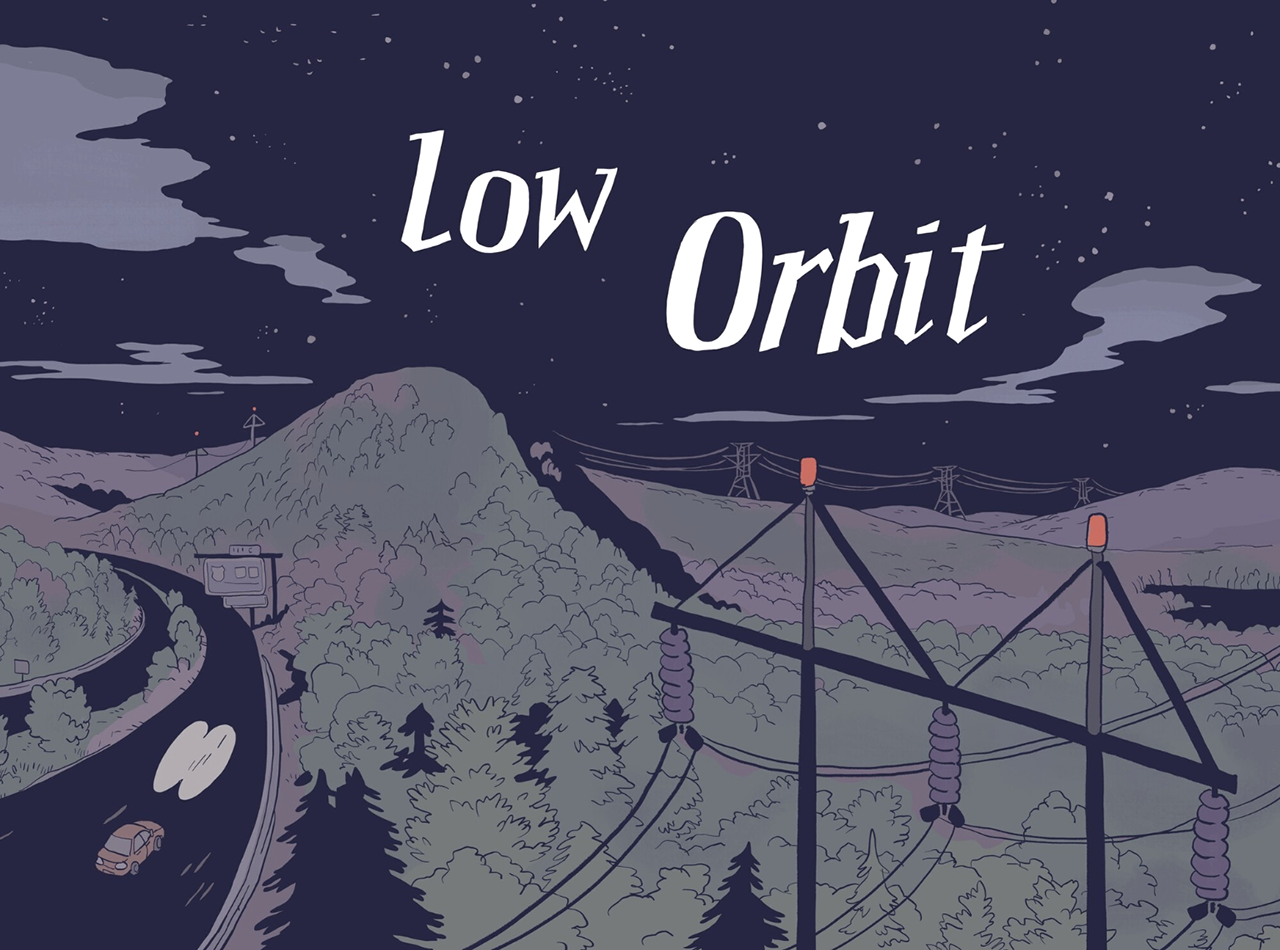
I’m honored to have been able to share a review of the recently published graphic novel Low Orbit on Comics Beat. Kazimir Lee’s debut is about dead malls in Vermont, sci-fi fan conventions in New York, epic space adventures, real-life queer identity, and everything in between. It’s an extremely ambitious story, and I’m in awe of the artist’s ability to pull it off with nuance and sensitivity – and also with some fantastic action scenes. Here’s an excerpt from my review:

At the end of Low Orbit, what lingers is the sensitivity with which Lee captures the slow and often painful process of becoming a person. Azar doesn’t find neat resolutions to her problems, and the adults around her remain as flawed as she is. Still, there’s a quiet clarity in how Azar begins to see them as fellow travelers on an uncertain path. Low Orbit is a stunning debut that’s just as fascinating as adolescence itself, and just as full of hard truths and unexpected kinships.

You can read the full review on Comics Beat here:
https://www.comicsbeat.com/graphic-novel-review-low-orbit-boldly-explores-the-intersections-of-fiction-and-identity/

Review of Strange Bedfellows on Comics Beat

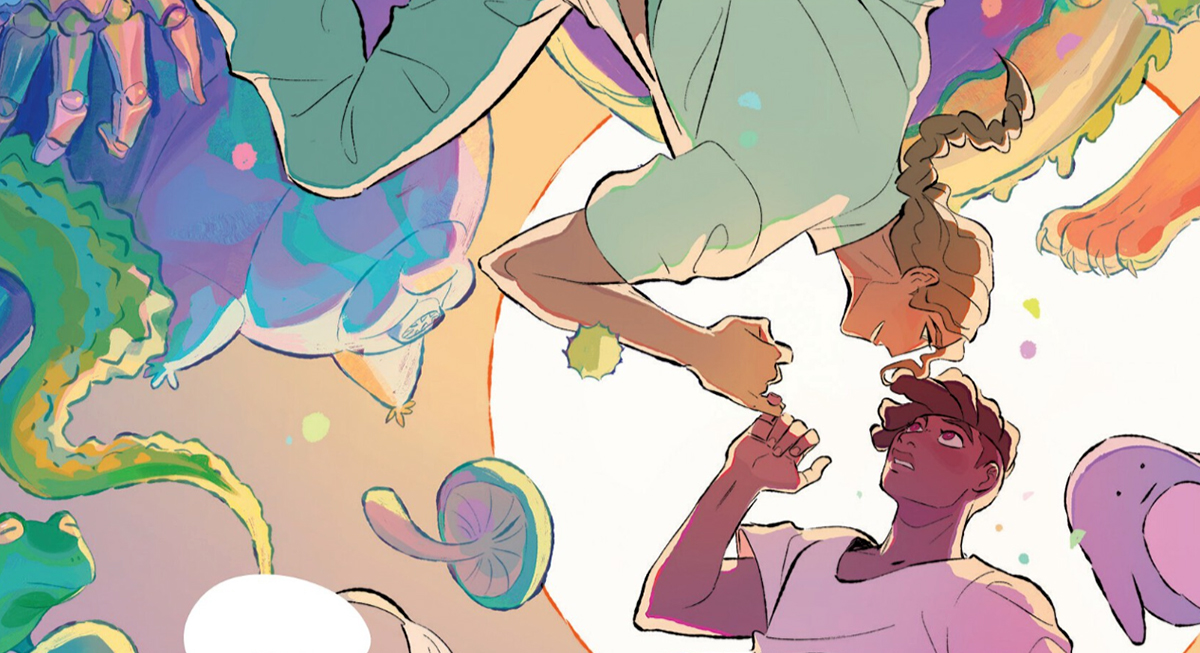
I’m excited to share my review of Ariel Slamet Ries’s newest graphic novel, Strange Bedfellows. This is a solarpunk romantic comedy that’s set in a utopia but still takes the darkness of human nature seriously. The art is gorgeous, and I very much enjoyed the time I spent in this fascinating world with these beautiful trashfire characters. Here’s an excerpt from my review:

Hardship comes to everyone, and romance isn’t always easy. The soft and hopeful message of Oberon’s story is that the flaws and complications in human ambitions are what make our lives interesting and beautiful. Strange Bedfellows assures the reader that, while we may not ever live in a perfect utopia, we don’t have to give up on our dreams of a kinder and greener future.

You can read the full review on Comics Beat here:
https://www.comicsbeat.com/graphic-novel-review-strange-bedfellows-dreams-of-a-romantic-solarpunk-future/

Best Horror Comics on How to Love Comics

I had the immense honor of being able to contribute to a list of “The 45 Best Horror Comics You Should Read” on the website How To Love Comics. Here’s how I pitched the eight titles I recommended…

Betwixt: A Manga Horror Anthology, edited by Fawn Lau and Mayuko Hirao
A diverse collection of big-name creators showcasing manga-style stories that focus on urban legends and folk horror.

Bloodborne: The Healing Thirst, by Ales Kot and Piotr Kowalski
A stand-alone story that captures the oppressive gothic atmosphere of Bloodborne while being accessible to readers with no knowledge of the game.

The Crossroads at Midnight, by Abby Howard
A single-artist collection of queer short stories with distinctive monochromatic art and intensely disturbing imagery. 

The Hills of Estrella Roja, by Ashley Robin Franklin
A lushly illustrated graphic novel about a college student on the hunt for cryptids in the beautiful but eerie Texas desert.

Loving, Ohio, by Matthew Erman and Sam Beck
A suburban gothic horror story about a small town quietly controlled by an all-too-realistic cult. 

Not Drunk Enough, by Tess Stone
A colorful and stylish horror comedy about being trapped in a mad science corporation after dark.

PTSD Radio, by Masaaki Nakayama
A quiet but intensely creepy collection of Japanese urban legends loosely connected by an overarching narrative.

The Shadow over Innsmouth, by Gou Tanabe
A painstakingly faithful Lovecraft adaptation with meticulously drafted art and a well-researched translation. 

You can check out the fully annotated list (here). There are a lot of famous heavy hitters on this list, and it was a pleasure to be able to include a few lesser-known manga and indie graphic novels.