The Annotated Kitab al-Azif

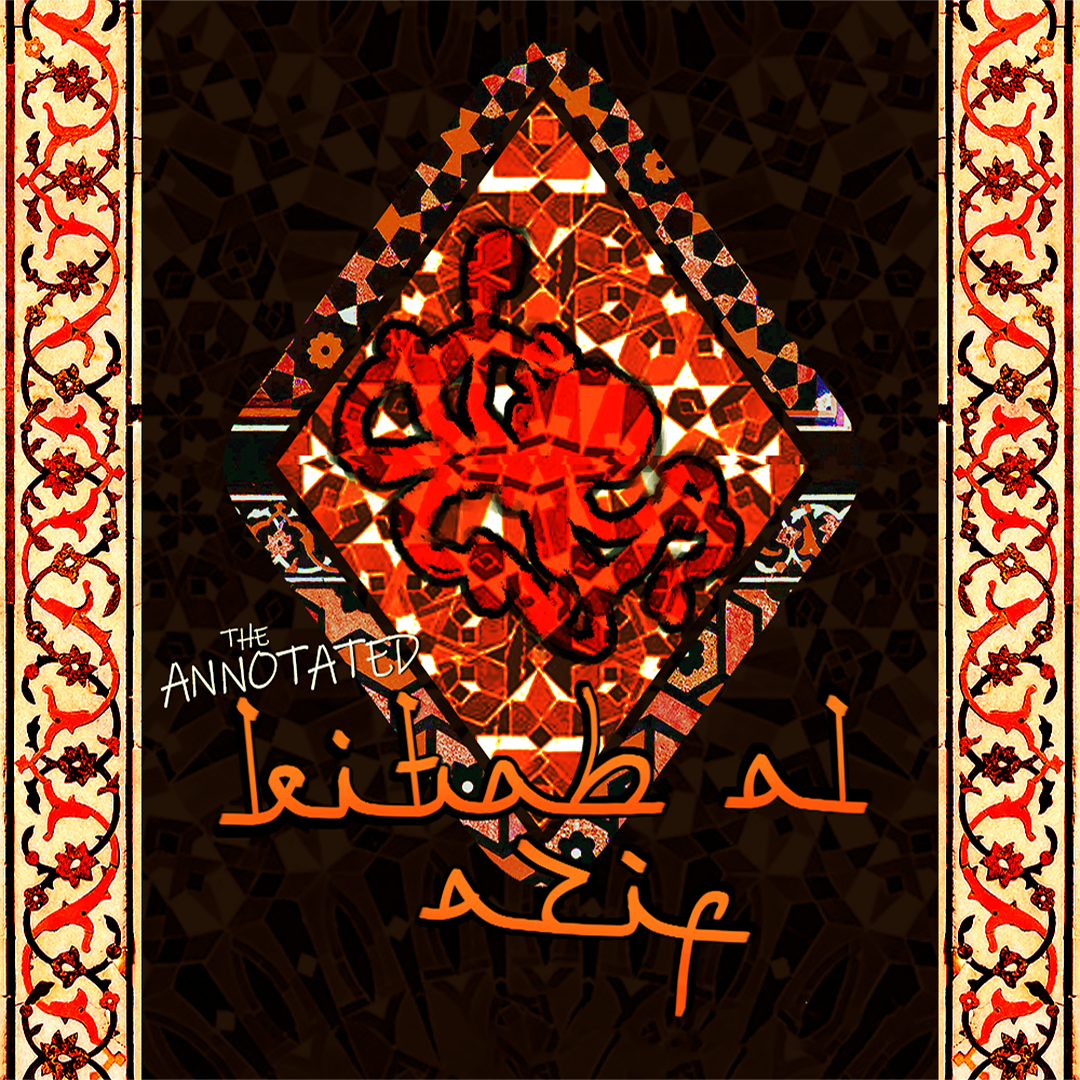
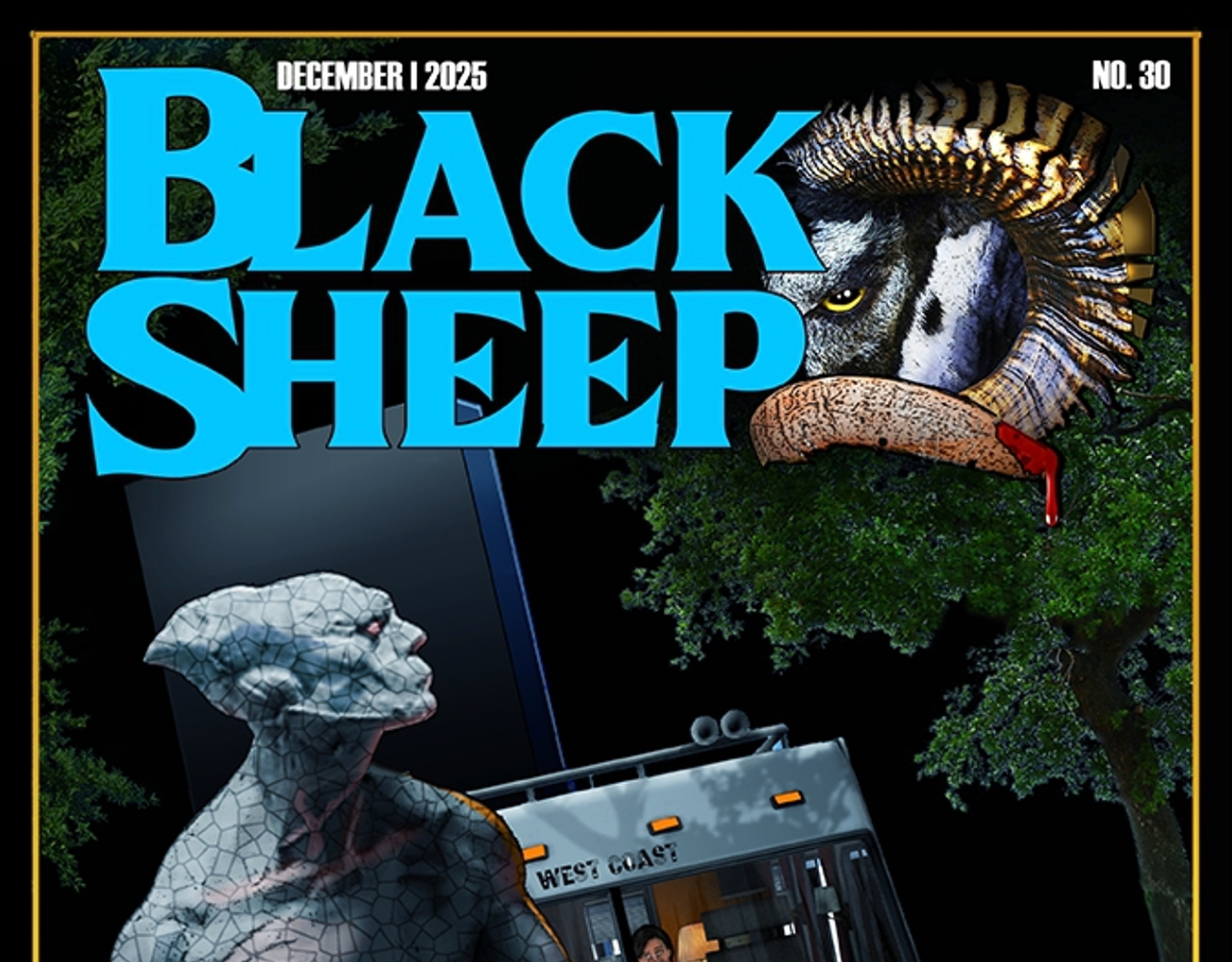
My queer Lovecraftian romance, “The Annotated Kitab al-Azif,” was just published in the latest issue of Black Sheep, a magazine for weird fiction. This story treats the gnostic origins of the Necronomicon with respect while being slightly silly about grad students.

You can order a copy of the issue with my story here:

🐙📖 www.amazon.com/dp/B0G25R82TY

It’s very cool to have the opportunity to publish a Lovecraft pastiche in an honest-to-god pulp magazine, which seems appropriate. At the same time, I definitely feel the friction of using Lovecraft’s own tropes to push back against the ugly Orientalism surrounding the Necronomicon.

The truth is that, while I admire Lovecraft, but I wouldn’t consider myself a fan. Rather, I spent a formative part of my childhood in a small town in the Deep South whose public library was severely limited by budget constraints. The only thing remotely close to fantasy fiction they had on their shelves was Stephen King, the lone second volume of Lord of the Rings, and a handful of ancient paperback collections of H.P. Lovecraft.

I didn’t really have the cultural context to understand Stephen King, and I wouldn’t recommend The Two Towers as the place to start reading Tolkien. Lovecraft grabbed me, though. Even as a kid, I understood the xenophobia expressed in Lovecraft’s stories. Believe me, I understood all too well. Still, I guess I was young enough that this wasn’t a dealbreaker, especially since there was nothing else to read during the summer where I practically lived at this tiny little library.

I had more resources the following year, when I started attending an international school in Atlanta and began to read more widely. But Lovecraft stuck with me, and a small but significant goal of my writing now is to try to capture and explain why that is.

I sincerely believe that people should write whatever they want, but a part of me still questions the value of aligning myself with the work of such a problematic author. The truth remains, though, that these Lovecraft stories only occupy a small closet in the house I’m trying to build with my writing. What I want to do is expand the scope of the small rural library that only had room for Stephen King and HP Lovecraft, as well as to create space for original work that dismantles the toxic feedback loop of preset responses to human difference.

Much love to Black Sheep magazine for giving a home to this story. 

Review of The Corus Wave on Comics Beat

I really enjoyed writing a review of Karenza Sparks’s debut graphic novel, The Corus Wave, for Comics Beat.

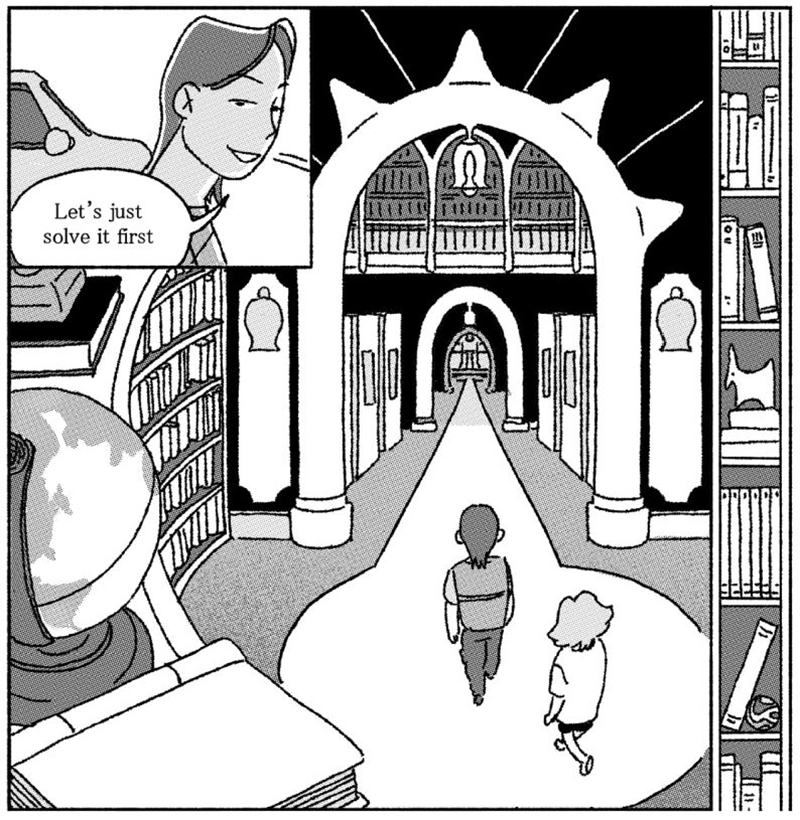
The Corus Wave is a cozy science mystery about a grad student who inadvertently tumbles down a research rabbit hole while writing her thesis about an unusual (and potentially supernatural) fossil. The story quickly becomes a low-stakes Da Vinci Code adventure with a lot of local color borrowed from the artist’s home in Cornwall, and it’s super charming. I really love this book.

Here’s an excerpt from my review:

The Corus Wave is a celebration of the joys of research. The hunt for Corus’ manuscripts begins with a footnote that becomes a rabbit hole, but the story evolves in a more practical direction as the two students find friendship and support in a scholarly community. Their fieldwork provides opportunities to appreciate the human stories behind a built environment whose unique design flourishes might otherwise be taken for granted. The Corus Wave is about going offline and touching grass, the pleasure of which is conveyed through gentle and attractive art that presents lively and expressive characters navigating interior spaces that only reveal their secrets under close observation.

You can read the full review on Comics Beat here:
https://www.comicsbeat.com/graphic-novel-review-the-corus-wave/

In Praise of Moss Disability Zine

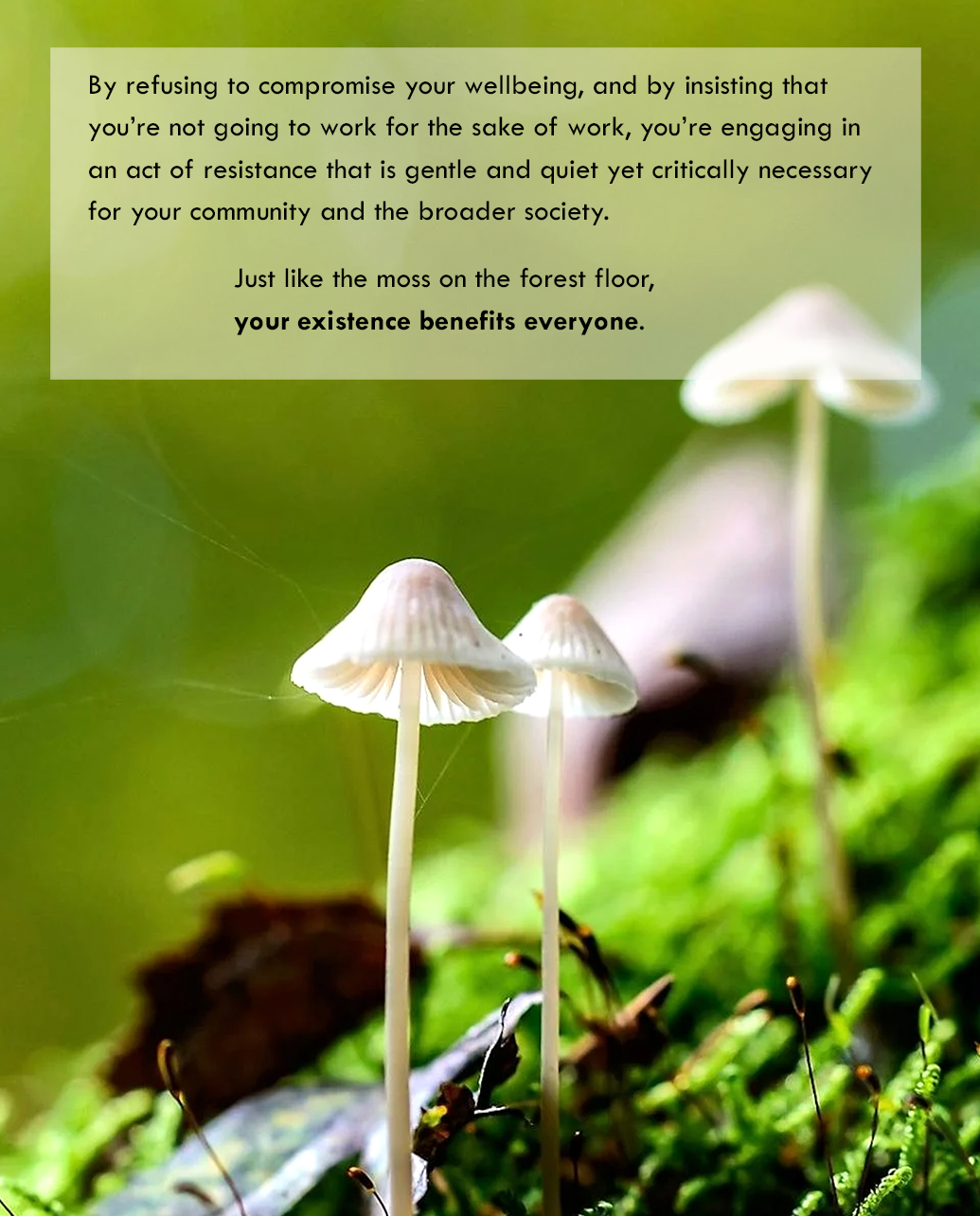
In Praise of Moss is a zine that argues against the myth of productivity while celebrating the value of a diversity of contributions to our culture and communities. Not everyone can be a tree, and that’s okay. Moss is an equally important part of an ecosystem.

I wrote this zine from a perspective that respects people of all abilities, but I think it’s important to acknowledge the more challenging aspects of disability. Disabled people are often expected to “pull their weight,” usually with the assumption that there’s only one way to measure success. In addition, people who live with invisible disabilities are often met with frustration and accusations of laziness when we’re unable to work or behave “normally.”

Moss is a useful metaphor for a recontextualization of what it means for disabled people to be useful to our communities and valued in our relationships. By exploring how moss can support an entire ecosystem, we can craft a model for how disability positivity can benefit society.

In addition, moss is remarkably adept at surviving disaster, which makes it an engaging analogy for resistance against the pressures of self-optimization exerted by neoliberal capitalism. While my focus is on disability, I believe that all readers can benefit from a shift in perspective that encourages us to grow naturally without worrying about productivity. 

When I write about “resisting productivity,” I’m speaking from the position of someone in academia who is directly affected by the myth that hard work will lead to prosperity. I hate the way this myth is weaponized against disabled people in the realm of higher education, and I want to destroy it. Very softly and quietly. Like moss.

While I love the lo-fi DIY aesthetic of many of the disability zines I’ve found on Etsy and in indie bookstores, it was important to me to create an attractively formatted physical object that feels good in my hands and accommodates my own disabilities by being easy to read. I want people who encounter this zine to feel that it’s valuable, and that they’re valuable too. I was fortunate to be able to work with Fireball Printing, a local Philadelphia service that creates gorgeous full-color publications.

If you’re interested, you can order a copy of the zine from Etsy, or you can download a free digital version on Itch.io.

🌿 https://digitalterrarium.itch.io/in-praise-of-moss
🌿 https://www.etsy.com/listing/1881401704/in-praise-of-moss-disability-zine

Review of Textual Cacophony

I was honored to write a review for Pacific Affairs of Daniel Johnson’s 2023 monograph Textual Cacophony, a critical analysis of Japanese internet culture between roughly 2006 and 2014. Johnson is especially interested in the anonymous message board 2channel and the video sharing site Niconico, and my review highlights why the online subcultures associated with these sites are still relevant and worth studying. Here’s the opening paragraph:

It’s no secret that a great deal of twenty-first century media has been influenced by internet subcultures; unfortunately, much of this culture has been lost to time. Many emergent online cultures of the 2000s have proved tragically ephemeral, with the scarce documentation that exists often falling into the trappings of cultural nostalgia. Thankfully, Daniel Johnson’s Textual Cacophony: Online Video and Anonymity in Japan functions as a critical analysis that documents and preserves an important moment in Japanese media history that continues to resonate across national borders.

You can read the full review on the Pacific Affairs website here:
https://pacificaffairs.ubc.ca/book-reviews/textual-cacophony-online-video-and-anonymity-in-japan-by-daniel-johnson/

Essay about Elden Ring and Dark Academia

I’m excited to share an essay I wrote for Bloodletter Magazine, a stylish biannual anthology of queer and feminist horror. The piece is titled “Dark Academia for Dark Times: Elden Ring and the Fall of the Academy,” and I’m writing about how the haunted lore of the game’s cursed university reflects real-world academic anxieties. 

You can read the essay here:
https://bloodlettermag.com/dark-academia-for-dark-times-elden-ring-and-the-fall-of-the-academy/

While I use the character Rennala from Elden Ring as an illuminating point of focus, my piece is really about the uncanny connections between the crisis currently facing universities and the social media aesthetic of “dark academia” embraced by young women. I’m arguing that the association of dark academia with the corruption of female bodies reflects deeper concerns regarding the ties between academic liberalism and the decay of imperial privilege. 

Basically: Is the wokeness of postcolonial queer feminism ruining college? I would like to believe that it is, and I think this is kind of neat, actually.

My piece is graced with a creepy spot illustration by the magical Katy Horan, who goes by @goodyhoran on Instagram, and you can follow Bloodletter at @bloodlettermag, where they post eye-catching film stills from indie horror movies created by emerging female directors. 

Essay on WWAC about Machiko Kyō’s Manga Cocoon

I’m proud to have worked with the brilliant editorial team at Women Write About Comics on my essay “Nature and War Memory in Machiko Kyō’s Cocoon,” in which I discuss the imagery that propels the story of a heartbreaking graphic novel about the Pacific War.

An animated cinematic adaptation of Cocoon is scheduled to be released in Summer 2025. This is a high-profile project commissioned by NHK and directed by the veteran Studio Ghibli artist Hitomi Tateno, whose animation credits range from Spirited Away to The Wind Rises.

Although the essay (like the manga itself) should be approached with sensitivity to its content, I hope I was able to offer a small contribution to the international awareness of the narrative work of Machiko Kyō, a celebrated and prolific Japanese artist who has created some of the most groundbreaking manga of the past decade.

You can find my essay about Cocoon (here) on Women Write About Comics, an award-winning venue for media journalism covering pop culture from a diversity of perspectives. I’m extremely grateful for the support and excellent feedback of Emily Lauer (on Bluesky here), whose critical insight illuminates the discussions and reviews of genre fiction on WWAC.

Seeded Ground

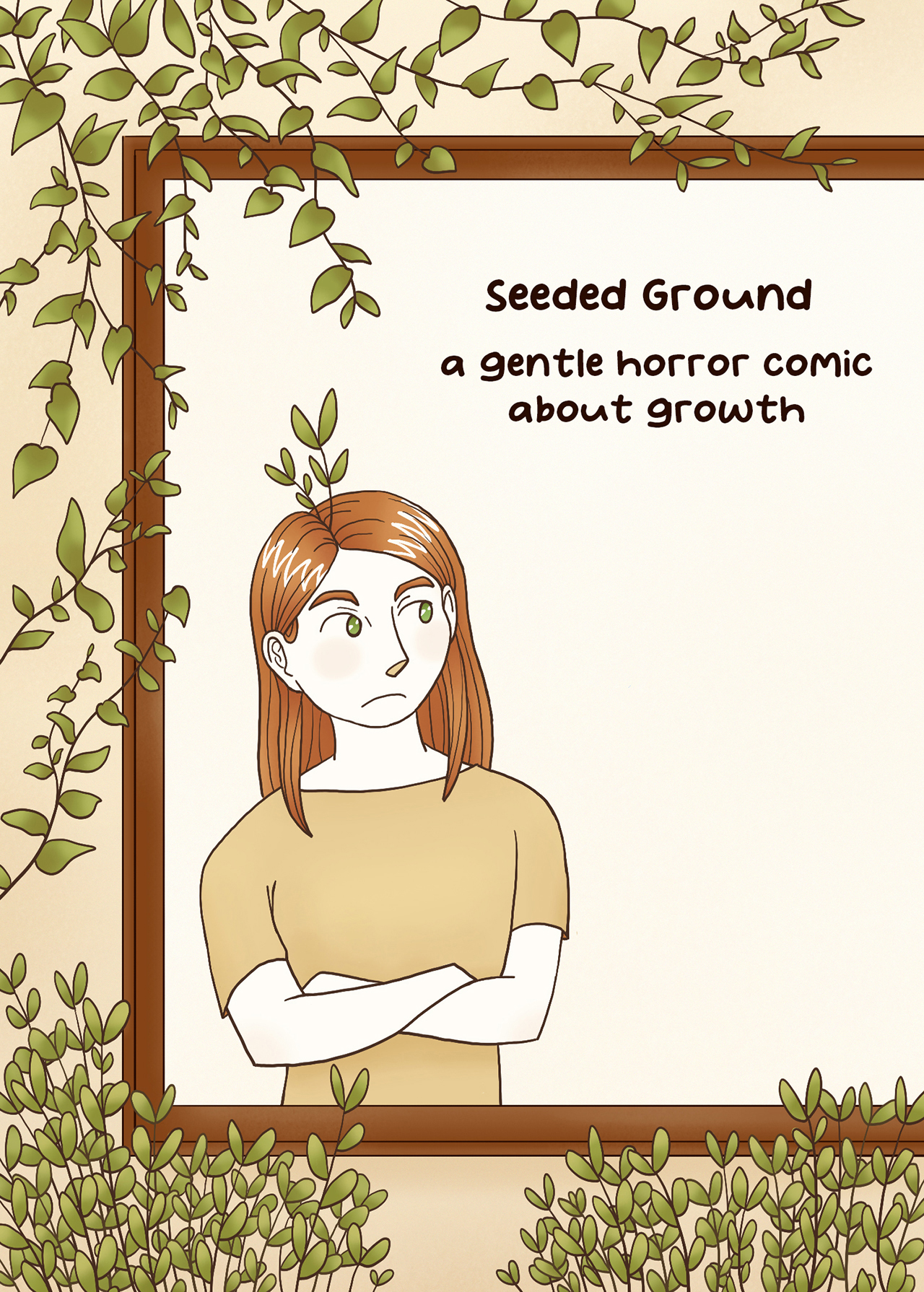
Seeded Ground is a twelve-page botanical horror comic about growth. It reads a bit like a supervillain origin story, but I created it as a statement of resistance against the oppressive ideologies of neoliberalism that have lured so many people in my generation into the trap of self-optimization.

You can download a free digital copy of the comic from Itch.io here:
https://digitalterrarium.itch.io/seeded-ground

I was inspired to draw this comic by a tweet written by a respected senior scholar. They argued that assigning at least five pages of writing every week is necessary to maintain “a certain standard of quality” in the undergraduate students who register for their classes.

This tweet inspired me to reflect on an unfortunate aspect of education in the United States. Namely, it’s an unstated but almost universally accepted goal of the formal education system to monopolize students’ time in order to train them to become the sort of adult workers who are willing to devote their lives to their career. An employee at a “good” job is expected to wake up early, commute, spend the entire day at work, and then go home and finish the tasks they didn’t have time to complete at the office. Meanwhile, freelance and part-time workers are expected to be available at any hour of the day, every day of the week, and at short notice. This is messed up, and I hate it.

My own experience as a professional working adult has essentially been the equivalent of that professor’s tweet. Namely, I’ve felt compelled to engage in meaningless work that no one will ever see in order to maintain the pretense of “a certain standard of quality.” Around the time of the pandemic, I got fed up. Was I really supposed to feel guilty about not replying to emails within 24 hours while I was sick with Covid? Fuck that.

These days I’m much more aggressive about enforcing boundaries concerning how much work I’m willing to do, and I can’t even begin to express how much the quality of my life has improved. I have no regrets.

As an epilogue to Seeded Ground, I illustrated a quote from the radical social theorist Herbert Marcuse’s 1964 book One-Dimensional Man: Studies in the Ideology of Advanced Industrial Society:

“If the individual were no longer compelled to prove himself on the market, as a free economic subject, the disappearance of this compulsion would be one of the greatest achievements of civilization.”

And he’s not wrong! I know it’s a twee Millennial stereotype to hate capitalism, but I really do believe that the point of life is not to optimize your performance as an employee. People need room to grow.

And if that growth is impeded? All sorts of bad things can happen. 🌿

Tokyo Stories in Contemporary Japanese Fiction

This spring, I taught a new class called “Tokyo Stories in Contemporary Japanese Fiction.” Here’s the course description…

Tokyo is one of the largest and most vibrant cities in the world. It’s also one of the most storied, laying claim to centuries of history and countless colorful districts and neighborhoods. In this class we will explore Tokyo by delving into a collection of stories set in and around the great metropolis. We will work our way forward in time, beginning with the city’s roots as the samurai capital of Edo. Along the way, we will investigate contemporary themes such as demographic crisis, social stratification, gender trouble, and the ruins of neoliberal capitalism.

Through the study of representative works of contemporary Japanese fiction, this course gives students the opportunity to learn about Japanese values from a diversity of perspectives as we investigate how social and cultural organizations are mapped onto physical space. Our study will incorporate visual media such as films, animation, music videos, fine art, architectural photography, and fashion. Various methods of critical cultural analysis will be modeled in class lectures and practiced during class discussions, and students will be asked to perform their own critical analysis in their written assignments.

By the end of the semester, students will have been exposed to a diverse range of representative authors and cultural concerns that will help them develop a nuanced understanding of Japanese literature, history, and society.

You can download a copy of the course syllabus (here).
I’ve collected PDF copies of the course readings on Dropbox (here).

The Academy of Raya Lucaria

This is how I imagine Sellen and Rennala celebrating the end of the semester at the Academy of Raya Lucaria.

The postapocalyptic world of Elden Ring isn’t a great place to live, and good people usually end up dead. The Academy of Raya Lucaria seems as though it was dangerous even before the world ended, as very few of the wizards who studied there had even the slightest hint of ethics regarding the otherworldly powers they were attempting to harness. As much as I would love to study magic myself, I’m fairly certain that I would die – or even worse, become undead – within the first semester of wizard school.

Also, multiple people have commented to me that Elden Ring contains the most accurate portrayal of academia they’ve seen in a video game. As a professor, I think it’s best that I keep my comments to myself, but damn if that isn’t the truth.