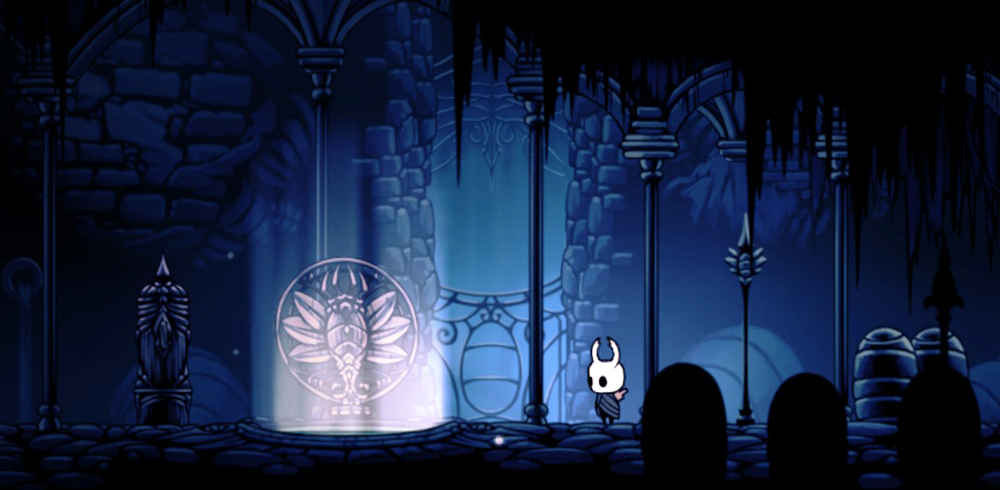
Firebird

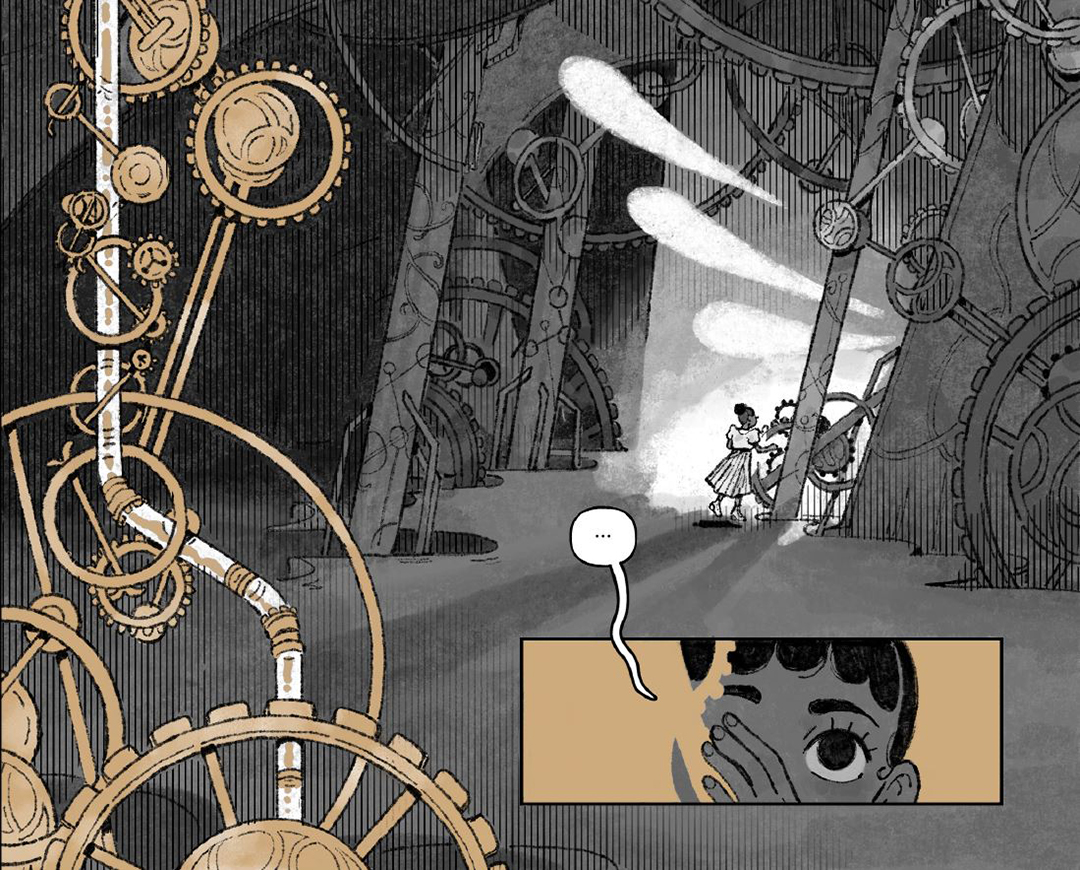
Firebird is a choice-based visual novel that takes about an hour and a half to play. The story is set in the northern borderlands of contemporary Russia, where a Hungarian migrant named Mariska makes her living as a freight trucker.

Since she’s in the country illegally, Mariska had to take out the loan for her truck, the Firebird, from a local mob boss. When she’s caught after trying to flee the boss’s territory without paying the interest on her loan, Mariska crosses paths with a strange girl in traditional clothing named Vassilissa, who promises great riches if Mariska will deliver food to her village in the far north.   

Your job as the player is to navigate between points on the map as Mariska and Vassilissa head steadily northward. There’s no backtracking, so you’ll have to choose between multiple routes while ensuring that the Firebird doesn’t run out of gas. The game is entirely text-based, and the elements of resource management are fairly chill.

More than anything, the gameplay is about roleplaying as you explore the dialogue options. It’s possible to die, but doing so will simply restart the game at a crucial choice. As the player, you’re mostly just along for the ride. And what an incredible ride it is.

At each point on the map along her route, Mariska is able to leave her truck and search for gasoline or money (which can occasionally be used to buy gas). The road is littered with the ruins of old villages and Soviet outposts, but a few of the waystations are still populated. The humans Mariska and Vassilissa meet are friendly, but the wolves and bears are another story entirely. To make matters worse, the mob boss has sent his henchman Ivan to pursue Mariska in his truck, the Gray Wolf.  

As you might have guessed from the character names, which are drawn from Slavic folklore, there are supernatural forces at play. Over the course of her journey, Mariska encounters various legendary characters, from the crafty witch Baba Yaga to the warrior princess Maria Morevna. The gradual shift from gritty realism into the realm of a fairy tale is a lot of fun, especially when the seemingly absurd advice offered by characters along the way begins to make perfect sense. Thankfully, Mariska is nothing if not pragmatic, and her no-nonsense attitude is exactly what she needs to get the job done.   

Firebird’s developers, Ludogram, are based in France, but they’ve devoted love and care to bringing the Russian setting to life. The luminous ligne claire artwork of Quentin Vijoux invites the player onto the northern tundra while conveying a strong sense of lingering twilight and freezing cold. Despite Firebird’s celebration of Slavic folklore, the game’s narrative makes no attempt to hide its criticism of the Russian state, especially the collusion between government and organized crime. There’s also a haunting scene with Soviet ghosts that I found genuinely chilling.

Although it’s possible to see an entirely different variation of the game’s story during a second playthrough by having Mariska drive through a different set of points on the map, the destination is always the same. No matter what path you choose, Firebird connects to universal themes as it acknowledges the cycles of nature – between winter and summer, and hardship and plenty, and faith and hard work. The bad times won’t last forever, Firebird suggests, and Mariska will keep on trucking.

Blackout

Blackout
https://freshgames.itch.io/blackout

Blackout is a Halloween-themed point-and-click adventure game that you can play in your browser or download for free.

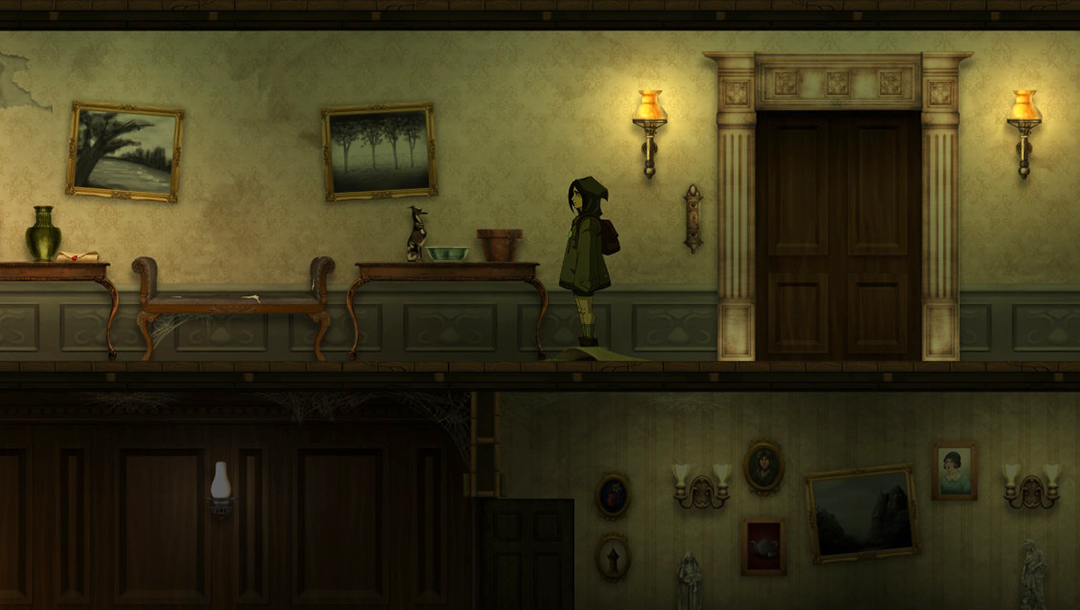
You play as a teenage witch who falls from the roof of a house while trying to snatch a feather from a crow. She loses her memory during her tumble to a second-floor balcony, and she’s surprised to find that the house is filled with corpses. The electricity seems to have been cut, and it’s too dark to see anything clearly. Your job as the player is to guide the witch through the haunted house and get the lights on so she can figure out what happened.  

Once the lights are back on, you’re free to explore the house a second time to see what’s actually going on. This is a super fun twist, and it’s what really sells the game for me. The tone completely shifts, and the ending is fantastic. I hope it doesn’t spoil the story to say that it’s just as much comedy as it is horror.  

Even though your character is in the dark, the game’s 16-bit pixel art is bright and colorful. Each room of the house is a pleasure to explore. There are enough points of interest to provide flavor, but the graphics are designed to help the important puzzle pieces stand out. The puzzles are mostly self-explanatory – use the footstool to reach the key on the shelf, etc. – but some are silly and surprising. The writing in this game is just as charming as the art, and I really enjoyed the time I spent in this weird little house.

Blackout probably takes twenty minutes to play if you know what you’re doing. Since there’s not much guidance, I got stuck a few times, and it took me about 45 minutes to finish the game. I’m grateful to ( this ) short video walkthrough on YouTube for helping me figure out the endgame puzzle, which is very clever but only makes sense in retrospect once the lights are back on.

Don’t Let Her In

Don’t Let Her In
https://flowerstudio.itch.io/dont-let-her-in

Don’t Let Her In is a free ten-minute horror game that you can play on a Game Boy Color emulator (such as mGBA) or directly in your browser on Itch.io.

You play as a teenager who hasn’t set foot outside the house in several weeks. Their father left a note on the kitchen table with a simple warning: Don’t let her in. As the player, you move through the house while interacting with various objects. You have one job, but you won’t be able to keep yourself safe forever.

Alternatively, you can ignore your father’s warning and invite the creepy woman inside the house as soon as she knocks on the kitchen window. This also leads to a satisfying story, although I’d recommend playing the game straight the first time around. The slow lead to the twist ending is wonderful, and having already experienced this twist makes the second ending much more satisfying.

The game’s graphics are simple but effective, and you might be surprised by how much body horror a few pixels can generate. The subtle worldbuilding is quite intriguing as well. There’s no good ending to this story, and its tone is bleak – there’s no irony or campiness, just horror. Don’t Let Her In may be short, but it’s remarkably effective at creating an atmosphere of loneliness and dread.

Summer Break

In December 2019, I printed a chapbook that contains my unofficial translation of Hiromi Kawakami’s “Summer Break” (Natsu yasumi), the second story in the author’s prizewinning 1998 collection Kamisama. This story has not been officially translated, so I created a translation of my own to use in my Japanese literature classes.

“Summer Break” is a Studio Ghibli style celebration of the magic of the natural world and a quiet meditation on coping with mental illness. The narrator spends a few weeks working at a pear orchard, where they unwittingly adopt a trio of small tree spirits. One of these creatures is humorously neurotic, and its anxiety for the future resonates with the worries of the narrator, who feels that the world is slipping away from them.

You can download a free PDF copy of the chapbook from Itch.io here:
🌿 https://digitalterrarium.itch.io/summer-break

The cover illustration was created by Koyamori, who goes by @maruti_bitamin on Instagram.

Silent Princess Zine Preorders Open

I’m proud to have contributed a nonfiction meta essay to Silent Princess, a fanzine celebrating Princess Zelda.

My essay, “The Wisdom of the Waiting Princess,” offers an empowering feminist reading of how the trope of the “captive princess” applies to the Zelda of the original 1986 game. My goal is to demonstrate that, while this Zelda is an action hero in her own right, her wisdom lies in patience, strategy, and the careful coordination of allies.

Silent Princess contains a sparkling treasure trove of essays, stories, comics, and illustrations, and I can’t wait for everyone to see the amazing work the team has created.

Preorders for the fanzine are open until January 6 on Bigcartel here:
🌟 https://silentprincesszine.bigcartel.com/

Chamomile Tea

Mila works as an editor at a publisher that specializes in art catalogs. While working late one night, she orders coffee, but the delivery service brings her chamomile tea instead. Not wanting to waste more time, Mila returns to her desk, but there was something strange about that driver…

I contributed a short story called “Chamomile Tea” to Caffeine Rush, an anthology zine that challenged participating writers and artists to create a caffeine-themed piece within the span of two weeks. My story is about a woman who’s so exhausted that she meets Death herself, and it’s loosely based on the experience of a friend who left a prestigious publishing job in Manhattan to go live in the woods. And honestly, good for her. 

If you’re interested, you can read a PDF of my story (here) and download the full zine from its page on Itch.io (here).

I Am Setsuna

I Am Setsuna, which was published by Square Enix in 2016, is a twenty-hour JRPG set in a beautiful fantasy world blanketed by snow.

You play as a young man named Endir, a member of a secretive tribe of masked warriors. Endir has been hired by a mysterious third party to assassinate Setsuna, a young woman who has been chosen as the sacrifice whose death will hold back the tide of ice and monsters plaguing the world for another decade. When Endir finds and confronts Setsuna, she tells him that she is willing to die, but she requests that he accompany her on her journey to the sacrificial grounds so that her death will have meaning.

The structure of the game follows a standard JRPG progression. As he follows Setsuna on her pilgrimage, Endir travels between an alternating series of towns and dungeons. Each new town has slightly nicer weapons, and the money gained while fighting monsters allows these weapons to be purchased. The player can also purchase accessories that can be customized with various materials dropped by defeated monsters, thus granting characters new and improved battle abilities and magic spells.

I am Setsuna takes its inspiration in equal parts from Final Fantasy X and Chrono Trigger, meaning that its combat system is simple, easy to pick up, and fun to experiment with. Your characters gain levels quickly, so you’ll never have to worry about grinding. To help keep battles engaging, the combat employs an optional system of timed button presses that enable attack bonuses.

About ten hours in, the game becomes more challenging. Enemies take longer to defeat and often damage your characters before they die, while the dungeons become twisting labyrinths of indistinguishable corridors. It shames me to admit this, but I had to buy the Japanese strategy guide to find my way through an endgame dungeon filled with teleporter traps. In addition, I’d have to say that the game’s story begins to lose its threads well before the ending, which is remarkably unsatisfying.

As I’ve gotten older, I’ve found that I care far less about finishing any given video game. The moment a game stops being fun, I put it down and move on to something else. This is less about frustration and more about appreciation. Even if I never beat a game’s final boss, I can still be grateful for the parts of it that I enjoyed. Once I’ve seen everything I want to see, I can feel satisfied.

For me, I am Setsuna is a perfect example of a game that’s wonderful to play until it stops being fun. Although I’ve finished the story twice in the past, I was happy to enjoy about a dozen hours during my most recent playthrough. I suppose that I could keep going and power through the segments that necessitate a walkthrough, but I don’t particularly want to. And that’s okay.

Over the course of the first twelve hours of I am Setsuna, you’ll traverse snow-covered forests, venture into mountain villages beset by blizzards, and explore sparkling ice caves. Along the way, you’ll fight winter-themed creatures such as snow rabbits, arctic foxes, walruses, and bears. All of your characters are bundled up in warm and comfortable clothing, and it’s a pleasure to spend time in the villages chatting with NPCs by the fire while admiring the dried herbs and patterned quilts hanging from the walls.

I’m a fan of I am Setsuna, but I’d recommend it in the same way I’d recommend an actual retro game like Ocarina of Time. It’s absolutely worth playing I am Setsuna to experience its atmosphere and charm, but no one should feel bad about walking away when it becomes difficult and awkward.  

An Unfound Door, Chapter 16

Fhiad reflects on the uncanny emptiness of Erdbhein Castle as he leads Agnes to the queen’s ruined chambers. While describing Erdbhein before the war, Fhiad tells Agnes about his three sisters, all of whom were highly competent administrators. Fhiad confesses that he dreamed of becoming a mage so he could return to Erdbhein to build monumental stone structures aboveground to rival the stonework in the long-abandoned city underneath the castle.

.

This chapter is about Fhiad processing his grief. It would be the perfect opportunity for an exposition dump, but Fhiad isn’t in a good mental state to deliver a lecture at the moment. Like Agnes, he feels like a failure, and he misses his family.

While Fhiad talks about the past, I hope the reader gets a sense of this character belonging to a much larger story. Unfortunately, Fhiad is never going to be able to live that story, and the reader isn’t going to hear much more about it, either. Fhiad mentions spending time in an ancient city in the mountains below Erdbhein, and tells Agnes that he went to university to study architecture because he always dreamed of building something equally grand aboveground.

That’s an intriguing detail, I hope. It adds another layer of foreshadowing regarding Agnes and Fhiad’s final destination, but the reader is never going to encounter another reference to Erdbhein’s history and culture. That’s what it means for an entire group of people to be destroyed; all of their art and memories and folklore are destroyed along with them.

Agnes is deeply disturbed by this loss, as she should be. Meanwhile, Fhiad’s anger regarding the destruction of Erdbhein has drained away, alongside his sense of agency. At the beginning of the story, he was furious and hostile and scary, but he’s become calmer and more introspective as the reality of his situation becomes clear.

Fhiad’s monologue in this chapter mirrors Agnes’s monologue at the beginning of the novel about how she’s the exact wrong person to handle a difficult situation. Agnes was doing something stupid (bringing a demon back to Faloren) because she felt that she had no power to halt her kingdom’s decline on her own. Fhiad was likewise attempting to do something stupid (stealing a relic that could turn back time) because he saw no other way to address what happened in the past. Fhiad knows that his mother or any one of his sisters could have been effective in restoring his kingdom, but he feels that he himself doesn’t have the power to do anything. And honestly, he’s right.

I think that’s a hard lesson to learn, that sometimes you’re just not the right person to fix a messed-up situation. Not everyone can be a hero. At the same time, if a broken situation can’t be fixed by normal people working together and trying their best while using the tools at their disposal, then perhaps the situation isn’t worth fixing.

In The Demon King, a novel I put on hold to focus on writing An Unfound Door, the main character finds himself in a situation that’s somewhat similar to what Fhiad’s going through. This character is going to succeed by virtue of being ten years older and completely unhinged, and his success will destroy him. Fhiad is going to fail, though. His failure isn’t without sadness, but accepting himself and the reality of his circumstances is going to be the best thing that ever happened to him.

The same goes for Agnes, who needs to understand that she can simply walk away from Faloren. The arc of her character development is longer and more complicated; but, from this point forward, it’s going to be Fhiad’s job to support her.

This chapter is relatively quiet, especially after the action in the previous chapter, but it’s the emotional turning point of the novel. So this chapter is about grief, but it’s also about two tired adults taking a much-needed break to have a nice date with delicious tea in a handsome ruined castle overgrown with beautiful bioluminescent flowers.

The illustration of Fhiad in this chapter’s preview graphic was created by the bold and brilliant fantasy illustrator Armd39, who posts dynamic and creatively textured artwork on Bluesky (here) and on Instagram (here). You can also find her commission info pinned on Twitter (here) if you’re interested. Arma was wonderful to work with, and the process of creating this illustration was a fantastic experience that easily added a few months to my life.

The Smile of the Mountain Demon

Liam is a budding content creator who specializes in guided meditation videos. Seeking to grow his following, he jumps at an Airbnb listing for a spiritual retreat in the Adachigahara mountains of rural Japan. At the end of a long journey, the stylish cabin enclosed within a verdant forest is everything Liam could hope for. The beautiful young woman who manages the property offers a warm welcome, but there’s something strange about her smile…

I was extremely honored to contribute to this year’s 13 Days Advent horror anthology. My story, “The Smile of the Mountain Demon,” is about a 21st century yamauba who entraps a YouTube influencer with Buddhist pretensions by using Airbnb and the language of New Age spirituality. The young man is looking for a scenic “spiritual retreat” to use as a source of content, and the yamauba is looking for a tasty snack.

This story is based on the medieval Adachigahara folktales in which a cunning yamauba entraps a less-than-devout Buddhist priest, as well as Minako Ohba’s beautiful and heartbreaking short story “The Smile of a Mountain Witch.”

If you’re interested, I’ve posted my story on AO3 (here), and you can download a free digital copy of the anthology via its page on Itchio here:

🌟 https://13daysadvent.itch.io/13days-demons-divinity

The illustration that accompanies my story was created by the brilliant dark fantasy artist Maxyvert, who posts strange and ethereal paintings on Tumblr (here), on Instagram (here), and on Twitter (here). This artist takes commissions for both digital and physical watercolor portraits (here), and it was an amazing experience to work with them.

An Unfound Door, Chapter 15

Now that Fhiad has taken the form of a demon boar, Agnes rides him through the mountain forest on the way to Erdbhein. They make quick progress, stopping only for Agnes to rest. As they approach Erdbhein Castle, Fhiad leads Agnes to an overlook from which she can see the overgrown ruins of the city in the valley.

At the cliffside castle’s back entrance, severely decayed husks emerge from what used to be a village that housed the castle staff. Fhiad is frightened, so Agnes dismounts and comforts him as she leads him across a bridge and into the castle’s rear courtyard. More husks emerge, and Fhiad is paralyzed with fear. Agnes forcibly reverts him to his human form, and they escape into the castle keep.

.

Based on the synopsis, you might think there’s fighting in this chapter, but the truth is that I dislike writing action. As much as I enjoy the choreography of cinematic fight scenes, I find prose descriptions of battles to be tedious. I always skim through action sequences as a reader. Why subject myself to this sort of thing as a writer?

In my defense, neither Fhiad nor Agnes is an action hero. Fhiad is an extremely cowardly demon, and Agnes wields a sword the way I imagine most people would, which is to panic and swing it around wildly. When she actually hits something, she’s horrified and disgusted.

Instead of a thrilling adventure, this chapter is more of an extended meditation on death and decay. In particular, I really enjoyed writing about the slow creep of the husks. My personal take on zombies is that they’re scariest when they take the “persistence predator” aspects of human physicality to an extreme. Fast zombies are a lot of fun! But slow zombies that just keep coming? That’s what really creeps me out.

On a more serious note, zombies are an indirect way to think through the indignity of certain types of death. An Unfound Door isn’t a political novel by any means, but I can’t deny that I wrote this story while watching a genocide unfold. It’s important to bear witness, I think. Still, I’m disturbed by the media spectacle of destruction, in which the victims of war are reduced to nothing more than their blunt physicality in order to sell an enticing narrative to a public that passively consumes death on television or online. As my academic work has (hopefully) demonstrated, I care deeply about these issues, and fiction is another way to explore the complications and consequences of an empire lashing out at imagined enemies as it crumbles from the inside. Let it suffice to say that I have a great deal of sympathy for zombies.

In any case, Agnes isn’t particularly afraid of husks, which she sees as pathetic but harmless. There are a whole lot of husks in this ruined castle, however, and Agnes has a difficult time shepherding Fhiad inside the keep while doing her best to keep both of them safe. Consequently, the main narrative breakthrough that occurs in this chapter is a demonstration that Agnes has become much more sensitive to Fhiad’s emotional state. I guess riding a man through the forest like a horse will do that.

The illustration of Agnes in the chapter preview graphic was created by Loustica Lucia, a bright and shining fantasy artist who posts colorful battle scenes and character portraits on Instagram (here), on Tumblr (here), and on Bluesky (here).