Social Media and Character Development

I got on Facebook in June 2007 but didn’t really start using it until July 2008. At the time, there wasn’t a well-defined code of Facebook etiquette, so I did what everyone else was doing. What everyone else seemed to be doing back in 2008 was posting tons of pictures of themselves and their friends on Facebook while tagging everyone involved, so I blithely jumped onboard. My friends and I were all young and beautiful, so everyone was happy and no one complained. When I posted a picture of myself and my classmates in March 2009, however, one of the people I tagged sent me a message asking me to take the photo down. I told her that I would just untag her, so she followed up to insist that I delete the picture entirely. I was a bit confused at first, but after another exchange of messages I apologized and did as she asked.

Now, of course, I would never post a picture of someone without asking for their permission first. Common standards of civil online behavior have evolved since Facebook went public in 2006, and I’d like to think that I’ve grown as a person and developed a more nuanced understanding of how social media works since then.

Earlier this year, someone sent me a link to a long comment my former classmate posted on a popular cosplay blog explaining how upset she was when she had to ask someone multiple times to remove a picture of her from Facebook. It’s likely that she wasn’t talking about me, but seeing her comment triggered my memory of this interaction. I’m not criticizing this person for being upset, because she had every right to be upset. The reason I’m telling this story is because it seems so strikingly obvious to me now that what I did then was thoughtless and wrong.

About a month ago, a friend of mine retweeted something that someone I used to know had written about a short conversation we had on LiveJournal at some point during 2012, when she was struggling with depression. I was also in a dark place at that point in my life, but my attempts to seek treatment had failed, so I was managing as best I could on my own. I therefore didn’t have any formal language to communicate my sympathy to her, so I left a comment on one of her posts saying something to the effect of “I hope you feel better soon, but in the meantime it sounds like you could really use a drink.” She sent me a long response telling me how insulting it was for me not to have taken her depression seriously, and how ignorant I was for not understanding that alcohol and anti-depression medication don’t mix. I apologized immediately but then, like an idiot, tried to excuse myself by saying that I didn’t mean to offend her – which is, of course, not something that someone who’s just been offended wants to hear.

Since then, there’s been an ongoing discussion on social media and in the broader culture about how conversations relating to disability and neurodivergence can and should play out. I now understand that the correct response to the situation I described above would have been for me to express concern at the escalating despair evident in my friend’s posts, to ask if there was anything I could do, and then to step away. I also recognize that it would have been appropriate in that situation to explain that I was speaking as someone who was struggling with depression myself. Talking about mental illness is always going to be tricky, and I don’t think there are ever going to be solutions that work for everyone. Still, it’s much easier to stay educated and informed about how to reach out to people who seem like they might need help in 2018 than it was in 2012.

Again, I’m not criticizing this person for complaining about the stupid thing I did, because what I did was obviously wrong. It was wrong of me to make a facetious remark about someone’s mental illness, just as it was wrong of me to post a picture of someone on Facebook without asking for their permission first.

I didn’t do either of these things out of a sense of malice; rather, I just didn’t know any better. That doesn’t excuse my behavior, of course, but I think this general situation is probably relatable to anyone who’s grown up along with the internet. We’re given rules about how to behave in real life, but we’re more or less on our own when it comes to figuring out how to be good people on social media. I think that, as a result, we’ve probably all done something that, in retrospect, was undeniably unkind.

After reflecting on these snapshots of my past self, there are two lessons that I want to take away. The first is that it’s important to learn from your mistakes and keep growing as a person. Second, and more specifically, it’s also important to give the benefit of the doubt to people who make stupid mistakes online. This is not to say that you have to perform emotional labor for everyone who insults you on the internet, because some people are just assholes. If someone does something offensive but seems to be coming from a good place, however, it can be useful to remember that it’s probably not personal. After all, social media hasn’t actually been around all that long, and we’re still figuring out the best practices for how to interact with each other online.

The Demon King

I spent the month of August working on my book project and two academic essays, but I can’t stop thinking about the novel I want to write. I’m starting to get a sense of the story progression and the major twists in the plot, and I’m also beginning to visualize a few of the dramatic high points. Although I’m sure I could (and I will) write pages and pages of chapter outlines and character details, what I’d like to do first is write something resembling a pitch. I’m still working on this summary, but I thought I’d share what I have so far…

    Plot

People say that a tall and terrible tower rises from the dark heart of a wasteland swarming with evil, and that a dark lord reigns over the monsters of his hideous domain from the top of this tower. Balthazar is that dark lord, and he’s doing the best he can. Despite his godlike power, he just can’t get people to stop pestering him with administrative annoyances.

The biggest thorn in his side is the kingdom of Whitespire, which is ruled by Princess Ceres. Ceres is beautiful, flawless, and adored by her subjects, but she has an unpleasant habit of sending “heroes” into the wasteland to fight the demon king. Balthazar is nothing short of invincible, and no ordinary hero has the slightest hope of defeating him. Ceres knows this, which is why she uses Balthazar as an excuse to rid her kingdom of dangerous upstarts and dissidents. Balthazar knows exactly what’s going on, but he tolerates it. In fact, he and Ceres are in regular communication. Although they get on each other’s nerves, the demon king and the princess are secret allies and perhaps even something resembling friends.

This state of affairs is disturbed by rumors that a hero has drawn the Dawnsword sleeping deep in the caverns under Whitespire Castle. This sword is an ancient relic believed to have been forged by the very goddesses who created the world. The rumors that a hero has drawn the legendary sword prove to be true, and before long this hero appears in the wastelands, demanding the right to challenge the demon king. Balthazar has the hero escorted to his tower, only to find that she is all of ten years old. The girl can’t seem to remember how she drew the sword, where she came from, or even her own name. Not knowing what else to do, Balthazar decides to care for her until he can figure out how to destroy the Dawnsword, which is indeed the only weapon capable of harming him. He calls the girl Hero, and the name sticks.

    Characters

Balthazar is a wizard whose power is without equal among mortals. He built the tower that rises over the wastelands through the sheer force of his will, and the scale of the monument has attracted other nonhuman races to the territories he has claimed. He is a competent administrator but not a particularly nice person. He’s called “the demon king” not just because of his fierce temper but also because he is a rare full-blooded demon. Despite being large and muscular, Balthazar finds violence distasteful and often leaves the dirty work of dealing with invading “heroes” to his four generals. His hobbies include dressing in flashy outfits and reading trashy romance novels. He’s in his late thirties but looks much older.

Ceres, the radiantly beautiful princess of Whitespire, is in her thirties but looks much younger, an illusion she goes to great lengths to maintain. She has inherited the magical abilities of the royal bloodline, but she’s careful not to draw attention to the true extent of her power. As the public face of the monarchy, Ceres seems to be a paragon of wisdom and virtue, but she employs a number of confidants to conduct her business from the shadows. In fact, Balthazar may be one of the least unsavory people who knows her true face. Ceres is constantly under a great deal of pressure, and she has a bit of a drinking problem.

Hero is a rude and savage girl of unknown origins who seems to be roughly ten years old. She managed to draw the sacred Dawnsworn that has been sleeping under Whitespire Castle for hundreds of years, but no one knew anything about her before she suddenly appeared at the castle gates claiming that she would be the one to defeat the demon king. Although Hero is generally good-natured, she fights with the skill of an experienced warrior, and she possesses extraordinary powers that tend to manifest at inopportune times. She worships and adores Ceres but only barely tolerates Balthazar.

Demon King Cares for Wayward Child

I’ve written a lot of fanfic during the past two years, and I just finished up a huge project that got some great feedback along the way.

I’m starting to think about “the next step” after fandom, and I think I’d like to get more into comics. I just approached two artists to ask about commissioning some short fancomics, which will hopefully help me get a bit of practice. I’m very nervous about this; but I also feel that, if I have good ideas and the resources to bring them to fruition, then I should go for it!

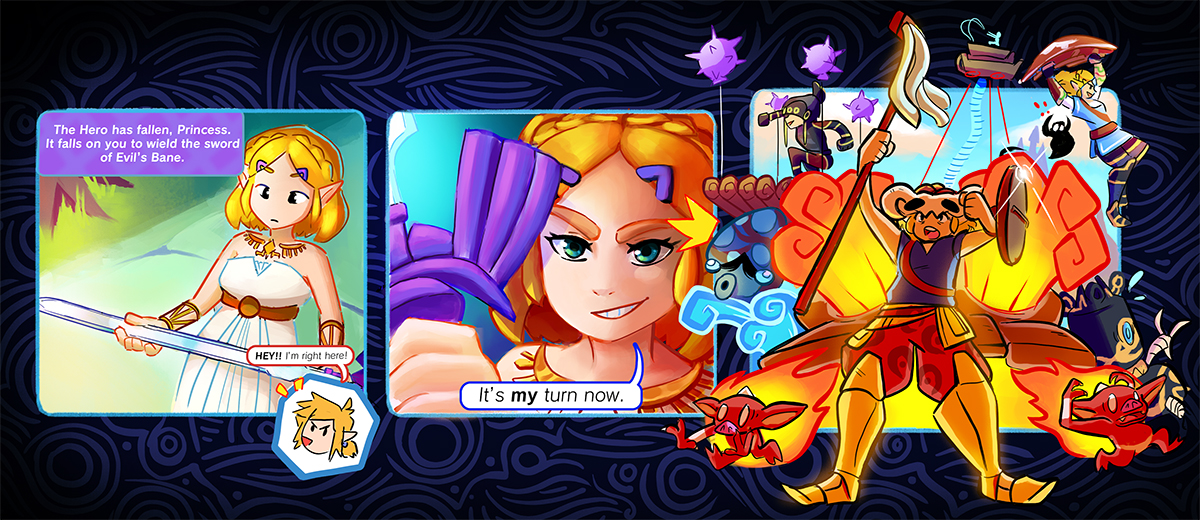
I’m also starting to think about original projects. I’ve been playing with an idea for a novel that I’m currently referring to by the title “Demon King Cares for Wayward Child,” and it goes something like this…

There is Demon King who looks like a huge buff meathead but is actually a powerful wizard. He lives in a tower in the wastelands of a high fantasy kingdom. There are nothing but ruins (dungeons and such) in this area, but the understanding within the kingdom is that he has taken territory that does not belong to him and is threatening the border. He does indeed have secret nefarious plans (involving elder gods or something of that nature), but he doesn’t really care about the kingdom at all and simply sees himself as keeping the peace by providing a sanctuary of sorts for other monsters.

One day a hero comes to slay the Demon King, but it turns out that this “hero” is a ten-year-old girl. She’s somehow managed to get her hands on a magical sword that could technically defeat him, but how it came into her possession is something of a mystery. In any case, it turns out that this girl doesn’t have anywhere else to go, so the Demon King decides to keep her with him in sort of a Dread Pirate Roberts “I’ll most likely kill you in the morning” situation. Not killing the girl turns out to be a challenge, as she’s headstrong and a complete savage.

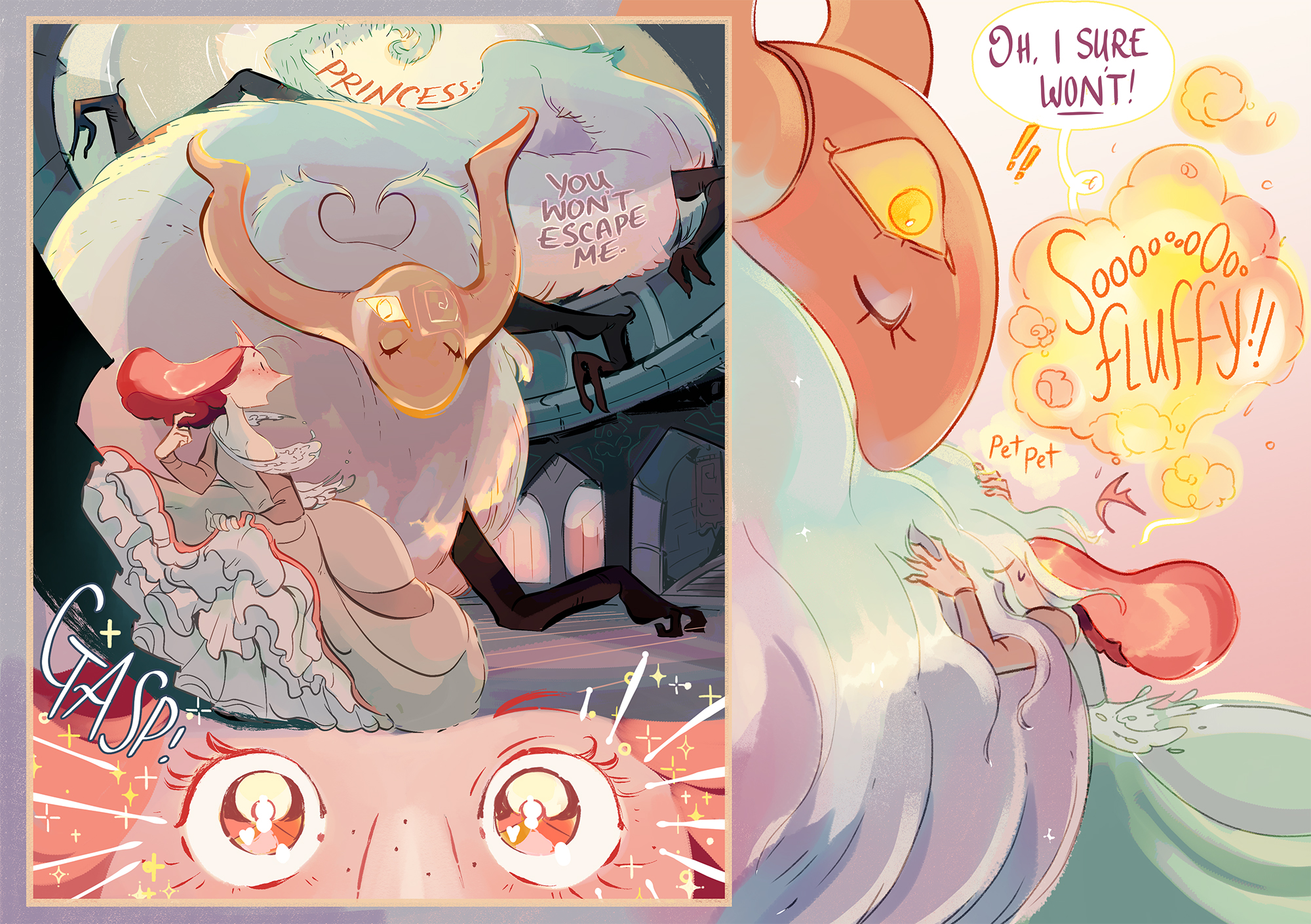
Meanwhile, the Demon King is corresponding (via magic?) with the reigning adult princess of the kingdom. The princess doesn’t particularly see him as a threat, but she also doesn’t want her kingdom to have to go to war with him. She’s been trying to put it off as long as possible, and in the meantime she blames everything that goes wrong on the Demon King. They are awful and catty and cruel to one another, and it’s very clear to their respective minions that they’re totally in love.

The four intersecting storylines are therefore the Demon King’s progress toward his secret nefarious plot, the identity of the child hero and the provenance of her sword, the growing tensions between the castle and the tower, and the love story between the Demon King and the princess. What pulls everything together, however, are the shenanigans of the child hero and the over-the-top angry responses of the Demon King.

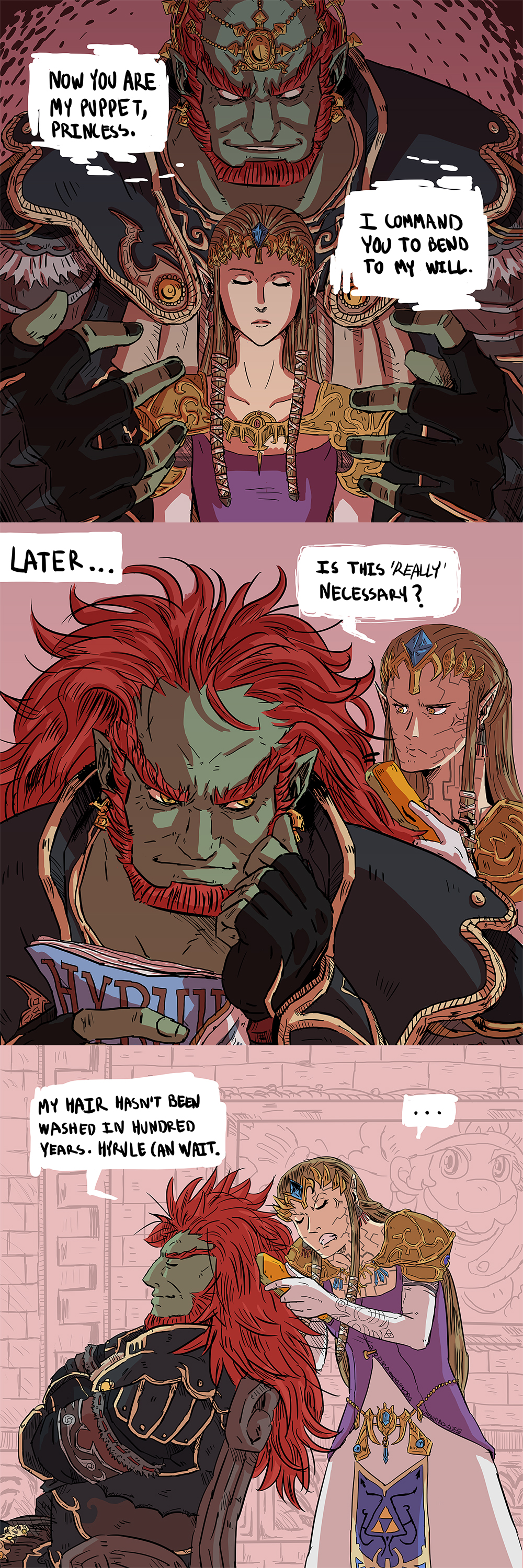
This still needs some polishing, as well as named characters and a better title, but I’ve been amusing myself by imagining the plot as a series of four-panel gag manga. Perhaps I could write both the novel and a comic strip simultaneously…?

The State of Airbnb in Japan

Nick Kapur has a great thread on Twitter about the controversy (or rather, the catastrophe) concerning Airbnb in Japan. This is something I’ve been following closely as it’s descended into true madness over the course of 2018, and Dr. Kapur gives an excellent summary of what’s happening and why it’s so upsetting. This perfect storm of xenophobia and irresponsible market capitalism is going to impact a lot of people, and it’s well worth taking a minute or two to read the thread all the way through.

https://twitter.com/nick_kapur/status/1004930586954420225

As a grad student friend of mine wrote in response to a Facebook post on the matter, “The big issue that [Kapur] doesn’t mention is that Air BnB has been a lifesaver for foreigners doing research in Japan for less than a year. Almost all Japanese housing contracts are for two years, and most home owners don’t accept foreigners (often being openly racist about their preferences). This leaves students and other researchers with extremely overpriced long-stay hotels, or with share houses that offer a dormlike setting with little privacy, often questionable living spaces, and sometimes a complete unwillingness to communicate with foreigners.”

Tokyo Travel Recommendations

I recently shared a list of recommendations with a student who will be studying abroad in Tokyo this coming school year, and I thought I’d share it here as well!

Two Resources

Tokyo Trend Ranking
This is a free magazine that you can find in most stations of the Tokyo Metro. It comes out once a month and is filled with photographs and information about unique and popular restaurants and pubs and cafés, as well as seasonal special events throughout the city. Because it’s meant to promote usage of the Metro, it always contains illustrated walking tours focused on one or two specific stations. If you want to explore the off-the-beaten-track neighborhoods of Tokyo, this is a great resource!

Suica Card
This is a refillable prepaid train fare card, and it’s the first thing you want to get when you arrive in Japan. You should probably go ahead and get one in the airport as soon as you get off the plane. You can get one at the automatic vending machines next to train stations, and the process is super easy. Your Suica card will work just about everywhere in Japan, and you can use it in all sorts of places, from convenience stores to movie theaters. If you’re feeling hardcore, you can link it to your smartphone and your bank account.

Seventeen Places to Visit

Tokyo National Museum
This is the big museum of Japanese art and culture that you definitely want to see. It’s in Ueno Park in northeast Tokyo, not too far away from the zoo.

Shitamachi Museum
This is also in Ueno Park. It’s a small museum, just the inside of an old house, but you can walk through it and see how people lived during the first half of the twentieth century.

Edo-Tokyo Museum
This indoor museum is probably the best place to go if you want to learn more about the history of the city of Tokyo. The architecture is really cool, and it’s a neat space to walk around. It’s also not too far away from Akihabara.

Art Aquarium
Fish and art and over-the-top spectacle. It’s really close to Tokyo Station, whose interconnected underground shopping streets are another blitz of sensory overload.

Maruzen Nipponbashi Branch
In my opinion, this is the best place to go in Tokyo for English-language books. Most of the English books they stock come from the UK, and they tend to be of higher quality than American publications of the same titles. These imports are expensive, though!

Meiji Shrine
The main shrine buildings are well worth visiting, especially because someone always seems to be getting married there. More than the shrine itself, however, the huge forested park is a great place to take a long walk while surrounded by nature. All of this is free, but I highly recommend paying the 500 yen entrance fee for the Inner Garden, which is especially lovely. Meiji Shrine is a major tourist destination, though, so you want to go early in the morning (probably as soon as they open the grounds) in order to avoid the crowds.

Nezu Museum
If you start at Meiji Shrine and walk along the Aoyama-dōri boulevard through Harajuku, you’ll eventually get to the Nezu Museum, which houses a private collection of Asian art. Even if you don’t care anything about sculpture and ceramics, the estate garden is gorgeous, and teahouse café at the entrance to the garden is a beautiful place to drink tea and eat cake and feel super fancy.

Aoyama Flower Market Tea House
This café is in the neighborhood of the Nezu Museum, and it’s one of the most beautiful interior spaces I’ve ever seen in my life. You definitely want to get there when they open, because they get busy! They have tasty salads, heavenly parfaits, and delicious teas. If you can’t get a seat here, the entire neighborhood of Aoyama is full of trendy little organic restaurants filled with beautiful young people. Even going into one of the Starbucks in this neighborhood will make you feel like a rockstar.

Sunshine Aquarium
This large rooftop aquarium has no redeeming cultural value, but it’s a cool place to spend an afternoon. If you watch a lot of anime set in contemporary Japan, you’re sure to recognize the setting! The caretaker talks showcasing the animals are a lot of fun to watch; and, since they’re geared toward children, they’re also relatively easy to understand. The Sunshine City shopping complex contains a Pokémon Center, a Studio Ghibli store, a Shonen Jump store, and other pop culture outlets. It also contains a Tokyu Hands, which is a great place to buy just about everything. The Tokyu Hands fronts the main outdoor shopping arcade, and they host small indie craft fairs at the entrance on the weekends.

Cat Café Nekorobi
This is right behind the Tokyu Hands, and it’s a warm space filled with softness and light. In my experience, it generally isn’t that crowded; and, although the cats are standoffish (but what can you expect, they’re cats), the staff and the other patrons are very friendly. What you really want to take your time with is the guestbook, which is an ongoing work of art. Also, this is the starting point of Otome Road, which is where you go if you’re looking for pop culture goods targeted at a female audience.

Shoto Museum of Art
This is a neat little art museum in Shibuya with some really cool gallery spaces. They exhibit a lot of early modern (Edo period) and modern (Meiji and Taishō period) art alongside contemporary work, and the architecture of the building is quite interesting as well.

Shibuya Botanical Center
This is a warm and happy healing space full of greenery. The entire building is suffused with humidity, and there’s free tea on the top floor. This is a great place to learn the Japanese names of flowers and plants, and it’s also a wonderful place to take selfies or pictures with your friends in soft diffuse light.

Mori Art Museum
This museum has some really cool exhibitions, which feature everything from avant-garde architectural photography to the work of popular manga artists. The gallery spaces are located at the top of a huge skyscraper, so the views of Tokyo from the windows are incredible. It’s located in the Roppongi Hills shopping complex, which is super trendy and also home to a large movie theater that shows a lot of American movies with subtitles. TV Asahi also has a presence in the area, so you can sometimes randomly encounter live performances of various Power Rangers and Doremon characters if you go during the afternoon.

Oedo Onsen Monogatari
This place is ridiculous. It’s an onsen theme park where you can go in and take all sorts of baths and eat all sorts of snacks and drink all sorts of beverages. A lot of people visit with their families, so it’s a good place to chill out in a yukata and watch people walk by. It’s in Odaiba, an artificial island in Tokyo Bay, so it’s kind of a pain in the ass to get to, but there’s a huge mall called VenusFort nearby that has an Italian-themed interior. The mall is an experience in and of itself, and you can often see brand-new idol groups performing there on pop-up stages.

Ghibli Museum
110% worth the hype. When you first enter, you’re allowed to watch a screening of an original short film, and your “ticket” is a tiny animation cell. You’d think that this place exists solely to sell you merchandise, but commercialism isn’t really the focus, thankfully. Still, you probably want to get a ticket for early in the morning before the crowds gather. You can only reserve a ticket in advance (usually at least a week in advance) from one of the digital vending machines in Lawson convenience stores, but the process isn’t really that difficult. Because of the scarcity of tickets, this is something you can only do if you’re in Japan for an extended period of time, so you should jump on the opportunity if you’re interested!

Yokohama Museum of Art
The building is awesome, and the exhibitions are always fantastic. The reason you’d want to make a special trip out to Yokohama, however, is because the museum is part of the Minato Mirai waterfront area, which is a huge upscale shopping complex and gourmet paradise. You can find the same sort of pop culture specialty chain stores (like the Pokémon Center) that are in Sunshine City in Ikebukuro, but Minato Mirai is way more classy and far less crowded over the weekend. Also, there are a lot of restaurants in the Yokohama Chinatown that have branches in Minato Mirai, and it’s usually much easier to get a table here than it is in the main branches.

Meigetsuin Temple in Kamakura
Why go all the way to Kyoto when you can go to Kamakura? You’ll probably have to go through Yokohama to get here, but it’s really not that far away from Tokyo, and the train ride is lovely. I recommend getting off the train at Kita-Kamakura Station and then walking to Kamakura proper along the main road while visiting a few temples along the way. Engakuji and Kenchōji are the two most popular sites, but my favorite is Meigetsuin, which is known as “the hydrangea temple” because of its stunning mountainside walking garden. Due to the natural beauty of the area and relatively low rent, a lot of artists live in Kamakura, and there are all sorts of small galleries and lovely cafés in and around the city. Once the weather gets warm, you’ll notice that the lifestyle magazines in convenience stores start featuring Kamakura locations on their covers, and it’s well worth consulting one for recommendations!

American Anime Conventions

Earlier this year an artist I know through Tumblr asked me about anime conventions in the United States, and I ended up sending them a long email based on my experiences and bits of gossip I’ve picked up here and there. This information is aimed at a professional artist who has already exhibited at a few regional conventions and has enough experience and polish to start aiming big, and I thought it might be useful to reproduce my message here, if only to preserve a snapshot of what the American convention scene looked like in early 2018.

Youmacon (in Detroit over Halloween weekend)
From what I hear, this con can occasionally be a bit of a dumpster fire in terms of its administration, but I’ve always had a good time there. Rooms at the convention center hotel are relatively inexpensive, and the attendance is always well over 20,000 people.

Katsucon (in National Harbor right outside of DC over Valentine’s weekend)
With around 15,000 to 18,000 attendees, Katsucon is a bit smaller than Youmacon, but it’s always run very efficiently. I’ve heard that the people who manage the Artist Alley are extremely professional, but the deadline for application is a bit early. The Gaylord Resort where the con is held is absolutely lovely, and the staff will take care of you if the con gets snowed in, which occasionally happens.

MAGFest (also in National Harbor right at the beginning of January)
A gaming convention that’s also held in the Gaylord. The focus is on indie games, but there is a relatively large Artist Alley, and I’ve heard that people can make a killing on commissions at this con. MAGFest is also an excellent place to make professional connections, not in the least because of all the industry people who hang out here. It’s a really fun event if you love games, because the exhibition space is all about people showing off their playable demos. A word of warning, though – most people behave themselves, but there is some hardcore drinking that happens at this convention. If it makes a difference, though, there’s always a diverse crowd in attendance, and it’s not just a bunch of gamebros.

PAX East (in Boston during the first weekend of April)
This used to be a sausage fest of truly epic proportions, but then the anime fans got their grubby hands on it and now it’s much more inclusive of all genders. Attendance is huge (way over 80,000 people), but I hear that the Artist Alley isn’t that competitive. They’re always looking for fresh talent!

Sakura-Con (in Seattle at the beginning of April)
Around the same size as Youmacon, but in Seattle! In my experience, Sakura-Con is a great way to make connections with the West Coast art scene, as the con is both well run and relatively laid back. Seattle is gorgeous in April, and it’s not as expensive as you might think, especially if you stay in one of the smaller (but much trendier) hotels a few blocks away from the convention center. My recommendation is Hotel Max, which will make you feel like a rockstar. If you’re interested in spending time in Seattle but want to forgo the insanity of a large convention, GeekGirlCon (in October) is a decent alternative, although with only 2,000 attendees it might be too small to be worth your while.

Otakon (in DC at some point during August)
The big East Coast anime convention, generally with around 25,000 attendees. It used to be in Baltimore, and you would always hear news reports about cosplayers meeting terrible fates, but it recently moved to beautiful downtown DC. The Artist Alley was huge in Baltimore, and it’s even bigger in DC. There’s always a wide range of artists who table here, from experienced professionals to students who are just starting out, and people seem to have a lot of fun.

Anime Expo (in LA over the 4th of July weekend)
This is the big one, and it’s always absolutely insane. You’ve probably heard stories about how crazy AX is, and they’re all true. Because the Artist Alley is so enormous, I hear that it’s not particularly competitive, and I also hear that people make a ton of money at this con. There’s none of the pressure or industry blitz of the San Diego Comic-Con, and it’s worth mentioning that artists from all over the world (especially from Asia) table here. Since most of the American anime companies are located in Southern California, there are also a lot of freebies floating around, as well as free world premiers of various shows and movies.

Toronto Comic Arts Fest (at the central Toronto library during May)
Clocking in at around 5,000 to 6,000 attendees, this is a good size for a comic convention, and it’s especially welcoming to artists in their twenties. Even though there’s a very strong focus on comics (as opposed to merch like prints and stickers), a lot of people show up with zines that they obviously photocopied and stapled themselves the week before the con. There are always a lot of interesting people and up-and-coming artists tabling here, and it has a warm and relaxed atmosphere.

Small Press Expo (right outside of DC in September)
This is the holy grail of conventions for people who want to be professional comic writers and artists outside the DC/Marvel studio system. This is where the Ignatz Awards happen (basically, you nominate yourself and then there’s an open ballot over the weekend, so it’s incredibly low pressure despite being such a big deal). This is where people get discovered, and this is how you get your first book deal. Because it’s relatively small, it’s extremely competitive, but the lottery system guarantees that even newcomers have a chance to get in. What most artists do is piggyback alongside a friend who gets accepted and then share their table, so it helps if you can convince other people to apply. The staff, the artists, and the industry professionals are all super friendly and supportive, and the bonds that people form here tend to result in high-profile comic anthologies that make tons of money on Kickstarter and launch people’s careers. SPX is definitely a goal to aim for!

Ten Positive Art Exercises

(1) Find a picture of a cute frog, and give yourself ten seconds to copy it. Do another copy in thirty seconds, and then another in a minute. Repeat the process with a second frog, and then draw it with your first frog. Now they’re frog friends!

(2) Draw a piece of your favorite fruit. First draw it whole, and then draw it in slices. Now draw it as a topping on a cupcake or a parfait or a slice of pie.

(3) Draw a leaf from your favorite tree, both rightside-up and upside-down. Now draw one of the seeds, berries, cones, or fruit from this tree. Now turn the leaf and the seed into a Korok!

(4) Draw a speech bubble saying “You’re awesome,” and then draw your first anime boyfriend/girlfriend underneath that speech bubble. For an extra challenge, you can draw them in both the artist’s original style and in your own style.

(5) Draw Gozilla with huge sparkling Steven Universe eyes, and then color your drawing using a palette randomly selected from a color palette generator (like this one).

(6) Draw a video game system or control pad that brings back good memories from your childhood. Now color it with super shiny pastel shades!

(7) Design a set of three to five simple stickers that you would love to have received as a child. Please consider: dinosaurs, knights, planets, mythological creatures, fairies, and mad scientists.

(8) Draw the monster from your favorite horror movie blushing and being shy and adorable. Remember, we’ve all done crazy things to get sempai to notice us.

(9) Buddhist hand gestures used to enhance meditative practice are called mudras. Run an image search and try to draw at least two left hands and two right hands in mudra positions.

(10) Draw a piece of inorganic trash, which can be anything: a soda can, a shoe that’s falling apart, a worn-out tire, a plastic bottle, a discarded toy, an empty cereal box, and so on. Now draw fresh green plant shoots growing out of it, and add one or two flowers if you’d like. New life always emerges from the ruins of old mistakes!

Writing Het Romance in Fanfic

The more I study shōjo manga, the more interested I’ve become in romance tropes. Based on about a month of observation throughout about two dozen fandoms on AO3, here are my notes on the sort of stories that get hundreds of kudos within the first day of being posted. I’m not judging, just observing:

(1) Ideally, one should be writing for a popular pairing in a popular entertainment franchise.

Even more ideally, the writer should also have a huge following on Tumblr because of their artwork. I actually think that the single most effective thing you can do to improve the reception of your writing is to develop your skill in visual art, but writing for a popular pairing definitely helps.

(2) The story needs to be at least 3,000 words, and 4,500 words is ideal.

The most effective structural balance seems to be 800 to 1,000 words of setup, 1,500 to 2,500 words of erotica, and maybe around 500 words of postcoital conversation. If an author can consistently put out a 4,500 word chapter of a slow burn novel every week (or, in a best-case scenario, twice a week), then the story has the potential to get massive numbers of hits and kudos, but intense sexual tension still needs to be incorporated every four chapters or so.

(3) The male lead needs to be scary.

If he’s murdered people, that’s good. If he’s murdered entire geographical populations of people, that’s even better. The idea is that he’s misunderstood and really a gentle person, but that he will only show this side of himself to his female love interest.

(4) The male lead needs to hate himself.

“I’m a monster,” he needs to think. “I’m a terrible, terrible monster, and no one will ever love me.” This is the cue for the heroine to step in and heal him with amazing therapeutic sex. She is special because her hidden depths allow her to see past all the murder. Basically, this is a way to flatter the reader, who also possesses hidden depths and is able to love the male character despite the fact that he’s scary.

(5) Both the male and female lead need to have tragic pasts.

Even if one or both parties haven’t been abused or mistreated in canon, they still need to bond and express vulnerability by revealing their secret trauma to one another. This creates feelings of mutual understanding and sympathy that pave the way for sexytimes.

(6) One or both parties need to feel intense guilt about their intimacy.

“No, I shouldn’t” and “No, we shouldn’t” are common phrases. One party needs to either convince or coerce the other party into a sexual situation. The “I’m a terrible monster” trope ties directly into this, especially if the male partner gets a bit angsty or violent. The more dubious the consent, the better. Obviously this is not a good model for relationships in the real world, but it’s precisely because it’s fiction that things can get a little rough and kinky without anyone getting hurt.

Again, I’m not judging, just observing. It’s easy to look at some of these tropes and pass them off as simple self-imposed misogyny, but I really don’t think that’s what’s going on in a lot of the fanfic I’ve read. Based on the quality of the writing, I also don’t think most of these authors are young and inexperienced. Obviously this is a very shallow summary of these narrative patterns, and I’m interested in conducting a more detail-oriented and nuanced study.

A Woman of a Certain Age

It’s so strange how Tumblr culture fetishizes youth, like, it’s all about promoting creativity and social justice until a woman is older than 21, at which she should really get a life and stop messing around in fandom. And this is especially bizarre because most of the content creators I know on Tumblr are in their mid-twenties to early thirties.

Instead of trying to fight this attitude, I’ve decided to embrace its weirdness wholeheartedly and start hardcore lying about my age.

From now on I am going to tell people that I am 57 years old and got into fandom when I retired.

…But actually, though. About a year ago I commissioned a drawing from an artist whose character designs I admire, and when I found out (from her profile on Paypal, of all places) that she has an online portfolio, I visited her site and realized that she had worked as a successful commercial artist for decades and decided to only draw self-indulgent fan art once she retired.

That woman is awesome, and I aspire to be exactly like her one day.