Night in the Woods, Part One

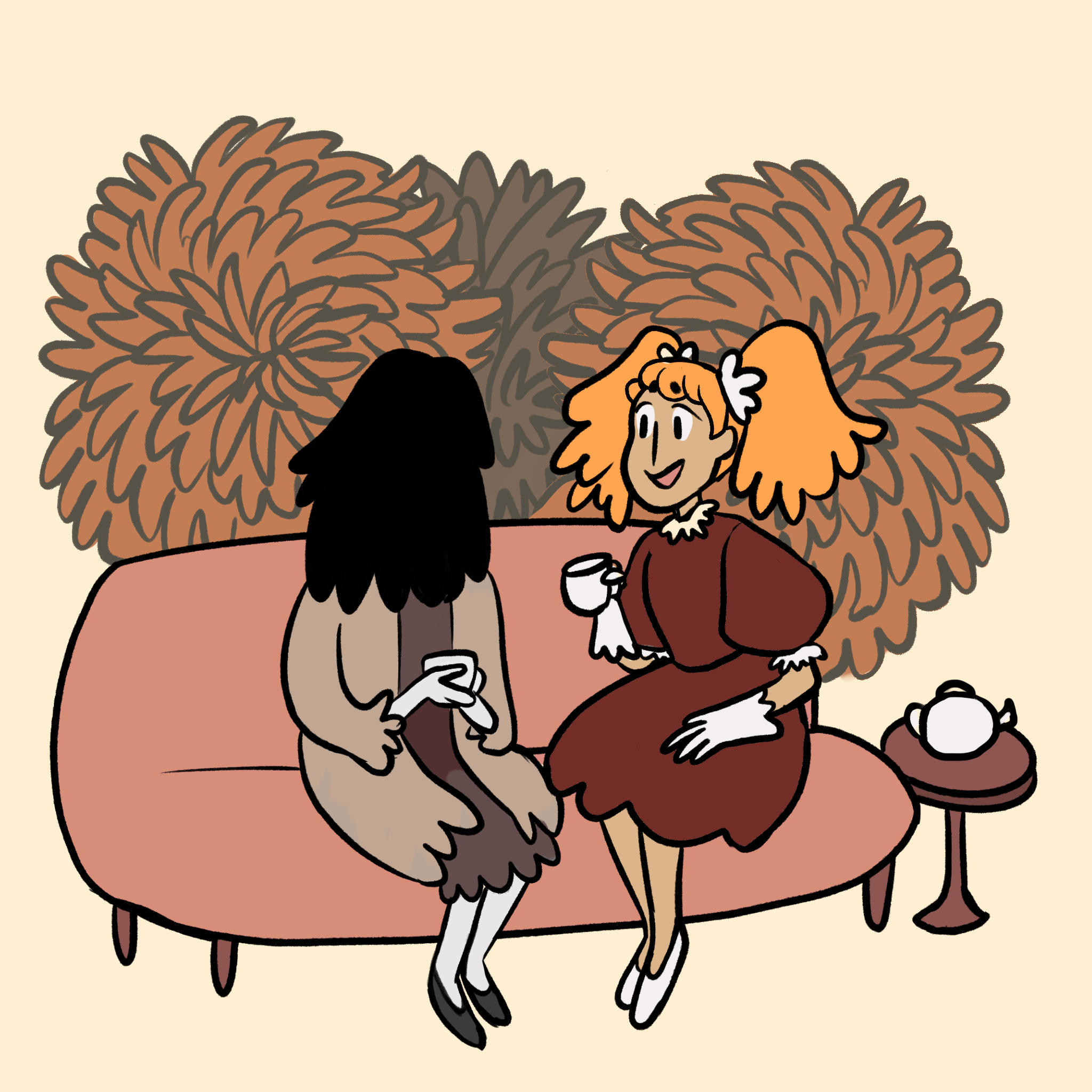
One of the things I find interesting about Night in the Woods is the relationship Mae has with her parents after she drops out of college and moves back home. There are a few moments of tension, but they’re resolved in a satisfying way; and, on the whole, Mae’s parents are kind and supportive.

I’m not sure how much I want to write about this, but my own situation with my parents and family was so dysfunctional and abusive that I had a lot of trouble understanding the relationship between Mae and her parents as “normal.” I kept waiting for Mae’s parents to show their real faces, but that twist never happened; both of them were kind and supportive for the entire game. It’s embarrassing to admit this, but most of my adult years have been an ongoing process of re-evaluating what “normal” relationships look like. Partially for this reason, I think Night in the Woods is incredible in the way it portrays an extraordinary range of relationships between different people. Even though none of the characters is a perfect model of what a person “should” be, the game contains a number of useful examples for what healthy interactions between different people can look like.

To put this into perspective, here’s an excerpt from a wholesome Tumblr post about good parenting:

And then one day the abusive father was angry at the mom, and tried to take it out on my friend, my friend got a call filled with insults and threats. It was scary and my friend got upset, I tried to comfort them but I really didn’t have good words to say. They later called their mom, and this is what the mother said:

“You are a perfect person, if anyone is talking to you like this, you can walk away.”

I remember just feeling complete awe hearing this, told from a mom, to a child. It even cheered me up. Those are the words we should have been getting from our parents. This is the correct attitude.

Night in the Woods has a cast of characters who are flawed but try to have this sort of “correct attitude” regarding the trouble in their lives. The overall atmosphere of the game is quite dark, but each of the characters shines like a small light. It’s useful to be able to identify signs of abuse, of course, but it’s also important to have access to models for healthy relationships, no matter how old you are or where you are in your life.

Hollow Knight

I’m a big fan of the aesthetic of Hollow Knight, and I got the collector’s edition from Fangamer when the game came out on the Nintendo Switch. I absolutely loved the first hour or two of gameplay. The world is gorgeous, the gameplay is a lot of fun, and the writing is lovely.

When I got to the first boss, however, I died. And then I died again, and then I died again. And then I died again. It’s not that this boss is particularly difficult; it’s just that it has a ton of health while you have relatively little. The fight is therefore an endurance test in which you can’t make any mistakes. This is particularly unpleasant because, once the boss starts breaking out new attacks and movement patterns, you’ve already been in the fight for a relatively long time and have probably already lost some health.

When I took to the internet to figure out what was going on, I found a lot of posts saying that Hollow Knight is a brutally punishing game, and that sometimes people can take hours to make it through a boss fight.

I then tried to search for “Hollow Knight easy mode,” and that was a mistake. Oh my, the “real gamer” discourse these children engage in.

I remember really loving Super Metroid as a kid. It was much too difficult for me and my small brain and tiny hands, so I used a Game Genie as something like a set of training wheels until I got good enough to play it on my own. I ended up spending more than a hundred hours playing the game instead of just one or two, and this hurt no one. I had a game, and I played it, and it was fun. I liked exploring the world and discovering its secrets while listening to the soundtrack; and, if this isn’t “how the developers intended the game to be played,” it didn’t matter, because my parents paid money for the game and I owned it.

This is more or less the same thing I’m interested in when it comes to Hollow Knight – exploring the world and discovering its secrets while listening to the soundtrack. Because of one boss fight at the beginning of the game, however, there’s no way I can do this. I now own a very pretty $70 game that I could only play for a little more than two hours, and it’s frustrating.

I wonder, would it really hurt the developers to include an easy mode?

We Don’t Live in a Patriarchy

In the spring of 2014, back when people still used Facebook, I came across a post from a male friend who was a grad student at a West Coast school known for its progressive social climate. He had put together a proposal for an event with a female grad student in his department. She sent the proposal to their department chair, who returned it with a brief comment saying that it was unprofessional of her to submit such a shoddy piece of work. My friend and his colleague therefore sat down together and rewrote the proposal. This time he submitted the papaerwork, and the department chair congratulated him and told him that their administrative assistant would be in touch soon to help set up the funding.

When my friend forwarded this response to the female grad student, she pointed out that, lo and behold, he had made a mistake and attached the first draft – the very same one that she had submitted the first time around.

My friend was upset, as he rightly should have been, that such an obvious display of sexism could happen at his Progressive Liberal™ institution. I replied with “I blame the patriarchy” as a comment on his Facebook post and then thanked him via DM for being a good ally and talking about this in a semi-public space.

I didn’t think too much about this exchange until I got a notification that someone had replied to my comment on his post. A white woman around our age, who was a grad student herself, wanted to let me know that she objected to my use of the term “patriarchy.” She threw the Merriam-Webster dictionary at me, saying that, if “patriarchy” is defined as a “social organization marked by the supremacy of the father in the family,” then we haven’t lived in a patriarchal society for a long time.

I literally saw red when I read that.

Within the space of ten minutes, I had posted more than a dozen responses to her comment, each of which cited and linked to accredited sources of statistics strongly suggesting the male dominance of various political, economic, social, religious, and cultural fields in the United States.

When I came to my senses, I sent a DM to apologize to my friend. He got back to me right away, saying that my responses were important and asking me not to delete anything. I thanked him again and then took a nice long break from the internet.

I was still upset a week later, though, so I copied all of the text from my responses to that comment on Facebook and made a zine that I called “We Don’t Live in a Patriarchy.” Several dozen of my friends (and friends of friends) wrote to ask me for a copy. I also took copies from three print runs to Quimby’s Bookstore in Chicago within the span of two months, and I sold out of all the remaining copies almost immediately after I put them on Etsy. I think I probably ended up giving away or selling more than a hundred copies of this zine, which I found surprising, especially given how quickly put together and cheaply made it was.

The world has changed since the spring of 2014, but not as much as you’d expect, and not always in a sane and reasonable way. I’ve considered updating this zine several times, but I always decide against it. The truth is that I dislike being angry. I feel like anger is a tool that no one person can hold for an extended period of time, so it gets passed from one feminist to the next like a baton. I made my angry feminist zine back in spring 2014, and now it’s time for me to step back so that the next group of young people can speak and be heard.

Horror Haiku

In the spring of 2014, I made a half-letter size photocopied zine that collected thirty horror-themed haiku. I had so much fun putting it together that I made a second issue the very next week. I was teaching at Notre Dame that year and driving to Chicago practically every weekend to stay sane, and I spent a lot of time at Quimby’s Bookstore in Wicker Park. I took a handful of zines to Quimby’s to ask if they would take them on consignment, and they agreed. This turned out to be an incredibly transformative experience for me.

I was expected to teach a course on Japanese cinema during the spring semester, so I spent the summer and fall reading recent issues of about half a dozen different Cinema Studies journals from cover to cover. There are a number of excellent independent theaters in Philadelphia (and Tokyo), so I’d watched a lot of movies during grad school. I was excited about movies, and I was excited about Cinema Studies. I was also high off the experience of having finished my dissertation, so I ended up being very productive and writing a handful of essays about horror movies, which I sent to the specific journals whose articles and general editorial voices inspired me.

Everything I wrote was rejected without even going to peer review. Because the editors felt no need to be anonymous, they told me exactly why they rejected my work, and I knew exactly who they were.

Basically, I am gay and I love monsters, and I was looking at horror films from the perspectives of Queer Studies, which was a major focus of my dissertation, and Disability Studies, which was just starting to emerge as a discipline at the time. What one older straight white man after another told me was that, while my essays were well-written and skillfully argued, I lacked the “critical distance” necessary to engage in serious scholarship in Cinema Studies. Also, because I was writing about East Asian cinema, DO NOT GET ME STARTED on the racism I encountered. (I’m especially looking at you, British academics.)

I should have pushed back or tried to reach out to other female and female-identified scholars who wrote about East Asian cinema, but what I ended up doing was crying. I cried kind of a lot, actually. I cried and watched movies and wrote a bunch of horror haiku, which eventually became these two zines.

When Quimby’s agreed to put my zines on the shelves of their store, it gave me the courage I needed to keep writing. It’s not that my work wasn’t worth being read; it’s that I was trying to get it past the wrong gatekeepers. Once I realized that a smug rejection from some narrow-minded older white man didn’t mean that there was something wrong with my writing or scholarship, I started submitting to different venues and, thankfully, getting my work published.

Zines have historically served as a platform for minority voices that have been denied expression in mainstream and more traditional venues, and that’s how they worked for me. Honestly, Quimby’s Bookstore probably saved my academic career. Be gay! Make zines!!

Both of these zines have long since sold out, but you can still find my old horror haiku (here).

My Mother’s Cats

My first zine, which I put together in the spring of 2014, was made with a single sheet of copy paper and a construction paper cover. It had eight pages with simple illustrations of my mother’s cats.

My mother has (and has always had) twenty cats. When I went home for Christmas in 2013, I took pictures of them in an attempt to learn their names. I wasn’t successful, but the photos turned out to be useful references.

This was a fun zine, but I don’t think I’ll make any more of them. I no longer have access to a photocopy machine, and using scissors and a glue stick to create the cover by hand doesn’t seem as exciting and creative to me now as it did five years ago.

I’m thinking of making another zine with actual photographs, though. Caring for twenty cats may seem extreme, but my mother is very good at it. All of her cats are gorgeous, and they’re very photogenic.

DC Zinefest 2019

I tabled at the DC Zinefest this past Saturday, and it was a positive experience.

I sold out of almost all of the zines, bookmarks, and stickers I brought, and I was able to use that money to buy zines from the other people tabling at the event. I love zines, and I love the subculture surrounding zines. It’s good to support other writers and artists, and it’s always nice to smile at someone and look them in the eye and tell them how much you value and appreciate their work.

The Zinefest staff were wonderful. I tend to get overwhelmed by the crowd at events like this, so it’s important for me to be able to step back and spend a few minutes in a relatively calm space. I think the people who organize DC Zinefest understand that everyone needs a quiet place, so they set aside a small, screened-off area at the back of the room where people could chill out for a bit without bothering anyone.

My experience with anime conventions has been that the staff are primarily focused on crowd control and therefore operate under the assumption that aggressive confrontation is the best way to minimize trouble. This has led to some awkward situations when I’ve given panels at anime cons, so I appreciate that the DC Zinefest staff took it for granted that everyone who participated was a responsible adult, and I’m grateful that the organizers were willing to provide simple accommodations in good faith.

This was the first time I’ve tabled at an event like this, and here are some things I learned:

– It’s good to have some sort of vertical display for your zines. I’m not a huge fan of the elaborate fortresses constructed by some of the professionals who table at anime and comic conventions, but a low-key vertical display uses space efficiently and helps catch the eyes of people casually walking through the room. I’ve seen a lot of variations of these displays, and I get the feeling that a lot of structures are made by the artists themselves. I only trust myself enough to put together Ikea furniture, so it might be worth looking into where to buy a premade display if I table at an event like this again in the future.

– It’s good to incorporate short written descriptions of each zine into your vertical display. Some people used sticky notes, some people used index cards, and some people crafted display notes by hand. They were all cute and creatively presented, and they were useful to me when I only had a limited amount of time (and money) to look at other people’s tables.

– Along with written descriptions, it’s good to rehearse at least two different elevator pitches for each zine. It’s important to design zine covers that are able to speak for themselves, of course, but it’s also important to engage the people who stop by your table. A few people asked me questions that I didn’t know how to answer, and it would have been helpful if I could have said a sentence or two about the zine as a response, even if my description didn’t directly address what they were asking.

– A lot of people who stopped by my table were a bit awkward. That’s totally understandable, since going up to an artist’s or writer’s table is an awkward situation that takes some experience to get used to. Since I can sometimes be a bit awkward myself, I think it might be good to practice a few simple conversation starters, such as “I like your shirt” or “Do you like video games?” as preparation. It sounds silly to have to practice small talk, but I found that I got better at it with each passing hour. I was downright friendly by the end of the event, which makes me think that practice and experience probably help smooth over some of the awkwardness of this particular social interaction.

– It’s good to table with a friend, or at least to have someone who can drop by for an hour or two and give you a chance to walk around and stretch your legs. The floor layout of DC Zinefest is well organized and has enough room for people of all sizes, but I still think it’s a good idea to apply for a half table (instead of a quarter table) if you have more than one or two zines. If nothing else, a half table comes an extra chair, which means that anyone who comes with you will have a place to sit if they (or you) need it.

The only slightly critical thing I have to say about this experience is that I had a bit of trouble with some attendees – all adult men – who wanted to buy something for $1.00 and insisted on paying with Venmo. If you’ve never used Venmo, it’s a money transfer service that allows smartphones to communicate via QR codes and thereby complete transactions quickly, usually within five to ten seconds. What a few people (about one per hour) did was to make a big deal about having trouble with Venmo. They would make a scene and refuse to let me direct the transaction from my end, and I got the impression that they might have been trying to pressure me into giving them what they wanted for free. I understand that sometimes money transfers can be tricky, and I understand that sometimes QR codes don’t scan, but this happened so many times that I started to suspect something bigger was going on, especially since all of these Venmo “problems” were solved immediately as soon as my male tablemate stood up, spoke to these men at eye level, and told them that they could try transferring the payment to his account instead. The idea that grown-ass men would try to use some sort of stupid “my Venmo doesn’t work” scam to get a $1.00 sticker or bookmark for free at a local zine fest makes no sense to me, but something weird was going on.

Anyway, that’s another reason why it’s good to table with a friend – so that someone can play “bad cop” if an interaction seems as if it’s heading in a difficult direction.

Those minor instances of strangeness aside, I had a fantastic time. The organizers knew what they were doing, the staff was great, my fellow tablers were lovely, and the event was a huge success. I’m truly grateful that I was able to table at the DC Zinefest this year. I met some cool people, I made some good trades, and I came home with a bag full of interesting zines. I’m looking forward to next year!