Review of Hero Cave on Comics Beat

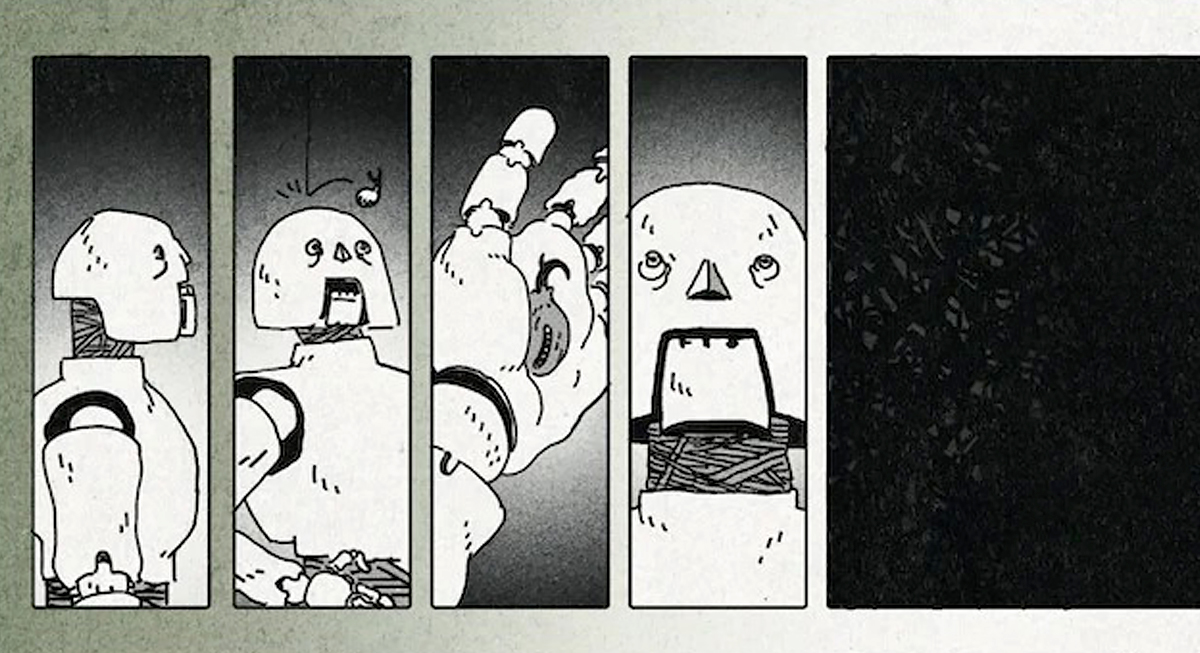
My review of Hero Cave, a dark fantasy comedy, was recently published on Comics Beat (here). This graphic novella is only about fifty pages long, but it’s surprisingly powerful and cathartic. Here’s an excerpt from my review…

It’s easy to look down on NPCs, the “non-player characters” who seem shallow and uninteresting when compared to the protagonists. It’s not so easy to realize that, in certain aspects of your life, you’re not much better than an NPC yourself. In Player vs. Monster: The Making and Breaking of Video Game Monstrosity, Jaroslav Ŝvelch explains how the construction of monsters in Dungeons & Dragons reflects the concerns of the white-collar managerial class. To the dungeon master, even a creature as miraculous as a walking skeleton is little more than a series of numbers to be entered into a spreadsheet. Given how frequently we’re all reduced to data points — by social media algorithms, by insurance companies, and certainly by employers — perhaps it’s worthwhile to extend a bit of sympathy to a low-level skeleton.

You can read the full review on Comics Beat here:
https://www.comicsbeat.com/graphic-novel-review-hero-cave/

As an aside, Hero Cave features a type of nonbinary representation that I love to see. Waifishly thin models with stylishly androgynous faces are all well and good, but it’s frustrating that only attractive and nonthreatening “childlike” body types are commonly understood as being nonbinary. I believe we should have a bit more range in our representation, while also not limiting ourselves to conventional notions of “humanity.”

Why, for example, does a cartoon skeleton need to fit into a binary notion of gender? Also, if a character is an undead eldritch monstrosity, it’s silly to think that their nonbinary gender identity is the most interesting thing about them. Hero Cave demonstrates a refreshing lack of concern for the gender of its skeleton protagonist, but that doesn’t preclude the possibility of queer sexuality serving as an escape from the restrictive confines of hellworld capitalism. I didn’t want to get into this aspect of the book in my review, but it’s brilliant, and it means a lot of me personally.

Miaow: A Cat Zine

I’m excited to share a charmingly cozy and delightfully fluffy murder mystery story with Miaow: A Cat Zine. All proceeds from this digital zine will be donated to RAPS Cat Sanctuary, and preorders are open until September 5.

You can learn more about the zine and order a copy on their site here:
https://miaowzine.carrd.co/

The story I contributed to the zine, “Angus and Peaches Get Away with Murder,” is about two cats who do exactly what the title suggests, but it’s also about two pairs of humans – the two women who benefit from a wealthy man’s death, and the two freelance detectives who investigate the incident. As much as I appreciate lone-wolf genius criminals, I thought it would be fun to write a story in which every character conspires in the murder in some fashion.

The two nameless detectives are modeled on Sherlock Holmes and John Watson, whom I’ve brought forward into the twentieth century. Something I’ve always admired about Sherlock Holmes is his strong sense of compassion, which occasionally overrules his sense of justice. There are a number of cases (“A Scandal in Bohemia” is my favorite) in which he allows the person who committed a crime to get away with it if he believes this will be the best outcome. I really enjoyed writing the scene in this story where the Holmes character just kind of shrugs and says, “What are you going to do, try a cat for murder?”

What he doesn’t know is that Angus and Peaches are unrepentant fiends, and that they would happily get away with murder again. I love all cats on this earth, but I truly believe that this is the sort of creature they are. Cats are all tiny little devils, and that’s one of the many things I admire about them.

Essay about Deltarune on Sidequest

I recently had the immense pleasure of writing an article about the latest chapters of Deltarune for Sidequest. This piece features some story analysis and theorizing, as well as a personal anecdote about an extremely awkward moment during my job search in my last year of grad school, but it’s mostly about the joys of retro media and the lost art of having fun. Here’s an excerpt…

Nostalgia is a difficult subject to approach. Cultural nostalgia, which often takes the form of a glorified version of an earlier decade, is a hallmark strategy of conservative political movements that attract sympathy by engendering a fantasy of a time when, supposedly, things were better. Nostalgia for childhood media can be fraught as well, especially when we view the more problematic aspects of this media from an adult perspective.

Still, nostalgia has its uses. When approached with care and attention, indulging in nostalgia can be an exercise that facilitates a rediscovery of play. In its celebration of the television and video games of an earlier era, Chapter 3 of Deltarune invites introspection into the aspects of play that a younger version of yourself understood to be “fun.”

You can read the full essay on Sidequest here:
https://sidequest.zone/2025/08/04/deltarune-remembers-how-to-have-fun/

As an aside, my corner of video game fandom spent the month of July going wild for the character Tenna, an anthropomorphic personification of a CRT television who plays a central role in Chapter 3 of Deltarune. Tenna’s status as the Summer 2025 Tumblr Sexyman is partially due to his eye-catching visual design and flashy personality, but I also get the feeling that his near-instant popularity was due to the way he speaks to a particular type of cultural malaise.

As a consequence of the concomitant collapse of social media platforms and the proliferation of AI-generated “content,” everyone is exhausted by the effort it takes to wade through (and compete with) soul-numbing machine slop. What Tenna represents is an era of media that, though it might not have been “good,” was at least intentional. My essay doesn’t touch on specific issues relating to gen-AI, but I was directly inspired to write this piece by the very enthusiastic reception of the recent chapters Deltarune in online creative communities. There’s definitely something interesting going on there culturally, I think.

Review of Bramble on Comics Beat

My review of Hollow Press’s newest publication, Bramble, was posted on Comics Beat!

Hollow Press is an Italian micropress that publishes strategy guides for dark fantasy adventure games that don’t exist. Their most well-known book is Vermis (which I wrote about here), but I think Bramble is probably more accessible to a wider readership. It’s very weird and creative, and the art style is a lot of fun. Here’s an excerpt from my review…

Bramble is a worthy successor to Vermis, and the book proudly stands on its own as an accessible introduction to the emerging genre of original strategy guides. Its story is driven by the forward momentum of a traditional graphic novel and augmented by the intriguingly fragmented worldbuilding presented by digital RPGs. As a physical object, Bramble also suggests the nostalgic mystery of forgotten media, and the reader can easily imagine coming across this book hidden in the back of a closet or buried at the bottom of a box at a flea market. 

You can read the full review on Comics Beat here:
https://www.comicsbeat.com/graphic-novel-review-bramble/

Dark Souls Fandom Essay on Sidequest

“The Softer Side of Dark Souls Fandom,” my essay about a major shift in internet culture, was published on Sidequest. Everybody loves Bloodborne and Elden Ring now; but, ten years ago, FromSoft fans were a fairly isolated group, not to mention some of the most hateful people I’d ever encountered online. At about 1,400 words, this piece is far shorter than it should be, but I still had a fun time writing about how FromSoft fandom has become much more welcoming and inclusive over the past decade. Here’s an excerpt:

I’ve put untold hundreds of hours into Dark Souls and its sequels. When the game first came out almost fifteen years ago, however, there was nothing I hated more than Dark Souls. I refused to play it. I associated the game with the worst people on the internet, who spewed hate while using Dark Souls memes to shame and attack anyone they felt challenged the hegemony of their male-dominated subculture of video game fandom.

I therefore feel an ironic pleasure in the fact that, these days, Dark Souls and the other FromSoft games have been embraced by women and the queer community, the exact people these angry online gaming communities loved to hate. In a strange twist of fate, the games weaponized to mock diversity have become a sanctuary for many of the people who were once excluded.

You can read the full essay here:
https://sidequest.zone/2025/07/14/dark-souls-fandom/

An earlier version of this essay was published in Act Your Age, Vol. 2: Dark, a fandom memoir anthology zine that you can check out (here).

I decided to publish this piece online when the host of one of my favorite video game podcasts, Bonfireside Chat, came out as transgender. Since she’s not really a public figure, I don’t mention her in the essay itself, but her announcement made me incredibly happy. Regardless of gender and sexuality, I hope everyone can find a place where they feel accepted and supported in their interests… even if their interest is in dark fantasy games about dying in all sorts of grisly and horrifying ways!

The Wisdom of the Waiting Princess

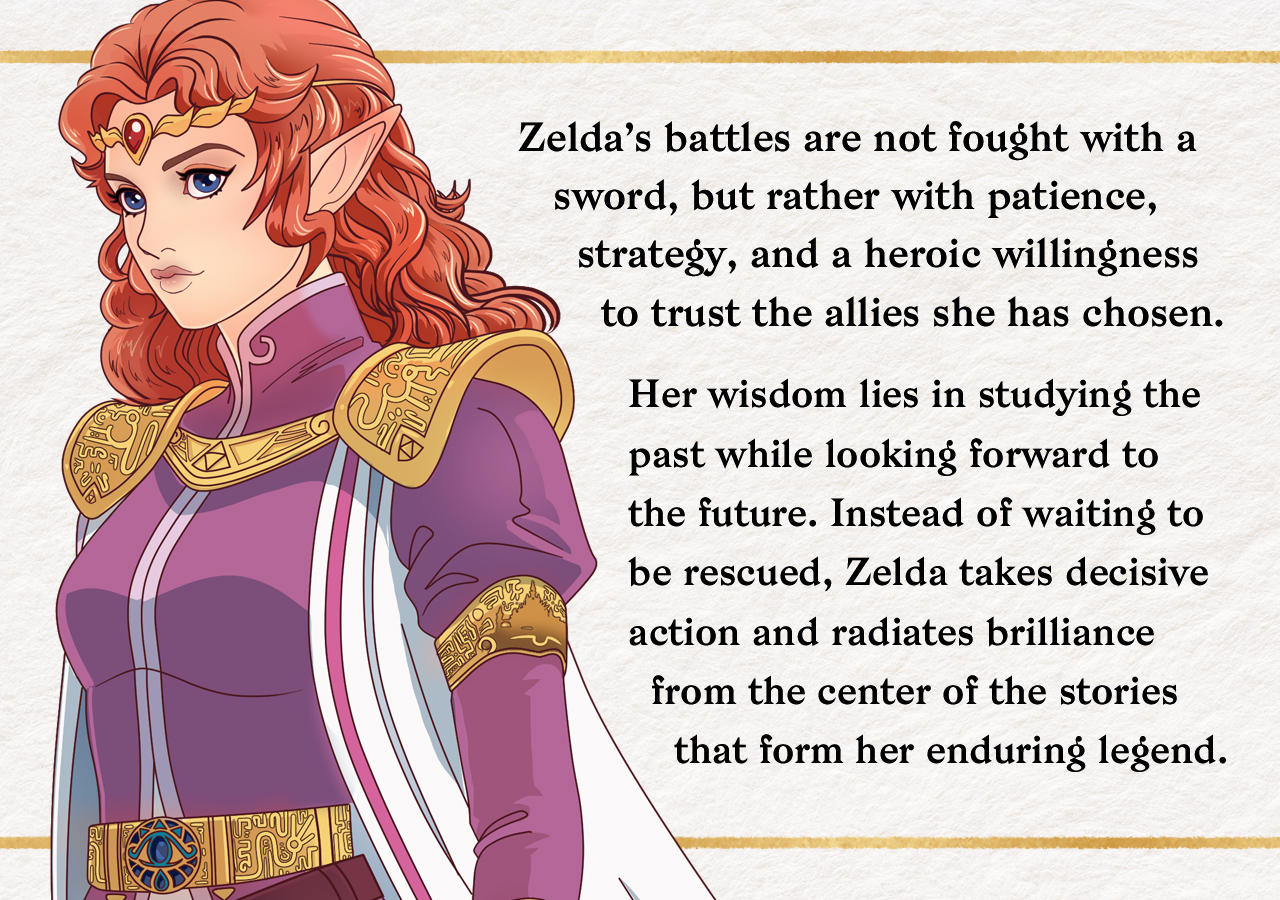
The Wisdom of the Waiting Princess is an empowering feminist reading of how the trope of the “captive princess” applies to the Zelda of the original 1986 game. While this Zelda is an action hero in her own right, her wisdom manifests in her remarkable ability to lay plans for the future.

You can read the essay on AO3 here:
https://archiveofourown.org/works/67410167

I had the honor of contributing this essay to Silent Princess: A Zelda Zine. The zine’s website is on Carrd (here), and you can check out the art and writing featured in the zine on its Tumblr site (here). Leftover sales of the zine merch are currently open (here), and you can still pick up a digital copy of the zine (here). All profits from zine sales will go to support Doctors Without Borders.

This original design for Princess Zelda was created by Hollarity, who put an incredible amount of love and care into portraying the character as a courageous young woman who is fully capable of going on her own adventures. You can find more of Holly’s gorgeous artwork on her website (here).

Review of Model Five Murder on Comics Beat

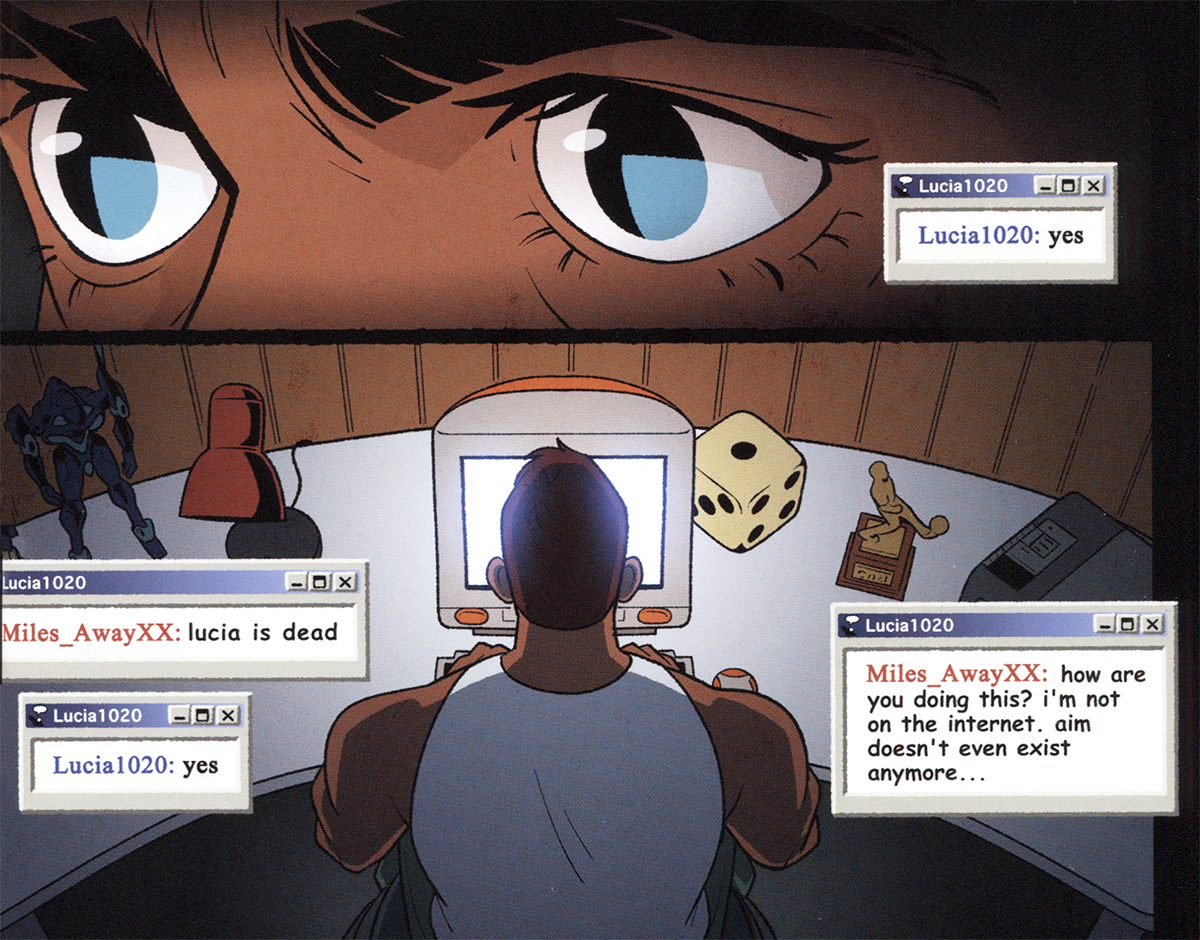
I really enjoyed Tan Juan Gee’s Model Five Murder, which was just published by Silver Sprocket. This graphic novella is an intriguing sci-fi noir mystery with stylish art that investigates the issues of AI, technology, and labor. I’m very lucky to have been able to write a review for Comics Beat. Here’s an excerpt…

Model Five Murder is a thematically rich murder mystery that plays with the question of whether concepts like “victim” and “murderer” have any meaning in a situation involving artificial life and artificial intelligence. If memories and consciousness can be transferred between bodies, is it murder to shoot an android? If androids are proprietary technology owned by a corporation, who has the legal right to make decisions about their bodies?

You can read the full review here:
https://www.comicsbeat.com/graphic-novel-review-model-five-murder/

Escaped Chasm

Escaped Chasm
https://tuyoki.itch.io/escaped-chasm

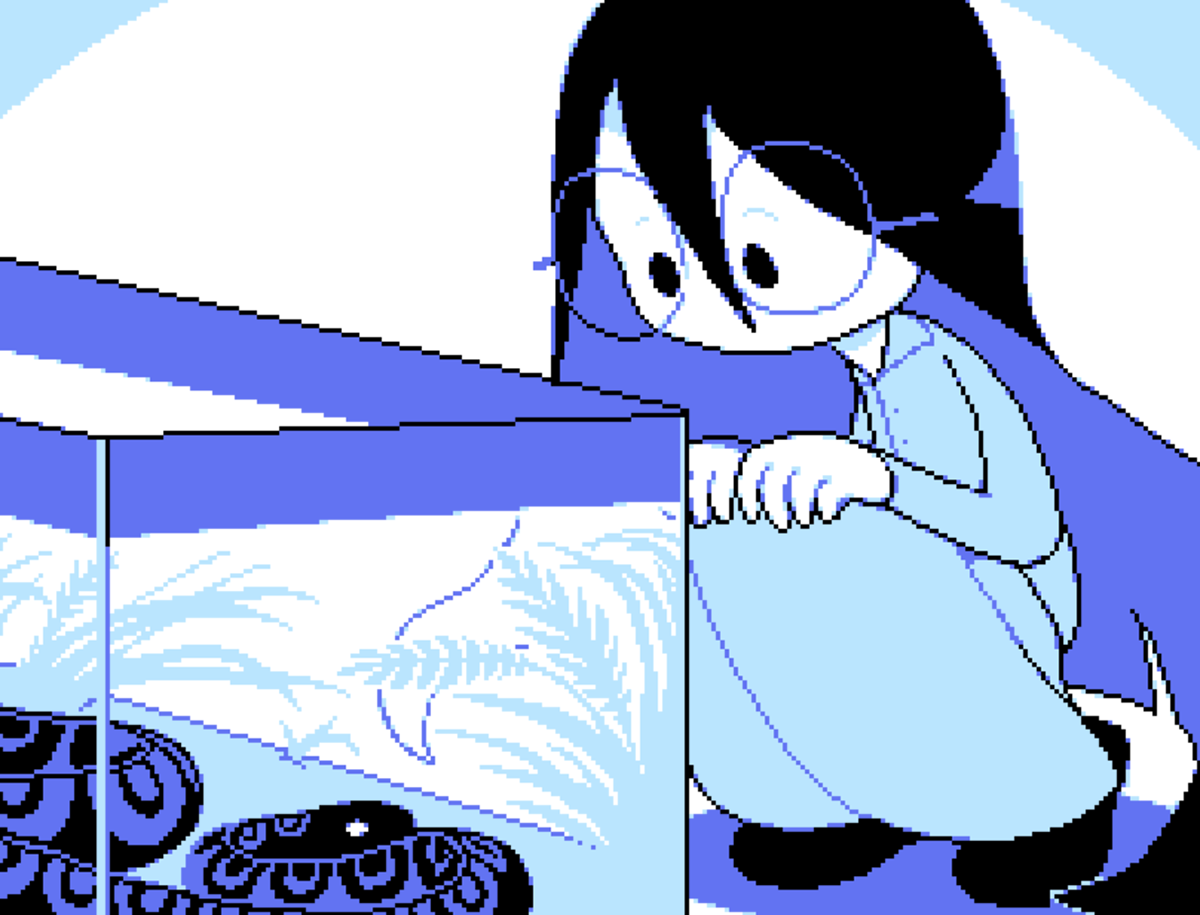
Escaped Chasm is a 25-minute dark fantasy adventure game created in RPG Maker with a mix of retro Game Boy graphics and anime-style cutscenes. Originally released in 2019, it’s the first stand-alone project of Temmie Chang, a longtime collaborator of Toby Fox who contributed character designs and graphics to Undertale and Deltarune.

You play as a young teenage “Lonely Girl” who doesn’t leave the house and lives vicariously through her dreams and art. Her parents appear to have gone missing, and she doesn’t know what to do. To make matters worse, she’s tired all the time, and a strange man has started appearing in her house.

Something is seriously wrong, and the Lonely Girl has four days to figure it out and escape. If leaving the house isn’t an option, where can she go? And how can she find the courage to leave?

Escaped Chasm is free to download, and the zip file contains an illustrated guide to the game’s four endings. I get the feeling that most players will probably see the good ending simply by playing the game naturally, but it’s nice to have grimdark alternatives. After unlocking the good ending, the player is able to enter and explore a bonus “developer’s room” that I love with all my heart. It’s fascinating to read Chang’s thoughts about making the game while checking out extra material that fills out a few gaps in the story.

Both Toby Fox and Temmie Chang were fans of and contributors to Homestuck, and it’s possible to see its influence on Escaped Chasm. It’s difficult to summarize Homestuck, but the webcomic begins as a story about four young teenagers who can’t leave their houses because they’re the last remaining survivors of a universe that’s unraveling around them. I get the sense that the Lonely Girl in Escaped Chasm is based on one of the four teenagers in Homestuck, Jade Harley, and it’s probably not a coincidence that she’s found herself in a remarkably similar situation.

Escaped Chasm is like a bridge between Homestuck and Deltarune in its theme of “using art and imagination to escape into another world,” but it’s also very much its own thing. I love Chang’s illustration style and narrative voice, and I admire how she pushes the boundaries of the medium to create a palpable sense of liminality and dread – and of catharsis and joy. Escaped Chasm is atmospheric horror with a (potentially) happy ending, and it’s idiosyncratic and self-indulgent in interesting ways that elevate it above the level of mere pastiche.

Escaped Chasm is a short test project made in preparation for Dweller’s Empty Path (on Itch.io here), a more extensive Game Boy style narrative adventure game. I really enjoyed Escaped Chasm, and I’m looking forward to jumping into Dweller’s Empty Path.

Symbiosis

Symbiosis
https://spicaze.itch.io/symbiosis

Symbiosis is a free-to-play RPG Maker horror game about a murderous mad scientist living in a house in the woods with an adorable child. The story has two endings, and it takes about 25 minutes to play through the game once.

You play as Magnolia, a geneticist who left her university post after a mysterious fire broke out in her lab when her research came under public scrutiny. She now lives in isolation with Mint, a curious and precociously intelligent young boy whom she’s raising as her son. According to local rumors, Magnolia is a witch. It doesn’t help that hikers have a tendency to disappear in the forest surrounding her property.

The game begins as Magnolia carves up the corpse of someone she caught sneaking into her house. She’s interrupted by Mint, who can’t sleep and wants a bedtime story. Unfortunately, there are three more intruders in the house, and Mint won’t stay in his room. Your job as the player is to turn the remaining intruders into corpses – for science! – while ensuring that Mint remains out of harm’s way. 

Magnolia’s house isn’t too terribly large, but it’s big enough to have all sorts of nooks and crannies to poke around, as well as various journals and research notes to find. The player can use these clues to figure out who Magnolia is and where Mint came from, although you’ll have to make your own decision regarding Magnolia’s feelings toward Mint and what the fate of the pair will be. The game’s creator has posted a guide for the two endings (here), and this short devlog also contains their thoughts on the story and characters.

What sets Symbiosis apart from the crowd of RPG Maker horror games is the creator’s gleeful willingness to allow Magnolia to be messy and problematic. She initially seems to be a complete sociopath, and her bad behavior is a joy to watch. As you witness her interactions with Mint unfold, however, her character becomes more complicated. Why Magnolia feels affection for Mint is open to interpretation, but I think it’s fair to say that her attachment is genuine.

The way I interpret this relationship is that it’s an analogy for the process of artistic creation (or scientific discovery, as the case may be). In order to create something meaningful, an artist has to be unpleasant, selfish, and more than a little antisocial. Gradually the art comes to take on a life of its own, and it’s up to the artist to decide whether to let it go or to keep it firmly in the orbit of their own dysfunctional personality.

Lest you think I’m spoiling the story, fear not – there’s all sorts of nasty business in Magnolia’s past for the player to discover. This woman is a legitimately horrible person, and her crimes are fantastic fun.

Symbiosis tells a short but grisly story through simple narrative adventure gameplay intercut with stylishly illustrated cutscenes, and I enjoyed it enough to go back and see both endings. I definitely recommend this game to fans of gothic horror, demonic women, and questionable scientific ethics.

Essay about Final Fantasy VII’s Anti-Capitalist Critique

I’m excited to say that my essay “Final Fantasy VII Confronts Capitalism: Tifa Lockhart vs. Medical Debt” is now on Sidequest (here)! 👊🌟

I recently read the official Final Fantasy VII Remake prequel novel, Traces of Two Pasts. I was fascinated by Tifa’s backstory, especially how she was driven to the starting point of the game by medical debt. I hadn’t come across a serious discussion of this book in fandom or elsewhere, so I wanted to write a short but accurate summary with substantial analysis. My goal was to situate the book’s anti-capitalist themes in the context of the game’s story, Japan’s economic recession in the 1990s, and our current hellworld.

Here’s an excerpt from my article…

Tifa is twenty years old at the beginning of Final Fantasy VII. Despite her youth, she’s calm and level-headed, yet Tifa willingly becomes a member of Avalanche, an armed militia that conducts terrorist attacks on Midgar’s power grid. Though she questions the use of violence, Tifa understands that aggressive action is necessary.

The juxtaposition between Tifa’s personality and her involvement in an active terrorist organization begs the question of how such a kind and gentle woman could become so politically radicalized. The question Kazushige Nojima asks in Traces of Two Pasts is much sharper: under the circumstances, how could she not? If you had to walk in Tifa’s shoes, wouldn’t you become radicalized too?

You can read the full piece on Sidequest here:
https://sidequest.zone/2025/06/02/final-fantasy-vii-confronts-capitalism/