Spun Stories Folk Horror Anthology

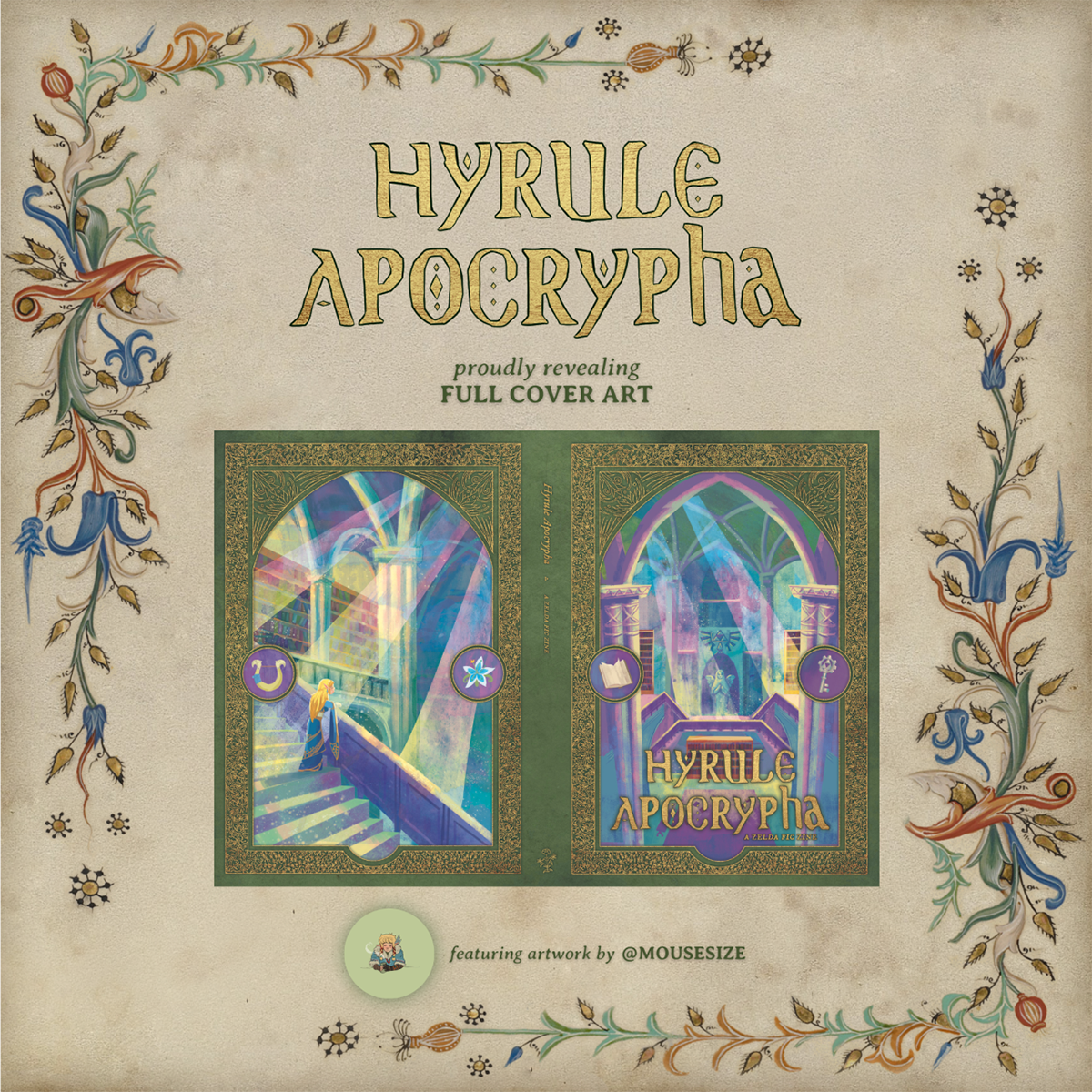
I’m honored to have a piece appearing in Spun Stories, the first anthology of short fiction released by Myth & Lore magazine. My folk horror story, “The Cow-Headed Boy,” is about an idealistic young teacher who accepts a position in a village in rural Pennsylvania at the turn of the twentieth century. Many of the village’s Yuletide traditions are quaint and charming, but some are a bit more sinister. Despite my general lack of interest in anything related to Christmas, I ended up doing a lot of research into Germanic pagan solstice traditions, and I hopefully managed to channel a bit of H.P. Lovecraft in the process.     

If you’re interested, you can preorder a copy of the Spun Stories anthology (here), and you can follow Myth & Lore magazine on Twitter (here) and on Instagram (here). I also want to give a shout-out to the editor, a talented artist who goes above and beyond in promoting authors while networking with the indie horror community. If you’re interested in folk horror, it’s definitely worth following Myth & Lore on social media – and perhaps even submitting your own work!

The Minish Cap

Nintendo recently released The Minish Cap on the Game Boy Advance virtual console included with its Nintendo Switch Online + Expansion Pack subscription service. This service costs $50 a year, and you have to pay the annual fee all at once. As a reminder: It is always morally correct to pirate Nintendo games.

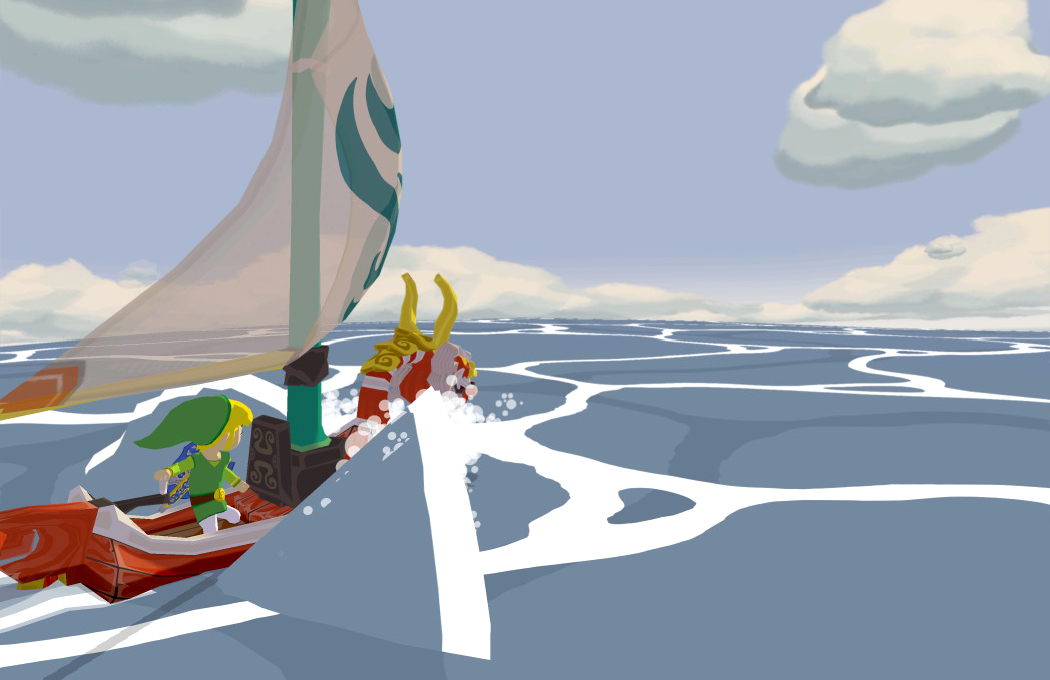
The Minish Cap came out around the same time as The Wind Waker, and it translates a lot of The Wind Waker’s characters and enemy designs into a 16-bit pixel aesthetic modeled on A Link to the Past. As a Zelda game, the structure of The Minish Cap is very conventional: There are five themed dungeons in five themed zones. You must beat these dungeons in order, as the item you find in each dungeon allows you to access more of the world. All of the dungeons are well-designed, and it’s fun to navigate each of the five zones.

To me, there are three things that make The Minish Cap special. The first is a core game mechanic that’s brilliant and magical; the second is a minor game mechanic I hate; and the third is the game’s lighthearted tone.

The main conceit of The Minish Cap is that Link is able to shrink down to the size of the Minish, tiny little mouse-elves who live in adorable mushroom houses, hollowed-out books, and so on. The Minish spaces in the game are a Studio Ghibli fantasy on par with The Secret World of Arrietty, and there are a number of fun navigation puzzles that require Link to alternate between human size and Minish size. This is especially enjoyable during an item quest that requires you to return three books to the library, which necessitates navigating the central hub of Hyrule Castle Town at Minish size.

Unfortunately, the Minish are obsessed with fusing kinstones. A kinstone is a broken medallion, and several dozen NPCs are willing to connect their half of a kinstone with a matching half in your possession. A successful fusion will result in a small change somewhere in the world – a merchant will come to Castle Town, a treasure chest will appear in a cave, or a special golden monster will appear in the field. These fusions are mostly random, as are the kinstones you find. All of the game’s sidequests (if you can even call them that) are connected to kinstone fusions, and the randomness of the fusions can make these sidequests infuriating. Thankfully, none of the sidequests is necessary, as The Minish Cap is easy enough to play with just the bare minimum of resources.

I imagine that most players will probably think of successful kinstone fusions as fun bonuses, but a Zelda game without sidequests can feel a little empty. In addition, because many of these fusions are made with random NPCs at seemingly random points in the game, none of the sidequests is connected to a narrative.

This lack of substance and specificity is tied to the lighthearted tone of The Minish Cap, which doesn’t have much of a story. The King of Hyrule has been possessed by an evil Minish wizard named Vaati, who turns Princess Zelda to stone during the first ten minutes of the game. Because only children are pure-hearted enough to see the Minish, only Link can save Zelda. Meanwhile, none of the adults care about any of this.

Aside from Zelda and your trusty talking hat Ezlo (who has also been transformed by Vaati), nothing bad happens to anyone in the game. In fact, everyone is quite happy.

In The Wind Waker, the disconnect between the carefree world of the Great Sea and the importance of Link’s quest is a major thematic element of the story. The only person living on the Great Sea who cares about Hyrule is Ganondorf, and the only reason he cares is because he’s been woefully displaced in time. The fact that no one except the King of Red Lions understands Link’s quest emphasizes The Wind Waker’s tone of loneliness, and this is why it’s so emotionally impactful when Link finds someone who appreciates the stakes of what he’s trying to accomplish and volunteers to help.

Meanwhile, in The Minish Cap, Hyrule is densely populated by Hylians and Minish who seem to be doing just fine, even without a government. Aside from poor Zelda, everyone is living their best life, and no one needs your help. I can’t overemphasize that there is not a single element of darkness in this game, which has no narrative tension and very little forward momentum.

A fandom friend who recently played The Minish Cap for the first time said that this is the game they’d recommend to first-time Legend of Zelda players, and I can understand where they’re coming from. The Minish Cap is about as conventional as you can get. Overall, it’s really fun, and neither its combat nor its puzzles are difficult.

Unfortunately, the kinstone fusion sidequests can be hideously annoying, and the game’s “safe for children” cutesy tone makes the world and its story seem unimportant and forgettable. The Minish Cap feels like it was created for casual players, and your mileage may vary on how much you appreciate this.

In the end, The Minish Cap is still a great 8/10 game that’s very much worth playing, but it’s on an entirely different level than A Link Between Worlds, which perfected the top-down 2D Zelda formula while also featuring excellent writing and interesting design work. Given its limitations, I think The Minish Cap will probably appeal most strongly to 16-bit retro game fans, as well as its actual target demographic of ten-year-old kids.

Tears of the Kingdom Leaks and Spoiler Culture

This past Sunday, someone on Reddit posted a link to a page-by-page series of photos of the (original Japanese) artbook that comes included with the special edition of Tears of the Kingdom. Since then, a lot of big-name fandom artists have been sharing public pledges that they won’t post any art that contains spoilers. I appreciate their stance, but I’d like to offer my own take – not on the spoilers themselves, but on the culture of corporate secrecy surrounding “spoilers.”

Before anything, I should admit that I looked at the leaked pages. They’re neat! There are a few new interesting character designs, but no story spoilers. The text is little more than design notes. “This clasp connects the two sides of her hairband,” that sort of thing.

I actually wasn’t all that impressed by the Tears of the Kingdom trailers, which make the game seem like a hot mess of heterogeneous elements that don’t fit together. That being said, some of the new character designs are really exciting! I’m not a fan of video game trailers to begin with, as they tend to target action-oriented fourteen-year-old boys. Meanwhile, the Tears of the Kingdom concept artwork is much more specific and interesting, and I think it invites a much broader and more diverse range of people who play games.

To put it bluntly: I didn’t like the trailers, but the leaked concept art sold me on this game.

I think it’s important to keep in mind that the refusal of media companies to put out nothing more than one or two teaser trailers in advance of a big release is a relatively recent practice. Before Disney bought Marvel in 2009, it was common to share all sorts of concept art, cast interviews, behind-the-scenes set photos, and so on. One of the most enjoyable aspects of being a video game fan in the 1990s and 2000s was checking out all the cool pre-release content in magazines and on official websites. In my experience, these little teaser “spoilers” aren’t going to diminish anyone’s enjoyment. Quite the opposite, in fact!

In addition, I think it’s important to put this leak into the context of Nintendo posting a major Direct video saying that they would open preorders for a special edition, only for the extremely limited stock to be almost instantaneously bought out by scalper bots, as Nintendo’s marketing people must have known it would be. Putting the $130 special edition aside, just a regular download of Tears of the Kingdom costs $70, which is quite hefty. I’m not inclined to take Nintendo’s side in any of this, nor am I amused by their weird Disneyesque attempts to create a kind of sacred space around a video game release to inspire “fear of missing out” anxieties.

Of course, I can understand the mindset of someone who wants to go into a game completely “unspoiled,” but you have to wonder. How good can a game (or movie) be if the entire experience of enjoying it would be ruined by knowing more about it?

My final reaction to the conversation surrounding this leak is rooted in my frustration with the prevailing culture of image-based social media. It makes sense for big-name professional artists with large followings to say that they’re not going to post “spoilers.” I understand that having an active online audience of tens of thousands of people necessitates certain precautions against discourse and harassment! Still, that experience is limited to a relatively tiny percentage of creatives.

The tail of social media interest in any given media release is a week at most. If you’re an artist with a low-to-mid-range following, and you can post your work within the first three to five days of a release, this translates to a difference between your post getting 3,000 notes and it getting maybe 300 if you’re lucky. If you’re an absolute amateur like me, this is a difference between getting 3,000 notes and maybe getting 30.

I can’t even begin to explain how intense the pressure to drop everything and produce work quickly is. Intense, and unpleasant. It’s disheartening to see work that was posted maybe two days earlier get an exponentially higher amount of positive feedback simply because of the timing of the post. Essentially: if you’re unable to produce quality work within a magic window, it can feel as though your work doesn’t matter.

( By the way, if your response is “you should create art for yourself,” please go sit in the corner and think about why an aspiring or early-career artist might need or appreciate support. )

Meanwhile, if an artist has more concept art and other development material to work with, they can take their time and create good work on their own schedule so that it’s ready to go when the magic window opens. Personally speaking, I think being able to enjoy the process of making art instead of operating on an unhinged crunch schedule is much healthier, much more sustainable, and a lot more fun.

So, all things considered, maybe being able to access a wider range of information about a game before it releases is kind of nice, actually.

The Eyes of Hyrule Zine Preview

I’m excited to announce that preorders are open for The Eyes of Hyrule, a Legend of Zelda fanzine devoted to the Sheikah. The zine’s Carrd is (here), and you can check out more previews on its Twitter account (here).

There’s a lot of talent involved in this project, and the mods have been totally on the ball at keeping everything organized for the zine, which is expected to ship out this summer. It’s always a pleasure to be part of a project where everything clicks and comes together so well. Also, I might be biased, but I think the stories (and comics!) in this zine are especially interesting and unique.  

My own piece, “The Only Come Out at Night,” is a soft horror story about Kakariko Village in Ocarina of Time. It’s narrated from the perspective of Grog, the punk kid who hangs out near the entrance of the village at night. During the trading sequence necessary to acquire Biggoron’s Sword, the player can pick up hints that Grog’s story is much darker and more complicated than his initial appearance would suggest. I therefore wanted to use this character to explore the darker side of the Sheikah through the medium of a Stephen King style “peculiar little town” story. I had a lot of fun writing this piece, and I can’t wait to share it.

If you’re interested, you can preorder a copy of The Eyes of Hyrule via Bigcartel (here).

Space Trash Review on WWAC

My review of the first volume of Jenn Woodall’s lunarpunk graphic novel Space Trash has just been published on the website Women Write About Comics. Here’s an excerpt…

Una, Yuki, and Stab are three lowkey troublemakers who share a dorm room and dye each other’s hair while watching each other’s backs. The three young women mostly play by the rules until they’re challenged by a rival girl gang, the Trash Queens. Their brawl is broken up by the school’s robotic disciplinary wardens, which causes the two gangs to realize that they share something in common: a burning desire to upend a system that doesn’t serve their best interests.

You can read the full review (here), and you can follow Jenn Woodall on Twitter (here). Once again, I have nothing but gratitude and admiration for my brilliant editor, who brought a number of interesting parallels to my attention as I was thinking about how to approach this book.

Scotland

This is a sequel to my “Demonic Women in Fiction” comic.

I think perhaps the most amusing aspect of that comic was how much hate it got on Twitter. I actually had to lock my account for a few days because randos kept popping up and commenting with long lists of every demonic man who has ever appeared in popular culture. Those dudes don’t know me, so they would have no way of knowing this, but I am in fact very familiar with demonic men. I’m even something of a connoisseur, one might say.   

Still, I haven’t read that many m/f romance novels, so I have only recently learned about Scotland.  

I should add that I’m referencing a line from Lucky Penny, a comedy romance (graphic) novel about romance novels. Lucky Penny‘s story is a lot of fun, and the writing is fantastic.

What Remains of Edith Finch

What Remains of Edith Finch is a walking sim that takes about two hours to complete. It was released in April 2017 for Steam and PlayStation 4, but it’s now available on a number of other platforms, including the Nintendo Switch.

What Remains of Edith Finch is visually gorgeous, and it falls into my favorite category of games: It was created for an adult audience by a small team of developers who take full advantage of the interactive gaming medium but don’t frustrate the player with unnecessary puzzle or platforming elements. There’s a lot to explore in this game, but the atmosphere is never broken by the player having to get up and check a walkthrough.

You play as a teenage woman named Edith Finch, who is returning to her family’s house on a small island off the coast of the Pacific Northwest. The house has been abandoned ever since Edith’s mother moved away in order to escape “the family curse,” which holds that everyone who is born into (or marries into) the Finch family dies in a tragic accident. In order to find closure, Edith tries to reconstruct the details of her family’s deaths, which the player experiences though a series of vignettes that play out in the form of short interactive stories.

Progression through the game is definitely on rails, but it doesn’t feel particularly linear. This is partially due to the unique architecture of the Finch house, whose rooms seem impossible yet manages to fit together neatly like the pieces of a puzzle. The game’s sense of progression is also enhanced by the player’s interactions with the environment, which are essential to the storytelling. I’m going to use the case of Edith’s older brother Lewis as an example of what I mean.

Lewis is a young man who loves fantasy novels, video games, and weed. After he graduates from high school, he drifts aimlessly for a few years before getting a job at a salmon cannery. This job is just as dreary as you might expect, but Lewis survives the tedium of menial labor by immersing himself in daydreams. As the player, you use one joystick to control the repetitive motion of decapitating fish and throwing them onto a conveyor belt while simultaneously using the other joystick to guide Lewis’s avatar through his RPG-themed fantasies.

Lewis’s daydream gradually becomes more interesting and complex. This is reflected by the game inside his mind being upgraded, almost as though it were being remastered across various eras of gaming consoles. The controls for the salmon cannery aspect of Lewis’s life never change, and they remain a constant annoyance as the fantasy slowly expands to fill the screen. When the player is jolted out of this daydream back into the bloody and poorly lit factory, it’s much more jarring than it would be if we were simply reading or watching Lewis’s story.

The psychiatrist who narrates this vignette says that Lewis’s death was caused by a hallucination triggered by withdrawal from hard drugs, but the player understands that it was a suicide brought about by his overwhelming desire to no longer be anchored by an unpleasant and unsatisfying reality. This episode is only twenty minutes long, but I cried. Kind of a lot actually.

What Remains of Edith Finch isn’t sad or sentimental; rather, it’s nuanced and incredibly beautiful. It doesn’t offer the player the same sort of transcendent experience as a more ambitious game like Everybody’s Gone to the Rapture, but its smaller and more personal stories are replete with mystery and wonder. Although the two games were made by different developers, What Remains of Edith Finch feels like a spiritual sequel to Gone Home, and it’s such a pleasure to see the gaming medium used to apply magical realism to gothic dramas of family ghosts and personal journeys of discovery.

I was inspired to return to What Remains of Edith Finch by a recent episode of the podcast Watch Out for Fireballs, which you can listen to (here). Reflecting on the game almost six years after it was first released, I would agree with the podcast hosts: Although What Remains of Edith Finch was almost universally praised when it came out, I’m afraid that its Wes Anderson style of twee humor might not land the same way on social media now. What Remains of Edith Finch treats the twinned subjects of death and mental illness with humor and sympathy in a way that celebrates the joys of being alive, and I’m not sure its multilayered tone would necessarily survive the black-or-white mentality of Twitter.

Still, I love this game, and I appreciate it even more now that I’ve had more personal experience with grief. I wouldn’t go as far as to say that What Remains of Edith Finch is uplifting, but the two hours I spent with the game improved my mood, bolstered my courage, and reignited my creative motivation. As with any work of art, the specificity of the game’s tone and viewpoint may not land with everyone, but it’s precisely this specificity of storytelling that makes What Remains of Edith Finch so strange and fun and interesting.

At the Edge of the Garden

When I was ten years old, all my friends had trampolines. I wanted a trampoline too, but my mother was opposed to the idea. One of my cousins decided to jump onto a trampoline from the roof of his house, breaking his arm and becoming a neighborhood hero in the process. My mother used my cousin’s behavior as a justification for keeping our yard trampoline-free, but I understood that she didn’t want her garden to be invaded.

My family lived on the outskirts of a pine forest bordering a small town. The property would later be sold, cleared, and incorporated into a subdivision, but our house was fairly isolated when we lived there. Since I had no one to play with and nothing better to do, I spent the summer roaming the forest with my dog while pretending to be a dinosaur. After a boy was shot in a hunting accident only a mile away from our house, my mother came to the reluctant conclusion that keeping me and the dog in the yard on a trampoline would probably be safer than letting us run wild in the woods.

The trampoline dominated my mother’s garden, as she had known it would, but this was more than likely a relief for her. She had neglected to do any weeding that summer, and the plants had gone feral. The trampoline blocked the view of the overgrown tangle of the rose bushes and ornamental shrubs that she used to keep meticulously maintained. My dog would sometimes disappear into the thistles and milkweed that grew as tall as my waist at the edge of the yard and emerge with his coat covered in burs, and my mother would pretend not to notice.

My parents’ marriage had turned sour. They fought after dinner, so I tried to be in the house as little as possible. I would go outside to jump on the trampoline every evening. It was soothing, almost hypnotic. I would position myself in the middle of the black canvas tarp and bounce in place as I watched the sun set over the pine trees standing just beyond the garden. I would hop off the trampoline and head back inside once the sky had gone completely dark, but twilight tends to linger in that part of the world, especially during summer. Sometimes I would be on the trampoline for more than an hour, letting my mind draft into various fantasies of prehistoric life while my dog barked at the rabbits that sniffed around the patch of soil where my mother used to grow carrots.

One evening, just as the sun had begun to sink below the tops of the pines, I saw a figure slink out of the dim forest underbrush. There wasn’t enough light to see clearly, but I was convinced it was a person. My dog was somewhere else, so I was alone with the shadow.

I was struck by a sense of terror, but I couldn’t stop jumping on the trampoline. My body moved mechanically as the blob of darkness made its way across the yard. Eventually it halted, raised the stalks of its arms, and slowly waved at me. I kept jumping, and it kept waving. It seemed as though it were trying to get my attention, but I refused to acknowledge its presence. If I looked at it directly, the stalemate would be broken, and I would be eaten. I was only a dinosaur in my mind, after all, and I knew that I was no match for whatever had come out of the trees.

As the sun disappeared, the shadow sank back into the forest. I hopped off the trampoline and ran inside as quickly as my shaking legs could carry me. 

The next day, when the sun was fully back in the sky, I ventured out to the line of trees beyond the garden, but I didn’t find anything out of the ordinary. The thick mat of pine needles covering the ground lay undisturbed.

Later that afternoon, my dog got hit by a speeding truck on the state highway that ran past the end of our driveway, but I don’t think there was any connection to what I’d seen the previous evening. How could there have been? Nothing made sense to me at the time – not the death of my dog, not the end of my parents’ marriage, and not the creeping realization that my mother and I would have to leave our home at the end of the summer. All things considered, a strange shadow lurking in the woods at the edge of the garden was the least of what was wrong with that house.

. . . . . . . . . . . . . . .

This story was originally published in Issue 7 of 3 Moon Magazine in April 2021. The issue’s theme was “Growing Malcontent,” and this story was my first foray into botanical horror. 3 Moon Magazine ceased publication and closed its website at the end of 2022, and I am reproducing this story with the kind permission of the editors.

A Monstrous Little Mermaid Story

I’m honored to have an essay in one of my favorite online magazines, Cosmic Double. “A Monstrous Little Mermaid Story” is about how I discovered the joy of queer transformations in HP Lovecraft’s “The Shadow over Innsmouth.”

“A Monstrous Little Mermaid Story” is free to read on the Cosmic Double website here:
https://cosmicdouble.com/2023/01/08/a-monstrous-little-mermaid-story/

I originally created this essay as something of a writer’s statement for a short story called “Don’t Eat the Fish.” The story is about the uncanny space at the intersection of queerness, disability, and economic precarity, but I also think it stands on its own as an unsettling work of body horror. I workshopped this story for years as I slowly developed my skills, and I worked hard to polish the narrative voice and sharpen the genre effectiveness while also being as honest as I could about the nuances of my own personal experience.

I generally try to keep overt identity politics out of my writing, which isn’t a value statement as much as it is a personal preference. It’s not as though my stories aren’t informed by my identity or social environment. Rather, both my identity and my environment constantly shift and change, and my stories generally aren’t about myself to begin with. Still, because this particular story was so strongly informed by my positionality, I spent more than a year submitting it a series of literary magazines dedicated to raising the voices of queer, disabled, and economically precarious writers.

Unfortunately, every single magazine I submitted the story to was like, “Oh damn, that’s truly upsetting, and this story is not Positive Queer Representation™ enough.” Usually, when I have a story rejected, I’m lucky enough to get a personal note from an editor along the lines of, “This isn’t a good fit for us right now, but we all enjoyed this piece and would love to see more work from you in the future.” With this story, the response was inevitably: NO.

I therefore wrote this essay as a way of processing what my story and its literary influences meant to me. I’ve long since accepted that the story itself will never be published, but I’m truly grateful to Cosmic Double for being willing to publish an essay that may not be Positive Queer Representation™ but still attempts to represent what I believe is a very real aspect of nonbinary (and trans!) queer identity. That takes courage, and the essays I’ve been reading on the site led me to believe that the editors are open to an earnest investigation of what it means to feel “monstrous.” If you’re interested in well-crafted essays from unexpected points of view, please check them out!