Reader of books and player of games. College professor and pokémon trainer. Writes about Japanese fiction, media, gender, and society. In love with monsters and magic.
https://digitalfantasydiary.com/
Echoes of Wisdom is growing on me, and I especially love how Zelda fights by rapid-summoning monsters to overwhelm her enemies. I suppose Zelda is technically creating “echoes” instead of resurrecting her defeated foes, but she still reminds me of the Tears of the Kingdom trailer in which Ganondorf triggers the Blood Moon, summons a bunch of monsters, and tells them to “sweep over Hyrule.” Necromancy seems like a very fun gig if you can get it.
This comic was drawn by the horrifically talented Frankiesbugs, whose cute and creepy illustrations and comics can be found on Tumblr (here), on Instagram (here), on Cara (here), and on Redbubble (here).
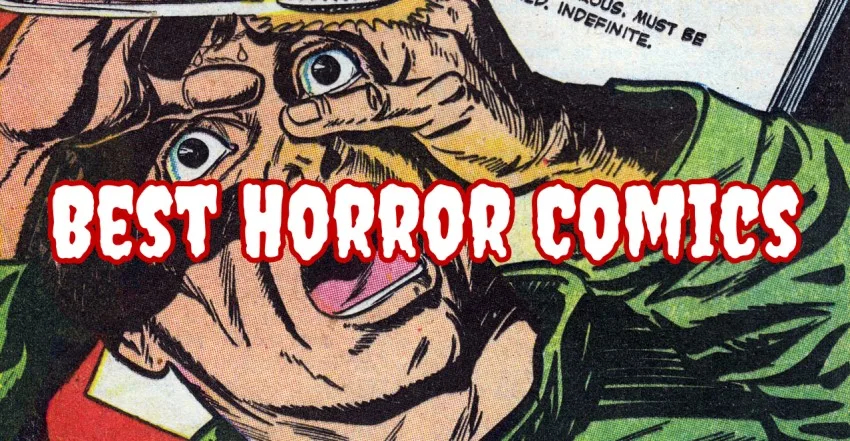
Betwixt: A Manga Horror Anthology, edited by Fawn Lau and Mayuko Hirao A diverse collection of big-name creators showcasing manga-style stories that focus on urban legends and folk horror.
Bloodborne: The Healing Thirst, by Ales Kot and Piotr Kowalski A stand-alone story that captures the oppressive gothic atmosphere of Bloodborne while being accessible to readers with no knowledge of the game.
The Crossroads at Midnight, by Abby Howard A single-artist collection of queer short stories with distinctive monochromatic art and intensely disturbing imagery.
The Hills of Estrella Roja, by Ashley Robin Franklin A lushly illustrated graphic novel about a college student on the hunt for cryptids in the beautiful but eerie Texas desert.
Loving, Ohio, by Matthew Erman and Sam Beck A suburban gothic horror story about a small town quietly controlled by an all-too-realistic cult.
Not Drunk Enough, by Tess Stone A colorful and stylish horror comedy about being trapped in a mad science corporation after dark.
PTSD Radio, by Masaaki Nakayama A quiet but intensely creepy collection of Japanese urban legends loosely connected by an overarching narrative.
The Shadow over Innsmouth, by Gou Tanabe A painstakingly faithful Lovecraft adaptation with meticulously drafted art and a well-researched translation.
You can check out the fully annotated list (here). There are a lot of famous heavy hitters on this list, and it was a pleasure to be able to include a few lesser-known manga and indie graphic novels.
The errant knight Caelif rides to Faloren Castle from the south. Through Caelif’s eyes, the reader sees the castle city, which was once grand but has fallen into decline. Caelif enters the castle and is greeted by Agnes’s cousin Galien, with whom he shares a professional and romantic partnership.
After they indulge in an intimate moment, Caelif reflects on his first acquaintance with Galien in Cretia. He tells Galien that he believes Fhiad to be the demon that Agnes was sacrificed to resurrect, and Galien reveals that he suspected as much. Galien assures Caelif that Fhiad is no danger to Agnes, and he confesses that he’s far more concerned with who may have abducted her in the first place.
.
At the beginning of An Unfound Door, Agnes leads a demon through the woods. To stave off exhaustion, she’s started talking to the demon, complaining that she’s not cut out to be a princess. Agnes argues that her cousin Galien, who is a duke in his own right, would be perfect in her position. He’s a born politician, and he would make a good king.
Agnes has previously shared several conversations with Galien, but this is the first chapter in which he takes the spotlight. He does so through the viewpoint perspective of his partner Caelif, the knight who rescued Agnes immediately before the novel opens.
Caelif serves as Galien’s messenger and fixer, as he’s willing and able to travel freely. A bit later in the story, Agnes explains to Fhiad that Caelif works for her as well, as she’s been asking him to sell the heirlooms of the royal family outside the kingdom, a last-resort fundraising strategy facilitated by Galien.
In another story, Galien would be the villain, but he and Agnes get along well and care for each other a great deal. Agnes had intended to renounce her royal status so Galien would be next in line for the throne, but her plans were complicated by her father’s ill health and her own abduction.
All of the chapters so far have been focused on Agnes and Fhiad, and this is where the story introduces a broader perspective. What I’d like to achieve with Caelif’s chapters (of which this is the first) is to give the reader a sense of the story being set on the edge of a much larger world.
Also, some of the oddness at the beginning of the novel is hopefully starting to make more practical sense. What I’d like to do with the narrative progression of this story is to take the broad archetypes of the initial scenario – a princess walking through the woods with a demon boar, who turns out to be a cursed prince – and gradually add more layers until the reader finally understands exactly how and why these characters arrived in that situation. In other words, the story is something like a mystery that the reader solves along with the characters.
If you’re curious, Caelif’s name comes from Caelifera, the scientific name for the suborder of insects that includes grasshoppers. Meanwhile, the concept art I used for this chapter’s graphic is from Bloodborne. I love how the city of Yharnam feels magnificently grand yet oppressively empty, and I aim to convey the same atmosphere of ruined grandeur in An Unfound Door.
There’s a chill in the air as the twilight lingers and the moon glows bright in the autumn sky. What better time to crouch in front of your computer and scare yourself silly? For intrepid digital ghost hunters, Sidequest presents eight eerie games that are free to play on itch.io and short enough to occupy an intermission between deep dives into creepypasta wikis…
I was thrilled to have an opportunity to write another piece for Sidequest showcasing a curated collection of indie horror games. If you’re interested, you can check out the list here:
After returning from the library in the east tower, Agnes and Fhiad immediately head to the door in the graveyard via a set of underground access tunnels for the castle staff. They enter the tunnel system through the ground floor library. Along the way, Agnes remarks on how all of the underground areas of the castle have been abandoned for decades. In the courtyard, Fhiad tries to open the door with magic but fails.
The next day, Agnes talks with her father, who is recovering from a lingering illness. He suggests that she should visit the castle’s west wing, which once hosted a world-renowned magic academy but has fallen to ruin after the war with Erdbhein. As she prepares to present herself at court that evening, Agnes reflects on the magic of the lost Soreiya’s Tear and thinks that her own wish would be to see Faloren before its decline.
.
Following two successive library explorations, this chapter is significantly more mundane. Agnes and Fhiad manage to locate the “unfound door” of the novel’s title, but Fhiad can’t open it. Agnes then talks to her father, the king, but he doesn’t know anything either.
The king points Agnes in a potential direction, but his advice is little more than his own wishful thinking. Much later on in the story, it will be revealed that Agnes’s father and mother spent a fair bit of time exploring the castle themselves. Although it may seem like Agnes’s father is an antagonist, he had dreams and ambitions once, and he loves his daughter in his own way.
An Unfound Door isn’t YA fiction – everyone in this story is an adult – but one of the staple elements of the genre of YA fiction that has always bothered me is how anyone over the age of twenty is automatically cast as a villain. I understand why it can be useful to set up “adults” as antagonists from a narrative perspective, but the idea that any given adult would have any actual power in real life is laughable.
Speaking personally, I feel like there are more limitations placed on me with every year I get older, and that’s the theme I want to express through Agnes’s father. Precisely because he’s a king, there are many things he can’t do. Still, when Agnes obliquely mentions that she’s taking up the quest he secretly began when he was younger, he can’t help but get excited. Agnes’s father isn’t a bad person; he’s just the hero of an entirely different story.
Also, although I love novels like those in the Redwall and Harry Potter series, I want to use the setbacks and mundanity of this chapter to challenge the fantasy genre convention that Agnes will be embarking on a fun adventure in a magical castle. I am not made of stone, and I’ve definitely enjoyed writing the adventure segments! Still, the point of this story is for Agnes to realize that her quest to save her kingdom isn’t what she should be doing with her life. Not everyone is meant to be a hero, and that’s okay.
The illustration in this chapter’s graphic was created by the magical Allison McKenzie, a Final Fantasy fan artist who draws colorful and expressive female characters who are always full of life. As you can probably guess from Agnes’s visual design, her character is partially based on Garnet from Final Fantasy IX, so I’m thrilled that Allison drew this illustration for me. You can check out her art on Twitter (here), on Instagram (here), and on Tumblr (here).
I recently had the opportunity to write a review of Loving, Ohio, a graphic novel about a small town shadowed by the secrets of a cult. Here’s an excerpt…
Loving, Ohio is a powerful work of contemporary horror guided by a tense mystery that unravels against the backdrop of eerily evocative scenery. What makes this story truly disturbing is its resonance with the current cultural climate, in which exploitative religious organizations have become more mainstream while conspiracy theories are taken seriously by people looking for connection on social media. Loving, Ohio tells a compelling story that’s all the more haunting because of how critically relevant it is to the hidden monsters of contemporary American society.
You can read the full review on Women Write About Comics (here). You can read more about Matthew Erman on his website (here) and check out more of Sam Beck’s art (here). As always, I’d like to express my appreciation for my amazing and brilliant editor at WWAC, Kat Overland, who is admirably fearless and as sharp as ten knives.
Agnes and Fhiad visit the magic library in the abandoned tower of the east wing of the castle, where Fhiad demonstrates the concept of magical “cost” to Agnes. Fhiad then locates a book about the castle’s architecture left in the library by Agatha, the princess of his era. He explains that Agatha was searching for a secret entrance to the castle’s deeper subterranean levels, where she believed Soreiya’s Tear was hidden. Fhiad shows Agnes an illustration of a door, and she immediately recognizes it as the entrance to a vault in the graveyard adjoining the north courtyard garden.
Fhiad is frustrated that Agnes was able to solve the problem so quickly, while Agnes is jealous of Fhiad’s relationship with Agatha. She snaps at him; and, in retaliation, he creates an entirely new staircase to the main hallway in a grand display of magic. Agnes is impressed, and Fhiad is pleased by her praise. They agree to visit the door in the graveyard immediately in order to see it for themselves.
.
There’s a tidy bit of plot setup in the chapter. This is where the reader learns about the weirdness going on between Fhiad and the princess of his era, and this is also where I introduce the eponymous “unfound door” of the novel’s title.
This is the second chapter narrated from Fhiad’s perspective. When he sets part of the tower library on fire in order to adjust the castle architecture, he doesn’t remark on the fact that he’s doing anything unusual, but this is where it should become clear to the reader how exceptionally skilled he is. Agnes had a similar scene in Chapter Five, when it’s strongly implied that she’s keeping the bureaucracy of the royal household running almost single-handedly.
An Unfound Door isn’t a power fantasy, however. This is a story about the fall of empires and the gentle beauty of decay, and it ultimately doesn’t matter how talented the characters are. Both Agnes and Fhiad want to restore their kingdoms, but this isn’t possible, not even with their incredible skills. This isn’t a story about being strong and overcoming obstacles. That sort of narrative makes me tired.
I originally wrote this chapter in October 2023 before taking a long hiatus from the project. I returned to the novel this past April, and I’m pleased to say that the first draft is finished. Now that I’ve returned to the earlier chapters, it feels strange to see Fhiad and Agnes at this stage of their relationship. Even though I wrote this story myself, I have to admit that I’m looking forward to watching them gradually warm up to one another.
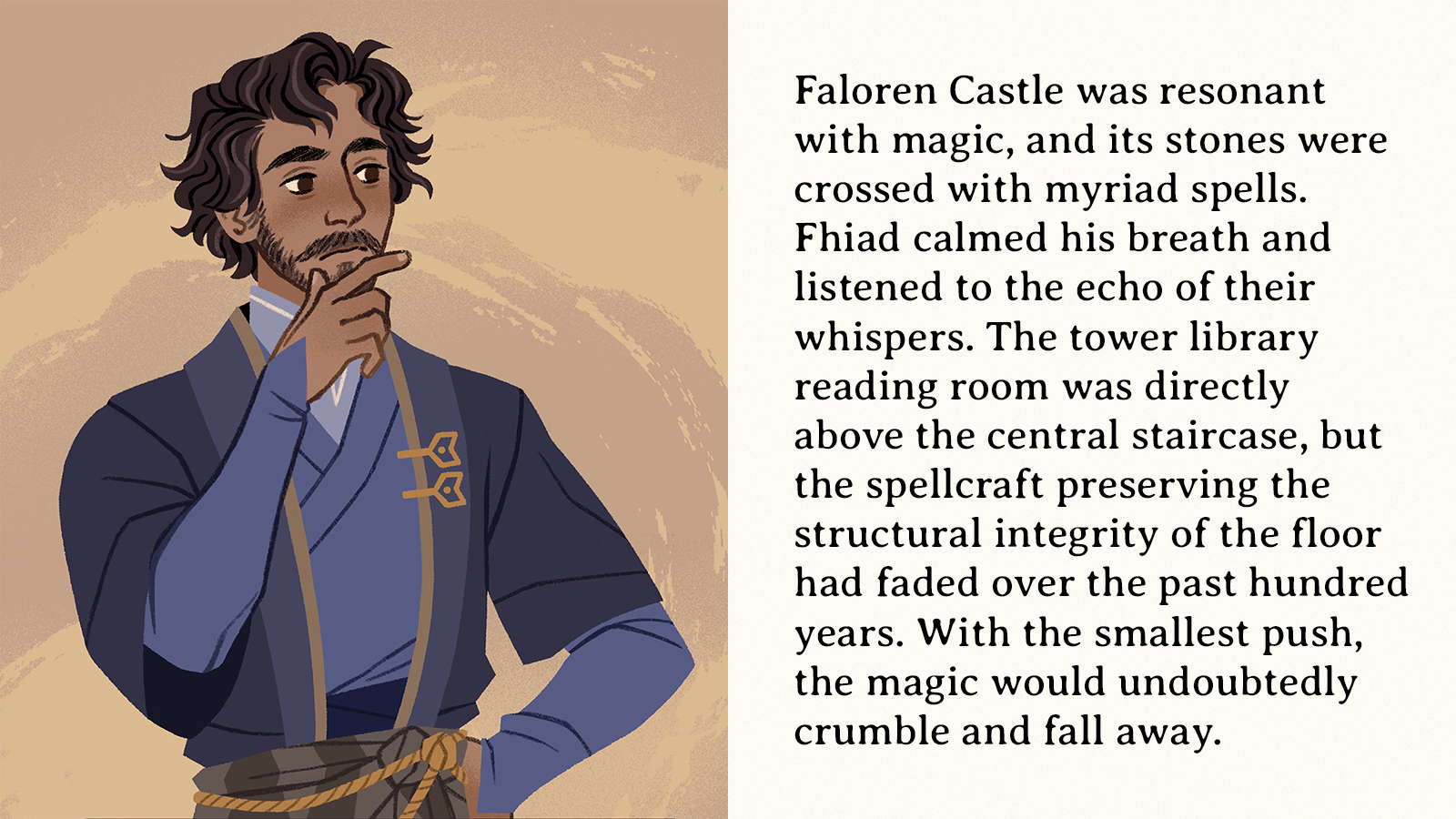
The illustration of Fhiad in this chapter’s preview graphic was created by the marvelous Emily Cheeseman, whose website is (here). You can follow her work on Instagram (here), and I recommend checking out her postcard club on Patreon (here). The general atmospheric vibe of An Unfound Door was partially inspired by Em’s graphic novella adaptation of Gawain and the Green Knight (here), so it was an incredible honor to have her draw one of my story’s main characters!
I had the opportunity to review Geneva Bowers’s amazing graphic novel HoverGirls for Women Write About Comics. Here’s an excerpt…
HoverGirls includes a few battle scenes, but most of the story’s action takes place across the dialogue between characters. This type of interpersonal character drama is the element of action-oriented magical girl manga I always loved. As in Sailor Moon, the fighting is all well and good, but it mostly serves as a backdrop to what’s really important – character development. Each character has a distinct voice and motivations, and their conversations are augmented by humor and just the right amount of tension.
You can read the full review on WWAC (here). If you’re interested, you can read the comic online (here), check out the book’s official page (here), and see more of the artist’s work on her webpage (here). And, as always, I have nothing but gratitude for my brilliant editor, Kat Overland.
When calamity besets his home in the desert, the young prince Ganondorf is forced to journey abroad to seek answers in Hyrule’s ancient sanctuaries. Lost within the shadows of a temple deep in the forest, Ganondorf struggles with a burden he does not yet have the power to bear.
I wrote “A Legend of Shadows” for Hyrule Apocrypha, an illustrated storybook fanzine exploring the myths and lore of the Legend of Zelda series. I consider myself extremely lucky to have been be able to create a story illustration with Peregyr, whose green and magical art can be found on Twitter (here) and on DeviantArt (here). We had a great time imagining Ganondorf’s backstory as a failed hero. This is how the story opens…
What would you do if you weren’t the hero? What if the chosen one were someone else entirely? Would you curse the gods and lament your fate? Would you turn tail and go home? Would you try your luck elsewhere, in a distant land where no one knew your name? Or would you simply lay down your sword and give up? Ganondorf was beginning to suspect that he was no hero, but he was nothing if not stubborn. Giving up was not a choice he was willing to make.
You can read the full story on AO3 (here), and you can check out more of the work featured in the zine on Twitter (here) and on Tumblr (here). Leftover sales, which include some lovely Zelda-themed merch, are now open (here).
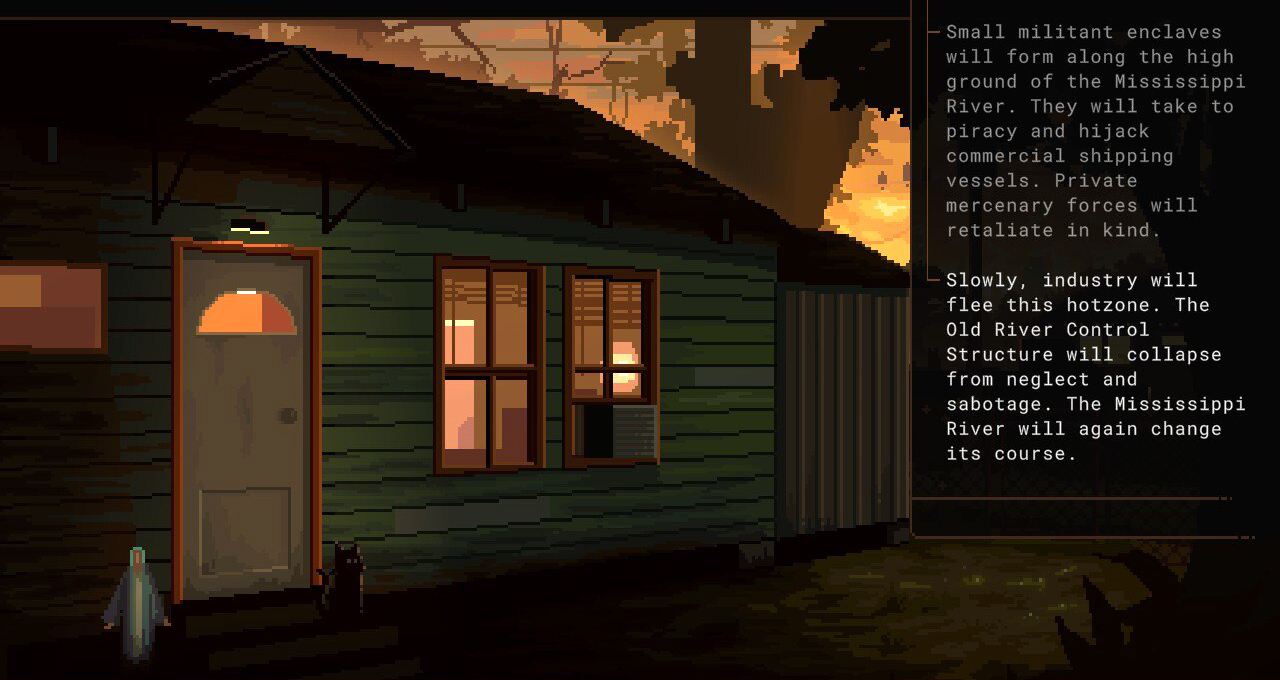
Norco is a cross between a visual novel and a point-and-click adventure game that takes seven hours to play. The game is set in a near-future version of New Orleans and its surrounding bayou. Despite its lowkey cyberpunk elements, the future envisioned by the game isn’t all that different from the present. Norco is gorgeously well-written and intriguingly grounded in the specificity of its setting, and the various small stories it encompasses are filled with fascinating characters and meaningful human drama.
I want to focus on what’s interesting about this game. That being said, Norco can be frustrating, so let me get this out of the way: most of the adventure game elements of Norco are bad. The puzzles (such as they are) are poorly executed and annoying. There’s at least one instance of turn-based combat per act, and it’s not great. Also, the game takes a weird turn toward cosmic horror in the third and final act; and, in order to unlock a slightly more satisfying ending, you have to do a minor random thing in the second act that’s extremely easy to miss.
None of this is a deal breaker. Rather, I think it’s good to set expectations. Specifically, you should expect to use a walkthrough at some point. I actually ended up using three walkthroughs, as I found some of the adventure game sequences to be difficult to piece together. They’re not complicated; they’re just opaque. Thankfully, the more frustrating puzzles are few and far between, and you can play the vast majority of the game just fine on your own.
You begin Norco as a woman named Kay who returns home after her mother dies of cancer and her brother Blake stops replying to texts. Although Blake is nowhere to be found in or around the house, Kay is greeted by the family robot Million, a fugitive from the skirmishes between armed militias that have broken out across the southwest. Million suggests that she and Kay talk to people in the neighborhood to figure out where Blake has run off to.
The search for Blake is interrupted by extended flashback sequences in which you play as Kay’s mother Catherine. While her cancer is in remission, Catherine takes odd jobs on a Fivver-like platform called Superduck in order to pay off loans so her kids can keep the house after she dies. These jobs take Catherine across New Orleans and eventually lead her to an abandoned mall colonized by the teenage disciples of an internet demagogue by the name of Kenner John.
We’re introduced to Catherine as she allows a blandly anonymous tech corporation to make a neural map of her brain. In theory, the experimental procedure is compensated by the generation of an AI personality intended to help Catherine’s family process her death. In reality, Catherine needs the money. Immediately after her brain imaging session, she’s out in the city after dark running errands via the Superduck app.
Oddly enough, Superduck ends up being a real “person,” a branch of an AI personality based on Catherine’s friend Duck. Based on a story Catherine once told Duck, Superduck has figured out that an alien entity resides in the estuary of Lake Pontchartrain, and that it was captured by Kenner John.
Although the cyberpunk elements of Norco’s plot are fun, they’re not the real story. As Catherine, you play as a tired and washed-up adult using a rideshare service to get around town while trying to gather information from other tired adults who are just trying to make a living. It’s through these conversations that the player gets a sense of what New Orleans is like as a city, as well as a sense of how not even wealthy people who seem to be major players have any control over the environment. There are going to be hurricanes, and there are going to be floods, and neither oil companies nor tech companies can do anything about it.
What I appreciate about Norco is how realistic and grounded it is. As someone dealing with cancer, Catherine gets winded climbing stairs during one of the adventure game segments, and she’s okay with telling people that no, actually, she’s not fine and she needs a minute. Kenner John’s cultists are dumb kids (affectionate) who just want to hang out in an abandoned mall and smoke weed while playing video games. Even the MAGA-style militia members who make a brief appearance in the last act are heroic in their own deranged way, and the poor harassed public official who stays late in City Hall dealing with paperwork delivers a monologue about how you can’t save everyone that’s worthy of Shakespeare.
Despite the gritty setting of a city on its last legs and Norco’s complete lack of sentimentality, all of the characters are intensely human and sympathetic. They’re also quite funny, even when they’re at their lowest and most morally dubious. There’s one story about a guy who eats a hotdog from a food cart in a downtown tourist area that made me laugh so hard I cried. Norco tackles challenging themes, but it also manages to be pitch-perfect comedy storytelling. I really can’t overemphasize how brilliant the writing is.
Also, this is worth saying: As someone who grew up in the Deep South, I’m truly and deeply grateful that the script of this game uses an accurate representation of Southern AAVE. My promise to myself about Norco was that I would put the game down and walk away the second anyone said “y’all” or pulled some sort of X-Men Gambit bullshit, but I didn’t need to worry. Everyone talks like a normal person.
The basic gameplay of Norco consists of conversation-based fetch quests. Someone will tell you to talk to someone else, and you have to go find them. You do this by driving (or ordering an off-brand Uber) to take you to a point on a map of New Orleans, and from there you’ll navigate between four or five screens by clicking on various points of interest. Your objective is always clear, but there’s a lot of non-essential content to interact with. And it’s good to talk with everyone! What you’ll get as a reward for being curious is some of the best stand-up comedy you’ll ever read.
The adventure game puzzles are so deeply embedded in the action of the story that they’re difficult to describe without extensive plot summary. What makes the worst of them annoying is that they expect you to leave the game and write something down in real life. One of the more obnoxious of these puzzles involves numerology. I understand that this is a play on the weird Christian-themed numerology cults that have sprung up on YouTube and Facebook – one of my aunts got really into this during the pandemic, true story, and it’s batshit insane – but it’s still a pain to put down the game and go get a piece of paper.
One of the interactive elements of the game that actually works well occupies a large portion of the third act. The Surprise Big Bad antagonist has gotten an offshoot of the Kenner John cult to build a spaceship on the bayou, and Kay needs to go out and find the site by navigating through the swamp in a small boat on a 4-bit pixelated sonar screen. There are all sorts of fun things to find out on the water, and this segment is enhanced by an atmospheric lead-up that includes an interesting lesson in natural history concerning why the topography of the bayou is so treacherous even though it looks like open water.
At the conclusion of the end credits, Norco provides a list of books and documentaries that the developers used as references. I was so drawn into the real-world history presented by Norco that I immediately screencapped this list. I got started on following up with these references by watching a documentary called Mossville: When the Great Trees Fall, and it’s almost painfully apparent that the creators of Norco were pulling inspiration from serious ongoing issues. It’s amazing that they were able to take such heavy material and transform it into something so gorgeously strange and entertaining.
Although Norco isn’t as mechanically robust as Disco Elysium, it’s easily in the same category of excellent writing and unique visual stylization. I somehow got the impression that this game would be all doom and gloom about poverty and injustice, but it’s actually a genuinely funny dark comedy about a cast of characters whom I grew to love despite (and often because of) their flaws and bad behavior.






 Digital Fantasy Diary