Residents of the Wild Fanzine

I’m honored to have a story about the adventures of the Gerudo archaeologist Rotana appearing in Residents of the Wild, a digital Legend of Zelda fanzine celebrating the NPCs of Breath of the Wild and Tears of the Kingdom. All proceeds from the zine will be donated to this year’s Zeldathon charity event. The zine is scheduled to be delivered on August 1, and preorders are open until July 28.

📚 rotwzine.carrd.co
📚 residents-of-the-wild-zine.square.site

Strange Things Happen in Philadelphia

Strange Things Happen in Philadelphia collects six short pieces of weird fiction about the past, present, and near future of a city where anything can happen. Philadelphia is simultaneously filled with decaying ruins and vibrant cultures, and I see the stories in this zine as a celebration of those of us surviving and thriving during the slow collapse of the American empire. Nothing in these stories is real, of course, but I’ve drawn them from a deep well of local folklore and hearsay.

To tell the truth, I don’t actually know that many people in Philadelphia. I lived here for most of grad school but then moved away to chase various academic jobs. I returned during the pandemic, which wasn’t a great time to meet new people or reconnect with old friends. I’ve tried to apply to local writing groups and workshops but haven’t gotten anywhere (yet).

Don’t get me wrong – I’m fortunate to enjoy the support of various writing communities online. Still, my personal experience of Philadelphia has been mediated by long solitary walks through parts of the city that have a lot of abandoned buildings, many of which have fallen to ruin.

One of these areas is my own neighborhood of Point Breeze, which is a lovely place to live but also filled with decrepit warehouses and other abandoned properties. I myself live next door to a derelict funeral home, and I’m constantly reading threads on various Philadelphia reddit boards about the struggles of homeowners whose townhouses adjoin similarly abandoned buildings.

It’s worth emphasizing that Philadelphia is densely populated. In fact, one of the reasons I love living here is that there are always people on the street at all times of the day and night. In a lot of ways, Philadelphia reminds me of Tokyo. It’s an affordable city with a lot of history, culture, and potential…

…but that’s not really what these stories are about. As I edited this zine, I realized that it’s pervaded by a sense of loneliness. Not an unpleasant loneliness, but rather the unique perspective afforded to a stranger. When you’re alone, you end up seeing things that perhaps other people might miss, and that sense of strangeness is what I wanted to capture in this collection.

I was fortunate to be able to work with Kaylee Rowena, an architectural wizard of the highest order, to create the art for the zine cover. The zine also features a spooky illustration of Mothman by an artist of the odd and surreal who goes by Gravemud on Tumblr, as well as a gorgeously aesthetic illustration of two elegant monsters by the brilliant and stylish Critter Crafter Ally. I’ve also included a half dozen of my own illustrations.

Unlike my previous short fiction zines, Strange Things Happen in Philadelphia is printed in full color, and I’d like to think it’s an attractive little book. If you’re interested, you can download a free digital copy from Itch.io or order a physical copy from Etsy.  

🌇 https://digitalterrarium.itch.io/strange-philly-zine
🌇 https://www.etsy.com/listing/1761448527/strange-philadelphia-fiction-zine

Essay on WWAC about Machiko Kyō’s Manga Cocoon

I’m proud to have worked with the brilliant editorial team at Women Write About Comics on my essay “Nature and War Memory in Machiko Kyō’s Cocoon,” in which I discuss the imagery that propels the story of a heartbreaking graphic novel about the Pacific War.

An animated cinematic adaptation of Cocoon is scheduled to be released in Summer 2025. This is a high-profile project commissioned by NHK and directed by the veteran Studio Ghibli artist Hitomi Tateno, whose animation credits range from Spirited Away to The Wind Rises.

Although the essay (like the manga itself) should be approached with sensitivity to its content, I hope I was able to offer a small contribution to the international awareness of the narrative work of Machiko Kyō, a celebrated and prolific Japanese artist who has created some of the most groundbreaking manga of the past decade.

You can find my essay about Cocoon (here) on Women Write About Comics, an award-winning venue for media journalism covering pop culture from a diversity of perspectives. I’m extremely grateful for the support and excellent feedback of Emily Lauer (on Bluesky here), whose critical insight illuminates the discussions and reviews of genre fiction on WWAC.

Games like Echoes of Wisdom

Are you excited about Echoes of Wisdom and can’t wait to play it? Thankfully, there’s a wealth of excellent Zelda-style games with female and nonbinary protagonists made by small studios that you can jump into right now on Nintendo Switch. These are eight of my favorites…

Do you wish Zelda got to fight with a sword?
Check out: Ocean’s Heart

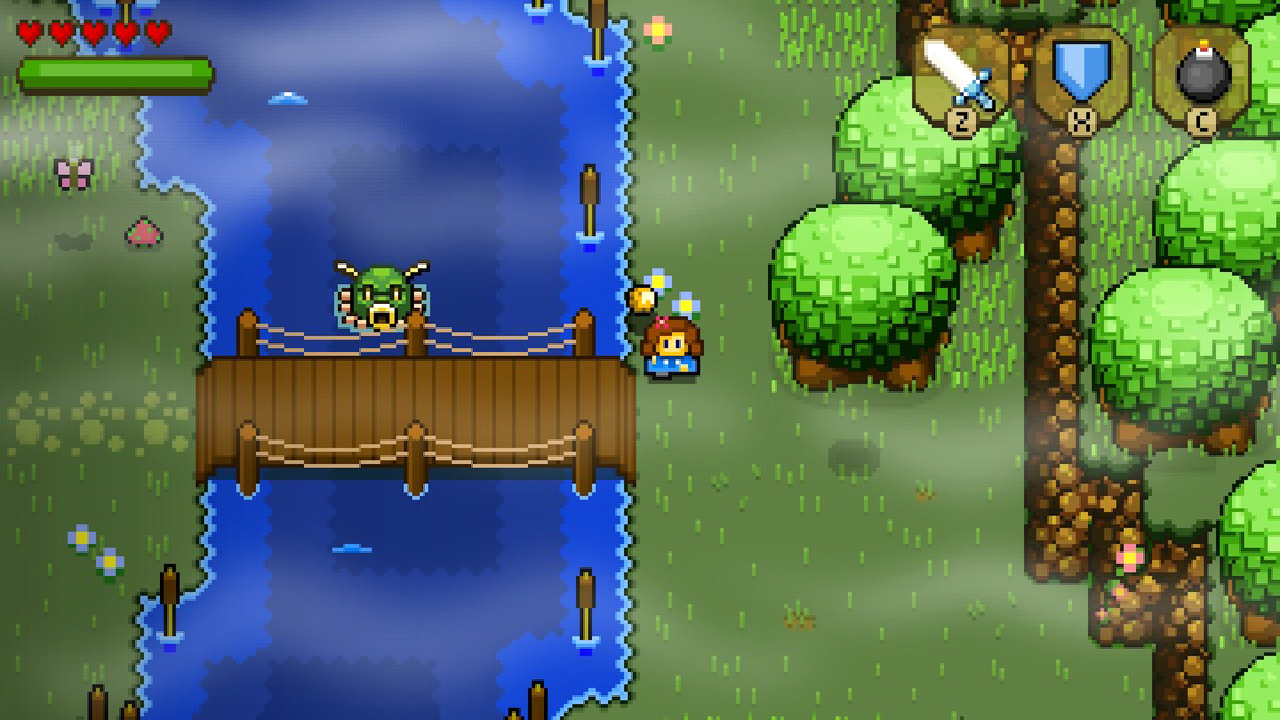
Are you nostalgic for the gameplay and dungeons of A Link to the Past?
Check out: Blossom Tales: The Sleeping King

Are you hungry for more rock-tossing action?
Check out: Lila’s Sky Ark

Are you looking for cute graphics and a nonbinary protagonist?
Check out: Frogsong

Would you like a simple and easy game to share with kids?
Check out: Arietta of Spirits

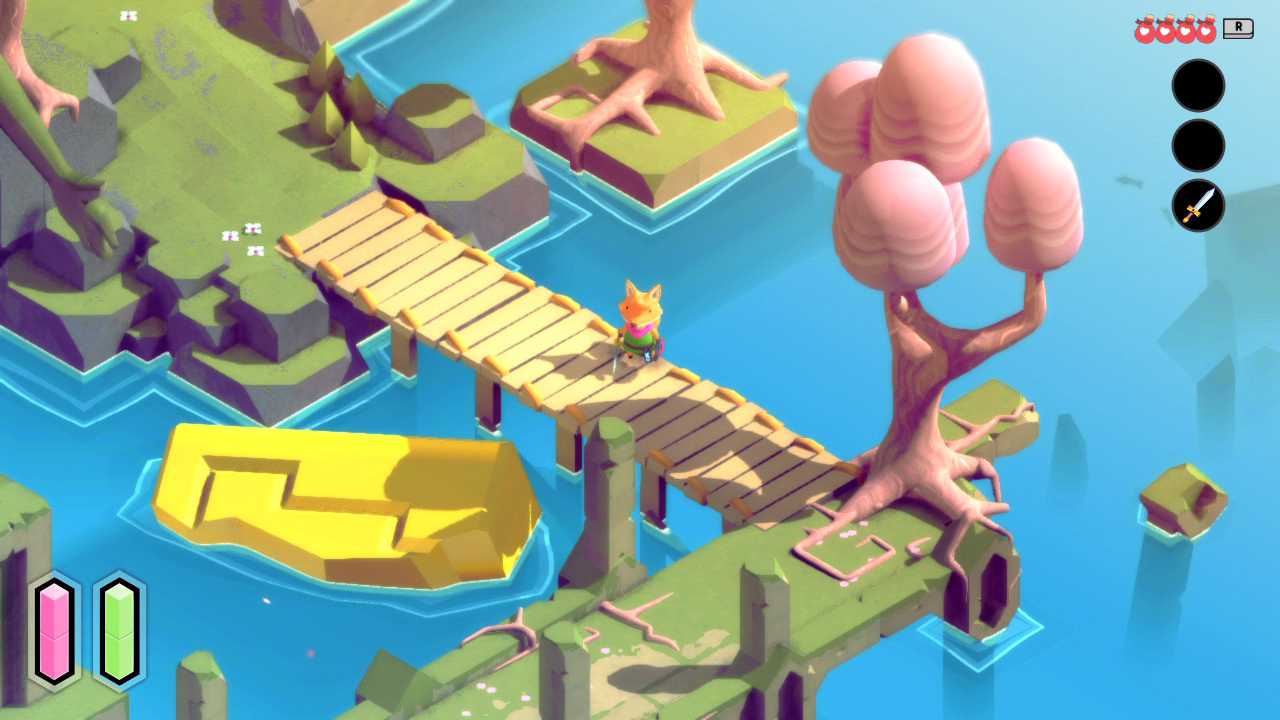
Would you like a challenging game with accessibility options?
Check out: Tunic

Do you prefer the game to be super difficult and have deep lore?
Check out: Hyper Light Drifter

Do you want your female character to wield both a sword and magic, and will you be satisfied with nothing less than complex and multilayered combat in an exploration-rich dark fantasy world that hides a tragic story about the suffering implicit in the rise and fall of empires? 
Check out, unironically: Dark Souls

When the Moon Didn’t Fall

All the clocks in Clock Town have stopped working, and letters have stopped arriving from the Gerudo in the Great Bay. Both the clock master’s daughter and the swamp witches’ son sense that something is amiss. Slowly they come to understand one another while their world gradually winds itself apart.

When the Moon Didn’t Fall is a short novella that imagines what Zelda and Ganon would look like in the world of Majora’s Mask. According to the Legend of Zelda Encyclopedia, Termina only exists as a dream inside Link’s mind, and it’s interesting to analyze how the events and characters of Majora’s Mask reflect the trauma that Link experienced in Ocarina of Time. I therefore wanted to use Termina as a stage to explore the trauma of Zelda and Ganon, specifically within the context of a dream that’s rapidly fading.

I think it’s fair to admit that I was strongly inspired by Stephen King’s 1990 novella “The Langoliers,” which is a disturbing bit of speculation concerning what happens to the world of the past after the present has already moved on. I tried to capture a similar sense of time (literally) running out, a theme that felt appropriate to the anxiety-inducing atmosphere of Majora’s Mask. Like “The Langoliers,” When the Moon Didn’t Fall has elements of uncanniness and horror, but it’s also about forgiveness, healing, and hope for the future.

I originally wrote this story back in 2018, but it still holds a special place in my heart. I completed a substantial set of edits so that I could include one of the early chapters in my portfolio of writing samples for The Whispers of Hyrule, an upcoming Legend of Zelda fanzine celebrating Hyrule’s forests. I love the swamp forest bordering the open plains of Majora’s Mask, and I enjoyed revisiting the strange green spaces of Termina through this fic.  

You can read the full story on AO3 here:
https://archiveofourown.org/works/14093202/

The story illustration was created by the dangerously talented Thali, whose cool and creepy video game art can be found on Twitter (here), on Instagram (here), and on Tumblr (here).

Evil Gardening with Ganondorf

I always seem to find myself in a Wind Waker mood during summer. One of the many things I love about The Wind Waker is how beautiful and green and breezy it is. It’s a joy to spend time in the world of the game, which is filled with all sorts of strange and interesting creatures.

To me, then, it’s always been amusing that the Deku Tree in the Forest Haven blames this state of affairs on Ganondorf. I believe the implication is supposed to be that Ganondorf is so innately evil that his very presence on the Great Sea causes monsters to appear, but that’s extremely silly. Ganondorf may be up to no good, but he’s just a crabby old man.

If Ganondorf is responsible for the appearance of plant monsters, I prefer to think that this is because one of his many old man hobbies is gardening. Evil gardening!!

This comic was drawn by the darkly brilliant Frankiesbugs, whose cute and creepy illustrations and comics can be found on Tumblr (here), on Instagram (here), on Cara (here), and on Redbubble (here). Frankiesbugs is also responsible for the comic art and environment design featured in an upcoming beat-em-up game called V’s Rage. Like Wind Waker, V’s Rage boasts plenty of cute creatures, beautiful sun-soaked landscapes, and ridiculous middle-aged men. You can check out the game and play a substantial free demo on Steam (here).

Tales of the Black Forest

Tales of the Black Forest
https://store.steampowered.com/app/1093910/Tales_of_the_Black_Forest/

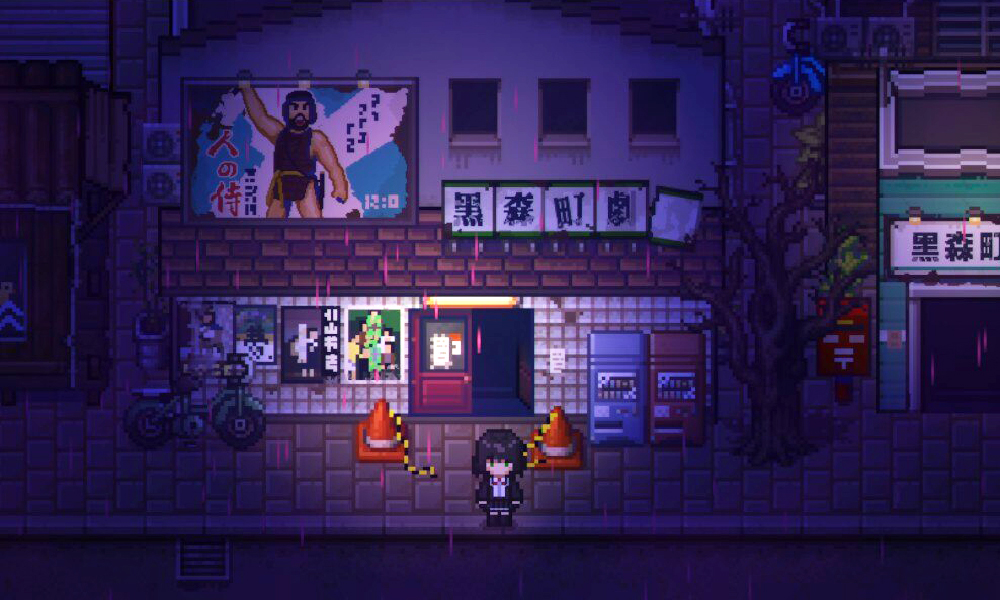
Tales of the Black Forest is a 16-bit RPG Maker narrative adventure game whose tone is split evenly between wholesome cuteness and graphic horror. Although Tales of the Black Forest features a dozen simple puzzles, a few short chase sequences, and limited elements of exploration, it might be more accurate to call it a visual novel instead of a classic adventure game. Tales of the Black Forest takes about three and a half hours to play, and more than half of this time is spent reading character dialog as you progress through a linear story.

The game’s story follows a high school student named Kihara Kashin who wakes up on a bench outside an abandoned train station. Kihara has somehow been transported to a depopulated town called Kuromori (whose name means “black forest”), where she used to live as a child before her mother died in a car accident. Inside the derelict station, Kihara meets a mysterious shape-shifting woman named Kiritani Yuki, who tells her that she has been trapped in the ruins of Kuromori by a curse. The only way to escape Kuromori is to use Nensha, a magical power that allows Kihara to travel back in time by touching retro electronic devices. By going back to the 1990s with Kiritani as her guide, Kihara can learn the origin of the curse and hopefully break it. 

The overall story arc of Tales of the Black Forest admittedly doesn’t make much sense. Thankfully, the game is split into three distinct chapters, each of which showcases the stand-alone character story of a cute yōkai girl while allowing the player to explore her environment. Each of the three chapters also explores the intersection between an urban legend and a social issue of the 1990s.

The first chapter is about a deserted village, Shiranaki (a play on the urban legend of Inunaki Village), and rural depopulation. The second chapter is about a magical ghost train and a fictional version of the Aum Shinrikyō “new religious movement” that carried out the Tokyo Subway Sarin Gas Attacks in March 1995. The third chapter is about a haunted movie theater that serves as a case study for how many small businesses that thrived during the postwar Shōwa era were forced to close during the prolonged economic recession of the 1990s.

Along with urban legends and social issues, Tales of the Black Forest is strongly inspired by the movies of Studio Ghibli, and its magical world is filled with quirky yōkai and gentle kami. The character illustrations of cute girls that accompany the dialog text are somewhat generic, but the game’s developers clearly put a great deal of love and attention into the 16-bit character sprites and their environments. There’s not a single part of this game that doesn’t make a gorgeous screenshot.

Alongside its whimsy and beauty, however, Tales of the Black Forest contains serious and sometimes graphically violent scenarios with disturbing themes and imagery. The overall tone of the game’s story emphasizes character drama more than horror, but the gruesome and upsetting elements are still there. You’ll be talking to adorable cats in the beautiful green yard of a forest café, and fifteen minutes later you’ll be watching a young woman beaten to death by a deranged cultist.

This mix of wholesome and horror worked for me, but both tonal aspects of the story are equally prominent. Accordingly, I wouldn’t recommend Black Forest to anyone who can’t sit through the creepier moments of The Ring, nor would I recommend it to anyone who can’t tolerate the more sentimental moments of My Neighbor Totoro.

Tales of the Black Forest was made by a Chinese studio in an obvious homage to Japanese popular culture, and its story occasionally feels like an attempt to filter a lecture from an “Introduction to Contemporary Japanese Society” university course through the medium of fiction. I personally found the references to Japanese social problems of the 1990s to be interesting and well-intentioned, but I could understand that some players might find these elements of the story a bit cringe in the way that early 2000s “onigiri means rice ball desu” North American anime fandom was a bit cringe.

Tales of the Black Forest was originally written in Chinese, and the English translation feels as though it was created by someone without much experience in localization. It’s serviceable, but it can be awkward at times. I tend to think the concept of “standard English” is nonsense, and I found the translation to be charming, especially because it reminded me of how pirated anime used to have English subtitles created by people whose first language was Chinese. In keeping with the retro theme of the game, I very much appreciated this unintentional element of nostalgia.

Tales of the Black Forest isn’t perfect, but it’s a solid 7/10 game that’s elevated to an 8/10 by virtue of the love and care that the two-person development team put into every aspect of its creation. This game caters to Japanese pop culture nerds who are fans of both cute anime characters and creepy urban legends, and I’m surprised it hasn’t attracted more attention since it was released on Steam in 2019. Tales of the Black Forest is a small but shining hidden treasure.

Neko Can Dream Review on Sidequest

I’m excited to have published a review of the indie narrative adventure game Neko Can Dream on Sidequest. Neko Can Dream was created by the Japanese yuri manga artist Nekobungi Sumire, who captures a complex and beautiful world inside the simple Game Boy graphics.

Here’s an excerpt from my review:

Neko Can Dream will take most players about two and a half hours to finish. Even though the narrative tone is gentle, the pace is quite brisk, and the excellent game design ensures that the player never becomes lost or confused. Certain elements of the individual character stories will resonate strongly with players interested in themes relating to queer identity; however, at its core, Neko Can Dream is about how the dream worlds of video games can help people at all stages of life recover from trauma and reach out for connection.

If you’re interested, you can read the full review on Sidequest here:
https://sidequest.zone/2024/05/27/neko-can-dream-bittersweet-nostalgic-treat/

Usurper Ghoul

Usurper Ghoul
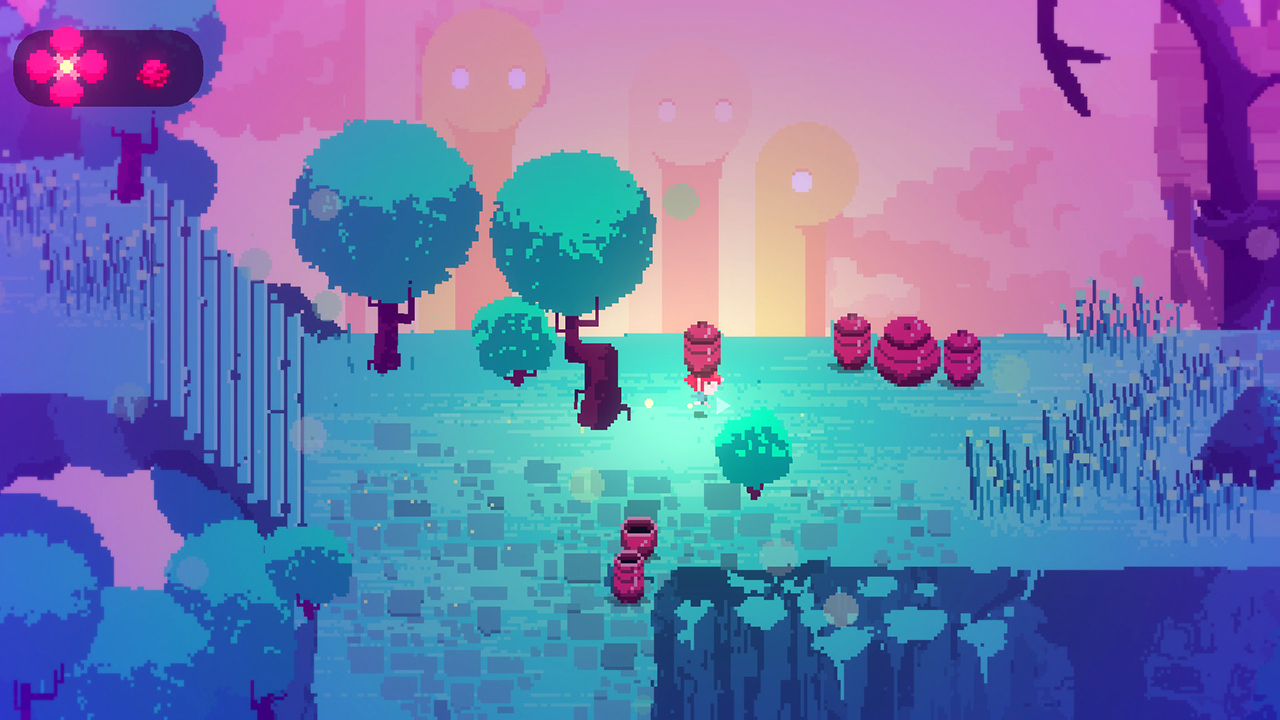
https://evandahm.itch.io/usurper-ghoul

Usurper Ghoul is a nonviolent Game Boy adventure game that channels the “ruined kingdom” vibe of Dark Souls. I tend to think that Dark Souls is marred by needless difficulty; and, in the same way, the gameplay elements of Usurper Ghoul are needlessly frustrating. The nonlinear exploration-based gameplay of Usurper Ghoul is on brand for a Soulslike Game Boy game, but it’s not for everyone. Like Dark Souls, Usurper Ghoul becomes more interesting the more you engage with it, but the beginning is rough.

You play as a horned, skull-headed demon who wakes in a garden in the hills overlooking a small village, which in turn overlooks a valley of tombs. In true Dark Souls fashion, no one tells you where to go or what you need to do, and it’s possible to spend a lot of time walking around without getting anywhere. There are a few people scattered across the wilderness, but they’re not particularly helpful.

With no particular goal other than to explore the world, your job is to collect three items from three categories. Flowers allow you to interact with people, sticks allow you to interact with the environment, and rocks allow you to access more knowledge about the world. One stick allows you to unlock doors, for example, while another stick allows you to read written text. The catch is that you can only hold one of each type of item at a time.

The necessity of discarding one item in order to use another fits the broader theme of the game, which is that something must be sacrificed in order for something else to be gained. Unfortunately, switching between items involves a great deal of needless backtracking. The world of Usurper Ghoul isn’t that big, and the game isn’t overly complicated, but it’s big and complicated enough for the backtracking to be annoying. There are no puzzles involved; it’s just donkey work.

One might say that Dark Souls involves needless complications and barriers to progress, but one of the primary attractions of Dark Souls is that it’s gorgeous to look at. You might be continually frustrated over the course of your journey through Lordran, but you tolerate the setbacks because the environment is so beautiful and atmospheric. The world design of Usurper Ghoul is unique and interesting, to be sure, but it’s still rendered with primitive Game Boy graphics. There’s no background music, and the sound design is limited to jarring beeps at odd moments. In other words, it’s not necessarily a pleasure to trek back and forth across the map to switch out one tool for another.

The overall story of Usurper Ghoul is intriguing, but the writing is hit or miss. Most NPCs say decontextualized NPC banalities, and the lore encountered in books and on monuments often feels like a parody of Dark Souls. Although this is never explained, your goal is to enter a tower; and, to do so, you have to collect enough lore to figure out the right order to light torches in front of the tombs in the valley. You need different sticks to unlock gates, to read the writing on the tombs, and to light their torches, so this is a tedious process even if you (like me) lose patience with the game’s obtuse writing and resort to a walkthrough to figure out the order.

Having discussed what’s frustrating about Usurper Ghoul, I now want to explain why I enjoyed it anyway. The next paragraph contains mild gameplay spoilers, but it’s also the coolest part of the game.

For your own nefarious purposes, you can offer three varieties of flowers to NPCs. Comely flowers make people like you, malodorous flowers make people dislike you, and horrid flowers will kill anyone who touches them (except you). In one of the game’s endings, you can climb the tower in the valley and simply leave the kingdom behind without hurting anyone. If you want to experience everything Usurper King has to offer, however, your goal becomes to kill as many NPCs as possible while managing the limitations imposed by each death. Each NPC you kill with a horrid flower leaves a book in the tower whose text emphasizes the theme of sacrifice. For me, this was when the story became worth the trouble of navigating the world.

I found the endgame of Usurper Ghoul to be extremely compelling. And really, despite the initial annoyances, the ideas informing Usurper Ghoul are brilliant. I feel that the success of the execution is limited by the Game Boy technology, and I’d like to give the developer a nice chunk of cash to hire collaborators and develop these ideas into a less bare-bones format, perhaps along the lines of Tunic. Usurper Ghoul is a fascinating proof of concept; and, with a bit of polish, I could easily imagine it becoming a cult classic.

For me, the payoff of Usurper Ghoul was worth the frustration of the gameplay and the occasional Dark Fantasy Generator™ writing, but your mileage may vary. There’s a lot to explore and experiment with in the world of the game, and it’s definitely possible to spend several hours there. I lost patience toward the middle and used (this walkthrough on Reddit) to smooth over some of the rougher bits, and I ended up spending a bit more than two hours with the game. If nothing else, I’m really looking forward to checking out the developer’s comic projects in the near future.

NextDoor

NextDoor
https://broelbrak.itch.io/nextdoor

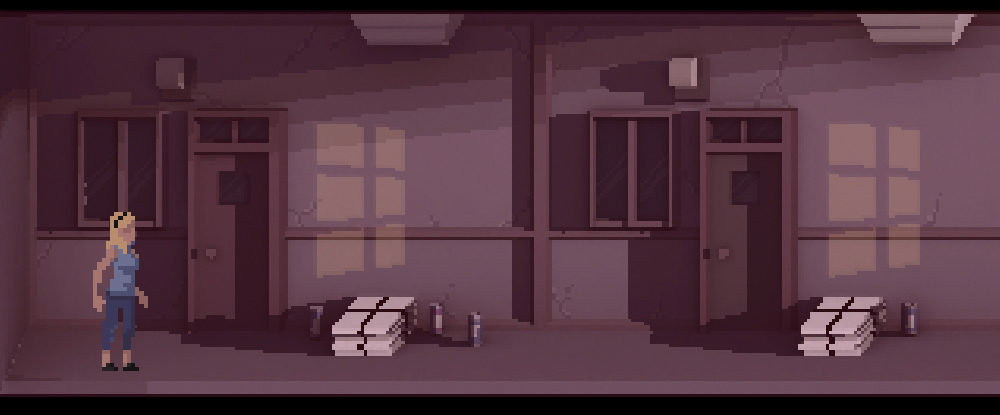
NextDoor is a spooky 2D interactive story game based on one of Junji Itō’s short horror manga. It’s free to download or play in your browser, and it takes about ten to fifteen minutes to read.

You play as a college student living in a rundown apartment building. The student is unable to concentrate because of the loud music blaring in the apartment above hers, so she finally snaps and goes to complain. The upstairs tenant is an asshole who refuses to turn down his stereo because his next-door neighbor has never said a word to him about the noise. If you can convince his neighbor to complain, the manchild gripes, perhaps he might listen to what you have to say.

The problem is that the next-door neighbors are decidedly unfriendly. Another tenant in the building says that there’s actually a group of women in that apartment, but they’re very quiet, and no one has ever spoken with them. Perhaps it’s not the best idea to attract their attention…

Despite its limited scope, the environment design of NextDoor is nicely done and more than sufficiently creepy. Ironically, the music is quite good, and the sound design is better. The character animations are a pleasure to watch, especially when the player gets to see more of the mysterious next-door neighbor.

“The Lady Next Door” is from Junji Itō’s collection Mimi’s Tales of Terror, and it’s a fun play on a category of Japanese urban legends that take the form of “here’s some weird shit I saw in a Shōwa-era (built before the 1990s) apartment building.” Itō transforms the tropes of these non sequitur “weird shit I saw” stories into a cautionary tale, and it’s delightfully cathartic to witness the unnecessarily harsh punishment of the transgressor. Because seriously, fuck that guy.

NextDoor’s adaptation of this manga is interesting in that it configures the college student as the transgressor. By association, you the player are the transgressor as well, and it’s fun to push the college student forward into increasingly bad decisions. She doesn’t die, but she most definitely sees some weird shit.

There’s one (very mild) jumpscare in the game, and it’s a cameo from my favorite Junji Itō manga, Junji Ito’s Cat Diary: Yon & Mu. Yon & Mu is exactly what you would expect from a cute autobio pet manga drawn by Junji Itō, and it’s marvelous. It’s always a pleasure to have an unexpected encounter with one of these adorable hellbeasts.